Cruising Hubbard Glacier: Essential Tips for Alaska Cruise Passengers

There are moments on an Alaska cruise that take your breath away—and seeing Hubbard Glacier is one of them. Stretching 76 miles from the Yukon into Alaska’s Disenchantment Bay, this massive river of ice is alive and constantly moving, groaning, and cracking as it advances toward the sea. Known as “The Galloping Glacier,” Hubbard is one of the few glaciers in the world that’s still growing, making it an extraordinary sight even for seasoned travelers. In this guide, I share everything you need to know before your cruise day at Hubbard Glacier—where it is, what to expect, the best viewing spots, and insider tips to help you make the most of this unforgettable Alaska experience.
This article may contain affiliate / compensated links. For full information, please see our disclaimer here.
Our Experiences Cruising Hubbard Glacier
Chris and I have cruised past Hubbard Glacier several times, and every visit has been different. Sometimes the approach was clear and sunny, with brilliant blue reflections dancing on the ice. Other times, thick fog shrouded the bay until the glacier suddenly appeared like a giant frozen wall.
No matter the weather, watching Hubbard calve with a thunderous crash and seeing chunks of ice plunge into the bay is a moment we’ll never forget.
Over the years, we’ve been lucky to observe many of Alaska’s glaciers up close. We’ve cruised Glacier Bay National Park—an incredible experience filled with majestic fjords and multiple glaciers, each with its own character.
We’ve also witnessed powerful calving events during day cruises, like in Prince William Sound from Whittier, Columbia Glacier from Valdez and Kenai Fjords glaciers from Seward. Every one of these encounters was spectacular, but Hubbard Glacier left the strongest impression.
This glacier is enormous—truly on a different scale. When it calves, the sound echoes like thunder across the water. Hubbard Glacier is North America’s largest tidewater glacier.
Even from the deck of a large cruise ship, you can feel the raw energy of nature. It’s one of those rare moments in Alaska where you simply stop, take a deep breath, and realize how small you are compared to the wild beauty around you.

What Makes Hubbard Glacier So Special
Hubbard Glacier lies at the edge of Wrangell–St. Elias National Park and Preserve, the largest national park in the United States and a UNESCO World Heritage Site.
It stretches an incredible 76 miles from its source in Canada’s Yukon Territory to its icy terminus in Alaska’s Disenchantment Bay. The glacier’s face rises more than 400 feet above the water, creating a dramatic wall of ice that continues to advance year after year—a rare phenomenon in today’s warming climate.
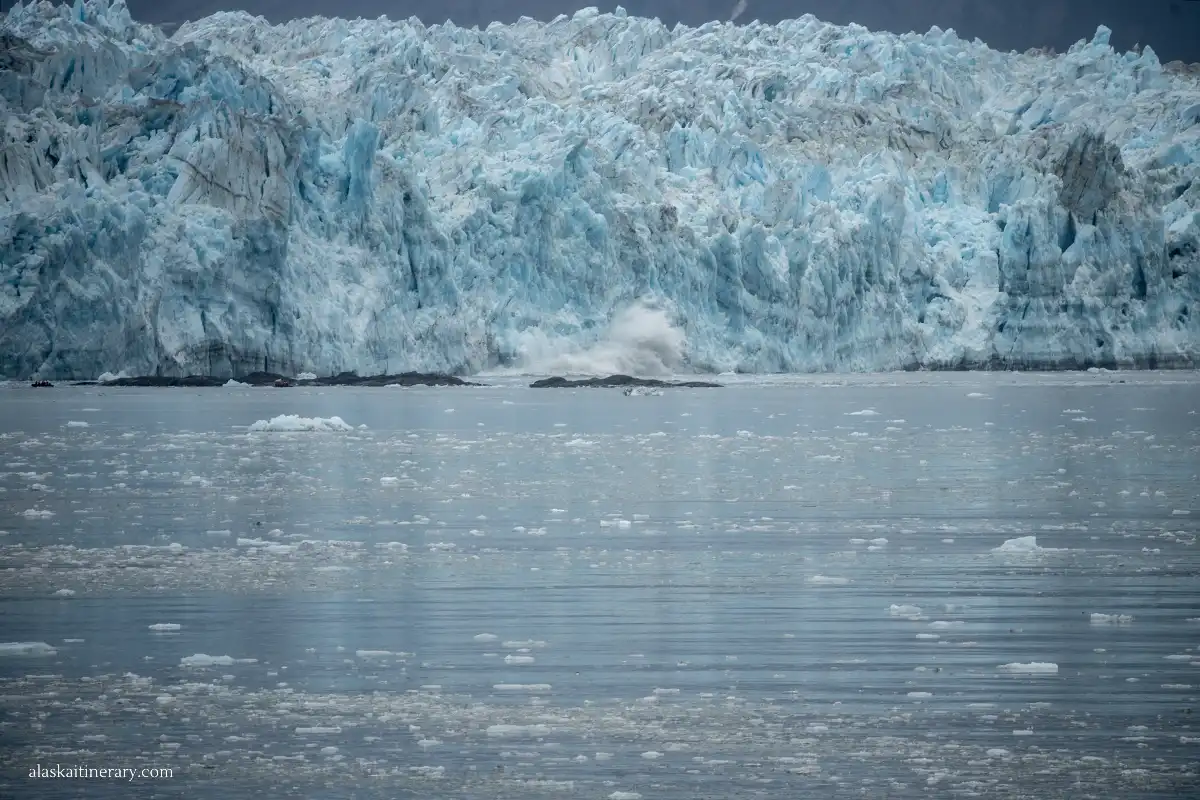
Nicknamed “The Galloping Glacier,” Hubbard continues to surge toward the ocean, pushing forward at an average of about 80 feet per year. That slow, steady movement creates dramatic calving events when massive chunks of blue ice crack and crash into the bay below. It’s both mesmerizing and humbling to witness.
Because of its size and activity, Hubbard Glacier often creates floating icebergs scattered throughout the bay—some as small as dinner plates, others as large as buildings. The vivid shades of blue come from centuries of compacted snow and ice, reflecting light in stunning patterns that change with every cloud and ray of sunshine.
When your ship approaches the glacier, you’ll notice the sound before you even get close—the deep, echoing rumble of ice shifting and splitting. It’s nature’s soundtrack at its most powerful, and once you’ve experienced it, it’s impossible to forget. For us, it’s one of the top reasons to cruise to Alaska.
Agnes Advice: Take a look at our Alaska Cruise Planner, from itineraries to ports and excursions.

Where You’ll See Hubbard Glacier
When planning your first Alaska cruise, you’ll often need to decide which glacier experience you want to include in your itinerary. Not every cruise sails to Hubbard Glacier. Some itineraries focus on Glacier Bay, while others cruise along Hubbard Glacier, College Fjord, or Tracy Arm Fjord. Each of these destinations offers different scenery, atmosphere, and wildlife opportunities.
Hubbard Glacier is usually featured on Gulf of Alaska itineraries—especially one-way cruises between Vancouver and Seward or Whittier. You’ll also find it on some round-trip cruises from Vancouver, but it’s less common on routes departing from Seattle.
You’ll find it on routes offered by top Alaska cruise lines, like Princess, Holland America, NCL, Celebrity, and Royal Caribbean, among others.
When choosing your Alaska cruise, take a close look at the itinerary details and decide what fascinates you most—whether it’s multiple glaciers in one day, a vast advancing glacier like Hubbard, or the serene fjords of Glacier Bay.
Agnes’ Advice: If you’re still deciding between these iconic destinations, take a look at my detailed article Hubbard Glacier vs. Glacier Bay, where I compare these two incredible natural landmarks to help you choose the one that best fits your Alaska cruise dreams.

What to Expect on Your Hubbard Glacier Cruise Day
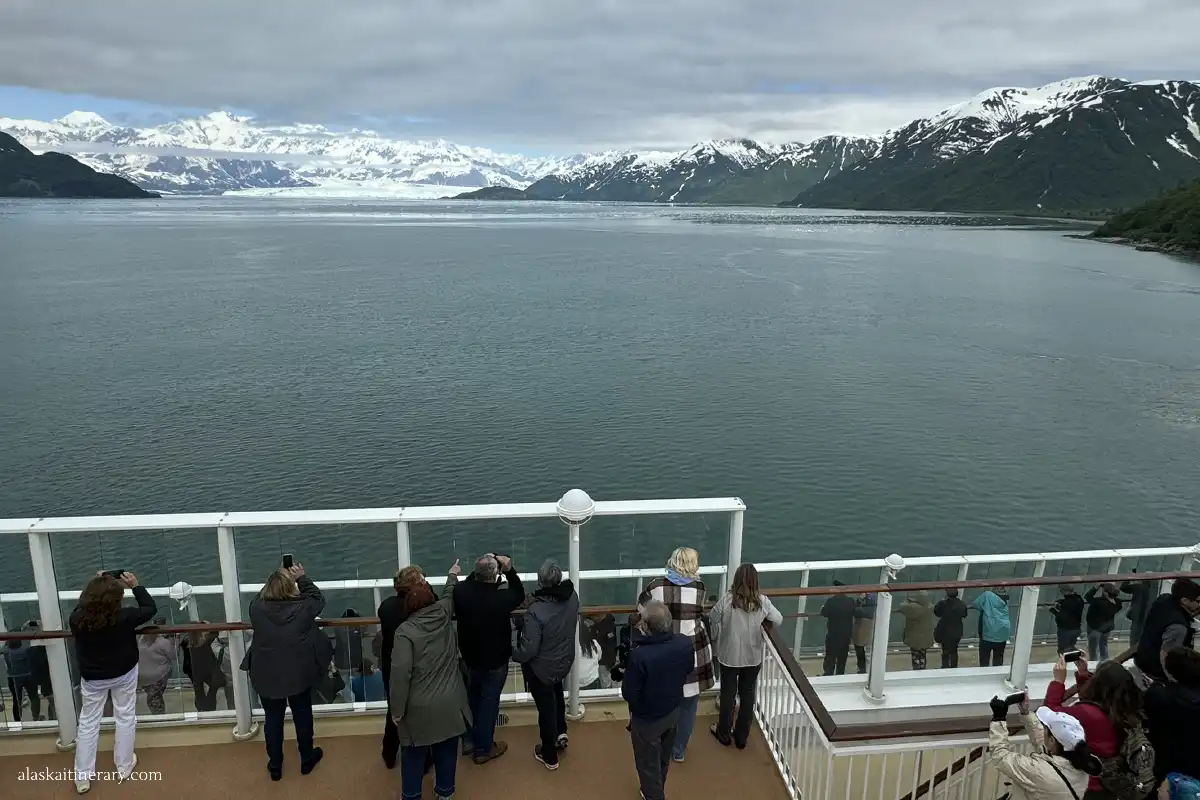
Cruising to Hubbard Glacier is a highlight of the entire Alaska voyage, and the atmosphere onboard changes the moment the captain announces the ship’s approach. The air gets colder, the decks start to fill with excited passengers wrapped in blankets and parkas, and cameras appear everywhere.
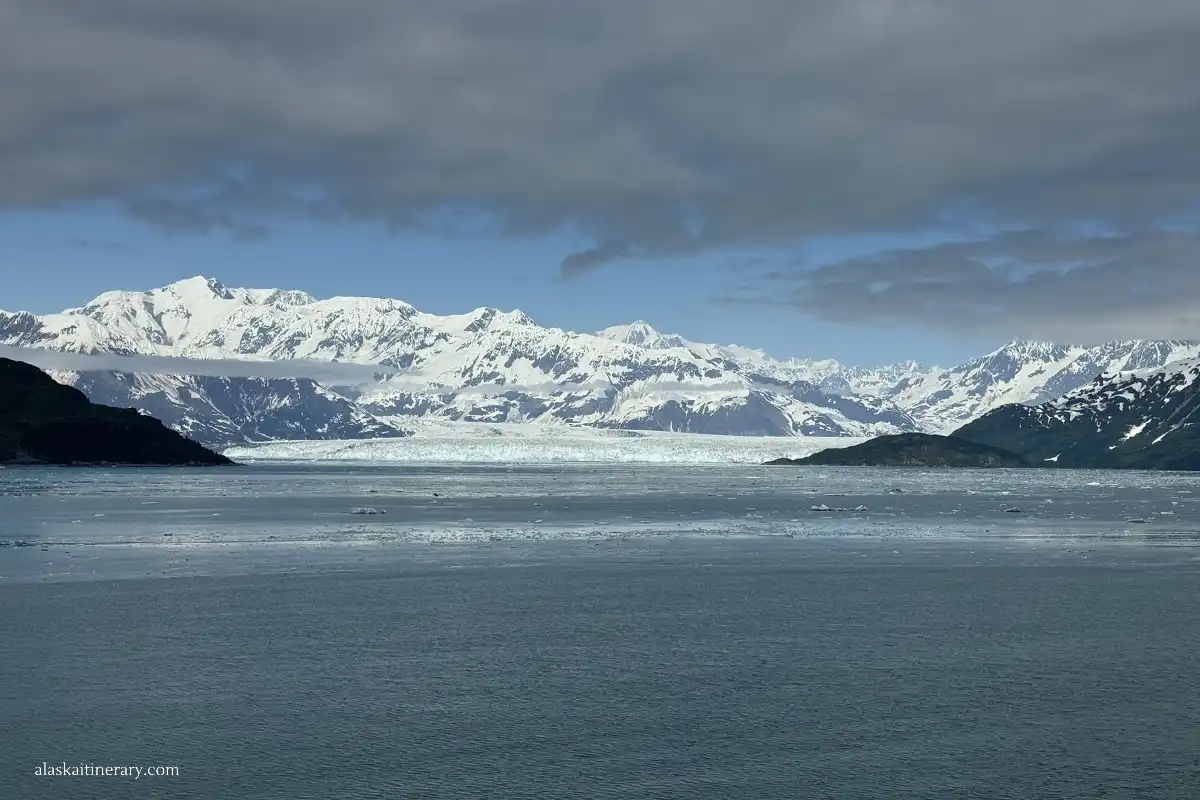
As your ship glides into Disenchantment Bay, you’ll notice chunks of floating ice scattered across the water—some as small as dinner plates, others the size of small boats. The captain will slow down and maneuver carefully through the ice field.
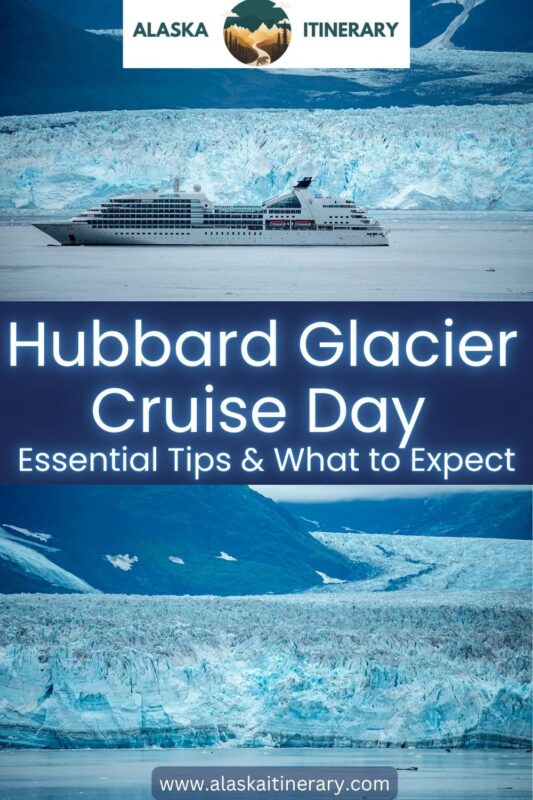
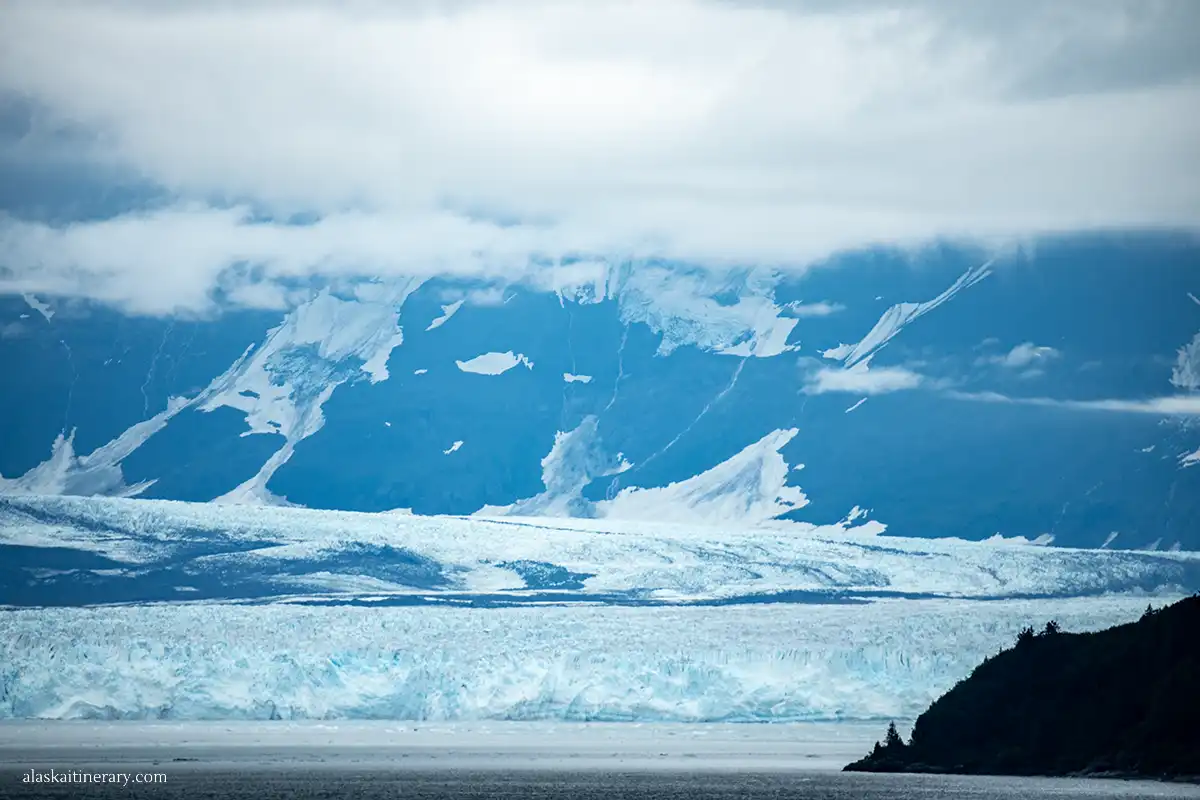
Then, suddenly, Hubbard Glacier comes into full view: a six-mile-wide wall of blue and white ice towering hundreds of feet above the waterline.
Ships typically spend one to three hours in front of the glacier, giving everyone plenty of time to admire it. Most captains slowly rotate the vessel so passengers on both sides have an equal view. During this time, onboard naturalists often provide commentary about the glacier’s geology and wildlife, while crew members offer hot drinks on deck.
The most thrilling moment is witnessing a calving event—when a massive block of ice breaks off and crashes into the bay. The sound is like thunder echoing across the mountains, followed by ripples spreading through the water. It’s an unforgettable spectacle, and if you’re lucky enough to see it, it will likely be one of your favorite memories from the cruise.
Be sure to bundle up, step outside, and spend as much time on deck as possible. Hubbard Glacier is not just a stop—it’s an experience that truly captures the wild, untamed spirit of Alaska.

Smart Tips for Experiencing Hubbard Glacier from Your Cruise Ship
Cruising Hubbard Glacier is one of the most breathtaking experiences on any Alaska voyage—but it’s also a day that rewards a little preparation. The glacier’s size, power, and unpredictable conditions make it both thrilling and unforgettable. Here are a few smart tips to help you make the most of your Hubbard Glacier day:
Dress in layers and stay warm
Even in midsummer, temperatures near the glacier can feel freezing, especially with the wind coming off the ice. Wear a warm hat, gloves, and a waterproof jacket so you can comfortably stay outside on deck.
Agnes’ Advice: Take a look at my detailed Alaska cruise packing list.
Get outside early
As your ship enters Yakutat and Disenchantment Bays, the scenery becomes increasingly dramatic. Early risers often enjoy quieter decks, fewer crowds, and soft morning light perfect for photography.
Keep your camera ready
Calving can happen at any moment. Set your camera to burst mode and have extra batteries or memory cards handy—cold temperatures can drain power quickly.
Bring binoculars
They make it easier to spot details on the glacier’s surface and watch for harbor seals resting on floating ice.
Move around the ship
Don’t stay in one spot. Check both sides of the deck or different viewing levels to capture changing angles and reflections as the captain slowly turns the ship.
Listen carefully
You’ll often hear the glacier before you see movement—the deep cracking and booming sounds mean a calving event may be about to happen.
Enjoy the moment
Take a few minutes to simply put your camera down and watch. Feel the cold air, listen to the ice rumbling, and let yourself absorb the scale of it all. Hubbard Glacier isn’t just something to see—it’s something to feel.
Following these small but smart steps will help you stay comfortable, catch the best views, and fully experience the magic of one of Alaska’s most powerful natural wonders.
Fun Facts About Hubbard Glacier
- It’s Alaska’s largest tidewater glacier. Hubbard Glacier stretches about 76 miles (122 km) from its source in Canada’s Yukon Territory to its icy terminus in Disenchantment Bay.
- The glacier is still advancing. Unlike most glaciers around the world that are retreating, Hubbard continues to grow—earning it the nickname “The Galloping Glacier.”
- It’s incredibly tall. The glacier’s face towers roughly 400 feet (122 meters) above the water and extends another 250 feet (76 meters) below the surface.
- It once blocked an entire fjord. In 1986, Hubbard surged forward and blocked Russell Fjord, creating a temporary lake that flooded nearby valleys. When the ice dam burst, it released billions of gallons of water back into the sea.
- Named after an explorer’s father-in-law. The glacier honors Gardiner Hubbard, the first president of the National Geographic Society and father-in-law of Alexander Graham Bell.
- It moves fast—for a glacier. Hubbard advances about 80 feet (24 meters) per year on average, though short-term surges have pushed it even faster.
- The color tells a story. The glacier’s stunning blue hue comes from centuries of compacted snow and ice, which absorb all colors of the spectrum except blue.
- Wildlife loves it too. Harbor seals often rest on the icebergs, while eagles and seabirds circle overhead. Occasionally, whales can be spotted feeding in the bay’s rich waters.
Each of these facts helps explain why cruising Hubbard Glacier feels like witnessing a living, moving force of nature—one of the most powerful and mesmerizing sights in Alaska.
Final Thoughts
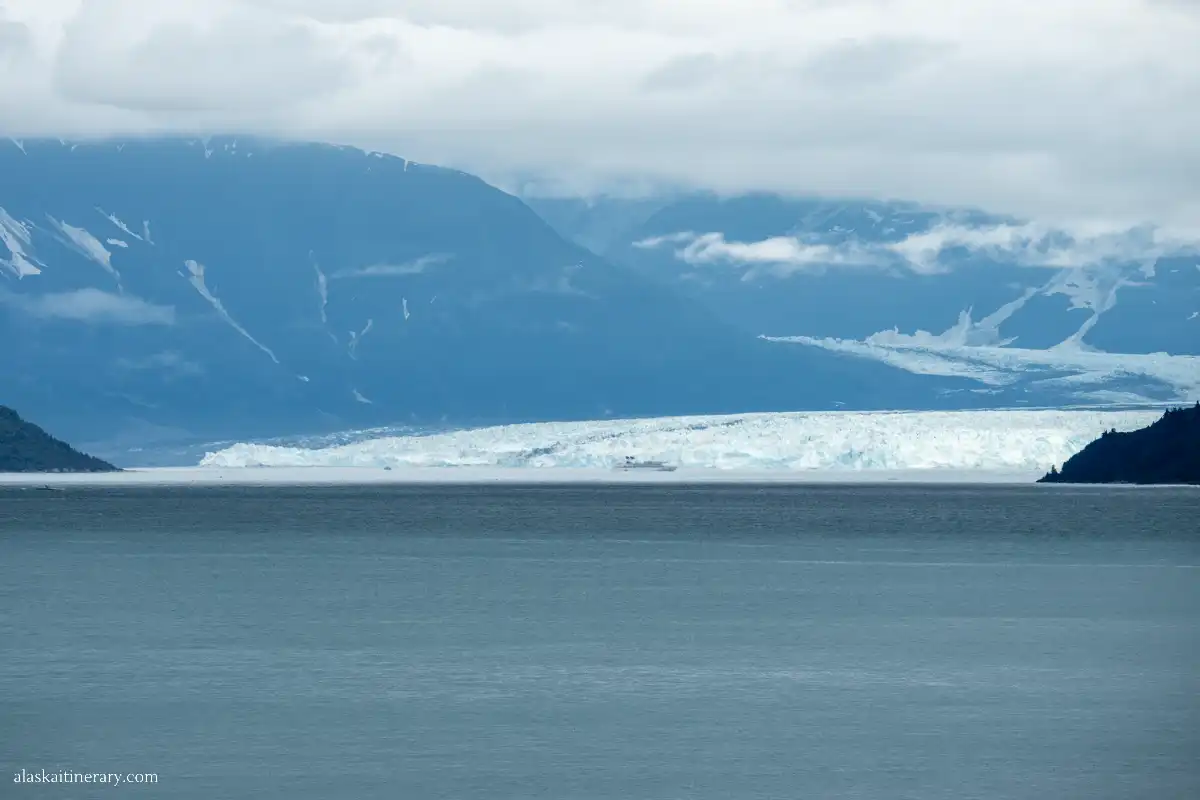
Cruising Hubbard Glacier is one of those experiences that truly captures the spirit of Alaska—raw, wild, and unforgettable. No photo or video can prepare you for the moment you first see that massive wall of blue ice rising from the bay or hear the deep thunder of a calving event echoing across the water.
Even after seeing many of Alaska’s glaciers—from Prince William Sound to Kenai Fjords—Hubbard still stands out for its sheer power and scale.
If your cruise includes Hubbard Glacier, prepare for a day that feels both peaceful and thrilling. Dress warmly, spend as much time as possible outside, and don’t rush the experience. Watching the glacier’s brilliant blue face shimmer in the shifting light is pure magic.
Do You Like It? Pin It For Later!