
Alaska is home to eight national parks: Denali, Kenai Fjords, Glacier Bay, Wrangell–St. Elias, Katmai, Lake Clark, Gates of the Arctic, and Kobuk Valley. Alaska has the second-highest number of national parks in the U.S., right after California.
This guide explains all eight Alaska national parks, how they differ, and how to choose the right ones for your trip, and how to plan a trip to each park step-by-step.
These parks protect some of the most extreme landscapes in North America. Denali National Park is crowned by Denali (Mount McKinley), the highest peak in North America. Wrangell–St. Elias is the largest national park in the United States, covering about 13.2 million acres. Glacier Bay is part of a UNESCO World Heritage Site, recognized for its glaciers and ecosystems. And Gates of the Arctic is the least visited U.S. national park, which makes sense once you realize it has no roads, trails, or facilities.
Some Alaska national parks are easy to include in a road trip. Others require bush planes, boats, and flexible planning.
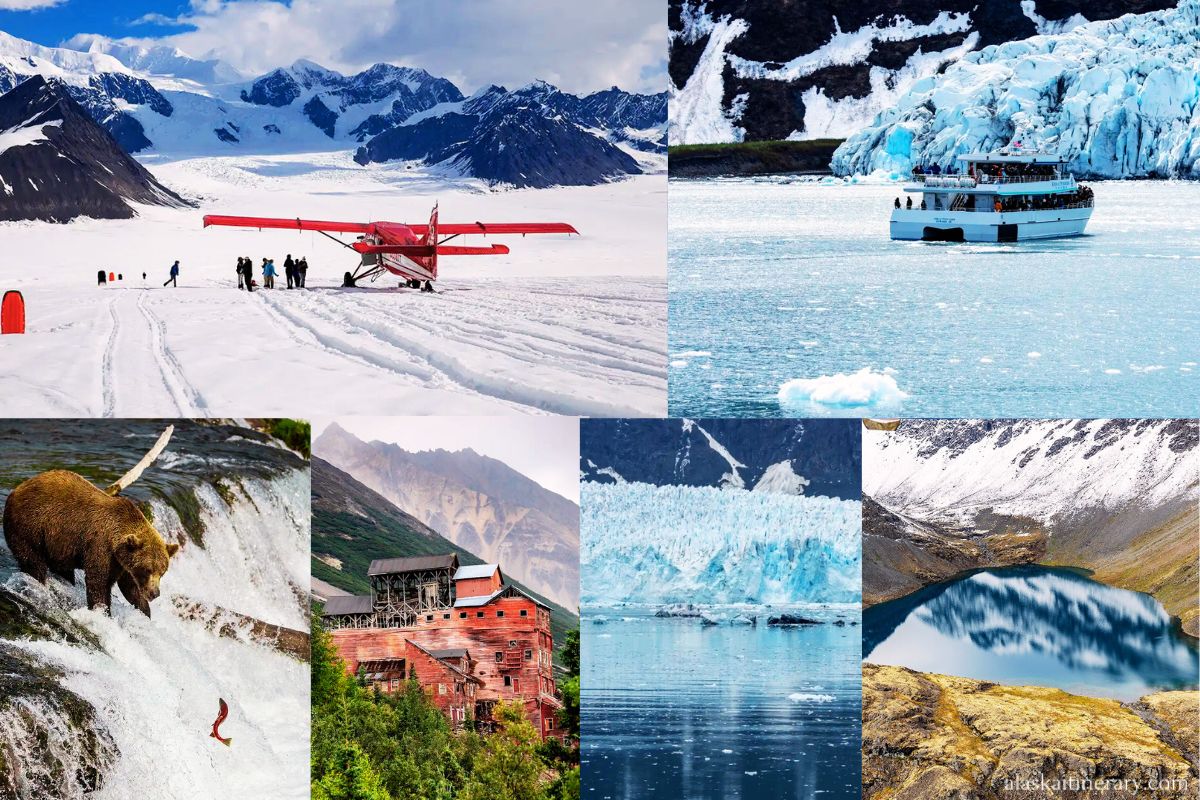
Our Experiences in Alaska National Parks
Chris and I have explored Alaska for years by road, rail, boat, and cruise ship. We’ve visited Denali, Kenai Fjords, and Wrangell–St. Elias multiple times and planned travel to fly-in parks like Katmai, Lake Clark, and Gates of the Arctic. We’ve experienced Glacier Bay National Park by cruise, the most common way to visit. All recommendations here are based on firsthand travel and practical planning.
How Alaska National Parks Are Different
Alaska’s national parks operate very differently from most parks in the Lower 48. Distance, access, and logistics play a much bigger role here. In many cases, visiting the park is the experience itself.
Most Alaska national parks feature:
- limited or no road access
- few developed facilities
- short and weather-dependent seasons
- true wilderness conditions, including wildlife encounters and minimal or no services
This means trip planning looks very different. Some parks work well for first-time Alaska visitors. Others are best suited for travelers with experience, flexibility, and time buffers built into their itineraries.
Across Alaska’s eight national parks, you’ll find:
- vast mountain ranges and glaciers
- coastal fjords and tidewater glaciers
- active volcanoes and volcanic terrain
- Arctic tundra and river systems
- some of the highest concentrations of wildlife in the U.S.
Rather than scenic drives and paved overlooks, these parks emphasize wilderness, space, and immersion in nature. Each park offers a very different experience, shaped by its geography, climate, and ecosystems.
Alaska National Parks at a Glance
Road-accessible or partially road-accessible parks
- Denali National Park
- Kenai Fjords National Park
- Wrangell–St. Elias National Park (partial road access)
Primarily fly-in or boat-access parks
- Glacier Bay National Park
- Katmai National Park
- Lake Clark National Park
- Gates of the Arctic National Park
- Kobuk Valley National Park
How To Plan A Trip To Each Alaska National Park – Step-By-Step Travel Guides
Now it’s time to start planning your Alaska national parks adventure. Below you’ll find detailed, park-by-park travel guides covering what to see and do, how to visit, how to get there, and where to stay. Choose the parks that interest you most and use these guides to build a trip that fits your travel style, available time, and experience level.
Below, you’ll find a short overview of each Alaska national park, followed by links to detailed planning guides.
Denali National Park

Denali National Park is Alaska’s most visited national park and one of the best known in the state. It is home to Denali (Mount McKinley – 20,310 feet / 6,190 meters), the highest peak in North America, and protects a vast interior wilderness of tundra, mountains, and braided rivers.
The park is well known for wildlife viewing, including grizzly bears, moose, caribou, wolves, and Dall sheep. Unlike most U.S. national parks, access beyond the park entrance is limited, and much of the park is explored by shuttle or tour buses rather than private vehicles.
Denali works well for both first-time visitors and experienced travelers and fits easily into an Alaska road trip or an Alaska Railroad itinerary, if you decide for scenic train ride.
Related Denali guides on Alaska Itinerary:
- Exploring Denali National Park in 2026: Your Ultimate Guide
- Denali National Park Itinerary: Your Perfect 3-Day Adventure
- 23 Best Things to Do in Denali National Park
- Denali Bus Tours Explained: Narrated vs. Non-Narrated Bus
- Where to Stay in Denali: Hotels and Lodges
- Guide to Denali National Park Camping
- Denali RV Campgrounds
- Denali by Train: Guide to Riding the Alaska Railroad
- Denali Hiking Adventures: Our Picks for the Best Trails
- A Guide to Wildlife Viewing in Denali National Park
- Denali Facts: North America’s Tallest Peak & Its Park
- When is the best time to visit Denali National Park?
- Horseshoe Lake Trail: An Easy Yet Scenic Hike in Denali
- Hiking the Mount Healy Overlook Trail in Denali
- Denali vs. Mount McKinley
- The Ultimate Guide to the Best Denali Viewpoints in Alaska
- Visiting Denali in Winter: What’s Open, Things to Do, and Planning Tips
Kenai Fjords National Park

Kenai Fjords National Park protects a dramatic stretch of Alaska’s southern coastline, where tidewater glaciers flow directly into the ocean. The park is known for its fjords, icefields, and rich marine ecosystems shaped by glaciers advancing and retreating over thousands of years.
Most visitors experience Kenai Fjords from the water on glacier and wildlife cruises departing from Seward. These cruises offer excellent opportunities to see calving glaciers, as well as whales, sea lions, sea otters, puffins, and seabirds. Exit Glacier, one of the park’s most accessible glaciers.
Kenai Fjords is one of the easiest Alaska national parks to visit and fits well into a road trip from Anchorage or a Seward-based itinerary. It’s easy to get there by car, train or bus.
Related Kenai guides on Alaska Itinerary:
- How to Get to Kenai Fjords National Park: A Transportation Guide
- 13 Best Things to Do in Kenai Fjords National Park
- How To Visit Exit Glacier – Hiking Trails, Camping, Tours, And Tips
- Best Kenai Fjords Tours from Seward: Cruises, Kayaks, and Glacier Adventures
- 6-hour Kenai Fjords National Park Cruise from Seward, Review
- Where to stay in Seward (gateway to Kenai Fjords)
- RV and tent Camping in Seward (gateway to Kenai Fjords)
Wrangell–St. Elias National Park

Wrangell–St. Elias National Park is the largest national park in the United States, protecting an immense landscape of glaciers, rugged mountains, and remote river valleys. The park includes some of North America’s highest peaks and the largest concentration of glaciers on the continent.
Unlike most national parks, Wrangell–St. Elias has no central entrance gate. Access is limited to a few rough roads, including the McCarthy Road and Nabesna Road, which lead into different areas of the park. Historic mining sites, especially Kennecott, offer a rare glimpse into Alaska’s early industrial history within a vast wilderness setting.
Wrangell–St. Elias is best suited for travelers seeking space, solitude, and off-the-beaten-path exploration rather than traditional sightseeing.
Related Wrangell–St. Elias Guides on Alaska Itinerary:
- How to Get to Wrangell-St. Elias National Park: Roads, Shuttles, Air Travel, and Access Points
- Guide to McCarthy Road: The Gateway to Wrangell-St. Elias National Park
- 15 Best Things to Do in McCarthy, Alaska
- Exploring Alaska’s Hidden Gem: Kennecott Copper Mine
- The Ultimate Guide to Hiking the Root Glacier Trail in Wrangell-St. Elias
- Nabesna Road Guide: Essential Tips, Best Stops, Must-See Sights
- Exploring Copper Center, Alaska: Best Activities, Lodging, and Tips
Glacier Bay National Park

Glacier Bay is best known for its vast tidewater glaciers, deep fjords, and pristine marine ecosystems. Located in southeast Alaska, the park stretches along the Inside Passage region, and protects a dynamic coastal landscape shaped by rapid glacial retreat over the past two centuries. It is recognized as part of a UNESCO World Heritage Site.
Most visitors experience Glacier Bay from the water, primarily aboard Alaska cruise ships that sail deep into the bay for glacier viewing. Independent visits are also possible by boat or small plane via Gustavus, though access remains limited and highly regulated to protect wildlife and fragile ecosystems..
Glacier Bay is ideal for travelers interested in glaciers, marine wildlife, and large-scale coastal scenery rather than road-based exploration.
Related Glacier Bay Guides on Alaska Itinerary:
Katmai National Park
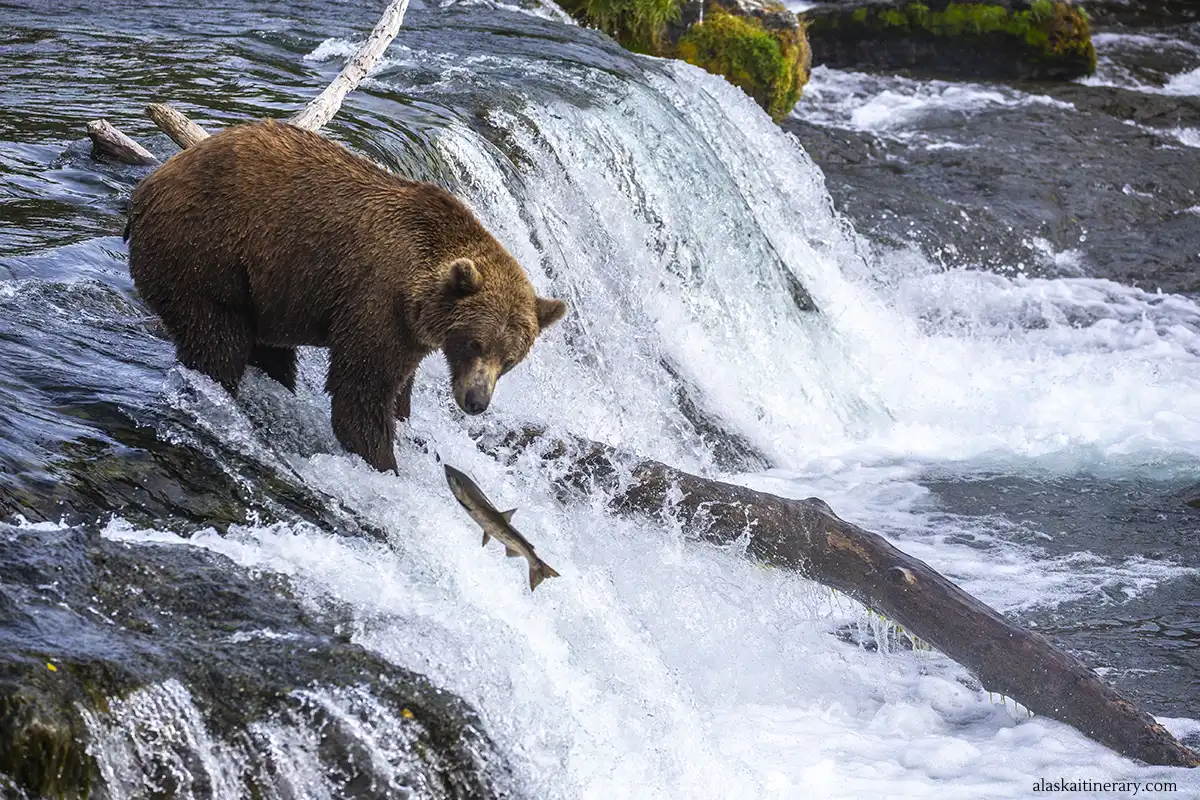
Katmai National Park is best known for brown bear viewing, especially at Brooks Falls, where bears gather to fish during the summer salmon runs. The park is home to an estimated 2,200 brown bears, making it one of the best places in the world to observe bears in their natural habitat. Katmai also protects a rugged volcanic landscape shaped by the 1912 Novarupta eruption, one of the largest volcanic events of the 20th century.
Katmai has no road access and is reached by small plane, most commonly via King Salmon. It’s also possible to get there from Homer and Anchorage. Visitor access around Brooks River is highly regulated, with permits, time slots, and seasonal limits in place to protect both people and wildlife.
Katmai is best suited for travelers focused on bear viewing and remote wilderness experiences rather than traditional sightseeing.
Related Katmai Guides on Alaska Itinerary:
- The Complete Guide to Visiting Katmai National Park – How to Plan a Trip?
- Bear Viewing at Brooks Falls: Everything You Need to Know
- 14 Best Things to do in Katmai National Park
- Killing time, not salmon, in King Salmon, Alaska
- Best Alaska Bear Viewing Tours – Our Top Picks Based on Firsthand Experience
Lake Clark National Park

Lake Clark National Park and Preserve protects a striking mix of turquoise lakes, active volcanoes, glaciers, and coastal wilderness in southwest Alaska, along the western edge of Cook Inlet. The park is part of the Alaska Peninsula volcanic arc and includes snow-covered peaks rising directly above lakes and bays.
There are no roads into Lake Clark. Most visitors arrive by small plane, often landing on beaches or remote lakes. It’s also possible to get there by boat. The park is known for excellent brown bear viewing, especially along the coast, as well as opportunities for fishing, hiking, and backcountry exploration. Compared to Katmai, Lake Clark typically sees far fewer visitors, offering a quieter wilderness experience.
Lake Clark is best suited for travelers seeking remote scenery, wildlife, and flexibility rather than structured sightseeing.
Related Lake Clark Guides on Alaska Itinerary:
Gates Of The Arctic National Park

Gates of the Arctic National Park and Preserve protects a vast expanse of Arctic wilderness above the Arctic Circle, defined by rugged mountains, broad river valleys, and untouched tundra. It is the least visited national park in the United States and offers no developed facilities, marked trails, or road access.
The park is reached by bush plane or long-distance backcountry travel, and visitors must be fully self-sufficient. Wildlife includes caribou, grizzly bears, wolves, and musk oxen, and landscapes remain largely unchanged by modern development.
Gates of the Arctic is best suited for experienced wilderness travelers seeking solitude, self-guided exploration, and a true off-the-grid national park experience.
Related Gates of the Arctic Guides on Alaska Itinerary:
Kobuk Valley National Park

Kobuk Valley National Park protects a remote stretch of Arctic wilderness north of the Arctic Circle, best known for the Great Kobuk Sand Dunes—a rare expanse of massive sand dunes rising from the tundra. The park also preserves river corridors, boreal forest, and seasonal wildlife migrations.
There are no roads or trails in Kobuk Valley. Access is by bush plane, most often from Kotzebue, and visits are typically self-guided. In summer, the park experiences long daylight hours, while winter brings extreme cold and darkness. Wildlife includes caribou, grizzly bears, wolves, and Arctic foxes.
Kobuk Valley is best suited for experienced travelers seeking unique Arctic landscapes and complete solitude rather than traditional park amenities.
Related articles comming soon.
Which Alaska National Parks Are Right for You?
Alaska’s eight national parks offer very different experiences, so the best choice depends on what you want to see and how you like to travel. Visiting Alaska’s national parks requires careful planning around seasonal access, transportation, safty and logistics.
A first trip to Alaska pairs well with Denali National Park or Kenai Fjords National Park. These parks showcase classic Alaska scenery, strong wildlife viewing, and relatively straightforward access.
Travelers drawn to glaciers and coastal landscapes often gravitate toward Glacier Bay National Park and Kenai Fjords National Park, where tidewater glaciers and dramatic fjords dominate the experience from the water.
When bear viewing tops the priority list, Katmai National Park and Lake Clark National Park and Preserve stand out as two of the best places on Earth to observe brown bears in the wild.
Meanwhile, remote wilderness and solitude define visits to Wrangell–St. Elias National Park, Gates of the Arctic National Park and Preserve, and Kobuk Valley National Park, where vast, undeveloped landscapes stretch far beyond paved roads.
Many visitors combine two or three parks to experience different regions and ecosystems. Each Alaska national park reveals a distinct side of the state’s scale, wildlife, and wild character.
Alaska’s national parks offer some of the most diverse and remote landscapes in the United States. Whether you focus on one park or combine several, this guide provides a starting point for choosing where to go next.
From here, explore the individual park guides to begin planning your route, timing, and experiences, and use our Alaska destinations guide to see which towns and regions work best as your base.