
Whale Watching in Alaska – Best Places, Seasons & Tips

Whale watching in Alaska is one of the most unforgettable wildlife experiences in the world. From humpback whales breaching near Juneau to orcas cruising through Kenai Fjords, Alaska offers some of the most reliable whale sightings anywhere. But success depends on where you go and when you visit. Not every location is equal, and whale activity changes throughout the season. In this guide, we focus on the best places for whale watching in Alaska, the best months to go, and practical tips based on our own firsthand experiences. We’ve watched whales from small boats, cruise ships, and even from shore, across multiple regions of Alaska.
This article may contain affiliate / compensated links. For full information, please see our disclaimer here.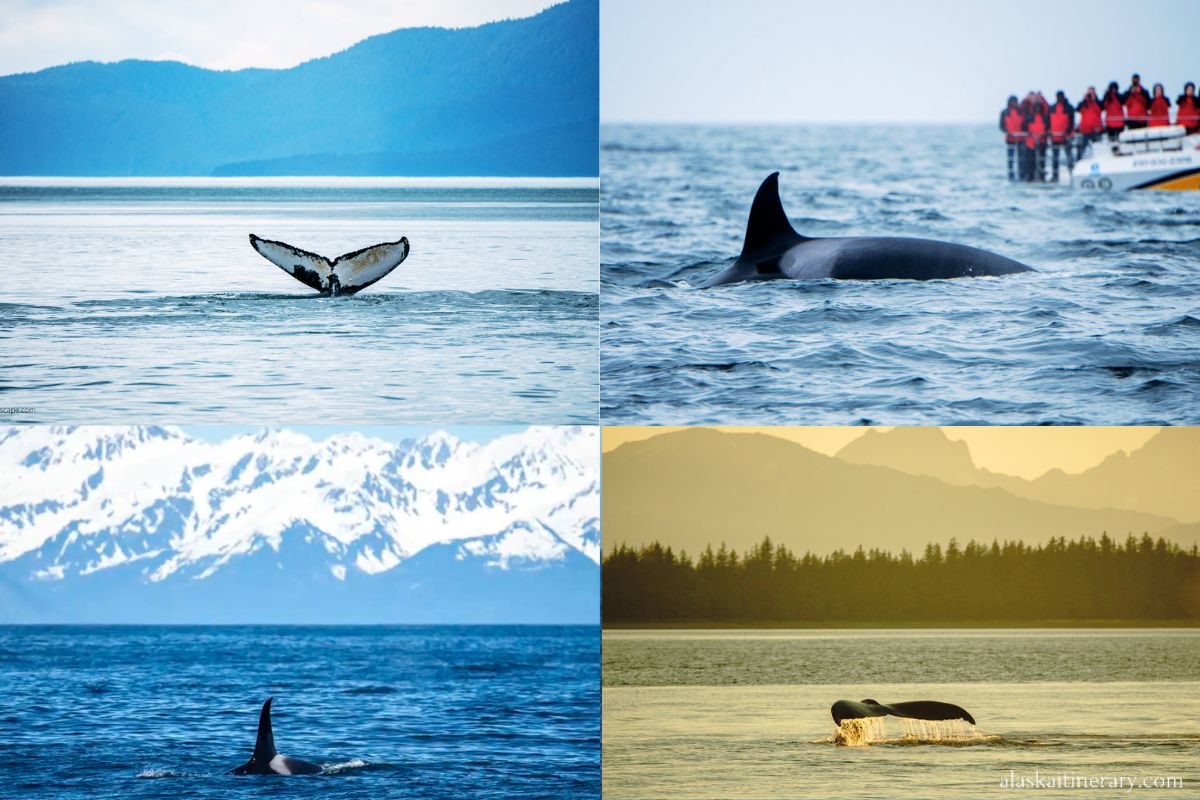
Whale Watching in Alaska – Our Experiences
Whale watching has been a priority on nearly every Alaska trip we’ve taken. Over the years, we’ve seen whales from cruise ships, small wildlife boats, national park waters, and even from shore. Each experience was different, shaped by weather, location, and timing.
We’ve watched humpback whales surface repeatedly near Juneau, followed orcas through the deep fjords of Kenai Fjords National Park, or Prince William Sound, and spotted whales so close to shore at Icy Strait Point or in Sitka that binoculars felt optional.
Some days were calm and sunny. Others came with fog, rain, and rough water. That contrast is part of the Alaska experience.
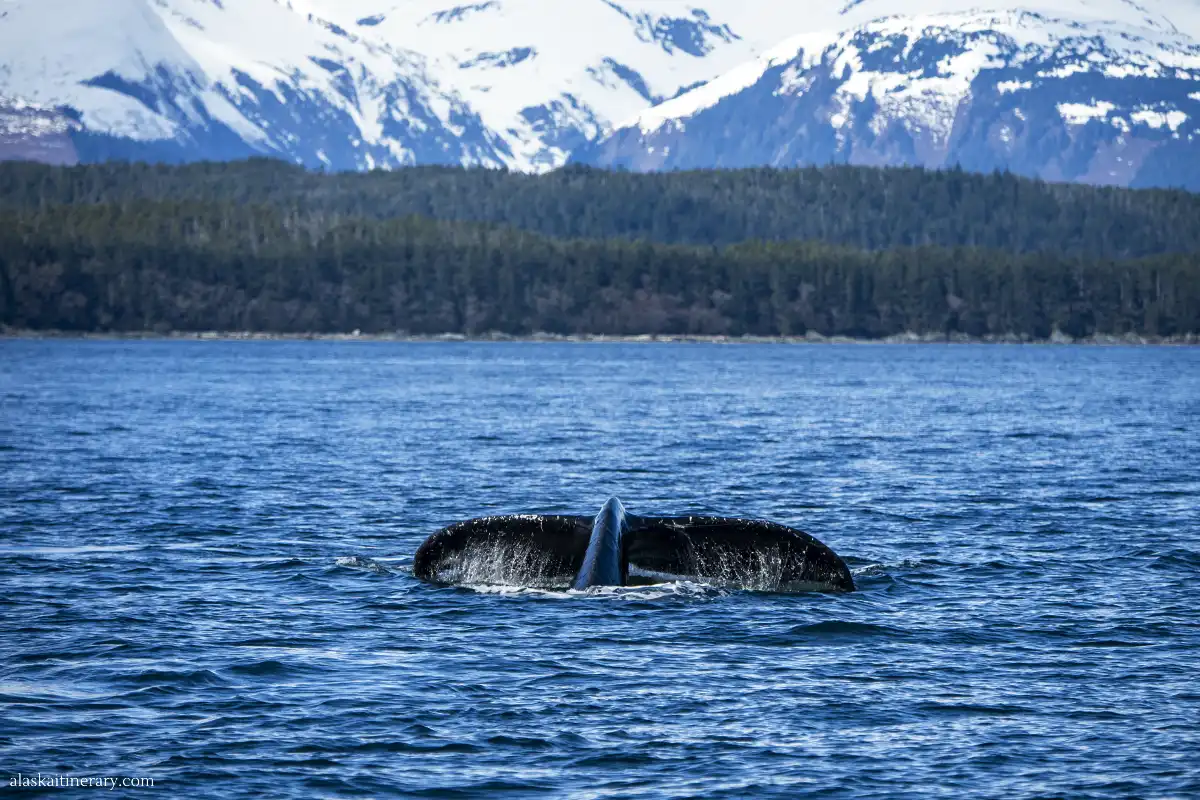
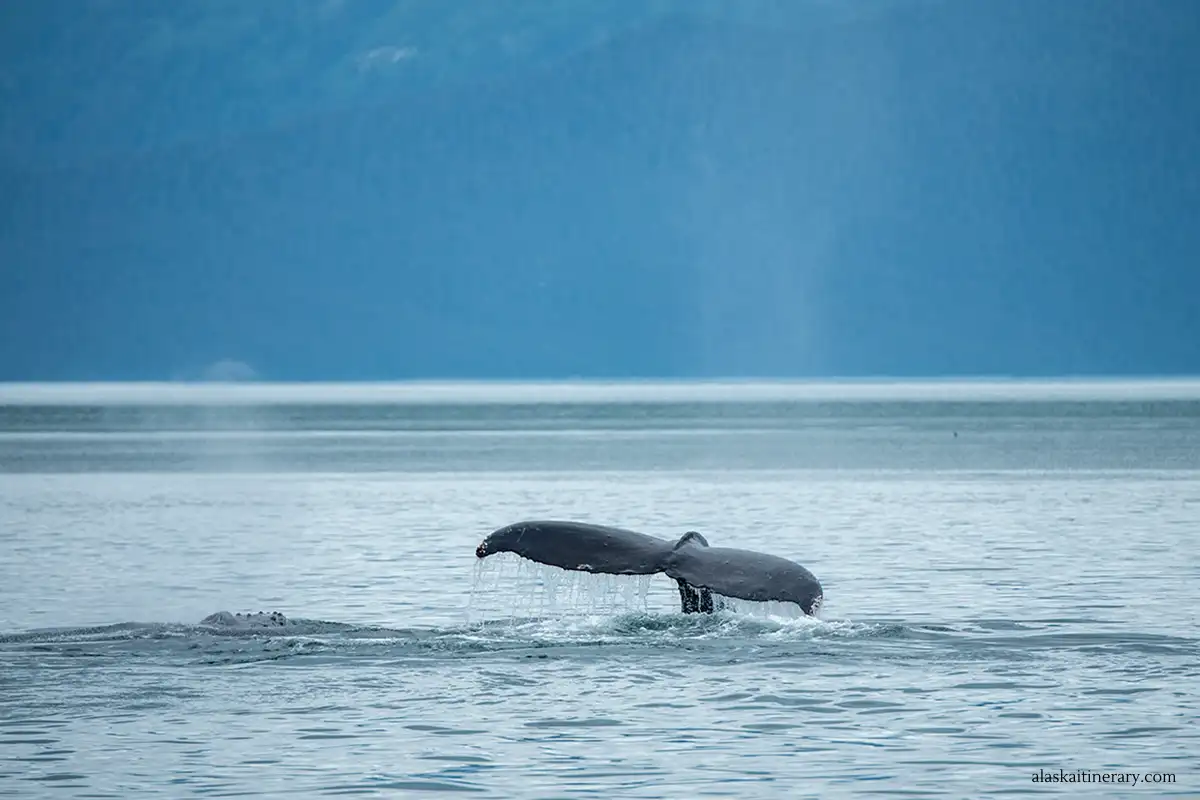
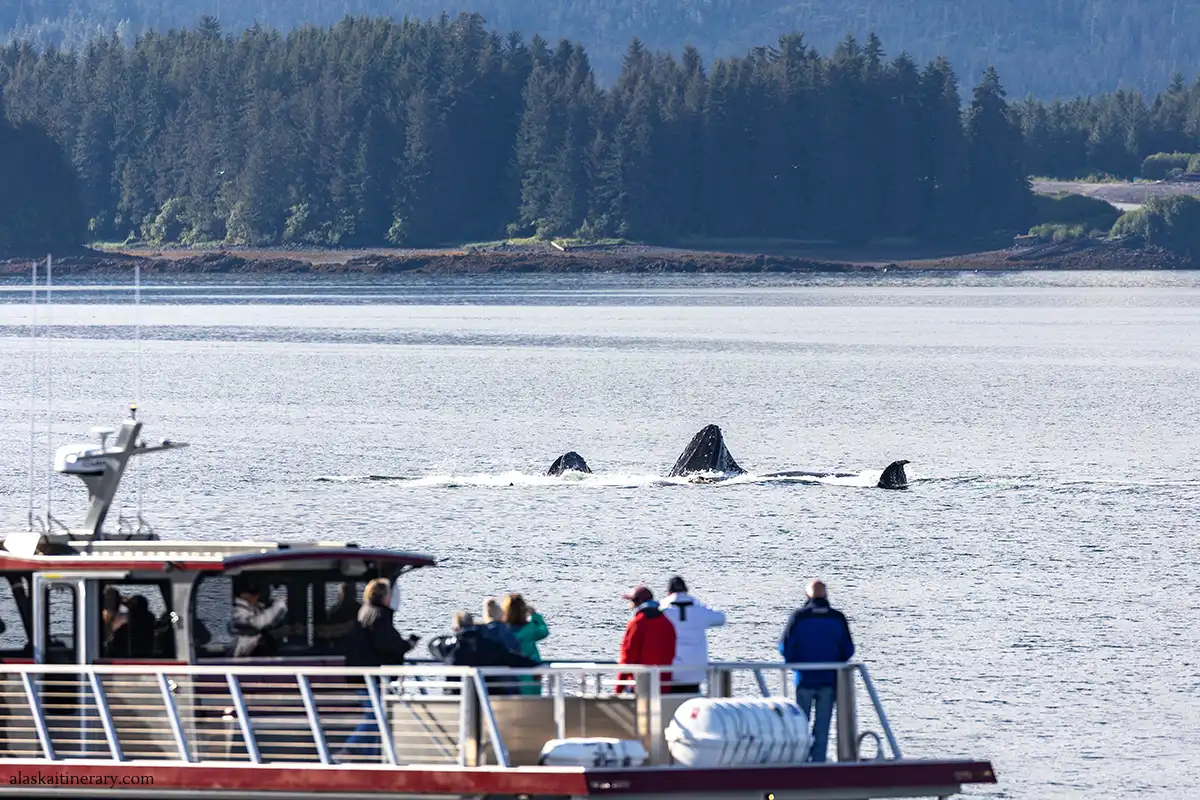
Not every outing brought dramatic breaches. In fact, those moments are rare. Most of the time, whale watching means spotting powerful tail flukes, tall spouts rising above the water, and slow, deliberate movements just below the surface. Those quieter encounters often felt the most special.
We’ve also learned that location matters more than luck. Certain areas consistently produce better sightings, while others depend heavily on conditions. Timing matters just as much. Visiting the right place a few weeks too early or too late can change the entire experience.
Agnes’ Advice: In this article, we focus on the best places and seasons for whale watching in Alaska, but if you’re looking for a specific tour, you might also like my article Best Alaska Whale Watching Tours Across the State, featuring tours we personally experienced and confidently recommend.
Whale watching highlights Alaska’s rich marine life and plays a major role in many Alaska wildlife experiences.

Why Alaska Is One of the Best Places in the World for Whale Watching
Alaska is one of the top whale watching destinations on the planet, and the numbers back it up.
At least 11 whale species have been documented in Alaska waters. Five of them are commonly seen during summer:
- humpback whales
- gray whales
- minke whales
- fin whales
- killer whales (orcas)
Some regions see whales in exceptional numbers. For example, more than 500 humpback whales return each summer to Southeast Alaska alone to feed. Gray whales migrate past Alaska in even larger numbers. Their annual migration includes over 20,000 individuals, making it one of the longest mammal migrations on Earth.
The reason whales gather here is food. Alaska’s cold, nutrient-rich waters support massive plankton blooms. Long summer daylight — up to 20 hours per day — fuels the marine food chain. That attracts herring, salmon, and krill. Whales follow.
Geography also plays a major role. Alaska has over 33,000 miles of coastline, more than all other U.S. states combined. Deep fjords, narrow passages, and protected bays concentrate whales close to shore. In many places, whales feed just offshore, not far from towns and harbors.
Alaska is also a seasonal feeding ground, not just a migration corridor. From May through September, whales actively feed, breach, and surface frequently. That makes sightings more predictable and longer-lasting than in many other destinations.
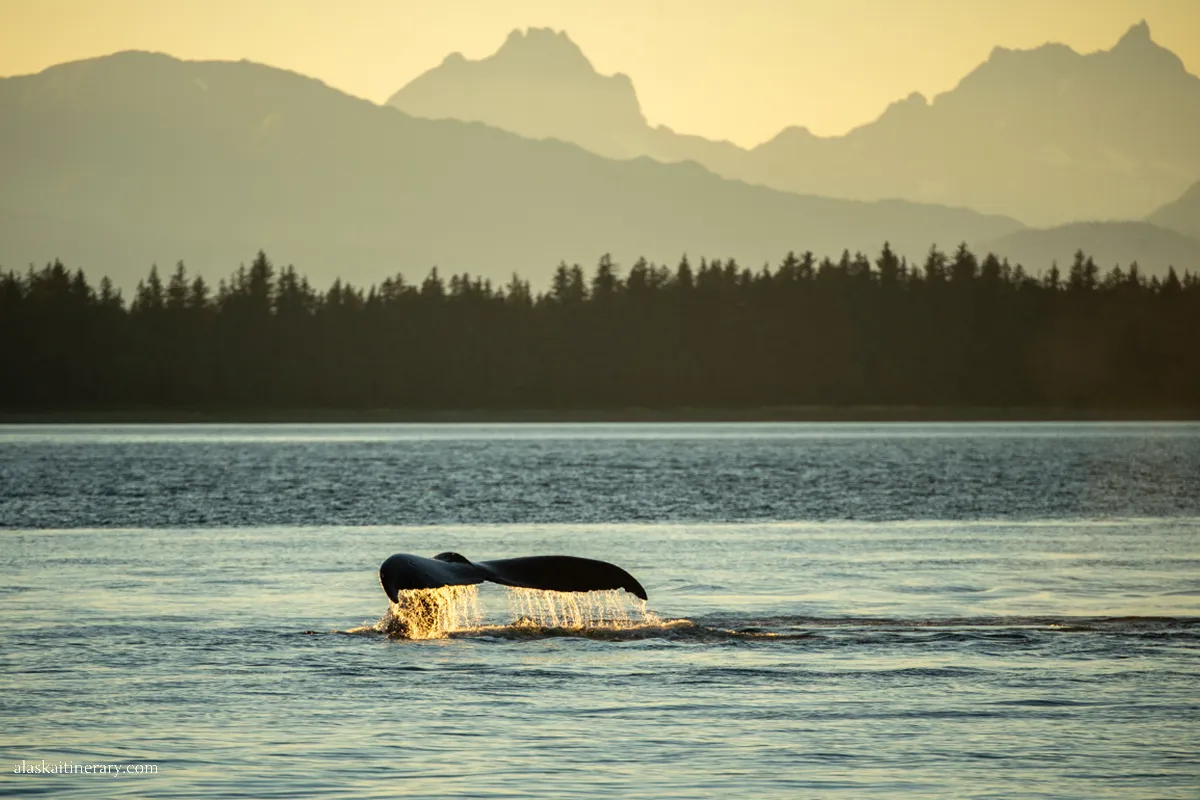
We’ve watched whales in several parts of the world. Alaska still feels different. The encounters are frequent, the settings are wild, and the behavior you see — bubble-net feeding, tail slaps, long dives — is often unforgettable.
If you want reliable whale sightings, multiple species, and dramatic scenery, Alaska truly stands in a league of its own.
Whale Species You Can See in Alaska
Alaska is one of the few places in the world where you can see multiple whale species in one trip. Some are common and easy to spot. Others are rarer but still possible with luck and timing. Here are the whale species most often seen in Alaska waters.
Humpback Whales
Humpback whales are the stars of Alaska whale watching. They arrive in late spring and stay through early fall.
- Most sightings happen from May to September
- Adults reach 45–50 feet in length
- Known for breaching, tail slaps, and bubble-net feeding
Southeast Alaska and Prince William Sound are especially strong areas for humpback sightings. In summer, many individuals return to the same feeding grounds year after year.
Gray Whales
The gray whales follow one of the longest migrations of any mammal on Earth.
- Annual migration includes 20,000+ whales
- They pass Alaska during spring and fall
- Some remain in Alaska all summer to feed
Gray whales are often seen closer to shore. In certain areas, they can even be spotted from beaches or coastal trails.
Killer Whales (Orcas)
Orcas are not technically whales, but they are part of the dolphin family. Alaska is one of the best places to see them in the wild.
- Two main types are present: resident and transient
- Seen from May through October
- Travel in pods and are highly social
Sightings are less predictable than humpbacks, but when they happen, they are unforgettable.

Minke Whales
Minke whales are smaller and more elusive.
- Usually seen alone or in pairs
- Appear as quick, low surfacing blows
- Most common in summer months
They are harder to spot, but experienced captains often recognize their behavior patterns.
Fin Whales
Fin whales are the second-largest animals on Earth.
- Can reach 70–80 feet in length
- Fast swimmers with tall, powerful blows
- Sightings are less common but increasing
They are most often seen in deeper offshore waters.
Rare but Possible Sightings
With luck, you may also encounter:
- blue whales
- sei whales
- sperm whales
These sightings are uncommon, but they do happen, especially during longer offshore trips. Seeing even one whale species in the wild is special. Seeing several in Alaska during one season is what makes this place extraordinary.
Next, we’ll look at the best places in Alaska for whale watching and what makes each region unique.

Best Places in Alaska for Whale Watching
Alaska offers many whale watching locations, but not all places are equal. Some areas are major feeding grounds with consistent sightings. Others offer occasional or opportunistic encounters. Below are the best and most reliable places, starting with Alaska’s national parks.
Glacier Bay National Park
Glacier Bay National Park is located in Southeast Alaska, along the northern Gulf of Alaska. It sits west of Juneau and north of Icy Strait Point, within a vast protected coastal wilderness of fjords, glaciers, and open marine waters.
How to Get There
Glacier Bay is not accessible by road. Travel options include:
- Cruise ships sailing into Glacier Bay (the most common way)
- Small-ship cruises with permitted access
- Flight to Gustavus, then access via Bartlett Cove
- Glacier Bay day boat departing from Bartlett Cove (seasonal)
Private vessels and tour operators must have special permits to enter the park.
Best Time for Whale Watching
Best Time for Whale Watching in Glacier Bay is June through August. This is the peak feeding season, when whales spend extended time inside the bay.
Whale Species Commonly Seen
- humpback whales
- killer whales (orcas)
Humpbacks are by far the most frequently observed species in Glacier Bay.
Why This Location Is Special for Whale Watching
Glacier Bay is one of Alaska’s most important protected whale feeding grounds. Cold, nutrient-rich waters support abundant krill and fish, which attract humpback whales every summer. Many individuals return to the bay year after year.
Strict regulations limit vessel traffic, reduce noise, and protect marine life. As a result, whale behavior here feels natural and undisturbed. Whales are often seen feeding, breaching, and surfacing near tidewater glaciers, creating one of the most dramatic whale watching settings in Alaska.
How Whales Are Usually Seen Here
Most visitors see whales:
- from cruise ships during a full-day visit inside the park
- aboard the Glacier Bay day boat
- from permitted small vessels
Shore sightings near Bartlett Cove are possible but unpredictable.
Who This Location Is Best For
Glacier Bay National Park is best for:
- cruise travelers
- travelers seeking a wilderness-focused experience
- visitors interested in protected ecosystems
- photographers who want whales with glacier backdrops
Glacier Bay is not ideal for travelers looking for short, independent whale tours, but it offers one of the most pristine and memorable whale watching experiences in Alaska.

Kenai Fjords National Park
Kenai Fjords National Park is located in Southcentral Alaska, along the northern Gulf of Alaska. The park begins just outside the coastal town of Seward, about 125 miles south of Anchorage on the Kenai Peninsula.
How to Get There
Kenai Fjords National Park is not accessible by road beyond Exit Glacier. Most of the park is reached by water.
Travel options include:
- Driving from Anchorage to Seward (about 3 hours)
- Alaska Railroad from Anchorage to Seward
- Kenai Fjords boat tours departing from Seward (the primary way to see whales)
- Private charters and permitted small vessels
Seward is the main and most practical base for visiting the park.
Best Time for Whale Watching
- May through August
Peak sightings usually occur from June to late August, when feeding activity is strongest.
Whale Species Commonly Seen
- humpback whales
- killer whales (orcas)
- fin whales
Minke whales are occasionally seen, but less frequently.
Why This Location Is Special for Whale Watching
Kenai Fjords National Park sits at the meeting point of deep fjords and the open Gulf of Alaska. Cold, nutrient-rich waters flow in from the continental shelf, creating excellent feeding conditions for whales.
This is one of the best places in Alaska to see fin whales, the second-largest animals on Earth. The combination of whales, tidewater glaciers, and massive seabird colonies makes this area especially impressive.
Because whales are actively feeding here, sightings often last longer and include surface behaviors such as tail slaps and repeated dives.
How Whales Are Usually Seen Here
Whales are almost always seen from:
- half-day or full-day boat tours from Seward
- longer wildlife and glacier cruises within the park
Shore-based whale watching is not realistic in Kenai Fjords due to steep terrain and limited coastal access.
Who This Location Is Best For
Kenai Fjords National Park is best for:
- travelers who want whales and glaciers in one trip
- visitors staying in Seward or Anchorage
- wildlife-focused travelers willing to spend a full day on the water
- people interested in seeing larger whale species
- cruise passengers starting or ending their cruise in Seward
Kenai Fjords is ideal for travelers who want a high-impact, scenery-rich whale watching experience, rather than a short or casual outing.
Agnes’ Advice: If Kenai Fjords is on your itinerary, you can check available whale watching tours and schedules here.

Juneau
Juneau is located in Southeast Alaska, along the Inside Passage, between steep coastal mountains and deep marine channels. It sits west of the Coast Mountains and faces some of the richest whale feeding waters in the region.
How to Get There
Juneau is not connected to the road system.
Travel options include:
- Flights from Anchorage, Seattle, and other Alaska hubs
- Alaska Marine Highway ferry
- Cruise ships sailing the Inside Passage
Most whale watching tours depart directly from downtown Juneau or nearby harbors, making access very easy once you arrive.
Best Time for Whale Watching
- May through September
Peak activity usually occurs from June to August, when feeding behavior is most intense.
Whale Species Commonly Seen
- humpback whales
- killer whales (orcas)
- minke whales
Humpbacks are seen consistently throughout the summer. Orcas appear less frequently but are spotted every season.
Why This Location Is Special for Whale Watching
Juneau sits next to some of the most productive feeding grounds in Southeast Alaska. Nutrient-rich waters, strong tidal currents, and deep channels create ideal conditions for whales to feed close to shore.
This is one of the best places in Alaska to observe bubble-net feeding, a cooperative hunting technique used by humpback whales. Because whales feed repeatedly in the same areas, sightings are often long and behavior-rich.
In many cases, whales are spotted within minutes of leaving the harbor, which is rare even by Alaska standards.
How Whales Are Usually Seen Here
Whales are most commonly seen:
- shore excursions
- on half-day whale watching tours
- during combined wildlife cruises
- occasionally from shore in calm conditions (unpredictable)
Tours are short compared to other regions, making Juneau ideal for travelers with limited time.
Who This Location Is Best For
Juneau is best for:
- cruise travelers with limited port time (one day in Juneau)
- first-time whale watchers
- travelers who want very high sighting reliability
- visitors who prefer shorter boat trips
Juneau offers some of the most consistent and accessible whale watching in Alaska, with a strong chance of close, memorable encounters even on a brief visit.
Agnes’ Advice: Travelers visiting Juneau can explore current whale watching tour options through this link.
Icy Strait Point / Hoonah
Icy Strait Point and the town of Hoonah are located in Southeast Alaska, along Icy Strait, west of Juneau and east of Glacier Bay National Park. This narrow marine corridor connects rich feeding waters of the Inside Passage with the open Gulf of Alaska.
How to Get There
Hoonah is not connected to the road system.
Travel options include:
- Cruise ships docking at Icy Strait Point
- Flights from Juneau to Hoonah Airport
- Small boats or charters from nearby communities
Most whale watching tours depart directly from Icy Strait Point, which was designed specifically for cruise visitors.
Best Time for Whale Watching
- June through August
This period offers the most consistent sightings and longer feeding encounters.
Whale Species Commonly Seen
- humpback whales
- killer whales (orcas)
Humpback whales are extremely common here during summer. Orcas are seen regularly, especially later in the season.
Why This Location Is Special for Whale Watching
Icy Strait is one of the most productive whale feeding corridors in Southeast Alaska. Strong tidal currents push nutrient-rich water through the strait, concentrating fish and plankton.
Because of this, whales often feed very close to shore, sometimes just minutes from the harbor. Encounters here are often long and calm, with whales surfacing repeatedly in the same area.
This region is also less developed than larger ports, which means fewer boats and less marine traffic.
How Whales Are Usually Seen Here
Whales are most commonly seen:
- shore excursions
- on half-day whale watching tours departing from Icy Strait Point
- on small-group boats that focus solely on whales
Shore sightings are possible but not guaranteed.
Who This Location Is Best For
Icy Strait Point and Hoonah are best for:
- cruise travelers with only one day in Icy Strait Point
- travelers who want fewer crowds
- people looking for longer whale encounters
- visitors interested in a quieter, more natural setting
This area consistently ranks among the highest-success whale watching locations in Alaska, especially for humpback whales.
Agnes’ Advice: If you’re visiting Icy Strait Point/Hoonah and want to see current whale watching tours, you can browse available options here.

Sitka
Sitka is located in Southeast Alaska on the outer coast of Baranof Island, facing the open Pacific Ocean. Unlike most Inside Passage ports, Sitka sits on the west side of the Alexander Archipelago, where deep ocean waters meet the coastline.
How to Get There
Sitka is not connected to the road system. Travel options include:
- Flights from Anchorage, Juneau, and Seattle
- Alaska Marine Highway ferry
- Cruise ships
Most whale watching tours depart from Sitka Harbor and nearby marinas.
Best Time for Whale Watching
- May through September
The most reliable sightings usually occur from June to August, when feeding activity peaks.
Whale Species Commonly Seen
- humpback whales
- killer whales (orcas)
- grey whales
Minke whales are occasionally seen, but less frequently than in Inside Passage waters.
Why This Location Is Special for Whale Watching
Sitka’s biggest advantage is its open-ocean location. Deep Pacific waters lie very close to shore, creating excellent feeding conditions for whales without the need to travel far offshore.
Because Sitka is outside the sheltered Inside Passage, whales here are often feeding in more dynamic conditions. Orca sightings tend to be more frequent than in many other Southeast Alaska ports, particularly transient orcas following prey along the outer coast.
This region feels wilder and less controlled than classic Inside Passage routes, which many experienced travelers appreciate.
How Whales Are Usually Seen Here
Whales are most commonly seen:
- on half-day boat tours departing from Sitka
- during open-ocean wildlife cruises
Shore-based whale watching is rare and unpredictable due to the rugged coastline and limited access points.
Who This Location Is Best For
Sitka is best for:
- cruise passengers who have only one day in Sitka
- travelers who have already visited Inside Passage ports
- visitors interested in open-ocean wildlife encounters
- travelers hoping to see orcas
- people who prefer fewer ships and a less commercial feel
Sitka offers a different kind of whale watching experience—less sheltered, more ocean-driven, and especially appealing to travelers looking for something beyond the typical Inside Passage route.

Prince William Sound (Whittier / Valdez)
Prince William Sound is located in Southcentral Alaska, along the northern Gulf of Alaska. It stretches east of the Kenai Peninsula and south of the Chugach Mountains, forming a vast network of deep fjords, sheltered passages, and hundreds of islands.
How to Get There
There are two main access points, each offering a different travel style Whittier and Valdez.
Whittier
- About 60 miles southeast of Anchorage
- Reached by car via the Anton Anderson Memorial Tunnel
- The most convenient option for travelers based in Anchorage
Valdez
- About 300 miles east of Anchorage
- Reached by car via the Richardson Highway
- Requires a longer drive but offers a more remote experience
Both towns serve as departure points for whale watching and wildlife cruises.
Best Time for Whale Watching
- June through September
Peak feeding activity usually occurs from late June through August.
Whale Species Commonly Seen
- humpback whales
- killer whales (orcas)
Occasional sightings of minke whales are reported, but humpbacks and orcas are the primary species.
Whale Species Commonly Seen
- humpback whales
- killer whales (orcas)
Occasional sightings of minke whales are reported, but humpbacks and orcas are the primary species.
How Whales Are Usually Seen Here
Whales are most commonly seen:
- on half-day or full-day glacier and wildlife cruises departing from Whittier
- on longer wildlife and glacier cruises from Valdez
- occasionally during kayaking trips (at safe distances)
Shore-based whale watching is rare due to the scale of the sound.
Who This Location Is Best For
Prince William Sound is best for:
- travelers staying in Anchorage or driving Alaska’s road system
- people who prefer calmer waters
- visitors seeking fewer crowds
- travelers interested in longer whale encounters
Prince William Sound often surprises travelers. It is less famous than Southeast Alaska, but for many people, it becomes one of the most relaxed and rewarding whale watching experiences in the state.
Seward / Resurrection Bay
Seward is located in Southcentral Alaska on the Kenai Peninsula, about 125 miles south of Anchorage. Resurrection Bay opens directly into the northern Gulf of Alaska and forms the marine approach to Kenai Fjords National Park. Resurrection Bay is a solid choice for travelers with motion sickness. The bay is sheltered and typically calmer than the open Gulf of Alaska, which helps reduce rough conditions, especially early in the trip.
How to Get There
Seward is fully accessible by land and rail.
Travel options include:
- Driving from Anchorage via the Seward Highway (about 2.5–3 hours)
- Alaska Railroad from Anchorage
- Cruise ships that begin or end in Seward
Most whale watching and glacier cruises depart directly from Seward Harbor and spend significant time in Resurrection Bay.
Best Time for Whale Watching
- May through August
Sightings increase in June and July, when feeding activity peaks.
Whale Species Commonly Seen
- humpback whales
- killer whales (orcas)
- occasional fin whales
Minke whales are seen less frequently in the bay but do appear in the broader area.
Why This Location Is Special for Whale Watching
Resurrection Bay is a productive feeding area on its own, not just a passage to Kenai Fjords. Deep water lies close to shore, and strong tidal currents concentrate fish and plankton.
Whales often begin feeding inside the bay, which means sightings sometimes occur early in the trip, before boats reach open waters or glaciers. This makes Seward a strong option even for shorter cruises.
Because Resurrection Bay is more sheltered than the open Gulf, conditions are often calmer, which improves comfort and visibility.
How Whales Are Usually Seen Here
Whales are most commonly seen:
- on half-day wildlife cruises
- on full-day glacier and wildlife cruises
- during longer offshore tours that continue into Kenai Fjords
Shore-based whale watching is very limited due to steep terrain.
Who This Location Is Best For
Seward and Resurrection Bay are best for:
- road trip travelers
- visitors combining whale watching with glaciers
- people starting or ending an Alaska cruise
- travelers who want flexibility in tour length
Focusing on Resurrection Bay keeps this section accurate and avoids repeating Kenai Fjords details. It also helps readers understand where whale encounters actually happen near Seward.
Agnes’ Advice: For those spending time in Seward, this page shows available whale watching tours and departure options.

Kodiak Island
Kodiak Island is located in Southcentral Alaska, off the southern coast of the Alaska Peninsula, facing the Gulf of Alaska. It is the second-largest island in the United States and sits along major marine feeding routes.
How to Get There
Kodiak Island is not connected to the road system.
Travel options include:
- Flights from Anchorage to Kodiak (year-round)
- Alaska Marine Highway ferry (seasonal and weather-dependent)
- Cruise ships that include Kodiak as a port of call
Most whale watching tours depart from the city of Kodiak’s harbor.
Best Time for Whale Watching
- June through August
Summer offers the most consistent sightings, with peak feeding activity in July and early August.
Whale Species Commonly Seen
- humpback whales
- killer whales (orcas)
- gray whales
Occasional sightings of minke whales are reported, but they are less common.
Why This Location Is Special for Whale Watching
Kodiak Island sits near deep offshore waters where nutrient-rich currents from the Gulf of Alaska support strong marine food chains. This makes the area an important seasonal feeding ground for whales.
Compared to Southeast Alaska, Kodiak feels more remote and less crowded. Boat traffic is lighter, and encounters often feel less rushed. Whales are frequently seen feeding rather than traveling, which allows for longer observation periods when conditions are good.
Kodiak’s location also increases the chance of seeing orcas, especially transient pods moving along the coast.
How Whales Are Usually Seen Here
Whales are most commonly seen:
- on half-day or full-day wildlife cruises
- during fishing charters that encounter whales along the way
- on small-group boat tours focused on marine wildlife
Shore-based whale watching is rare due to distance and terrain.
Who This Location Is Best For
Kodiak Island is best for:
- travelers looking for a more remote Alaska experience
- repeat Alaska visitors
- wildlife-focused travelers
- visitors combining whale watching with fishing or hiking
Kodiak Island is not the easiest place to reach, but for travelers who make the effort, it offers a raw, less commercial whale watching experience that feels distinctly different from Southeast Alaska or Kenai Fjords.

Optional / Opportunistic Whale Watching Locations
These places do see whales, but sightings are unpredictable. They work best as bonus encounters, not primary whale watching destinations.
Homer / Katchemak Bay
- Located on the Kenai Peninsula, about 220 miles south of Anchorage
- Occasional humpback and orca sightings during summer
- Most sightings happen on fishing or Katchemak Bay wildlife cruises
Homer is not a reliable whale watching base. Sightings should be treated as a bonus.
Anchorage / Turnagain Arm (Belugas)
- Turnagain Arm lies south of Anchorage along Cook Inlet
- Beluga whales appear seasonally, mainly June–July
- Viewing is from shore and highly tide-dependent
This is one of the few places in Alaska to see whales from land, but timing and luck are critical.
Skagway
- Northern Inside Passage port
- Occasional humpback and orca sightings
- Whales are usually far from town
Skagway is better known for land excursions than whale watching.
Ketchikan
- Southern Southeast Alaska port
- Infrequent humpback and orca sightings
- Less consistent than Juneau or Icy Strait Point
Whale watching in Ketchikan is possible, but not dependable.
Agnes’ Advice: If whales are your priority, focus on national parks and core regions. In these locations, whale sightings are a pleasant surprise, not a guarantee.

Alaska Whale Watching Season
The best months for whale watching in Alaska are June through August. This is when whales are fully settled into their summer feeding grounds and sightings are the most consistent. During these months, whales are actively feeding, surfacing often, and staying in the same areas for long periods.
Below is a clear breakdown of what to expect by month.
April
- Very early start to the season
- First humpback whales begin arriving in Southeast Alaska
- Sightings are possible but limited
April works only for early travelers. It’s not ideal for a whale-focused trip.
May
- Whale watching season officially begins
- Humpback whale numbers increase quickly
- Gray whales migrate past parts of Alaska
May offers improving sightings with fewer crowds.
June
- One of the best months overall
- Whales settle into feeding areas
- Long daylight improves visibility
June is excellent across Southeast Alaska, Kenai Fjords, and Prince William Sound.
July
- Peak whale watching month
- Daily sightings are common
- High chance of surface activity like breaching and tail slaps
July offers the most reliable encounters statewide.
August
- Still excellent for whale watching
- Whales feed heavily before migration
- Orca sightings often increase later in the month
August remains a top choice, especially for longer tours.
September
- Season begins to slow
- Some whales start migrating south
- Sightings still possible, especially early in the month
September works best early in the month, with fewer visitors.
Best Months Summary
- Best overall: June and July
- Best balance of crowds and sightings: June and August
- Shoulder season: May and early September

Whale Watching Tips: What to Expect, What to Pack, and Common Mistakes
Whale watching in Alaska is incredible, but expectations matter. These practical tips help you enjoy the experience, stay comfortable, and avoid common mistakes.
What to Expect on a Whale Watching Trip
- Sightings are never guaranteed, even in peak season
- Most tours last 3 to 8 hours, depending on location
- Whales often surface repeatedly while feeding, then disappear for longer dives
- Weather and sea conditions can change quickly
Patience is part of the experience. Some days bring nonstop action. Other days require waiting.
What to Pack for Whale Watching in Alaska
Alaska weather can feel colder on the water, even in summer.
Pack:
- warm, windproof jacket
- layers, including a fleece or insulated layer
- hat and gloves, even in July
- sunglasses for glare
- sunscreen (sun reflects off water and ice)
- binoculars (optional, but helpful)
If you’re prone to motion sickness, take medication before boarding.


Common Whale Watching Mistakes
Avoid these:
- expecting whales to be visible nonstop
- underestimating cold and wind on the water
- choosing the shortest tour to save money
- skipping motion sickness prep
Longer tours usually offer better chances and less rushed encounters.
Cruise vs Land-Based Whale Watching
- Cruise ship viewing works well in places like Glacier Bay
- Dedicated whale tours offer closer and longer encounters
- Land-based trips give more flexibility in timing and location
Both can be excellent. It depends on your itinerary.
Agnes’ Advice: Choose your location carefully, go during peak season, dress warmer than you think, and stay patient. When whales appear, the wait is always worth it.

Final Thoughts
Whale watching in Alaska is not about chasing a single moment. It’s about being in the right place at the right time, surrounded by wild landscapes and cold, productive waters.
If whales are your priority, focus on June through August and choose locations known for feeding activity, not just migration routes. National parks like Glacier Bay and Kenai Fjords offer protected habitats. Places like Juneau, Icy Strait Point, and Prince William Sound provide some of the most reliable sightings.
Plan carefully, dress for cold conditions, and allow enough time on the water. Whales move on their own schedule, and the best encounters often happen when you least expect them.
Alaska remains one of the few places in the world where seeing whales still feels wild, unscripted, and deeply memorable.
Do You Like It? Pin It For Later!



We would certainly want to plan to go whale watching when we get to Alaska. Good to know we can get some good tours in different spots. Definitely a great reason to plan a visit during the peak whale months. I like the idea of going with a smaller tour operator. Seeing bubble-net feeding is still something we have missed on other whale watching trips. You sure did get some amazing whale experiences. I am definitely keeping this comprehensive guide!
This is one of my dream activities to do one day. I had no idea about Alaska being a top place for whale watching but it makes a lot of sense! I like the sound of the less busier places like Seward and Icy Strait Point. But I understand the cons of each one and this is so helpful to know. I would love to see Beluga whales in their packs one day, I’ve only seen it in documentaries and they are beautiful!
Alaska has been on my list of dream destinations forever! Actually, there are two reasons that hold me back: Numero uno is it’s said to be very expensive. And the other one is that I’m always dragged toward warm destinations and have therefore missed out on many amazing places in colder areas. Seeing all these mesmerizing pictures and reading your info pushes me closer and closer toward biting the bullet and just buying a ticket to Alaska 🙂
This is a great post for people who want to whale-watching in Alaska. You give options with the pros and cons of each of the tours. I like places that are not too crowded, but at the same time, it’s not easy to reach. Juneau sounds like a good choice with the possibility to watch orcas and minke whales, too. I hope I can make it there.
Having witnessed these majestic creatures during their migration along Australia’s Pacific coast, I can certainly appreciate the appeal of whale watching. Your blogs always provide such useful and interesting insights, and Alaska looks like another incredible place to experience these magnificent animals.
Wow! This is incredible! I sounds so interesting to go whale watching. Seems to so many places to watch from. And so many places to see. Love the details. You make me want to plan a trip. Thanks.
Wow! This is incredible! I sounds so interesting to go whale watching. Seems to so many places to watch from. And so many places to see. Love the details. You make me want to plan a trip. Thanks.
Whale watching in Alaska is definitely high on my bucket list. Would love to do it in several places and then go for the longer tours. We’ve been whale watching in Iceland and Canada and loved it both times. You have to be patient indeed, but just being on the sea/ocean/river is already worth it. And there’s usually other wildlife to admire. c
Such a great breakdown of the best spots to see whales in Alaska. Makes me want to plan a trip up there just to experience it all. Thanks for sharing!
Whale watching is a great reason to visit Alaska. And you have shown so many options and spots for great whale experiences. Nice to see Minke and Fin Wales that we rarely see anywhere else. A sight I never get tired of! Even if it is just spouts in the distance.