
Haunted Alaska: Spooky Stories, Ghost Towns, Legends, and Haunted Places

Alaska’s beauty hides a darker side. Behind the glaciers, mountains, and gold-rush towns are eerie stories that locals still whisper about — strange footsteps in old hotels, lights flickering in abandoned buildings, and voices echoing through empty mines. This isn’t just folklore. Many of these haunted places in Alaska are real locations you can still visit — historic hotels, saloons, theaters, and ghost towns that hold more than memories of the past. In this guide, you’ll find the most famous haunted sites across Alaska, from Anchorage to Skagway, and the legends that make them unforgettable. We’ll also share which spots are open to the public, how to visit them safely, and what’s fact versus fiction.
This article may contain affiliate / compensated links. For full information, please see our disclaimer here.
Why Alaska Has So Many Ghost Stories
Stories, ghost towns, and legends often reflect Alaska’s remoteness and history, which are important realities to understand when planning Alaska travel.
Alaska’s wild beauty also holds a deep sense of mystery. Its long, dark winters, isolated towns, and miles of untouched wilderness have always sparked the imagination. During the Gold Rush era, thousands of people came north chasing fortune. Many never left — their stories, triumphs, and tragedies became part of local legend.
Add to that the state’s mix of Indigenous peoples heritage, Russian influence, and frontier history, and you have the perfect setting for ghost stories. Old mining towns, shipwrecks, and forgotten settlements still stand as reminders of lives cut short and dreams lost in the cold. It’s no surprise locals say Alaska never really lets go of its past.
Today, those tales live on — whispered in hotel hallways, shared on stormy nights, and echoed through Alaska’s abandoned buildings and empty valleys. If you like spooky stories and haunted places, keep reading to add a few to your Alaska bucket list.
How to Use This Guide (Respect, Safety, Access)
Before you grab a flashlight and head out, a quick note — Alaska’s haunted sites are more than spooky stories. Many are historic landmarks, private properties, or working businesses, and they deserve respect.
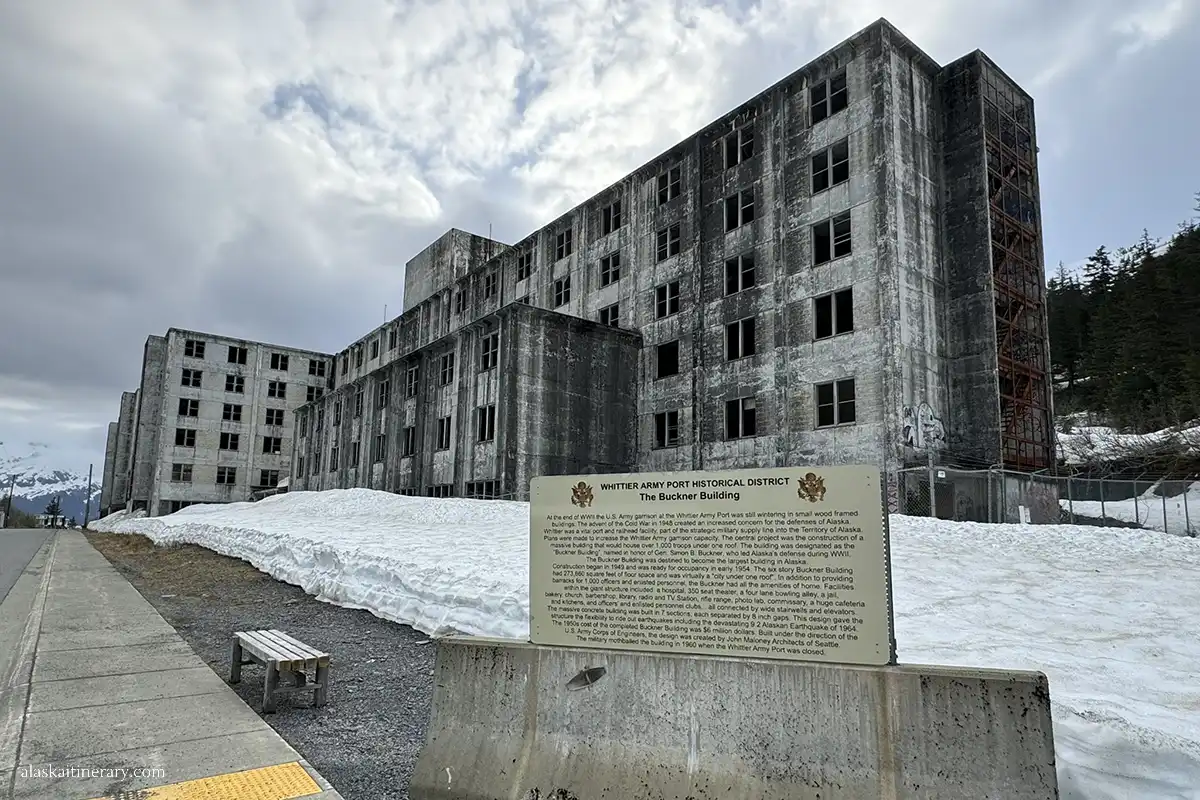
Always follow posted rules and signs. If a place is closed or marked “no trespassing,” stay out. Some abandoned buildings, like the old Buckner Building in Whittier, or Igloo City near Cantweel, are structurally unsafe and off-limits.
When you visit historic hotels, saloons, or museums, remember they are real workplaces and homes. Ask before taking photos indoors, and support local owners by grabbing a drink, joining a tour, or staying the night.
If you’re traveling on your own, research current access before you go. Some ghost towns and remote areas are only reachable by small plane, boat, or rough gravel roads.
This guide will help you explore Alaska’s haunted side safely — showing you which places are open to the public, which require a guide, and which are best enjoyed as legends.

Haunted Hotels You Can Actually Sleep In
If you love ghost stories but prefer a warm bed to a dark forest, Alaska has several historic hotels where guests have reported strange encounters. These are real places where you can book a night — and maybe meet one of Alaska’s most famous ghosts.
Historic Anchorage Hotel
This Anchorage downtown landmark is Alaska’s best-known haunted hotel. Guests and staff have long reported flickering lights, mysterious footsteps, and the image of a man in uniform.
Many believe it’s the spirit of Police Chief Jack Sturgus, found dead near the hotel in 1921. Each October, the hotel even keeps a “ghost log” where visitors record strange events during their stay.
Tip: The hotel is fully operational year-round, within walking distance of Anchorage museums and restaurants. Book it ahead if you want to sleep in.
Alaskan Hotel & Bar – Juneau
Opened in 1913, this ornate hotel is one of the oldest in Alaska — and one of the most haunted. Room 315 is said to host the ghost of a woman waiting for her sailor husband who never returned. Guests have reported doors opening on their own and faint music in the hallways.
Tip: Located in downtown Juneau, it’s easy to visit during a day cruise stop. Even if you don’t stay overnight, the bar downstairs welcomes curious travelers and ghost enthusiasts.
Golden North Hotel – Skagway (Currently Closed to Overnight Guests)
One of Alaska’s most famous ghost legends, “Mary,” or Scary Mary, is said to haunt Room 23 of the historic Golden North Hotel. She allegedly died waiting for her fiancé to return from a gold-mining expedition.
Although the building no longer operates as a hotel, it remains a popular stop on walking tours through Skagway’s historic district.
Tip: You can still photograph the building and hear Mary’s story on the Red Onion Saloon’s ghost or brothel tours nearby. If you have only one day in Skagway – it’s a must.
Westmark Fairbanks Hotel
Modern and comfortable, this Fairbanks hotel still hides a few ghost stories in its halls. Staff have mentioned unexplained sounds and objects moving in rooms on the upper floors.
Though less historic than Anchorage or Juneau’s hotels, it’s a popular base for northern lights travelers who enjoy a good mystery with their midnight show. Book your room in advance if you want to spend the night.
These hotels offer comfort, character, and a touch of the supernatural. Whether you believe the stories or not, each stay connects you to a century of Alaska history — and a few unexplained moments that guests still talk about today.
Silverbow Inn – Juneau
Built in 1914, the Silverbow Inn is a cozy downtown bed-and-breakfast with a calm atmosphere — but a few guests have reported odd experiences. Staff and visitors have mentioned footsteps in empty hallways, faint music, and shadows passing by upstairs windows. Some local ghost tours include it among Juneau’s haunted landmarks.
Tip: It’s in the heart of downtown, walking distance from the Alaskan Hotel — another well-known haunted stay — making it an easy stop for curious travelers.

Historic Saloons & Museums with a Spooky Reputation
Alaska’s Gold Rush history left more than old photographs and mining tools behind. Many historic saloons and museums still carry stories of the past — and some say, a few lingering spirits.
These places mix lively atmosphere with a ghostly twist, making them fun (and a little eerie) stops on your Alaska trip.
Red Onion Saloon & Brothel Museum – Skagway
Once a bustling Gold Rush saloon and brothel, the Red Onion Saloon opened in 1898 and remains one of Skagway’s most famous landmarks. Today, it’s a bar and museum filled with antiques, old photos, and… according to many, one resident ghost named Lydia.
Staff and visitors report footsteps upstairs, perfume in empty rooms, and shadows moving along the balcony. The museum offers guided Brothel Tours that share both the building’s colorful history and the stories of its ghostly past.
Tip: The Red Onion is open seasonally during the Alaska cruise season (May to September). You can visit the bar for lunch or drinks, then join a short tour to learn about Lydia’s story.
Talkeetna Historical Society Museum – Talkeetna
Housed in an original 1917 schoolhouse, this small museum in Talkeetna tells the story of Alaska’s early bush pilots, mountaineers, and settlers.
Some volunteers have mentioned cold spots and faint voices when locking up for the night. It’s likely just the creaks of an old log building — or maybe not.
Tip: It’s located right in downtown Talkeetna and open most of the year, but check out current hours on the official website before you go.
Alaska State Museum – Juneau
This modern museum showcases Alaska’s art, Indigenous heritage, and natural history — but staff have long whispered about mysterious sounds and flickering lights after hours. The building stands on what was once an early settlement site, adding another layer of history to its halls.
Tip: It’s open year-round and worth visiting even if you’re not hunting ghosts. The museum’s exhibits bring Alaska’s past to life, from ancient artifacts to shipwreck relics.

Theaters, Campuses, and Public Buildings
Not all haunted places in Alaska hide in old hotels or ghost towns. Some are in the middle of daily life — schools, theaters, and office buildings where people still work or study.
Begich Towers – Whittier
Nearly the entire town of Whittier lives in one huge building, the Begich Towers. Built in the 1950s, it once housed soldiers and still feels like a piece of Cold War history. Locals talk about hearing footsteps in empty hallways or doors opening on quiet nights.
Tip: You can visit Whittier easily from Anchorage by car or train. Just remember, it’s a real residential building — be respectful of residents.

Wendy Williamson Auditorium – University of Alaska Anchorage
This modern theater may not look spooky, but it’s one of Anchorage’s most talked-about haunted spots. Staff and students have reported flickering lights, voices backstage, and equipment moving on its own. Performers say they’ve seen a woman in white walking behind the curtain — only to find no one there.
Tip: The theater sometimes hosts Halloween events or ghost talks. Check the university calendar if you visit in fall.
Pioneer Park – Fairbanks
What looks like a cheerful family park has a few eerie corners. Some visitors say they’ve seen shadows or felt cold air while walking past old cabins moved here from mining towns. The Pioneer Park’s century-old buildings come from across Interior Alaska, each carrying its own bit of history.
Tip: Visit during the day for museums and attractions. At dusk, it takes on a whole new atmosphere.
City Hall – Seward
Local workers have shared stories about lights switching on at night and doors unlocking themselves in Seward’s old City Hall building, now home to the Seward Community Library and Museum. The structure survived the 1964 earthquake, and some believe its past still lingers in the walls.
Tip: It’s open to the public, so stop by for the exhibits — and maybe a chill or two.

Alaska Ghost Towns & Abandoned Places (What’s Real, What’s Safe)
Alaska has dozens of ghost towns scattered across its vast wilderness. Some are open for visitors and full of history. Others are remote, unstable, or completely off-limits. Before heading out, always check access rules and local conditions — many sites are managed by the National Park Service or require guided visits.
Kennecott Mines National Historic Landmark – Wrangell–St. Elias National Park
Kennecott is one of Alaska’s most fascinating ghost towns — and one of the few you can safely explore. Once a booming copper mine in the early 1900s, it was abandoned in 1938 when the ore ran out.
Today, the red wooden buildings stand beneath towering peaks and glaciers. Some visitors say they’ve felt cold drafts or seen shadows move through the old mill building, even on calm days.
Tip: The National Park Service has restored many structures, and guided history and mill tours are available in summer. You can drive to McCarthy and walk or shuttle the last short stretch to Kennecott.

Portlock (Nantiinaq Legend) – Kenai Peninsula
Few Alaska ghost stories are as chilling as Portlock’s. The settlement, once a busy cannery village, was mysteriously abandoned in the 1940s after residents reported strange figures in the woods and unexplained disappearances. Some blamed a giant creature called Nantiinaq — part of Native folklore.
Tip: Portlock is only accessible by boat or floatplane and has no remaining services. It’s more a story to read about than a place to visit.
Flat (Iditarod Mining District) – Remote Interior
Near the old Iditarod gold-mining area, the town of Flat was once home to more than 2,000 residents. When gold ran out, everyone left — leaving behind cabins, mining gear, and a silent airstrip. It’s one of the most intact ghost towns in Alaska, though reaching it requires a charter flight.
Tip: Access is limited to experienced explorers or guided trips arranged from Anchorage or McGrath. Don’t attempt to go alone.
Whittier – The Buckner Building
The Buckner Building was built in the 1950s as a self-contained military complex. Locals call it the “City Under One Roof.” It’s now abandoned and badly deteriorated, with ghost stories about footsteps, cold spots, and laughter echoing through empty halls.
Tip: The Buckner Building is closed to the public and extremely unsafe. Do not enter. You can safely view it from a distance during a day trip to Whittier.
Igloo City – Near Cantwell
Built in the 1970s as a hotel that never opened, Igloo City stands along the Parks Highway near Cantwell. The giant concrete dome was meant to attract travelers heading to Denali but was abandoned mid-construction.
Over the years, it’s become one of Alaska’s most photographed roadside ruins — and a favorite subject of ghost stories. Some travelers claim to see lights inside, though the building has no power.
Tip: The structure is unstable and closed to visitors. You can safely view and photograph it from the highway pullout.

These ghost towns show Alaska’s past frozen in time — gold rush dreams, mining fortunes, and mysterious disappearances. Some are open-air museums. Others belong only to the stories passed down through generations. Visit safely, respect what remains, and remember: in Alaska, silence can tell the loudest stories.
What’s Folklore vs. Documented History?
Ghost stories are part of Alaska’s culture, but not every tale comes from fact. Many legends started as campfire stories or newspaper gossip from the Gold Rush era. Others are tied to real people, places, and events that left behind historic records. Knowing what’s folklore and what’s documented helps travelers appreciate both sides — the myth and the history.
For example, the Historic Anchorage Hotel has police reports and records tied to Chief Jack Sturgus’s mysterious death in 1921 — a true historical event. But sightings of his ghost? That’s where the folklore begins.
At the Red Onion Saloon in Skagway, guides will tell you about Lydia, the spirit of a former madam. While there’s no proof Lydia ever lived there, the saloon’s original layout and 1898 history are very real.
Stories about Portlock (Nantiinaq) and its vanished villagers come from oral accounts shared by locals, but there’s little written evidence from the time. Historians see it as a blend of Native legend and unexplained mystery rather than a documented disappearance.
Kennecott, on the other hand, is thoroughly recorded. Mining company logs, payrolls, and town records show exactly when it boomed and when workers left in 1938. Its ghostly feel comes from silence and decay — not necessarily spirits.
When exploring haunted places in Alaska, treat each story as part of a larger tapestry — some woven from fact, others from imagination. Both reveal something powerful about Alaska’s past: isolation, hardship, and the human desire to explain the unexplainable.
Eerie Alaskan Legends You Should Know
Alaska’s ghost stories go beyond haunted hotels and abandoned mines. The state is filled with eerie legends passed down through generations — stories of mysterious creatures and unexplained disappearances that add another layer of mystery to the Last Frontier.
The Kushtaka – The Shape-Shifting Otter-Men
In Tlingit and Tsimshian folklore, the Kushtaka (meaning “land otter man”) is a creature that can shape-shift between human and otter form. It’s said to mimic cries for help to lure people toward the water — and then transform them into one of its own.
Many coastal communities in Southeast Alaska still share warnings about these trickster spirits, especially near rivers and fjords.
The Hairy Man of Portlock – Alaska’s Bigfoot Story
The Hairy Man legend is tied to the abandoned village of Portlock on the Kenai Peninsula. In the 1940s, residents reportedly fled after a series of violent disappearances and strange footprints appeared near the cannery.
Some claim a large, ape-like creature was responsible — Alaska’s own Bigfoot. While no evidence exists, the legend remains one of Alaska’s most chilling mysteries.
The Alaska Triangle – The Greatest Unsolved Mystery
Roughly stretching between Anchorage, Juneau, and Utqiagvik (Barrow), the Alaska Triangle is known for a high number of unexplained disappearances — planes, hikers, and even whole villages.
Theories range from magnetic anomalies and extreme weather to supernatural portals. While most incidents can be explained by rugged terrain and unpredictable conditions, the mystery keeps drawing curious minds and paranormal enthusiasts north.
Bookable Ghost-Themed Tours & Experiences in Alaska
If you prefer spooky stories with a guide and a warm bed nearby, these ghost-themed experiences let you safely explore Alaska’s haunted side. Many are seasonal, so always check availability and make early reservations.
Red Onion Saloon Ghost & Brothel Tours — Skagway
One of Alaska’s most famous haunted stops. The Red Onion offers guided Brothel & Ghost Tours during the summer cruise season, weaving together tales of Lydia, old-town prostitution, and paranormal reports. Their museum and bar remain open for many cruise-based visitors.
Book in summer; check for evening tour slots.
Anchorage Ghost Walks & City Tours
Anchorage offers occasional ghost walks or history ghost tours, especially around Halloween. These walks cover downtown haunted hotels, old theaters, and lore tied to pioneer Anchorage. Guides often mix historical detail with spooky storytelling.
Tip: Book early for autumn; check local tour calendars or the Alaska ghost walk operators.
Private Hotel Ghost Packages
A few haunted hotels (like the Historic Anchorage Hotel) sometimes offer overnight ghost packages — room, a “ghost log” experience, and special evening stories or light paranormal instruments. These are niche offers and may only run during October or ghost-festival times.
Final Thoughts
Alaska’s haunted side is as wild and mysterious as its landscapes. From creaking hotel hallways in Anchorage to ghostly saloons in Skagway and forgotten mining camps deep in the wilderness, every story reveals another layer of the state’s rugged past.
Some of these tales are built on fact, others on folklore — but each carries the same message: Alaska’s history never really fades. It lingers in the wind, the fog, and the silence between mountains.
Whether you’re exploring haunted hotels, touring ghost towns, or chasing eerie legends like the Kushtaka or the Alaska Triangle, remember to travel with curiosity and respect. These stories connect people to Alaska’s history in ways no museum ever could.
So pack your camera, keep your flashlight close, and maybe leave a light on. In Alaska, even the ghosts have stories to tell.
Do You Like It? Pin It For Later!


The Red Onion Saloon tour in particular sounds like a fun one. Do they have any tours around Halloween too or just in summer?
Wow, this is a chilling and fascinating read! Alaska’s blend of rugged natural beauty and historical depth really gives these haunted places an extra layer of intrigue. I especially enjoyed how the article covers not only the famous spots, but also the lesser-known ones that bring quiet, eerie charm. I loved the information about the Kushtaka folklure.
For someone planning a future trip, this is a goldmine of ideas—nature lovers and ghost story fans alike will find something to sink their teeth into. Thanks for sharing this spooky journey through Alaska’s haunted landscape!
Wow, never thought there’s an article about haunted housed in Alaska, the history in Alaska is pretty cool and unique, so does the haunted houses. I just visited Alaska and it was such a great destination!
When it comes to Alaska I always picture the crazy landscapes and wildlife. However, now that I read about its history, it makes sense that there are also so many haunted places. It would be quite interesting to visit and take a dedicated tour.
Looks like the perfect place for Halloween
Except for the snow. Every halloween there is snow and it’s cold… OHHHHHH, I understand now. its going to be cold and isolated every Halloween.
I had NO idea Alaska had so many haunted places!
What a unique and well written guide! I love folklore and a spooky story, especially this time of the year. 🙂
Oh I can only IMAGINE some of the dark things that have gone on in Alaska, and that’s not even taking into account all of the residential schools and the horrors Indigenous folks have and continue to endure. This is such a great list of spooky attractions (or repulsion depending on your spook tolerance haha) that I’ve never heard of! I also quite enjoyed how you included bits that arose from folklore! As an anthropology major, this is what drives me when I traveling!