
Alaska Cruise Wildlife: What Animals Can You See?

Alaska cruise wildlife sightings can include humpback whales, bald eagles, harbor seals, sea lions, and sea otters. However, the animals you see depend on your route, travel dates, and time spent watching. Some encounters happen right from the ship. Others require an excursion to reach feeding areas, nesting colonies, or salmon streams. A distant whale blow also looks very different from watching whales during a dedicated boat tour. Chris and I have spent years exploring Alaska and photographing its wildlife, both on cruises and on land. We combine mainstream sailings with selected wildlife excursions to make the most of our budget. In this guide, we share what wildlife you might see on Alaska cruise, where to look, and how timing affects your opportunities. We also explain when an excursion is worth considering and how to prepare for viewing from the ship.
This article may contain affiliate / compensated links. For full information, please see our disclaimer here.
Our Experience Watching Wildlife on Alaska Cruises
Chris and I have explored Alaska’s wildlife habitats for years, combining cruises, road trips, and dedicated wildlife outings. We’ve photographed bears in Katmai and Lake Clark national parks and watched wildlife in Denali. Those land experiences differ considerably from viewing animals aboard a large cruise ship.
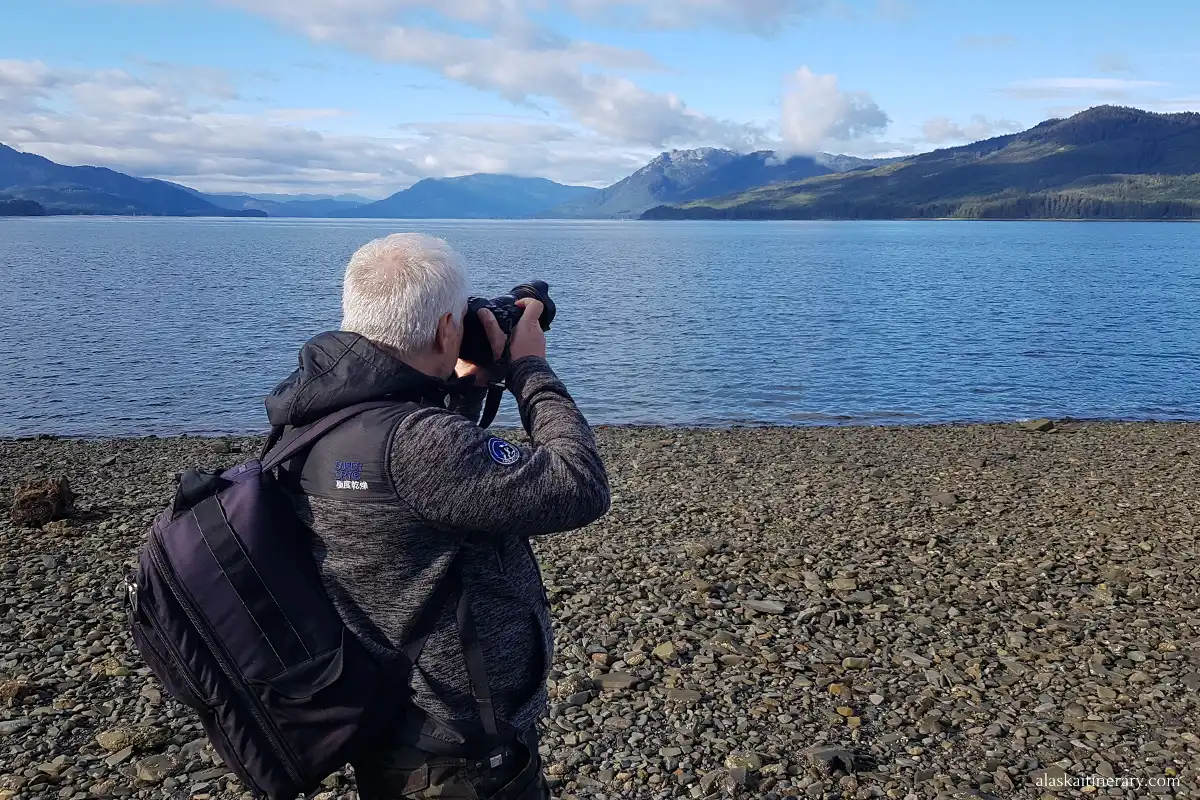
On our Alaska sailings, we spend time scanning the water and shorelines with binoculars and cameras ready. The ship offers viewing opportunities, but distance and brief encounters can make wildlife photography challenging. Seeing an animal does not always mean getting a detailed photograph.
That’s why we combine shipboard viewing with selected excursions. We’ve taken whale-watching trips in Juneau and Icy Strait Point, along with a kayaking excursion in Sitka. At Icy Strait Point, we also enjoyed watching whales from shore. Going out by boat gave us another perspective and more time focused on finding wildlife.
We’ve also included bear-viewing excursions during our Alaska cruises, giving us time in habitats we couldn’t explore from the ship. For us, dedicated whale- and bear-watching outings are worth prioritizing when planning our excursion budget.
We paid for these experiences from our own pockets. Small expedition ships appeal to our wildlife interests, but their prices have exceeded our budget. Instead, we choose mainstream cruises and put some of our savings toward wildlife outings.
Our experiences shape the advice below: enjoy opportunities from the ship, then choose excursions around the animals you most want to see. When planning an Alaska cruise, consider your route, season, and excursion budget together.
What Wildlife Can You See on an Alaska Cruise?
Marine mammals and coastal birds are the main wildlife to watch for on an Alaska cruise. Bears and mountain goats are possible shoreline sightings, but they can be distant. Moose and other inland animals require different expectations.
Here’s a practical overview. These are viewing opportunities, not a checklist every sailing will complete.
| Animal | What to expect from the cruise ship | Where an outing can help |
|---|---|---|
| Humpback whales | Watch for blows, backs, and occasional tails. Encounters can be brief or distant. | Dedicated whale-watching trips from Juneau, Seward or Icy Strait Point. |
| Orcas | Possible along the route, but unpredictable. | Marine wildlife tours provide more time searching suitable waters. |
| Harbor seals | Look on floating ice near glaciers and along sheltered shores. | Smaller boat trips can offer easier viewing at a respectful distance. |
| Steller sea lions | Watch rocky haul-outs, buoys, and surrounding waters. | Whale-watching and coastal wildlife trips may pass resting groups. |
| Sea otters | Small floating shapes can be difficult to identify without binoculars. | Wildlife outings around Sitka, Glacier Bay, and Prince William Sound. |
| Porpoises and dolphins | Fast-moving animals may appear briefly near the ship. | Marine wildlife trips offer additional opportunities, without guarantees. |
| Bald eagles | Scan shoreline trees, beaches, and waterfront structures. | Port walks and guided outings provide time to look more carefully. |
| Puffins | Difficult to identify from a large ship; suitable habitat matters. | Boat trips visiting seabird colonies, including Kenai Fjords outings. |
| Black and brown bears | Occasional distant sightings along suitable shorelines. | Dedicated bear-viewing excursions reach seasonal feeding areas. |
| Mountain goats | Scan steep slopes and cliffs; animals may resemble small white dots. | Guided scenic outings can help with spotting and identification. |
| Moose | An unlikely sighting on a typical Inside Passage sailing. | Suitable mainland outings or a land extension provide better opportunities. |


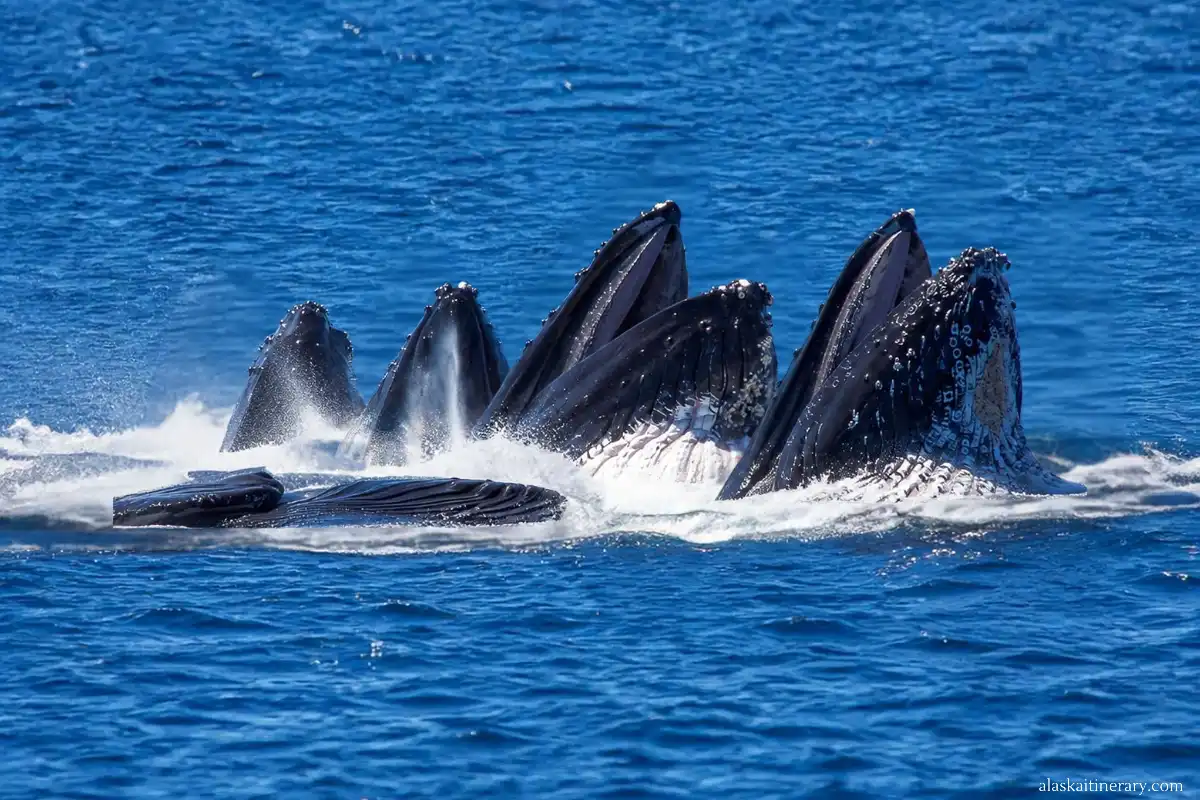
Humpback Whales
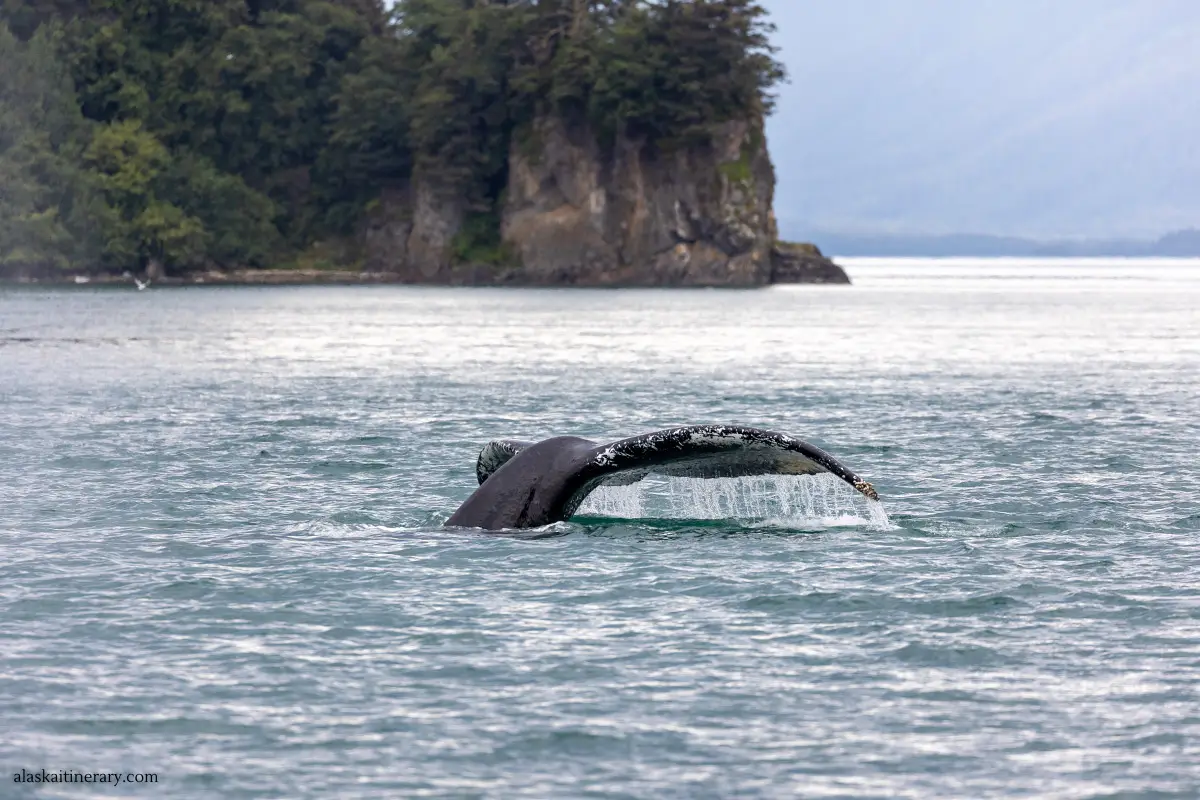
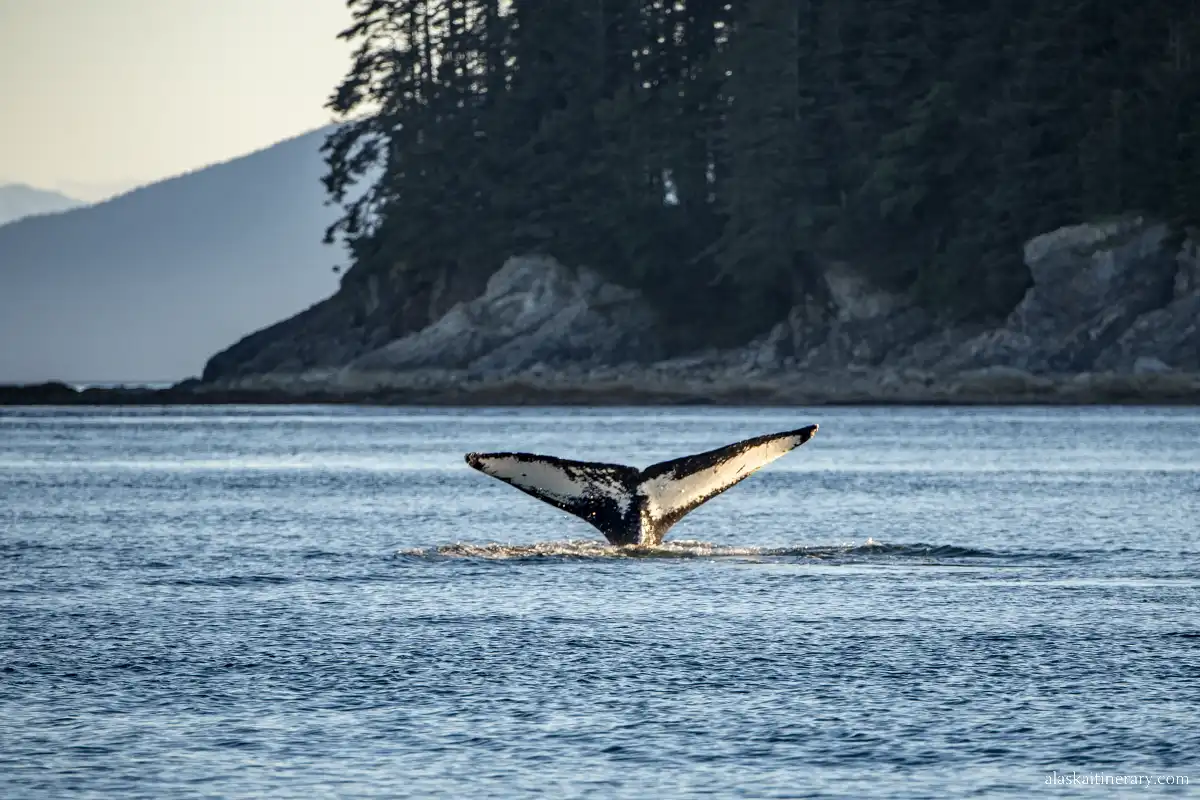
A whale blow may be your first clue that a humpback is nearby. Keep watching that area for its back, dorsal fin, or tail as it dives.
Breaching and tail-slapping are possible, but they should never become the expectation. Sometimes you’ll see several surfacings. Other times, the ship passes before you get another look.
Dedicated whale-watching boats spend time searching feeding areas rather than simply traveling through them.
Where to look: Juneau’s surrounding waters, Icy Strait near Hoonah, Sitka Sound, and Glacier Bay. Kenai Fjords from Seward also offers opportunities before or after a one-way cruise.
Our guide to whale watching on an Alaska cruise explains locations and seasonal considerations.
Orcas
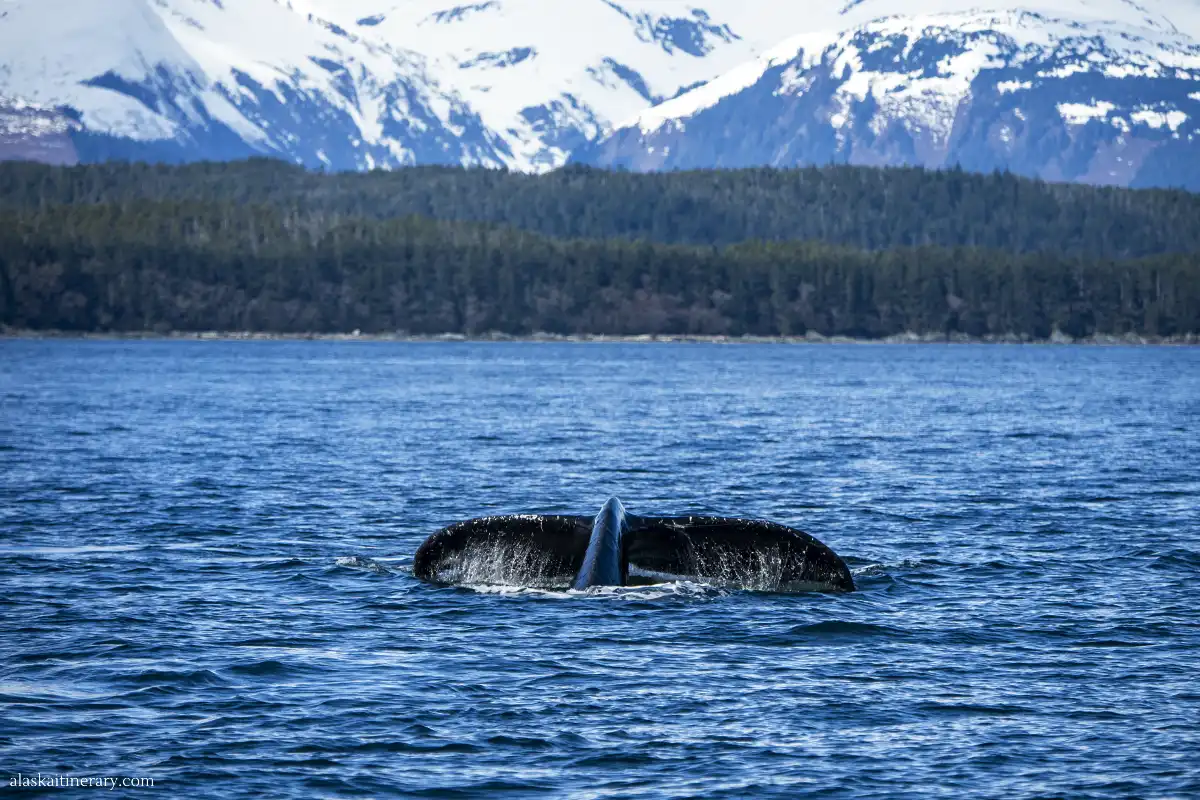
Orcas are another possible encounter along Alaska’s coastal waterways. Look for their contrasting black-and-white markings and prominent dorsal fins.
Treat an orca sighting as a welcome bonus rather than an expected part of every sailing. Booking a general whale-watching excursion does not mean you’ll see orcas specifically.
Where to look: Kenai Fjords from Seward and Prince William Sound from Whittier are worthwhile areas to watch. Orcas also travel through Southeast Alaska’s waterways, but no port or excursion can promise a sighting.

Harbor Seals and Steller Sea Lions
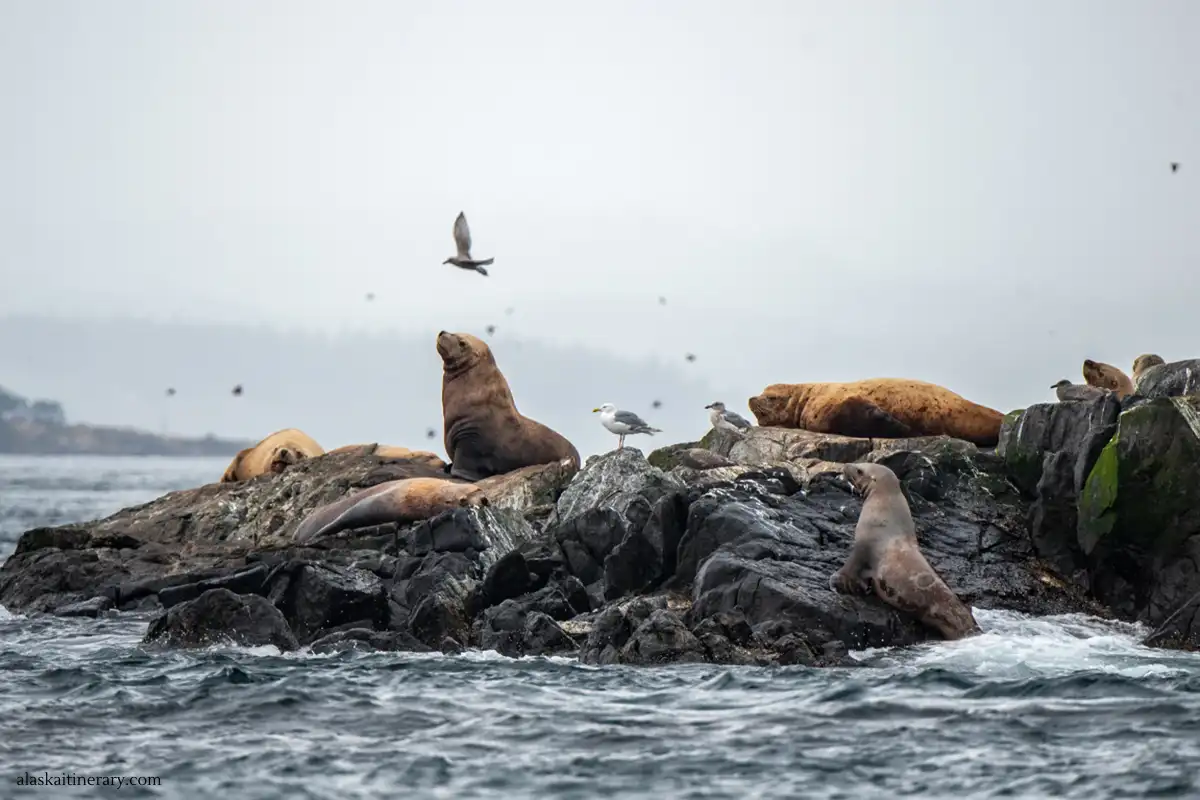
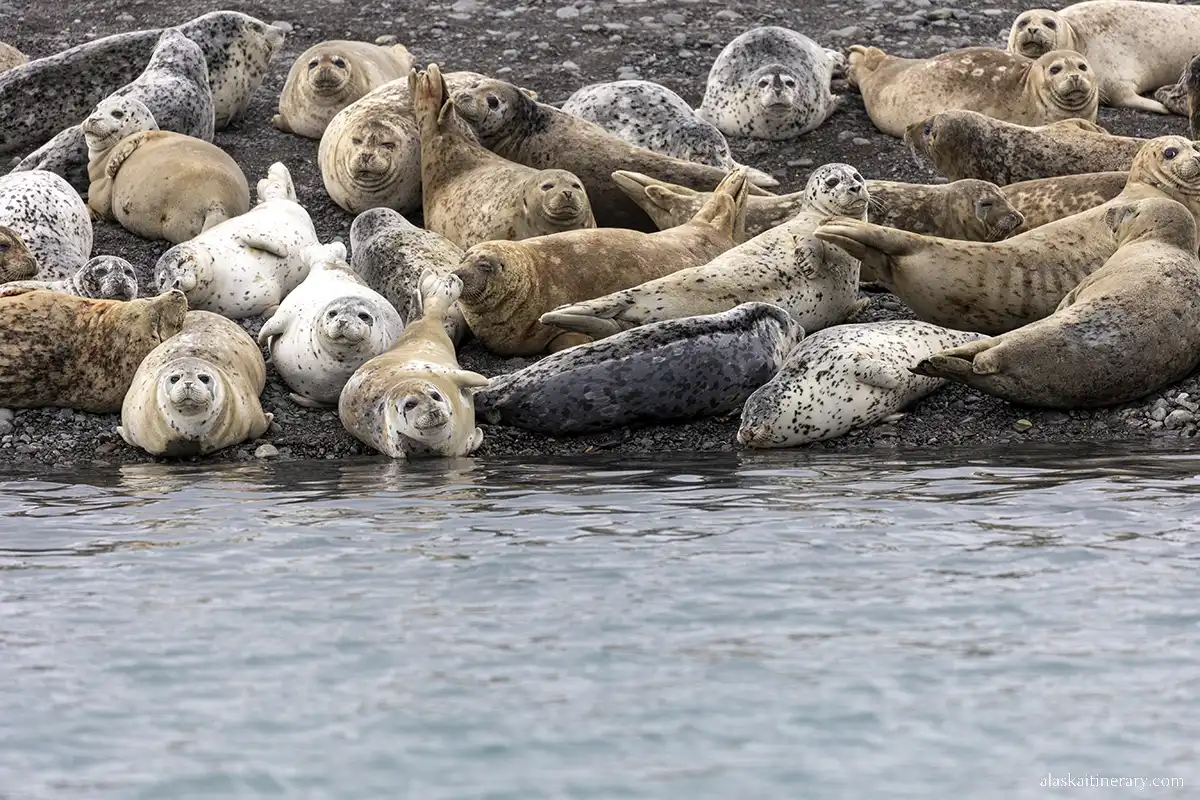
Harbor seals often rest on floating ice near tidewater glaciers. Through binoculars, what initially looks like a dark patch may reveal a resting animal.
Steller sea lions are larger and often gather on rocky haul-outs or navigation structures. Their external ear flaps help distinguish them from seals when you have a clear view.
Scan both the water and resting places. Animals can be easy to miss when your attention stays entirely on the glacier.
Where to look: Scan floating ice for harbor seals in Glacier Bay and near Hubbard Glacier. For Steller sea lions, notable locations include South Marble Island in Glacier Bay and the Chiswell Islands on boat trips from Seward. Your exact route determines which sites you pass.
Sea Otters
Sea otters float on their backs and may gather in groups called rafts. However, from a large ship, individual animals can look surprisingly small.
Look carefully at floating shapes rather than assuming everything is kelp or driftwood. Good pair of binoculars make a substantial difference.
Smaller wildlife boats can provide a lower viewing perspective and more time observing their behavior.
Where to look: Sitka Sound, Glacier Bay, Prince William Sound, and the waters around Kenai Fjords. Dedicated boat outings provide more time to identify animals that can look tiny from a cruise ship.

Porpoises and Dolphins
Porpoises and dolphins sometimes appear during coastal cruising. Dall’s porpoises, for example, have distinctive black-and-white coloring.
These encounters can happen quickly. Watch the water with your eyes first, then raise your binoculars or camera once you locate the animals.
You may have only seconds before they disappear beneath the surface.
Where to look: Watch around Juneau’s Auke Bay, the channels between Sitka and Juneau, and Kenai Fjords. Harbor porpoises and Dall’s porpoises are among the species found in these coastal waters.
Bald Eagles and Other Coastal Birds
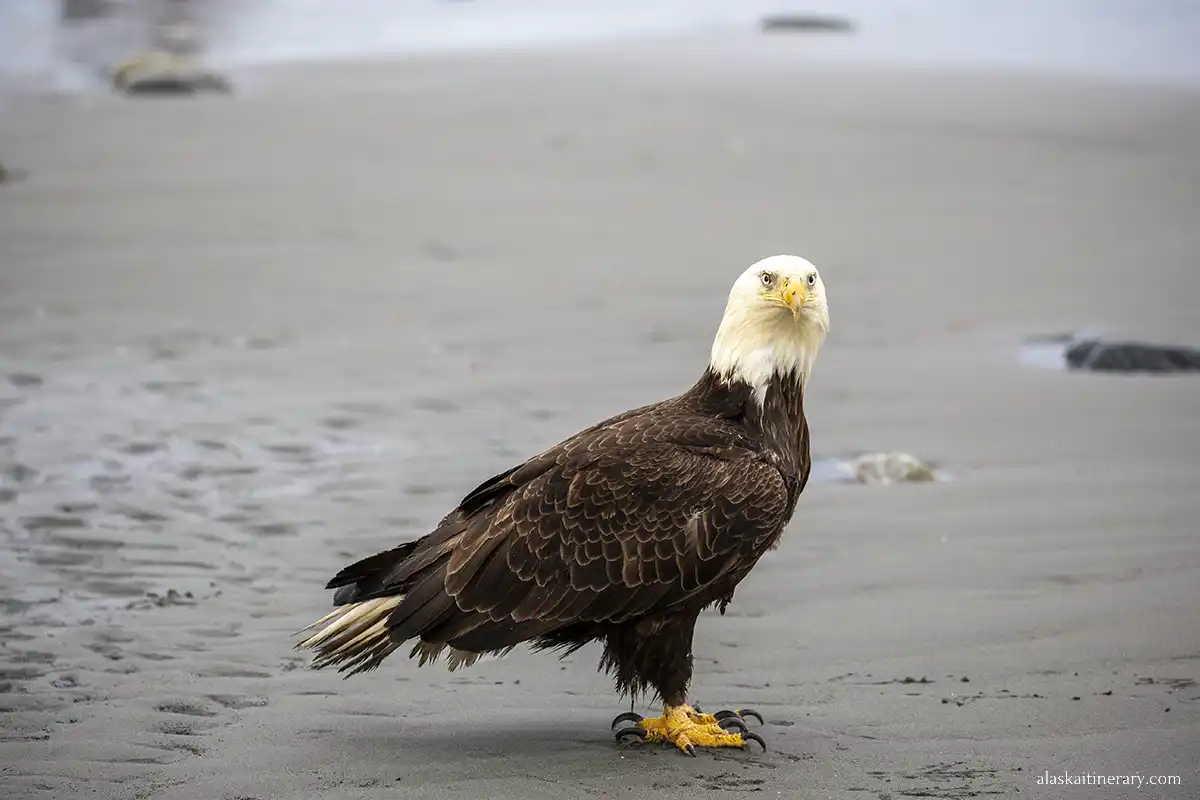
Bald eagles are worth watching for during both scenic cruising and independent port exploring. Scan tall shoreline trees, exposed branches, beaches, and harbor structures.
An adult’s white head can stand out against dark foliage. Younger eagles lack that familiar adult coloring, making identification less obvious.
Also watch for seabirds resting on the water or gathering around rocky islands. You don’t need to identify every species to enjoy the activity.
Where to look: Haines and the Chilkat River area are well-known eagle-viewing destinations. Juneau, Icy Strait Point, Ketchikan and Sitka also offer opportunities around waterfronts and shoreline trees.

Puffins
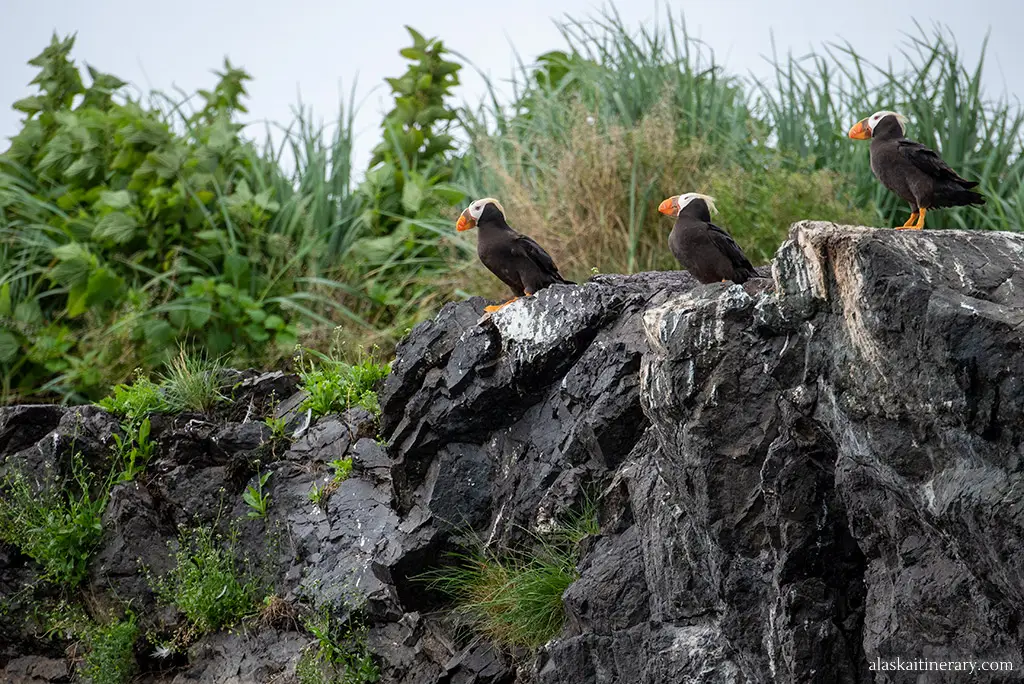
Puffin viewing depends on reaching suitable habitat, not simply sailing in Alaska. These small seabirds can be difficult to identify from a passing cruise ship.
A boat excursion visiting nesting colonies offers a more focused opportunity. Kenai Fjords trips from Seward are one option before or after a cruise. Both horned and tufted puffins nest in Kenai Fjords National Park.
Where to look: Kenai Fjords boat trips from Seward, particularly routes passing the Chiswell Islands, offer access to nesting habitat. Some wildlife trips from Sitka visit the seabird colonies around St. Lazaria Island.
Black Bears and Brown Bears
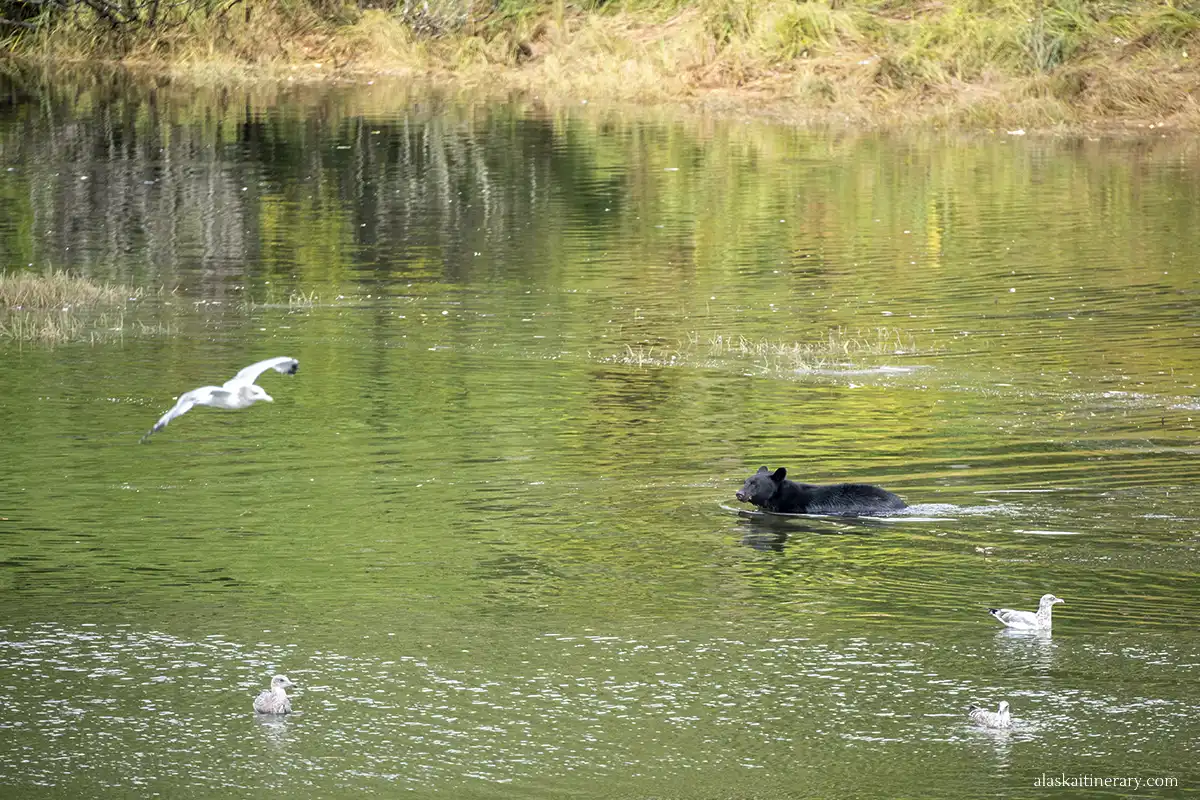
Bears sometimes appear along shorelines during scenic cruising. However, a distant animal can be difficult to distinguish from rocks or vegetation.
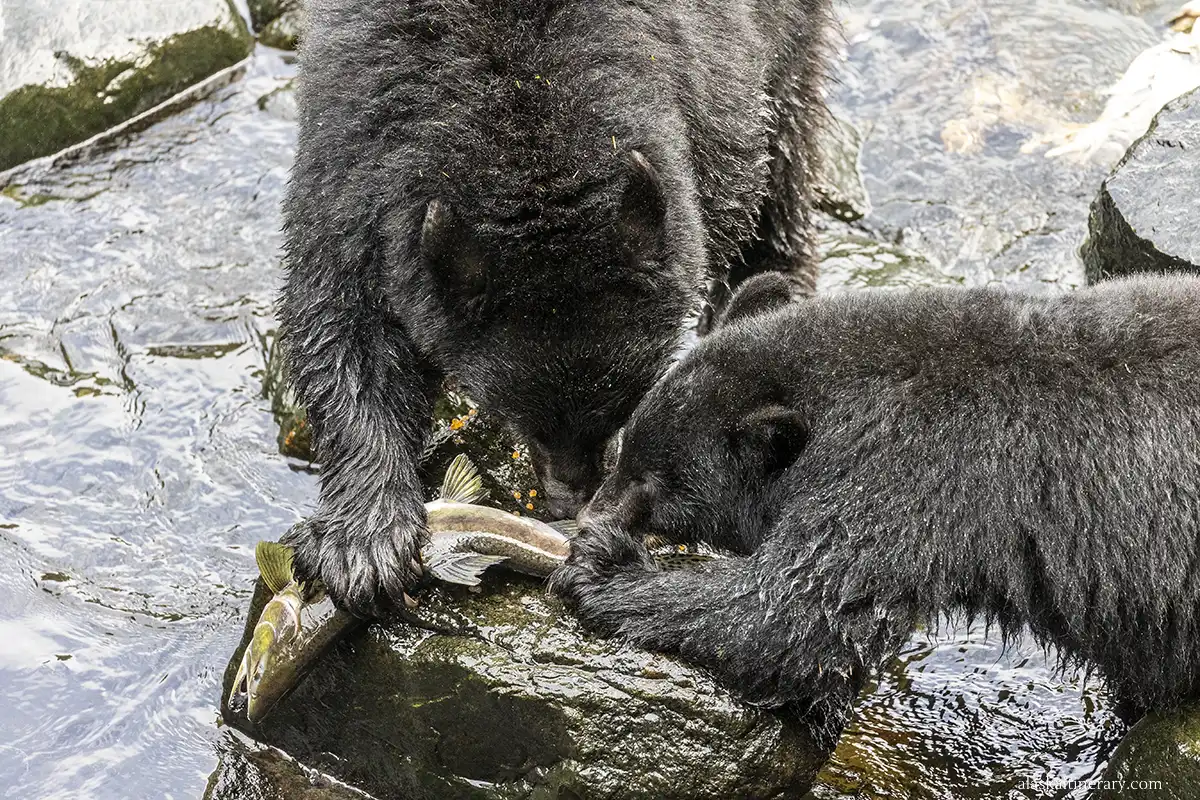
If bears are a priority, consider a dedicated bear-viewing excursion. These outings reach specific habitats, including seasonal salmon streams and managed viewing areas. Timing matters because feeding opportunities vary by location.
Where to look: Consider seasonal black-bear excursions from Ketchikan and brown-bear outings on Chichagof Island from Hoonah. Pack Creek near Juneau is another brown-bear destination. Anan, accessible from Wrangell, is known mainly for black bears, with brown bears seen less frequently. Access and viewing seasons vary by site.
Our guide to bear viewing on an Alaska cruise covers the options in more detail.

Mountain Goats
Watch steep coastal slopes and rocky cliffs for mountain goats. From the ship, they may appear as tiny white shapes against the rock.
Binoculars help you check those shapes for movement. An onboard naturalist or ranger may also point out animals you would otherwise miss.
Glacier Bay provides suitable habitat, but spotting a goat does not guarantee a close or detailed view.
Where to look: Gloomy Knob in Glacier Bay is a notable location for scanning rocky cliffs for mountain goats.
Moose and Other Animals Better Suited to a Land Extension
An Inside Passage cruise should not come with an expectation of seeing moose. They occupy limited areas of Southeast Alaska and are essentially absent from its major islands.
A land extension can create opportunities to look for moose, caribou, and Dall sheep in suitable habitats. These are different experiences from watching coastal wildlife aboard the ship.
Seeing Alaska’s name on your booking does not mean every Alaskan animal lives along your route.
Can You See Wildlife From the Cruise Ship?
Yes—you can spot wildlife directly from an Alaska cruise ship, without booking an excursion. However, animals may be distant, partially submerged, or visible for only a few seconds.
We enjoy watching from the decks, but we treat these encounters as opportunities rather than scheduled attractions.
What Shipboard Wildlife Viewing Is Really Like
A whale sighting might be a blow followed by a curved back. A bear could appear as a moving shape along a distant beach. Mountain goats may look like white dots on a cliff.
Spotting wildlife and seeing detailed behavior are different experiences. Binoculars help, but they cannot remove every limitation of distance, weather, and the ship’s movement.
Large cruise ships follow an itinerary rather than a dedicated wildlife-search route. You generally cannot linger with an animal as you might during a wildlife excursion.
For us, shipboard viewing complements those outings. It gives us additional opportunities while traveling between ports and scenic areas.
How the Ship’s Height Affects Your View
Higher decks provide a broad view of the surrounding water. That can help you notice distant whale blows or activity across a wider area.
However, height also affects your viewing angle. Small animals near the surface may be difficult to identify or photograph clearly.
Lower outdoor decks offer a different perspective when available. We like having access to several viewing areas instead of relying on one location.
There is no single best deck for every encounter. Visibility, obstructions, wind, and the animal’s position all matter.
Where to Look From the Ship
Scan slowly rather than moving your binoculars constantly between unrelated spots.
- Open water: Look for blows, dorsal fins, unusual splashes, and repeated surface movement.
- Floating ice: Check for resting harbor seals.
- Rocky islands and navigation structures: Watch for groups of sea lions.
- Shoreline trees and exposed branches: Look for perched bald eagles.
- Beaches and coastal meadows: Scan for moving animals, including possible bears.
- Steep slopes and cliffs: Use binoculars to investigate small white shapes that could be mountain goats.
Find the general location with your eyes first, then use binoculars for a closer look. This makes locating a moving animal easier.
How to Improve Your Chances
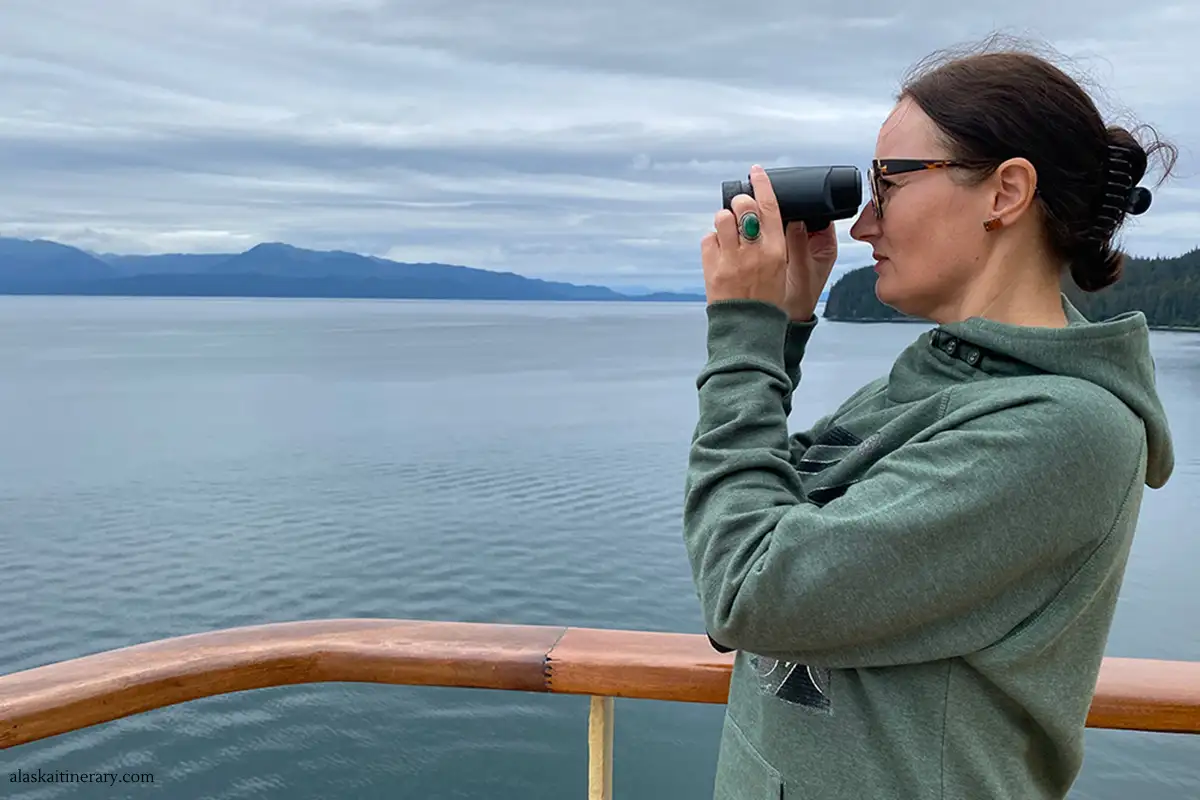
Keep your binoculars somewhere accessible. Leaving them in the cabin means you may miss a brief encounter while retrieving them.
We also keep cameras ready when spending time outside. Still, sometimes we choose to watch rather than struggle for a photograph.
Listen for wildlife announcements and any guidance from onboard naturalists or visiting rangers. Announcements can help you locate animals, but don’t rely on them for every sighting.
When someone spots wildlife, clear directions help. Mention the side of the ship and a nearby landmark instead of simply pointing.
Dress for wind and changing conditions so you can watch comfortably for longer. A sheltered viewing area provides a useful alternative when being outside becomes uncomfortable.
Finally, stay observant throughout the day. Early and late light can suit photography, but wildlife encounters are not limited to those hours.
Do You Need a Balcony for Wildlife Viewing?
No—a balcony is convenient, but public decks and lounges also provide wildlife-viewing opportunities. Chris and I have chosen interior cabins on three Alaska sailings and used shared spaces for our views.
Public decks let us move between different viewpoints. A private balcony offers immediate outdoor access, but its view remains limited to that location.
Indoor lounges provide warmth and shelter. However, window reflections can make photography more difficult, which is one reason we prefer taking pictures outside.
Wildlife Viewing in Glacier Bay and at Hubbard Glacier
Glacier-viewing days also offer opportunities to watch wildlife. Keep your binoculars ready during the approach and departure, rather than focusing only on the glacier face.
Glacier Bay: Watch Throughout the Visit
Glacier Bay’s wildlife occupies different habitats throughout the park. Watch the water for humpback whales, sea otters, harbor porpoises, and other marine mammals. Scan rocky shorelines for Steller sea lions and floating ice for harbor seals.
The surrounding slopes deserve attention, too. Mountain goats inhabit steep terrain, while bears sometimes appear along suitable shorelines. These land animals can be distant and difficult to identify from the ship.
Don’t put your binoculars away between glacier stops. Listen for ranger commentary and wildlife announcements, then follow the indicated direction.
We also watch with our eyes before raising the camera. Finding a small animal through a telephoto lens can take longer than locating it with binoculars.
Our Glacier Bay cruise guide explains what to expect during the scenic visit and how to prepare.

Hubbard Glacier: Scan the Floating Ice and Surrounding Waters
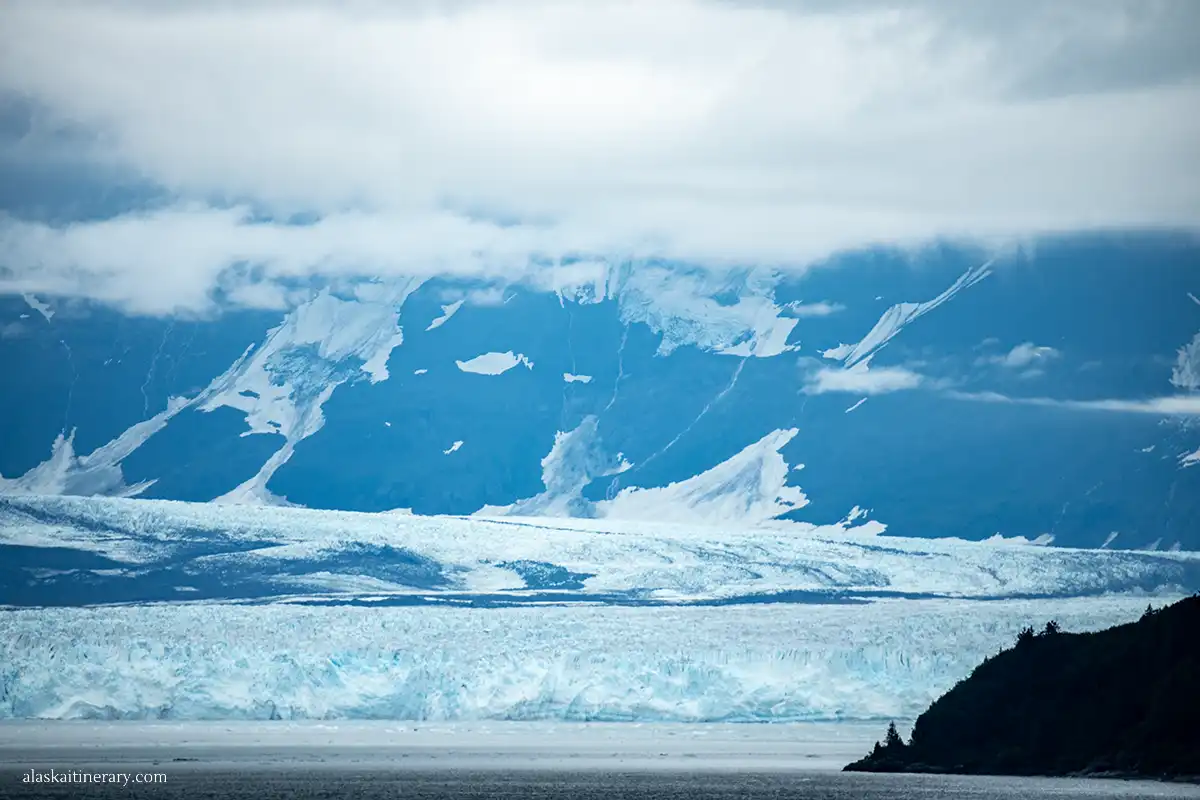
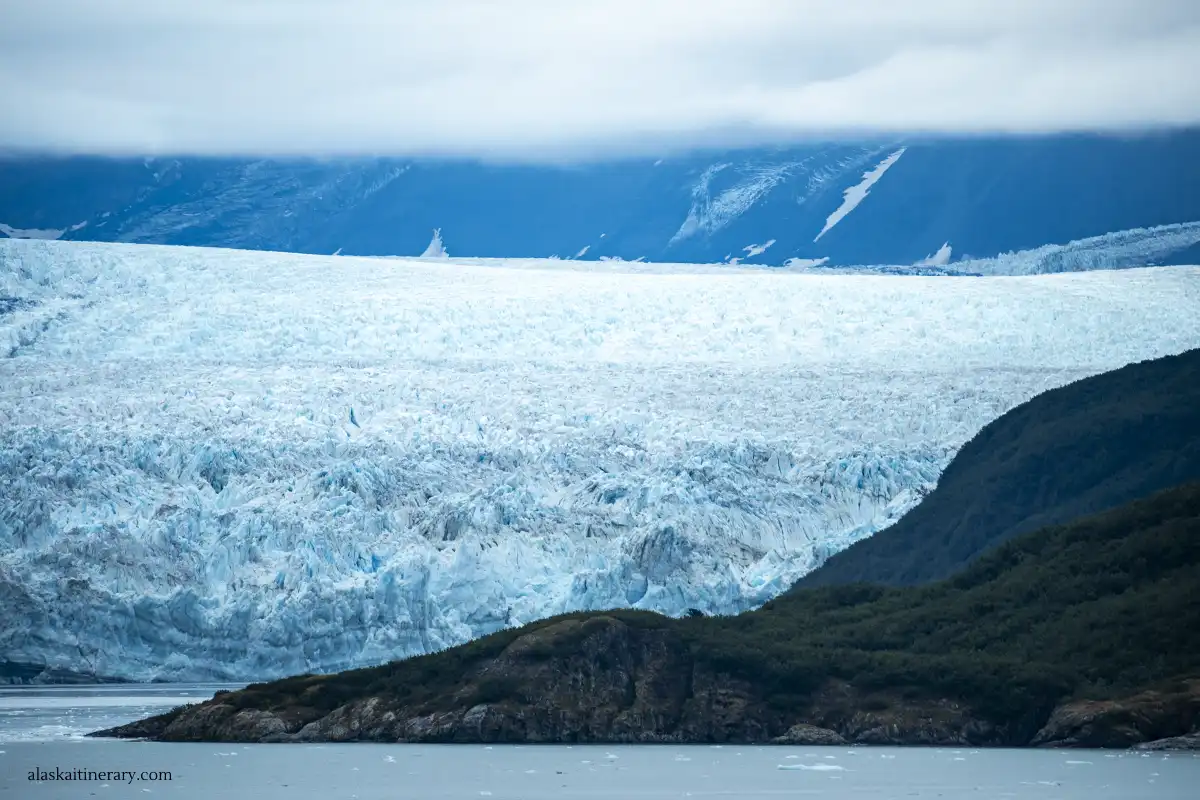
Hubbard Glacier’s immense face naturally draws your attention. However, take time to inspect the floating ice for harbor seals, which may look like small dark shapes from the ship.
Binoculars help distinguish resting animals from uneven ice. Scan patiently, but avoid expecting every ice floe to hold wildlife.
Also, watch the surrounding waters during the approach and departure. Wildlife encounters depend on animals being present, visibility, and the route the ship can safely follow.
Treat wildlife as an additional opportunity rather than a promised part of the glacier visit. You may enjoy memorable sightings, or the glacier itself may remain the main attraction.
Our Hubbard Glacier cruise guide covers the scenic experience, viewing conditions, and practical preparation.
Best Time to Cruise Alaska for Wildlife
There is no single best month for every animal. Your route and chosen outings matter alongside your travel dates.
For general wildlife viewing, June and July are our personal picks. They offer a useful balance of marine wildlife opportunities, nesting seabirds, and available excursions. However, a particular bear-viewing destination may suit later dates better.
| Cruise period | Wildlife opportunities | Important limitations |
|---|---|---|
| April–May | Marine mammals, bald eagles, and returning migratory birds. | Some wildlife excursions have limited availability. Salmon-stream bear viewing is generally not the focus of early sailings. |
| June–July | Feeding humpbacks, nesting seabirds, and a broad selection of wildlife outings. | Bear-viewing conditions vary by location. Orcas and specific whale behaviors remain unpredictable. |
| August–September | Marine wildlife and seasonal bear viewing around suitable salmon streams. | Salmon timing differs between sites. Some excursions finish before the cruise season ends. |
April and May
An early-season cruise can still offer rewarding wildlife encounters. Watch for whales, seals, sea lions, sea otters, and bald eagles in suitable areas along your route.
Our April sailing included a small-group gray-whale outing from Sitka. That experience illustrates why the destination matters alongside the month.
However, check excursion operating dates before choosing an early departure. A cruise ship calling at a port does not mean every wildlife tour is running.
Also, avoid choosing April or early May specifically for bears catching salmon. Those feeding opportunities follow local fish runs rather than the cruise calendar.
June and July
June and July offer a strong combination of wildlife opportunities and excursion choices. Humpbacks feed in Alaska’s coastal waters, while seabirds occupy nesting areas.
In Glacier Bay, summer viewing can include humpbacks, harbor seals with pups, sea lions, harbor porpoises, and mountain goats. These animals occupy different habitats, so stay observant throughout the visit.
Bear viewing requires more specific planning. Some destinations offer early-summer opportunities, while salmon-stream sites become more productive later.
For example, July and August are the main bear-viewing months at Anan Wildlife Observatory. That does not establish the same schedule for every bear-viewing location.
August and September
Late summer can suit travelers who prioritize bears feeding near salmon streams. However, choose the viewing location first, then check its seasonal conditions and tour schedule.
August and September are not interchangeable across every destination. An excursion available in August may have finished by your September port call.
Continue watching for marine mammals during scenic cruising and boat outings. A later sailing does not make whales disappear, but neither does it guarantee particular species or behaviors.
Match Your Travel Dates to Your Priority Animal
If wildlife drives your trip, start with a specific goal. Watching humpbacks, photographing puffins, and seeing bears catch salmon involve different planning decisions.
Then compare:
- Location: Does your itinerary reach suitable habitat?
- Timing: Does your visit overlap the relevant feeding or nesting period?
- Access: Is the wildlife outing operating during your port call?
- Port time: Can you comfortably fit the excursion into your schedule?
Haines provides a useful example. Eagles live in the area during cruise season, but the famous Chilkat River concentration peaks around November. Summer visitors should not expect that same gathering.
Our guide to the best time to cruise to Alaska compares wildlife considerations with weather, crowds, and other activities.
Wildlife Excursions Worth Considering During an Alaska Cruise
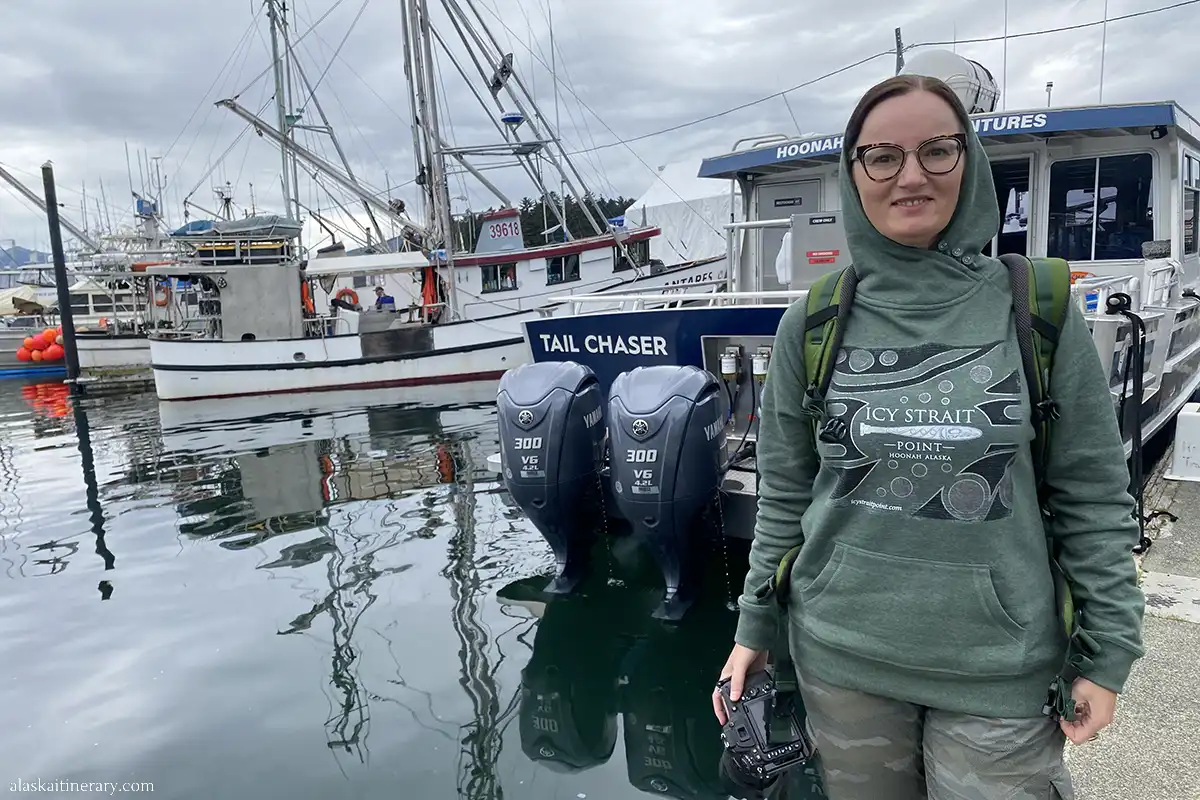
We prioritize excursions that provide time in wildlife habitats we cannot explore from the cruise ship. That might mean searching whale-feeding areas by boat or visiting a seasonal bear-viewing site.
You don’t need a paid wildlife outing in every port. Choose around your interests, travel dates, and budget.
Our best Alaska cruise excursions guide compares wildlife trips with other experiences ashore.
Whale Watching in Juneau
Juneau is one of our favorite Alaska cruise ports for dedicated whale watching. We’ve enjoyed spending time on the water with a crew focused on locating and observing whales.
Humpbacks are the main attraction. Sea lions and other marine wildlife may also appear, but orcas should remain a bonus rather than an expectation. Unlike watching from a passing cruise ship, a dedicated outing gives you time focused on wildlife.
Our Juneau whale-watching review shares our experience and practical planning advice.

Whale Watching in Icy Strait Point
We’ve enjoyed both free shoreline whale sightings and dedicated boat excursions at Icy Strait Point. That makes this port a good place to balance paid activities with independent exploring.
From the waterfront, scan for blows and surfacing animals. Binoculars help when whales remain farther offshore. However, sightings depend on whales being present during your visit.
A boat excursion lets the crew search a wider area and spend time observing animals they locate. We’ve taken small-group outings here, including a departure from Hoonah.
Our Icy Strait Point whale-watching guide shares our experiences and tour options.
Whale Watching and Marine Wildlife in Sitka
Our small-group whale-watching trip from Sitka focused mainly on gray whales. We also spotted other marine wildlife, making it a rewarding outing during our Alaska cruise.
This experience differed from our humpback-focused trips in Juneau and Icy Strait Point. However, the species you encounter depend on the season and where animals are feeding.
We also enjoyed kayaking in Sitka, where we observed sea lions. Kayaking offers another perspective, especially if you want an active excursion with possible wildlife encounters.
Our Sitka whale-watching guide shares our experience and tips for choosing an outing.

Bear Viewing From Ketchikan
If bears are a priority, consider a dedicated viewing excursion rather than relying on a shoreline sighting from the ship. Seasonal outings reach feeding areas outside downtown Ketchikan.
Traitors Cove is one option. Excursions typically involve transportation to the area and a walk to a managed viewing platform near Margaret Creek.
The important detail is timing. Check the specific outing’s operating season rather than assuming it runs throughout the cruise season. Bear activity also depends on local feeding conditions.
Our dedicated Ketchikan bear-viewing guide compares the locations in more detail.
Eagle and Wildlife Outings in Haines
Haines offers opportunities to look for bald eagles around river habitats and coastal areas. Guided outings can help visitors understand those habitats and locate wildlife.
Choose a summer outing for the experience available during your visit. Do not expect the thousands of eagles associated with the famous fall gathering, which peaks around November.
Consider what else the trip includes, such as river scenery, a float, or a guided walk. Those elements matter when wildlife sightings vary.
Anan Wildlife Observatory From Wrangell
Anan remains a wish-list experience for us rather than an excursion we have personally reviewed. It offers managed viewing of bears feeding along Anan Creek.
Black bears are the main draw, while brown bears are seen less frequently. July and August are the principal viewing months.
Access requires boat or floatplane transportation, and peak-season visits involve permits. Guided operators may include those permits, so check the package before purchasing anything separately.
This option is relevant if your itinerary calls at Wrangell and your port time accommodates the trip. It should not be presented as an easy addition to every Alaska cruise.
Kenai Fjords National Park From Seward
If your cruise starts or ends in Seward, consider adding a Kenai Fjords wildlife cruise. Plan it before embarkation or after disembarkation, allowing enough time for the outing and your onward travel.
We’ve taken several Kenai Fjords boat tours from Seward. Most recently, we joined a six-hour tour before boarding our Alaska cruise in Seward.It combined glacier scenery with opportunities to watch marine wildlife beyond Seward’s harbor.
Depending on the route and conditions, these trips offer opportunities to look for whales, sea lions, harbor seals, and seabirds. Both horned and tufted puffins nest in the park.
Check the itinerary carefully. Shorter Resurrection Bay outings and longer trips entering Kenai Fjords National Park cover different areas.
For wildlife-focused travelers, extra time in Seward can be a valuable addition to a one-way Alaska cruise.

How to Choose a Wildlife Excursion
Choose the animal and experience you want first, then compare suitable outings. A general sightseeing trip with possible wildlife encounters differs from a tour dedicated to finding whales or observing bears.
We consider these details before booking:
- Target wildlife and habitat. Check what the excursion actually focuses on. A whale-watching trip does not automatically include puffin colonies or bear-viewing areas.
- Seasonal suitability. Confirm that your dates suit the specific destination. An excursion operating during your visit does not mean every featured animal is equally likely.
- Actual viewing time. Compare time spent watching wildlife with transfers, flights, boat travel, and other stops. Total excursion length can hide substantial transportation time.
- Boat size and viewing arrangements. Look at passenger capacity, outdoor access, sheltered seating, and window views. We enjoy small groups, but comfort and clear sightlines matter alongside group size.
- Physical demands and accessibility. Check boarding steps, walking distances, uneven trails, and restroom availability. A boat tour is not automatically accessible simply because little walking is involved.
- Weather and cancellation terms. Understand what happens if the operator cancels or your ship misses the port. Compare those conditions with the policy for canceling yourself.
- Meeting point and return time. Allow time to reach the departure location and return before all-aboard. Include dock shuttles or tendering when relevant.
- Any advertised wildlife guarantee. Read exactly what it covers. A refund or repeat-trip offer cannot make animals appear or promise particular behaviors.
For us, the best choice balances wildlife opportunities, viewing time, comfort, and cost. The smallest boat or longest excursion is not automatically the right option for every traveler.
Which Alaska Cruise Itinerary Is Best for Wildlife?
The best itinerary gives you access to the animals and habitats you most want to see. Look beyond the cruise line’s name and compare ports, scenic cruising areas, and available time ashore.
Choose Ports Around Your Wildlife Priorities
For whale watching, we particularly value Juneau, Icy Strait Point, Seward and Sitka. Our experiences differed between these ports, including humpback-focused outings and our gray-whale encounters near Sitka or orcas in Seward.
If bears are your priority, check which seasonal viewing excursions operate from your proposed ports. Ketchikan, Icy Strait Point and Wrangell provide access to specific bear-viewing sites, but dates and transportation arrangements matter.
Choose the wildlife opportunity first, then check that your sailing can accommodate it. A port name alone does not establish that a particular excursion will fit.
Consider Scenic Cruising and Time in Port
Glacier Bay adds opportunities to watch marine wildlife, birds, and distant shoreline animals throughout the visit. Other scenic waterways also deserve time with binoculars ready.
However, scenic cruising and dedicated excursions serve different purposes. A glacier visit should not replace a whale-watching outing if focused whale observation is your main goal.
Compare arrival times, departure times, and usable hours ashore. A longer port call can provide more flexibility for wildlife outings, transfers, and independent exploring.

Compare Mainstream Cruises With Small-Ship Expeditions
Small expedition ships may offer flexible wildlife watching, smaller landing groups, and activities such as kayaking or skiff outings. The exact experience depends on the operator and itinerary.
We have chosen mainstream cruises because they suit our budget. Combining those sailings with selected wildlife excursions has allowed us to spend more on the experiences we value.
We have not personally reviewed small-ship expedition cruising. Compare the actual inclusions before assuming a higher fare offers better value for your priorities.
Add Wildlife Viewing Before or After a One-Way Cruise
A sailing starting or ending in Seward or Whittier creates opportunities to extend your wildlife viewing on land and smaller boats.
From Seward, consider a Kenai Fjords National Park boat trip. Schedule it before embarkation or after disembarkation, with enough time for transportation and overnight arrangements.
From Whittier, Prince William Sound boat trips combine glacier scenery with possible marine wildlife encounters. We experienced the area on a 26 Glacier Cruise.
These outings require their own budget and planning. However, an extra day can provide a different wildlife perspective from your main cruise.
If inland animals are important, consider a longer land extension rather than expecting to see them along the Inside Passage.
Our guide to choosing your Alaska cruise itinerary compares routes, departure ports, and options for extending your trip.
What to Bring for Alaska Cruise Wildlife Viewing
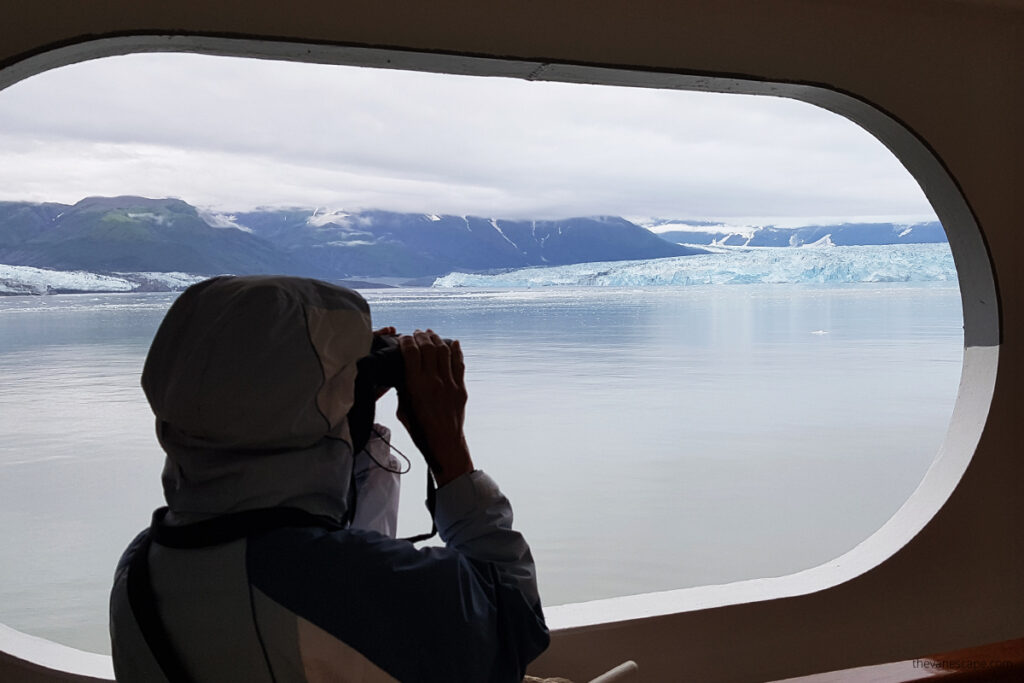
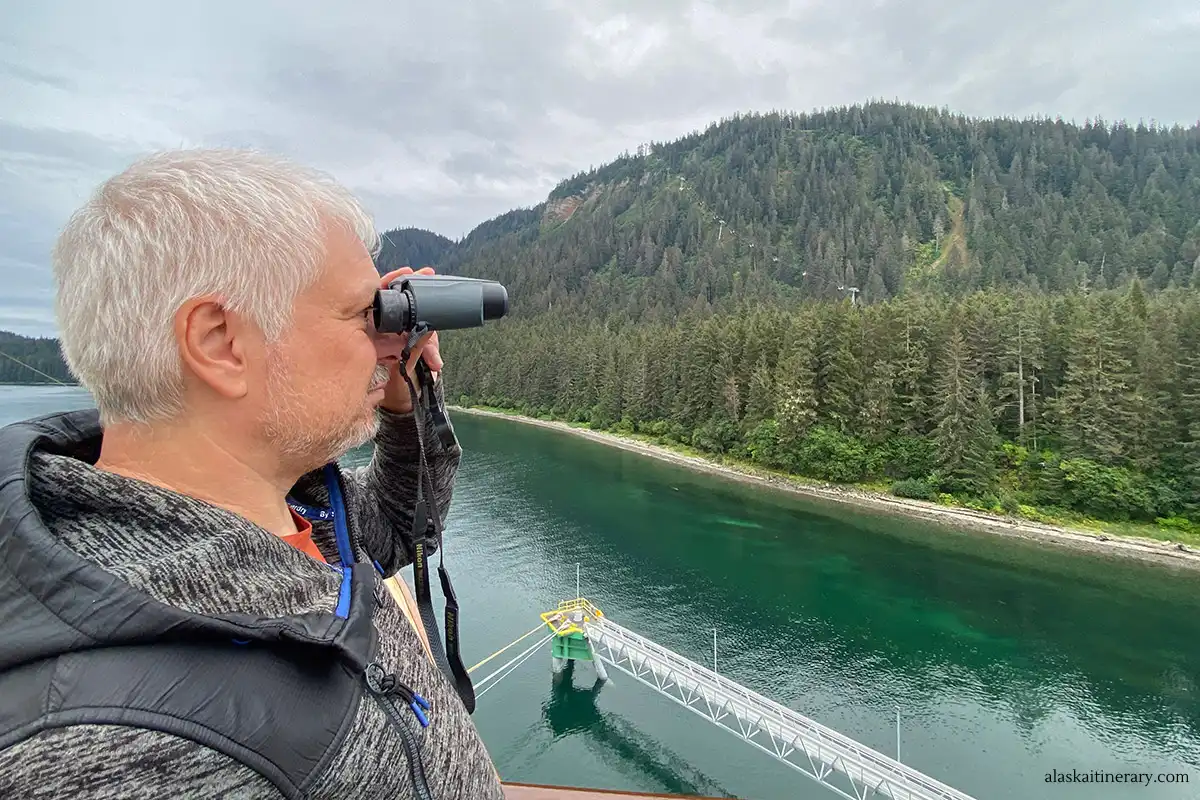
Binoculars are the first item we would pack for watching wildlife from the ship. Cameras help capture encounters, but comfortable viewing matters even when an animal is too distant for a good photograph.
Binoculars You Can Use Comfortably
Choose binoculars you can hold steadily and carry without discomfort. Stronger magnification is not automatically better, especially when your hands or the boat are moving.
Try focusing on a distant subject before your trip. Practice finding it with your eyes, raising the binoculars, and adjusting the focus.
Waterproof construction is useful around rain and sea spray. Keep the binoculars accessible and use their strap securely. The best pair offers little benefit sitting in your cabin.
A Camera and Telephoto Lens
I use a Nikkor 80–400mm lens, while Chris uses a Canon 100–500mm. These lenses help us photograph distant animals without approaching them.
However, they are heavy and take up luggage space. You do not need to carry similar equipment to enjoy wildlife viewing.
A telephoto lens also cannot guarantee detailed images from a moving ship. Distance, light, weather, and the animal’s movement all affect the result.
We prefer photographing outside when conditions allow because windows can introduce reflections. Our Alaska cruise photography guide covers camera preparation and shooting techniques in more detail.
Your Phone for Quick Photos and Video
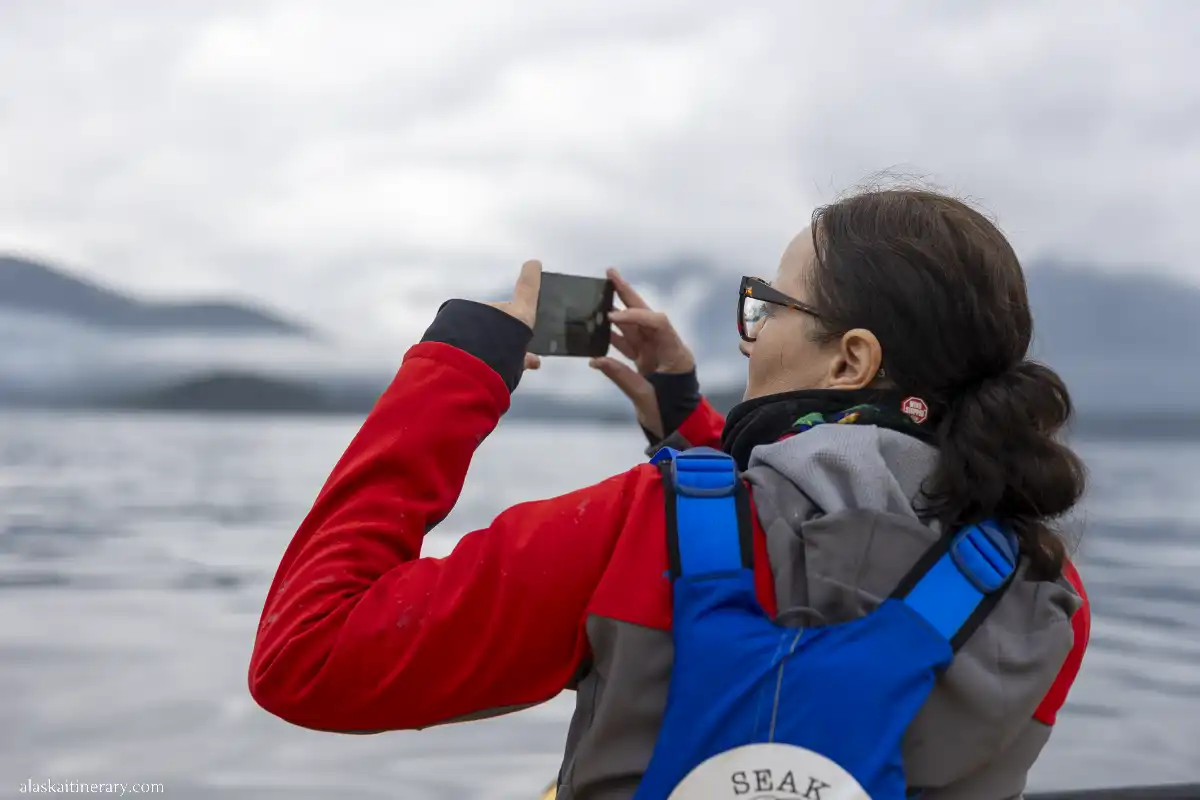
My iPhone 15 Pro Max has been useful for spontaneous moments when a larger camera was not immediately ready. I’ve also used it during activities such as kayaking.
A phone is convenient for nearby subjects, short videos, and photographs showing wildlife within the landscape. However, distant animals can remain tiny, and heavy digital zoom may produce disappointing results.
Sometimes the better choice is to watch through binoculars and enjoy the encounter.
Lens Cloths and Weather Protection
Mist, rain, and sea spray can quickly cover binoculars, camera lenses, and glasses.
We carry several clean microfiber cloths and keep spares dry. Remove grit before wiping, and use cleaning methods suitable for your equipment.
Pack rain protection for your camera and a waterproof dry bag for outings such as kayaking. Keep equipment secured when boarding boats or moving around wet decks.
Warm layers and a waterproof outer layer also help you stay comfortable while watching outside.
Wildlife Identification Apps
Apps such as Merlin Bird ID and iNaturalist can help you investigate unfamiliar sightings.
Download any relevant offline resources before sailing. Internet access may be limited when you want to identify an animal.
Treat app suggestions as identification aids rather than certainty, especially when your photograph shows only a distant shape.

Responsible Wildlife Viewing on an Alaska Cruise
A good wildlife encounter lets you observe animals without changing their behavior. That applies when watching from shore, paddling a kayak, or joining a guided boat trip.
- Give animals space. Use binoculars or a telephoto lens instead of approaching for a closer view. Never block an animal’s route to the water or along a shoreline.
- Follow your guide’s instructions. Viewing rules vary by species and location. Stay within designated areas and follow any directions about movement, noise, and food.
- Never feed or attract wildlife. Keep snacks secured, dispose of waste properly, and avoid calls or sounds intended to draw animals closer.
- Keep your distance from resting animals. Seals, sea lions, and birds need undisturbed places to rest. An animal watching you closely or moving away may be responding to your presence.
- Let the operator manage the encounter. Avoid pressuring a captain or guide to approach closer. Responsible viewing may mean changing position, waiting, or leaving an area.
- Accept the limits of the sighting. A distant view or brief encounter can still be rewarding. No photograph justifies disturbing an animal.
We would rather leave with fewer photographs than push an encounter too far. Watching natural behavior is what makes Alaska wildlife experiences worth seeking out.
Alaska Cruise Wildlife: Frequently Asked Questions
Are wildlife sightings guaranteed on an Alaska cruise?
No. Sightings depend on the animals, location, season, weather, and visibility. Even dedicated excursions cannot promise particular behaviors, such as breaching or bears catching salmon.
If a tour advertises a sighting guarantee, read its terms. It may offer compensation rather than guarantee an encounter.
Can you see whales without booking a tour?
Yes. Whales may be visible from the cruise ship or certain shore locations. We’ve enjoyed watching them from the waterfront at Icy Strait Point.
However, encounters can be distant or brief. Dedicated whale-watching trips provide more time searching suitable waters.
Can you see bears from the cruise ship?
Sometimes, but shoreline sightings can be distant and difficult to identify. Binoculars help, especially when someone points out the animal’s location.
If bears are a priority, consider a seasonal bear-viewing excursion rather than relying on a shipboard encounter.
Will you see moose on an Alaska cruise?
Moose are not an expected sighting on a typical Inside Passage cruise. They occupy limited parts of Southeast Alaska and are essentially absent from its major islands.
A land extension through suitable mainland habitat offers more appropriate opportunities to look for them.
Where can Alaska cruise passengers see puffins?
A boat outing visiting suitable nesting habitat offers a more focused opportunity than watching from a large cruise ship. Kenai Fjords trips from Seward are one option before or after a sailing.
Check the excursion’s route and seasonal wildlife information. Not every coastal boat trip visits puffin colonies.
Is a balcony worth it for wildlife watching?
A balcony offers convenient viewing, but it is not essential. Public decks let you watch from different parts of the ship.
We’ve used shared viewing areas on three Alaska sailings in interior cabins. Compare the upgrade cost with the wildlife excursions that money could help fund.

Final Thoughts: Making the Most of Alaska Cruise Wildlife
You don’t need an expedition cruise or a balcony cabin to enjoy Alaska’s wildlife. Our approach combines mainstream sailings, time watching from public decks, and selected wildlife excursions.
We’ve enjoyed whales from shore, dedicated boat outings, bear-viewing excursions, and wildlife encounters while kayaking. Each offered a different perspective, which is why we value both independent watching and guided experiences.
Choose your priority animals, then match your route, dates, and excursion budget to those interests. Keep binoculars ready, allow time to watch, and remember that sightings follow the animals’ schedules.
For us, the goal is to observe wildlife responsibly and enjoy the encounters that unfold—not complete a checklist.
Do You Like It? Pin It For Later!


Seeing Alaska’s wildlife will be high up on my list of things to do when I finally visit Alaska – especially the bears, moose and whales.