
Vancouver Cruise Port Guide: Canada Place, Transfers, and Boarding

Planning an Alaska cruise from Vancouver? Knowing where to board and how to reach the terminal makes your arrival much easier. Most Alaska cruises depart from Canada Place, right on the downtown waterfront. In this Vancouver cruise port guide, we share practical advice from our repeated cruises and visits to the city. We cover airport transfers, boarding, luggage storage, parking, and getting around before or after your sailing. You’ll also find tips for choosing where to stay and making the most of your time in Vancouver.
This article may contain affiliate / compensated links. For full information, please see our disclaimer here.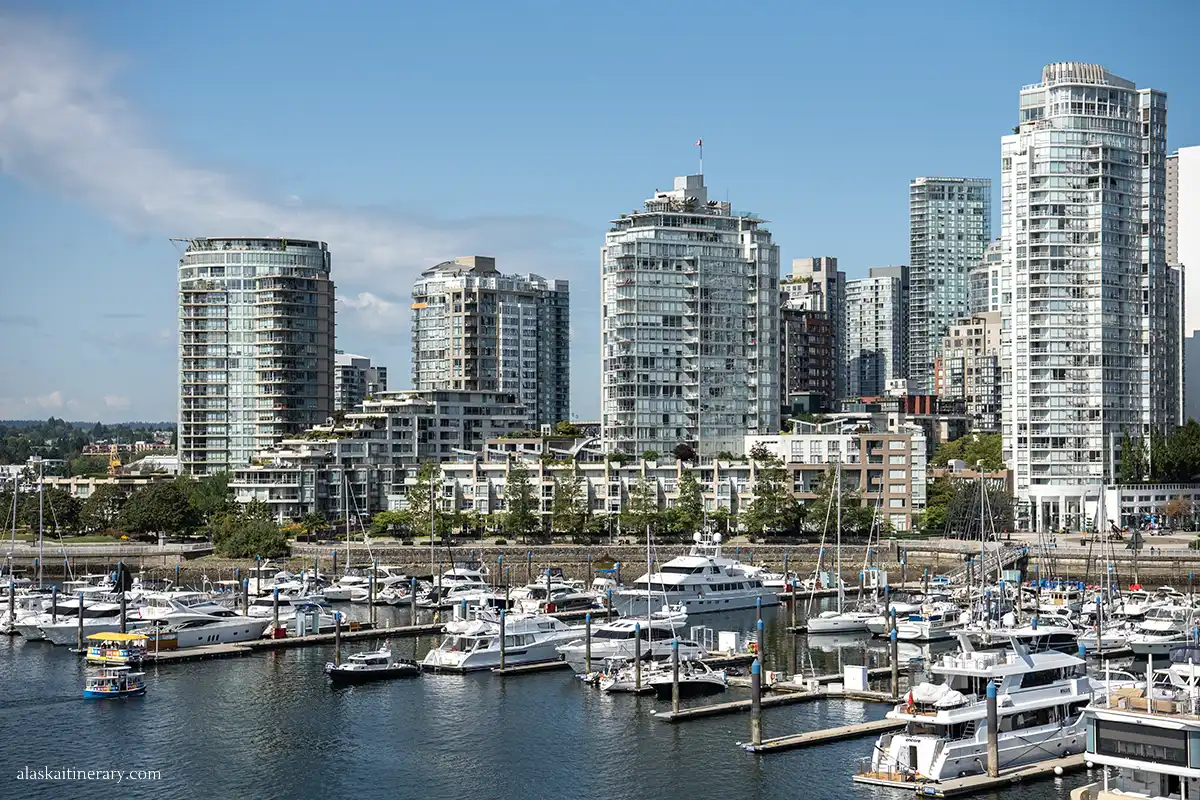
Our Experiences Cruising from Vancouver
Vancouver is one of the main departure ports for Alaska cruises, offering round-trip sailings and one-way routes to Seward or Whittier. It also welcomes southbound cruises from both Alaska ports. These one-way itineraries are especially useful if you want to explore Alaska by land before or after your cruise.
We’ve taken multiple Alaska cruises starting or ending in Vancouver, including a seven-day sailing from Seward to Vancouver. These trips have given us firsthand experience with departures and arrivals at Canada Place.
Our time in Vancouver extends well beyond cruise days. We’ve spent weeks here over the years, visiting friends who live downtown and exploring different neighborhoods. We especially enjoy biking around Stanley Park, walking the waterfront, and finding good food around Gastown.
That familiarity helps us plan transportation and make time for the city before or after a sailing. We recommend arriving at least one day before your cruise, giving yourself a buffer for travel delays.
Getting to the terminal is one part of planning an Alaska cruise. Below, we focus on Vancouver’s practical details, from airport transportation to boarding and your journey home.

Vancouver Cruise Port at a Glance
Canada Place puts you right on Vancouver’s downtown waterfront. Use this overview to organize your arrival and departure. Below the table, we explain each option and share practical planning tips.
| Planning detail | What to know |
|---|---|
| Cruise terminal | Canada Place Cruise Ship Terminal |
| Address | 999 Canada Place, Vancouver, British Columbia |
| Location | Downtown waterfront, near hotels, restaurants, and public transportation |
| Main airport | Vancouver International Airport (YVR), south of downtown in Richmond |
| Airport rail connection | Canada Line to Waterfront Station; approximately 25–30 minutes aboard the train |
| Station near the terminal | Waterfront Station is a short walk away. Allow extra time for station exits and luggage. |
| Other airport transfers | Taxis, rideshares, private transfers, and cruise-line transfers |
| Intercity train station | Pacific Central Station serves Amtrak and VIA Rail. It is separate from Waterfront Station. |
| Cruise parking | Paid parking is available at Canada Place. Check current rates, vehicle restrictions, and availability before driving. |
| Luggage | Storage and early ship baggage drop-off are separate services. Confirm arrangements before planning sightseeing. |
| Currency | Canadian dollars (CAD). Check the currency when comparing transportation and parking prices. |
| Recommended arrival | We recommend reaching Vancouver at least one day before sailing. |
| Boarding time | Follow your cruise line’s assigned arrival window and final check-in deadline. |
Still deciding where to sail from? Our Seattle vs. Vancouver Alaska cruise comparison explains the differences in routes, flights, and travel logistics.
Below is map showing Canada Place cruise terminal, Waterfront Station, downtown Vancouver, and Vancouver International Airport in a regional inset.

Where Do Alaska Cruises Dock in Vancouver?
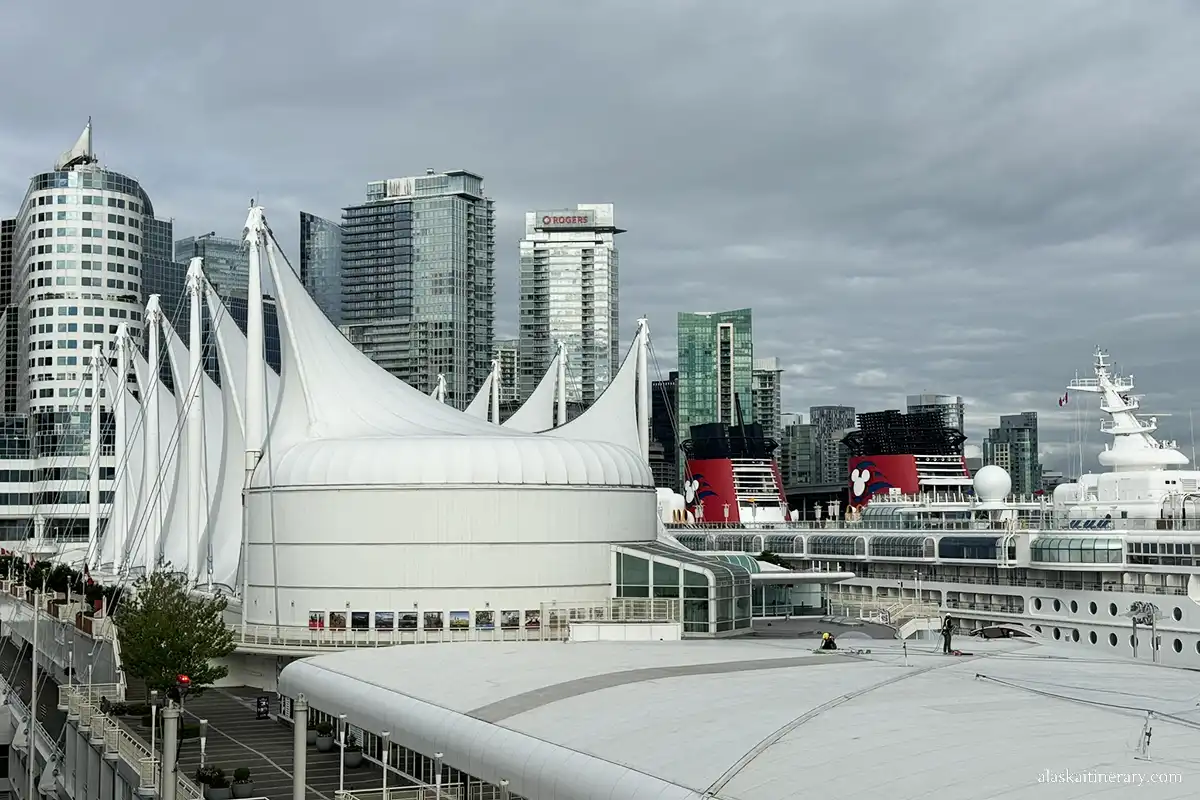
Canada Place is Vancouver’s main terminal for Alaska cruises. It sits on the downtown waterfront at 999 Canada Place. Its distinctive white sails make the building easy to recognize.
However, Canada Place houses more than the cruise terminal. The complex also includes the Pan Pacific Vancouver hotel and convention facilities. Follow signs for cruise passenger access, rather than assuming the waterfront promenade leads to boarding.
Several ships can use Canada Place on the same day. Check your cruise documents and follow signs for your ship’s baggage drop-off and check-in area. Staff can direct you if you’re unsure where to go.
When arranging transportation, specify Canada Place cruise terminal and your ship’s name. Follow your cruise line’s instructions for passenger drop-off, especially if you need assistance with luggage or mobility.
Getting from Vancouver Airport to Canada Place
The Canada Line is a convenient airport connection if you can comfortably manage your luggage. Taxis and private transfers reduce walking and luggage handling. Compare the total cost for your group before choosing.
Canada Line: Airport Train to Downtown
From YVR’s main terminal, follow signs for the Canada Line and board a train toward Waterfront. The journey takes approximately 25–30 minutes, without downtown traffic delays.
At Waterfront Station, exit toward Canada Place and walk to the cruise terminal. Allow extra time for elevators, street crossings, and finding your ship’s passenger entrance.
For a standard adult ticket or contactless payment, current airport-to-Waterfront fares are:
- CAD $11.60 on weekdays before 6:30 p.m.
- CAD $10 after 6:30 p.m. on weekdays, weekends, and provincial statutory holidays.
These totals include the CAD $6.50 airport surcharge. The surcharge applies when leaving the airport, but not when traveling back to YVR.
You can buy a ticket at the station or use an accepted contactless card or mobile wallet. Each paying passenger needs a separate ticket or payment method. Tap in and out using the same card or device.
The stations have elevators. However, you’ll still need to handle your bags and walk from Waterfront Station to the terminal.
Taxis: A Direct Ride to the Cruise Terminal
YVR’s official taxi stands are outside Domestic and International Arrivals on Level 2. Join the taxi line and tell the driver you’re going to Canada Place cruise terminal.
The current airport-to-Canada Place flat fare is CAD $46 per vehicle, before tipping. This includes taxes and the airport passenger charge. Requested stops can add to the cost.
For a group, compare this vehicle fare with individual train tickets. Tell the taxi attendant if you need extra luggage space or an accessible vehicle.
Allow roughly 30–45 minutes for the drive, with additional time during heavy traffic. This estimate excludes baggage collection, airport entry procedures, and waiting for a taxi.
Uber and Lyft
Uber and Lyft operate at YVR, with designated pickup areas on Level 2 for Domestic and International Arrivals.
Collect your luggage before requesting a ride. Follow airport signs and the pickup instructions in your app.
Prices vary with demand and vehicle type. Check the live quote and choose a vehicle that fits everyone and their bags.
Cruise-Line and Private Transfers
Cruise-line transfers can simplify transportation on boarding day. However, availability, eligible arrival times, and prices depend on your sailing.
Before booking, confirm the airport meeting point, departure schedule, and luggage allowance. If you’re arriving the day before, check if your transfer serves your hotel.
Private transfers can suit larger groups or travelers needing specific assistance. Confirm the full price, vehicle capacity, flight-delay policy, and passenger drop-off arrangements.
Reaching Canada Place from Your Hotel or Train Station
From a Downtown Vancouver Hotel
Some downtown hotels are within walking distance of Canada Place, especially around the waterfront and Coal Harbour. However, “downtown” doesn’t automatically mean a short walk to the terminal.
Check the walking route from your hotel’s exact address. Consider hills, rain, luggage, and your comfort with walking before deciding.
For a short taxi or rideshare trip, ask your hotel about pickup arrangements. Tell the driver you need the cruise passenger drop-off, rather than the hotel entrance at Canada Place.
If your hotel advertises a cruise shuttle, confirm its price, departure time, and reservation requirements. Don’t assume transportation is included with your room.
From Pacific Central Station
Amtrak and VIA Rail use Pacific Central Station, not Waterfront Station. You’ll need a separate connection to Canada Place.
A taxi or rideshare is the simplest option with several bags. Allow extra time for downtown traffic and the terminal’s passenger drop-off process.
For public transportation, walk to nearby Main Street–Science World Station. Take the Expo Line toward Waterfront, then walk from Waterfront Station to Canada Place.
This option involves walking at both ends and handling your luggage through the stations. A direct vehicle transfer may suit you better with heavy bags or limited mobility.
Finding the Correct Drop-Off Area
Canada Place serves cruise passengers, hotel guests, and convention visitors. Follow your cruise line’s arrival instructions and the traffic attendants’ directions.
Keep your ship’s name and boarding documents handy. Baggage drop-off arrangements can vary with your transportation and the number of ships in port.
Driving, Cruise Parking, and Rental Car Returns
Parking at Canada Place
Indigo operates the parking garage beneath Canada Place, with long-term parking available for cruise passengers. Book through its cruise parking page and check the total for your dates.
Compare the full booking price, including any additional fees. A regular downtown parking rate doesn’t necessarily cover leaving your vehicle throughout a cruise.
Indigo directs Canada Place cruise parkers to level P2. Published clearance limits are 6 feet 9 inches on P2 and 6 feet 6 inches on P1. Include roof racks and rooftop cargo boxes when checking your vehicle’s height.
For an oversized vehicle, contact Indigo before booking. Don’t assume a truck, camper, or RV will fit.
Nearby garages offer alternatives, but confirm that they permit parking for your entire trip. Also check access hours and transportation to the terminal.
Long-term parking makes the most sense when your cruise returns to Vancouver. On a one-way sailing ending in Alaska, you’ll need a plan to retrieve your vehicle.
Driving to the Terminal
Use 999 Canada Place as your destination, then follow current cruise access signs and traffic attendants’ directions.
Canada Place street runs one-way westbound between Howe and Burrard streets. Don’t rely on older driving instructions that show two-way access.
Have your boarding documents and luggage tags ready before reaching the terminal. Follow staff instructions for baggage drop-off and parking.
Returning a Rental Car Before Boarding
Confirm the rental company’s exact return address and operating hours before booking. A downtown branch isn’t necessarily inside the cruise terminal.
If you return the car downtown, plan your final connection to Canada Place. Walking may work from a nearby branch with manageable luggage. Otherwise, arrange a taxi or rideshare.
An airport return adds another transfer to your boarding-day schedule. Allow time for refueling, returning the vehicle, and traveling downtown.
For rentals collected in Seattle, confirm that the company permits driving into Canada and returning the vehicle in Vancouver. Cross-border one-way availability and fees depend on your reservation.
Boarding Your Alaska Cruise at Canada Place
Boarding at Canada Place involves more than dropping off your bags and walking onto the ship. Expect cruise-line check-in, security screening, and U.S. border processing for your Alaska sailing.
Several ships may board passengers on the same day. Lines can build, so keep your boarding-day schedule flexible.
Complete Check-In Before You Arrive
Complete your cruise line’s online check-in within its required timeframe. Download or print your boarding documents and attach the correct luggage tags.
Follow your assigned arrival window and final check-in deadline. The ship’s departure time is not your deadline for reaching the terminal.
Keep these items in your carry-on:
- Passport and any other required travel documents.
- Boarding pass and reservation details.
- Medications, valuables, and essential electronics.
- Anything you’ll need before your checked bags reach your cabin.
Drop Off Bags for Your Ship
Follow signs and staff directions to your ship’s baggage drop-off area. Confirm the ship’s name before handing over your tagged bags.
Keep your travel documents with you. You’ll need them during check-in and border processing, after leaving your larger bags.
Baggage drop-off arrangements can vary by arrival method and the number of ships in port. Follow the instructions for your sailing.
Check-In, Security, and U.S. Border Processing
Staff will guide you through the required boarding stages. Their order can vary, so follow the terminal’s signs rather than expecting one fixed sequence.
For Alaska departures, U.S. border processing takes place at Canada Place before boarding. Entering Canada at the airport or land border is a separate process.
Have your documents ready and allow time for questions and screening. Don’t plan sightseeing around an assumed boarding duration.
Arrange Boarding Assistance Ahead of Time
If you need wheelchair assistance, contact your cruise line before departure. Confirm where to meet staff and how assistance works between drop-off and boarding.
Keep any mobility equipment you need with you. An accessible terminal still involves moving between processing areas and potentially waiting in line.
Passports and Entry Requirements for a Vancouver Alaska Cruise
Check three separate requirements: entering Canada, boarding your cruise, and entering the United States. Your citizenship, travel documents, and transportation affect what you need.
For U.S. Citizens
Bring a valid passport book if you’re flying to Vancouver. U.S. citizens don’t need a Canadian visitor visa or electronic travel authorization (eTA).
Different documents may be accepted when entering Canada by land or sea. However, your cruise line can impose additional requirements.
We recommend carrying a passport book throughout your trip. A passport card cannot replace it for international flights, including an unexpected flight home.
Don’t assume documentation rules for a round-trip Seattle cruise apply to a Vancouver departure. Check your cruise line’s requirements for your exact itinerary.
For Travelers with Other Passports
Some travelers need a Canadian visa. Others need an eTA when flying to Canada, but not when arriving by land or cruise ship.
Use Canada’s official entry requirements tool to check your situation. Include your return journey, especially if your cruise ends in Vancouver.
Alaska is part of the United States. Permission to enter Canada does not provide permission to enter the U.S. Check the applicable U.S. visa or travel authorization requirements separately.
Check Your Cruise Line’s Document Rules
Review your cruise line’s passport validity requirements well before departure. Also check any additional documents needed for children or travelers whose reservation names differ from their identification.
Keep original travel documents in your carry-on. Photos and copies can help if documents are lost, but they don’t replace the originals at boarding.
For a closer look at passport requirements for different routes, read our guide: Do You Need a Passport for an Alaska Cruise?
Luggage Storage and Early Baggage Drop-Off
Luggage storage and ship baggage drop-off serve different purposes. Storage lets you collect your bags after sightseeing. Ship baggage drop-off sends tagged luggage aboard your cruise.
Luggage Storage at Canada Place
Westcoast Sightseeing offers all-day baggage storage inside the Canada Place cruise terminal.
Its published hours are 8 a.m. to 5 p.m., with bag collection required by 4:30 p.m. After disembarking, visit the Ground Transportation Desk for drop-off instructions.
Check availability and current prices before planning your day. The service does not provide overnight storage at the terminal. Unclaimed bags are moved off-site after closing, with an additional charge.
If you’re staying in Vancouver, ask your hotel about luggage storage before check-in or after checkout. Confirm availability, hours, and any fees directly.
Dropping Bags Before Your Boarding Time
Your cruise line may accept tagged luggage before your assigned check-in window. However, confirm the earliest baggage acceptance time for your sailing before arriving.
Don’t assume another ship’s schedule applies to yours. Ask if you can leave bags and return later for passenger check-in.
Keep your passport, boarding documents, medications, and valuables with you. Return within your assigned arrival window and before the final check-in deadline.
Where Should You Stay Before Your Vancouver Cruise?
A downtown hotel is our preferred choice if you have time to enjoy Vancouver before sailing. You can explore the waterfront, find good restaurants, and keep your boarding-day transfer short.
For the easiest access to Canada Place, look around the downtown waterfront and Coal Harbour. Check each hotel’s exact location. Some are an easy walk from the terminal; others require a short ride.
Hotels around Robson Street and the West End offer more options for dining and exploring. Compare room prices alongside the cost of reaching the terminal with luggage.
An airport-area hotel in Richmond can be practical after a late flight. However, you’ll still need transportation downtown the next day. Confirm airport shuttle hours and access to the Canada Line before booking.
We recommend arriving at least one day before your cruise. If your schedule allows, add another day to enjoy Vancouver without fitting sightseeing around boarding.
For specific hotel recommendations, see our guide to where to stay in Vancouver before an Alaska cruise.
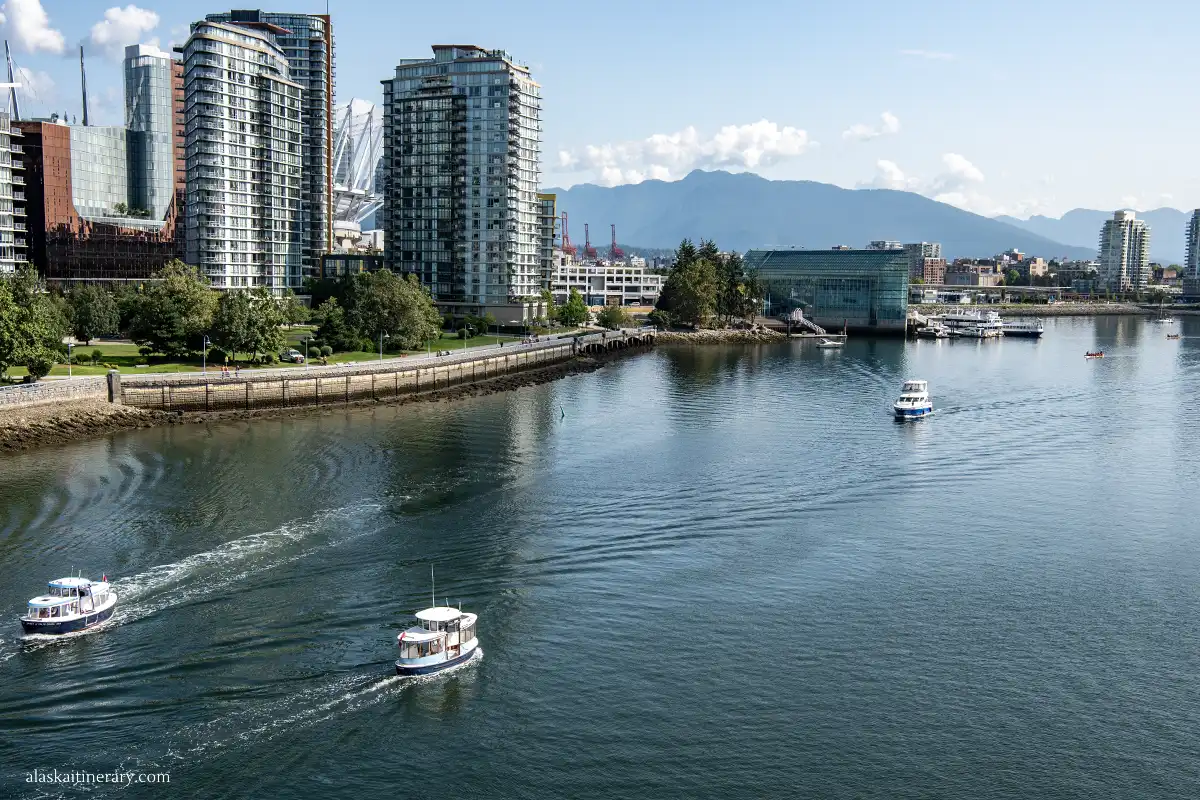
Things to Do Before or After Your Vancouver Cruise
We recommend allowing extra time to enjoy Vancouver. These are some of our favorite ways to explore before or after sailing:
- Coal Harbour waterfront: Enjoy harbor views and watch seaplanes near Canada Place.
- Gastown: Explore historic streets, see the Steam Clock, and stop at a café or restaurant.
- Stanley Park: Walk part of the waterfront or rent bikes to explore the seawall.
- Granville Island: Browse the Public Market and enjoy a relaxed food stop.
With only a few hours, stay near the terminal. Arrange luggage storage and leave enough time for boarding or your airport transfer.
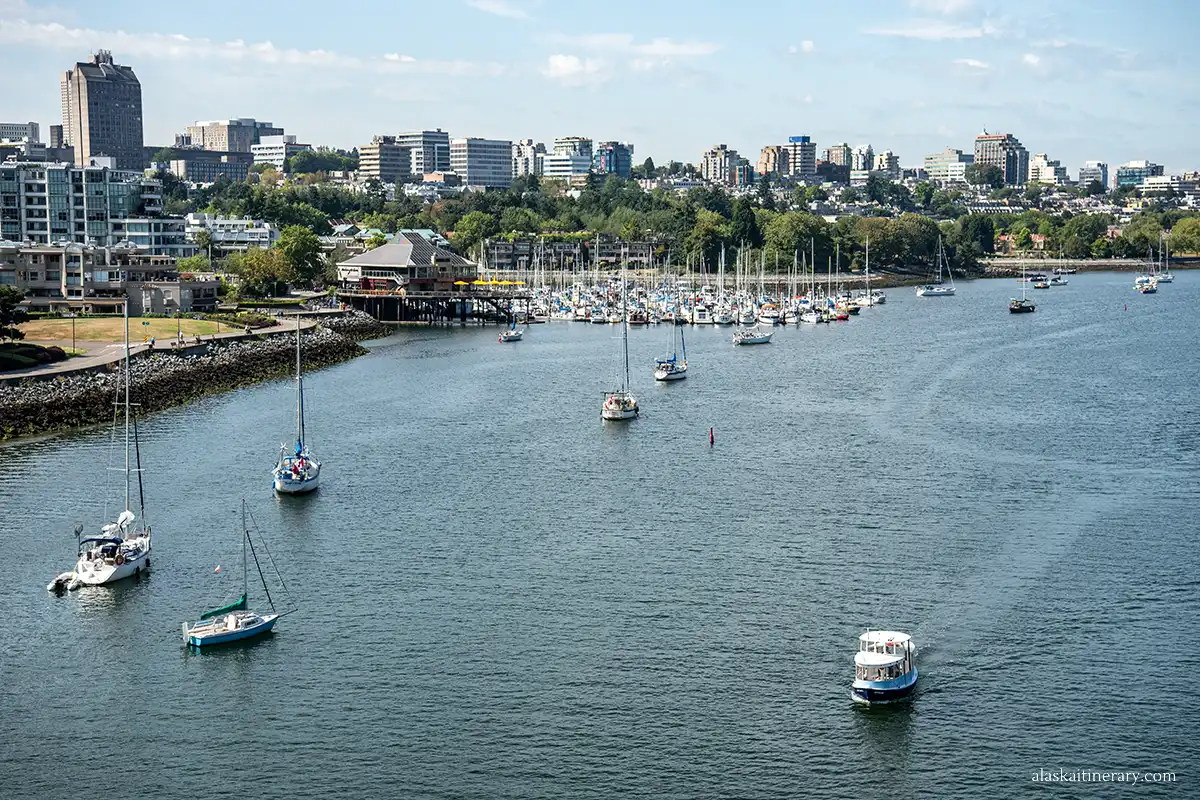
Disembarking in Vancouver and Getting to YVR
Your ship’s arrival time is not the time you’ll leave the terminal. Allow for clearance, your assigned departure group, baggage collection, and Canadian border procedures.
Follow the disembarkation instructions provided onboard. If you choose self-disembarkation, you must be able to handle all your luggage yourself.
Choosing Your Airport Transfer
You can reach YVR by taxi, rideshare, cruise-line transfer, or Canada Line:
- Taxi: Join the designated terminal taxi line. The current Canada Place–YVR flat fare is CAD $42 on posted cruise ship days, before tipping.
- Rideshare: Follow your app’s designated pickup instructions. Don’t assume your driver can collect you beside the taxi line.
- Cruise-line transfer: Confirm eligibility, departure arrangements, and the earliest flight time accepted for that service.
- Canada Line: Walk to Waterfront Station and board a train marked YVR–Airport, not Richmond–Brighouse.
The train journey takes approximately 25–30 minutes. Add time for walking, elevators, waiting, and reaching your airline’s check-in area. The airport surcharge does not apply when traveling to YVR.
What Time Should You Book Your Flight?
We recommend an afternoon flight for a more comfortable departure day. Before booking, check your cruise line’s earliest recommended flight time for your sailing.
YVR recommends arriving at least:
- Two hours before domestic Canadian flights.
- Three hours before U.S. and other international flights.
For U.S.-bound flights, you also complete U.S. border preclearance at YVR. Include that processing time in your plans.
Avoid choosing a flight based only on the ship’s scheduled docking time. Terminal queues, traffic, and airport processing can reduce your available buffer.
If Your Flight Leaves Later
Store your bags before sightseeing, then plan your airport journey around the storage collection deadline.
Alternatively, choose a post-cruise tour with airport drop-off. Confirm luggage capacity and the scheduled airport arrival before booking.
Traveling Between Seattle and Vancouver for Your Cruise
Flying into Seattle can work for a Vancouver cruise, but include the cross-border transfer in your budget and schedule. Compare transportation, an overnight stay, and luggage costs before choosing the cheaper flight.
We recommend reaching Vancouver at least one day before sailing. Traffic, border queues, or transportation delays can make a same-day connection stressful.
- Train: Amtrak Cascades connects Seattle’s King Street Station with Vancouver’s Pacific Central Station. You’ll need a separate transfer to Canada Place. Amtrak recommends arriving one hour before cross-border departures.
- Coach: Quick Shuttle offers cross-border services with selected Canada Place departures and arrivals. Check your date carefully; not every service stops at the cruise terminal.
- Car: Confirm cross-border permission with your rental company. If returning the vehicle in Vancouver, verify the approved location and one-way fees before booking.
After your cruise, allow a generous buffer before a flight from Seattle. Your journey includes disembarkation, transportation, the border crossing, and airport check-in. Don’t treat it like a local airport transfer.

Vancouver Cruise Port FAQs
Do Different Cruise Lines Use Different Vancouver Terminals?
Alaska cruises generally use Canada Place, with different ships assigned separate berths and processing areas within the complex. Check your cruise documents and follow signs for your ship.
Does the Airport Train Stop Inside the Cruise Terminal?
No. The Canada Line stops at Waterfront Station, a short walk from Canada Place. You’ll need to handle your luggage between the station and cruise passenger entrance.
Do You Need a Rental Car Before a Vancouver Cruise?
For a short downtown stay, we usually recommend walking, public transportation, and occasional taxis or rideshares. A rental car adds parking costs and a return trip before boarding.
A car can be useful if you plan to explore beyond Vancouver. Compare that benefit with your hotel’s parking charges.
Can You Fly into Vancouver on the Day Your Cruise Departs?
It’s possible if your flight meets your cruise line’s arrival requirements. However, we recommend arriving at least one day earlier.
Allow time for Canadian entry procedures, baggage collection, transportation, and terminal check-in. A flight landing before the ship departs doesn’t guarantee you’ll reach boarding in time.
Final Thoughts
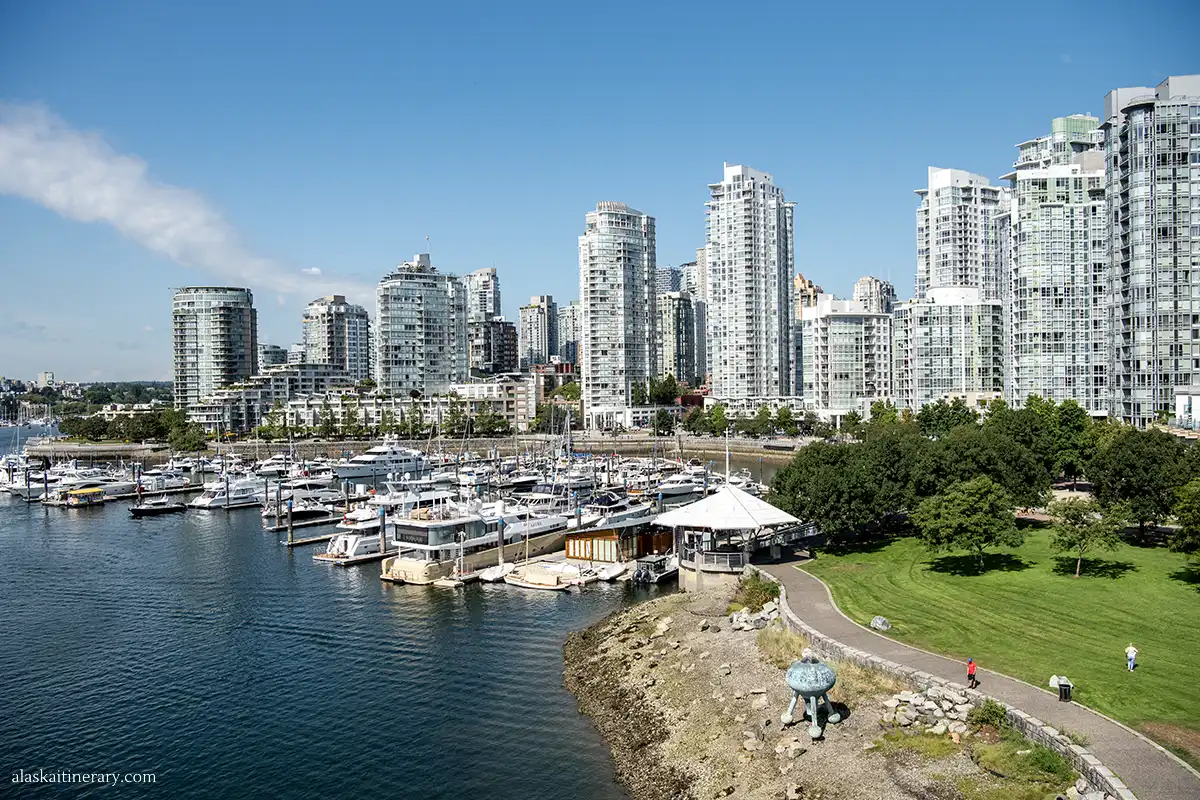
Vancouver is a city we enjoy returning to, with or without a cruise. Visiting friends, biking the seawall, and exploring its food scene have made it much more than a departure point for us.
If your schedule allows, give yourself time here before or after sailing. Even a relaxed waterfront walk and a good meal can become memorable parts of your trip.
For the cruise itself, settle your transportation and luggage arrangements ahead of time. Then you can enjoy Vancouver without spending your visit solving boarding-day logistics.
Do You Like It? Pin It For Later!


What a fantastic and detailed guide! I especially loved your tip about arriving a day early in Vancouver to explore the city before boarding — walking the Seawall in Stanley Park and exploring Gastown would definitely set the tone for an Alaska cruise. Thanks so much for sharing all your practical insights — this will be so helpful for planning my own trip.