
Bear Viewing at Brooks Falls: Everything You Need to Know

Brooks Falls, Alaska, is one of the most famous bear-viewing destinations in the world. Located in Katmai National Park, this remote spot offers a rare chance to watch brown bears catching salmon in their natural habitat. Every summer, dozens of bears gather at the falls, creating one of Alaska’s most iconic wildlife spectacles. In this guide, we’ll cover everything you need to know about visiting Brooks Falls. From the best time to go and how to get there to safety tips, photography advice, hiking trails, bear viewing platforms, and lodging options, we’ve got you covered.
This article may contain affiliate / compensated links. For full information, please see our disclaimer here.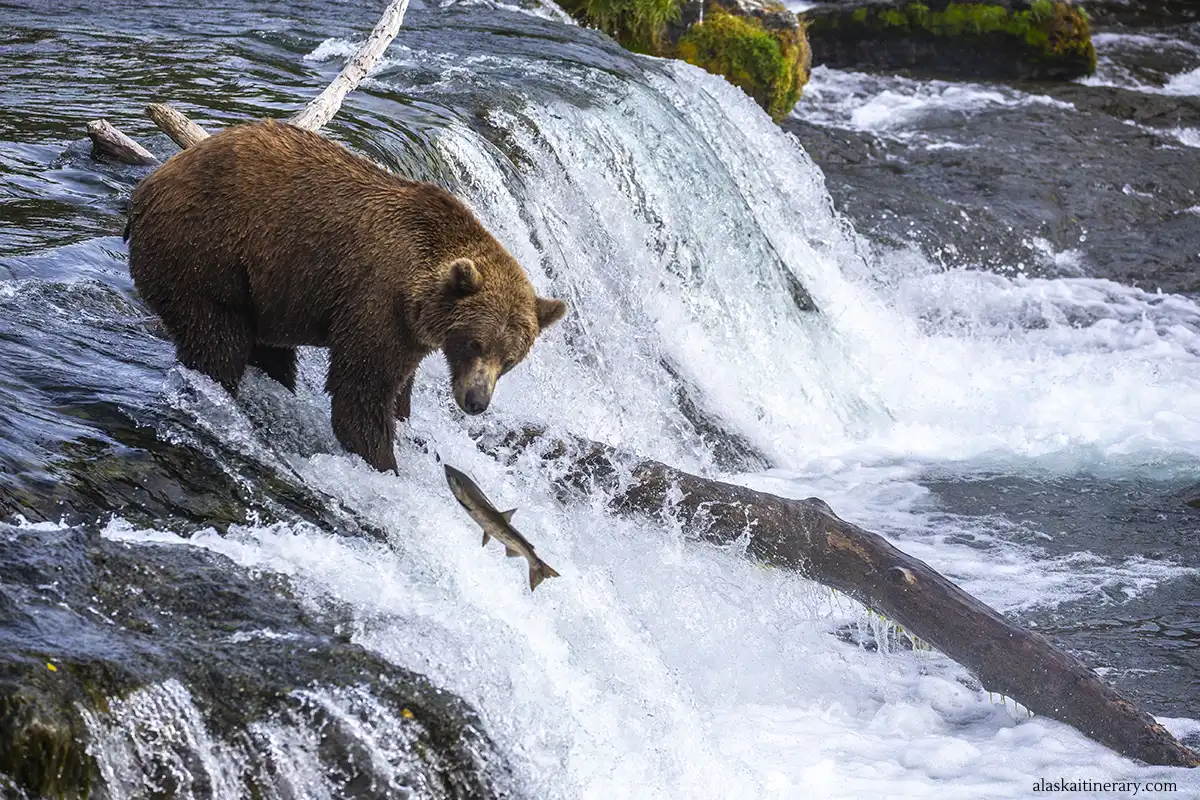
Bear Viewing At Brooks Falls: our Experiences
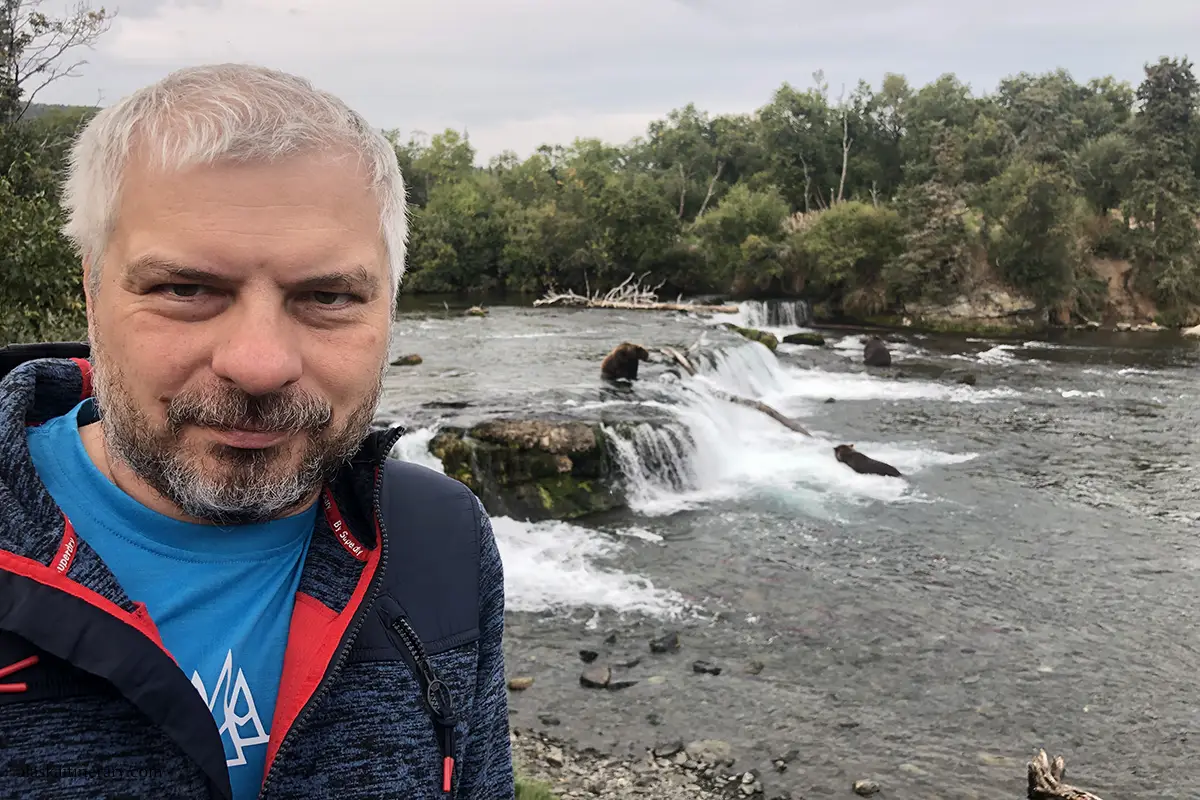
Chris and I have visited many bear-viewing locations in Alaska, but Brooks Falls stands out. It’s the best place to see brown bears up close, whether you’re a wildlife enthusiast, photographer, or first-time visitor.
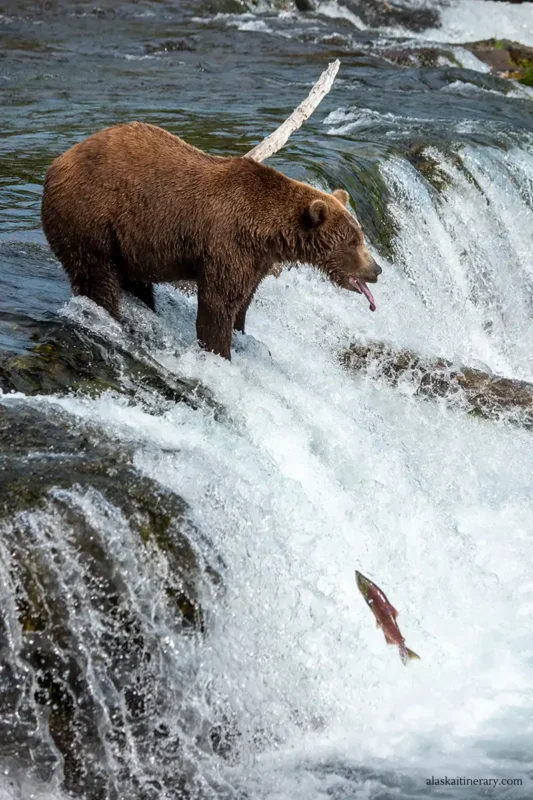
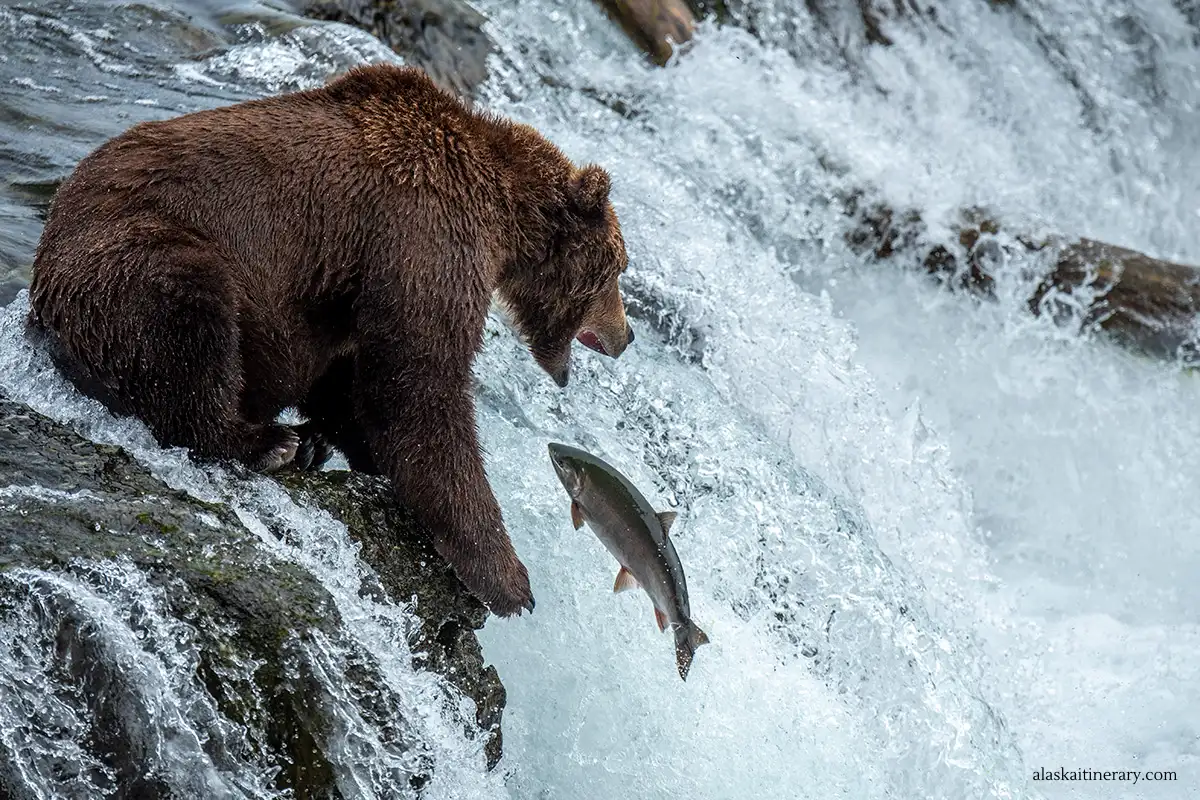
Watching massive bears stand in the rushing water, waiting for salmon to leap into their jaws, is an unforgettable experience.
We were lucky to spend several nights at Brooks Falls Campground, giving us the chance to enjoy bear viewing at Brooks Falls for multiple days.
But we also experienced a one-day bear viewing tour by floatplane, which is a great option for those with limited time.
So far, this has been the best bear viewing tour we’ve taken in Alaska.

We know how challenging it is to win the Brooks Falls lottery for a stay at the famous Brooks Lodge, and we also understand that camping in a tent in this one of the most remotes Alaska national parks isn’t for everyone.
Moreover, it’s chellenging to get there, as there no road to this park. That’s why a one-day flotplane tour can be the best solution for travelers on a tight schedule.
We’ve also written detailed guides on how to plan a trip to Katmai National Park, including all costs and top things to do in Katmai besides bear viewing. But for now, let’s focus on what makes bear viewing at Brooks Falls such a once-in-a-lifetime experience!

The Phenomenon of Bear Viewing at Brooks Falls
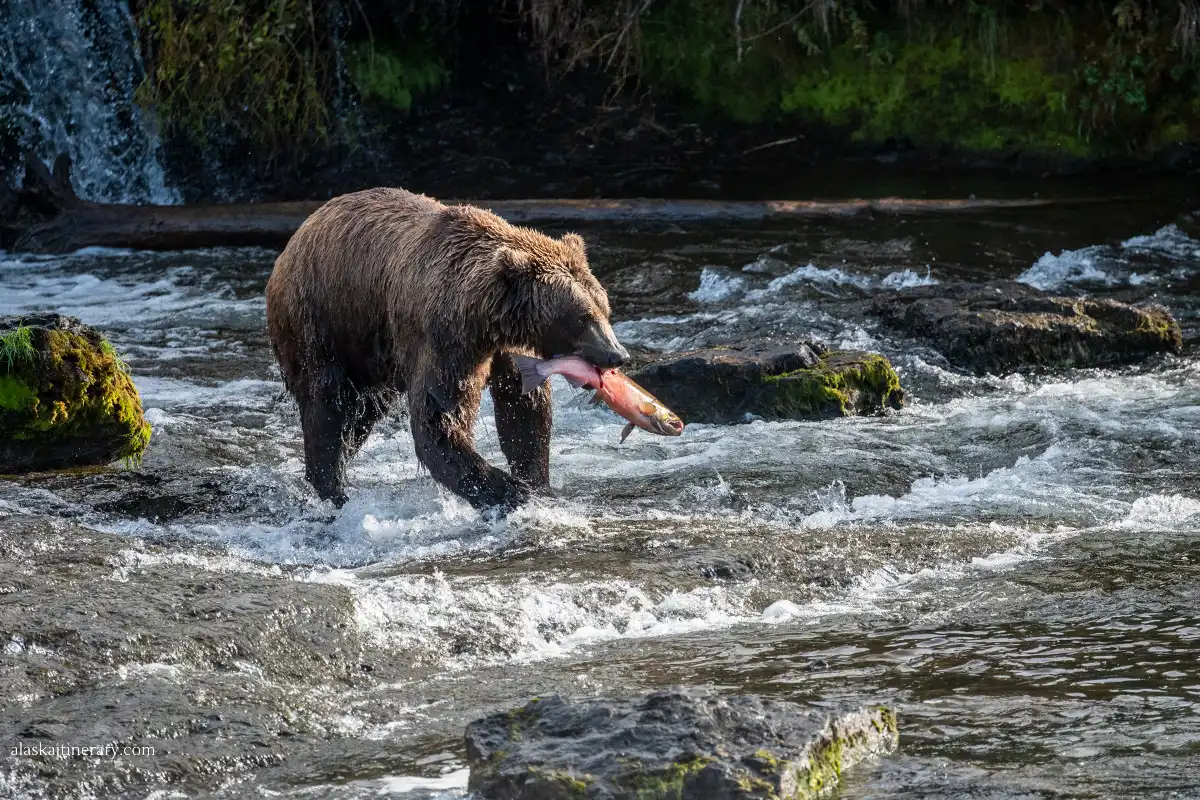
Brooks Falls is one of the best places in the world to observe brown bears in their natural habitat. Every summer, dozens of bears gather along the falls, creating one of Alaska’s most spectacular wildlife encounters. The sight of massive brown bears standing in the rushing water, patiently waiting for leaping salmon, is an experience unlike any other.
What makes Brooks Falls so special? The unique geography of the Brooks River and the annual salmon migration create a perfect feeding ground for bears, drawing them in year after year. Visitors can watch this incredible event from safe, elevated platforms, making it one of the most accessible and thrilling bear-viewing locations in Alaska.
Watching brown bears fish for salmon at Brooks Falls is one of the most iconic wildlife moments and a highlight among best things to do in Alaska.

What is Brooks Falls?
Brooks Falls is a natural waterfall located on the Brooks River in Katmai National Park, Alaska. The river connects Brooks Lake to Naknek Lake and is a prime salmon migration route. As salmon fight their way upstream, they jump over the falls, providing the perfect feeding opportunity for hungry bears.
The falls are about six feet high, but that small drop is enough to slow down the salmon, making them easy targets for waiting bears. This natural setup creates one of the most dramatic wildlife spectacles in Alaska.
Unlike other bear-viewing areas where sightings can be unpredictable, Brooks Falls consistently attracts large numbers of bears, offering some of the most reliable bear-viewing opportunities in Alaska.

Why is Brooks Falls So Important in Katmai National Park?
Katmai National Park is home to one of the largest protected brown bear populations in the world, with an estimated 2,200 bears roaming its vast wilderness.
While the park was originally established to protect the Valley of Ten Thousand Smokes after a massive volcanic eruption in 1912, it has since become world-famous for its thriving brown bear population.
Brooks Falls plays a key role in the survival of these bears. The high concentration of salmon in the Brooks River provides a critical food source, allowing bears to gain enough fat reserves to survive Alaska’s harsh winters. This is why, during peak salmon runs, you’ll see dozens of bears gathered at the falls, each competing for the best fishing spots.

Why is Brooks Falls One of the Best Places for Bear Viewing?
Brooks Falls stands out as a premier bear-viewing destination due to several key factors:
- Abundant Salmon Runs: Each summer, the Brooks River experiences significant sockeye salmon migrations, with numbers ranging from 200,000 to 400,000 fish. This abundance provides a reliable food source for the bears throughout the season.
- High Bear Concentration: During peak viewing times, particularly in mid-July, it’s possible to observe more than 25 bears simultaneously at Brooks Falls. This high density offers visitors unparalleled opportunities to witness bear behaviors up close.
- Strategic Fishing Location: The six-foot-high waterfall at Brooks Falls creates a natural barrier for migrating salmon, making them easier targets for bears. This unique setting allows bears to employ various fishing techniques, such as standing atop the falls to catch jumping salmon or waiting below to snag fish that are swept downstream.
- Established Viewing Platforms: To accommodate the influx of visitors, Brooks Falls features designated viewing platforms with a capacity of 40 people. These platforms provide safe and unobstructed views of the bears in action, enhancing the overall wildlife observation experience.

Best Times to Visit for Optimal Bear Viewing at Brooks Falls
While bears are present in Katmai National Park from spring to fall, peak bear viewing at Brooks Falls occurs when sockeye salmon migrate upstream in large numbers. The optimal times for bear viewing at Brooks Falls are primarily July and September. During these months, brown bears congregate in significant numbers to feed on the abundant salmon runs. Late June is when tours typically begin operating, as bears are already active around Brooks Falls.
Here’s a month-by-month breakdown of the best times to visit for optimal bear viewing. Peak bear viewing months at Brooks Falls are July and September.

July – The Best Time for Bear Viewing at Brooks Falls
- Why? The highest concentration of bears gathers at Brooks Falls in early to mid-July, when sockeye salmon begin their migration up the Brooks River.
- What to Expect:
- Dozens of brown bears actively fishing at the falls, even 25 bears in the same time.
- The most iconic bear behaviors, including catching salmon mid-air and defending fishing spots.
- Heavy visitor traffic—Brooks Falls is at its busiest, and permits for Brooks Lodge and camping are hard to get.
September – Fall Bear Viewing at Brooks Falls
- Why? While fewer bears are seen at the falls compared to July, September is still a great time to visit.
- What to Expect:
- Bears remain in the area as they prepare for hibernation, focusing on easy fishing.
- More sightings of fat bears, as they bulk up for the winter.
- Smaller crowds compared to peak season, making it a better experience for photographers.

Late June and August are often considered less ideal for peak bear viewing at Brooks Falls, but they are still excellent months to see bears. You may not see 25–30 bears stacked at the falls at once, but it’s very common to spot 5–10 bears fishing and moving through the area.
June – Some Bears, but Limited Salmon Activity
- Why? Bears are present but scattered, as the salmon run hasn’t fully started yet.
- What to Expect:
- Fewer bears at the falls—they are mostly searching for early fish.
- Bears are seen wandering along the riverbanks rather than actively fishing.
- It’s easier to spot bears in other areas of the park, than at Brooks Falls.
August – Unpredictable Bear Viewing
- Why? After peak July fishing, many bears leave the falls to forage in other areas.
- What to Expect:
- Some bears remain, but numbers are lower than in July and September.
- Bears may hunt along different parts of the river, making sightings less consistent.
Best Time of Day for Bear Viewing at Brooks Falls
- Early morning (6:00 AM – 10:00 AM) – Fewer visitors, great for photography, but bears may not be as active.
- Midday (10:00 AM – 4:00 PM) – Peak viewing times, as bears are most active when salmon are jumping.
- Evening (5:00 PM – 9:00 PM) – Fewer crowds, but bear activity can be unpredictable.
Agnes’ Advice: If you want to experience Brooks Falls at its best, visit in early to mid-July when bear activity is at its peak. If you prefer fewer crowds and a quieter experience, the first two weeks of September are an excellent alternative. Either way, Brooks Falls offers one of Alaska’s most spectacular bear-viewing experiences!

Getting to Brooks Falls
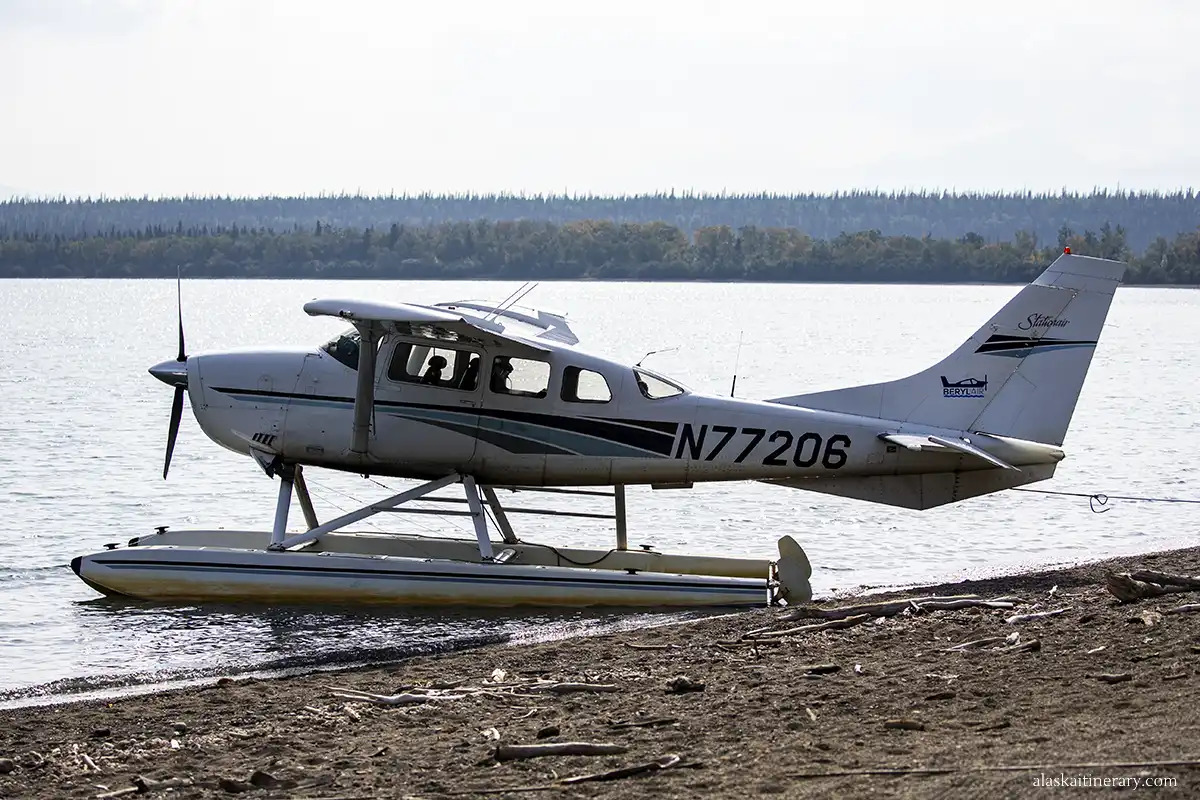
The easiest and most common way to visit Brooks Falls is on a day trip by floatplane from Anchorage or Homer. Many tour operators offer fly-in bear viewing experiences, allowing you to see the famous brown bears in a single day. However, if you want to spend more than a day at Brooks Falls, the logistics become more complex and require advanced planning.
The Best Way to Visit: A Day Trip by Floatplane
For those short on time, a day trip by floatplane is the simplest and fastest way to visit Brooks Falls. These tours depart from Anchorage or Homer and include:
- Round-trip flights on a floatplane
- Bear safety orientation upon arrival
- 3–5 hours of self-guided time at Brooks Falls for bear viewing
These tours bypass the challenge of securing overnight accommodations, making them the most stress-free option. Homer is the best departure point for a day trip to Brooks Falls since it’s the closest major town to Katmai, offering shorter flight times and more frequent floatplane departures compared to Anchorage.
- Cost: Expect to pay $1295–$1,599 per person depending on departure location and season.
- Flight Time: Approximately 2.5 hours one way from Anchorage and 1.5 hours from Homer.
If you only have one day in Katmai National Park, this is the best option to maximize your time and experience Brooks Falls without the hassle of overnight planning. Check out my article about the best bear-viewing tours from Homer.
Staying Overnight at Brooks Falls – A More Challenging Option
If you want to spend more than one day at Brooks Falls, planning becomes more complicated due to limited accommodations and logistics.
Staying at Brooks Lodge – A Highly Competitive Lottery
- Brooks Lodge is the only lodge at Brooks Falls, offering cabins and meals.
- Reservations are done through a lottery system that opens each December.
- Due to high demand, if you enter the December 2025 lottery, you are competing for a stay in 2027.
- Winning a spot is extremely difficult, making alternative options necessary.
Camping at Brooks Campground – A More Affordable but Logistical Challenge
- The Brooks Camp Campground is another overnight option, but it also requires advanced reservations.
- Unlike Brooks Lodge, which provides meals for its guests, campers must bring their own gear and food, as there are no grocery stores or restaurants at Brooks Camp. However, campers can purchase breakfast or dinner at the Brooks Lodge buffet, which is open to all visitors.
- Floatplanes have strict weight limits, making it difficult to carry all the necessary camping equipment.
- A water taxi from King Salmon can be an option for campers carrying extra gear.
If you’re prepared for the challenge, staying overnight at Brooks Falls allows for more relaxed bear viewing and fewer crowds early in the morning and late in the evening.
Step-by-Step: How to Get to Brooks Falls from Anchorage
If you’re not taking a guided day tour, getting to Brooks Falls requires multiple steps.
Step 1: Fly from Anchorage to King Salmon
Since Katmai National Park has no roads, you must first fly to King Salmon (AKN). Alaska Airlines and Ravn Alaska operate daily flights from Anchorage (ANC) to King Salmon (AKN). Flight duration is 1 hour.
Step 2: Fly or Take a Water Taxi from King Salmon to Brooks Camp
Once in King Salmon, you have two options to reach Brooks Falls.
- Option 1: Floatplane from King Salmon to Brooks Camp (Most Common & Fastest). Flight Duration: 30 minutes. Operators: Katmai Air, and Branch River Air. We had great experiences with Katmai Air. A flight from King Salmon costs $450 per person round-trip. And they also offer flights from Anchorage to Brooks Camp ($1370 per person round-trip).
- Option 2: Water Taxi from King Salmon to Brooks Camp. Duration: 45 minutes. Operator: Katmai Water Taxi Services. Cost: $450 per person round-trip. Best for: Campers needing to transport extra gear beyond floatplane weight limits.

Navigating Brooks Camp
So, you’ve reached your dream bear-viewing destination—whether for a day trip or a longer stay, the rules are the same. Brooks Camp is in the heart of bear country, and safety, respect for wildlife, and following park regulations are essential for an unforgettable and safe experience. Here’s everything you need to know about getting around Brooks Camp.
Mandatory Bear Safety Orientation
Before you can explore, all visitors must attend a mandatory bear safety briefing led by Katmai National Park rangers.
- Where? The Brooks Camp Visitor Center, near the floatplane dock.
- How long? About 20 minutes.
- What’s covered?
- How to behave around bears.
- Rules for walking trails safely.
- Proper food and gear storage.
After the orientation, you’ll receive a bear safety pin (a small badge) that you must wear during your visit. Rangers won’t allow you on the trails without it.

Walking Around Brooks Camp – Staying Bear Aware
Brooks Camp is not fenced, meaning bears roam freely throughout the area. It’s common to see bears along the trails, near the river, or even by the lodge and campground.
- Always give bears the right of way—stay at least 50 yards (150 feet) away.
- If a bear is on the trail, step off and wait for it to move. Never approach or run.
- Travel in groups whenever possible—bears tend to avoid groups of people.
There are three main trails visitors use:
- Brooks Falls Trail (1.2 miles one way) – The main trail leading to the bear-viewing platforms.
- Lake Brooks Trail (1 mile one way) – A scenic trail along Lake Brooks, often quieter.
- Cultural Site Trail – A short interpretive trail near the visitor center showcasing indigenous history.
Expect to stop often—rangers will temporarily close trails if bears are too close, ensuring both visitor and bear safety.
The Bear-Viewing Platforms at Brooks Falls
Brooks Falls offers designated bear-viewing platforms, providing safe and incredible views of the bears.
- Brooks Falls Platform (Main Viewing Area). The best place to watch bears catching salmon in the falls. Capacity is limited to 40 people, with a 1-hour viewing limit during peak times. A ranger monitors the platform and manages visitor rotations.
- Riffles Platform. A short walk from Brooks Falls Platform. Offers a side-angle view of the falls, perfect for photographers.
- Additionally, there is a third South Platform near the mouth of the Brooks River, offering another vantage point for visitors.
Food & Storage Rules – Bear Proofing Your Gear
To protect both visitors and bears, all food, toiletries, and scented items must be stored properly.
- No food or scented items on trails or viewing platforms—only water bottles allowed.
- Use the designated food storage cache at the lodge or campground.
- Cook and eat only in the designated dining areas.
- If staying overnight, store everything with a scent in bear-proof lockers.
Facilities at Brooks Camp
- Brooks Camp Visitor Center – Ranger station, park information, and bear safety orientation.
- Brooks Lodge Dining Hall – Open to all visitors for buffet-style breakfast, lunch, and dinner.
- Restrooms – Located near the lodge and campground.
- Bear-proof lockers – Available for food and gear storage.
Agnes Advice: At Brooks Falls, bear spray isn’t needed—in fact, you can’t bring it on the plane. If you’re planning bear viewing in other areas of Katmai or different Alaska national parks, camping or backpacking trips check out our Alaska bear safety tips to stay prepared.
Photography Tips for Capturing Bears at Brooks Falls
Photographing brown bears at Brooks Falls is a unique and exhilarating experience. To ensure both spectacular shots and compliance with park regulations, it’s essential to understand the guidelines set by Katmai National Park.
Platform Capacity and Time Limits
Due to high visitor numbers, especially in July, the Brooks Falls Platform has specific rules to manage crowding:
- Capacity: Limited to 40 people at a time.
- Time Limit: When at capacity, visitors are allowed up to one hour on the platform. Rangers maintain a waiting list and enforce time limits to ensure everyone gets a chance to view the bears.
Tripod and Equipment Usage
To minimize congestion and enhance safety on the platforms:
- Tripods and Rail-Mounted Fixtures: Prohibited on the Brooks Falls Platform from June 15 to August 15.
- Monopods: Allowed and recommended as a space-saving alternative.
Agnes’ Advice: If you rely on a tripod for stability, consider using a monopod during peak months. Always be mindful of your equipment’s footprint to ensure a comfortable experience for all visitors.
Optimal Viewing Times
Bear activity and platform crowding can vary throughout the day:
- Peak Hours: Between 10 AM and 4 PM, platforms are busiest, often leading to wait times exceeding 1.5 hours.
- Quieter Periods: Early mornings and late evenings typically see fewer visitors, offering a more relaxed experience.
Agnes’ Advice: Plan your visit during off-peak hours to maximize your time on the platforms and increase the chances of capturing unique bear behaviors.
Exploring Alternative Viewing Areas
Beyond the main Brooks Falls Platform, consider these spots:
- Riffles Platform: Located downstream, it offers a different perspective of bear activities.
- South Platform: Situated near the river mouth, these platforms can be less crowded and provide diverse viewing opportunities.
Agnes’ Advice: Bears often roam throughout the Brooks River area. Exploring multiple platforms can offer varied photographic angles and experiences.
General Park Etiquette
To ensure a safe and enjoyable experience for all:
- Stay Bear Aware: Always maintain a safe distance and never approach bears.
- Minimize Noise: Keep conversations low to avoid disturbing wildlife.
- Share the Space: Be considerate of fellow visitors, allowing everyone a chance to observe and photograph the bears.
Agnes’ Advice: Respecting park rules not only ensures your safety but also helps preserve the natural behaviors of these magnificent creatures.
Final Thoughts
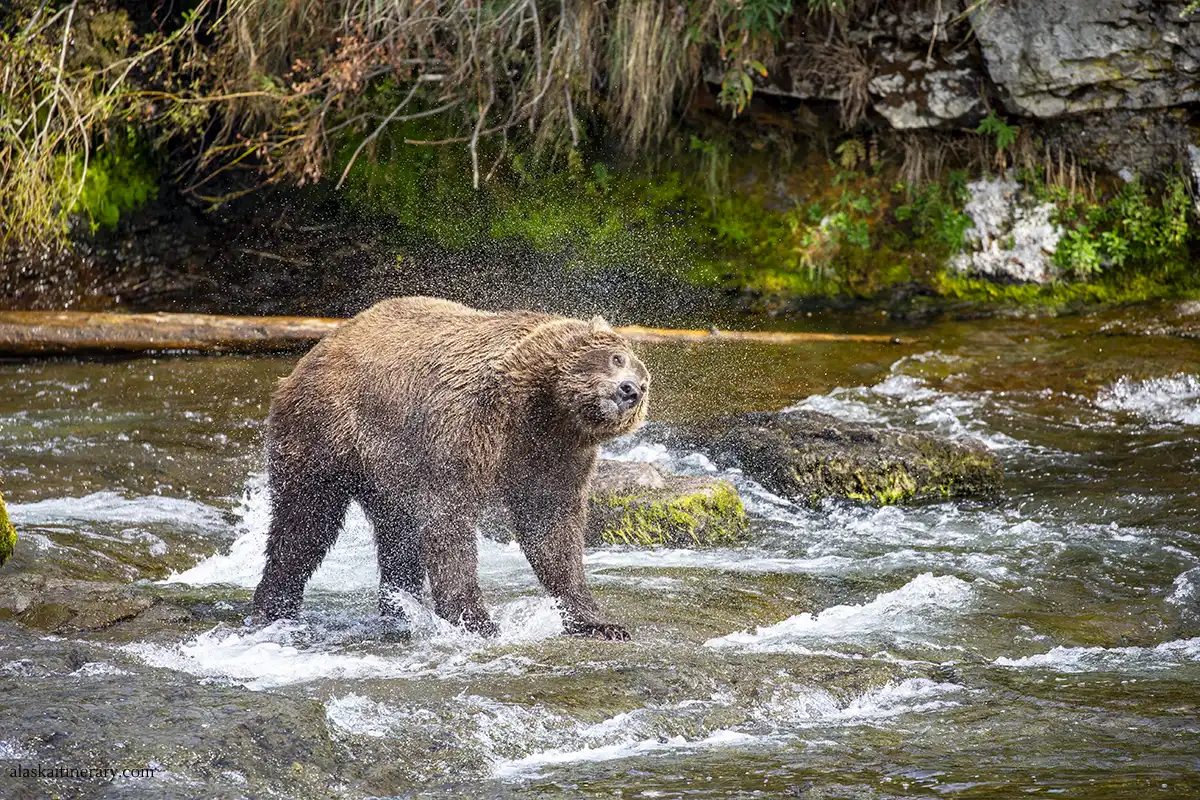
Brooks Falls is one of the most incredible wildlife destinations in the world, offering a once-in-a-lifetime opportunity to observe brown bears up close in their natural habitat. Whether you visit on a day trip by floatplane or stay overnight at Brooks Camp, the experience of watching bears skillfully catch salmon at the falls is truly unforgettable.
Reaching Brooks Falls takes planning and effort, but the reward is an unparalleled bear-viewing adventure in the heart of Katmai National Park. Understanding the best times to visit, park rules, and photography tips will help ensure a safe, enjoyable, and responsible experience.
If you’re dreaming of witnessing Alaska’s famous bears in action, Brooks Falls should be at the top of your bucket list. Follow the guidelines, respect the wildlife, and embrace the magic of one of the best bear-viewing locations on Earth!
Do You Like It? Pin It For Later!


Will there be enough rangers for safety this year after the crazy cuts?
That’s a great question, and it’s really one for the National Park Service to answer directly. However, I’m pretty sure that visitor safety remains a top priority for them.
If you follow the bear safety rules, Brooks Falls is a safe place to watch bears. The wooden platforms and designated trails are designed to keep visitors at a safe distance while minimizing disturbance to the bears. It’s always good to stay updated with NPS announcements before your trip!
This would be such an amazing experience. Not only to see the bears but to be able to watch them catching fish and being active in their natural habitat. There is a lot that goes into planning this, and your guide is helpful!
This is a bucket list item for me personally, it looks so thrilling but also slightly dangerous! We ran into several grizzly bears from afar when hiking in Glacier and it was pretty frightening, but we didn’t have the proper equipment like bear spray and we weren’t prepared. Seeing the bears at Brooks Falls seems like a great way to check out these giants while also being safe. I’m a huge fan of the fat bear contest each year and I’m sure several past winners have been spotted in this area!
This is at on my bucket list! I want to see all the bears and also visit all the national parks in the usa!
Hello! I guess it is one of the greatest experiences to see bears in wild nature! I like your idea about using monopode instead of tripode. It minimizes inconvenience for other visitors and makes your bag more appropriate in dize.
Wow. This has got to be so amazing to experience.
Bear viewing in safe environment sounds amazing. Booking accommodations into 2027 is a little wild. So much can change over the course of a full year! Sounds like a rewarding trip.
I woud love this – have several friends who have and walked away with beautiful photos. Love yours.
Will a 300 or 600mm lens be to large?
I would personally pick the longer lens for Brooks Falls. A 600mm definitely gives you better chances for great wildlife shots, especially when bears are farther from the viewing platforms. It also depends on the timing of your visit. Sometimes bears come very close, sometimes they stay farther away, and sometimes there are more people on the platforms which can affect your angles. You can also spot bears along the river and shoreline from a distance. Most photos in my article were taken with a 400mm lens, and honestly I still wished for a bit more reach sometimes.
Speaking of bears, which reminds me of summers in Yosemite. Growing up in Northern California, two weeks there was one of the rites of summer. I remember one year, a crowd had gathered when a bear was sighted. While almost everyone was keeping a safe distance, I remember the horrified look on everyone’s face when a father grabbed his young son and attempted to place it on the bear’s back while his wife was trying to take a picture. Fortunately, the kid survived the incident, but keeping “bear aware,” as you put it, must be taken seriously. Great post!
I would just love to do this someday. Great photos and great detail. Have never actually seen a bear in real life.