
Guide to Bear Safety in Alaska: How to Stay Safe in Bear Country

Alaska is home to some of the largest populations of wild bears in North America. Whether you’re hiking, camping, fishing, or just exploring, you need to know how to stay safe. In this guide, we’ll cover everything you need to know about bear safety in Alaska. This article will give you the best expert-backed advice for staying safe, from how to avoid attracting bears to what to do if you see one. Whether you’re a first-time visitor or a seasoned explorer, these tips will help you enjoy Alaska’s wilderness safely and responsibly.
This article may contain affiliate / compensated links. For full information, please see our disclaimer here.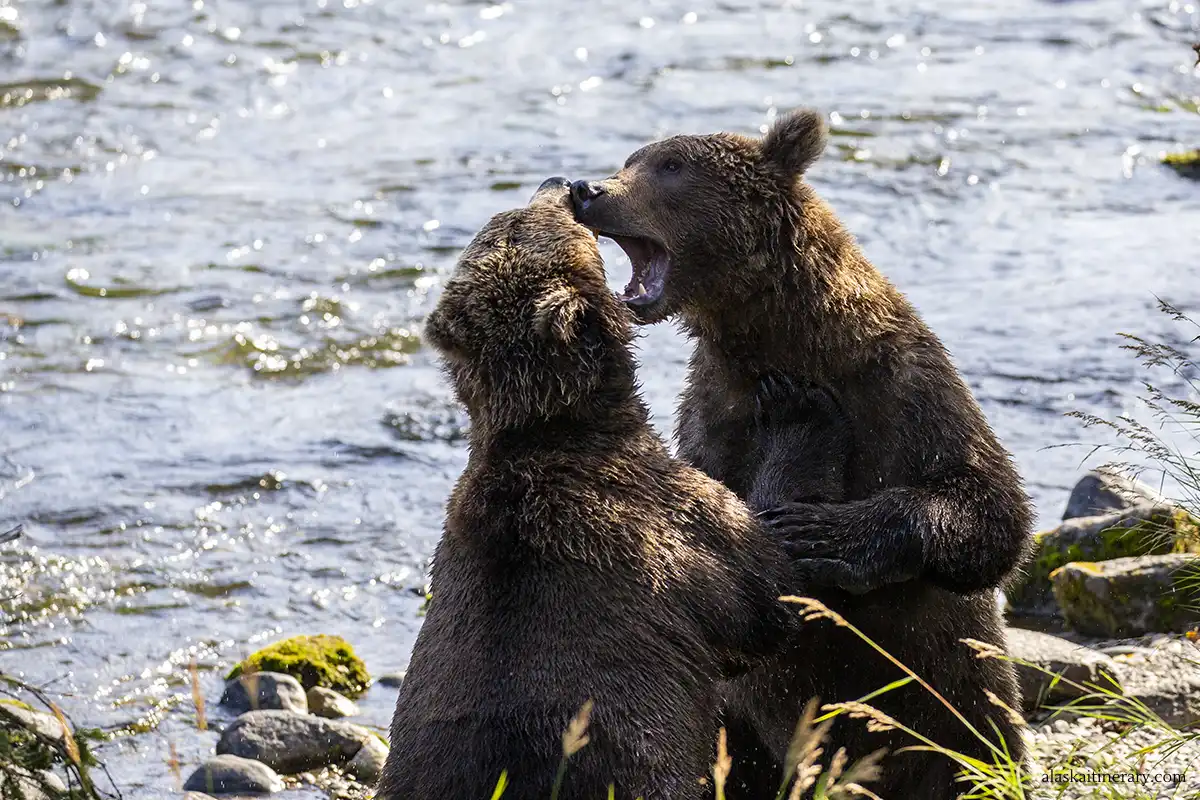
Bear Safety In Alaska: Our Experiences
Chris and I have spent countless days in Alaska’s wilderness, from national parks to remote backcountry trails. We’ve seen bears up close and know how important bear safety is. Understanding bear behavior, carrying the right deterrents, and following simple safety rules can help prevent dangerous encounters.
However, I want to emphasize that I am not a bear expert, wildlife biologist, or park ranger. This article is based on our firsthand experiences, as well as multiple bear safety orientations led by rangers and experts during our travels across Alaska. I relied on the most trusted and expert-backed resources specializing in bear safety to ensure this article provides the most valuable and accurate information.
Understanding bear safety is not just about behavior in the moment but an essential part of broader Alaska travel planning and preparation.
As photographers, we’ve also joined several bear-viewing tours across Alaska, some led by highly experienced guides.


That said, I strongly encourage you to check official, authoritative sources for the most up-to-date bear safety guidelines and always verify current conditions in the area you plan to explore. Check out the NPS website, Alaska Department of Fish and Game, Alaska Department of Natural Resources, Western Wildlife, or University of Alaska.
If you plan backpacking, I highly recommend reading Bear Attacks: Their Causes and Avoidance or Bear Essentials.

When planning your first trip to Alaska, prioritizing safety is essential. Before you go, think about the activities you plan to experience, including potential bear encounters. Even if you’re not camping or backpacking, bear sightings are possible.
If you’re not experienced in wildlife viewing or wilderness travel but dream of seeing bears in their natural habitat, consider an organized bear-viewing tour. Locations like world-famous Brooks Falls are well-prepared for visitors, offering designated viewing platforms that ensure safety for both people and bears.
These tours aren’t cheap and will add to your Alaska trip costs, but the once-in-a-lifetime experience is worth it! It’s one of the best places to see bears in Alaska.

Overview of Bear Species in Alaska
Alaska is home to three bear species: grizzly (brown) bears, black bears, and polar bears. Each species has unique characteristics, habitats, and behaviors, making it important to know what to expect depending on where you’re exploring.
Brown Bears (Grizzly Bears) in Alaska
- Scientific Name: Ursus arctos
- Size: 600–1,200 pounds (males), 300–700 pounds (females)
- Habitat: Coastal areas, river valleys, tundra, and interior forests
- Population in Alaska: ~30,000
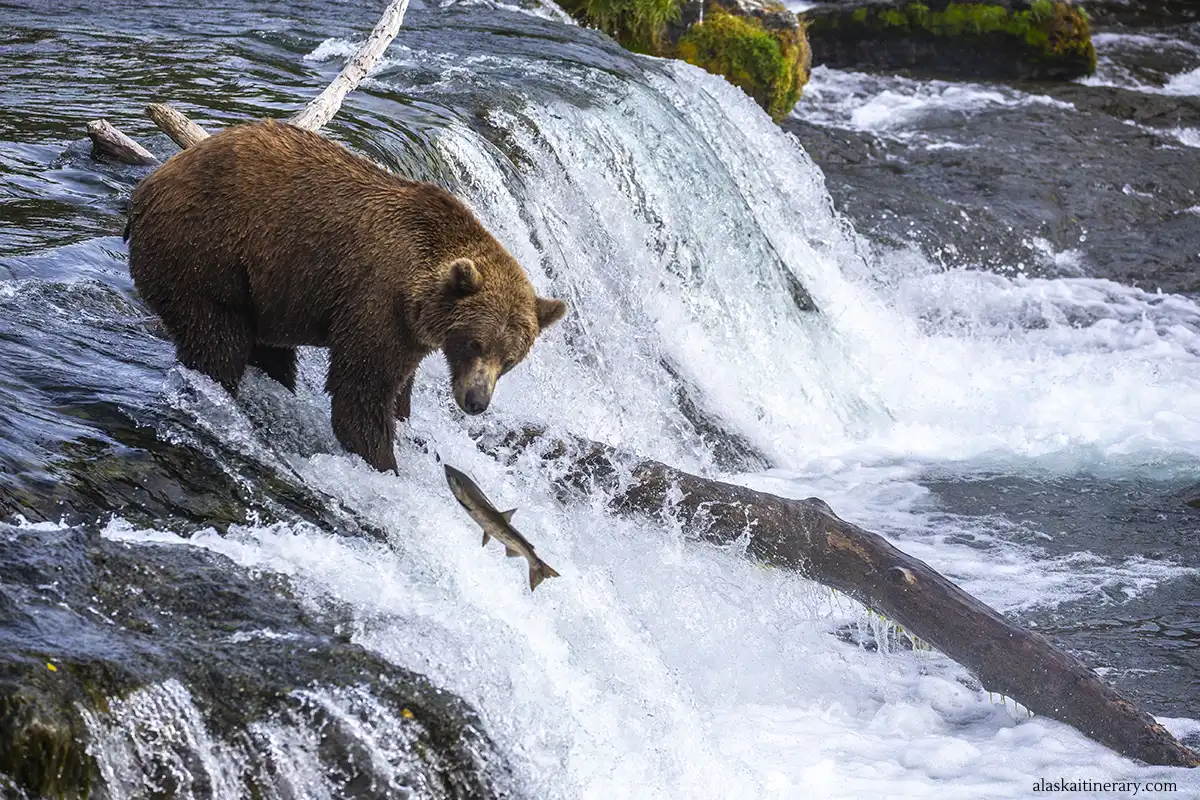
Brown bears, often referred to as grizzlies, are Alaska’s most well-known bear species. They are found in coastal and inland regions, with coastal brown bears growing larger due to their high-protein diet of salmon. Grizzly bears in interior Alaska are typically smaller and more territorial, as they rely on a more varied diet.
Brown bears are most active from spring through fall. They are often seen fishing in rivers, foraging for berries, and roaming open landscapes. While they typically avoid humans, they can be highly defensive if surprised, especially sows (mothers) with cubs.
Where You Might See Brown Bears:
- Katmai National Park (world-famous bear viewing at Brooks Falls)
- Lake Clark National Park (check out the best bear viewing tours from Homer)
- Denali National Park (check tips about wildlife viewing in Denali)
- Kodiak Island (home to the largest brown bears in the world)
Black Bears in Alaska
- Scientific Name: Ursus americanus
- Size: 150–400 pounds (males), 100–250 pounds (females)
- Habitat: Forests, coastal areas, and mountains
- Population in Alaska: ~100,000
Black bears are the most common and widely distributed bear species in Alaska. They are smaller and more adaptable than brown bears, often found in forested regions, near rivers, and even close to human settlements. Their diet consists of berries, plants, fish, and small mammals.
Black bears are generally less aggressive than brown bears, but they can become bold around food sources, especially in areas with improper food storage. While they usually avoid human encounters, it’s important to practice proper bear safety measures when camping or hiking in black bear territory.
Where You Might See Black Bears:
- Kenai Peninsula
- Southeast Alaska (Juneau, Ketchikan, Sitka. Check out Top Spots for Bear Viewing on a Cruise to Alaska)
- Chugach State Park (near Anchorage)
- Tongass National Forest

Polar Bears in Alaska
- Scientific Name: Ursus maritimus
- Size: 900–1,600 pounds (males), 500–1,000 pounds (females)
- Habitat: Arctic coastal regions and sea ice
- Population in Alaska: ~4,000
Polar bears are the least commonly encountered bears in Alaska since they live farther north in Arctic regions. They are marine mammals, spending much of their time on sea ice, hunting seals. Unlike brown and black bears, polar bears do not hibernate—they are active year-round.
Encounters with polar bears are rare unless you are traveling to Alaska’s Arctic regions, such as Utqiaġvik (Barrow), Kaktovik, or the North Slope. These bears are apex predators and highly dangerous, so if you plan to visit Arctic Alaska, you must follow strict polar bear safety protocols.
Where You Might See Polar Bears:
- Kaktovik (on a guided polar bear tour)
- Utqiaġvik (formerly Barrow)
- Arctic National Wildlife Refuge
How to Identify Bears in Alaska
Knowing how to tell black bears and brown bears apart is important for safety reasons, as their behaviors differ. Here are some key differences:
- Size – Brown bears are larger and more muscular than black bears.
- Face Shape – Black bears have a straight facial profile, while brown bears have a distinct shoulder hump and a more concave face.
- Claws – Brown bears have long, curved claws (ideal for digging and fishing), while black bears have shorter, sharper claws for climbing.
- Color Variations – Black bears can be black, brown, cinnamon, or even bluish-gray (in Southeast Alaska), while brown bears range from light blond to dark brown.
Preventative Measures: How to Avoid Bear Encounters in Alaska
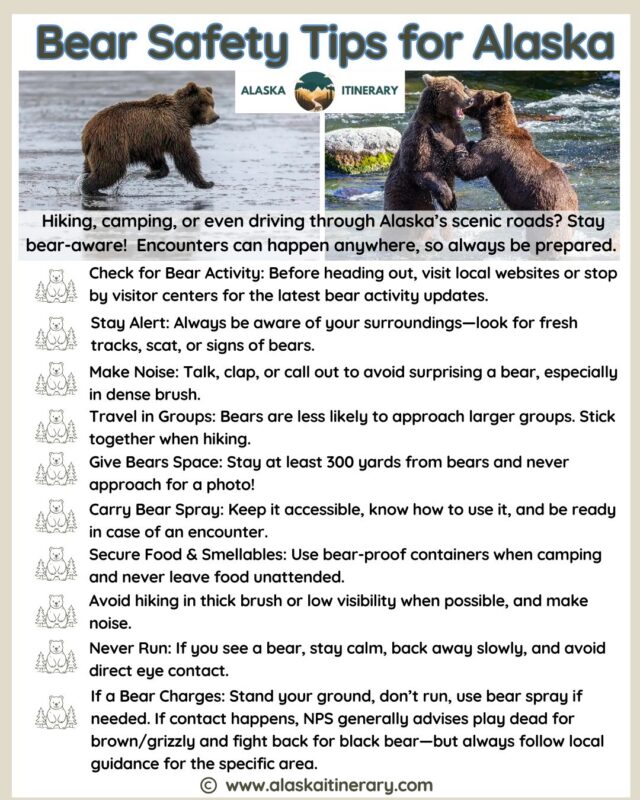
The best way to stay safe in bear country is to prevent encounters before they happen. Bears usually avoid humans, but surprising a bear, getting between a mother and her cubs, or attracting one with food can lead to dangerous situations. Here are the most important precautions to take when exploring Alaska’s wilderness.
Check Current Bear Alerts
Alaska is huge, and each area has different bear activity levels. This article provides general bear safety tips for Alaska, but conditions can change daily. Before you head out—whether for a road trip, hike, camping, or backpacking adventure—always check local bear alerts.
Stop by the nearest National Park Service (NPS) visitor center, state park office, or ranger station to ask about recent bear sightings, trail closures, and food storage rules. Some areas may have active bear warnings, while others may be low-risk. Staying informed helps you prepare and stay safe in bear country.

Make Noise to Avoid Surprising Bears
Bears prefer to avoid people, so the worst thing you can do is startle one at close range. Bears have poor eyesight compared to their exceptional sense of smell and hearing. However, their vision is not as bad as some myths suggest—they can still see well at moderate distances, especially movement.
Their strongest senses are smell and hearing, which is why making noise is one of the best ways to avoid surprising a bear. Bears rely more on their sense of smell and hearing than eyesight to detect danger. To prevent accidental encounters:
- Talk loudly, clap your hands, hum a song, or shout “Hey bear!” every few minutes, especially in dense vegetation or near rivers. A bear that hears you is more likely to move away, preventing a surprise encounter.
- Travel in groups—bears are less likely to approach multiple people.
- Avoid using headphones while hiking.
- Be extra cautious near streams, thick brush, or on blind corners, where a bear might not hear you coming.
Agnes’ Advice: In areas where bear activity is high, consider carrying a bear bell with a whistle and Loud Air Horn for Bears—but don’t rely on them alone! Your voice is the best tool for alerting bears to your presence. Those affordable and small items might be helpful. However, air horns or bear bells may be a supplementary tool to alert bears to human presence, potentially preventing surprise encounters. But, they should not replace Bear Spray as the primary means of defense.


Carry Bear Spray and Know How to Use It
Bear spray is one of the most effective deterrents for stopping an aggressive bear. However, having it isn’t enough—you need to know how to use it properly.
- Keep bear spray within quick reach (not inside your backpack). A holster or chest strap is ideal.
- Know how to deploy it before you need it. Bears can charge at speeds up to 35 mph, so there’s no time to fumble.
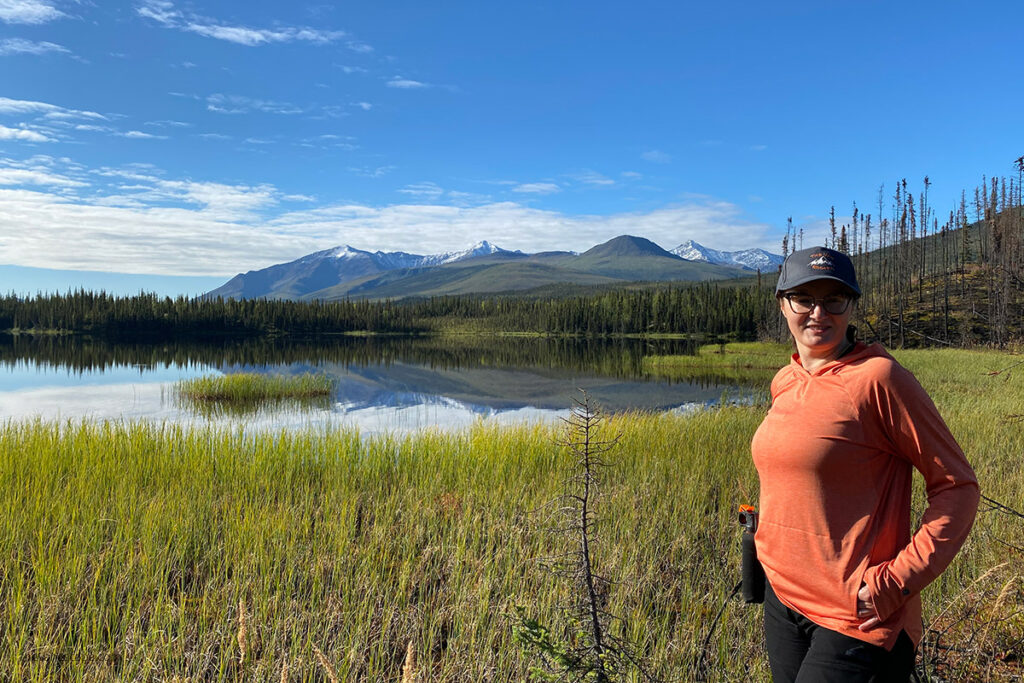
- Use bear spray only as a last resort—its purpose is to stop a charging bear, not to scare one away from a distance. This bear spray has a 30-foot (9-meter) spray range (fog barrier) and provides one of the best protection.
Agnes’ Advice: Practice using inert bear spray (without active ingredients) before heading into bear country. This way, you won’t panic if you need it.

Store Food and Scented Items Properly
Bears have an incredible sense of smell and are always searching for food. So, they are attracted to anything with a strong odor. Improper food storage can bring a bear into your campsite or picnic area, creating a dangerous situation.
Even if you’re just on a day hike, store all food properly—pack snacks and sandwiches in high-quality, smell-proof bags, keep food securely inside your sturdy daypack, and never leave any scraps behind. If camping or backpacking, use bear-proof-resistant food containers.
Fact: A bear’s sense of smell is 7 times stronger than a bloodhound’s and can detect food miles away. But if they hear humans approaching, they often choose to avoid them.
- Store all food, scented items, and trash in bear-proof containers or bear lockers where required.
- Never keep food, toiletries, or scented items inside your tent.
- If camping, cook and store food at least 100 yards from your sleeping area.
- Clean up all food scraps immediately—even small crumbs can attract wildlife.
- If camping/backpacking, use the Ultralight Bear Food Bag Hanging System.
Agnes’ Advice: Even items like toothpaste or sunscreen can attract bears. Store all scented products in the Bear-Proof Canister and Odor Proof Storage Bags.

Stay on Designated Trails
Bears roam freely, and stepping off the trail increases your chances of a close encounter. Stick to:
- Well-traveled hiking trails, where bears are used to human presence.
- Open areas, where you can see ahead and spot bears from a distance.
- Avoid thick brush or wandering along salmon-filled rivers, where bears are actively fishing.
Travel in Groups Whenever Possible
Bears are far less likely to approach a group of people than a single hiker. If possible:
- Hike in groups of two, three or more.
- Keep children close to adults and never let them run ahead.
- If you see a bear in the distance, stick together and avoid sudden movements.
Agnes’ Advice: If you’re solo hiking in bear country, be extra cautious—stay loud, alert, and carry bear spray within easy reach. We usually hike together as a couple, but many times in Alaska, we’ve come across solo hikers singing songs or reciting poems to make noise. There’s nothing shameful about it—in fact, it’s a smart way to alert bears to your presence and stay safe on the trail!
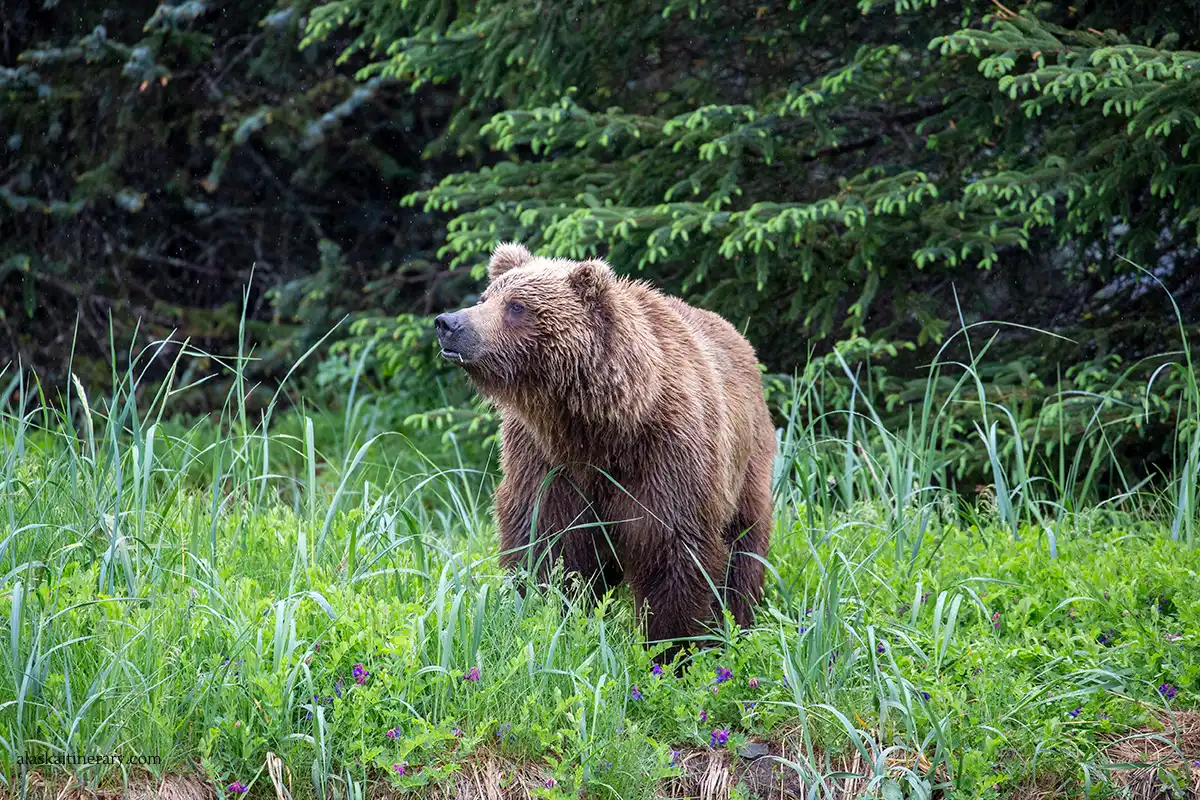
Avoid Hiking at Dawn, Dusk, or Night
Bears are most active early in the morning and late in the evening, especially in summer months when they take advantage of cooler temperatures. If you’re hiking in high bear activity areas:
- Start your hike later in the morning and avoid sunrise or sunset treks.
- Stick to well-traveled trails where bears are less likely to be hunting or foraging.
- If you must hike early or late, increase noise levels and stay extra alert.
Be Aware of Your Surroundings
- Look for signs of bear activity, such as tracks, scat (bear droppings), claw marks on trees, or overturned rocks.
- If you see a carcass or fresh kill, leave the area immediately—a bear is likely nearby and will defend its food.
- In bear country, assume bears are always around, even if you don’t see them.
Keep Pets Leashed or Leave Them at Home
Dogs can trigger dangerous bear encounters. A dog may provoke a bear and then run back to its owner, bringing the bear with it.
- If you bring a dog, keep it leashed at all times.
- Never let dogs chase, bark at, or approach bears.
- Some national parks and wildlife areas do not allow dogs on trails due to bear safety concerns.
Preventative Measures for Backpacking and Off-Trail Hiking in Bear Country
Alaska is true wilderness, with vast areas lacking established hiking trails or campgrounds. Many experienced travelers seek to explore this raw beauty through backpacking trips. For example:
- Denali has only about 35 miles of marked trails, and 6 designed campgrounds, but visitors can hike off-trail for the day or obtain a permit for backcountry backpacking.
- In Gates of the Arctic National Park, there are no marked trails or established campgrounds at all—it’s the least-visited national park in the U.S., requiring self-sufficiency and expert navigation skills.
- Similarly, in Wrangell-St. Elias National Park, the largest national park in the U.S., there are only a few marked trails and campgrounds, in the McCarthy area, but experienced adventurers can venture into the backcountry for true off-grid exploration.
- In Katmai National Park, home to over 2,200 brown bears, there are only a few designated trails at Brooks Camp, while the rest of the park remains untamed wilderness, open for backpacking and true off-grid exploration.
All these areas are bear country—where travelers must be prepared, bear-aware, and respect the wildlife that calls these remote landscapes home. Backpacking and off-trail hiking in remote areas require extra precautions due to the high likelihood of encountering bears.
When you step off established trails, you are entering undisturbed bear habitat, where bears are less accustomed to human presence. Proper bear awareness and safety measures are crucial.
Travel in Groups and Stay Visible
- Bears are less likely to approach larger groups. If possible, backpack with two or more people.
- Stick to open terrain whenever possible. Bears are more likely to be surprised in dense vegetation.
- If hiking through tall grass or thick brush, make extra noise to alert bears to your presence.
Agnes’ Advice: Avoid ridge edges with limited visibility, as bears often walk along ridgelines to travel efficiently.


Choose a Safe Campsite in Bear Country
- Camp in open areas where you can see your surroundings. Avoid thick brush, berry patches, or animal trails.
- Look for bear signs (tracks, scat, overturned logs). If you see fresh signs, move to a different location.
- Follow the “Bear Triangle” Rule:
- Sleeping area
- Cooking area (at least 100 yards from camp)
- Food storage area (at least 100 yards downwind)
Agnes’ Advice: If you’re in a high-density bear area, sleep with your bear spray within arm’s reach.
Carry a Bear Canister for Food Storage
- Bear-resistant food containers (BRFCs) are required in many backcountry areas, including Denali National Park.
- Keep all food, toiletries, and scented items in bear-proof containers at least 100 yards from camp.
- Hang food only if bear canisters are not required, using a tree at least 10 feet high and 4 feet from the trunk.
Agnes’ Advice: In Denali, you are required to pick up a bear-proof canister before heading into the backcountry. Our favorite backpacking items are Bear Resistant Food Container, Ultralight Bear Food Bag Hanging System, and Food Backpacking- Odor Proof Storage Bags.
Be Extra Cautious in Dense Vegetation and Near Rivers
- Bears use rivers and streams as travel corridors—avoid setting up camp directly near salmon-spawning streams.
- In thick brush, clap, talk loudly, or sing to reduce the risk of surprising a bear.
- Avoid walking on game trails—bears often use the same paths.
Understand Bear Behavior in Remote Areas
- Bears in backcountry regions are less habituated to humans, meaning they may be more curious or defensive.
- If a bear does not run away upon seeing you, stop, stand tall, and speak calmly.
- Do not run or make sudden movements, as this could trigger a chase response.
Agnes’ Advice: If a bear follows you but does not act aggressively, it may be curious—not predatory. Maintain distance, talk calmly, and do not approach.

Have an Emergency Plan
- Know your exit routes. In off-trail terrain, have a clear plan for where you will go if you need to retreat.
- Carry a satellite communication device like a Garmin inReach if backpacking far from civilization.
- If camping solo, check in with rangers before heading into remote areas.
Bear Spray Is Essential—Know How to Use It
- Keep bear spray accessible at all times (not inside your pack).
- Practice quick-draw deployment so you don’t panic in an emergency.
- If charged by a bear, stand your ground and deploy bear spray at a downward angle when the bear is within 30 feet.
Agnes’ Advice: Practice pulling out your bear spray while wearing a backpack, as straps and gear can slow you down.

Encountering Bears in Alaska: Dos and Don’ts
Even with the best preventative measures, encountering a bear in Alaska can still happen. Knowing how to react can make the difference between a safe outcome and a dangerous situation. The key is to stay calm, assess the bear’s behavior, and respond appropriately.
If You See a Bear from a Distance
Do:
- Stop and stay calm—bears usually don’t see humans as threats unless surprised.
- Observe the bear’s behavior to determine if it has noticed you.
- Slowly back away in the direction you came from.
- Speak in a calm, low voice so the bear recognizes you as human.
- Keep your bear spray in hand, ready to use if needed.
Don’t:
- Run—this can trigger a bear’s chase instinct.
- Approach the bear to get a better look or take photos.
- Make sudden movements or scream, as this may startle the bear.
- Block the bear’s path—always give it room to move away.
Agnes’ Advice: If the bear is far away and not approaching, slowly leave the area without drawing attention to yourself.
If You Surprise a Bear at Close Range
Do:
- Stop immediately and stay as still as possible.
- Talk calmly in a low, firm voice to let the bear know you are human.
- Slowly raise your arms to appear larger.
- Back away slowly—never turn your back.
- Watch the bear’s body language for signs of stress or aggression.
Don’t:
- Scream, make sudden movements, or panic.
- Turn your back or run—this could trigger a chase.
- Drop your backpack—it can serve as protection if the bear gets too close.
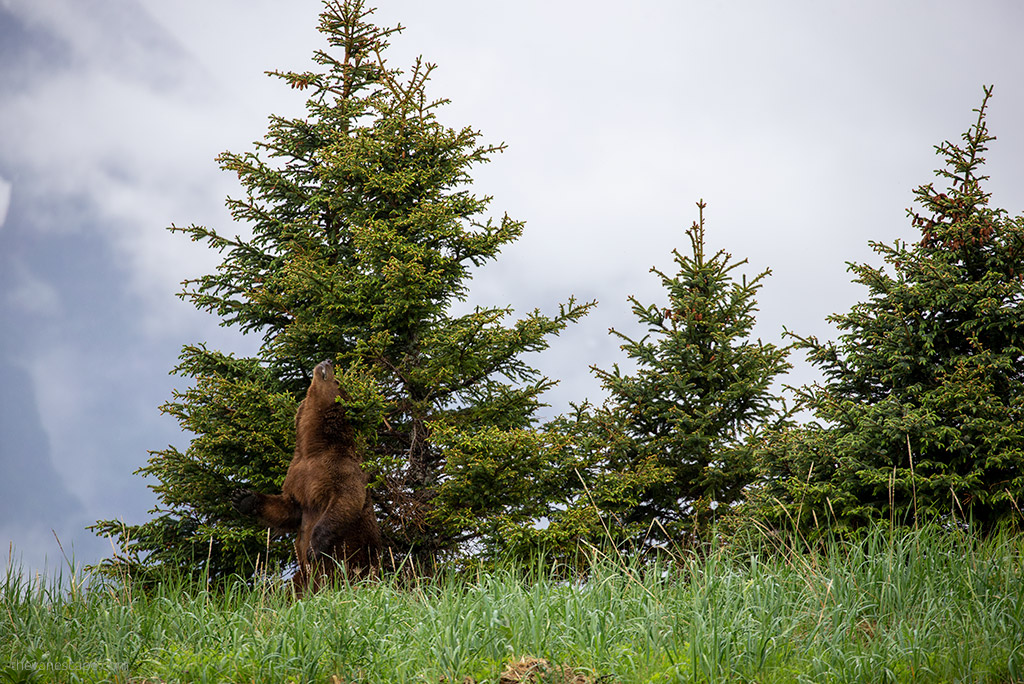
Agnes’ Advice: Most bears will leave on their own once they realize you’re not a threat. If the bear stands on its hind legs, it’s likely curious, not aggressive.
If a Bear Approaches You
Do:
- Stand your ground and keep talking calmly.
- Hold your bear spray ready but do not spray unless the bear charges.
- Keep backing away slowly if the bear stops advancing.
- Drop non-food items (like a hat) to distract the bear if needed.
Don’t:
- Run or turn your back.
- Make direct eye contact—bears may see it as a challenge.
- Climb a tree—brown bears are excellent climbers.
Agnes’ Advice: If the bear keeps approaching, stand tall and act confident, not fearful. Most non-threatening encounters end without conflict.
If a Bear Charges at You
A bear may bluff charge—running at you but stopping short. This is a warning to back off.
Do:
- Stand your ground—most bluff charges don’t end in contact.
- Hold your bear spray ready and spray if the bear gets within 30 feet.
- Keep talking in a firm voice.
Don’t:
- Run—bears can outrun humans easily.
- Drop to the ground unless the bear makes contact.
If a Bear Attacks
If It’s a Defensive Attack (Surprise Encounter or Protecting Cubs):
- Drop to the ground, lay on your stomach, and cover your neck.
- Spread your legs to make it harder for the bear to flip you over.
- Stay still—the bear will likely stop attacking once it feels the threat is gone.
- Do NOT fight back against a defensive attack.
If It’s a Predatory Attack (Bear Stalking or Showing Aggressive Interest):
- Fight back with everything you have.
- Use bear spray, sticks, trekking poles, rocks, or your fists—aim for the bear’s face and nose.
- Do NOT play dead—this bear sees you as food.
Agnes’ Advice: If a black bear attacks, always fight back—playing dead is only for defensive brown bear attacks. Defensive brown bear attack = play dead. Predatory attack or black bear attack = fight for your life.
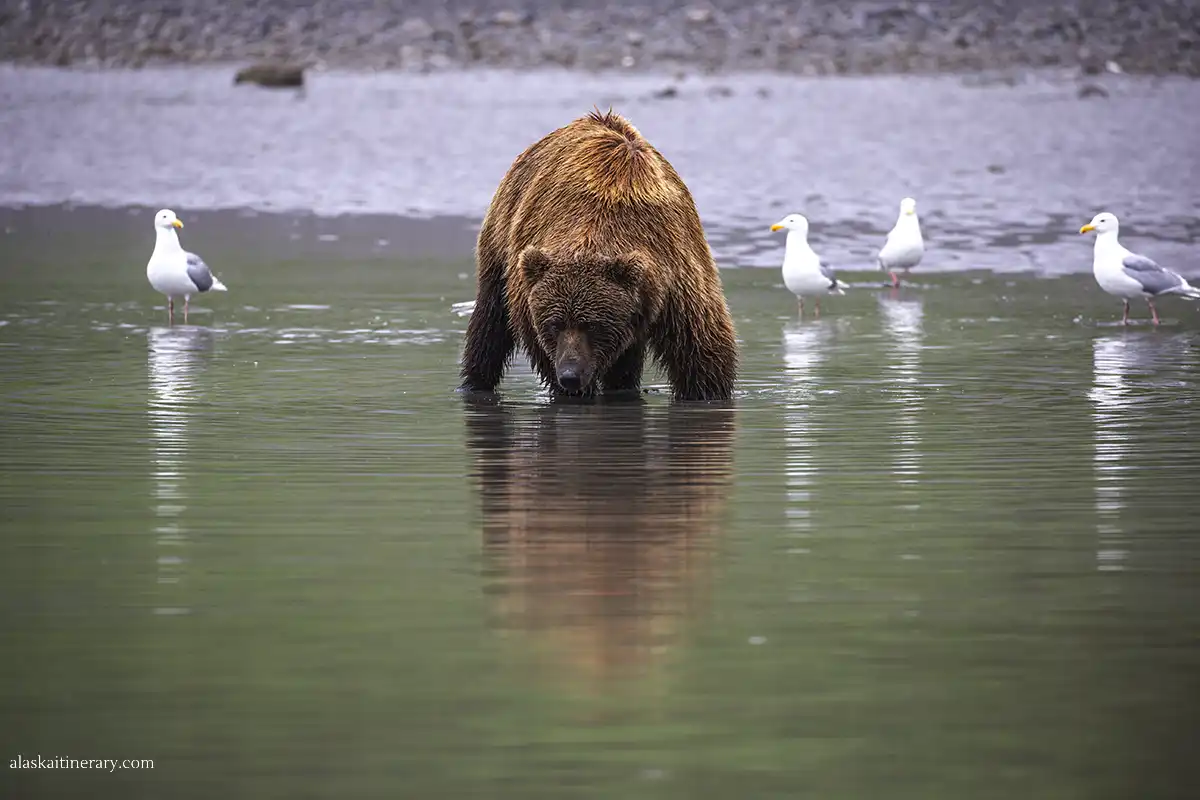
Play Dead During a Defensive Attack (Brown/Grizzly Bear Attack)
If a grizzly or brown bear attacks in a defensive manner (because it feels threatened, surprised, or is protecting cubs), playing dead can save your life.
- Drop to the ground as soon as the bear makes contact.
- Lay flat on your stomach with your legs spread apart (this makes it harder for the bear to flip you over).
- Cover the back of your neck with your hands and interlace your fingers for protection.
- Keep your backpack on—it can act as a shield.
- Stay completely still, and do not fight back.
- Wait until the bear leaves the area before moving—don’t get up too soon, as the bear may still be watching.
Why? Brown bears often attack to eliminate a perceived threat, not as a food source. If they think you’re no longer a threat, they may stop attacking and leave.
Do NOT Play Dead in a Predatory Attack (Black Bears or Unusual Brown Bear Behavior)
If a bear attacks in a predatory manner—meaning it stalks you, follows you, or seems interested in you as food—you must fight back.
- This is rare but serious.
- This applies to black bears and very rare predatory brown bear attacks.
- If a black bear attacks, NEVER play dead—always fight back.
- Use bear spray, rocks, trekking poles, sticks, fists—anything to hit its face, nose, and eyes.
- Be as aggressive as possible to make the bear see you as too much trouble to bother with.
How to Tell the Difference?
- Defensive Attack (Play Dead) – The bear charges suddenly, huffs, growls, or swipes, likely because it’s surprised, protecting cubs, or defending food.
- Predatory Attack (Fight Back) – The bear follows you, approaches slowly with curiosity, or doesn’t show signs of stress but rather intent.
Knowing the difference could save your life. Always carry bear spray and know how to use it effectively before an attack even happens.
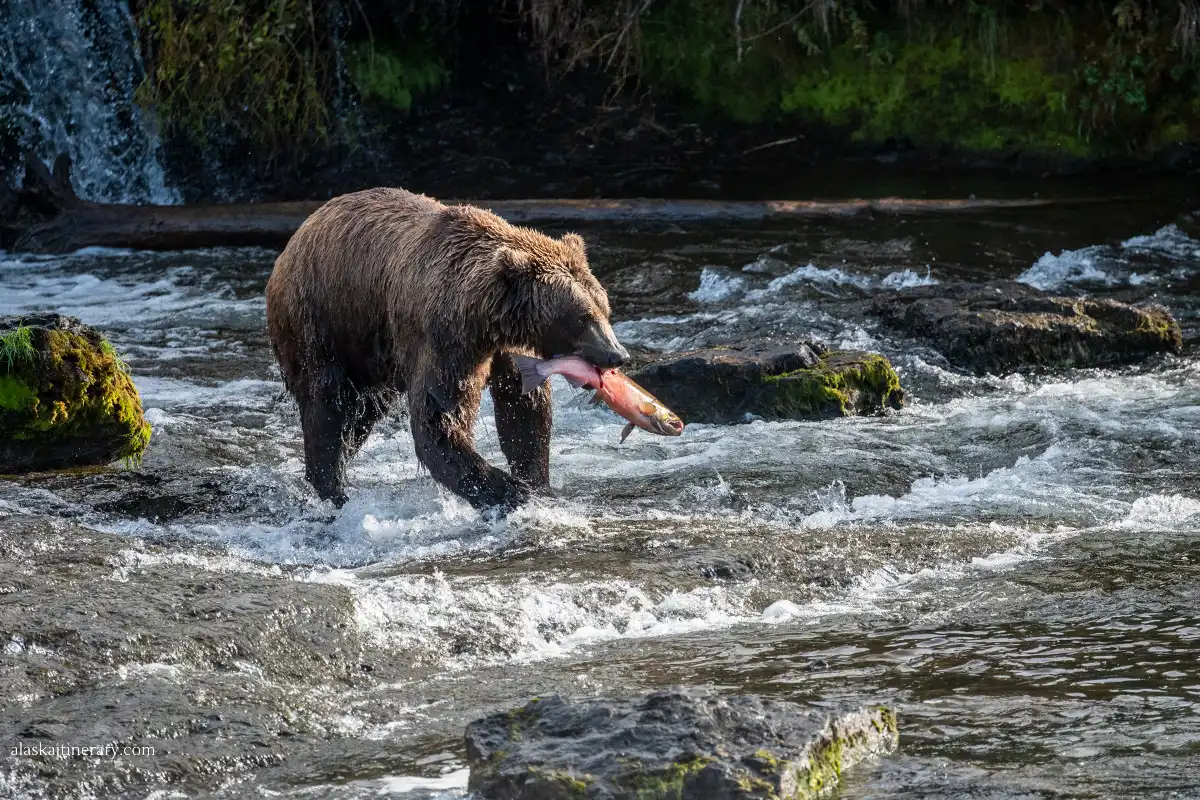
Final Thoughts on Bear Safety in Alaska
Exploring Alaska’s wild landscapes means sharing space with bears, but with the right knowledge and preparation, you can stay safe. Most bear encounters don’t lead to danger, but understanding bear behavior, making noise, storing food properly, and carrying bear spray are essential steps to avoid conflict.
Whether you’re hiking, camping, fishing, or backpacking, always respect the wilderness and stay bear-aware. Check current bear activity, follow local regulations, and never take shortcuts when it comes to safety.
Bears are incredible creatures, and seeing one in the wild can be a highlight of any trip—as long as it’s from a safe distance! By following these bear safety guidelines, you can enjoy Alaska’s wilderness while minimizing risk to yourself and the bears.
Do You Like It? Pin It For Later!


Great blog post not only about bear safety in Alaska but also learning about the different types of bears. It’s a very useful tip to make noise and clap hands to let the bears know that people are around. Of course, the smell of food near the bear is asking for trouble. Traveling in groups and avoiding evening times are good tips. Not to run is a known tip which works even for dogs as they love to chase. Thanks for such a useful blog. Now I need to make plans to visit Alaska soon! 🙂
These are EXCELLENT tips, I’m always worried about bears in the wilderness like this!
This is a great post with so much great information. I’d love to see bears in Alaska and I think for my first time, I’d prefer to be on a tour with an expert. I forgot just how big some bears can be! It’s so important to explore safely and to know what to do and what not to do should you encounter one.
This is such a helpful and well-rounded guide for anyone heading into Alaska’s wilderness. I especially appreciate the reminder to make noise on the trails and store food properly—simple steps that really can make all the difference in avoiding unwanted bear encounters. It’s so important to respect the bears’ space while also staying safe ourselves. Thanks for highlighting how preparation and awareness help protect both people and wildlife. A must-read for anyone planning to hike or camp in bear country!
Great bear safety tips! Your photos are incredible!