Creek Street in Ketchikan: Map, History & Visitor Guide

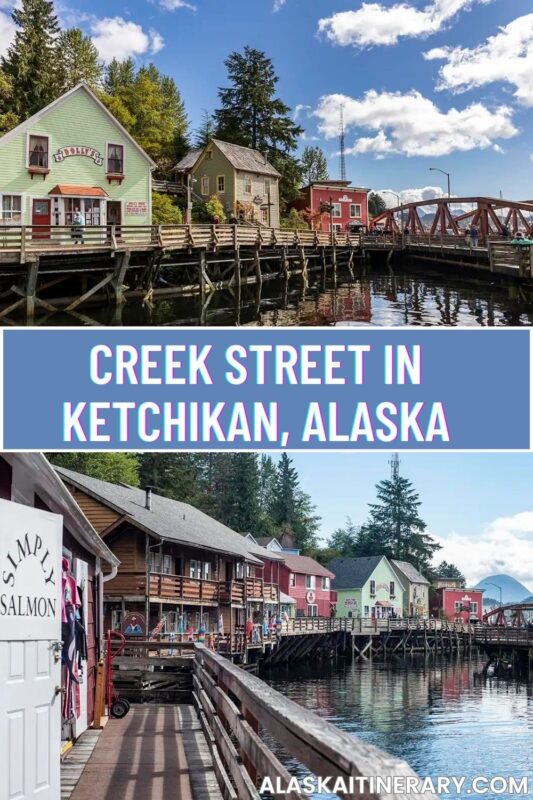
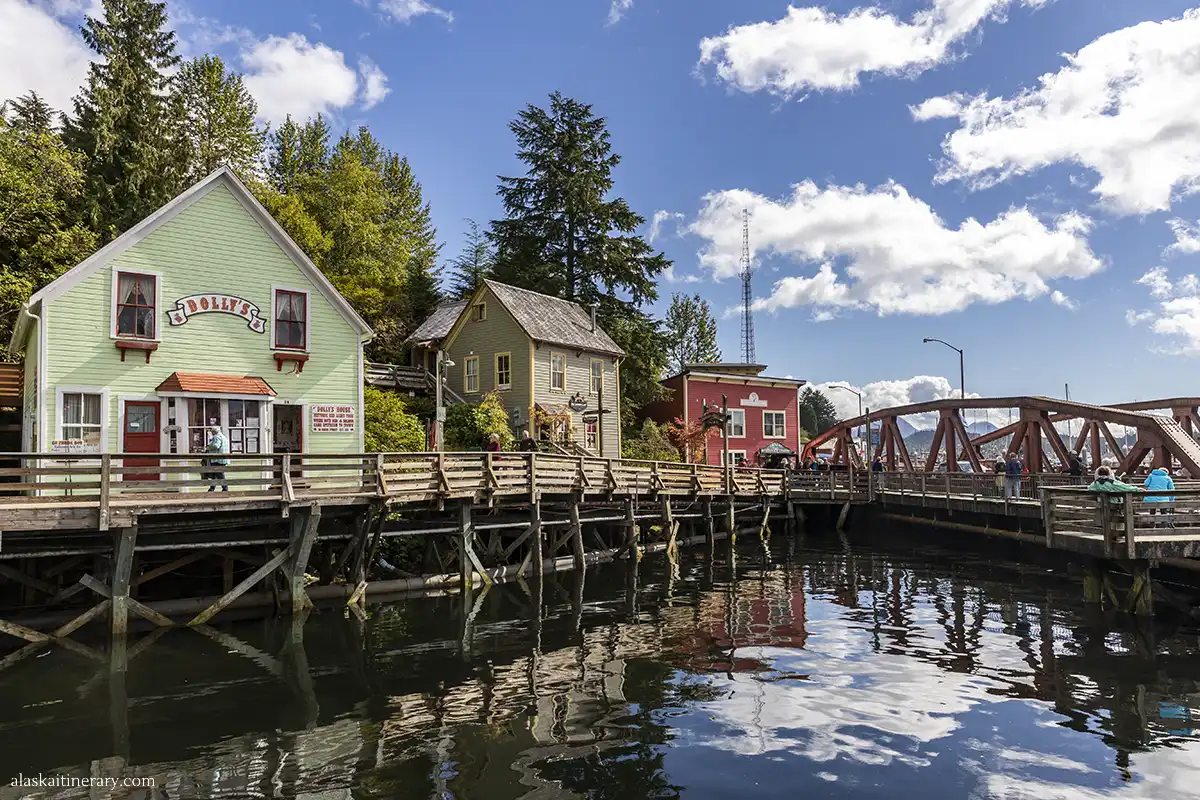
Creek Street is one of the most recognizable places in Ketchikan and one of our favorite areas to explore whenever we return. This historic district follows Ketchikan Creek, with colorful wooden buildings, boardwalks, and old structures built along the waterfront. Today, it is easy to visit on your own, and you do not need much time to see its highlights. But Creek Street is much more than a pretty photo stop. Its history includes fishing, Prohibition-era bootlegging, and the city’s former red-light district. It is also one of the best downtown places to watch salmon during the summer run. In this guide, we share everything you need to know before visiting Creek Street in Ketchikan, including how far it is from the cruise port, whether it is free, what to see, where to find the map, when to see salmon, and how much time to plan.
This article may contain affiliate / compensated links. For full information, please see our disclaimer here.
Our Experience Visiting Creek Street
We have visited Ketchikan many times, and Creek Street is one of the places we return to on almost every trip.
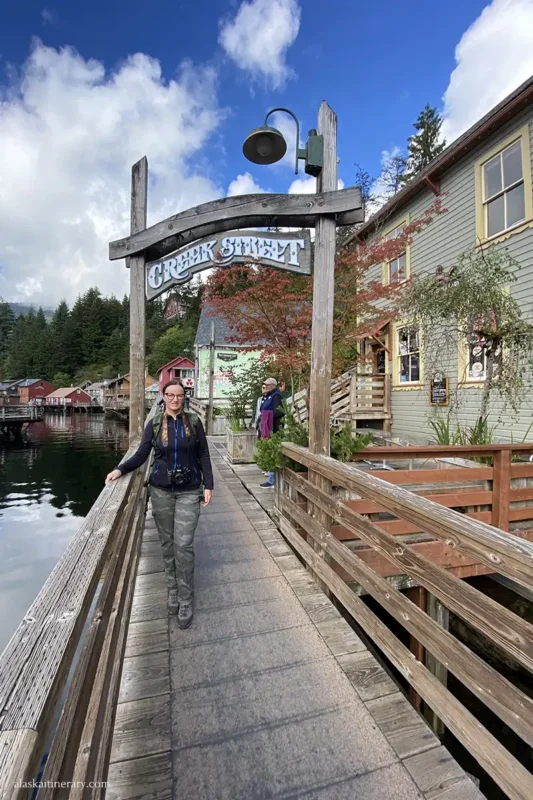
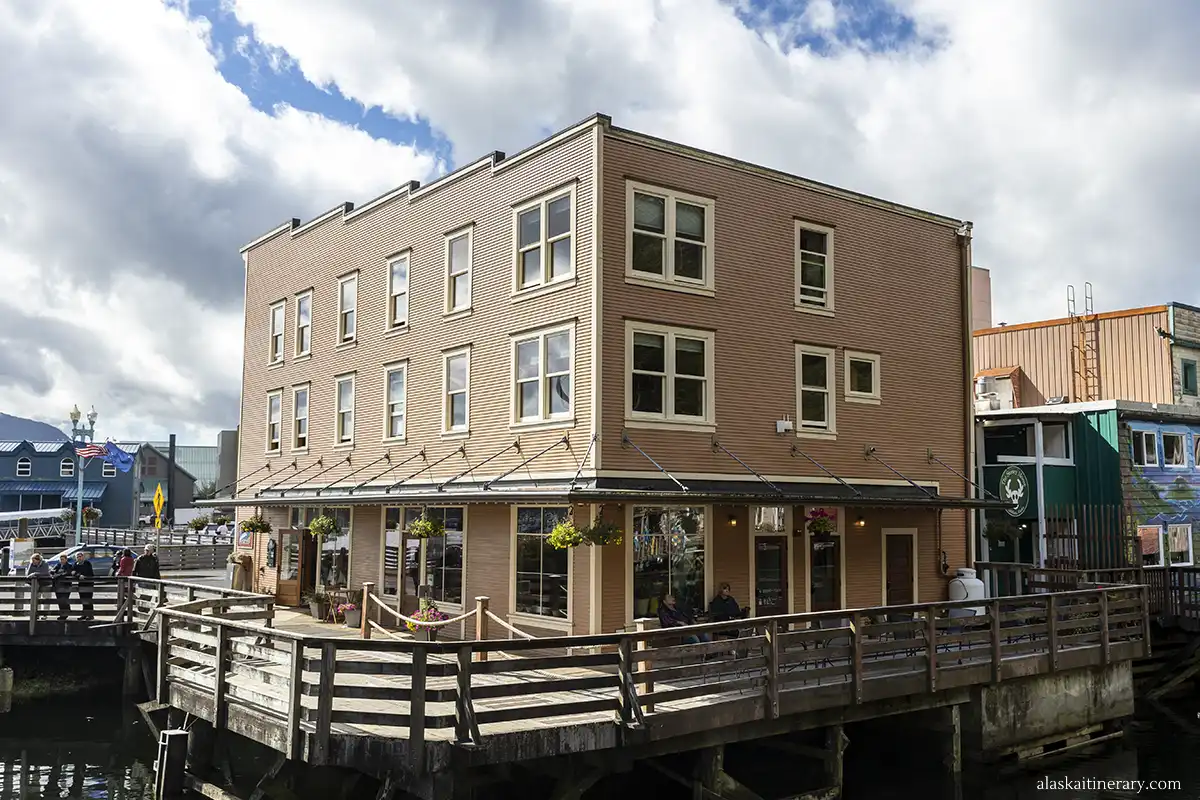
We love its colorful wooden buildings, narrow boardwalk, and setting above Ketchikan Creek. It is also one of our favorite places in town for photography. The classic views change with the light, weather, tide, and number of people walking through the district.
We have explored Creek Street when it was busy with cruise passengers and during quieter moments when we could slow down and enjoy the details. If you visit during salmon season, watching fish move through the creek adds another reason to spend time here.
What we like most is that Creek Street is easy to explore independently. You can walk through it in a short time or stay longer to photograph the historic buildings, visit Dolly’s House, browse local shops, and continue toward Married Man’s Trail.
In the sections below, we share the practical details we think are most useful before your visit.

Creek Street Ketchikan: Quick Answer
Creek Street is a historic boardwalk district in downtown Ketchikan, built along Ketchikan Creek. It is one of the easiest attractions to visit independently during a cruise stop.
Here are the most important things to know before you go:
- Entrance fee: Creek Street itself is free to visit.
- Location: Downtown Ketchikan, along Ketchikan Creek.
- Distance from the cruise port: About 0.3 miles from the Ketchikan Visitors Information Center at Berth 2. Walking distance varies from the other downtown berths.
- Time needed: We recommend at least 30–60 minutes. Allow longer if you visit Dolly’s House, browse shops, take photos, or walk Married Man’s Trail.
- Best time for salmon: July and August are the main months for watching spawning salmon in Ketchikan Creek.
- Main highlights: The historic boardwalk, colorful buildings, Dolly’s House, Ketchikan Creek, Married Man’s Trail, and the Salmon Walk.
- Best for: History, photography, salmon viewing, shopping, and an easy independent walk from the downtown cruise docks.
Creek Street is compact, so you do not need an organized tour to explore it. However, knowing a little about its history makes the walk much more interesting.
Is Creek Street in Ketchikan Free?
Yes. Creek Street is free to visit, and there is no entrance fee to walk along the historic boardwalk.
You do not need a ticket or reservation to explore Creek Street, walk beside Ketchikan Creek, take photos, or continue toward Married Man’s Trail.
However, individual attractions and businesses along Creek Street may charge admission or have separate costs. For example, Dolly’s House Museum requires an admission ticket, while galleries, shops, and cafés set their own prices and opening hours.
So, if you simply want to walk Creek Street and enjoy the historic district, it costs nothing.

How Far Is Creek Street From the Ketchikan Cruise Port?
If your cruise ship docks at one of Ketchikan’s four downtown berths, Creek Street is within easy walking distance.
The exact walking distance varies depending on which downtown berth your ship uses, but you do not need transportation to reach Creek Street from Berths 1–4.
From the Ketchikan Visitors Information Center at Berth 2, Creek Street is about 0.3 miles away. Walking from Berth 2 to Creek Street usually takes no more than about 10 minutes, depending on your pace.
If your ship docks at The Mill at Ward Cove, the situation is different. Ward Cove is about 7 miles north of downtown Ketchikan, so you cannot simply walk from the ship to Creek Street.
A complimentary shuttle connects Ward Cove with Berth 4 in downtown Ketchikan. The ride takes approximately 20 minutes each way, although Ward Cove recommends allowing at least 30 minutes when you have a scheduled activity downtown. From Berth 4, continue on foot through downtown to Creek Street. Walking from Ketchikan Cruise Port Berth 4 to Creek Street usually takes about 15–20 minutes, depending on your pace, and the route is easy and mostly flat.
If you are visiting during a cruise, check your docking location before planning your day. Our one-day Ketchikan itinerary for cruise passengers explains how to make the most of your port time from both downtown docks and Ward Cove.
Creek Street Ketchikan Map
Creek Street is compact and easy to navigate, but a map helps you understand how it connects with the downtown cruise docks and nearby sights.
From the downtown waterfront, Creek Street sits just a short walk inland along Ketchikan Creek. Once you arrive, you can explore the boardwalk, visit Dolly’s House, and then continue toward Married Man’s Trail.
Married Man’s Trail connects Creek Street with the Ketchikan Creek salmon ladder and the longer Salmon Walk. The City of Ketchikan describes the Salmon Walk as a self-guided route that continues along Ketchikan Creek toward City Park, the Deer Mountain Tribal Hatchery, and the Totem Heritage Center.
For a short cruise visit, you do not need to walk the entire Salmon Walk. However, the map is useful for seeing how easily Creek Street, Married Man’s Trail, and the salmon ladder can be combined.
How Long Do You Need at Creek Street?
For most visitors, we recommend allowing about 30–60 minutes to explore Creek Street itself.
That gives you enough time to walk the boardwalk, take photos, look at the historic buildings, watch Ketchikan Creek, and browse a few shops without rushing.
Plan more time if you want to:
- visit Dolly’s House Museum,
- wait and watch for salmon during the summer run,
- spend more time taking photos,
- browse galleries and shops,
- or continue along Married Man’s Trail toward the salmon ladder.
If you combine Creek Street with Married Man’s Trail and part of the Salmon Walk, we would allow around 1.5–2 hours.
However, Creek Street also works well when your port time is limited. Because it is compact and close to the downtown cruise berths, you can still enjoy a quick walk through the historic district in 20–30 minutes.

Best Things to Do on Creek Street
Creek Street is small, but there is more to do here than simply walk across the boardwalk. We recommend combining the historic district with a few nearby stops.
Walk the Historic Creek Street Boardwalk
Start by simply walking along Creek Street itself.
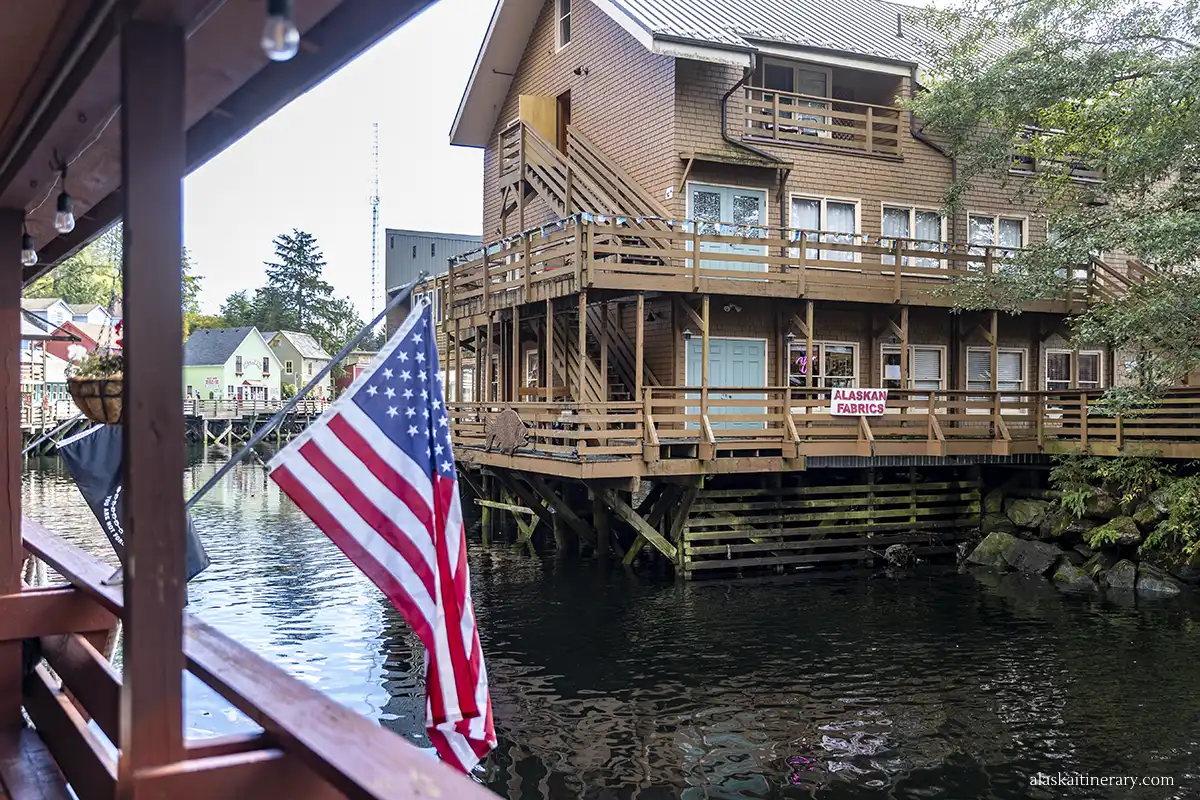
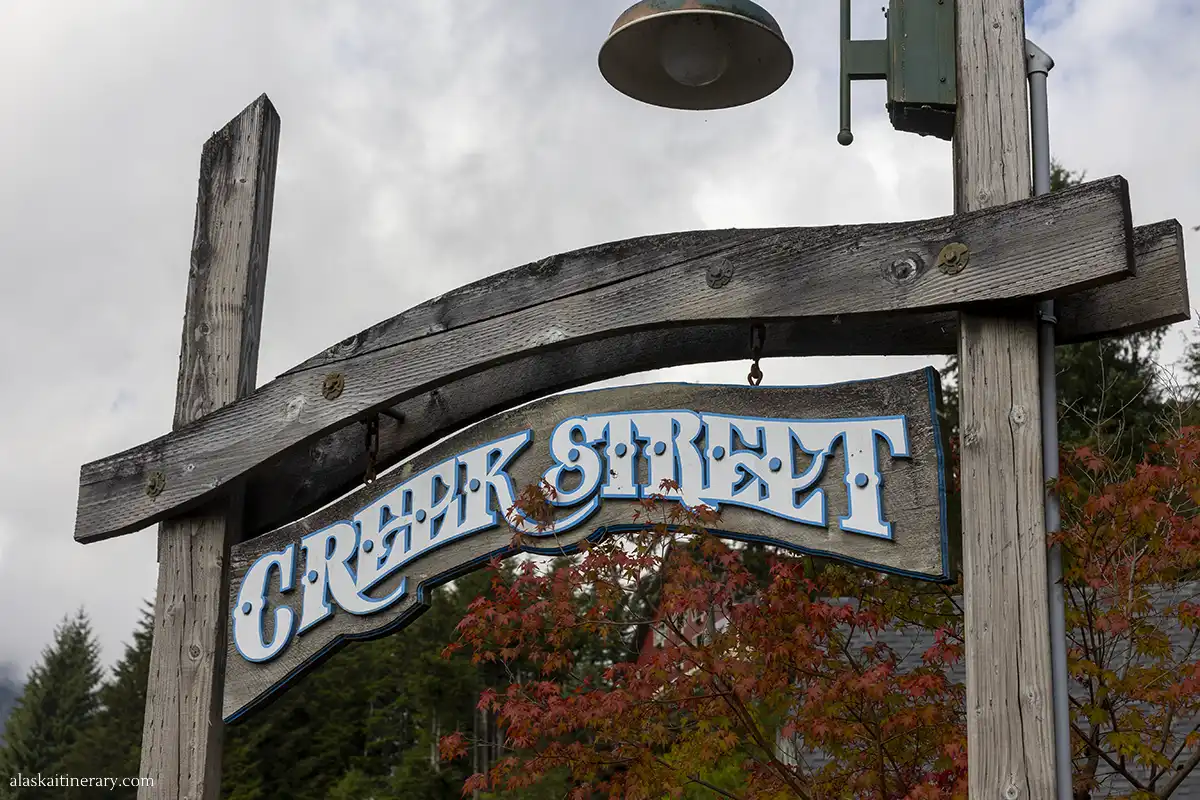
The wooden boardwalk follows Ketchikan Creek and passes colorful historic buildings built on pilings above the water. Creek Street, Married Man’s Trail, and Totem Way are part of the Creek Street Historic District, which was added to the National Register of Historic Places in 2014.
Take your time here. The boardwalk is short, but there are many good viewpoints for photos, especially from the bridges and from the opposite side of the creek.
Visit Dolly’s House Museum
At 24 Creek Street, you will find Dolly’s House Museum.
The house is associated with Dolly Arthur, one of Creek Street’s best-known former sex workers. She lived in the house for decades, and many furnishings inside date from the years she lived there.
Today, you can visit the small museum to learn more about Creek Street’s former red-light district and Dolly’s life. There is a separate admission fee ($10 per person).

Watch Salmon in Ketchikan Creek
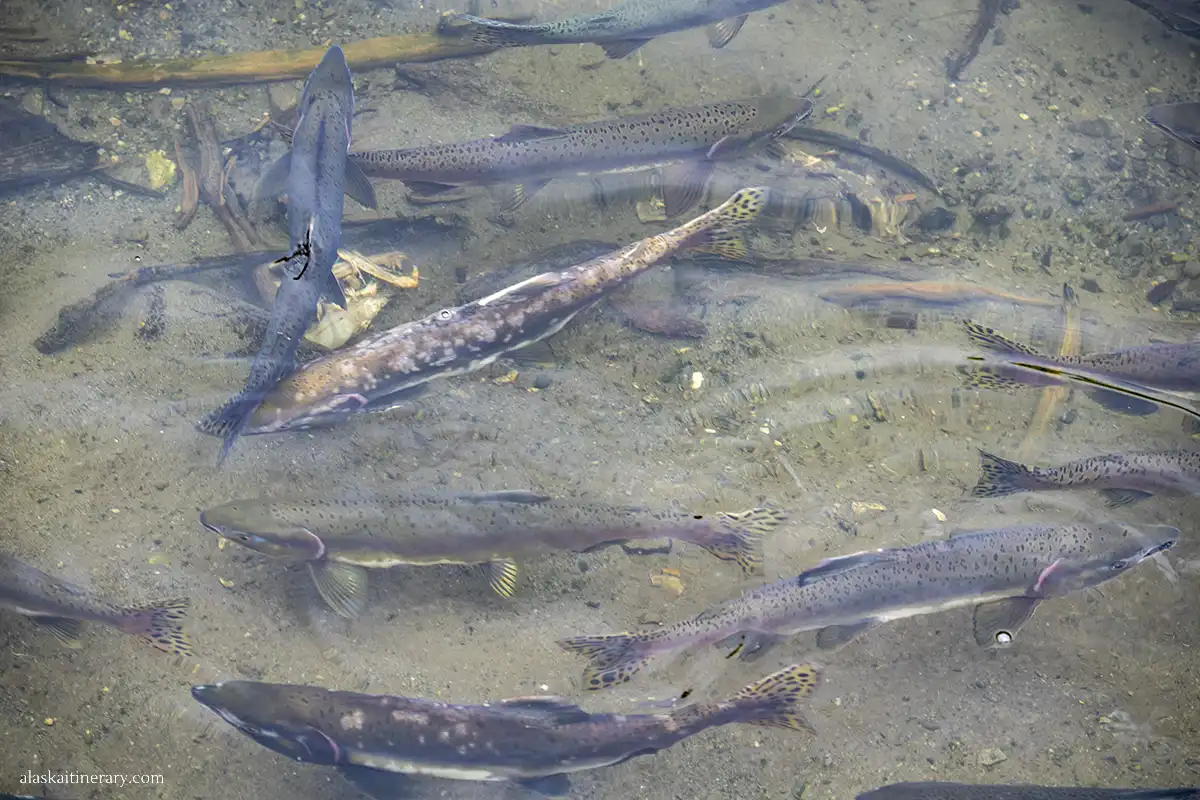
If you visit during salmon season, spend some time looking down into Ketchikan Creek.
Alaska Department of Fish and Game says the creek fills with spawning salmon in July and August, and specifically recommends Creek Street as a place to watch them move upstream.
Bridges over the creek provide some of the easiest viewing spots.
This is one of our favorite Creek Street experiences when the salmon are running.
Walk Married Man’s Trail
From Creek Street, continue onto Married Man’s Trail.
This boardwalk and path climbs away from the historic district and connects Creek Street with the area near the salmon ladder and Park Avenue. The City of Ketchikan has improved the trail to connect it with the broader Salmon Walk.
The trail includes stairs and uneven sections, so it is different from the flatter Creek Street boardwalk.
Even if you do not walk much farther, it gives you another perspective on Ketchikan Creek and the historic district.
Continue Along the Ketchikan Salmon Walk
If you have more time, continue beyond Married Man’s Trail onto the Ketchikan Salmon Walk.
This self-guided route follows Ketchikan Creek and connects Creek Street with the salmon ladder, City Park, Deer Mountain Tribal Hatchery, and Totem Heritage Center.
The full route forms an approximately 1.5-mile loop from downtown to the Totem Heritage Center and back toward Creek Street.
You do not need to walk the entire loop. Even following part of it toward the salmon ladder adds more nature and local history to your Creek Street visit.

Browse the Shops and Galleries
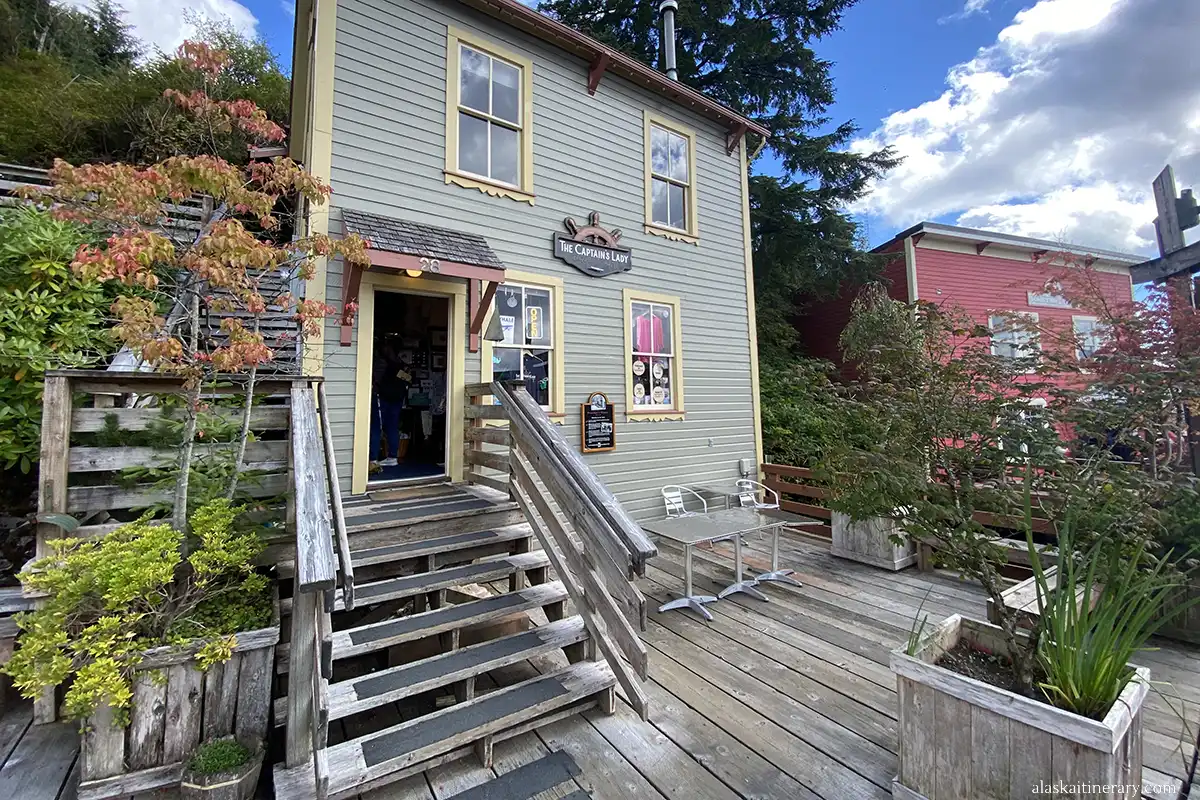
Creek Street’s historic buildings now contain galleries, small shops, and local businesses.
We enjoy looking around, but we recommend checking current businesses rather than relying on older guides. Shops along Creek Street can change from one season to another.
We cover the current shopping options in more detail later in this guide.
When Can You See Salmon at Creek Street?
If seeing salmon is one of your reasons for visiting Creek Street, July and August are the best months to plan your visit.
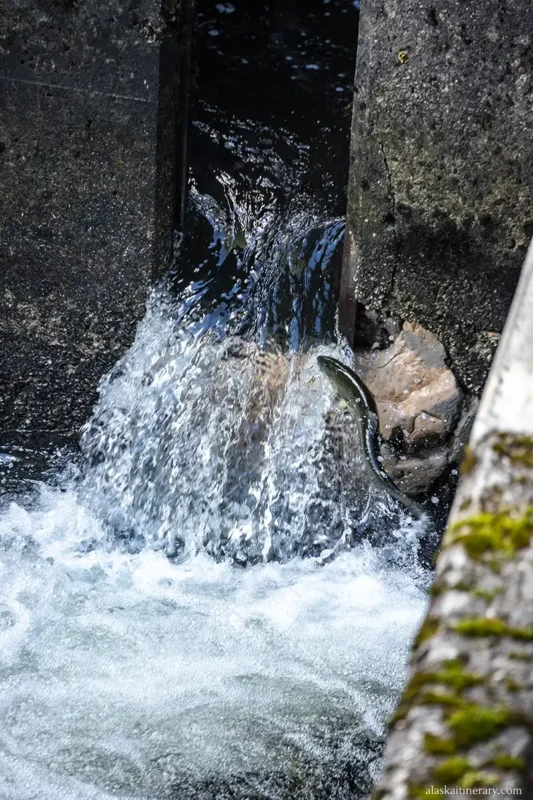
Alaska Department of Fish and Game says Ketchikan Creek fills with spawning salmon each July and August, and specifically recommends the Creek Street boardwalk and bridges for watching fish move upstream.
The broader Ketchikan Creek system can have salmon from July into October, depending on the species and exact location. ADF&G lists king, pink, chum, and coho salmon among the species using the creek and nearby Thomas Basin.
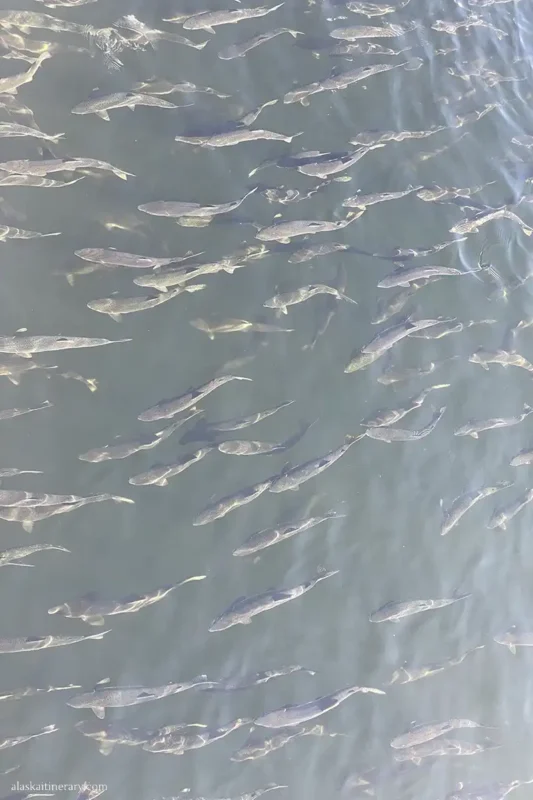
For the best chance of seeing large numbers of fish around Creek Street itself, we would focus on mid-July through August. Pink salmon return to the Ketchikan area in large numbers during this period, and they can be especially noticeable in the creek.
Good viewing spots include the bridges above Ketchikan Creek and the area around the salmon ladder farther upstream. If you have extra time, continue along the Salmon Walk for additional viewpoints.
Keep in mind that salmon runs are natural events. Timing and numbers can vary from year to year, so even during peak season there is no guarantee of seeing the same number of fish on every visit.
Best Time to Visit Creek Street and Avoid Crowds
If you want to experience Creek Street with fewer people, check Ketchikan’s cruise ship schedule before your visit.
There is no single quiet time that works every day. Ships arrive and depart at different hours, and some days have several large vessels in port at once.
From our experience, early morning is usually our favorite time to visit Creek Street. The boardwalk feels calmer, photography is easier, and you have more time to notice the historic buildings and details without large groups around you.
Later in the afternoon can also be quieter after some ships have departed, but this depends entirely on that day’s cruise schedule. On some dates, ships remain in Ketchikan into the evening.
If you are visiting from a cruise ship and cannot choose your arrival time, we suggest going to Creek Street soon after leaving the ship or after completing an early excursion. Even when the area is busy, it is still easy to explore independently.
For photography, we especially like quieter periods when we can take our time along the boardwalk and bridges without constantly waiting for people to move out of the frame.
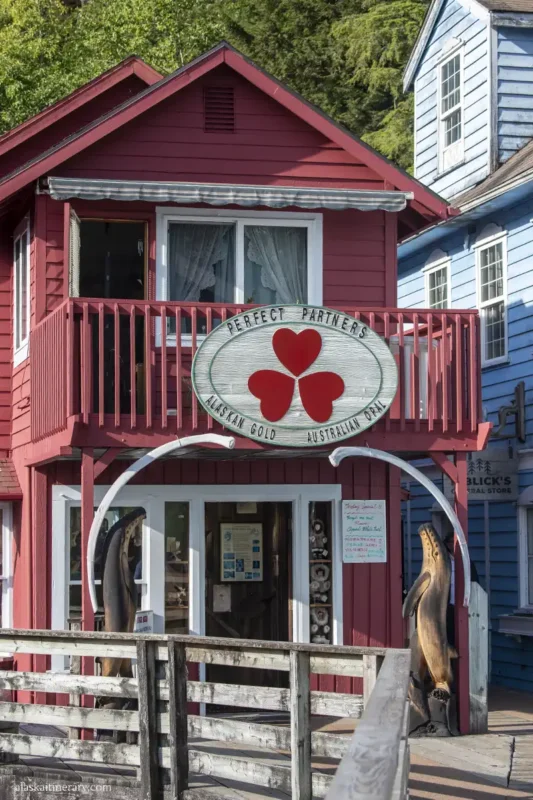
Creek Street Shops
Creek Street is also a popular place to browse local art, Alaska-made gifts, jewelry, prints, clothing, and souvenirs.
Many shops occupy the historic buildings directly above Ketchikan Creek. Because businesses can change from one season to another, we prefer not to give you a long directory that may quickly become outdated.
A few current Creek Street businesses include:
Star Gallery
Star Gallery is at 5 Creek Street, inside the historic Star Building. It features contemporary art, work by artists with Ketchikan connections, Alaska-made pieces, and gifts. It also carries artwork and designs by well-known Ketchikan artist Ray Troll.
Alaska Eagle Arts
Also at 5 Creek Street, Alaska Eagle Arts specializes in Northwest Coast Native art and represents the work of artist Marvin Oliver.
The gallery has operated in Ketchikan since 1991 and remains open at its Creek Street location.
Fish Creek Company
At 13 Creek Street, Fish Creek Company sells Alaska-made gifts, artwork, jewelry, and other locally focused items.
The shop is locally owned and sits directly above the salmon creek, making it an easy stop while walking the boardwalk.
If shopping is part of your plans, allow some extra time to browse. Opening days and hours can vary by season, especially outside the main cruise season.
Accessibility at Creek Street
Creek Street is relatively easy to explore, but not every part of the surrounding walking route is step-free.
The historic Creek Street boardwalk is made of wooden planks and follows the creek above the water. The boardwalk varies in width, and some sections are narrower than others.
The biggest accessibility difference comes when you continue beyond Creek Street.
Married Man’s Trail includes stairs, so it is not suitable for everyone using a wheelchair, scooter, or other mobility device. The City of Ketchikan identifies Park Avenue as the ADA alternative for this section of the Salmon Walk.
If you have limited mobility, you can still enjoy Creek Street without walking Married Man’s Trail. Explore the main boardwalk, bridges, shops, and creek viewpoints, then return through downtown.
We also recommend taking extra care during wet weather. Creek Street’s historic wooden surfaces can feel different from a standard paved sidewalk, so supportive shoes with good traction are useful.
History of Creek Street
Creek Street’s history is much more complex than its colorful buildings suggest.
Long before modern Ketchikan developed, Tlingit people used the mouth of Ketchikan Creek as a seasonal fish camp. The creek and its salmon were an important reason people settled in this area.
The Creek Street neighborhood began taking shape shortly after Ketchikan incorporated in 1900. In 1902, the Ketchikan Town Council ordered brothels operating elsewhere in town to move east of Ketchikan Creek. The area was largely undeveloped at the time.
The steep terrain made conventional streets difficult to build. Instead, buildings went up on pilings beside the creek, connected by a wooden boardwalk above the tidal water. By 1914, 22 buildings stood along the boardwalk, and 13 were known houses of prostitution.
Creek Street became especially busy during Prohibition. Alaska’s Bone Dry Law took effect in 1918, followed by national Prohibition in 1920. Along with prostitution, the district became associated with bootlegging, gambling, dancing, and other nightlife. At its peak, the historic survey documents more than 30 houses and at least 50 people working in the district.

One of Creek Street’s best-known residents was Dolly Arthur. She purchased her own Creek Street house in 1919 and became one of the district’s most remembered figures. Her former home is now Dolly’s House Museum.
Prohibition ended in 1933, but Creek Street’s red-light district did not disappear immediately. Prostitution continued for another two decades. Activity even increased temporarily during World War II because of the larger military presence around Ketchikan.
The district finally changed dramatically in 1954. A grand jury investigation connected local officials with bribery and activities along Creek Street. The city then closed the houses of prostitution.
Over the following decades, the neighborhood shifted from a declining residential district into the preserved historic area visitors see today. The Creek Street Historic District was listed on the National Register of Historic Places on August 6, 2014. The designated district includes Creek Street, Married Man’s Trail, and Totem Way.
Today, the shops and galleries are very different from the businesses that once occupied these buildings. However, the original boardwalk, stilt construction, and historic structures still tell an important part of Ketchikan’s story.

Photography Tips for Creek Street
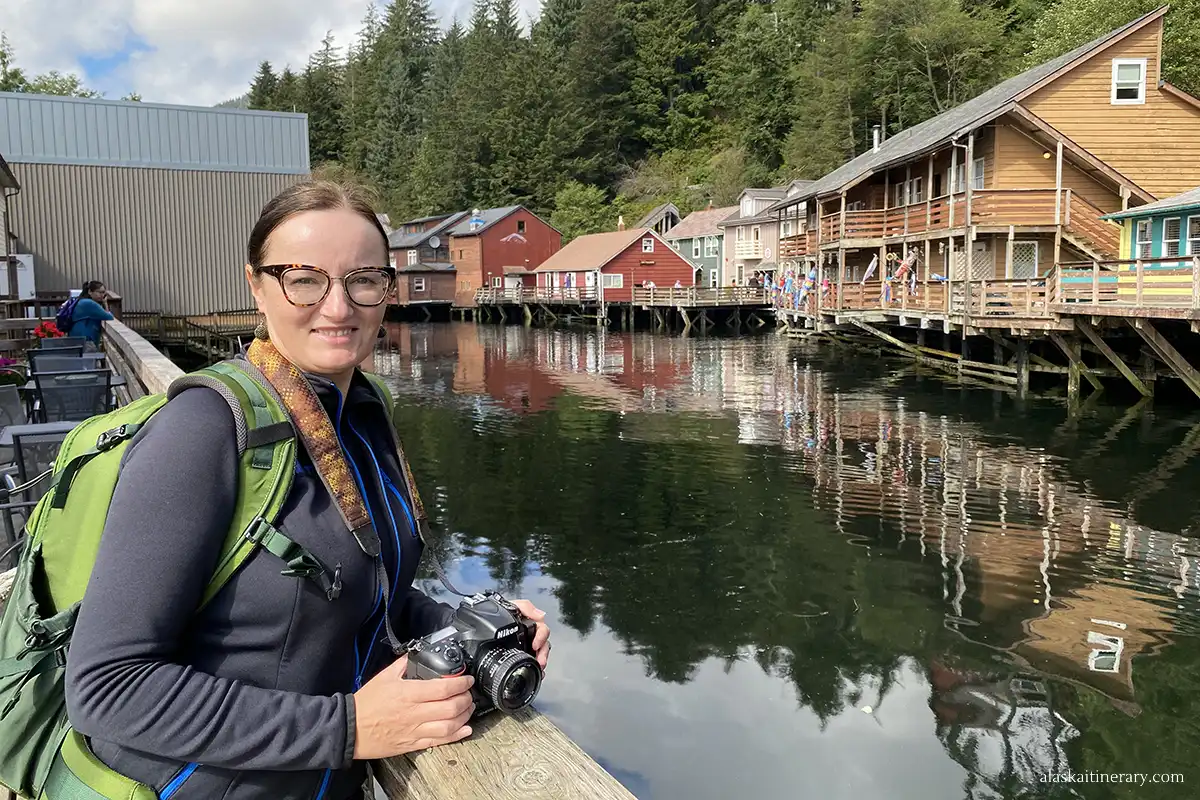
Creek Street is one of our favorite places to photograph in Ketchikan. The colorful buildings, wooden boardwalk, creek, and bridges give you plenty of different compositions in a very small area.
- Photograph Creek Street Early in the Morning. If your schedule allows, early morning is our favorite time for photography. There are usually fewer people around, so it is easier to photograph the boardwalk and historic buildings without large groups in the frame. Soft morning light can also work well on cloudy Ketchikan days.
- Use the Bridges for Wider Views. Some of the best views come from the bridges crossing Ketchikan Creek. From there, you can photograph several colorful buildings together, include the creek in the foreground, and capture the classic Creek Street scene from a little farther away. We recommend walking around before choosing your composition. A slightly different position can completely change the view.
- Photograph the Buildings From Across the Creek. Do not photograph only from the main boardwalk. Walk to the opposite side of Ketchikan Creek and look back toward Creek Street. This gives you a wider perspective and shows how the historic buildings sit above the water on pilings. It is one of our favorite ways to photograph the district.
- Look for Reflections. When the water is calm, the colorful buildings can create beautiful reflections in Ketchikan Creek. Cloudy weather can actually work in your favor here. The softer light often reduces harsh contrast and helps preserve details in both the buildings and the water.
- Bring a Longer Lens During Salmon Season. If salmon are running, a longer lens can help you photograph fish from the bridges without leaning over the railing or trying to get too close. You may also see birds around the creek when salmon are present, so keep your camera ready while walking along the boardwalk.
- Protect Your Camera From Rain. Ketchikan is wet, and light rain can start quickly. We always recommend having basic rain protection for your camera and lens, even if the forecast looks reasonable. A microfiber cloth is also useful for wiping water from the front element. Do not pack your camera away immediately when it starts raining. Wet boardwalks, reflections, and low clouds can make Creek Street even more photogenic.

Is Creek Street Worth Visiting?
Yes. We think Creek Street is absolutely worth visiting, especially if this is your first trip to Ketchikan.
It is easy to reach from the downtown cruise docks, free to explore, and you do not need much time to enjoy it. In one compact area, you can see historic buildings, walk above Ketchikan Creek, learn about the city’s colorful past, browse local shops, and watch salmon during the summer run.
Creek Street is also one of our favorite places in Ketchikan for photography. We have returned many times, and we still enjoy walking the boardwalk and looking for different viewpoints.

However, we would not treat Creek Street as the only thing to see in Ketchikan. If you have several hours in port, combine it with other downtown attractions, the Salmon Walk, local totem poles, or another Ketchikan experience.
For most visitors, 30–60 minutes is enough for Creek Street itself, although you can easily spend longer if you visit Dolly’s House, shop, photograph the area, or continue along Married Man’s Trail.
If your time in Ketchikan is limited, Creek Street is one of the easiest historic sights to add to your day. If you are planning your Alaska cruise, make sure to add this place to your itinerary.
Do You Like It? Pin It For Later!