Sitka, Alaska Facts: Population, History & Fun Facts

Sitka is one of Alaska’s most historically important and unusual communities. It combines Tlingit heritage, Russian history, coastal scenery, and a surprisingly large municipal area. Despite its size, Sitka has only a small year-round population. It was once the capital of Russian America and later became the site of Alaska’s formal transfer to the United States. In this guide, we share the most interesting Sitka, Alaska facts, including its population, history, name meaning, geography, and fun facts that make this Southeast Alaska town so distinctive.
This article may contain affiliate / compensated links. For full information, please see our disclaimer here.
Our Experience Exploring Sitka
We have visited Sitka several times and have explored both the town and the surrounding waters.
During our visits, we have walked through historic downtown, explored Sitka National Historical Park, visited Russian-era landmarks, and learned more about Sitka’s Tlingit history. We have also experienced the area from the water on wildlife and kayaking tours.
I love history and always enjoy learning more about the places we visit. I like digging into local history, geography, statistics, and unusual details because they help me understand a destination much better.
That is why I collected some of the most fascinating facts about Sitka in this article, including its unusual size, population, name, Russian heritage, and important place in Alaska history.
If you are planning a trip, see our Sitka Travel Guide for the best things to do, where to stay, where to eat, and practical tips for visiting.


Sitka Facts at a Glance
Here are some of the most important facts about Sitka before we explore its history and unusual details in more depth.
| Sitka Fact | Quick Answer |
|---|---|
| Location | Baranof Island in Southeast Alaska |
| Population | 8,319 residents according to the U.S. Census Bureau’s 2025 estimate |
| Municipality | City and Borough of Sitka |
| Land area | About 2,870 square miles |
| Name origin | From the Tlingit Shee At’iká, meaning “people on the outside of Shee” |
| Former Russian name | New Archangel |
| Russian America capital | Sitka served as the colonial capital of Russian America |
| Alaska transfer | The formal transfer from Russia to the United States took place at Castle Hill on October 18, 1867 |
| National park | Sitka National Historical Park |
| Road connection | No road connects Sitka with mainland Alaska or Canada |
| Known for | Tlingit culture, Russian heritage, the Alaska transfer, fishing, wildlife, and dramatic coastal scenery |
One of the most surprising Sitka facts is the contrast between its huge municipal area and small population. Sitka covers thousands of square miles, yet only about 8,300 people live there year-round.


What Is the Population of Sitka, Alaska?
Sitka has a surprisingly small population for such a large municipality. The U.S. Census Bureau estimated 8,319 residents in 2025.
For comparison, the 2020 Census counted 8,458 residents, while the 2010 Census recorded 8,881. That means Sitka’s population has declined slightly over the past 15 years.
Despite its small population, Sitka serves as an important regional center for healthcare, fishing, tourism, government, and other services in Southeast Alaska.
Despite its small population, Sitka becomes much busier during the summer cruise season. It is one of Alaska’s major cruise ports, and around 600,000 cruise passenger visits were scheduled in 2025.
Most visitors to Sitka arrive by cruise ship, so on busy summer days the number of visitors in town can be significant compared with its roughly 8,300 residents. If you are among them, our One Day in Sitka itinerary for cruise passengers will help you plan a realistic port day.

What County Is Sitka, Alaska In?
Sitka is not located in a county. Alaska does not use counties like most U.S. states. Instead, much of the state is divided into boroughs.
Sitka is officially the City and Borough of Sitka, a unified home-rule municipality. That means the city and borough operate as one local government rather than as separate jurisdictions.
So, if a form asks for Sitka’s county, the closest equivalent is the City and Borough of Sitka.
How Big Is Sitka, Alaska?
The City and Borough of Sitka covers about 2,870 square miles of land, according to the U.S. Census Bureau. That makes Sitka the largest incorporated U.S. city by land area.
However, that number can be misleading. Most of the municipality is mountains, islands, rainforest, and largely undeveloped land. The developed community occupies only a small part of the borough.
Another surprising contrast is Sitka’s road system. Although the municipality covers thousands of square miles, its main road stretches only about 14 miles from end to end.
This enormous area combined with a population of only about 8,300 makes Sitka one of Alaska’s most unusual communities geographically.
What Does Sitka Mean?
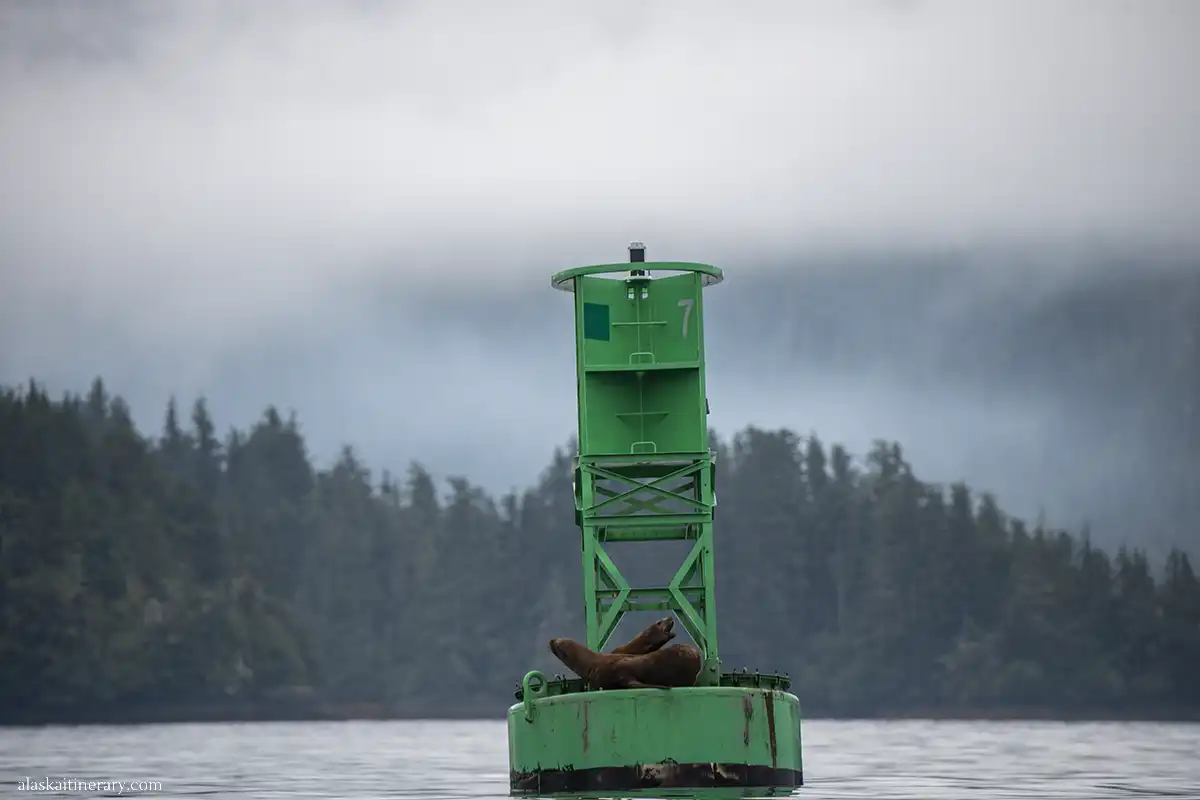
The name Sitka comes from the Tlingit name Shee At’iká, meaning “people on the outside of Shee.” Shee refers to Baranof Island, where Sitka is located.
The modern name Sitka developed from this Tlingit place name.
During the Russian period, the settlement was renamed New Archangel and became the headquarters of the Russian-American Company. However, Sitka remained the commonly used name and eventually became the city’s official name again.
Where Is Sitka, Alaska?
Sitka is located on the western coast of Baranof Island in Southeast Alaska, along the outer coast of Alaska’s Inside Passage. It faces Sitka Sound and the Pacific Ocean, with forested islands and mountains surrounding the community.
Sitka is about 93 miles southwest of Juneau as the crow flies. Because it sits on an island, no roads connect Sitka with mainland Alaska or Canada.
If you are planning a visit, see our How to Get to Sitka, Alaska guide for details about flights, ferries, and cruise access.

What Is Sitka Known For?
Sitka is best known for its unusual combination of Tlingit culture, Russian heritage, and Alaska history. Few communities in Alaska preserve these layers of history so visibly in one place.
The city is especially associated with the 1804 Battle of Sitka, its role as the capital of Russian America, and the 1867 transfer of Alaska from Russia to the United States. Today, much of this history can still be explored at Sitka National Historical Park, Castle Hill, St. Michael’s Cathedral, and the Russian Bishop’s House.
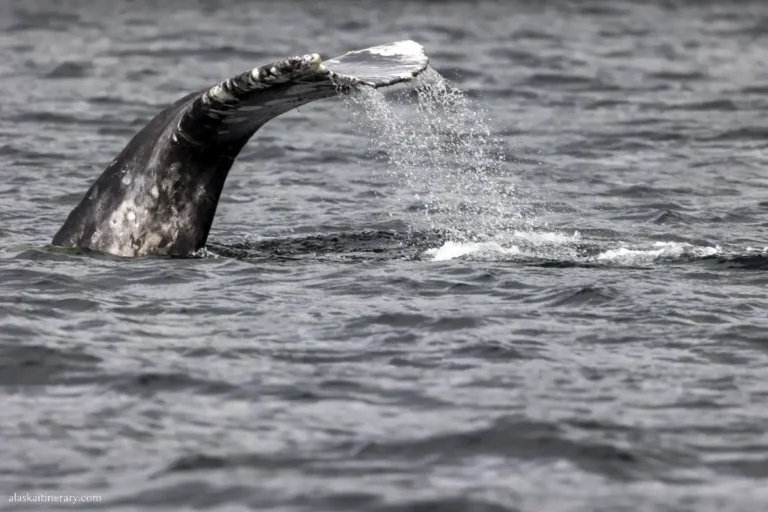
Sitka is also known for its marine wildlife and fishing. Sitka Sound is home to sea otters, whales, Steller sea lions, bald eagles, and all five species of Pacific salmon. Commercial and sport fishing remain an important part of the community.
Its setting is another defining feature. Sitka sits between the mountains and the sea, surrounded by rainforest, islands, and the waters of Sitka Sound.

A Short History of Sitka
Sitka’s history began long before Russian settlement. The Tlingit people lived on Baranof Island for thousands of years, and the Kiks.ádi clan has deep historical ties to the Sitka area.
In 1799, Alexander Baranov established a Russian trading post several miles north of present-day Sitka. The Tlingit destroyed that settlement in 1802. Two years later, Baranov returned, leading to the Battle of Sitka in 1804. After the battle, the Russians established New Archangel at present-day Sitka.
New Archangel became the headquarters of the Russian-American Company and, by the early 1800s, the capital of Russian America. It developed into an important North Pacific trading and administrative center.
In March 1867, U.S. Secretary of State William H. Seward negotiated the purchase of Alaska from Russia for $7.2 million, or less than two cents per acre. The treaty was signed on March 30 and approved by the U.S. Senate on April 9.
On October 18, 1867, the formal transfer of Alaska from Russia to the United States took place on Castle Hill in Sitka. The Russian flag was lowered and the American flag was raised.
Sitka remained Alaska’s main government center after the purchase. When Congress created a civil government for the District of Alaska in 1884, Sitka served as its capital. Government offices moved to Juneau in 1906.
Sitka also played an important role during World War II. The U.S. Navy established an advanced seaplane base on Japonski Island in 1937, later expanding it into the Navy’s first air station in Alaska, while the U.S. Army built coastal defenses around Sitka beginning in 1941. The base helped protect Southeast Alaska during the war and was decommissioned in 1944.
Today, Sitka’s Tlingit and Russian history remains visible throughout the community, especially at Sitka National Historical Park, Castle Hill, St. Michael’s Cathedral, and the Russian Bishop’s House.

Interesting and Fun Facts About Sitka
Sitka has far more unusual history than its small population might suggest. Here are some of the most interesting facts about the city.
1. Sitka National Historical Park Is Alaska’s Oldest Federally Designated Park
The land that became Sitka National Historical Park was first set aside as a federal public park in 1890. It later became Sitka National Monument in 1910 and Sitka National Historical Park in 1972. The National Park Service calls it Alaska’s oldest federally designated park.
2. Some of Sitka’s Totem Poles Traveled to a World’s Fair Before Coming to Sitka
In 1904, 15 Tlingit and Haida totem poles were taken to the St. Louis World’s Fair as part of Alaska’s exhibit. Most later traveled to the Lewis and Clark Exposition in Portland before arriving in Sitka in 1906.
3. Sitka National Historical Park Has More Than 25 Standing Totem Poles
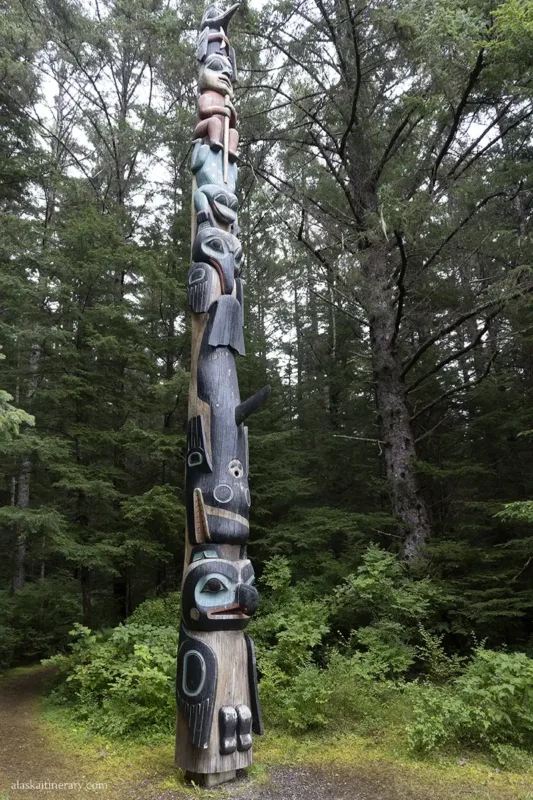
Today, Sitka National Historical Park has more than 25 standing totem poles. Many are replicas or later carvings that preserve the stories and designs of older poles.
4. Two of North America’s Four Surviving Russian Colonial Buildings Are in Sitka
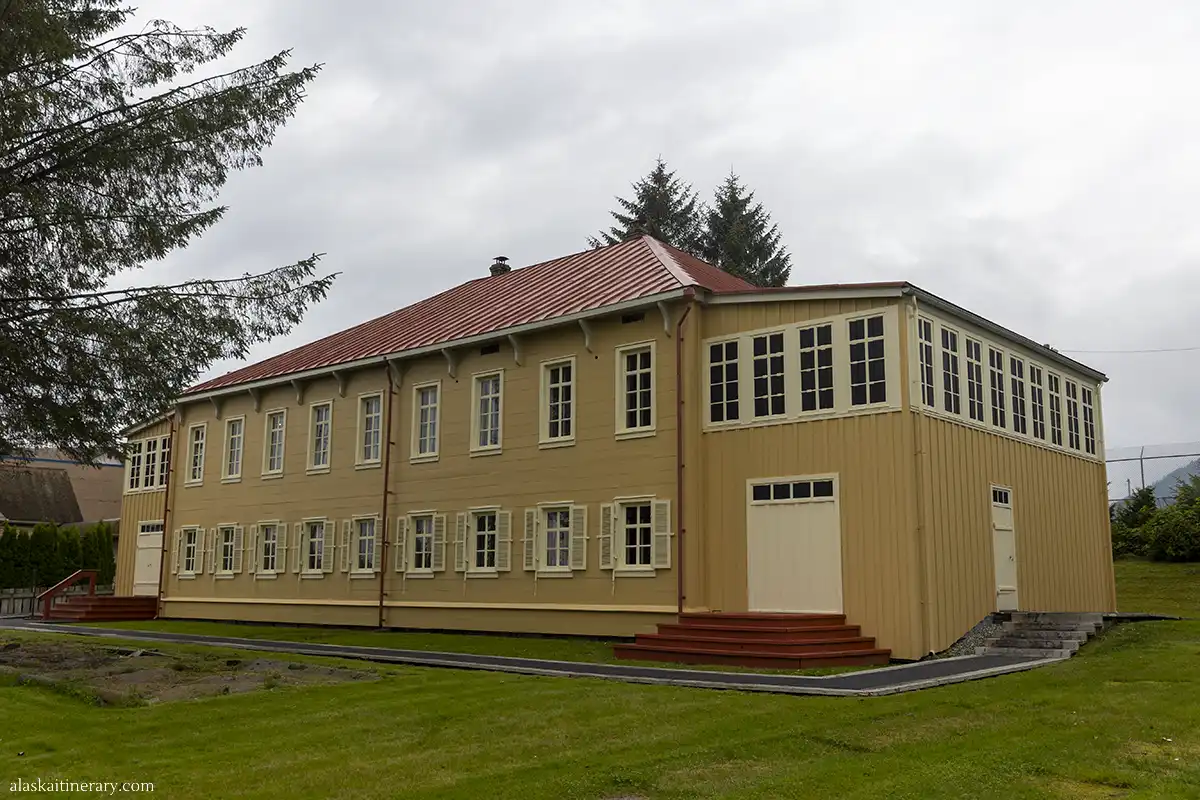
Only four buildings from the Russian colonial period survive in North America. Two are in Sitka: the Russian Bishop’s House and Russian-American Building No. 29.
5. Restoring the Russian Bishop’s House Took About 15 Years
By the 1970s, the Russian Bishop’s House was in poor condition and at risk of collapse. The National Park Service acquired it in 1973 and spent roughly 15 years restoring it to its mid-19th-century appearance.
6. St. Michael’s Cathedral Is Not the Original Building
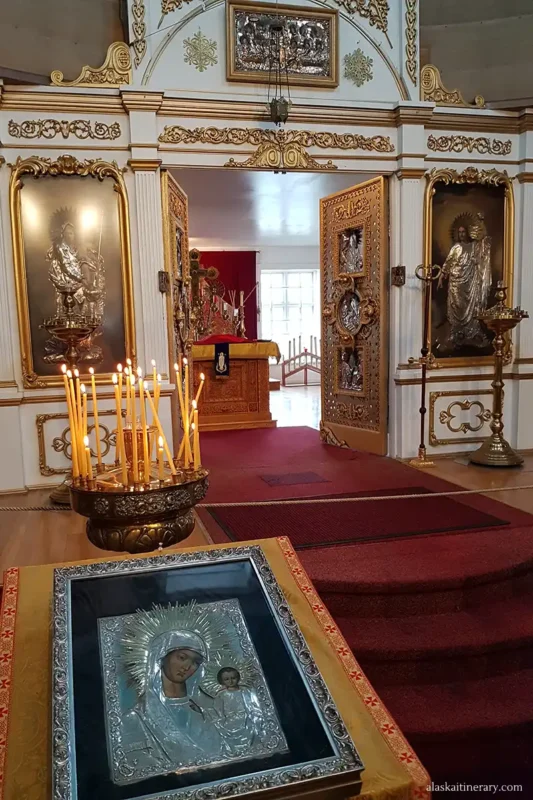
The original St. Michael’s Cathedral, built between 1844 and 1848, was destroyed by a fire in 1966. Sitka residents saved many icons, furnishings, and religious objects before the building burned.
The cathedral was later reconstructed using historic architectural drawings so that it closely matched the original.
7. Sitka Once Led a Russian Orthodox Diocese That Covered All of North America
From 1840 to 1872, Sitka was the seat of the Russian Orthodox Diocese that governed all of North America. St. Michael’s Cathedral became one of the most important symbols of Russian Orthodox influence in the region.
8. Sitka Has the First Vehicular Cable-Stayed Bridge Built in the United States
The John O’Connell Bridge, completed in 1971, connects Baranof Island with Japonski Island.
According to the City and Borough of Sitka, it was the first cable-stayed vehicular bridge in the United States.
9. Mount Edgecumbe Was the Scene of a Famous April Fools’ Prank
On April 1, 1974, local prankster Oliver “Porky” Bickar flew old tires into the crater of Mount Edgecumbe and set them on fire.
Black smoke rising from the dormant volcano made some Sitka residents think it was erupting. Bickar also painted “APRIL FOOL” in huge letters in the snow inside the crater.
10. Alaska’s First Printed Newspaper Was Published in Sitka
The handwritten Sitka Times appeared in 1868, shortly after the Alaska Purchase.
In April 1869, the Alaska Times began publication in Sitka and became the first newspaper printed in Alaska.
11. Russian Sitka Once Exported Ice to California
Sitka’s Russian-era economy was not limited to the fur trade.
By the 1850s, the Russian-American Company was also involved in shipbuilding, lumber, fishing, and even selling ice to customers in California during the Gold Rush era.
12. The Tlingit Fort in the Battle of Sitka Was Carefully Designed Against Russian Cannons
Before the Battle of Sitka in 1804, the Kiks.ádi Tlingit built Shís’gi Noow near shallow tidelands.
The location was deliberate. The shallow water prevented Russian ships from bringing their heavy artillery close to the fort.
13. Castle Hill Saw Another Important Flag-Raising in 1959
Castle Hill is famous for the 1867 transfer ceremony, but another symbolic event happened there after Alaska became a state.
In 1959, the first 49-star U.S. flag raised in Alaska was flown on Castle Hill during an unofficial ceremony.
14. Alaska Day Commemorates an Event That Happened in Sitka
October 18 is Alaska Day, a state holiday marking the formal transfer of Alaska from Russia to the United States in Sitka in 1867.
The ceremony took place on Castle Hill, where the Russian flag was lowered and the U.S. flag was raised.
15. The Proposal Is Set in Sitka, but It Was Not Really Filmed There
The 2009 romantic comedy The Proposal is set in Sitka, which introduced the town to millions of movie viewers.
However, most of the movie was actually filmed in Massachusetts, not Alaska.

Sitka Then and Now
Sitka has changed dramatically over the centuries, but its earlier history is still very visible today.
Long before Russian settlement, the area was home to the Sheet’ká Tlingit, whose culture and traditions remain an important part of the community. Russian traders later established New Archangel, which became the administrative center of Russian America. After the Alaska Purchase, Sitka continued as an important government center before that role shifted to Juneau.
Today, Sitka is a modern Southeast Alaska community with strong ties to fishing, tourism, healthcare, education, and regional services. At the same time, its Tlingit and Russian heritage remains easy to see in local landmarks, traditions, museums, and historic sites.
That combination of living culture and preserved history is one of the things that makes Sitka so distinctive.
Where Can You See Sitka’s History Today?
Sitka’s history is easy to explore because many important sites are still preserved around town.
One of the best places to start is Sitka National Historical Park, which protects the site of the 1804 Battle of Sitka. The park also includes the Totem Trail and the restored Russian Bishop’s House, one of the most important surviving Russian colonial buildings in North America.
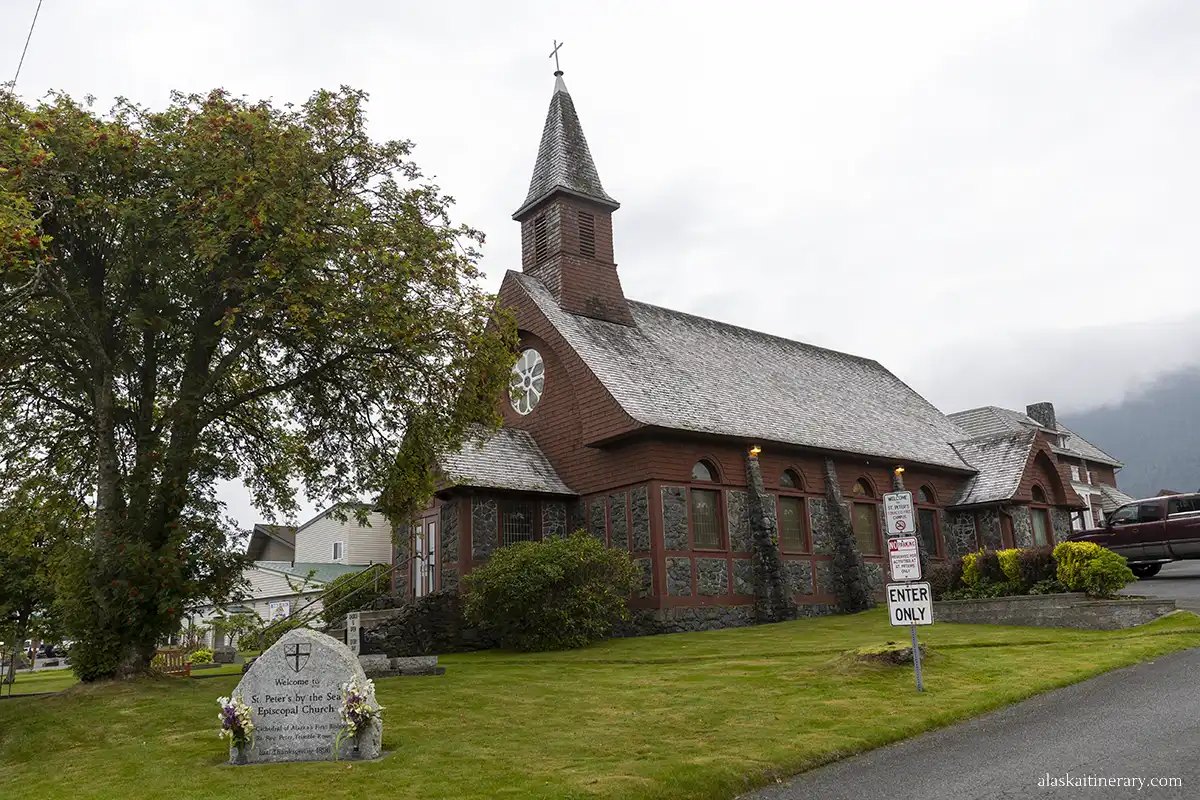
In downtown Sitka, you can also visit Castle Hill, where Alaska was formally transferred from Russia to the United States in 1867. Nearby, St. Michael’s Cathedral remains one of the clearest reminders of Sitka’s Russian Orthodox heritage.
For a deeper look at this part of Sitka’s past, see our Sitka Russian Heritage guide, where we cover the battle, Russian period, and historic landmarks in more detail.
You can also read our Sitka National Historical Park guide for more about the Totem Trail, park history, and what to see during a visit.
The Sitka History Museum and Sheldon Jackson Museum add even more context, especially if you want to learn about the community’s local history and Alaska Native cultures.
Final Thoughts
Sitka may have a small population, but its history is remarkably rich. Few places in Alaska combine Tlingit heritage, Russian influence, major national events, and dramatic coastal geography so clearly.
From the 1804 Battle of Sitka to the 1867 Alaska transfer, the city played an important role in Alaska’s history. Today, many of those stories are still visible in Sitka’s parks, museums, historic buildings, and cultural traditions.
That is what makes Sitka such an interesting place to learn about. Its history is not hidden in the past. You can still see it throughout the community today.
Do You Like It? Pin It For Later!