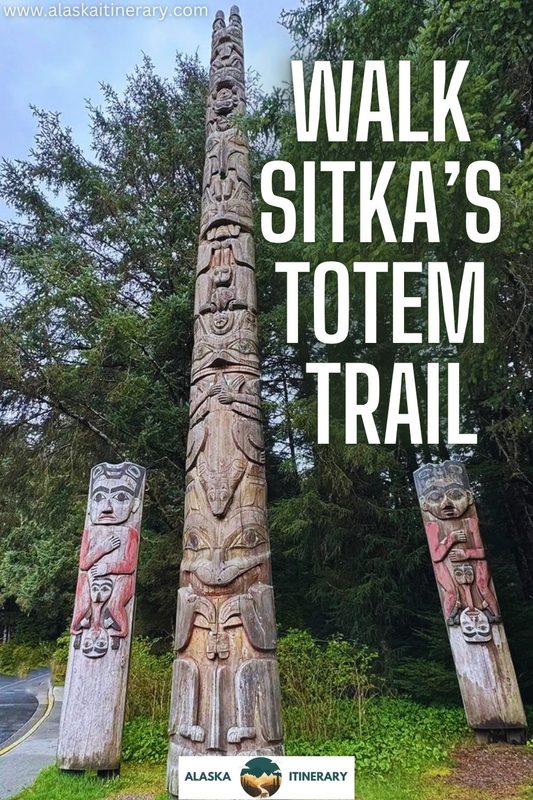
Sitka National Historical Park: Totem Trail & Visitor Guide

Sitka National Historical Park is one of the best places to understand Sitka’s history, culture, and natural setting in one visit. The park combines Tlingit heritage, the site of the 1804 Battle of Sitka, rainforest trails, and a collection of Northwest Coast totem poles. The main Totem Trail winds through temperate rainforest beside Sitka Sound, while the park also includes the Russian Bishop’s House, one of the few surviving Russian colonial buildings in North America. In this guide, we share what to see, how much time you need, how to get there from downtown or the cruise port, and practical tips from our own visit to Sitka National Historical Park.
This article may contain affiliate / compensated links. For full information, please see our disclaimer here.
Our Experience Visiting Sitka National Historical Park
We have visited Sitka National Historical Park during our trips to Sitka and spent time exploring the visitor center, Totem Trail, rainforest, and historic sites.
On one visit, we joined a guided walking tour, which gave us much more context about the Tlingit history, the 1804 Battle of Sitka, and the stories behind the totem poles. We also watched Alaska Native artists working in the park’s carving area, which made the visit even more interesting.
We love history, so this was one of our favorite places in Sitka for learning more about the city’s past. The park is also easy to explore independently, but we found the guided experience especially valuable for understanding the cultural and historical details behind what we were seeing.


Sitka National Historical Park: Quick Visitor Info
| Visitor Info | Quick Answer |
|---|---|
| Entrance fee | Free |
| Totem Trail | 1-mile loop |
| Time needed | About 1–2 hours for a typical visit |
| Visitor Center | 9 AM–5 PM from April 21 through September 30 |
| Park grounds and trails | Open daily for day use |
| From downtown Sitka | About a 15–20 minute walk |
| From Sitka Sound Cruise Terminal | Take the complimentary shuttle downtown first, then walk to the park |
| Accessibility | Visitor center is barrier-free; main trails are relatively flat and wheelchair-friendly |
| Russian Bishop’s House | Separate park site about a 10-minute walk from the Visitor Center |
| Best known for | Totem poles, Tlingit history, the 1804 Battle of Sitka site, and coastal rainforest |
There is no entrance fee for Sitka National Historical Park. The main visitor center is open daily from 9 AM to 5 PM from April 21 through September 30, while the park grounds remain open year-round during posted day-use hours.
The main trails are relatively flat and surfaced with crushed gravel. The Visitor Center is barrier-free, and accessible restrooms and parking are available. Exploring the Totem Trail is also one of the best free things to do in Sitka.
Where Is Sitka National Historical Park?
Sitka National Historical Park is located at the east end of Lincoln Street, about a quarter mile from downtown Sitka. The main visitor center is at 106 Metlakatla Street.
The park sits along Sitka Sound and the Indian River, with trails winding through temperate rainforest, along the shoreline, and past the historic battle site and totem poles.
Because it is so close to downtown, the park is easy to reach on foot once you are in central Sitka. The Russian Bishop’s House, also part of Sitka National Historical Park, is a separate site about a 10-minute walk away.


How to Get to Sitka National Historical Park From the Cruise Port
Sitka National Historical Park is easy to reach from downtown, but most major cruise ships dock at the Sitka Sound Cruise Terminal, about six miles north of the town center.
From the cruise terminal, take the complimentary shuttle to Harrigan Centennial Hall. The ride usually takes about 10–15 minutes. From there, walk along Lincoln Street to the park, which takes roughly another 15–20 minutes. For exact dock locations, shuttle details, and transportation information, see our Sitka Cruise Port Guide.
The map below shows the walking route from the downtown cruise shuttle stop at Harrigan Centennial Hall to the Sitka National Historical Park Visitor Center and Totem Trail.
If your ship tenders closer to downtown, such as at Crescent Harbor or O’Connell Bridge Dock, you can walk directly to the park.
Prefer not to walk? You can arrange a taxi or private shuttle from downtown to the park. Transportation can be limited on busy cruise days, so it is best to plan ahead.
Another option is to rent an e-bike. You can rent one at the Sitka Sound Cruise Terminal or choose a downtown rental if you prefer a shorter ride to the park. Keep in mind that bikes and e-bikes are not allowed on the park trails, so park your bike before walking the Totem Trail.
If the park is one stop during your cruise day, see our One Day in Sitka itinerary for realistic plans based on how many hours you have in port.

Sitka National Historical Park & Things To Do There
We recommend starting your visit at the Sitka National Historical Park Visitor Center. It is a good place to get oriented before walking the Totem Trail.
Inside, you can explore exhibits about traditional Tlingit life and culture. The collections include ceremonial objects, drums, robes, and other artifacts, including items loaned to the National Park Service by Tlingit clans.
You can also watch the short park film, The Voices of Sitka. It tells Sitka’s story through different perspectives and provides useful context before visiting the battle site and totem poles.
Stop at the ranger desk for a park map, current trail information, and details about programs offered that day. During summer, you may also find Alaska Native artists working in the studios near the visitor center, which we cover later in this guide. The visitor center is free to visit.


Explore the Totem Trail
The Totem Trail is the highlight of Sitka National Historical Park and the part we would not miss. The trail starts near the Visitor Center and follows a 1-mile loop through temperate rainforest and along the shoreline of Sitka Sound.
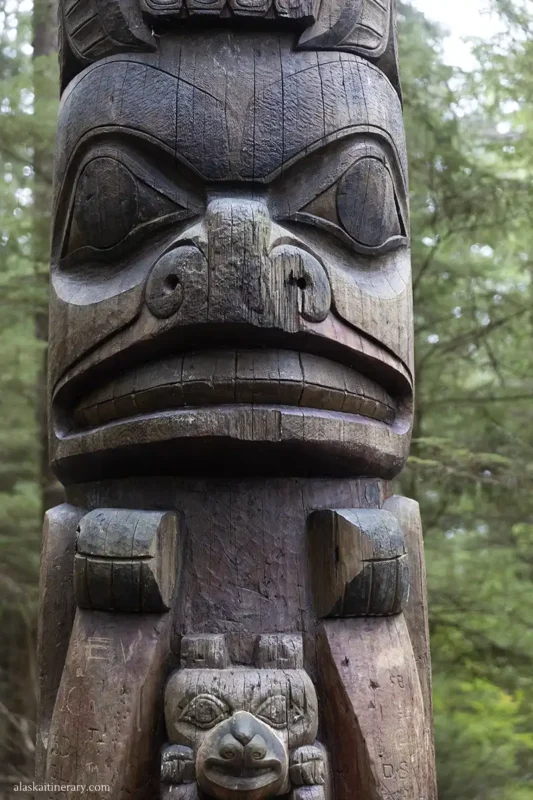
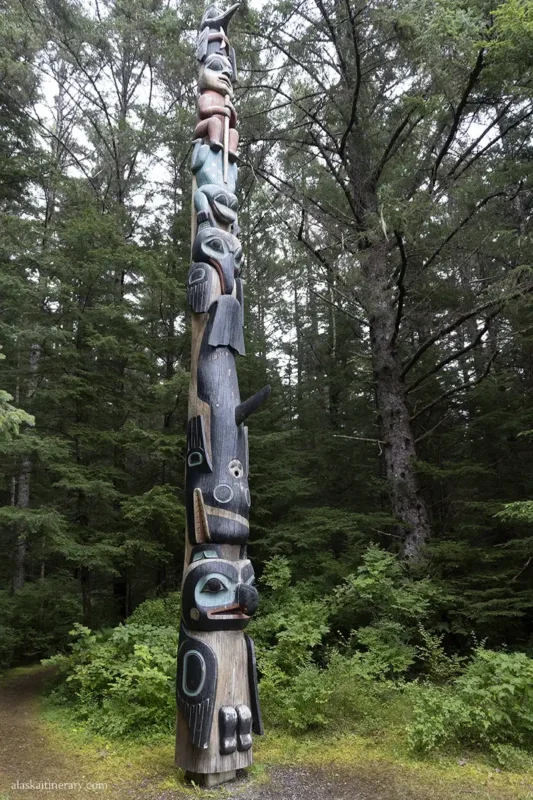
Along the trail and adjacent grounds, you will see 18 original and replica totem poles carved by Tlingit and Haida artists. The route also passes the site of the 1804 Battle of Sitka and the Kiks.ádi Fort site.
The trail is relatively flat, wide, and surfaced with crushed gravel. Most visitors need about 30–90 minutes, depending on how often they stop to read the signs, photograph the poles, and enjoy the waterfront views.
You can also use the NPS app for a self-guided Totem Pole Walking Tour, which explains the stories, symbols, and history connected with individual poles.
We recommend taking your time here. The combination of rainforest, totem poles, cultural history, and Sitka Sound makes this much more than a simple walking trail.

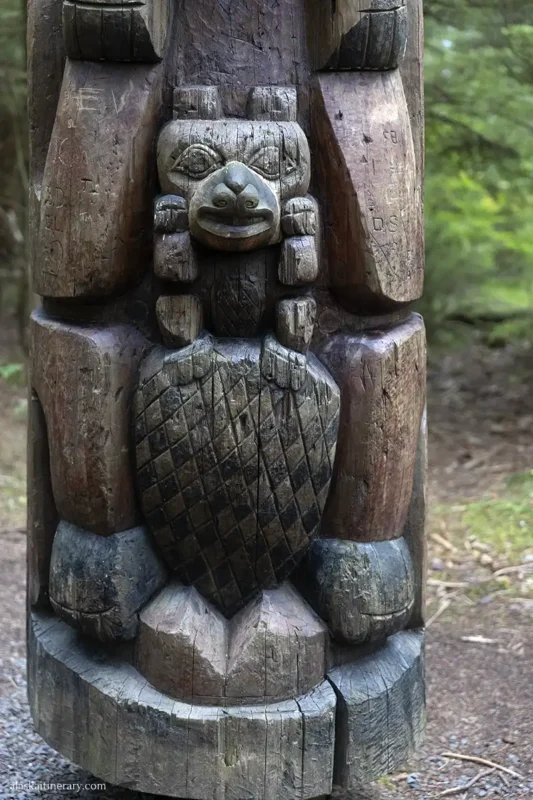
Why Is It Called Sitka Totem Park?
You may hear Sitka National Historical Park called “Sitka Totem Park”, especially when people refer to the Totem Trail and its collection of Tlingit and Haida poles.
The nickname has historical roots. Totem poles collected from Southeast Alaska villages were installed along trails in what was then commonly known as Indian River Park in 1906. Over time, the impressive collection became so closely associated with the site that “Totem Park” became a familiar name for the area.
However, the official name today is Sitka National Historical Park, and the totem poles are only one part of its story. The park also preserves the 1804 Battle of Sitka site, Tlingit cultural history, rainforest, and Russian heritage.

The 1804 Battle of Sitka Site
The park preserves several of the stories behind some of the most fascinating facts about Sitka, including the 1804 battle and the city’s Russian colonial past.
The Totem Trail leads through the site of the 1804 Battle of Sitka.
The Kiks.ádi Tlingit built a fortified settlement called Shís’gi Noow near the mouth of Indian River. They chose the location carefully because the shallow water made it difficult for Russian ships to bring their heavy cannons close to the fort.
Russian forces arrived in late September 1804. On October 1, they attacked the fort but were pushed back by the Tlingit defenders. After several days of fighting and bombardment, the Kiks.ádi withdrew when their ammunition supplies became too limited.
Today, Sitka National Historical Park preserves the battlefield and the location of the Kiks.ádi fort. Interpretive signs along the trail help explain what happened here and why the battle became such an important turning point in Sitka’s history.
For more about the Battle of Sitka, Russian America, and the landmarks that remain today, see our Sitka Russian Heritage guide.
The Totem Poles: What Makes Them Special?
The totem poles at Sitka National Historical Park are much more than colorful carvings. Tlingit and Haida artists created them to preserve stories, family histories, and important traditions.
Many of the poles also have a fascinating travel story. In the early 1900s, Alaska Governor John Brady collected 15 poles from Tlingit and Haida villages in Southeast Alaska.
The poles traveled to the 1904 St. Louis World’s Fair. They were later displayed at the 1905 Lewis and Clark Exposition in Portland. Thirteen eventually returned to Sitka and became part of the park’s collection.
Today, you will see a mix of original poles, replicas, and later re-carvings. Southeast Alaska’s wet climate slowly damages the wood. Over the years, Native carvers have recreated aging poles while keeping their original designs and stories.
We found this especially interesting because the collection is not only about the past. Totem carving is still a living tradition in Sitka, and visitors may even see artists working during the summer.
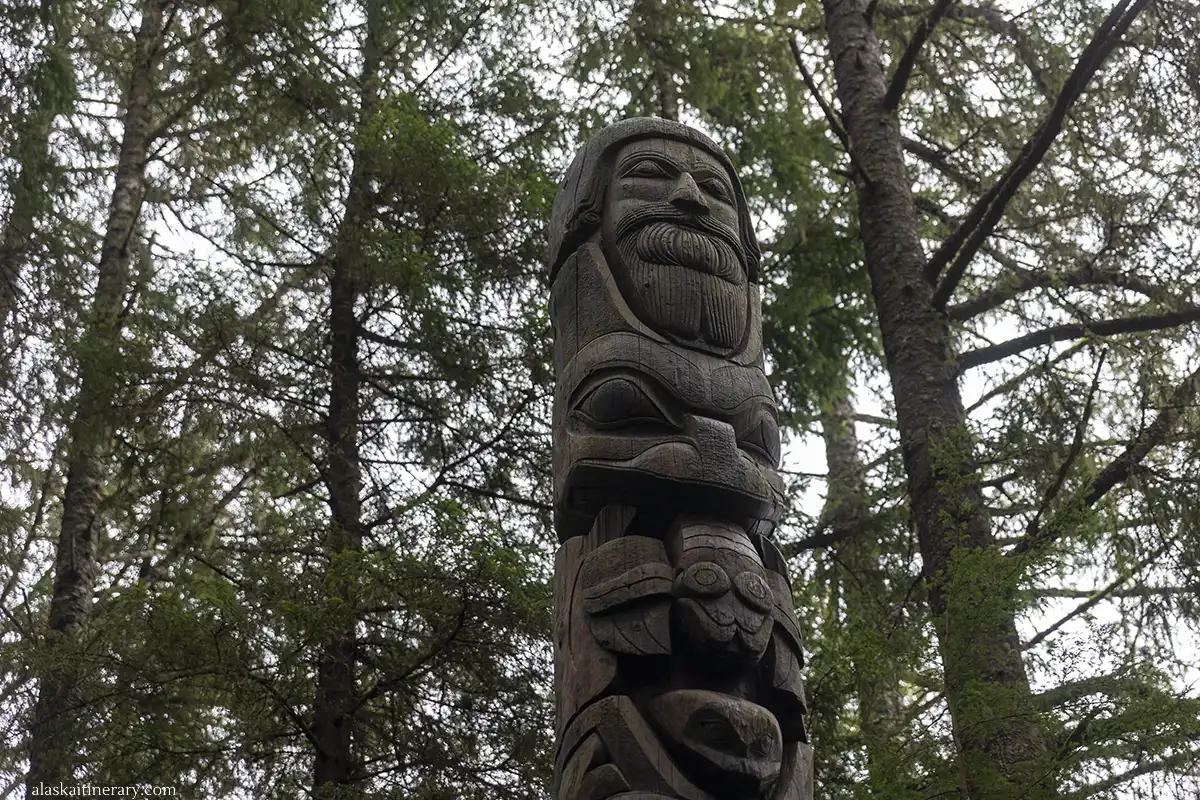

Walk the Russian Memorial Loop
If you have extra time, continue beyond the Totem Trail onto the Russian Memorial Loop. Together, the Totem Trail and Russian Memorial Loop cover about 1.6 miles.
The two loops are connected by a footbridge over the Indian River and pass through classic Southeast Alaska rainforest. Along the way, you will see Sitka spruce, western hemlock, and views toward Sitka Sound.
The Russian Memorial marks the site connected with a Russian midshipman and six sailors who were killed during the 1804 Battle of Sitka.
This loop is quieter than the main Totem Trail and is worth adding if you want a longer walk through the park.

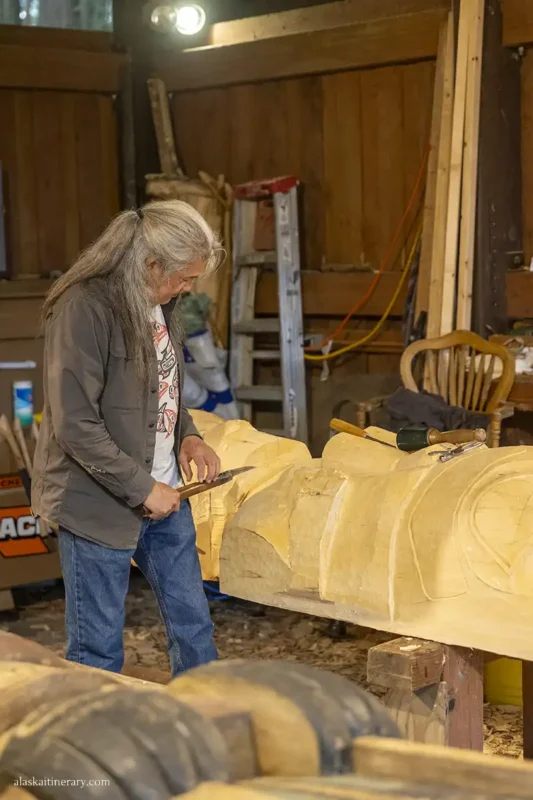
Watch Alaska Native Artists at Work
One of the most interesting experiences at Sitka National Historical Park is seeing Alaska Native artists working in the studios near the Visitor Center.
During summer, local artists may demonstrate wood carving, weaving, beading, or metalwork. The park works with the Sitka Tribe of Alaska to bring artists into the program, and visitors can often watch them work and ask questions about their techniques and traditions.
We especially enjoyed this part of our visit because it showed that these art forms are living traditions, not just museum displays.
Artist demonstrations are offered on many summer days, but they are not guaranteed every day, so check the park schedule when you arrive.

Visit the Russian Bishop’s House
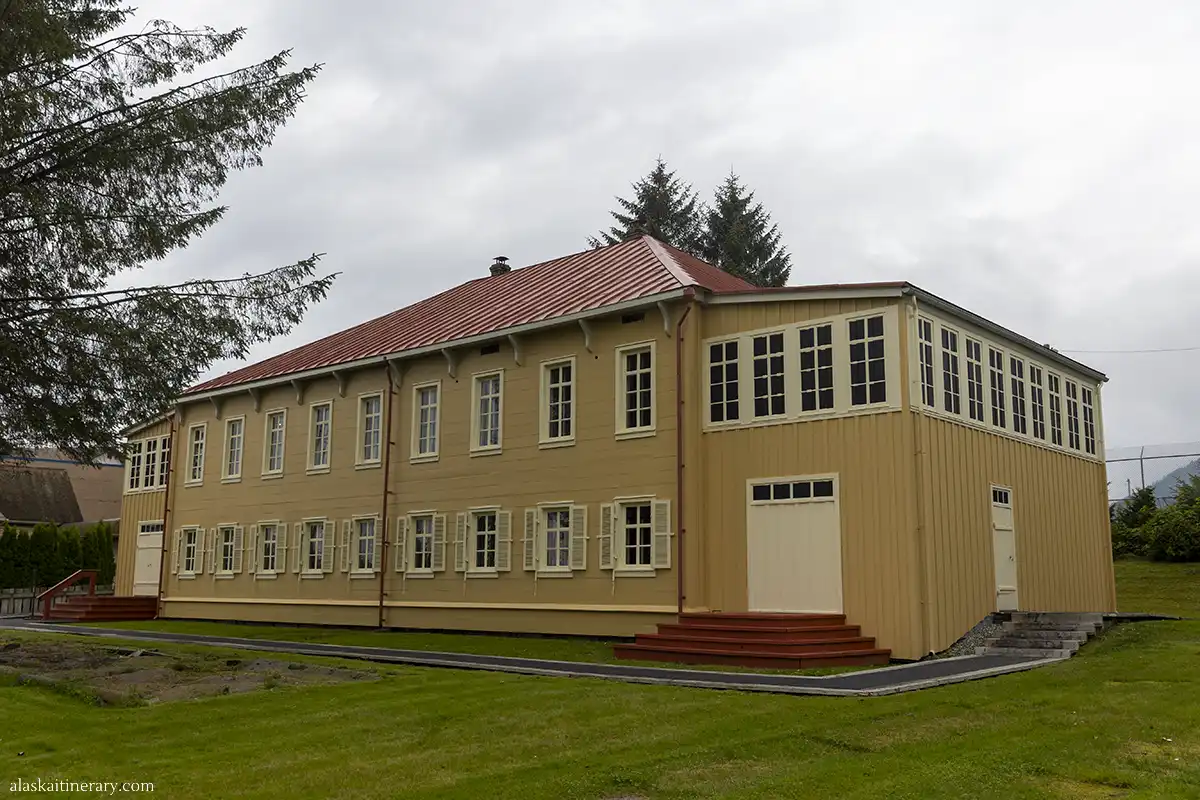
The Russian Bishop’s House is part of Sitka National Historical Park, but it is a separate site about a 10-minute walk from the main Visitor Center.
It is one of only four surviving Russian-period buildings in North America and offers a very different look at Sitka’s history. The first floor has free exhibits about Russian America and the role of the Russian Orthodox Church.
Allow at least 20 minutes for the first-floor museum. If tours are available, add about 30 minutes for the second floor, which includes restored rooms from the bishop’s residence. Guided tours are free and are generally offered from May through September, depending on staffing.
If Russian history interests you, this is well worth adding to your visit.
If you plan to continue exploring after the park, our Downtown Sitka walking guide covers the main historic sights nearby.

A Short History of Sitka National Historical Park
The land protected today as Sitka National Historical Park has deep cultural importance to the Tlingit people, especially the Kiks.ádi clan. It also preserves the site of the 1804 Battle of Sitka, which we covered earlier.
The area later became a popular community park. In 1890, President Benjamin Harrison set it aside as a federal public park. That makes Sitka National Historical Park Alaska’s oldest federally designated park.
In 1910, President William Howard Taft designated the area Sitka National Monument. The goal was to protect the battlefield and the growing collection of historic totem poles.
Finally, in 1972, the site was redesignated Sitka National Historical Park. Its boundaries were also expanded to include the Russian Bishop’s House.
Today, the park preserves both Tlingit and Russian history, along with the rainforest, shoreline, and Indian River that shaped the events that happened here.


Do You Need a Guided Tour of Sitka National Historical Park?
No. Sitka National Historical Park is easy to explore on your own. The Visitor Center provides maps and information, and you can follow the Totem Trail using interpretive signs or the self-guided tour in the NPS app.
During summer, the park may also offer free ranger-led talks, walks, and other programs, depending on staffing. Topics often include the totem poles and the 1804 Battle of Sitka.
During one of our visits, we chose a guided walking tour because we wanted more context about Tlingit culture, the battle site, and the stories behind the totem poles. For us, it was worth it because we learned much more than we would have from simply walking the trail.
So, you do not need a tour to enjoy the park. However, if history and culture are important to you, a knowledgeable guide can make the visit much more meaningful.
Accessibility at Sitka National Historical Park
Sitka National Historical Park is relatively easy to explore for visitors with limited mobility. The route from downtown to the park is also paved and flat, making it wheelchair-friendly and easy to navigate.
The Visitor Center is barrier-free, with accessible parking, restrooms, exhibits, and a wheelchair available for public use. The park film includes open captions, and assistive listening devices are available.
The main trails are generally about six feet wide, relatively flat, and surfaced with crushed gravel. However, rain can create muddy areas, so conditions may vary.
The first floor of the Russian Bishop’s House is wheelchair accessible, although the historic floors can be uneven. The second floor is reached only by stairs, but visitors who cannot go upstairs can use a virtual tour or video presentation on the first floor.

How Much Time Do You Need at Sitka National Historical Park?
For most visitors, 1–2 hours is enough to see the Visitor Center and walk the Totem Trail without rushing.
If you have less time, you can still enjoy a shorter visit:
- 30–45 minutes: Visitor Center plus a short section of the Totem Trail.
- 1–2 hours: Visitor Center, full Totem Trail, and time to stop at the totem poles and battle site.
- 2–3 hours: Add the Russian Memorial Loop and the Russian Bishop’s House.
- 3 + hours: Combine the Totem Trail and Visitor Center with a visit to the Alaska Raptor Center, which is located nearby and is easy to add to a longer visit.
We recommend allowing at least 90 minutes if this is your first visit. That gives you enough time to enjoy the rainforest trail and cultural exhibits without feeling rushed.
Practical Tips for Visiting Sitka National Historical Park
A little planning will help you get more from your visit.
- Bring a rain jacket or poncho. Sitka gets frequent rain, and much of your visit will be outdoors.
- Wear comfortable walking shoes. The Totem Trail is easy, but the crushed-gravel surface can be wet or muddy after rain.
- Download the NPS app before your visit. It includes park information and self-guided tours, and you can save content for offline use.
- Check current park hours and conditions. Visitor Center hours change seasonally, while the park grounds remain open for day use.
- Look for trail alerts before you start walking. Brown bears can be more active in late summer when salmon return to Indian River. NPS posts color-coded alerts at trailheads when bear activity increases.
- Allow extra time if you want to visit the Russian Bishop’s House. It is a separate park site about a 10-minute walk from the main Visitor Center.
- Do not rush the Totem Trail. Even though the loop is only about one mile, allow time to stop at the poles, read the signs, and enjoy the rainforest and waterfront views.
Final Thoughts
Sitka National Historical Park is one of the best places in Sitka to understand the city’s Tlingit heritage, Russian history, and natural setting.
The park is free, easy to reach from downtown, and simple to explore on your own. The Totem Trail, 1804 Battle of Sitka site, Visitor Center, and Russian Bishop’s House together give a much deeper look at Sitka’s history than a quick walk through town.
For us, the combination of rainforest, totem poles, cultural history, and living Native traditions made this one of the most memorable places we visited in Sitka.
Do You Like It? Pin It For Later!