Sitka Accessibility Guide for Alaska Cruise Passengers

Sitka is one of Alaska’s most scenic cruise ports. Snow-capped mountains, coastal forests, and rich Native culture surround the town. For travelers with limited mobility, Sitka can be very rewarding—but only with the right planning. This guide focuses on what matters most for wheelchair users, scooter riders, seniors, and slow walkers. Sitka is accessible in many ways, but it works differently than ports like Juneau or Ketchikan. The cruise terminal sits outside town, shuttles are essential, and terrain ranges from flat waterfront paths to forest trails with gravel and roots. In this Sitka Accessibility Guide, we explain what to expect at the terminal, how the shuttles work, which attractions are easiest to visit, and which ones to skip. The goal is simple: help you explore Sitka with confidence and minimal stress.
This article may contain affiliate / compensated links. For full information, please see our disclaimer here.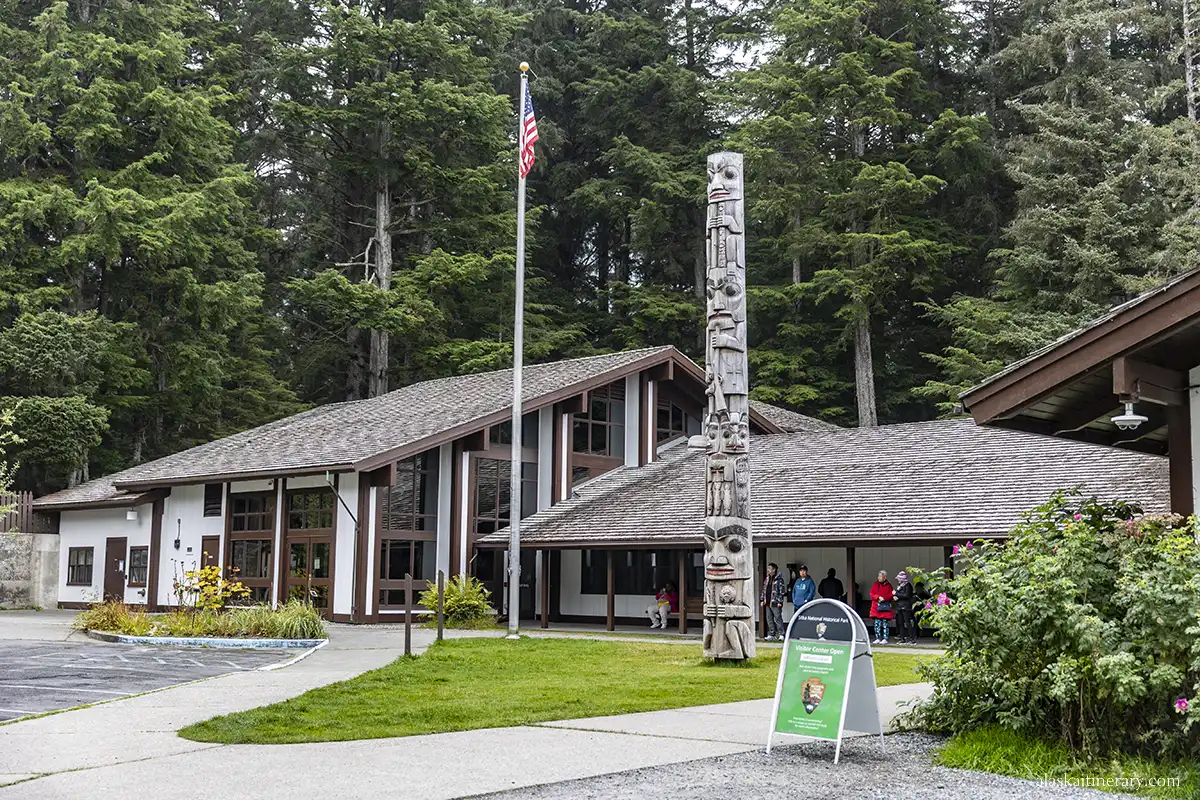
Our Experiences Exploring Sitka with Accessibility in Mind
Chris and I have visited Sitka several times during Alaska cruises and independent trips. During each visit, we focused on the details that matter most for travelers with limited mobility.
In particular, we paid close attention to shuttle boarding, sidewalk conditions, curb cuts, and slopes near the main visitor areas. Some routes felt smooth and easy, while others became challenging after rain. At the same time, we tracked real distances between shuttle stops and popular attractions, since Sitka’s layout is not compact like Juneau’s.
We often create custom Alaska itineraries for multi-generational families. Many of these trips include grandparents who need extra support or accessible options. Because of this, we understand what truly matters when planning shore days for seniors and travelers with mobility issues.
That’s also why we’ve expanded our blog to cover accessibility in more detail. You may also find our Alaskan Ports Accessibility Guide and our article on easy and accessible Alaska cruise excursions for seniors and travelers with limited mobility helpful when planning your trip.

Understanding Sitka’s Cruise Dock Layout and Getting Into Downtown
Sitka Cruise Port works differently than most Alaska ports of call. Ships do not dock downtown. Instead, most cruise passengers arrive at the Sitka Sound Cruise Terminal, located about five to six miles from the town center.
Sitka Sound Cruise Terminal (Primary Dock)
This is where most large cruise ships dock today.
What to expect at the terminal:
- flat, paved surfaces throughout
- wide walkways suitable for wheelchairs and scooters
- accessible restrooms inside the terminal building
- covered waiting areas for shuttles
- very short distance from ship to shuttle loading zone
The terminal itself is easy to navigate. The main challenge in Sitka is not the dock, but getting from the terminal into town, which always requires transportation.
Tendering in Sitka (Rare Today)
Tendering is now uncommon in Sitka and usually applies only to smaller ships or special itineraries.
If tendering does occur:
- access depends on tide and sea conditions
- crew assistance is provided
- slopes and ramps may feel steeper at low tide
Travelers who use wheelchairs or scooters should always confirm docking details with their cruise line before arrival.
Key Accessibility Takeaway
Sitka’s cruise terminal is modern, flat, and well designed for accessibility. However, because it sits outside town, shuttles are essential for nearly all visitors. Planning around transportation is the most important part of a smooth Sitka visit for travelers with limited mobility.

Getting from the Cruise Terminal to Downtown Sitka
Because the cruise terminal sits outside town, transportation is required to explore Sitka. Most travelers rely on shuttle buses, and understanding how they work is essential for anyone with limited mobility.
Free Shuttle Buses to Downtown
Sitka provides free shuttle service between the cruise terminal and downtown. This is the primary way cruise passengers reach the main visitor area.
The Sitka Sound Cruise Terminal requires passengers to reserve a seat on the complimentary shuttle in advance. Priority boarding is given to those with reservations, which helps reduce wait times and keeps transfers running smoothly. Booking early is especially important if your tour departs from downtown Sitka.
What to expect:
- shuttle ride takes about 10–15 minutes
- large coach-style buses are commonly used
- most buses have low steps; some have wheelchair lifts, and are ADA-accessible
- drivers assist with boarding but cannot lift passengers
- scooters may need to be folded, depending on the vehicle
Shuttles usually drop passengers near Harrigan Centennial Hall, which sits on flat ground, is ADA-accessible, and works well as a central starting point.


Accessibility Notes for Shuttle Use
Accessibility can vary by day and ship. Not every shuttle is lift-equipped. ADA-accessible transportation from ship to town requires booking in advance.
If you use a wheelchair or large scooter:
- check out cruise terminal website and book your seat, or
- speak with your cruise line’s accessibility desk onboard
- ask which shuttle has a lift and where it loads
- allow extra time during busy periods
Most travelers using walkers or small scooters manage the shuttles comfortably with assistance.
Alternative Transportation Options
Accessible taxis are limited in Sitka and often require advance booking. Ride availability can be unpredictable on cruise days, so the shuttle remains the most reliable option for most visitors.

Terrain, Sidewalks, and Surfaces in Downtown Sitka
Once you arrive downtown, Sitka is generally manageable for travelers with limited mobility. Still, surfaces and slopes vary by area, so knowing where to stay makes a big difference.
Near the Shuttle Drop-Off (Harrigan Centennial Hall)
This area works well as a starting point.
What to expect:
- flat, paved ground
- wide sidewalks with curb cuts
- accessible restrooms inside Centennial Hall
- short distances to nearby attractions
Many accessible routes begin here, which helps reduce unnecessary walking.
Waterfront and Main Visitor Area
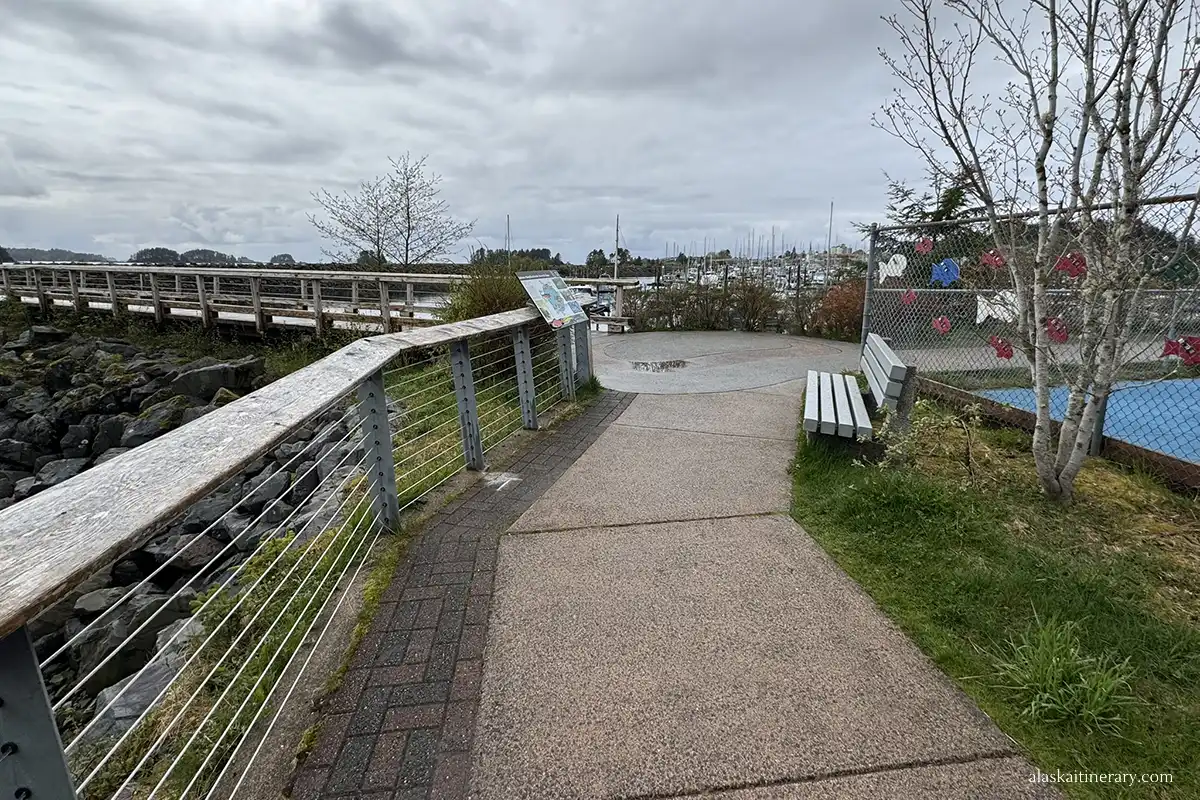
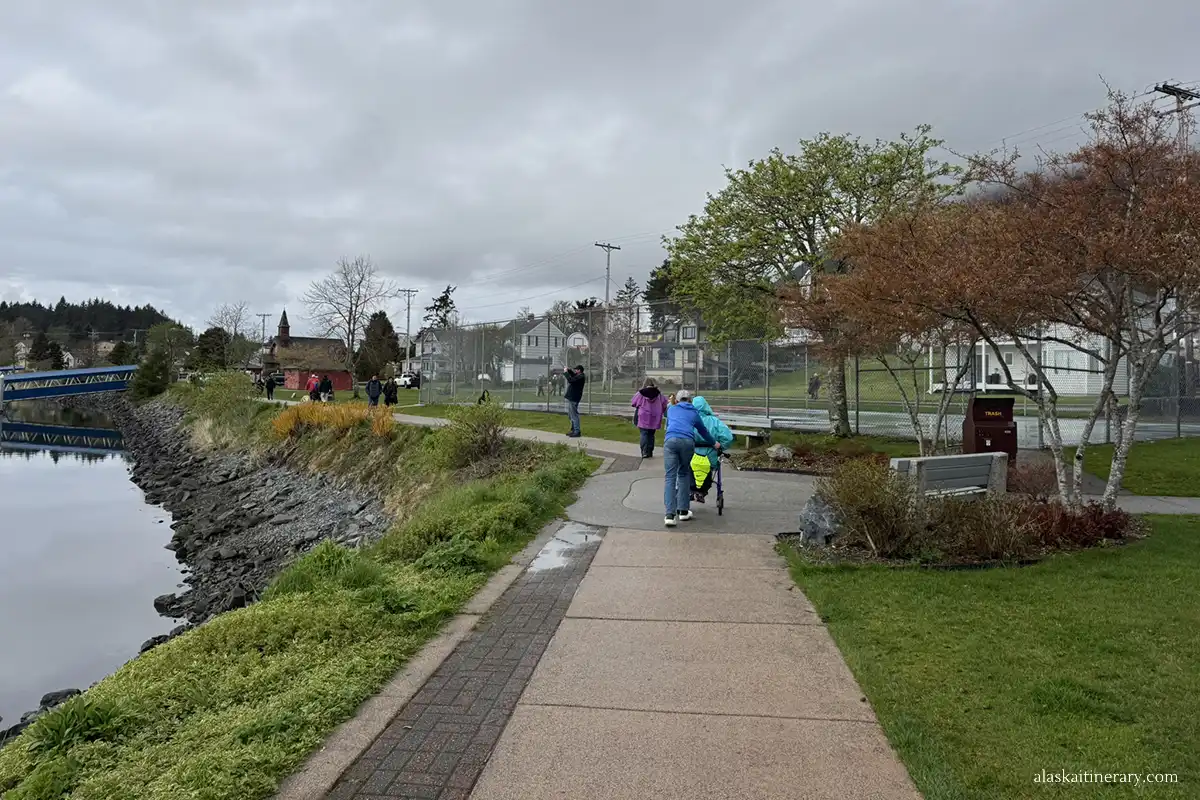
The waterfront zone near downtown is mostly flat and easy to navigate.
Details to know:
- smooth sidewalks along the harbor
- benches available for resting
- clear crosswalks at main intersections
- minimal elevation change
This area suits wheelchair users, scooter riders, and slow walkers.
Side Streets and Residential Areas
Conditions change once you move away from the waterfront.
Challenges to expect:
- moderate slopes on some streets
- older sidewalks with uneven pavement
- occasional narrow sections
Staying close to the waterfront keeps walking easier and more predictable.
Weather and Surface Conditions
Sitka gets frequent rain.
Important notes:
- wet pavement can feel slick
- wooden boardwalks and ramps become slippery
- gravel paths soften after rain
Non-slip shoes and slower pacing help maintain stability.
Key Accessibility Takeaway
Downtown Sitka is easiest near the waterfront and shuttle drop-off area. Terrain becomes more challenging as you move uphill or away from the harbor, so planning short routes keeps the visit comfortable.

Accessible Things to Do in Sitka Within Walking or Rolling Distance (Starting Point: Harrigan Centennial Hall)
Once you reach downtown Sitka, several attractions are easy to visit without long walks or extra transportation. These stops work well for wheelchair users, scooter riders, seniors, and slow walkers.
Harrigan Centennial Hall is the main shuttle drop-off point for cruise passengers. It sits on flat ground and has accessible restrooms. From here, several important Sitka attractions are reachable on foot or by wheelchair or scooter, as long as you understand the terrain.
All of these places are easy to explore independently, at your own pace, without booking a shore excursion. Moreover, most are free or very budget friendly.

Sitka National Historical Park (Visitor Center & Entrance Area)
The Sitka National Historical Park protects the site of the 1804 Battle of Sitka and highlights Tlingit history and culture. The visitor center offers exhibits, films, and carved totems that provide context before heading onto the trails. Even without walking far, you can experience Sitka’s cultural roots and coastal rainforest setting.
Distance: about 0.7 miles one way from Harrigan Centennial Hall
Walking time: 20 – 30 minutes at a relaxed pace
Route details:
- sidewalks from downtown toward the park are paved and wide
- minimal elevation change
- curb cuts at major crossings
Trail conditions inside the park:
- main trail is about 6 feet wide
- surface is crushed gravel, not pavement
- generally flat
- after rain, muddy patches are common
Accessibility summary:
- visitor center is fully accessible
- entrance totem area is reachable without entering forest trails
- good for slow walkers and some scooters
- manual wheelchairs may struggle after rain on forest trail
This park works best if you focus on the visitor center and first section of the trail.


Castle Hill (Baranof Castle State Historic Site)
This is one of the best accessible viewpoints in Sitka. Castle Hill is where the formal transfer of Alaska from Russia to the United States took place in 1867. Today, it offers one of the best viewpoints over Sitka Sound, the harbor, and surrounding islands. The accessible walkway allows visitors to reach the top without climbing stairs.
Distance: about 0.4 miles from Harrigan Centennial Hall
Walking time: 10-15 minutes at a relaxed pace

Accessibility details:
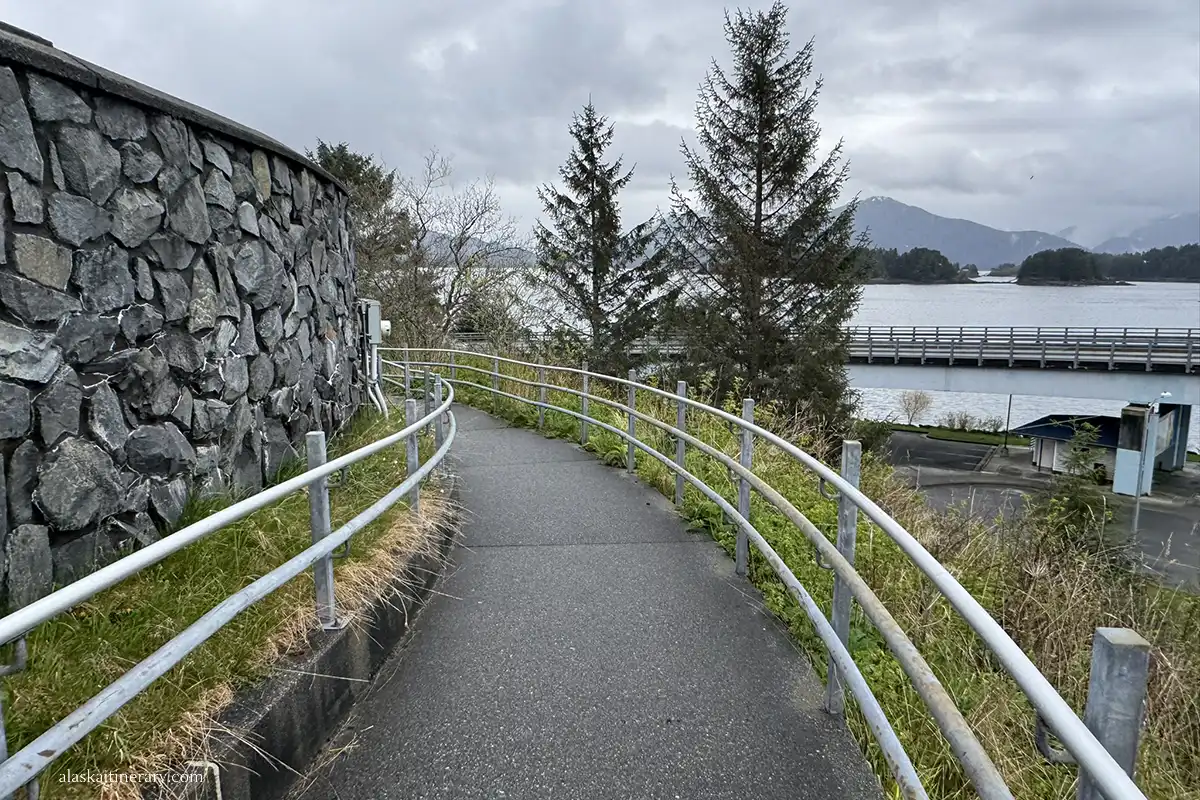
- a fully accessible paved walkway leads to the top
- steady incline, but no stairs required
- wide path suitable for wheelchairs and scooters
- viewing area at the top is flat
What you get:
- panoramic views over Sitka Sound
- benches near the top
- short visit with high reward

Sheldon Jackson Museum
The Sheldon Jackson Museum houses one of Alaska’s most important collections of Alaska Native artifacts, including tools, clothing, and ceremonial objects from cultures across the state. It’s a meaningful stop for visitors interested in history and Indigenous heritage. It sits on the way to Sitka National Historical Park, so it’s easy to visit both places in one outing.
Distance: about 0.5 miles from Harrigan Centennial Hall
Walking time: 15 minutes at a relaxed pace
Accessibility notes:
- wheelchair accessible entrance
- level access into the museum
- smooth indoor floors
- exhibits arranged on a single main level
- seating available inside
This museum works well for wheelchair users, scooter riders, and slow walkers who want a quiet, indoor cultural experience without long walking distances.

Russian Bishop’s House (Russian Bishop’s House National Historic Landmark)
The Russian Bishop’s House is one of the best-preserved examples of Russian colonial architecture in North America. Inside, exhibits explain daily life during Russian rule and the role of the Orthodox Church in Sitka’s history. Even a short visit provides strong historical context.
Because it sits on the route to Sitka National Historical Park, it’s easy to combine both sites in one outing.
Distance: about 0.15 miles from Harrigan Centennial Hall
Walking time: 5 – 10 minutes at a relaxed pace
Accessibility notes:
- not wheelchair or scooter accessible
- four steps at the entrance
- no ramp available
- suitable for slow walkers or visitors using canes
- interior space is compact
For wheelchair and scooter users, this site is best viewed from the outside.

St. Michael’s Cathedral (Exterior & Interior Limitations)
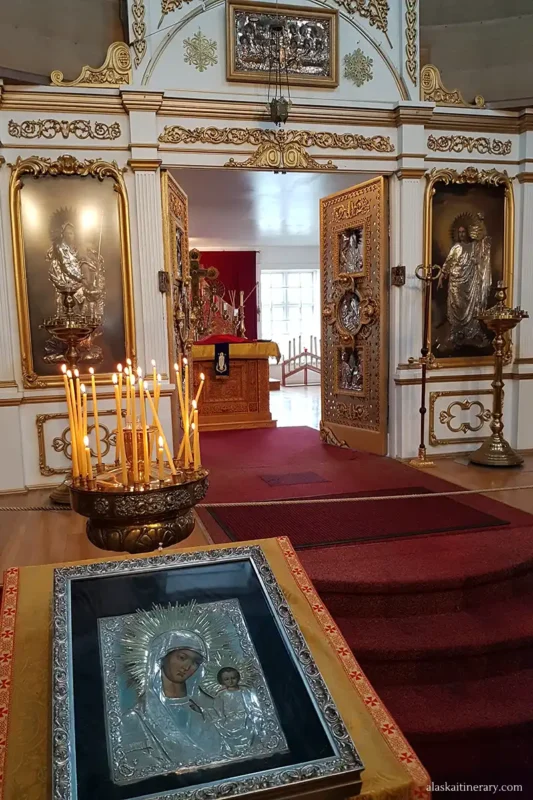
St. Michael’s Cathedral is a symbol of Sitka’s Russian heritage and Orthodox traditions. The interior features icons, religious art, and a calm atmosphere that appeals to many visitors. Travelers who walk slowly or use a cane often find it an easy and rewarding stop.
Distance: about 0.2 miles from Harrigan Centennial Hall
Walking time: 5 – 10 minutes at a relaxed pace
Accessibility notes:
- no ramp
- several steps at the entrance
- not accessible for wheelchairs or scooters
Who it works for:
- slow walkers
- visitors using canes
- travelers comfortable with 3-4 steps
For wheelchair and scooter users, this is best viewed from outside only.

Downtown Waterfront & Totem Square
This area offers a simple way to enjoy Sitka’s scenery without committing to a long walk. You’ll see harbor views, fishing boats, and carved totems in a compact space. It’s an ideal place to pause, take photos, and enjoy the coastal setting.
Distance: within 0.1–0.2 miles of Harrigan Centennial Hall
Surface details:
- paved sidewalks
- mostly flat
- benches along the way
This area is easy to navigate and good for a short stroll or rest stop.

Accessible Sitka Attractions That Require Transportation
While several Sitka landmarks sit within walking or rolling distance of the shuttle drop-off, a few of the most popular attractions require transportation. Fortunately, these stops can still work well for seniors and travelers with limited mobility—if you know what to expect.
Alaska Raptor Center
The Alaska Raptor Center is located about 2 miles from Harrigan Centennial Hall. Most visitors reach it by shuttle, tour van, or taxi.

What to expect on arrival:
- paved entrance and level access into the main building
- smooth indoor floors and wide viewing areas
- benches available inside
- outdoor paths between enclosures are a mix of pavement and compacted gravel
Why it’s worth visiting:
The center rehabilitates injured birds of prey, including bald eagles. You can see many birds up close without long walks, and most of the experience happens indoors.
Accessibility note:
This stop works well for wheelchairs and scooters, though outdoor viewing areas may feel uneven after rain.

Fortress of the Bear
Fortress of the Bear sits about 5 miles from downtown Sitka and always requires transportation.
What to expect:
- short walk from the drop-off area
- viewing platforms connected by flat paths
- mix of paved and compacted gravel surfaces
- railings at all viewing areas
Why it’s worth visiting:
This rescue center is home to brown and black bears that cannot return to the wild. Viewing platforms allow you to watch the bears safely and comfortably, without hiking.
Accessibility note:
This attraction works well for seniors, slow walkers, and most scooters. Manual wheelchairs may need assistance on gravel sections.

Sitka Wildlife and Whale-Watching Tours
Whale-watching is one of Sitka’s top experiences, but accessibility varies widely by vessel.
What to expect:
- short walk from downtown to the small-boat harbor
- boarding ramps that change with tide levels
- usually two to three steps to board larger vessels
- warm indoor cabins with large windows
- onboard restrooms
Why it’s worth considering:
Sitka Sound offers calm waters and excellent chances to see humpback whales, sea otters, and sea lions.
Important limitation:
Wheelchairs and scooters cannot be rolled onboard. Travelers must be able to manage steps with assistance. Small, fast boats should be avoided.

Weather, Crowds, and Other Accessibility Challenges in Sitka
Even with good planning, a few factors can affect accessibility in Sitka. Knowing them ahead of time helps you adjust your pace and expectations.
Weather Conditions
Sitka is one of the rainiest ports in Alaska. Rain can fall at any time of day. What this means for mobility:
- wet pavement can feel slick
- wooden boardwalks become slippery
- gravel paths soften and turn muddy
- slopes feel steeper after rain
Because of this, non-slip shoes and slower pacing are important, even on short routes.
Crowds on Cruise Days
Sitka may feel quiet, but cruise days change that quickly. Things to expect:
- shuttle queues during peak arrival times
- crowded sidewalks near Centennial Hall
- limited space inside smaller museums
- congestion at popular attractions
Limited Transportation Options
Sitka relies heavily on shuttles and small vans. Important notes:
- lift-equipped vehicles are limited
- accessible taxis must be booked in advance
- delays can happen when multiple ships are in port
Allow extra time between activities, especially if you depend on accessible transport.

Key Accessibility Takeaway
Sitka is manageable, but conditions can change quickly. Rain, crowds, and limited transportation have the biggest impact. Planning short routes and flexible timing helps keep the day comfortable and stress-free.
Sample Easy Sitka Itinerary for Wheelchair and Scooter Users
This sample plan shows how to enjoy Sitka at a comfortable pace, without rushing or long walking distances. It starts at the main shuttle drop-off and focuses on flat routes, short distances, and accessible stops.
Option 1: Independent, Low-Stress Sitka Visit (2–4 Hours)
Start by taking the free shuttle from the cruise terminal to Harrigan Centennial Hall. Use the accessible restrooms inside before heading out.
From there, roll or walk a short distance to Castle Hill (Baranof Castle State Historic Site). The paved, fully accessible walkway leads to the top and offers excellent views over Sitka Sound. Take your time and rest on the benches near the viewpoint.
Next, continue toward the downtown waterfront and Totem Square. This area is flat and easy to navigate, with harbor views and places to stop and sit. If the weather is wet, keep this part short.
If you feel comfortable with a slightly longer walk, head toward the Sitka National Historical Park visitor center. Focus on the visitor center and entrance area only. Skip the deeper forest trails if the ground is wet or muddy.
Afterward, return to Centennial Hall and take the shuttle back to the cruise terminal.
Option 2: Accessible Guided Experience (3–4 Hours)
Some accessible shore excursions in Sitka start directly at the Sitka Sound Cruise Terminal. In these cases, the local tour operator waits for you at the terminal, so there is no need to take a shuttle into downtown. This is often the easiest option for travelers with limited mobility.
Other independent tours use a meeting point near the entrance of Harrigan Centennial Hall. For these tours, taking the free shuttle from the cruise terminal into town is required. Because of this, it’s important to confirm the exact starting location when booking your excursion.
Many Sitka tours also combine multiple attractions into one trip. The Alaska Raptor Center and Fortress of the Bear are often visited together, which reduces walking and transportation time. In some cases, a short stop at the Sitka National Historical Park visitor center is included as well.
These combined tours work well for seniors and travelers with limited mobility because they offer controlled pacing, short distances, and fewer transitions between locations.


FAQ – Sitka Accessibility Guide
Is Sitka wheelchair Friendly?
Yes, Sitka is accessible, but planning is important. The cruise terminal is modern and flat, and many downtown attractions are reachable with short distances and many of them is weelchair friendly. However, transportation is required to reach town, and some surfaces include gravel or slopes.
Do cruise ships dock in downtown Sitka?
No. Most ships dock at the Sitka Sound Cruise Terminal, about 5–6 miles from downtown. Free shuttle buses connect the terminal with the main visitor area.
Are the Sitka shuttles wheelchair accessible?
Some shuttle buses are lift-equipped, but not all. Accessibility can vary by ship and day. If you use a wheelchair or large scooter, check with your cruise line’s accessibility desk before disembarking.
Can I explore Sitka without booking a shore excursion?
Yes. Many attractions near Harrigan Centennial Hall are easy to explore independently, at your own pace. Castle Hill, the waterfront, Totem Square, and the Sitka National Historical Park visitor center are popular self-guided options.
Is Castle Hill accessible for wheelchairs and scooters?
Yes. A fully accessible paved walkway leads to the top of Castle Hill. The incline is steady but manageable, and the viewpoint area is flat with benches.
Is St. Michael’s Cathedral wheelchair accessible?
No. The entrance has several steps and no wheelchair ramp. It works well for slow walkers or visitors using canes, but wheelchair and scooter users should plan to view it from outside.

Final Thoughts
Sitka is a beautiful and rewarding cruise port for travelers with limited mobility, as long as you plan with care. The modern cruise terminal, free shuttle system, and several accessible landmarks make it possible to enjoy the town at a comfortable pace.
At the same time, Sitka works differently than other Alaska ports, so understanding transportation, surfaces, and distances is essential.
By focusing on paved routes, choosing attractions close to the shuttle drop-off, and confirming accessibility details in advance, you can explore Sitka without feeling rushed or overwhelmed.
I hope this Sitka Accessibility Guide helps you plan a calm, enjoyable day ashore and experience Sitka’s scenery, culture, and history with confidence and minimal stress.
Do You Like It? Pin It For Later!