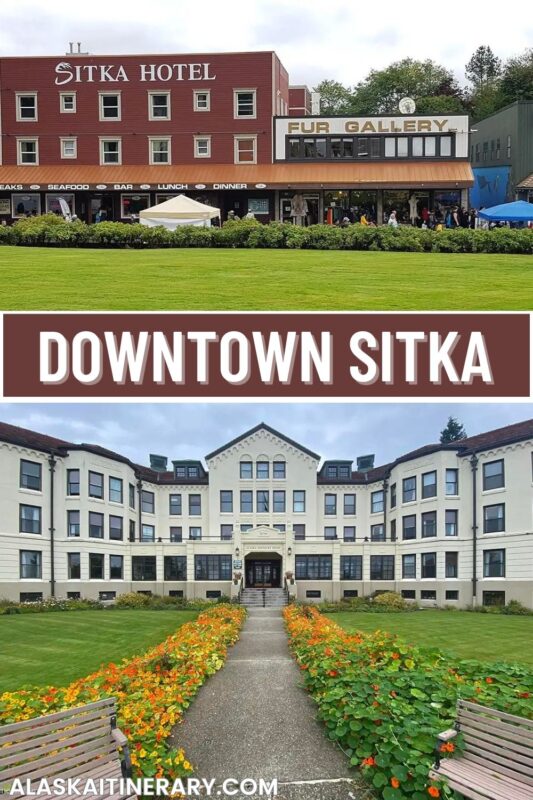
Downtown Sitka, Alaska: Self-Guided Walking Tour & Map

Downtown Sitka is compact, historic, and easy to explore on foot. Within a relatively small area, you can see Russian-era landmarks, Tlingit history, museums, waterfront views, local shops, and some of Sitka’s most important historic sites. A self-guided walking tour is one of the best ways to experience downtown at your own pace. Most of the route is flat and paved, and many highlights are close together. In this guide, we share a practical Downtown Sitka self-guided walking tour, including the best stops, a suggested route, how much time you need, and tips from our own visits.
This article may contain affiliate / compensated links. For full information, please see our disclaimer here.
Our Experience Exploring Downtown Sitka
We have explored downtown Sitka several times during our visits to the city. It is one of those places where we enjoy slowing down and walking because so much history is concentrated within a small area.
On one visit, we joined a guided walking tour of downtown Sitka. We especially enjoyed learning more about the city’s Russian heritage, Tlingit history, and the stories behind landmarks we might otherwise have walked past.
Since then, we have also explored downtown independently. It is compact, easy to navigate, and well suited to a self-guided walk.
In this guide, we use our own experience to create a route that connects the most interesting historic sites without unnecessary backtracking.

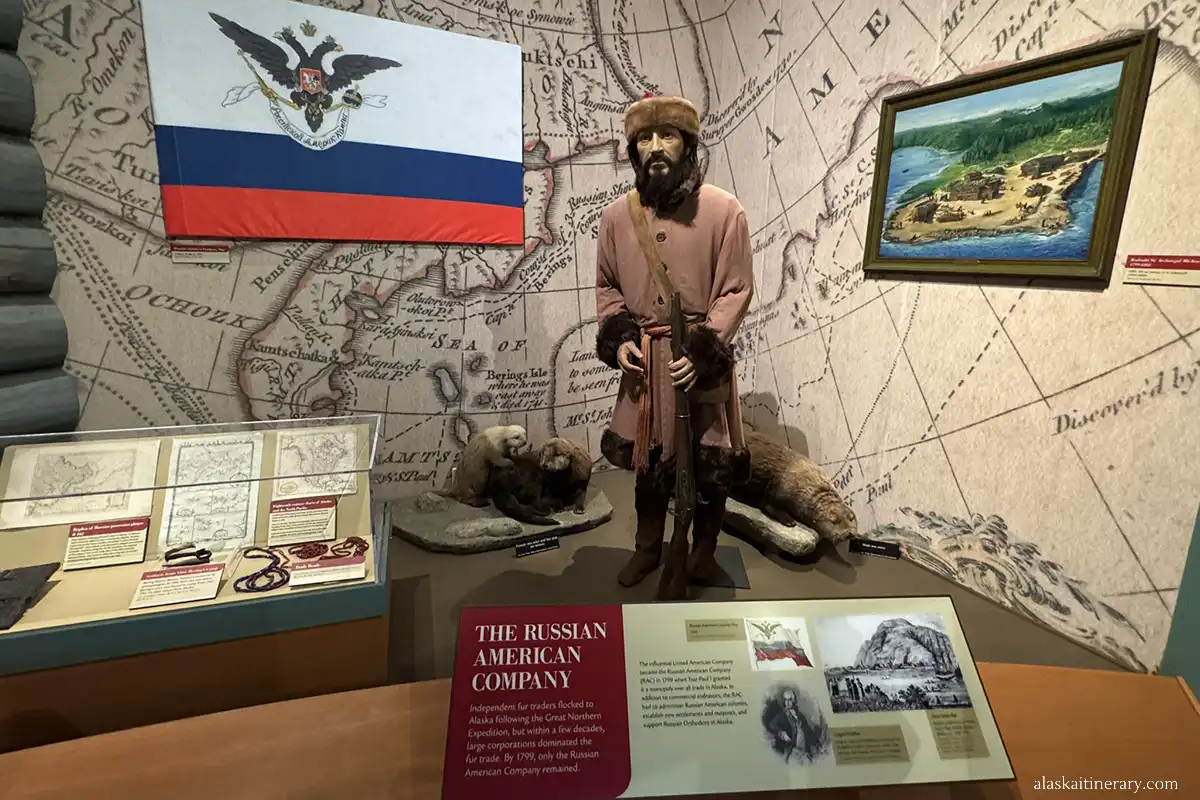
Downtown Sitka Walking Tour: Quick Route
Downtown Sitka is compact, so you can connect many of its most important historic sights in one easy walk. The route below focuses on the downtown landmarks that are most worth seeing without turning this article into a full Sitka sightseeing guide.
We recommend starting at Harrigan Centennial Hall, where the cruise shuttle stops and the visitor information center is located. From there, follow this route:
- Harrigan Centennial Hall and Sitka History Museum
- Castle Hill & Baranof Castle State Historic Site
- St. Michael’s Cathedral
- Lincoln Street and historic downtown
- Sitka Pioneer Home and Totem Square
- Russian Bishop’s House
- Crescent Harbor
- Optional extension to Sitka National Historical Park
Most of these stops are only a few blocks apart, and the route follows the heart of downtown Sitka. Official Visit Sitka maps also connect many of these landmarks along Lincoln Street and the waterfront.
If you only want to see the main downtown sights, allow about 1–2 hours. If you enter museums, tour historic buildings, stop for lunch, or continue to Sitka National Historical Park, plan for 3–4 hours.

Map of the Self-Guided Downtown Sitka Walking Tour
The map below shows our suggested self-guided walking route through downtown Sitka. It connects the main historic landmarks while keeping the route simple and avoiding unnecessary backtracking.
Start at Harrigan Centennial Hall, then follow the route through Castle Hill, Lincoln Street, Totem Square, St. Michael’s Cathedral, and the Russian Bishop’s House. From there, continue toward Crescent Harbor.
If you have more time, extend your walk to Sitka National Historical Park and the Totem Trail.

How to Get Downtown Sitka From the Cruise Terminal
Most major cruise ships dock at the Sitka Sound Cruise Terminal, about six miles north of downtown. Complimentary shuttles take passengers to Harrigan Centennial Hall, which is where our self-guided walking route begins.
The shuttle ride usually takes about 10–15 minutes. From Harrigan Centennial Hall, you are already in the heart of downtown and can start exploring on foot.
For detailed information about Sitka’s docks, shuttle service, and port transportation, see our Sitka Cruise Port Guide.
If you are visiting Sitka on a cruise, our One Day in Sitka itinerary can help you plan the rest of your port day around this downtown walking tour.


Do You Need a Tour to Explore Downtown Sitka?
No. Downtown Sitka is very easy to explore independently. The main historic sights are close together, and most of the route is flat and walkable.
You do not need a guided tour to see Castle Hill, St. Michael’s Cathedral, Lincoln Street, Totem Square, or the waterfront. With a simple route and a little background information, you can easily create your own walking tour. Many of these stops are free, making downtown one of the best places to enjoy Sitka on a budget.
We have explored downtown both independently and with a guide. A guided tour gave us more historical context, but self-guided sightseeing works very well in Sitka.
If you want to explore more of the city beyond downtown without booking an organized excursion, our Sitka On Your Own guide covers independent transportation and sightseeing options around Sitka.


Downtown Sitka Walking Tour: Top Landmarks
Let’s start our self-guided walking tour of downtown Sitka. We included the city’s top landmarks, making this route perfect for first-time visitors.
Stop 1: Harrigan Centennial Hall and Sitka History Museum
Start your walking tour at Harrigan Centennial Hall on the downtown waterfront. This is also where cruise terminal shuttles drop passengers, so it is a convenient starting point.
Inside, you will find the Sitka History Museum, which focuses on the people and events that shaped Sitka. Exhibits cover Tlingit culture, the Russian period, the transfer of Alaska to the United States, and the city’s later history.
Even if you do not visit the museum, stop inside Harrigan Centennial Hall for visitor information and printed maps during the summer season. You can also see a large hand-carved Tlingit canoe displayed near the building.
From here, continue a short distance toward Castle Hill, the next stop on the route.


Stop 2: Baranof Castle State Historic Site
From Harrigan Centennial Hall, walk to Castle Hill, officially called Baranof Castle State Historic Site. The site is free to visit and offers excellent views over downtown Sitka and the waterfront.
Castle Hill is one of Sitka’s most important historic places. Tlingit people occupied this strategic site before the Russian period, and Russian authorities later used the hill as the center of New Archangel. On October 18, 1867, the formal transfer of Alaska from Russia to the United States took place here.
Today, there is no castle on the hill. Instead, you will find interpretive panels, flags, and viewpoints explaining the site’s long history. An accessible walkway leads to the top.
It is a quick stop, but we think it is worth including for both the history and the views.

Stop 3: St. Michael’s Cathedral
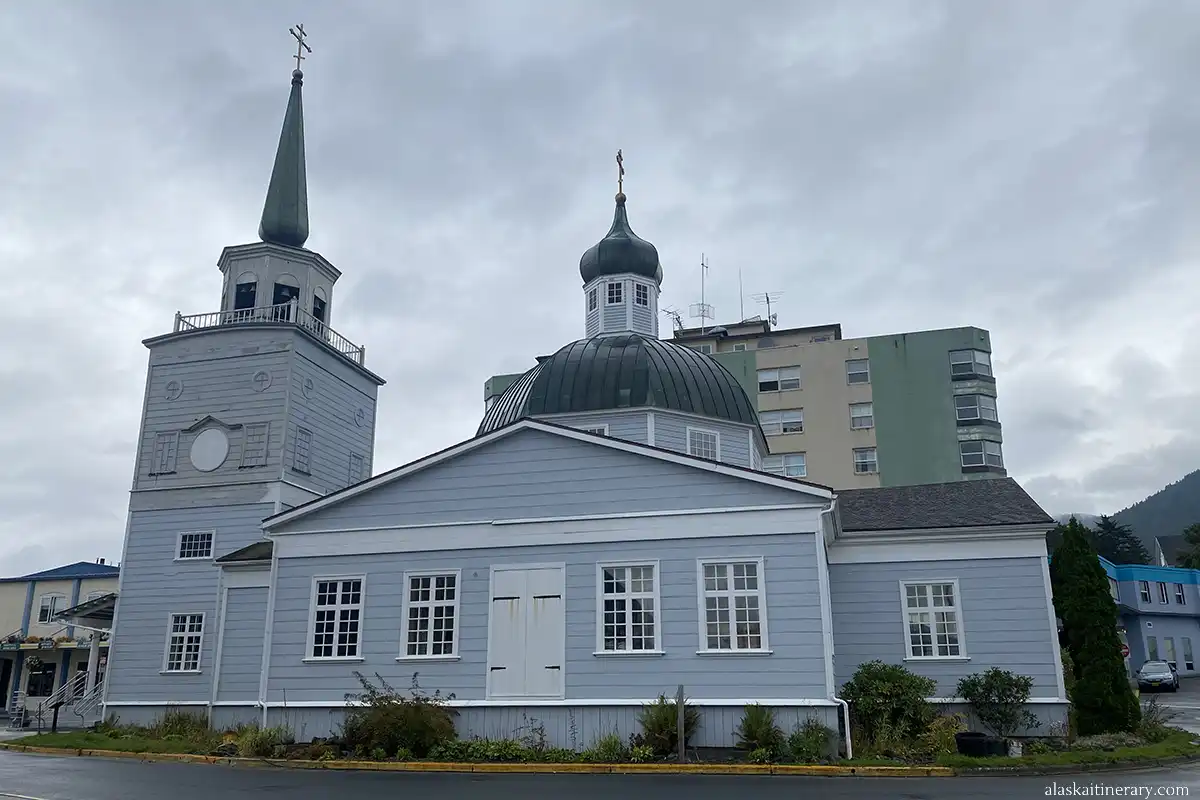
Continue to St. Michael’s Cathedral, one of the most recognizable landmarks in downtown Sitka. It stands directly on Lincoln Street and is an easy stop along the walking route.
The original cathedral was built between 1844 and 1848 during the Russian period. It was destroyed by fire in 1966, but many icons, religious objects, and other valuables were saved. The cathedral was later rebuilt using the original plans.
Today, St. Michael’s is still an active Russian Orthodox church. If it is open during your visit, step inside to see its collection of historic icons and church treasures. Tourist visiting hours are limited and can change, so check the posted hours before entering.
The cathedral is also a good place to pause and appreciate Sitka’s Russian heritage before continuing along Lincoln Street.
Stop 4: Walk Along Historic Lincoln Street
From St. Michael’s Cathedral, continue along Lincoln Street, the heart of downtown Sitka. The street is lined with locally owned shops, galleries, restaurants, and several historic buildings.
This part of the walk is less about one specific attraction and more about enjoying downtown itself. Take your time looking at the architecture, browsing local stores, and noticing the historic landmarks along the route.
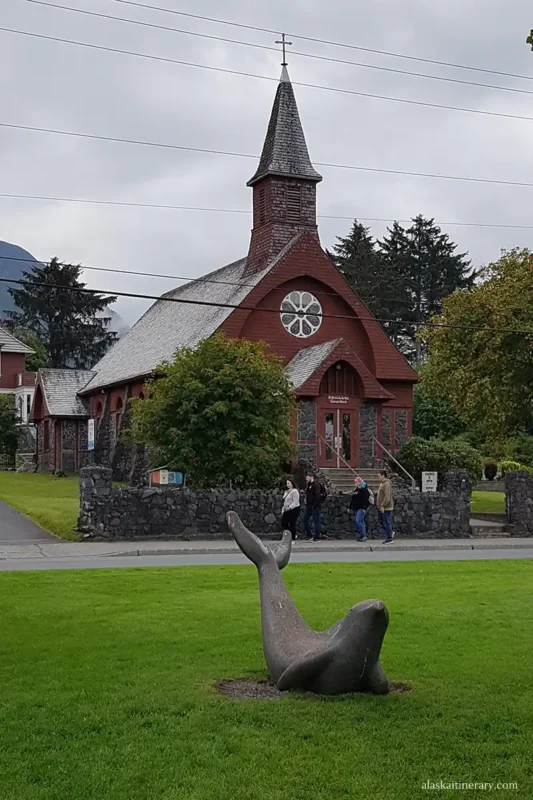
One interesting stop is Sitka Lutheran Church, founded during the Russian period. The congregation dates to 1839–1840, and the church preserves several artifacts from its original 19th-century building. Seasonal free tours are sometimes offered.
Lincoln Street is also a good place to stop for coffee, lunch, or shopping before continuing toward Totem Square and the Sitka Pioneer Home.

Stop 5: Sitka Pioneer Home and Totem Square
Continue to Sitka Pioneer Home, one of the most recognizable buildings in downtown Sitka. The current building dates to 1934 and stands on the site of the former Russian parade ground. In front, you will see the bronze Prospector statue, dedicated in 1949.
Across Katlian Street is Totem Square, a small waterfront park established in the 1940s. Its totem pole features a double-headed eagle connected to Sitka’s Russian-era history. You will also see a Russian cannon and several old anchors recovered from the Sitka area.
This is another quick, free stop and gives you a different view of Sitka’s layered history before you continue toward the Russian Bishop’s House.


Stop 6: Russian Bishop’s House
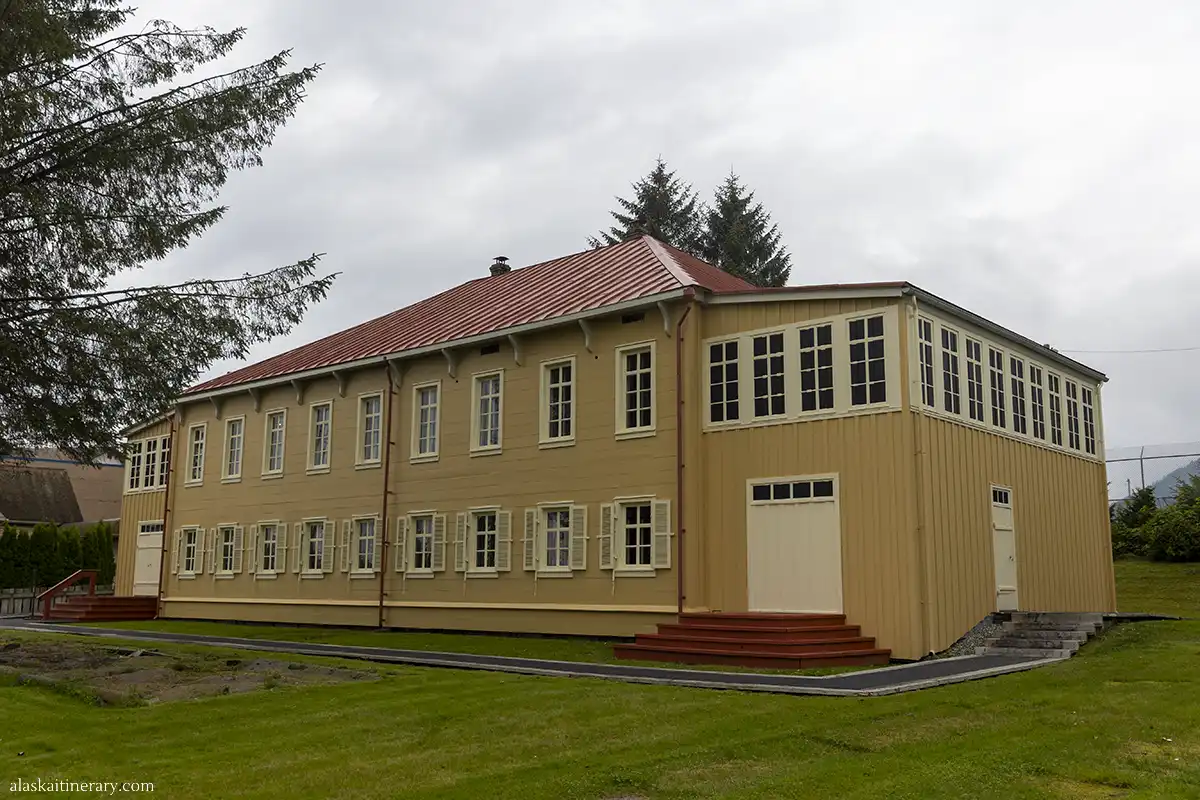
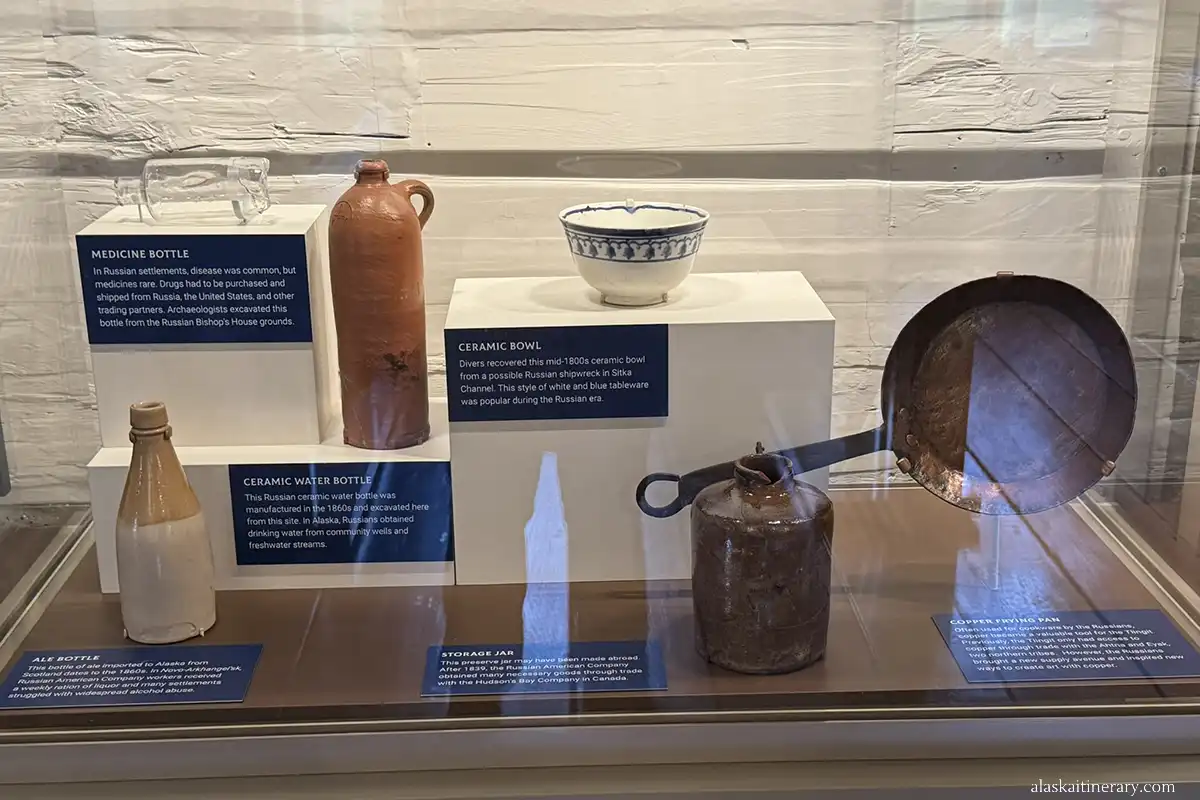
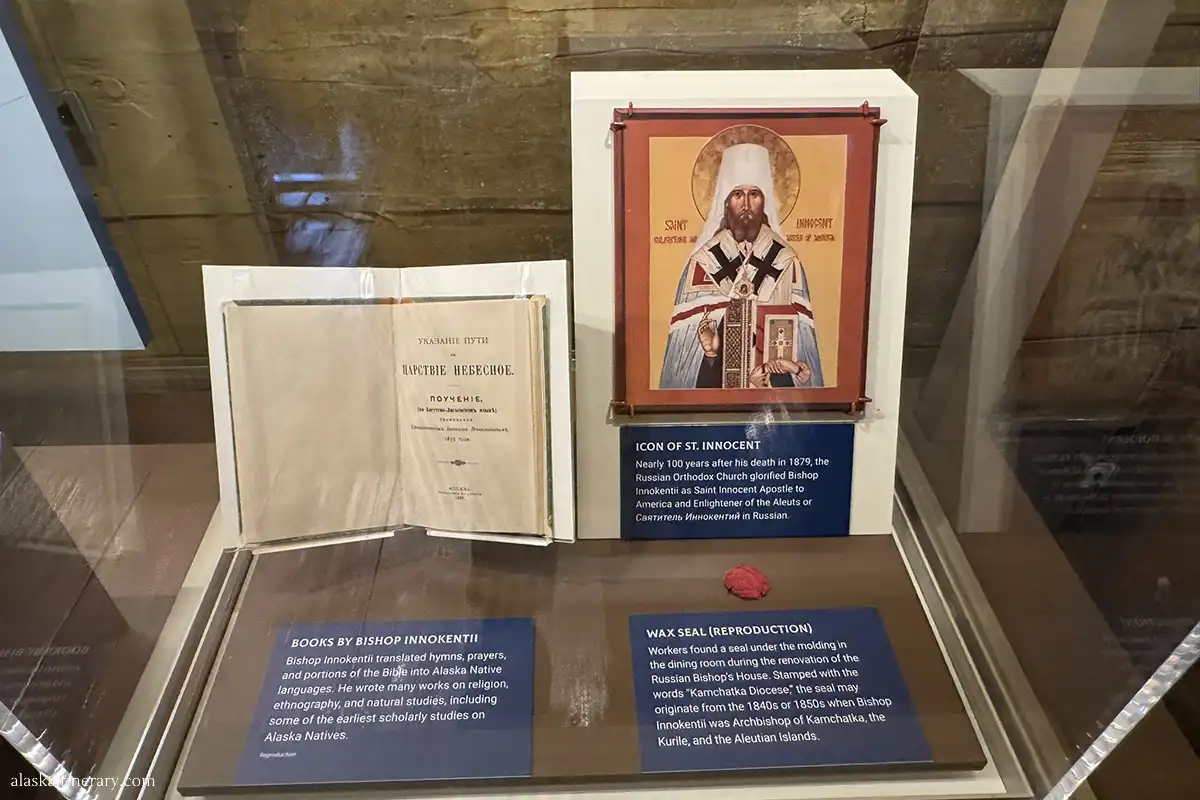
Continue along Lincoln Street to the Russian Bishop’s House, part of Sitka National Historical Park. Completed in 1843, it served as the home of Bishop Innocent and as an administrative center for the Russian Orthodox Church. It is one of only four surviving Russian-period buildings in North America.
The first floor contains exhibits about Russian America and the Orthodox Church. Allow about 20 minutes if you only visit the museum level. Free guided tours of the second floor are offered from May through September, depending on staffing, and take about 30 minutes.
Because we cover the building in more detail in our Sitka Russian heritage guide, this walking tour only gives you the essentials. It is still one of the most worthwhile historic stops in downtown Sitka.
From here, continue toward Crescent Harbor.
Stop 7: Crescent Harbor and the Sitka Sea Walk
From the Russian Bishop’s House, continue toward Crescent Harbor. This working harbor is home to recreational, charter, and commercial boats, and it adds a nice waterfront break after the historic stops downtown.
The harbor is also connected to the Sitka Sea Walk, a pedestrian route along the waterfront. It is a pleasant place to slow down, enjoy views across Sitka Sound, and watch boats moving through the harbor. The Sitka Sound Science Center is also worth a short stop, especially if you are interested in Alaska’s marine life and local ecosystems.
From this point, you can finish your downtown walk or continue along the waterfront toward Sitka National Historical Park.

Optional Extension: Sitka National Historical Park
If you have more time, continue your walk to Sitka National Historical Park. The Visitor Center and Totem Trail are at the east end of Lincoln Street, about a quarter mile beyond downtown.
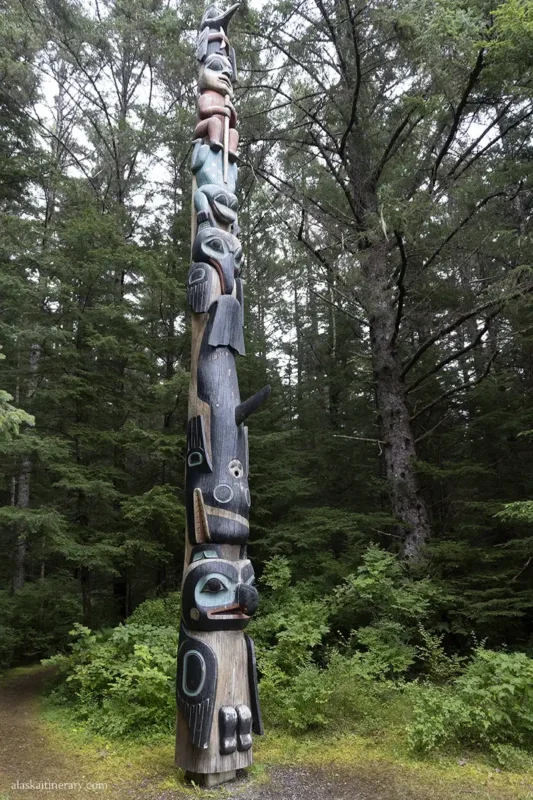
The park is free to visit and is one of the best additions to a downtown walking tour. The Totem Trail leads through temperate rainforest past Tlingit and Haida totem poles and the site of the 1804 Battle of Sitka. The loop usually takes about 30–90 minutes.
We recommend adding it if you have at least another hour. For trail details, the Visitor Center, accessibility, and historical background, see our Sitka National Historical Park and Totem Trail guide.

Shopping Along Lincoln Street
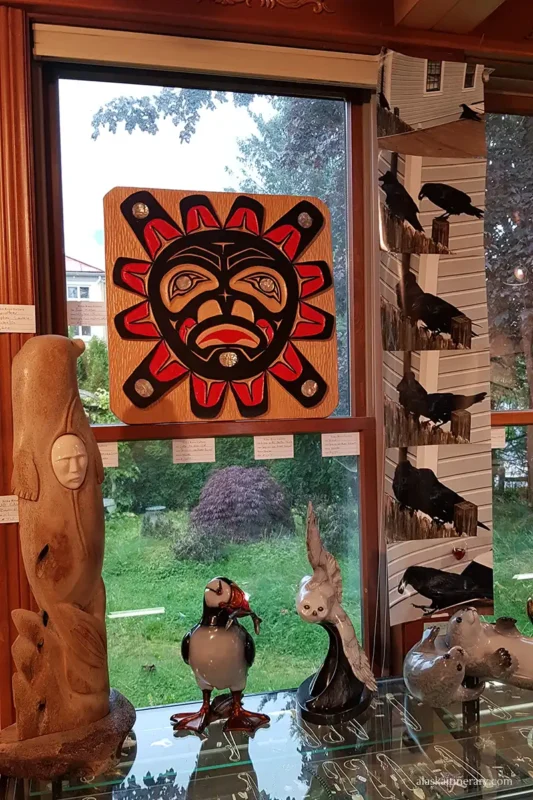
Lincoln Street is the main shopping area in downtown Sitka, so you do not need to make a separate detour during this walking tour. You will pass local galleries, gift shops, and small businesses as you move between the historic stops.
It is a good place to look for locally made art, jewelry, photography, Native artwork, Alaska-made gifts, furs, and Russian-inspired souvenirs. Sitka has deep connections to both the fur trade and Russian America, so these items fit naturally with the city’s history. Several galleries also feature work by Sitka and other Alaska artists.
We enjoy browsing the smaller local shops here, especially because shopping fits naturally between the historic stops. If you want time for souvenirs or local art, add a little extra time to your walking tour.

Where to Eat During Your Downtown Walk
Downtown Sitka has plenty of places to stop for coffee, lunch, or dinner. Fresh Alaska seafood is a highlight, with salmon, halibut, chowder, scallops, and seasonal crab appearing on local menus.
For a sit-down meal, Ludvig’s Bistro is a longtime Sitka favorite known for seafood and Mediterranean-inspired dishes. Bayview Pub on Lincoln Street is a more casual option, with seafood, burgers, and views toward the water.
For coffee or a lighter stop, Highliner Coffee Co. is close to the walking route. Sitka also has a good food-truck scene, especially during the summer, with casual options ranging from seafood to quick lunches.
Because locations, opening days, and food-truck schedules can change seasonally, check current hours before your visit.


How Much Time Do You Need in Downtown Sitka?
You can see the main downtown highlights in about 1–2 hours if you keep moving and focus on the historic stops.
Allow 2–3 hours if you want to enter the Sitka History Museum, visit the Russian Bishop’s House, browse shops, and stop for coffee or lunch.
If you also continue to Sitka National Historical Park, plan for at least 3–4 hours. That gives you enough time to walk the Totem Trail without rushing.
For most cruise passengers, downtown Sitka fits easily into a half-day visit. The compact layout makes it possible to combine history, shopping, food, and waterfront views without spending much time on transportation.
Accessibility in Downtown Sitka
Downtown Sitka is relatively easy to explore for travelers with limited mobility. Much of this walking route follows paved sidewalks and fairly flat streets, and several major attractions have accessible entrances.
Castle Hill has an accessible route to the viewpoint. At the Russian Bishop’s House, the first floor is wheelchair accessible, but the historic second floor can only be reached by stairs. A virtual presentation is available downstairs for visitors who cannot access the upper level.
If you continue to Sitka National Historical Park, a paved route leads from downtown to the Visitor Center. The Totem Trail is relatively flat but has a crushed-gravel surface, which can become muddy after rain.

Final Thoughts
Downtown Sitka is easy to explore on foot and full of history. In just a few hours, you can see important Tlingit and Russian heritage sites, walk along the waterfront, browse local shops, and enjoy fresh Alaska seafood.
We think a self-guided walking tour works especially well here because the main sights are close together and many are free to visit. You can move at your own pace and spend more time at the places that interest you most.
If you have extra time, continue to Sitka National Historical Park and the Totem Trail. It is a natural extension of the downtown route and adds even more history and scenery to your visit.
Downtown Sitka is only one part of what makes the city worth exploring. If you have more time, our Sitka Travel Guide covers more things to do, places to eat, where to stay, and practical tips for planning your visit.
Do You Like It? Pin It For Later!