
Guide To Moose Safety in Alaska: Essential Tips for Travelers

Moose may look gentle and slow, but they are one of the most unpredictable and dangerous animals in Alaska. Many travelers expect bears to be the biggest threat, but moose injure more people each year than bears do. In this guide, we’ll cover everything you need to know about moose safety in Alaska. From how to recognize aggressive behavior to what to do if a moose charges, these expert-backed tips will help you stay safe while enjoying Alaska’s incredible wildlife.
This article may contain affiliate / compensated links. For full information, please see our disclaimer here.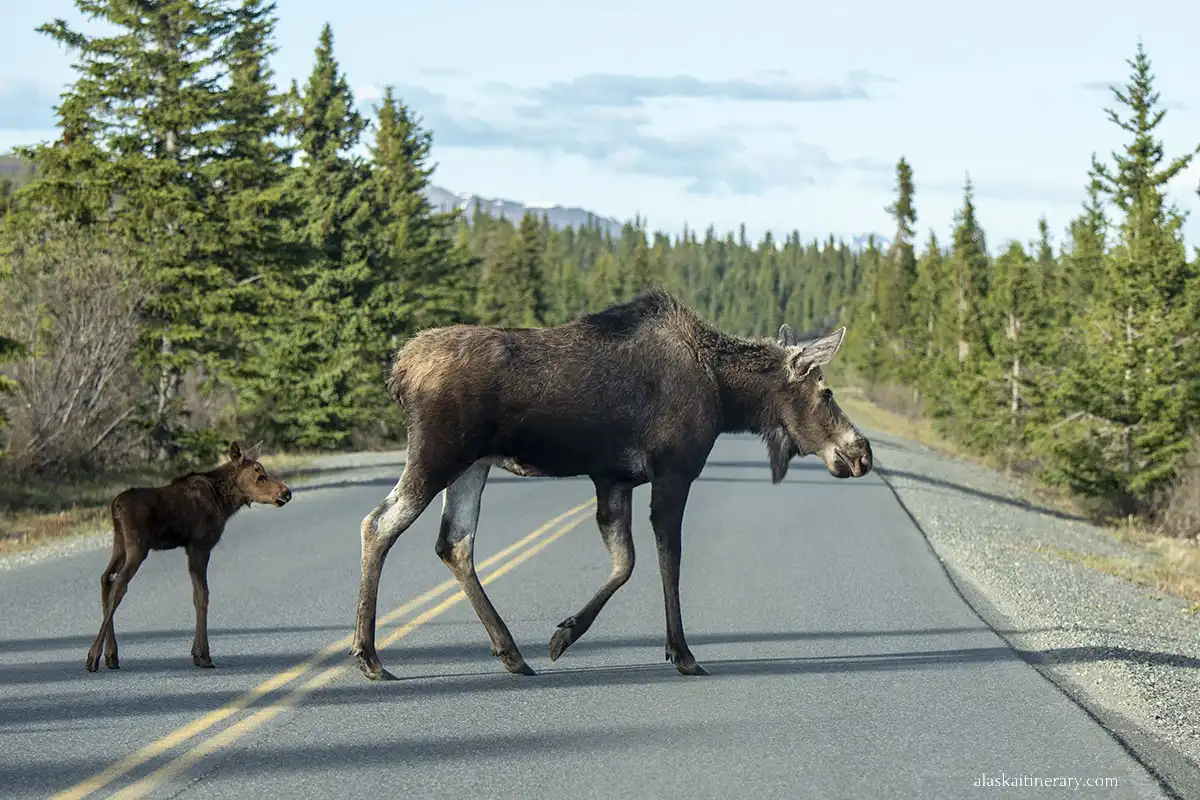
Moose Safety in Alaska: How to Stay Safe Around These Massive Animals
Alaska is home to around 175,000 – 200,000 moose, making them one of the most commonly seen large animals in the state. Unlike bears, moose are not predators, but they are massive, unpredictable, and can be dangerous if they feel threatened. Many travelers are excited to see a moose up close, but getting too near can quickly become a safety risk.
Understanding moose behavior is an essential part of planning Alaska travel safely, especially when hiking, driving, or camping in areas where wildlife encounters are common.
Moose can be found almost anywhere, from deep in the wilderness to roadsides, trails, and even towns like Anchorage and Fairbanks. Their presence in easily accessible areas makes encounters more likely for visitors exploring Alaska’s national parks, hiking trails, and scenic routes.
Chris and I have seen countless moose while hiking, driving, and exploring Alaska’s national parks and backcountry. We’ve learned firsthand that understanding moose behavior is essential. As photographers, we love focusing on moose during wildlife viewing in Denali. We’ve also had many moose encounters at Denali campgrounds and in other areas of Alaska, including while camping along the Dalton Highway.
Whether you’re hiking in Denali, camping in the wilderness, or driving on Alaska scenic roads, knowing how to avoid a moose encounter and react correctly if you see one can keep you safe.
If you love photographing moose, check out our tips on where and how to photograph moose in Alaska, where we share top locations and expert insights for capturing these incredible animals.

Why Moose Safety Is Important for Travelers in Alaska
Many people assume moose are slow and gentle, but they can be aggressive in certain situations. Their size alone makes them dangerous, as they can weigh over 1,600 pounds and run at speeds up to 35 mph. Unlike bears, they don’t stalk or hunt people, but they will defend themselves if they feel cornered or provoked.
Situations when moose are most likely to be aggressive:
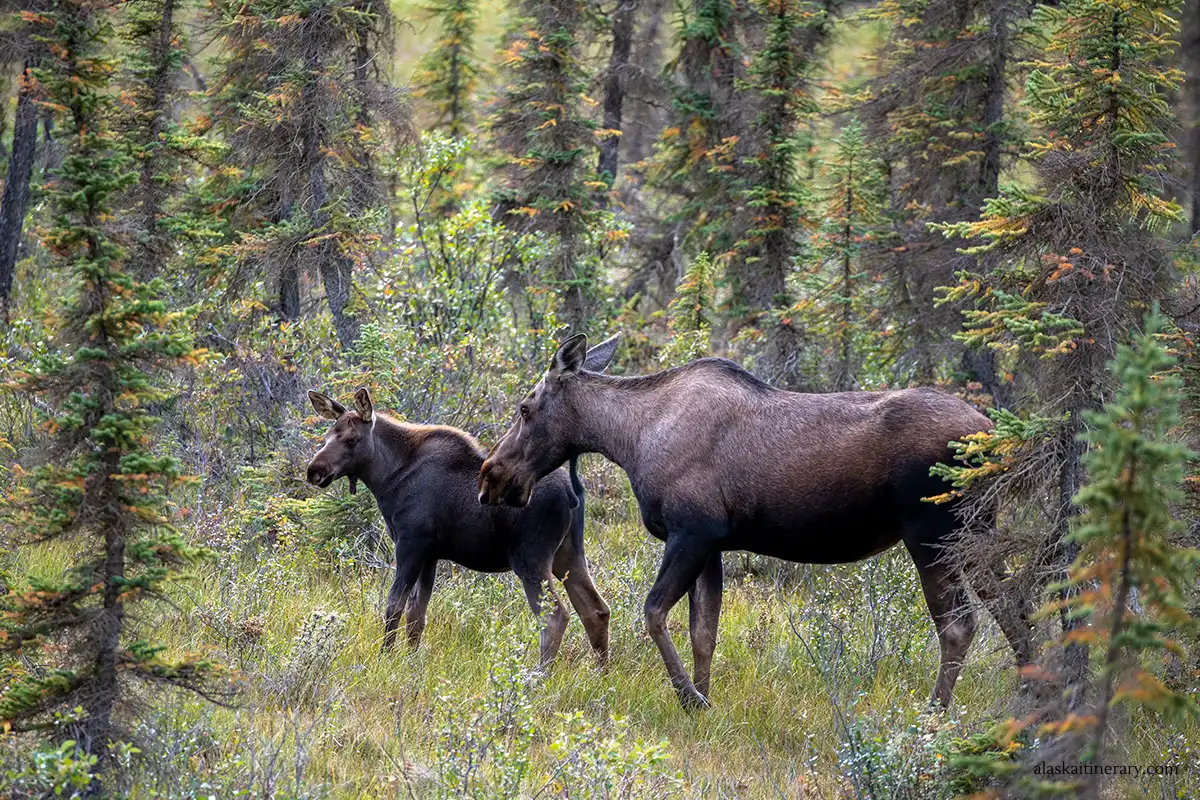
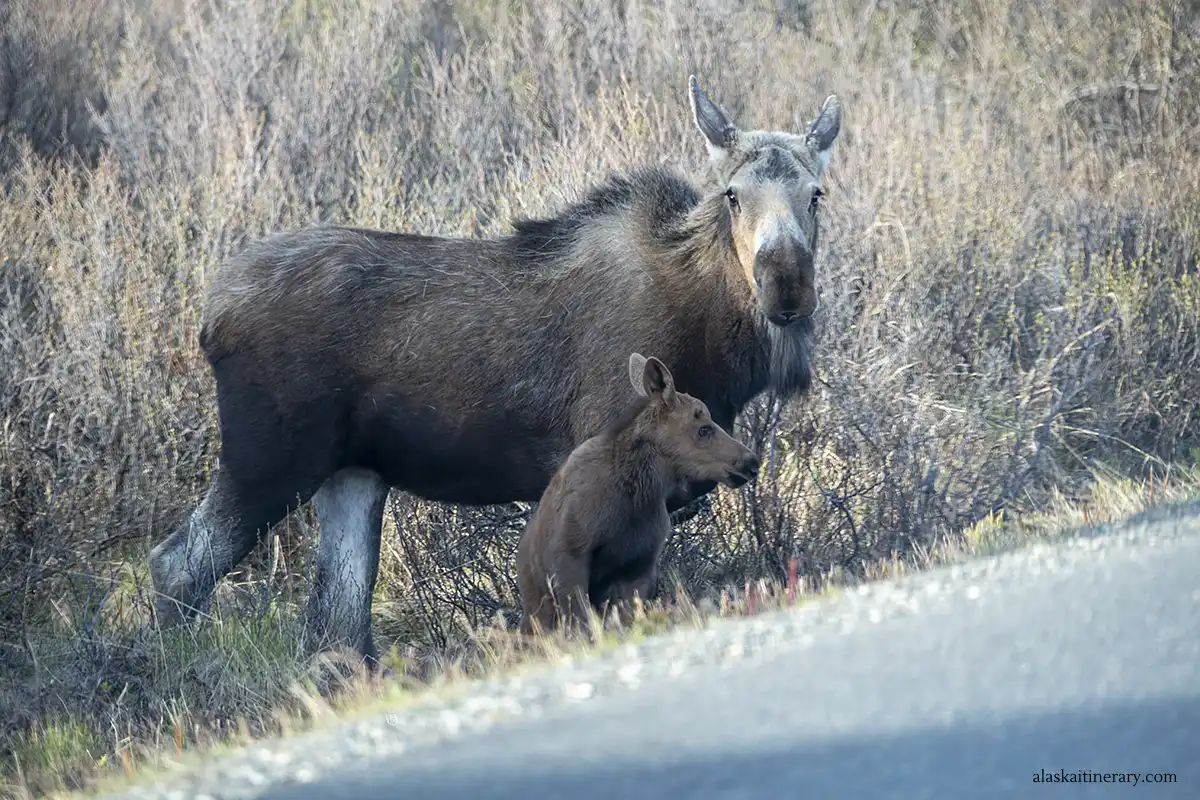
- Spring (May–June): Mothers are highly protective of their newborn calves. Approaching too closely or surprising a cow with her young can trigger a defensive reaction.
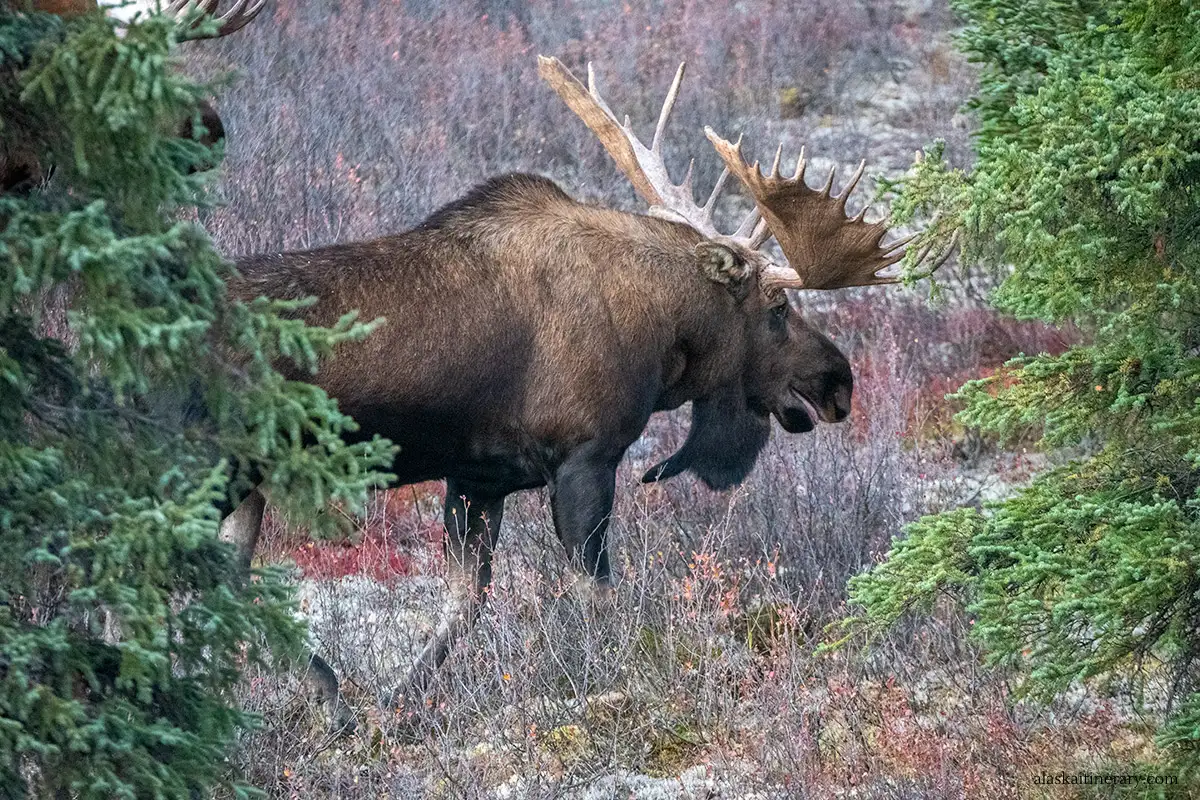
- Fall (September–October): During the rut (mating season), bulls become more aggressive and unpredictable as they compete for mates. They may charge without much warning.
- Winter: Deep snow and food scarcity can make moose irritable. They sometimes wander into towns and block roads, making encounters more common.
Many travelers assume that moose encounters should be handled the same way as bear encounters, but the two animals behave very differently. Unlike bears, moose are not predators, but they can be just as dangerous if they feel threatened. As Alaska is bear country, be sure to check out our Bear Safety in Alaska guide for detailed tips on avoiding bear encounters and staying safe in the wilderness.

Why you need to take moose safety in Alaska seriously:
- Moose are common and can be found near hiking trails, campgrounds, lodges, and even cities like Anchorage, Fairbanks, Homer, Seward.
- They are large, fast, and unpredictable, capable of charging and delivering powerful kicks with their long, strong legs.
- They can be defensive around calves (spring) and aggressive during the rut (fall).
- Moose-related vehicle collisions are a real danger, especially on remote highways.
Unlike bears, moose do not hunt or stalk people, but if provoked, they will defend themselves. Many travelers underestimate their strength and speed, putting themselves at risk by getting too close for a photo or accidentally surprising a moose on a trail.

Driving in Moose Territory: How to Avoid Collisions
When planning a trip to Alaska, you’ll likely rent a car to explore the scenic highways and backcountry roads of the Last Frontier. Whether you’re driving from Anchorage to Denali, exploring the Kenai Peninsula, or venturing deep into the Interior, moose encounters on the road are common.
If you’re renting an RV, your chances of seeing moose are even higher, as they frequently wander through campgrounds and roadside pullouts.
According to the Alaska Department of Fish and Game, Alaska has one of the highest moose-vehicle collision rates in the world per mile driven, with an estimated 800 or more accidents caused by moose each year.
Moose are massive animals, and collisions with them can be extremely dangerous. Unlike deer, which tend to dart across the road quickly, moose often stand in the roadway, unmoving, making them difficult to see until it’s too late. Understanding how to drive safely in moose country can help prevent accidents and keep your Alaska road trip safe.

Why Moose-Related Car Accidents Are Common in Alaska
Alaska’s highways cut through prime moose habitat, and these animals are not afraid of roads or vehicles. Unlike smaller wildlife that quickly runs away, moose often stand in the middle of the road, unaware of the danger. Collisions happen frequently, especially in the dark winter months and during peak moose activity seasons.
- Moose are active at dawn, dusk, and nighttime, when visibility is lower.
- They often use roads as travel corridors in winter because it’s easier to walk on plowed highways than through deep snow.
- Moose are tall, with their bodies at the height of a windshield. This makes collisions more deadly than hitting a deer, as the impact often sends the moose crashing through the windshield.
- Alaska sees hundreds of moose-related crashes per year, especially on busy roads like the Parks Highway (Anchorage to Fairbanks) and the Glenn Highway (Anchorage to Palmer and beyond).
What to Do If a Moose Is on the Road
If you see a moose standing in or near the road:
- Slow down immediately—do not assume it will move.
- Do not honk your horn—this may startle the moose, causing unpredictable movements.
- Give it plenty of space—moose can suddenly charge or run into traffic.
- Wait patiently—moose usually move on their own, but it may take time.
- If the moose is blocking the road and won’t move, flash your lights or wait for it to leave. Never try to drive around a moose at high speed.
If the moose appears agitated or aggressive, stay in your vehicle and wait for it to leave before proceeding.
How to Spot Moose at Night – Why They Are Harder to See
Moose are much harder to see at night than deer for several reasons:
- They are dark brown or black, making them blend into the shadows.
- Their eyes do not reflect headlights as brightly as deer do, making them harder to notice.
- They are tall, so their bodies are above the headlights, making them less visible.
- They tend to stand still rather than run, so you may not notice them until you’re very close.
Tips for spotting moose at night:
- Use high beams whenever possible to increase visibility.
- Scan the sides of the road constantly, especially in heavily wooded areas.
- Watch for movement or dark shapes ahead—moose often appear as large, black silhouettes.
- Look for other vehicles flashing their lights—this may be a warning that moose are on the road ahead.
- Slow down in known moose crossing areas, especially near rivers, lakes, and forested sections of highways.
What to Do If You Hit a Moose
Even with caution, moose collisions can happen, especially in low-light conditions. If you hit a moose, follow these steps:
- Pull over safely and turn on your hazard lights.
- Do not approach the moose—it may still be alive and could react unpredictably.
- Call 911 or Alaska State Troopers to report the accident.
- Stay inside your vehicle if possible until emergency responders arrive.
- If your vehicle is drivable, move it to the side of the road, but only if it is safe to do so.
In Alaska, wildlife collisions must be reported. If the moose is deceased, the state often donates the meat to local charities. Never attempt to move the moose yourself, as injured animals can be dangerous.

Moose Safety for Hikers & Outdoor Enthusiasts
Encountering a moose while hiking or exploring the outdoors is common in Alaska. These animals are often found near trails, rivers, and dense forests.
Keeping a Safe Distance – How Far Is Far Enough?
Moose may seem calm, but they need plenty of personal space. A safe distance is at least 50 yards, about the length of half a football field. If the moose notices you and changes its behavior, you are already too close.
- If the moose looks at you and stops what it was doing, back away slowly.
- Never approach a moose for a photo, even if it seems relaxed.
- If the moose moves toward you, increase your distance immediately.
- If a moose appears agitated, back away and find another route.
In open areas, maintaining distance is easier. In wooded or confined spaces, staying alert and moving cautiously can help avoid getting too close.
What to Do if a Moose Blocks a Trail or Charges
Moose often use the same trails as hikers, so it’s common to find one standing in your path. Unlike bears, moose will not always move away when they see people. If a moose blocks your trail:
- Stop and assess the situation from a safe distance.
- Do not try to scare the moose away by yelling or waving your arms.
- Wait quietly and see if the moose moves on its own.
- If the moose does not move, turn around and find another route.
If a moose charges:
- Run and get behind a tree, rock, or large object to put a barrier between you and the moose.
- Unlike bear encounters, do not stand your ground. Moose will follow through with a charge.
- If knocked down, curl into a ball and protect your head. Stay still until the moose moves away.
Moose charge when they feel threatened, so avoiding confrontation is the best way to stay safe.
Avoiding Moose Encounters Near Rivers, Lakes, and Dense Forests
Moose are often found near water sources, especially in the summer when they feed on aquatic plants. They also prefer forests, which offer shelter and protection. These environments increase the chances of surprise encounters.
To reduce the risk of startling a moose:
- Make noise while hiking, especially in dense forests or near water. Talking, clapping, or singing can alert moose to your presence.
- Be extra cautious near rivers and lakes, as moose may be feeding or drinking.
- If visibility is limited, slow down and scan your surroundings frequently.
- Watch for fresh moose tracks or droppings, which indicate a moose may be nearby.
Staying aware of your surroundings and giving moose plenty of space will help you avoid dangerous encounters while exploring Alaska’s wilderness.
Moose Safety in Campgrounds & Lodges
Moose are commonly seen near campgrounds and lodges throughout Alaska. Unlike bears, they are not drawn to human food, but they can still wander through campsites in search of vegetation or water. While a moose walking near your tent or cabin may seem like a peaceful wildlife experience, these animals can be unpredictable and dangerous. Knowing how to keep your campsite safe and react if a moose enters your area is essential for travelers.
What Attracts Moose to Campsites?
Moose are herbivores, so they are not interested in human food, but certain conditions at campsites and lodges can bring them closer.
- Moose are drawn to grassy areas and shrubbery that grow around campsites.
- In winter, moose may move into campgrounds looking for easier walking paths where snow has been packed down.
- Salt from campfire ashes can attract moose, as they seek minerals to supplement their diet.
- In dry seasons, moose may come near camps to access water sources, including lakes, rivers, or even water left out in buckets.
If moose frequent your campground, be extra cautious when stepping outside a tent, cabin, or RV, especially in the early morning or late evening.
Why You Should Never Feed Moose
Feeding moose is not only dangerous but also illegal in Alaska. Moose that become accustomed to human food lose their natural fear of people and can become aggressive when they expect handouts.
- A moose fed by humans may approach other people expecting food, leading to dangerous encounters.
- Moose that feel cornered or threatened will charge, putting campers and lodge guests at risk.
- Feeding moose can alter their natural behavior, making them dependent on humans instead of foraging naturally.
To keep moose wild and avoid dangerous encounters, never attempt to feed them, even if they seem calm.

What to Do if a Moose Wanders into Camp
Moose may occasionally walk through campgrounds or lodges, especially at dawn or dusk. If a moose enters your campsite:
- Stay calm and stay inside your tent, RV, or cabin if possible.
- Do not approach the moose for photos or to make it leave.
- If you are outside, move away slowly and put a barrier (a tree, vehicle, or picnic table) between you and the moose.
- Never run or make sudden movements—this could startle the moose and trigger a charge.
- Wait for the moose to leave on its own. Moose will usually continue walking unless they feel threatened.
If a moose lingers in your campsite and blocks your path, be patient. Do not attempt to scare it away—this may provoke aggression. Give the moose time and space to move before you continue your activities.
By keeping campsites clean, avoiding moose attractants, and knowing how to react when they appear, travelers can safely enjoy their stay in Alaska’s wilderness without unnecessary risks.
Recognizing a Moose’s Warning Signs
Moose are usually calm and non-aggressive, but they can become dangerous when they feel threatened, startled, or provoked. Unlike predators, moose do not attack to hunt. Instead, they show clear warning signs before they become aggressive. Understanding these signals can help you avoid a dangerous situation.
Early Signs That a Moose Feels Uncomfortable
If a moose notices you but is not yet aggressive, it may show subtle signs of discomfort or irritation:
- Pausing and staring at you instead of continuing what it was doing
- Ears flicking back and forth
- Lip licking or chewing even when not eating
- Restless shifting of weight from one leg to another
At this stage, the moose may just be assessing the situation. If you see these signs, back away slowly and give the moose space before it escalates.
Signs of an Agitated or Defensive Moose
If a moose feels threatened, it will show clear warning behaviors before charging. These include:
- Ears pinned back against its head (like an angry dog)
- Raised hackles (the fur on its neck and shoulders standing up)
- Lowering its head while looking in your direction
- Stomping or scraping the ground with its hooves
- Swinging its head side to side
- Loud huffing or grunting
If you see these signs, you are too close or the moose feels trapped or threatened. Back away immediately without turning your back on the animal.
Warning Signs That a Moose Is About to Charge
A moose charging at full speed is extremely dangerous. If a moose decides to attack, it may:
- Perform a bluff charge—running toward you but stopping short
- Toss its head aggressively
- Kick out with its front hooves
- Snort or make deep, loud grunts
- Lunge suddenly with its ears back
If a moose charges, you must act fast—run and get behind a large object like a tree, boulder, vehicle, or building. Unlike bears, you should NOT stand your ground—moose will follow through with a charge and can knock a person down or stomp them.
What to Do If You See These Signs
- Back away immediately and give the moose more space.
- Do not make sudden movements or loud noises—this may escalate aggression.
- Never try to approach a moose for photos or a closer look.
- If a moose blocks your path, wait for it to leave instead of trying to walk around it.
Recognizing these signs early can prevent a dangerous encounter and help you enjoy watching moose from a safe distance.
Moose Safety in Alaska – Final Thoughts
Moose may seem calm and gentle, but they are powerful, unpredictable animals that demand respect. Whether you’re hiking, camping, driving, or simply exploring Alaska’s wilderness, understanding how to avoid dangerous encounters and reacting appropriately if you see a moose is essential for your safety.
Unlike bears, moose are not predators, but they can be just as dangerous if they feel threatened, startled, or trapped. Keeping a safe distance, recognizing warning signs, and knowing how to respond in different situations can prevent unnecessary risks.
Alaska’s vast landscapes offer incredible opportunities to observe moose in their natural habitat, and with the right precautions, you can safely enjoy these experiences. Stay alert, respect wildlife, and always give moose the space they need. By following these safety tips, you’ll be able to appreciate Alaska’s iconic wildlife while keeping yourself and the animals safe.
Do You Like It? Pin It For Later!


I must admit that we have seen a lot of wildlife on our travels but have not yet run into Moose close up. Good to know how to deal with this and be safe. Good to know they generally do not attack. But understand that urge to be protective. And we would certainly not want to run into one with a car! A great comprehensive guide.
Excellent article – I loved reading through it! I didn’t know that moose are more dangerous than bears! I have seen moose in USA – in fact , even Canada and north eastern USA have a lot of moose. Great tips on what to do if we encounter a moose on the road. You have some great photographs of moose! Most animals are protective of their babies and tend to be aggressive. Thank you for this comprehensive guide on moose safety in Alaska.
Thanks for writing this! I hope to not run into a moose in my travels haha.
This is great information, and something I’m sure a lot of visitors search before heading to Alaska. Something super important in your post is the bullet point that says “Unlike bear encounters, do not stand your ground. Moose will follow through with a charge.” I think people are generally more educated on bear safety and may try to employ the same tactics when confronted by a moose without proper education.
I’ve seen quite a few moose out in the wild, but thankfully I’ve never came across an agitated or aggressive one.
Hello! The tips are pretty much helpful! When people talk about Alaska, they usually imagine bears, not moose. But I guess wild nature in Alaska is more diverse than we think.