
Affordable Bear Viewing in Alaska Without a Flight: Budget-Friendly Spots That Actually Work

Seeing bears in Alaska doesn’t always require an expensive plane flight. While many iconic bear viewing locations are fly-in only, there are real, affordable ways to see bears in Alaska without flying—if you know where to go and what to expect. In this guide, we focus on road-accessible sites, public viewing areas, park buses, and boat routes that make bear viewing possible for travelers on a budget, families, and those who prefer to keep their feet on the ground.
This article may contain affiliate / compensated links. For full information, please see our disclaimer here.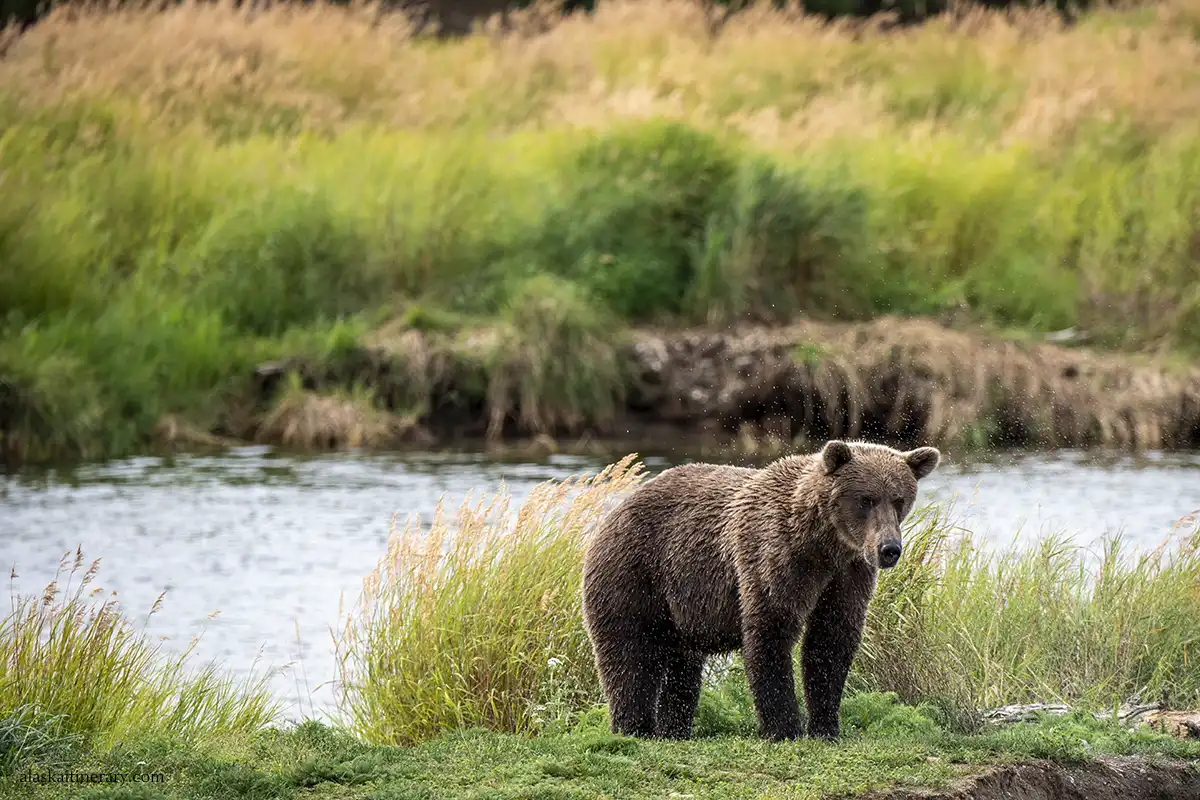
Our Experiences With No-Flight & Affordable Bear Viewing in Alaska
Over the years, Chris and I have seen bears in Alaska without using floatplanes or bush flights. Some encounters happened from park buses and roadside viewing areas. Others came from public platforms, salmon streams, and boat-access routes that don’t involve flying.
When planning a trip to Alaska, adding a fly-out bear viewing tour can dramatically increase the total trip cost, often becoming one of the most expensive single-day experiences of the entire journey.
We know firsthand how bear viewing tour prices have increased in recent years. Today, a single day trip to places like Brooks Falls often starts around $1,250 per person, and that price can climb even higher.
For a family of four, flying to Katmai or Lake Clark can quickly become unrealistic, even though these trips truly are once-in-a-lifetime Alaska experiences.
Many of our readers and Facebook followers ask the same question: Is there any way to see bears in Alaska on a budget? This guide exists because that question matters. Not everyone can justify—or afford—fly-out bear viewing, no matter how incredible it is.

Every experience referenced here is based on places we’ve personally visited, routes we’ve taken ourselves, or locations we’ve carefully evaluated using official park guidance and wildlife data. We always pay out of pocket. Nothing is sponsored, and our opinions are honest.
If you’re interested in fly-in options, we cover those separately in our article Best Alaska Bear Viewing Tours, where we share our firsthand experiences with guided bear viewing flights and other top tours.
For a broader overview of locations, seasons, and planning basics, you can also explore our guide Bear Viewing in Alaska – Best Places, Seasons & Tips.
In this article, we focus on what’s possible without flying, and how to approach bear viewing in Alaska with realistic expectations and a manageable budget.
Even though these locations are often accessible without a guide, remember that you are in bear country—be sure to review our Bear Safety in Alaska guide before heading out.

What “Without a Flight” Really Means in Alaska
In Alaska, “without a flight” specifically means no floatplanes or bush flights. Those aircraft are commonly used to reach remote bear viewing areas like Katmai or Lake Clark’s coastal lodges—and they are the main reason prices have skyrocketed.
Seeing bears without flying is still possible, but it requires understanding what transportation options do count.
In this guide, “without a flight” includes:
- driving on Alaska’s road system
- riding park-operated buses
- walking to public wildlife viewing platforms
- using ferries combined with road access
- joining boat-based tours that depart from road-accessible towns
It does not include:
- floatplanes
- charter bush flights
- fly-in day trips or longer trips to remote camps or lodges
This distinction matters. Many travelers assume that if they don’t board a plane, bear viewing isn’t realistic. That’s not true—but expectations need to be adjusted.
Without flying, bear sightings are:
- less predictable
- often more distant
- tied closely to salmon timing and location
What you gain instead is:
- dramatically lower costs
- easier logistics
- the ability to combine bear viewing with a broader Alaska road trip
Some locations work consistently without flights. Others only work during short seasonal windows. In the next section, we break down the best affordable bear viewing places in Alaska that do not require flying, starting with truly road-accessible options.

Best Affordable Bear Viewing Places in Alaska Without Flying
These locations allow you to see bears without boarding a floatplane or bush flight. Some offer wild bear encounters. Others provide reliable viewing in managed settings. All work best when timing, expectations, and safety rules are respected.
Alaska Wildlife Conservation Center
(Best option for families and guaranteed sightings)
The Alaska Wildlife Conservation Center (AWCC), located near Portage along the Seward Highway, is the most reliable way to see bears without flying. Bears here live in large, natural enclosures and can be viewed safely year-round. It’s a perfect idea as a trip from Anchorage, as it’s only 50 miles of scenic drive.
- Bear species: brown bears and black bears.
- Access: drive-up from Anchorage (about 1 hour).
- Best for: families, short visits, guaranteed sightings.
- Important note: this is a wildlife sanctuary, not wild bear viewing.
- Entrance fee: general admission – $30 per person.
If your priority is seeing a bear up close, especially with kids or limited time, AWCC is the easiest and most affordable option.
Denali National Park and Preserve
(Best wild bear viewing without flights)
Denali offers one of the best chances to see wild grizzly bears without flying, especially from park-operated buses traveling the Denali Park Road.
- Bear species: grizzly (brown) bears.
- Access: you can drive a private vehicle to the park entrance and up to Mile 15 (Savage River). Beyond that, access is by park buses only. In 2026, narrated and transit buses operate up to Mile 43, with transit buses being the more affordable option. Free shuttle buses run between the park entrance and Savage River (Mile 15).
- Viewing style: distant but natural sightings.
- Best time: Late May through early September.
- Entrance fee: Standard park entrance pass ($15 per person). Optional add-ons: Transit Bus to East Fork ($33.50 per adult, round trip) or Tundra Wilderness Bus Tour ($144.75 per adult, round trip).
Bears are often spotted roaming tundra slopes, river valleys, or crossing the road. Sightings are never guaranteed, but Denali consistently delivers authentic wildlife experiences at a much lower cost than fly-in destinations. Check out our tips for wildlife viewing in Denali.

Russian River Falls – Copper Landing
(Opportunistic wild viewing during salmon runs)
Russian River Falls is a popular salmon viewing area on the Kenai Peninsula and can attract bears during peak runs, especially in July and August.
- Bear species: primarily brown bears.
- Access: drive from Cooper Landing; short hike to the falls.
- Best time: during salmon runs.
- Reality check: sightings are inconsistent, and safety awareness is critical.
- No entrance fee.
This is not a dedicated bear viewing site, but bears do use the area. Visitors must be alert, follow all regulations, and respect closures when bears are active.

Solomon Gulch Fish Hatchery – Valdez
(One of the best no-flight coastal bear spots)
The Solomon Gulch Fish Hatchery near Valdez attracts salmon—and with them, bears—during peak runs.
- Bear species: brown bears and black bears.
- Access: drive to Valdez; viewing near Allison Point.
- Best time: late June through August.
- Tip: evenings often offer better activity.
- No entrance fee.
This is one of the most underrated no-flight bear viewing locations in Alaska and works well as part of a Valdez road trip.

Chinitna Bay (by boat)
Coastal brown bear viewing by boat (no flight required)
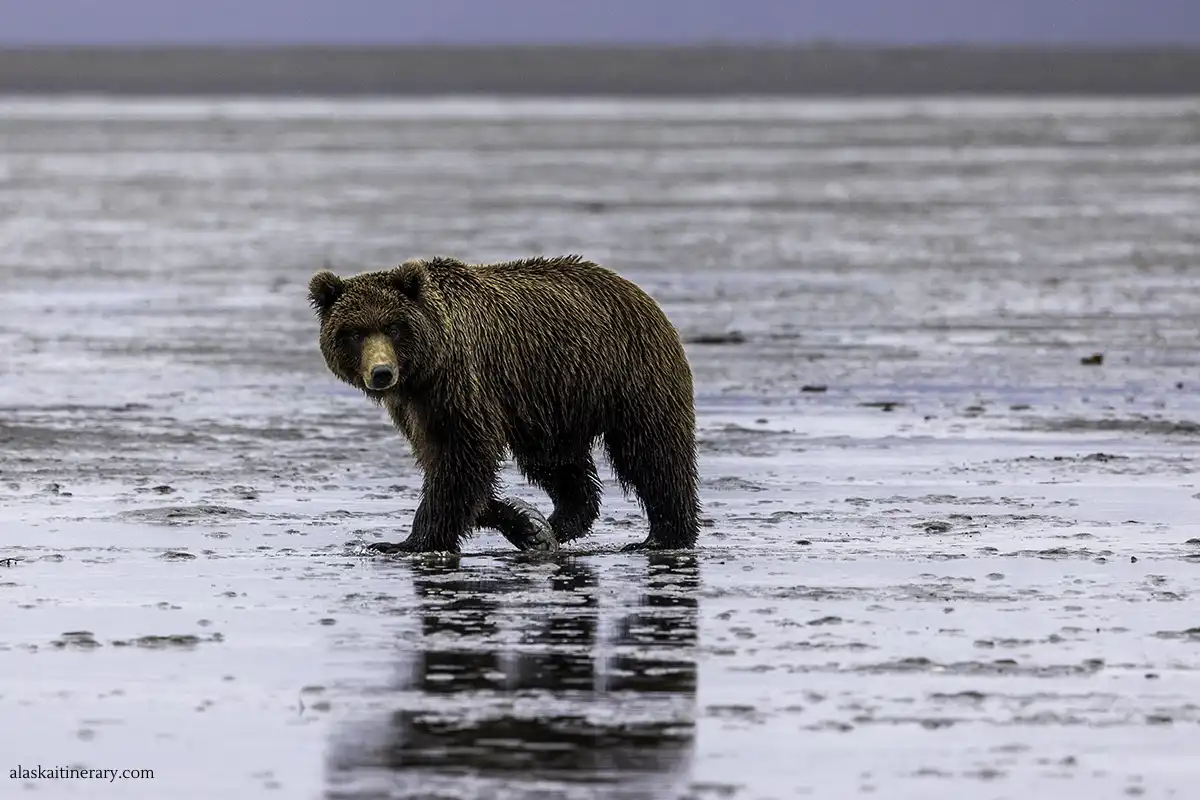
Chinitna Bay, on the Lake Clark coast, can be reached by boat from Anchor Point near Homer. While this is a paid tour, it avoids flying entirely.
- Bear species: brown bears.
- Access: boat across Cook Inlet.
- Best time: late May through July
- Reality check: weather-dependent, full-day commitment
- Boat tour cost: approx $795 per person.
This option offers true coastal brown bear viewing and is often the most realistic no-flight alternative to fly-in Lake Clark or Katmai trips.
Fish Creek Wildlife Observation Site – Hyder
(Public viewing platform with strong success rates)
Fish Creek near Hyder offers a structured viewing platform that allows safe observation of bears fishing during salmon runs.
- Bear species: black bears and brown bears
- Access: road-accessible via Stewart, British Columbia
- Season: typically mid-July to mid-September
- No entrance fee.
This is one of the most affordable and predictable wild bear viewing experiences without flying.

Cruise-Accessible Bear Viewing Without Flying
These options work best for Alaska cruise travelers who want to see bears during a port day, without booking flights or complex logistics. Sightings depend on timing and salmon activity, but these are realistic, no-flight opportunities when expectations are set correctly.
Ketchikan
(Black bear viewing during salmon runs)
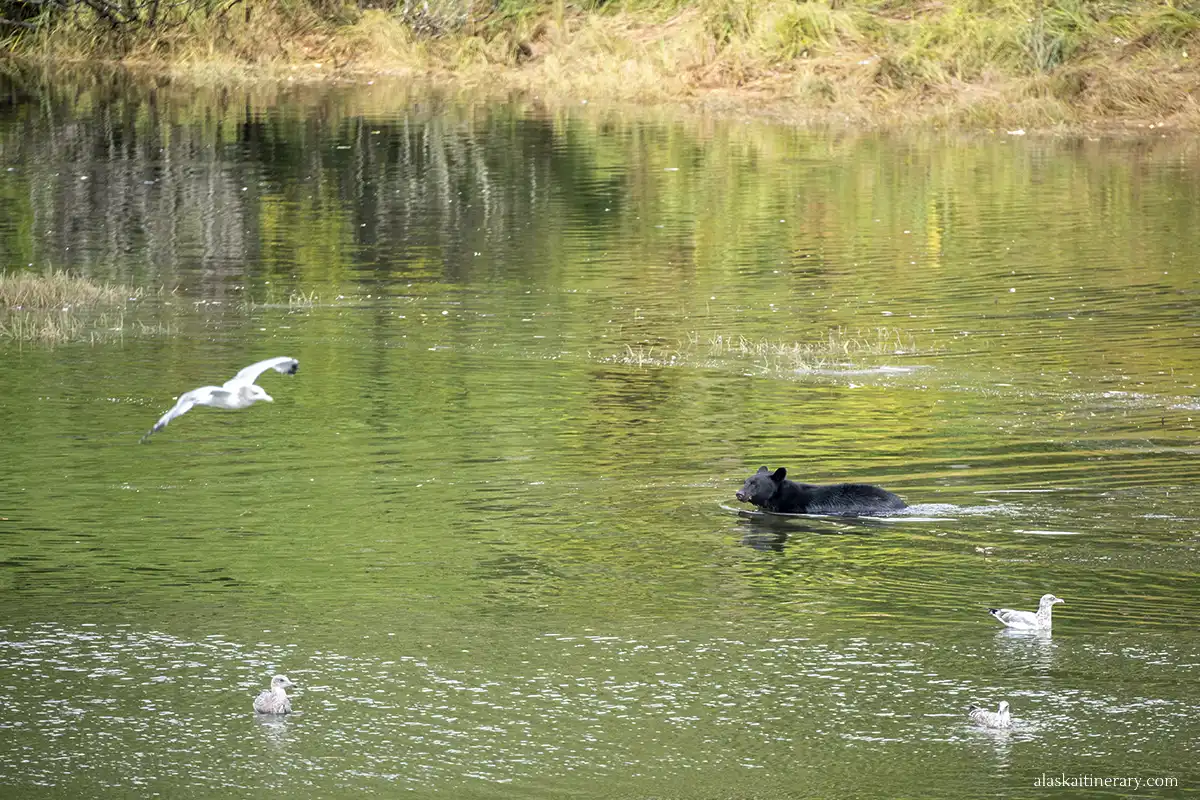
Ketchikan is one of the most accessible places to see wild black bears without flying, especially during peak salmon season. Bears are drawn to creeks and hatchery areas close to town.
Common viewing areas include:
- Traitors Cove
- Herring Cove
- Neets Bay
- Anan Wildlife Observatory (permit required; access by boat)
- Bear species: black bears
- Access: cruise shore excursions, short road transfers, or boat rides
- Best fit: cruise travelers with limited time.
- Tour prices range from about $120 to $500 per person, depending on the bear viewing site and tour format. So far, the most affordable bear viewing option we’ve found in Ketchikan is visiting the Rainforest Sanctuary and Herring Cove during the salmon run.
Bear viewing here is seasonal and situational, but when salmon are present, sightings can be very rewarding.

Icy Strait Point
(Brown bear viewing near the cruise port)
Icy Strait Point and the surrounding Hoonah area offer one of the better cruise-based chances to see brown bears without flying. The region has a high concentration of brown bears, especially near salmon streams.
- Bear species: brown bears.
- Access: guided shore excursions from the cruise port.
- Experience type: short, structured, educational tours.
- Tour prices in Icy Strait Point typically range from about $170 to $400 per person, depending on the tour format, group size, and time on the ground.
Sightings are not guaranteed, but this area consistently ranks among the strongest no-flight bear viewing options for cruisers, especially during mid to late summer.
Important Reality Check for Cruise Travelers
- viewing time is limited by port schedules
- sightings depend on salmon timing and daily activity
- tours are guided and controlled, not wilderness hikes
These experiences work best when treated as authentic wildlife encounters, not guaranteed spectacles.

How to Keep Bear Viewing Affordable in Alaska Without Flying
Seeing bears without flights is possible, but only if costs are managed intentionally. These strategies come directly from what has worked for us and from patterns we’ve seen across Alaska.
Stay in Road-Accessible Gateway Towns
Choose bases like Denali Park, Valdez, Haines, Hyder, or the Kenai Peninsula. Lodging, food, and transportation costs are far lower than in fly-in destinations, and you can try for bear sightings on multiple days without extra transport fees.
Plan More Than One Attempt
Affordable bear viewing works best when you allow repeat opportunities. Instead of paying once for a high-priced tour, build bear viewing into several days of your itinerary. Returning to the same platform, river, or area at different times often pays off.
Use Public Viewing Areas First
Public platforms, park buses, and salmon viewing areas exist for a reason. They concentrate activity safely and legally, and they cost a fraction of guided excursions. These locations are often your best starting point before considering paid options.
Combine Bear Viewing With Other Activities
Road-accessible bear locations are rarely “bear-only” destinations. Pair bear viewing with:
- scenic drives
- salmon viewing
- hiking or coastal walks
- glacier or fjord scenery
This way, the day still has value even if bears are inactive.
Be Flexible With Timing
Flexibility matters more than exact dates. Being able to return later in the day or try again the next morning increases success without increasing cost. Fixed, rushed schedules usually lead to disappointment.
Choose Shorter, No-Flight Guided Options When Needed
If you do book a tour, shorter excursions or boat-based trips without flights are usually far more affordable than fly-in experiences. They don’t guarantee sightings, but they often strike a better balance between cost and opportunity.
Set Realistic Expectations
Affordable bear viewing does not mean dramatic action or close encounters. It means observing natural behavior, often at a distance, in places where bears choose to be. When expectations match reality, these experiences feel rewarding rather than frustrating.
Keeping bear viewing affordable in Alaska is less about finding a secret spot and more about planning smart, staying flexible, and knowing when simple options work best.

What to Bring for No-Flight Bear Viewing in Alaska
When you’re seeing bears without flying, preparation matters more than gear. Most affordable bear viewing in Alaska happens from roads, platforms, park buses, or shoreline areas, often with limited services nearby. Bring what you need to stay comfortable, patient, and alert.
Here’s what actually helps.
Clothing and Layers
- waterproof rain jacket and rain pants
- warm mid-layer, even in summer
- sturdy walking shoes or hiking boots
- hat and light gloves on cooler days
Weather changes fast, especially near rivers and coastal areas.
Binoculars (Optional, but Very Helpful)
Binoculars are not required, but they make a big difference. They allow you to observe bears from a safe distance and catch details you’d otherwise miss, especially at platforms or from buses.
Camera Expectations
- zoom lens helps, but isn’t essential
- phones work fine for distant or documentary-style shots
- don’t expect dramatic action shots
Watching bears calmly is far more common than photographing them.
Food and Drinks
- water is essential
- snacks or a packed lunch
- hot coffee or tea is useful on long viewing days
Some locations have no services nearby, and viewing often requires waiting.
Bug Protection
- insect repellent during salmon season
- head net can be useful near rivers
Mosquitoes and no-see-ums can be intense in July and August.
Safety Basics
- follow posted rules and ranger instructions
- never approach bears or block their path
- keep children close and under control
- carry bear spray only where allowed and know local guidance
Platforms and designated viewing areas exist for a reason. Use them.
Patience and Time
This is the most important item you bring. No-flight bear viewing often means waiting, observing quietly, and accepting that sightings happen on the bears’ schedule.
When No-Flight Bear Viewing Is Not Worth Attempting
Seeing bears in Alaska without flying can be rewarding—but it isn’t always the right choice. In some situations, expectations and conditions simply don’t line up, and it’s better to adjust plans or skip bear viewing altogether.
Here’s when no-flight bear viewing is usually not worth it.
Outside Salmon Season
Most road-accessible and platform-based bear viewing depends on salmon. If salmon aren’t present, bears are widely dispersed and sightings drop sharply. Showing up too early or too late in the season often leads to long waits with no activity.
Very Limited Time
If you have only a short window—one or two hours—and no flexibility, no-flight bear viewing is risky. These experiences work best when you can:
- wait
- return later the same day
- try again the next morning
Rigid schedules reduce success.
Expecting Close-Up or Dramatic Behavior
No-flight bear viewing usually means:
- observing from a distance
- watching calm, natural behavior
- fewer “action moments”
If your goal is close encounters or iconic salmon-jumping scenes, fly-in destinations are a better fit.
Traveling With Unrealistic Expectations
This is the biggest issue. No-flight bear viewing does not offer guarantees. Bears may appear briefly—or not at all. If disappointment would overshadow the rest of your trip, it’s better to focus on scenery, wildlife variety, or family-friendly alternatives.
A Better Way to Think About It
An affordable bear viewing in Alaska works best as:
- part of a broader Alaska itinerary
- a flexible, patient experience
- a bonus, not the sole reason for a day
When expectations match reality, these encounters can be deeply satisfying. When they don’t, frustration follows.
That’s why setting the right mindset matters just as much as choosing the right location.

Final Thoughts
Affordable bear viewing in Alaska without flying is absolutely possible—but it requires a different mindset. These experiences trade convenience and predictability for flexibility, patience, and lower costs.
Road-accessible parks, public viewing platforms, salmon streams, and boat routes allow travelers to see bears in the wild without paying for expensive flights. The sightings may be less dramatic and more distant, but they are real, ethical, and often deeply rewarding.
The key is knowing where to go, what to expect, and when to walk away if conditions aren’t right. When no-flight bear viewing is treated as part of a broader Alaska adventure—not a guaranteed spectacle—it becomes one of the most authentic ways to experience Alaska’s wildlife.
With thoughtful planning and realistic expectations, seeing bears in Alaska doesn’t have to be a once-in-a-lifetime expense. It can be a meaningful, accessible experience that fits a wide range of travel styles and budgets.
Do You Like It? Pin It For Later!


It was great to read that there are some affordable tours to see bears that don’t involve expensive flights. We certainly saw bears on a cruise excursion by boat from Sitka! I sort of like the idea of finding bears when I am driving – as long as I see them first! Finding tours with guaranteed sightings would definitely be worth the price. And finding bears during salmon season would be awesome! A good resource for bear fans for sure.