How to Visit Portage Glacier: Cruise, Trails, Tours, and Tips

Want to experience the majestic beauty of an Alaskan glacier up close? Portage Glacier, just a short drive from Whittier or Anchorage, offers stunning views and exciting adventures. Whether you prefer hiking scenic trails, cruising on a boat tour, or camping, this guide will show you the best ways to explore and enjoy Portage Glacier. Read on to plan your unforgettable visit!
This article may contain affiliate / compensated links. For full information, please see our disclaimer here.
Why It’s Worth Visiting Portage Glacier and What To Know About It?
Portage Glacier is one of Alaska’s most accessible and breathtaking natural wonders. Located just 50 miles south of Anchorage and only about 10 miles from the town of Whittier, this glacier offers a unique opportunity to witness the raw beauty of Alaska’s icy landscapes.
Whether you’re looking to hike scenic trails, take a relaxing cruise, camping, or simply enjoy the serene views, Portage Glacier has something for everyone.
Chris and I have explored the Portage Valley area several times due to its convenient and short access from Anchorage. Here are our tips on how to spend your time and what activities to choose to see Portage Glacier. Besides Matanuska Glacier, Portage Glacier is one of the more easily accessible glaciers in Alaska.
Stunning Natural Beauty
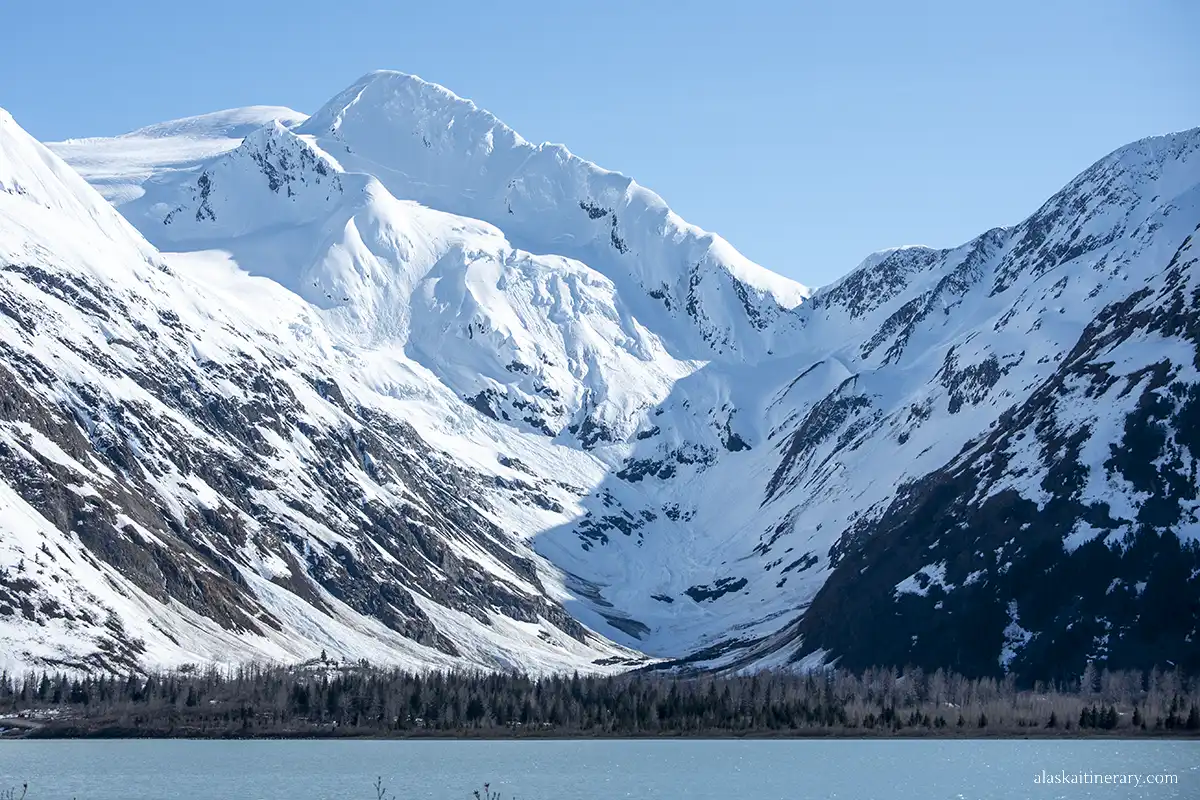
Spanning about 6 miles in length, this magnificent glacier descends from the icy heights of the Chugach Mountains into the picturesque Portage Valley. The glacier’s vibrant blue ice and surrounding rugged landscape make it a must-see for nature enthusiasts and photographers alike.
Historical Significance
Historically, Portage Glacier served as a vital portage route between stunning Prince William Sound and Turnagain Arm. Native Alaskans and early explorers used this route for travel, highlighting its importance in the Whittier history.
Portage Valley and Chugach National Forest
The glacier is nestled within the Chugach National Forest, one of the largest national forests in the United States.
Portage Valley, carved by glaciers over thousands of years, offers stunning views, pristine lakes, and dense forests. This area is home to diverse wildlife, including bears, moose, and a variety of bird species.

Getting to Portage Glacier
From Anchorage
Portage Glacier is approximately 50 miles south of Anchorage, making it an easy and scenic drive. You can add visiting this glacier to your Anchorage itinerary. Exploring this glacier is a perfect option for a day trip from Anchorage on your own. Follow these steps:
- Drive the Seward Highway (AK-1): Head south on the Seward Highway from Anchorage. This drive takes you along the Turnagain Arm, offering stunning views of mountains and water.
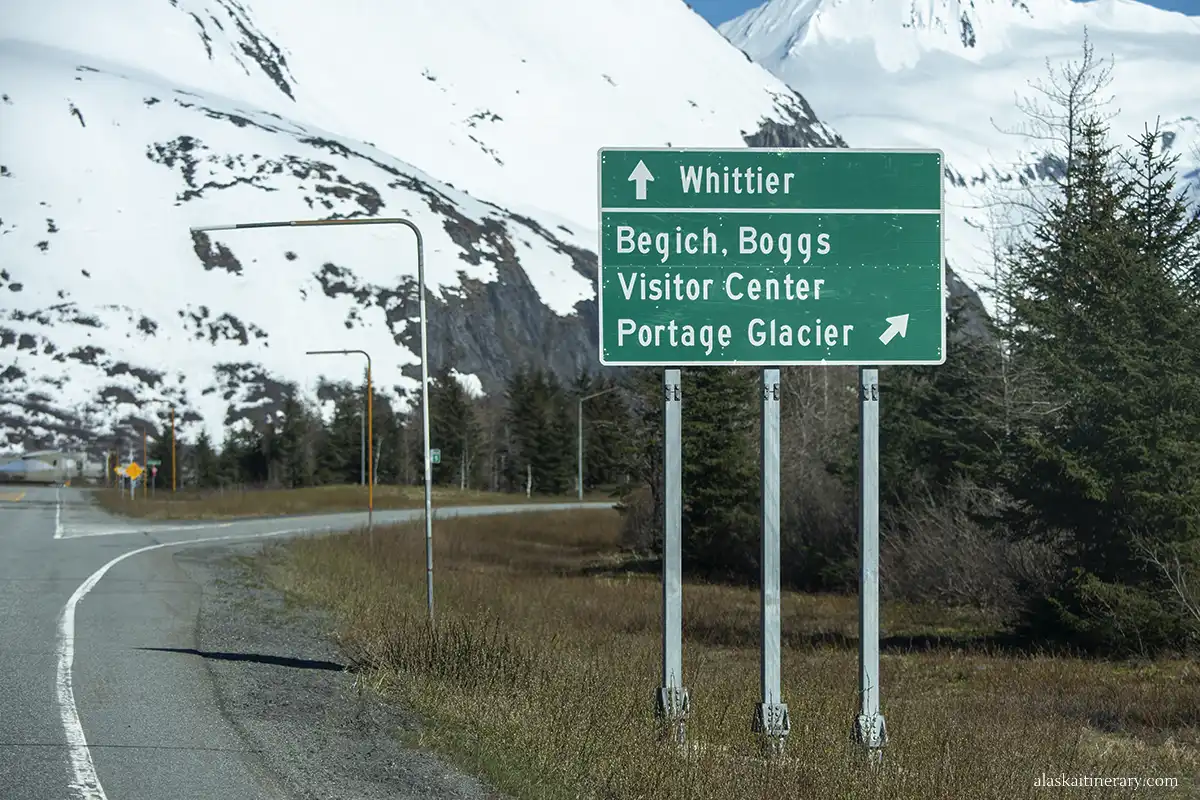
- Turn onto Portage Glacier Road: After about 48 miles, turn left onto Portage Glacier Road. There will be clear signs directing you toward Portage Glacier and the Begich Boggs Visitor Center.
- Continue to Portage Lake: Follow Portage Glacier Road for about 5 miles until you reach the lake and the visitor center. From here, you can access the boat tours and the trails.
Agnes’ Advice: You can also book a guided tour. Check out: Best guided tours from Anchorage with transportation.

From Whittier
Portage Glacier is easily accessible from Whittier, a small town about 10 miles away. When visiting from Whittier, you have two main options:
Explore from Whittier
- Portage Pass Trail: From Whittier, you can take the Portage Pass Trail, a popular hike that offers stunning views of Portage Glacier and Portage Lake. The trailhead is just a short drive from the town center, and the hike is approximately 4.2 miles round trip with moderate difficulty. This trail provides an up-close view of the glacier and is an excellent option for those already in Whittier. It’s one of the best things to do in Whittier.

Explore Before Entering Whittier
- Visitor Center and Cruises: Before reaching Whittier via the Whittier Tunnel, you can visit the Begich Boggs Visitor Center and take a glacier cruise on Portage Lake. These attractions are accessible without entering the Whittier Tunnel. The visitor center offers educational exhibits about the glacier and the surrounding area, while the boat tour provides a unique perspective of the glacier from the water.
- Portage Glacier Road: Turn onto Portage Glacier Road from the Seward Highway before the tunnel. This road leads to the visitor center, the lake, and hiking trails. You can enjoy various activities, including hikes like the Byron Glacier Trail, which offers beautiful views and is easily accessible.
These options allow you to experience the glacier whether you choose to explore directly from Whittier or before reaching the Anton Anderson Memorial Tunnel, making it convenient for various travel plans and preferences. Even if you have only one day in Whittier, make sure to stop for a while to admire this glacier.

From Girdwood
Girdwood is about 30 miles north of Portage Glacier. Here’s how to get there:
- Take the Seward Highway (AK-1) South: Head south from Girdwood on the Seward Highway.
- Turn onto Portage Glacier Road: After approximately 30 miles, turn left onto Portage Glacier Road.
- Continue to Portage Lake: Drive about 5 miles along Portage Glacier Road to the lake and visitor center.

The Begich Boggs Visitor Center
The Begich Boggs Visitor Center, located on the shores of Portage Lake, is an excellent starting point for your visit to Portage Glacier. The center provides a wealth of information about the region’s natural history, geology, and wildlife. It’s open from late May to mid-September, and the entrance fee is $5 for adults. It’s open from 9:00 AM to 5 PM.
The visitor center offers a variety of interactive and educational exhibits that detail the history and formation of Portage Glacier, the Chugach National Forest, and the surrounding ecosystems.
You can learn about the glacier’s retreat over the years and the impact of climate change on the area. Exhibits also cover the flora and fauna that inhabit the region, providing insights into the local wildlife.
Portage Glacier Cruise
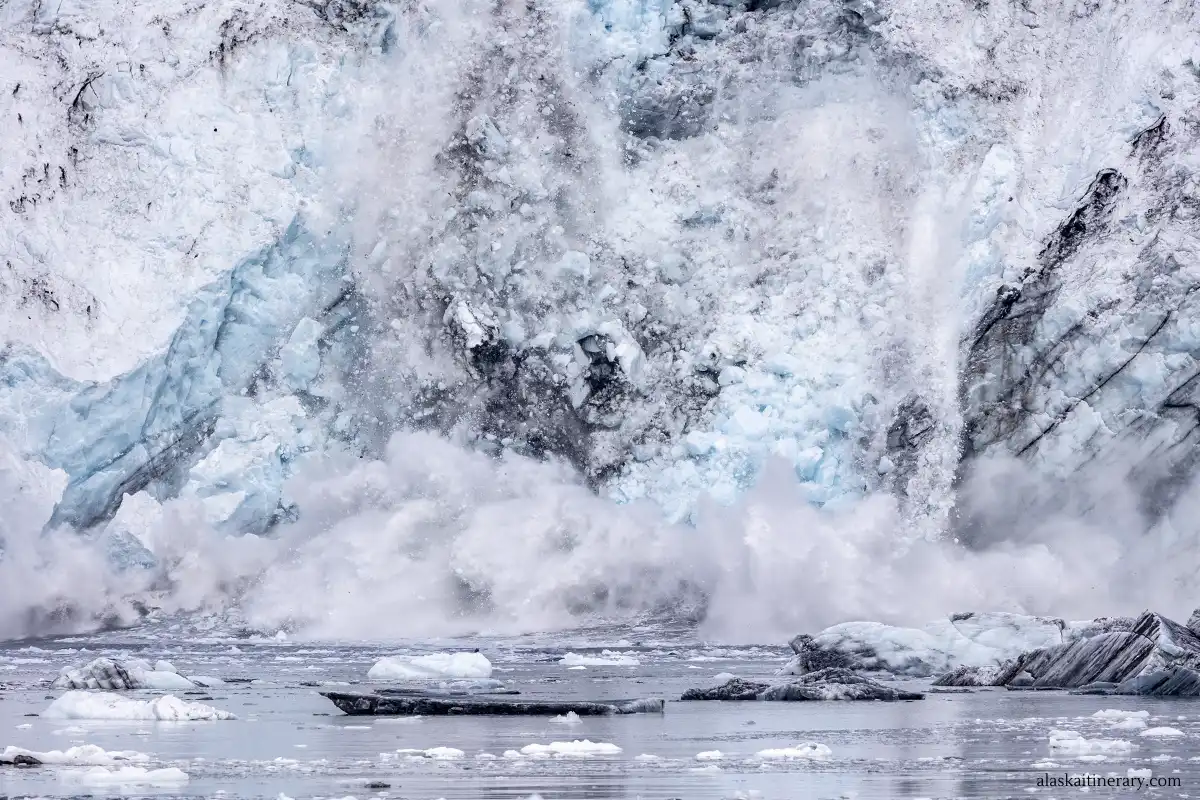
One of the most popular ways to experience Portage Glacier is by taking a boat cruise on Portage Lake. These cruises operate seasonally, typically from mid-May through mid-September, and provide a close-up view of the glacier’s stunning ice formations.
You can cruise across Portage Lake on the mv Ptarmigan. You can choose between a self-drive tour or a round-trip with a shuttle from Anchorage.
Portage Glacier Tours and Packages
In addition to the cruises, there are several guided tour options that combine visits to Portage Glacier with other local attractions. Most of them start and end in Anchorage.
- Combination Tours: Some tour operators offer combination packages that include a cruise on Portage Lake, wildlife viewing along the Turnagain Arm, and a scenic drive along the Seward Highway. They also add a stop at the Alaska Wildlife Conservation Center. These tours provide a comprehensive experience of the area, highlighting both natural and historical points of interest. It’s an 8-hour tour, roundtrip from Anchorage. Consider this Glacier and Wildlife Full-Day Tour from Anchorage.
Portage Glacier Hiking Trails
There are several hiking trails in the area. While hiking to Portage Glacier is possible, walking on the glacier alone is dangerous and not allowed. Ice climbing is permitted at the Portage River area for those interested, but it should only be done with proper equipment and experience.
Agnes’ Advice: Check out our Alaska summer packing list before you hit the hiking trail. It’s based on our years of experience exploring Alaska.
Byron Glacier Trail
The Byron Glacier Trail is an excellent option for those looking for an easy and accessible hike. Located just off Portage Glacier Road, this trail offers a gentle 1.4-mile (one way) hike suitable for all ages and fitness levels.
- Trail Details: The path is well-maintained and relatively flat, making it ideal for families and casual hikers. It meanders through lush forest and along a picturesque stream before reaching a viewpoint near the face of Byron Glacier.
- What to Expect: Along the trail, you’ll see stunning views of the glacier, surrounding mountains, and possibly even wildlife. The trailhead is located near the Begich Boggs Visitor Center, making it a convenient starting point.
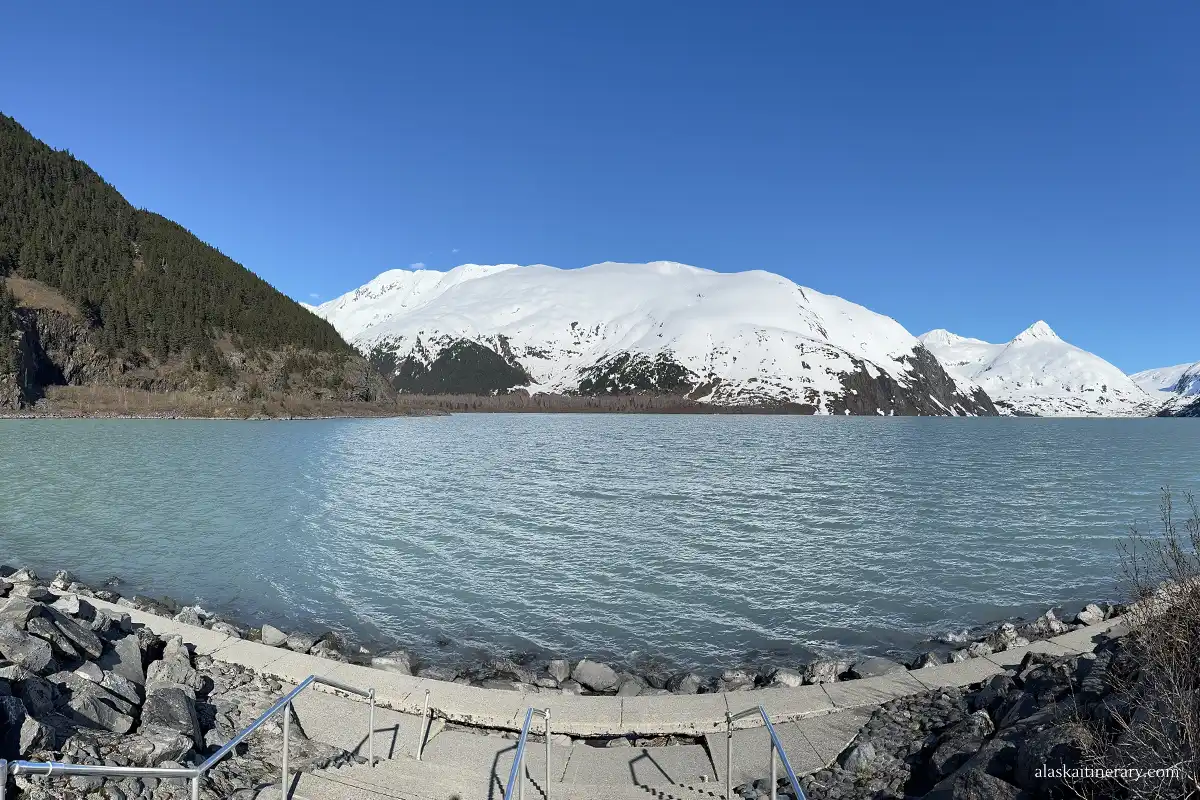
Garry Williams Moraine Nature Trail
The Garry Williams Moraine Nature Trail is a 1.4-mile loop that offers an easy and scenic hike through lush forests and glacial moraine. Located near Portage Glacier, this trail is ideal for families and nature enthusiasts, providing opportunities for wildlife viewing and stunning views of the surrounding mountains.
The well-marked trail allows for a leisurely outdoor adventure, making it a perfect complement to a visit to Portage Glacier.

Trail of Blue Ice
The Trail of Blue Ice is a longer, multi-use trail that stretches approximately 5 miles through Portage Valley. It’s perfect for hiking, biking, and even cross-country skiing in the winter.
- Trail Details: This wide gravel and boardwalked trail is relatively flat and accessible, making it suitable for all skill levels. It connects several campgrounds and scenic viewpoints, offering opportunities to see other glaciers and natural features in the valley.
- What to Expect: Along the trail, you’ll encounter dense forests, clear streams, and various glacier views. It’s a great way to explore more of the Portage Valley and enjoy a longer outdoor adventure.
Portage Pass Trail
For those seeking a more challenging hike with rewarding views, the Portage Pass Trail from Whittier is a fantastic choice. This 4.2-mile round-trip trail provides some of the best vistas of Portage Glacier and Portage Lake. Details about the trailhead and hike description you can find in our article: Tips for hiking the Portage Pass.


Kayak Portage Lake to Portage Glacier
Kayaking on Portage Lake to see Portage Glacier is a fantastic adventure. This experience, available since 2009, allows paddlers to get up close to the glacier’s stunning ice formations. Here’s how to make the most of your trip:
- Preparation: Use flotation devices and dress in dry suits due to the cold, silt-filled glacial water. Visit the Begich Boggs Visitor Center for maps and safety information.
- Launch Site: The kayak launch is located on the far side of the lake from the visitor center, across the bridge and through a tunnel.
- On the Water: Paddle close to the cliffs for spectacular views of waterfalls and icebergs. Be aware of changing winds and weather conditions.
How to Visit Portage Glacier in Winter?
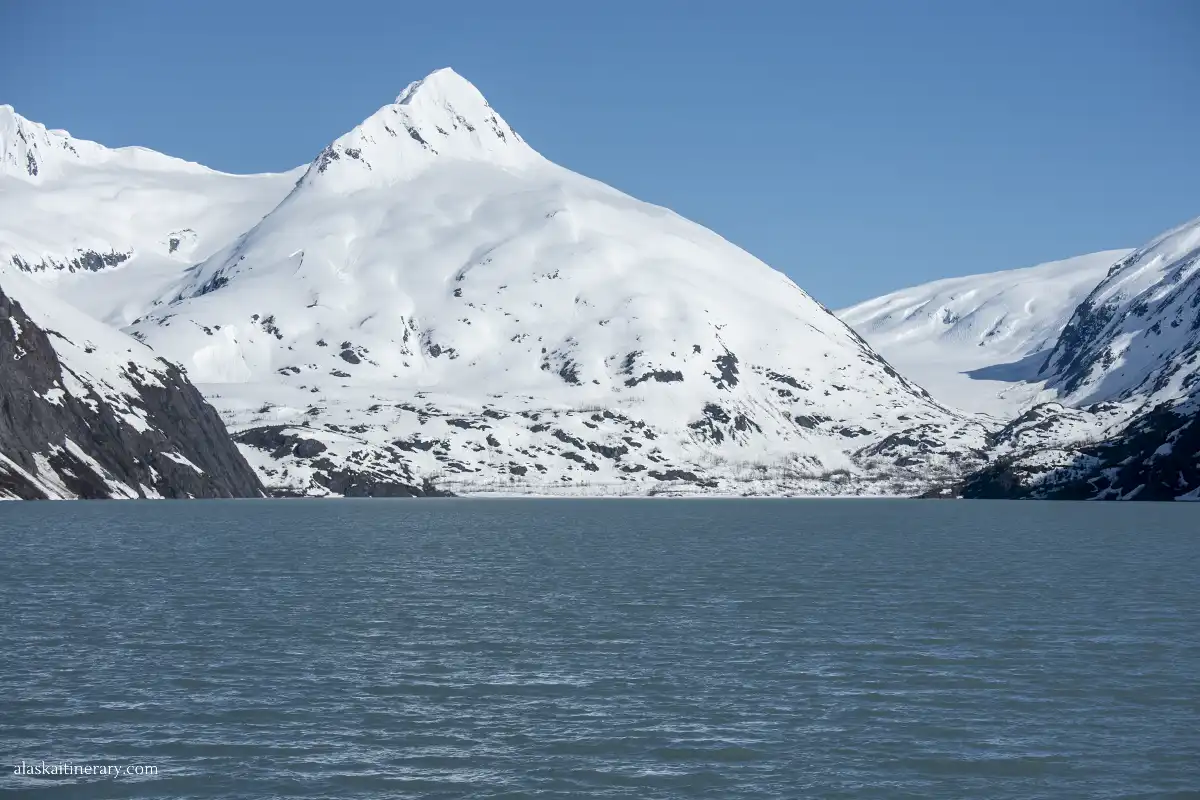
Visiting Portage Glacier in winter offers a unique and stunning experience, with the landscape blanketed in snow and ice. Here’s how to make the most of your winter visit:
- Portage Lake Winter Hike: When the lake is frozen, you can hike across it to the glacier. Start at the parking lot near the Begich Boggs Visitor Center. The hike is about 6 miles round trip, flat, and relatively easy, but requires proper winter gear. Make sure to check the weather forecast and if this activity is safe.
- Snowshoeing and Cross-Country Skiing: Trail of Blue Ice is perfect for snowshoeing and skiing, offering beautiful views through Portage Valley.
- Photography: Winter offers unique lighting and stunning contrasts. Capture the blue ice of the glacier against the white snow.
- Scenic Drives: Enjoy the drive along Seward Highway and Portage Glacier Road, with snow-covered mountains and frozen lakes providing breathtaking views.

Camping at Portage Glacier
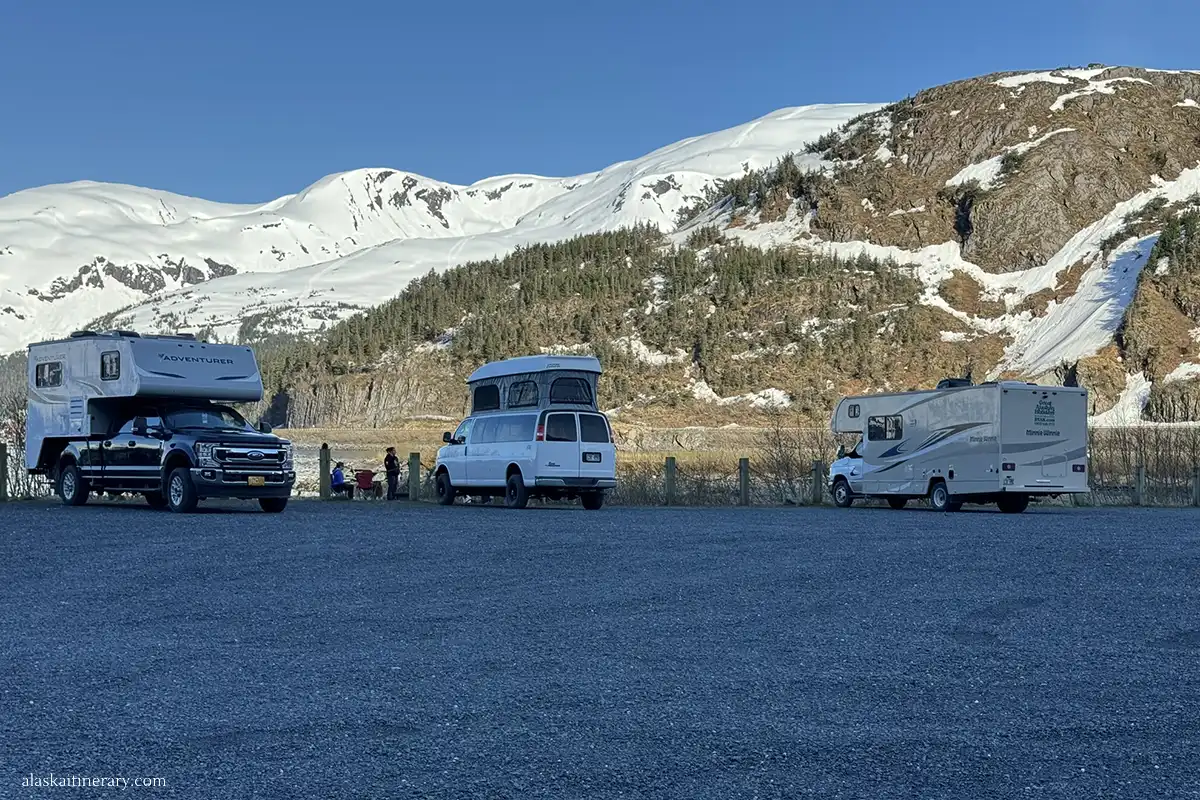
Camping near Portage Glacier provides an immersive experience in Alaska’s stunning wilderness. While you cannot camp directly at the glacier, several nearby campgrounds offer excellent facilities and easy access to the glacier and surrounding attractions.
Williwaw Campground
Located within the Chugach National Forest, Williwaw Campground is just a short drive from Portage Glacier. It’s on Mile 4 on the Portage highway. It has 59 fully accessible paved campsites for RVs and tents, picnic tables, fire pits, potable water, and restrooms. No hookups, no dump station. You can book it via Recreation.gov.
Black Bear Campground
Black Bear Campground offers a more intimate camping experience with 12 sites designed for tents and pop-up campers (no RVs). First-come, first-served only. Amenities include campfire rings, bear-proof dumpsters, bear-proof food lockers, picnic tables, and outhouses. No hookups are available. It offers convenient access to the Trail of Blue Ice, providing excellent opportunities for hiking and exploring the area.
Five Fingers Campsites
Five Fingers Campsites is a gravel parking area with access to the Trail of Blue Ice and rustic campsites. Basic amenities include picnic tables and fire pits. This place includes 3 hike-in-only campsites. This campground is ideal for those looking for a more rustic camping experience.
City of Whittier Campground
The Whittier Bay Campground offers basic camping facilities with stunning views of Passage Canal. To reach the campground, you must drive through the Anton Anderson Memorial Tunnel. The campground provides easy access to the Portage Pass Trail, making it a great base for exploring Portage Glacier and the surrounding area. Its proximity to the town of Whittier also allows campers to enjoy local amenities.
Conclusion
Portage Glacier offers a range of exciting activities and stunning views, making it a must-visit destination in Alaska. Whether you’re hiking scenic trails, taking a boat cruise, kayaking on Portage Lake, or exploring in winter, there are plenty of ways to experience the glacier’s beauty.
Remember to stay safe by following guidelines, and consider the unique opportunities for adventure and education provided by the Begich Boggs Visitor Center. Plan your visit to Portage Glacier to enjoy an unforgettable Alaskan experience.