When and Where to Spot Whales on Your Alaska Cruise?

Whale watching is one of the most unforgettable experiences on an Alaska cruise. Seeing these massive creatures in the wild is breathtaking. But many travelers wonder: What are the best months for whale watching, and what are the top Alaska cruise ports to spot whales? Where should you look? What kinds of whales will you see? In this article you will find all the answers and much more. Whether you’re watching from your cruise ship or booking a whale-watching tour, this guide has you covered. I’ll share the best viewing tips, what to bring, and how to make the most of your trip. If you want the best whale-watching cruise experience in Alaska, keep reading!
This article may contain affiliate / compensated links. For full information, please see our disclaimer here.
Whales on Alaska Cruise: Our Experiences
Chris and I have spent years exploring Alaska, both by land and sea. But when it comes to whale watching, nothing beats an Alaska cruise. There’s something magical about spotting a humpback or an orca from the deck of a ship, surrounded by glaciers and towering mountains.
As photographers, we’ve chased the best whale-watching spots in Alaska. We’ve observed whales from cruise ships and taken dedicated whale-watching excursions on smaller boats. In this article, we’re sharing our firsthand experiences, plus the best tips for spotting these incredible creatures on your cruise.
If you’re looking for general whale-watching tips—whether you’re traveling by car, RV, or ferry—check out my detailed guide on the best places for whale watching in Alaska nad top Alaska whale watching tours. But here, I focus only on Alaska cruising, including whale watching from a cruise ship and the best whale watching shore excursions in Alaska’s top ports.


And if you love wildlife in general, don’t miss my post on Wildlife Encounters on an Alaska Cruise, where I cover everything from bears to eagles and more!
If you are planning your Alaska cruise, my four favorite whale-watching shore excursions from my cruises are:
- whale watching in Auke Bay from Juneau,
- a premier whale watching and wildlife tour on a small boat from Sitka
- a small boat (6-passengers) whale-watching tour from Hoonah (Icy Strait Point),
- and the incredible 6-hour wildlife cruise from Seward through Kenai Fjords.

The Best Alaska Ports for Whale Watching
Not all cruise ports offer great whale-watching opportunities. Some are better than others. If spotting whales is on your Alaska cruise bucket list, make sure you know which ports give you the best chances.
Here are the top Alaska cruise ports for whale watching, based on our firsthand experiences. We personally paid for each activity ourselves. We usually book tours through Viator, as the prices are often much more affordable than those offered by the cruise lines. That’s why we prefer to arrange our shore excursions independently—it gives us more flexibility and better value.

Juneau – The Whale-Watching Capital of Alaska
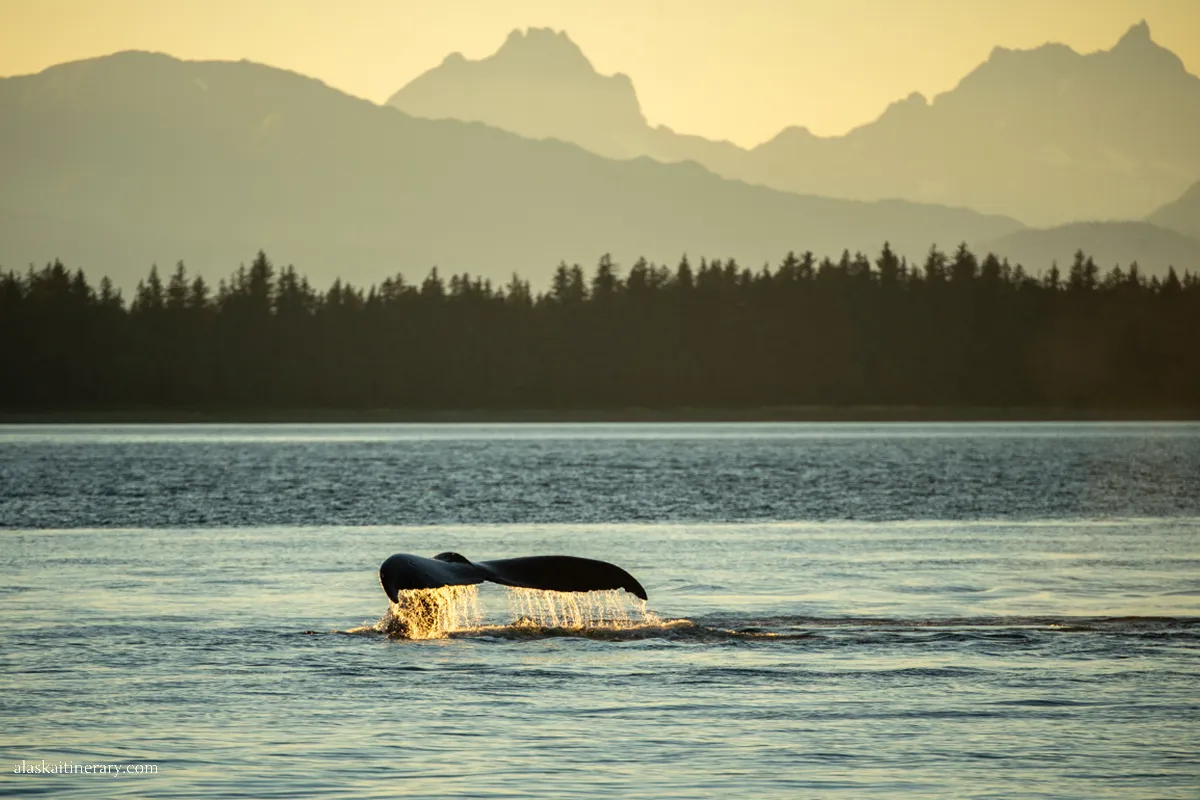
Juneau is hands down the best place to see whales on an Alaska cruise. Humpback whales are abundant in Auke Bay and Stephens Passage from May through September.
Some even call Juneau the “whale-watching capital of Alaska” because sightings are almost guaranteed. For us, it was one of the main reasons to cruise to Alaska.
Best Way to See Whales:
- Take a whale-watching boat tour—local guides know the best spots.
- Watch from the cruise ship as you sail through Gastineau Channel.
- Book a kayaking excursion for a closer, more immersive experience.
What You’ll See:
- Humpback whales breaching and bubble-net feeding.
- Occasional orca (killer whale) pods.
- Sea lions and bald eagles along the shoreline.
Agnes’ Advice: Book your tour in advance! Juneau is popular, and good tours sell out fast. If you are short of time choose a combo tour whale watching with a glacier stop to see Mendenhall Glacier. Check out
Juneau whale-watching tour review
The best Juneau shore excursions
One day in Juneau – itinerary for cruise passengers
Icy Strait Point – The Ultimate Wild Experience
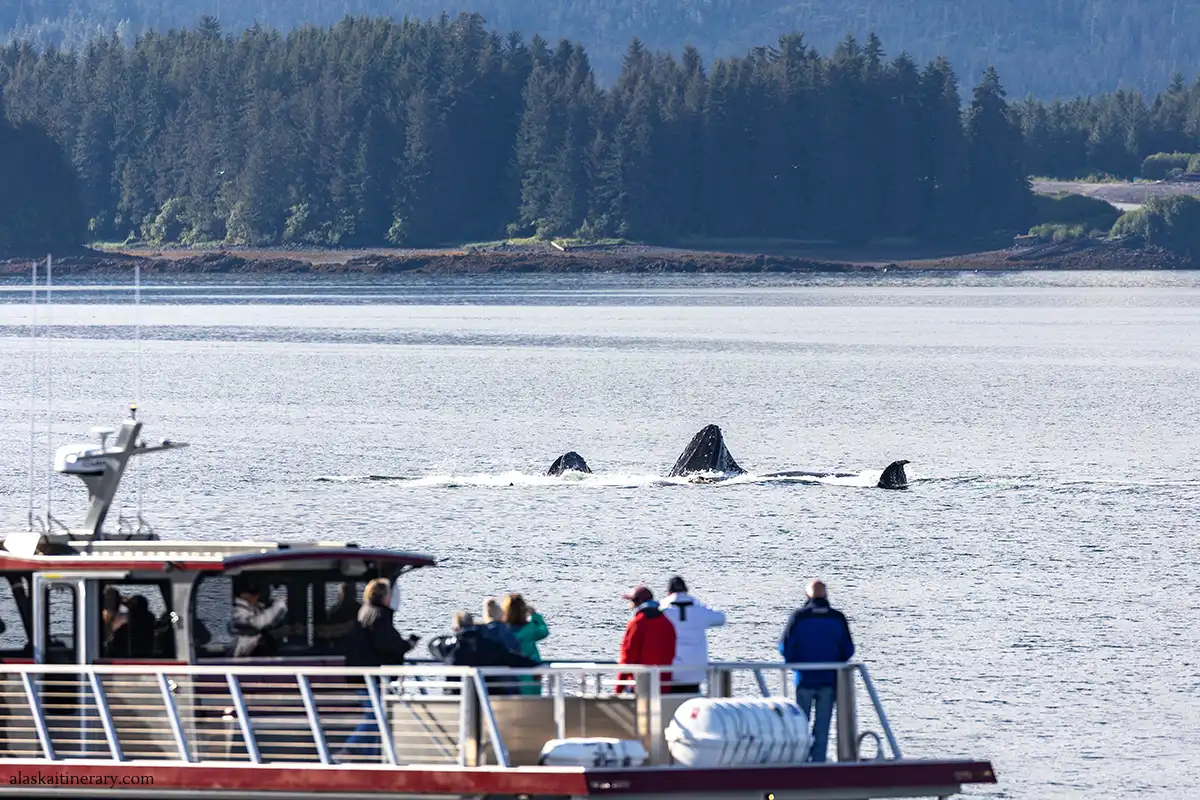
Icy Strait Point, near Hoonah, offers one of the most untouched whale-watching experiences in Alaska. The waters of Icy Strait are rich in food, making it a hotspot for humpback whales. It’s also one of the best places to see orcas.
Icy Strait Point is magical for me because you can even admire whales from the shore without taking a tour. I’ve been lucky to visit this port three times so far, and each time, while wandering along the beach, I spotted whales! So, if you’re cruising Alaska on a budget, Icy Strait Point offers a chance to enjoy whale watching for free—just take a stroll along the shoreline and keep your eyes on the water!
Best Way to See Whales:
- Join a small boat whale-watching tour for an intimate experience.
- Some lucky passengers see whales from their cruise ship!
- Kayak tours offer a quiet, up-close experience in calmer waters.
What You’ll See:
- Large groups of humpback whales feeding.
- Orcas hunting and playing in pods.
- Sea otters, porpoises, and even brown bears along the shore.
Agnes’ Advice: Icy Strait Point is less crowded than Juneau, making for a more peaceful experience. Check out
Icy Strait Point whale watching tour review
The best Icy Strait Point shore excursions
One day in Icy Strait Point – itinerary for cruise passengers
Seward – The Gateway to Marine Wildlife
Seward is not just a cruise port—it’s a gateway to Kenai Fjords National Park, one of Alaska’s best wildlife areas. This port is known for glaciers, stunning landscapes, and excellent whale watching.
Best Way to See Whales:
- Take a wildlife and glacier cruise.
- Watch from the cruise ship as you sail into Resurrection Bay.
- Some adventurous travelers book kayak tours for a closer look.
What You’ll See:
- Orcas are common here, especially from May to early July.
- Humpback whales are often spotted feeding near the fjords.
- Puffins, sea lions, and mountain goats along the rocky cliffs.

Agnes’ Advice: If you have time, visit the Alaska SeaLife Center and Exit Glacier before your cruise departs. Check out
Kenai Fjords wildlife and glacier cruise review
One day in Seward – itinerary for cruise passengers
Things to do in Kenai Fjords National Park
Ketchikan – Occasional Sightings but Still Worth It
Ketchikan isn’t the best place for whale watching, but it does offer occasional humpback and orca sightings. You’ll have the best chance if you take a tour into the open waters of the Inside Passage.
Best Way to See Whales:
- Take a boat tour that goes beyond the town’s coastline.
- Watch from your ship while sailing into port.
- Visit Tongass Narrows and Misty Fjords for other wildlife.
What You’ll See:
- Humpback whales (though less frequent than in Juneau or Icy Strait).
- Orcas hunting in deeper waters.
- Seals, sea otters, and bald eagles along the shoreline.
Agnes’ Advice: If you don’t see whales here, focus on other amazing wildlife experiences, like bear watching or rainforest hikes. Honestly, Ketchikan wouldn’t be my top pick for whale watching—it’s much better for bear viewing. If you want the best whale sightings, my top choices are Juneau and Icy Strait Point or Seward. Check out
The best Ketchikan shore excursions
One day in Ketchikan – itinerary for cruise passengers
Top Spots for Bear Viewing on a Cruise to Alaska
Which Alaska Port is Best for Whale Watching?
If whale watching is a priority, choose a cruise that stops in Juneau or Icy Strait Point. These ports offer the highest chance of sightings and the best tours. If your cruise also visits Seward, even better—you may spot orcas in Resurrection Bay! Each port offers something different, so if you love marine wildlife, consider booking multiple excursions to increase your chances of seeing whales up close.

Best Time to See Whales on an Alaska Cruise
The Alaska cruise whale watching season is a highlight for many travelers. Most whales appear from May through September. This is the best time to see whales on an Alaska cruise. Some months are better than others. Here’s a breakdown based on species and season.
Alaska Cruise Whale Watching Season: When to Go?
The Alaska cruise whale watching season runs from May through September. This is when humpback whales, orcas, gray whales, and even blue whales migrate to Alaska’s nutrient-rich waters.
May – Early Season Whale Watching
- Gray whales start arriving in April and May.
- Orcas (killer whales) are most active in early May.
- Humpback whales begin returning to Alaska from Hawaii.
- Fewer crowds make it a peaceful time to cruise.
- Whale-watching tours begin operating in May, but sightings may be less frequent than in peak months.
- Check out: Pros and cons of cruising to Alaska in May.
June – Peak Whale Watching Begins
- The humpback whale population increases as more arrive from Hawaii.
- Orcas are still common, especially in Seward and Icy Strait Point.
- Long daylight hours and the midnight sun create ideal viewing conditions, and the scenery is increible.
- Whale-watching tours run daily from all major cruise ports.
- Check out: Pros and cons of cruising to Alaska in June.
July – The Best Month for Whale Watching
- This is the absolute best time to see whales on an Alaska cruise!
- Humpbacks are fully settled in feeding areas like Juneau and Icy Strait Point.
- Orcas are still spotted, but they start moving around more.
- The weather is warmer, making it a great time for whale-watching tours.
- Check out: Pros and cons of cruising to Alaska in July.
August – Great Month, But Days Start Getting Shorter
- Humpbacks are still very active, often seen breaching and bubble-net feeding.
- Daylight hours start getting shorter compared to June and July.
- Orca sightings become less frequent, but some pods remain in Alaska’s waters.
- Check out: Pros and cons of cruising to Alaska in August.
September – Late Season Whale Watching
- Humpbacks start migrating back to Hawaii, but many remain feeding in Alaska’s bays.
- Whale-watching tours in Juneau and Icy Strait Point still have frequent sightings.
- Some lucky travelers may spot baby humpbacks making their first migration.
- Crisp autumn air and fall colors create a stunning backdrop for wildlife viewing.
- If you’re lucky, a September Alaska cruise might give you the chance to see the Northern Lights dancing across the night sky!
- Check out: Pros and cons of cruising to Alaska in September.

Best Month for Whale Watching on Alaska Cruise
If you want to maximize your chances, the best months are June and July. This is when humpback whales are fully active, and orca pods are still commonly seen. If you’re cruising in May or September, you’ll still have great opportunities, but sightings may be slightly less frequent. For the best experience, choose an Alaska cruise between June and August. These months offer the most consistent whale activity, with peak numbers of humpbacks feeding in Alaska’s bays.
Morning vs. Afternoon: When Are Whales Most Active?
- Early morning (7–10 AM) – Many tours report higher activity in the morning, especially for orcas.
- Afternoon (12–4 PM) – Humpbacks tend to be more playful and breach more often.
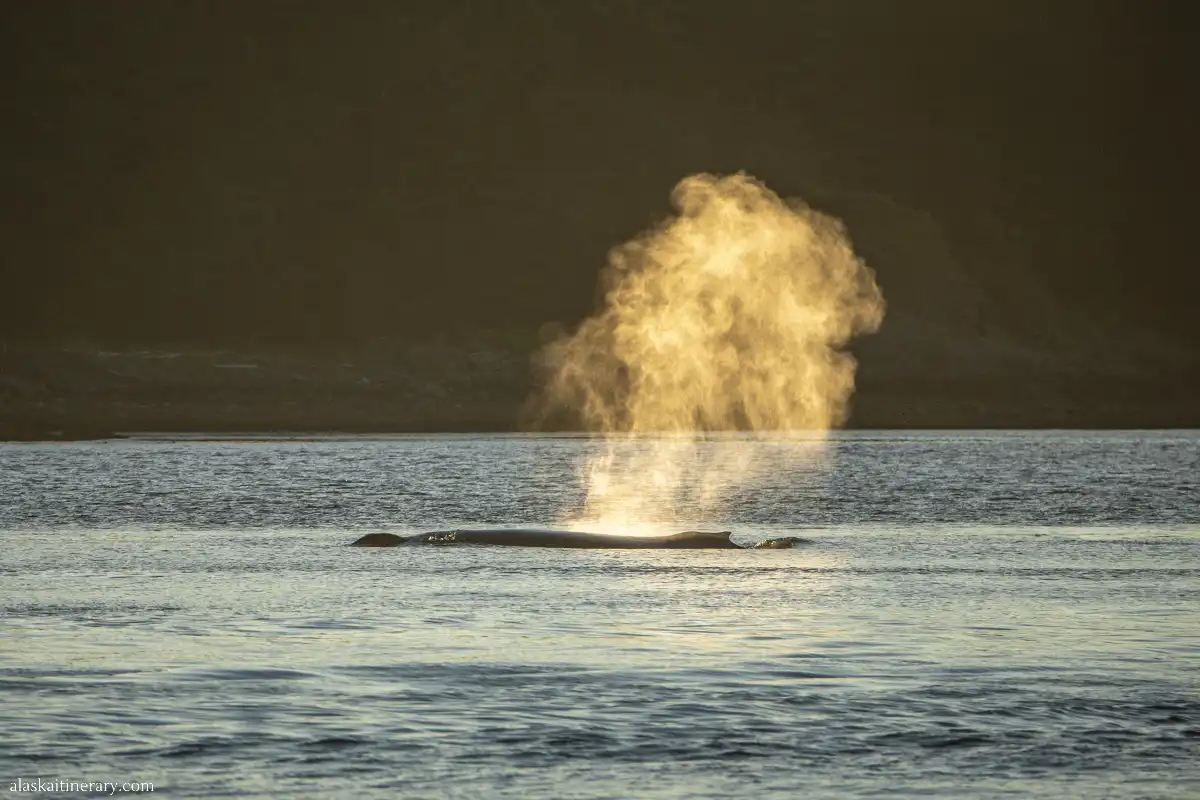
- Evening (5–9 PM, depending on daylight) – If your cruise sails through whale-rich waters in the evening, keep an eye out! Sunset whale sightings are magical.
Best Alaska Whale-Watching Cruise: Which One to Choose?
Not all Alaska cruises offer the same whale-watching experience. If seeing whales is a top priority for you, choosing the right cruise itinerary, route, and ship makes a difference. Some cruises sail through prime whale-watching areas, while others have fewer opportunities. Here’s how to pick the best Alaska whale-watching cruise for your trip.
Best Alaska Cruise Itineraries for Whale Watching
Some Alaska cruise routes are better than others for spotting whales. If you want the best chance to see humpback whales, orcas, and other marine life, choose an itinerary that includes Inside Passage and Gulf of Alaska waters.
Inside Passage Cruises (Round-Trip Seattle or Vancouver)
Best for: Frequent whale sightings from the ship and popular ports with great whale excursions.
- Sails through calm, rich feeding waters where humpbacks and orcas hunt.
- Juneau, Icy Strait Point, and Ketchikan—all excellent whale-watching ports.
- Ideal for first-time Alaska cruisers and those who prefer round-trip routes, which are more affordable.
- Best whale-watching months: June–August.
One-Way Alaska Cruises (Seattle/Vancouver to Seward/Whittier)
Best for: More time in whale-rich waters and diverse wildlife experiences.
- Sails deeper into Alaska, including spots like Resurrection Bay (Seward).
- More chances to see orcas (killer whales) near Kenai Fjords National Park.
- Hubbard Glacier or Glacier Bay—sometimes whales can be spotted near glaciers.
- Requires a one-way flight but offers more diverse scenery and wildlife.
- Best whale-watching months: Late May–early September.
Small-Ship & Expedition Cruises
Best for: Getting closer to whales and a more intimate, nature-focused experience.
- Smaller ships can navigate closer to wildlife-rich areas.
- Often include kayaking and Zodiac boat tours for closer whale encounters.
- Less crowded but more expensive than traditional cruises.
- Operators include UnCruise Adventures, Lindblad Expeditions, and Hurtigruten.
- Best whale-watching months: June–August.
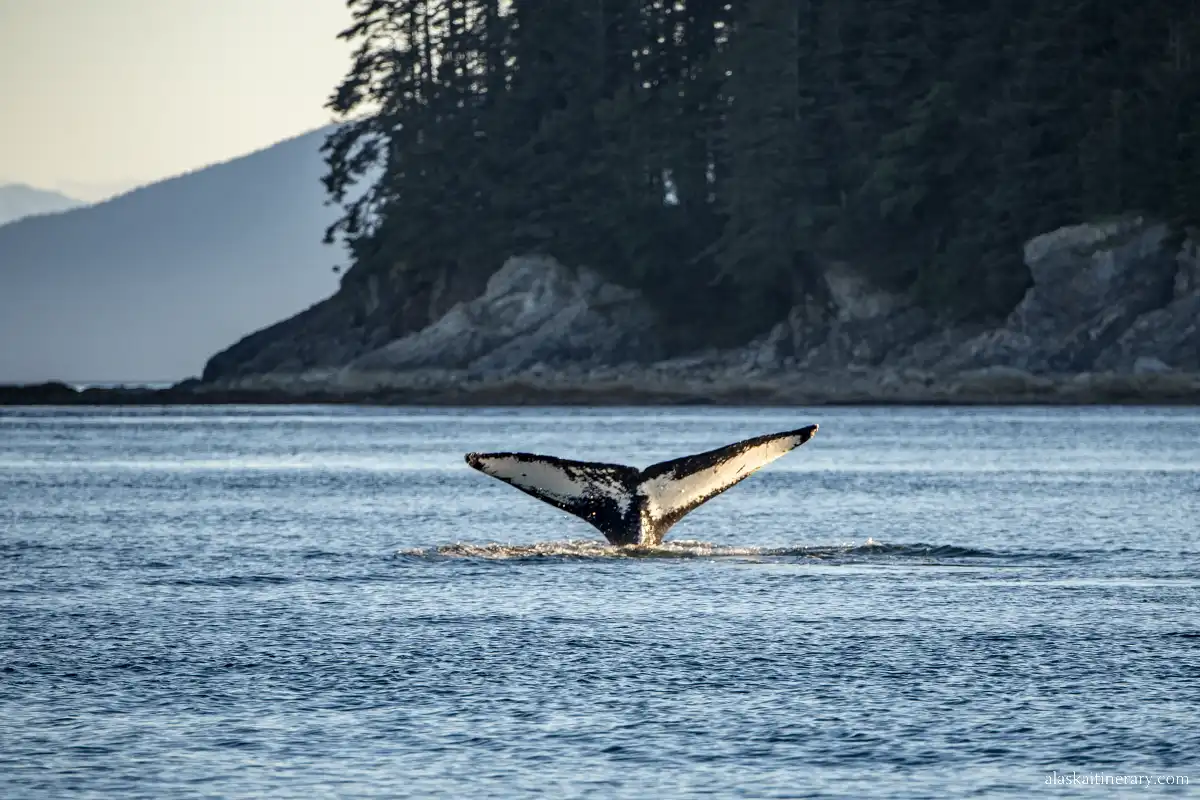
Best Cruise Lines for Whale Watching in Alaska
Some Alaska cruise lines cater more to wildlife lovers than others. Here are the best options for whale watching:
Holland America Line
- Best for: Serious wildlife enthusiasts.
- Why? Holland America ships have naturalists onboard who give live commentary when whales are spotted.
- Best routes: Inside Passage, Glacier Bay, and Gulf of Alaska cruises.
Princess Cruises
- Best for: A mix of comfort and great wildlife experiences.
- Why? Many Princess ships offer onboard naturalists, plus great shore excursion partnerships for whale watching.
- Best routes: Inside Passage and one-way Gulf of Alaska itineraries.
Norwegian Cruise Line (NCL)
- Best for: Budget-conscious travelers who still want good whale-watching opportunities.
- Why? NCL often has affordable fares and sails whale-rich waters like Icy Strait Point and Juneau.
- Best routes: Inside Passage and one-way Vancouver to Seward cruises.
Celebrity Cruises
- Best for: A more luxurious experience while still offering great wildlife viewing.
- Why? Many itineraries include Hubbard Glacier and Kenai Fjords, where whales are active.
- Best routes: Gulf of Alaska and Inside Passage.
UnCruise Adventures (Small Ships)
- Best for: Those who want small, adventure-focused cruises with close wildlife encounters.
- Why? UnCruise ships stop in remote areas, where you can kayak or take Zodiac tours to see whales up close.
- Best routes: Glacier Bay, Kenai Fjords, and Inside Passage.
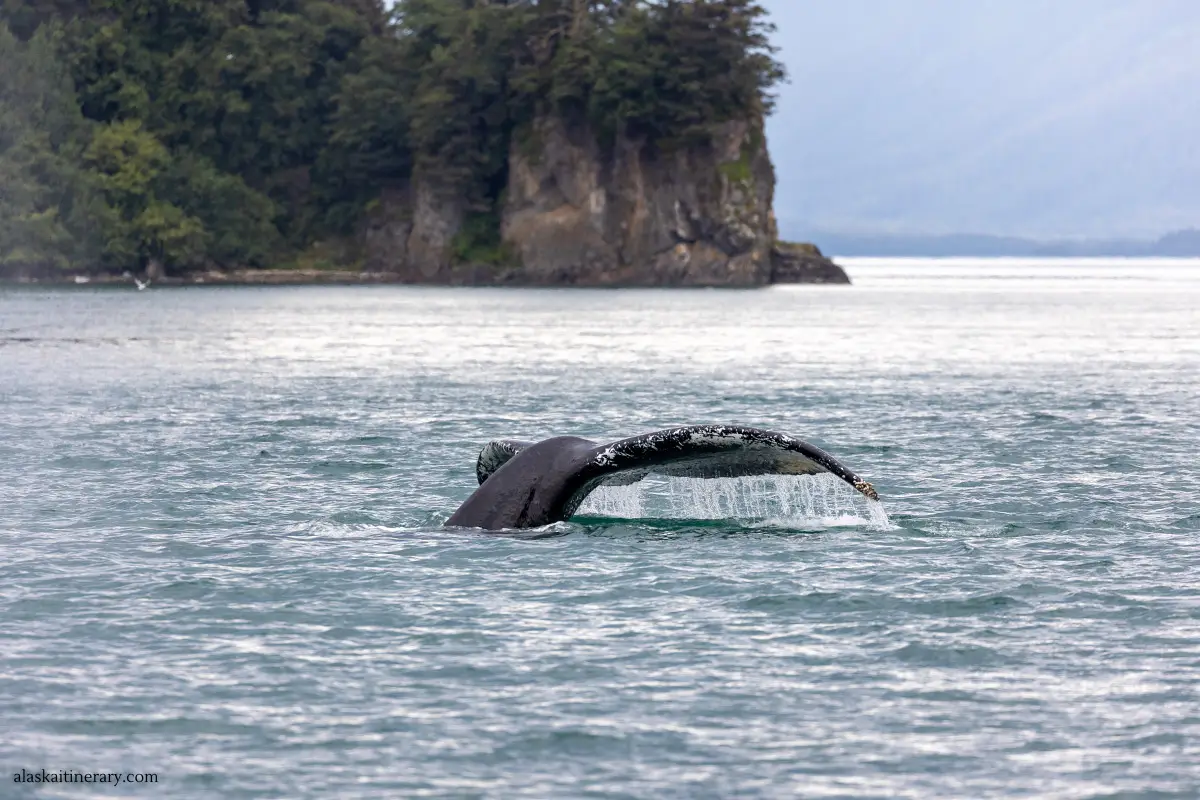
Onboard Whale-Watching Tips for Your Alaska Cruise
Whale watching from your cruise ship is an amazing experience. You don’t always need a tour—sometimes, the best sightings happen right from the deck! Here’s how to spot whales while onboard during day at sea, and make the most of your Alaska cruise.
1. Know the Best Spots on the Ship
Not all areas offer great views. To increase your chances of spotting whales:
- Go to the open decks. The aft (back of the ship) and upper decks usually provide the best views.
- Lower decks can be a great option because you’ll be closer to the water, giving you a better view of whales at a shorter distance. Upper decks provide a wider view, but keep in mind that the height of the ship (even smaller ones) creates more distance between you and the whales.
- Avoid crowded areas. If possible, find a quieter spot for better visibility.
- Choose the starboard or port side based on the route. Your ship’s crew often announces whale sightings—listen for updates!
2. Bring Binoculars for a Closer Look
Whales don’t always come right up to the ship. A good pair of binoculars helps you spot spouts, fins, and breaches from a distance.
3. Watch for Whale Signs
Whales often give clues before they surface:
- Look for spouts. A spray of mist in the air means a whale is nearby.
- Watch for splashes. Humpbacks sometimes breach (jump out of the water), while orcas make fast, sleek movements.
- Check for seabirds. Large groups of birds feeding on fish can mean whales are hunting below.
4. Be Patient and Keep Watching
Whale watching takes patience. They don’t appear on command, so stay alert and keep scanning the water. Some of the best sightings happen when you least expect them!
5. Mornings and Evenings Can Be the Best Times
- Early morning is often calmer, making it easier to spot spouts.
- Late afternoon to early evening can also be good, especially for humpbacks.
6. Dress Warm and Be Ready to Spend Time Outside
Alaska’s weather can be cold and windy, even in summer. If you’re spending time on deck, wear layers, a hat, and gloves to stay comfortable while watching. Check out my Alaska cruise packing list to be prepared!
7. Listen to Crew Announcements
Cruise ships often have naturalists or onboard guides who announce whale sightings. Keep your ears open and be ready to rush to a viewing area when whales are spotted!
8. Have Your Camera Ready—but Enjoy the Moment
If you want geat photos, use a fast shutter speed to capture movement. But don’t spend the whole time looking through a screen—watching a whale in real life is an unforgettable experience!
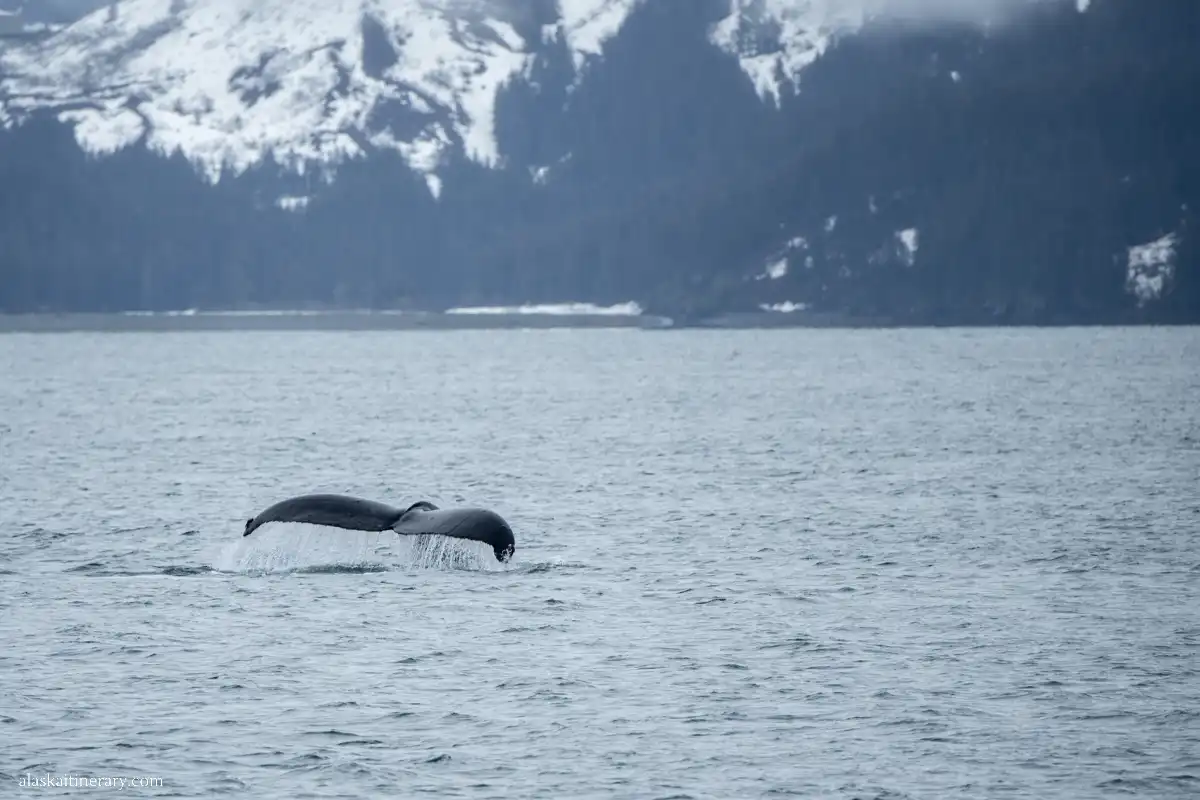
Shore Excursions: Whale-Watching Tips for Your Alaska Cruise
Booking a whale-watching tour in Juneau, Icy Strait Point, or Seward, can give you a much closer and more intimate whale-watching experience than from the cruise ship.
You can book your shore excursions through your cruise line or independently. We usually book our tours via Viator because the prices are often more affordable than those offered by the cruise lines. Even when we have onboard credits, the cruise line prices still tend to be higher in my experience. But that’s just my opinion and personal experience—yours might be different. If budget matters, it’s always a good idea to compare prices before booking!

To make the most of your tour, follow these tips:
1. Choose the Right Tour for the Best Experience
Not all whale-watching excursions are the same. Consider:
- Small boat vs. large boat: Smaller boats offer a more personal experience and can get closer to whales, while larger boats may have better stability and amenities.
- Tour duration: Most tours last 2–3 hours, but some half-day excursions explore more remote areas for better sightings.
- Photography vs. adventure focus: Some tours cater to wildlife photographers, while others offer kayaking or eco-friendly options.
Agnes’ Advice: If whale watching is your priority, book a dedicated whale-watching tour, not a general wildlife cruise.
2. Book Early—The Best Tours Sell Out Fast
Alaska whale-watching tours are in high demand, especially in June, July, and August. If you wait until the last minute, you may be left with fewer options. Book your excursion as soon as you finalize your cruise itinerary!
3. Be Ready for Any Weather
Alaska’s weather can be unpredictable, even in summer. To stay comfortable:
- Dress in layers (waterproof jacket, warm fleece, and gloves).
- Wear a hat and sunglasses—glare from the water can be strong.
- Bring a waterproof bag or backpack to protect your camera and phone.
Agnes’ Advice: Don’t let rainy weather stop you. Whales don’t mind the rain, and tours still operate! Make sure to pack lightweight waterproof poncho.
4. Sit or Stand at the Right Spot on the Boat
- If you’re on a smaller boat, ask the captain where the best views will be.
- On a larger boat, try to get a spot at the bow (front) or stern (back) for a clear, unobstructed view.
- Avoid the middle of the boat, where you might have less visibility.
5. Bring Binoculars for the Best Sightings
Even though the boats get closer to the whales, binoculars help you spot them earlier and see details like their eyes, barnacles, or tail markings.
6. Know What to Look For
Before a whale appears, you might see signs:
- Spouts (blows): A misty spray of water in the air signals a whale coming up for air.
- Tail flukes: Humpbacks often lift their tails before diving deep.
- Dorsal fins: Orcas and some humpbacks show their fins as they swim.
- Bird activity: Seabirds diving into the water can mean whales are feeding below.
7. Be Patient—Whales Don’t Follow a Schedule
Wildlife sightings are unpredictable. Some days, you’ll see dozens of whales. Other times, you might have to wait longer for a sighting. Stay focused, patient, and ready to move when the guide points something out.
8. Use a Fast Camera Shutter Speed for Photos
Whales move fast! If you’re taking pictures:
- Use a fast shutter speed (1/1000s or faster) to capture movement.
- Set your camera to continuous shooting mode to snap multiple shots at once.
- Avoid using flash—it won’t help, and it can disturb wildlife.
Agnes’ Advice: Sometimes, it’s better to just watch instead of worrying about getting the perfect shot!
9. Stay Respectful and Follow Wildlife Guidelines
Alaska enforces strict whale-watching regulations to protect marine life. Tour boats must keep a safe distance, and guides won’t chase or harass whales. If a whale approaches the boat, enjoy the moment—but never try to touch or disturb them. Always follow your captain rules.
10. If You’re on a Budget, Look for Free Whale-Watching Spots
If you don’t want to book a tour, some cruise ports offer whale-watching from shore. Icy Strait Point is one of the best free whale-watching locations—I’ve been lucky to see whales right from the beach every time I’ve visited!

Final Thoughts: The Magic of Whale Watching on an Alaska Cruise
Whale watching is one of the most unforgettable experiences on an Alaska cruise. Whether you see a humpback breaching, a pod of orcas hunting, or a massive tail fluke disappearing beneath the waves, the thrill of spotting these giants never gets old.
The key to the best experience? Timing, location, and patience. The peak months for whale watching are June, July, and August, with Juneau, Icy Strait Point, and Seward offering the best shore excursions. But don’t forget—whales can surprise you anytime! Keep your eyes on the water while onboard, and listen for crew announcements about sightings.
If whale watching is your top priority, choose an Inside Passage or Gulf of Alaska cruise, and consider booking a dedicated whale-watching tour in one of Alaska’s top ports. And if you’re on a budget, Icy Strait Point offers a rare chance to see whales right from the shore—for free!
No matter where or how you see them, witnessing whales in the wild is a once-in-a-lifetime moment. So bundle up, bring your binoculars, and get ready—because your Alaska cruise whale-watching adventure is about to begin!
Do You Like It? Pin It For Later!