
Ketchikan Totem Poles: Best Places to See Alaska’s Native Carvings

Ketchikan is more than just a cruise port—it’s the totem capital of the world. With over 80 poles across the city, Ketchikan holds the largest collection of authentic totem poles anywhere on Earth. These towering carvings are more than beautiful art—they tell stories of Alaska’s Native peoples, their clans, their history, and their identity. In this article, we guide you through the best places to see totem poles in Ketchikan. You’ll learn where to find them, what they mean, and how to visit the city’s top totem parks—whether you’re on a cruise excursion or exploring on your own. We include detailed visitor info, pricing, transportation tips, and insight from our own visits.
This article may contain affiliate / compensated links. For full information, please see our disclaimer here.
Ketchikan – The Totem Capital of the World
Ketchikan proudly holds the title of the Totem Capital of the World. With more than 80 totem poles across the city and surrounding areas, it’s home to the largest collection of standing totem poles in the world.
Totem poles are more than beautiful carvings. They tell stories passed down through generations. Created by the Tlingit, Haida, and Tsimshian peoples, each pole shares clan legends, honors ancestors, marks important events, or even calls out injustices.
Some totem poles are welcoming. Others are memorials. Some are even meant to shame. Every pole has meaning.
The Craft of Carving
Totem poles in Ketchikan are carved from western red cedar, a wood native to Southeast Alaska. It’s soft, straight-grained, and ideal for detailed hand carving. Once raised, a pole weathers naturally. It’s never repainted or repaired unless a new version is commissioned.
Ketchikan’s rainy climate—140 to 160 inches of rain annually—helps protect and preserve the cedar wood longer than in drier places.


A Living Tradition
Totem carving is not a lost art. It’s still very much alive. Modern Alaska Native artists continue the tradition, creating new poles for communities, ceremonies, and education. Some poles in Ketchikan date back to the 1800s, while others are less than a decade old.
You can even visit working carving sheds in town, where artists work in public view and explain their process.
Totems All Around the City
What makes Ketchikan unique is how accessible these poles are. They’re not just in museums. You’ll find them:
- In downtown plazas and walking areas
- Inside Totem Heritage Center and Saxman Totem Park
- Set among trees at Totem Bight State Park
- Near cruise docks, trails, and even along quiet roads
Wherever you walk in Ketchikan, chances are you’ll pass a piece of cultural history standing tall and silent.


How to Explore Totem Poles in Ketchikan
If you’re looking for one of the best free or budget-friendly things to do in Ketchikan, admiring totem poles should be at the top of your list. They’re beautiful, deeply meaningful, and an important part of Alaska’s Native history.
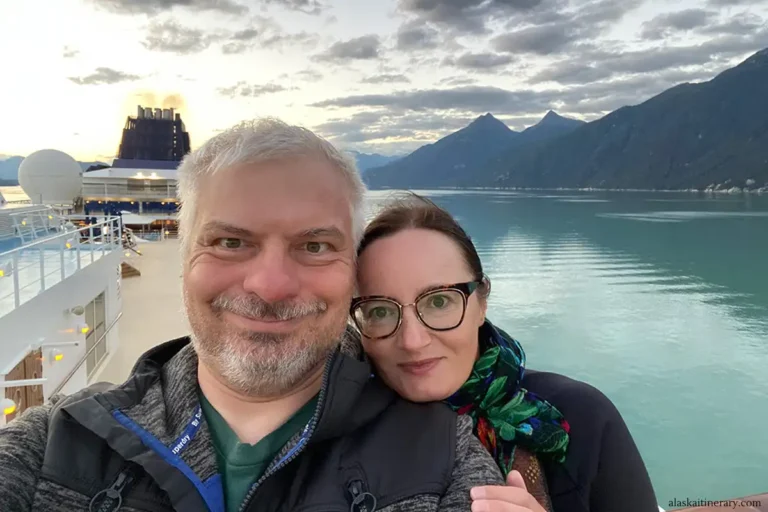
During every Alaska cruise we’ve taken, Chris and I make time to visit the totem poles—whether we have just a few hours in port or a full day. These poles never lose their magic. And good news: you can explore many of them without spending much—or even for free. If you want to explore Ketchikan on your own – this article is for you.
See Totem Poles on Your Own
If you’re a budget-conscious traveler, Ketchikan is a great place to explore totem poles independently. Several are located right downtown Ketchikan, and others are easy to reach by public bus for just a couple of dollars.
We’ll show you exactly how to visit each location below, with clear directions, entry fees (if any), and insider tips based on our own visits. Whether you’re walking, taking the bus, or catching a shuttle, you don’t need to spend a lot to experience something truly special.


Or Join a Guided Shore Excursion
If you’re on your first Alaska cruise, and only have one day in Ketchikan, we recommend joining a guided tour. Local guides do a great job bringing the stories behind each totem to life. They share cultural insights and history you might miss when going on your own.
We’ve taken both approaches—on our own and during Ketchikan shore excursions—and both are worthwhile. But we admit: hearing the meaning behind the carvings adds so much more to the experience. You walk away not just with photos, but understanding.
Our Booking Tip
We always book shore excursions independently, not through the cruise line. Platforms like Viator or GetYourGuide offer the same tours at much lower prices. And we’re not talking about a $10 difference—some tours are $50–$100 cheaper per person when booked via those platforms.
That said, choose what makes you feel most comfortable. Whether you go with a guided tour or explore on your own, the totem poles of Ketchikan are a must-see.


Top Places to See Totem Poles in Ketchikan
Ketchikan is filled with totem poles—you’ll spot them in parks, near trails, outside public buildings, and even next to parking lots. But if you want to see the most impressive and meaningful collections, there are four key places to visit. Some are downtown and easy to walk to, while others require a short ride or guided tour.
We’ve explored each of these locations ourselves—by foot, public bus, and shore excursion. Here’s how to visit them, what to expect, and which ones we recommend most.
Agnes’ Advice: If you’re interested in totem poles, another great place to explore them is Sitka National Historical Park.


Totem Heritage Center
- Location: 601 Deermount Street
- Entry Fee: $7 per person (under 17 free)
- Time Needed: 30–60 minutes
- Distance from Cruise Dock: About a 10-minute walk from Creek Street
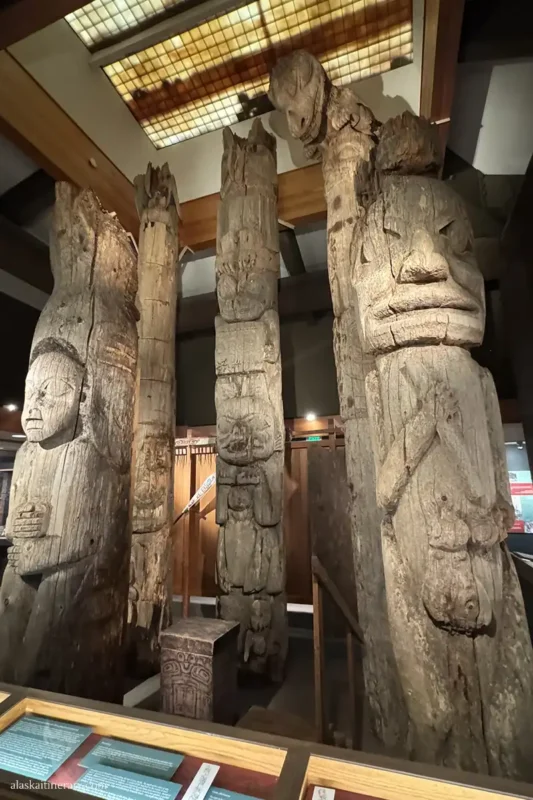
The Totem Heritage Center is a great first stop—especially if you’re staying downtown or visiting Ketchikan on a cruise. It houses original 19th-century totem poles recovered from abandoned Native villages. These aren’t replicas—they’re the real thing, preserved indoors.
The museum also features Alaska Native art, historic photographs, and educational exhibits about the Tlingit, Haida, and Tsimshian peoples. Outside, there are several carved totems standing in a small grove.
This site is easy to visit on your own. No shuttle or bus is needed. Just walk from Creek Street or downtown. The trail is flat and paved most of the way.
We recommend visiting the Totem Heritage Center first if you want historical context before seeing the outdoor parks.

Saxman Totem Park – Our Favorite Totem Spot
- Location: South Tongass Highway, about 2.5 miles south of downtown
- Entry Fee: Free to walk the park. Small fee applies for guided tours or cultural center visits
- Time Needed: 1 to 1.5 hours
- Getting There:
Public Bus: Take the Green Line southbound. It costs $2 per person, one way. Bring exact cash. By Tour: Many guided shore excursions include Saxman Totem Park with hotel or cruise pickup.
Recommended Tour: Saxman Native Village & Lumberjack and Private City Totems & Wildlife Van Tour
Saxman Totem Park is home to 25 impressive totem poles, all standing tall in an open clearing with a view of the forested hills behind. Many of these poles were replicated by master carvers as part of a preservation project, and each tells a story tied to clan history and local culture.
At the heart of the park is a traditional clan house, built in the authentic style of the Tlingit people. If you’re lucky, you might see a carving demonstration or cultural performance in the adjacent Saxman Community Center.


This is our favorite totem pole spot in Ketchikan. It’s quiet, beautiful, and less crowded than downtown. The carvings are bold, well-maintained, and visually stunning. Even if you don’t book a guided tour, walking the grounds is well worth it.
But if it’s your first visit, we recommend a tour. Local guides add valuable stories and help explain the meaning behind each pole. Some excursions also include time to see carvers at work, which is a highlight.
Totem Bight State Historical Park
- Location: 9883 North Tongass Highway (Milepost 10)
- Entry Fee: $5 per person (ages 18 and under are free)
- Time Needed: 1.5 to 2 hours
- Getting There:
Public Bus: Take the Green Line northbound from “Front & Dock St, Berth 2.” Get off at “D-1 Loop Road at Totem Bight.” Cross the road to enter the park.
Return Stop: Located inside the park’s main parking lot.
By Tour: Many shore excursions visit this park, often paired with a rainforest walk or cultural site.
Recommended Tour: Alaska Rainforest Walk and Totem Park Small Group Tour and Private City Totems & Wildlife Van Tour
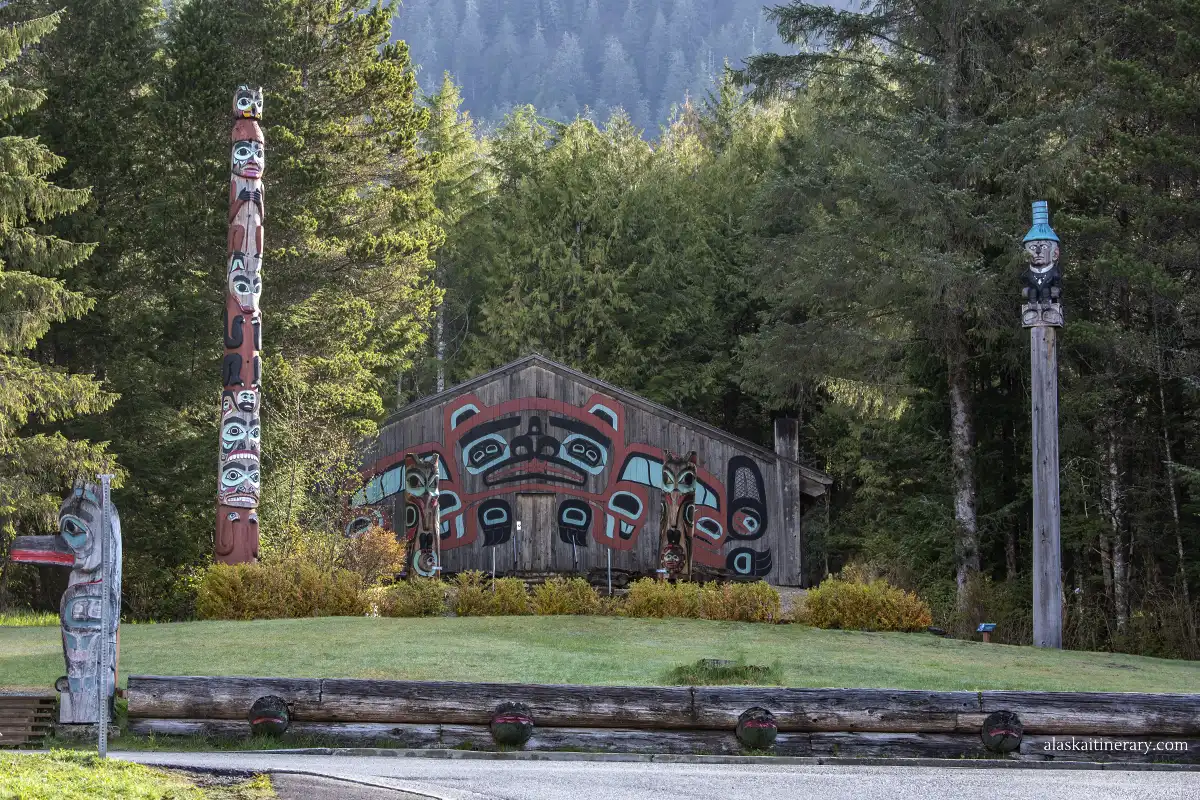
Totem Bight State Historical Park sits on a quiet stretch of forest along the coast, about 10 miles north of downtown Ketchikan—near the Ward Cove cruise dock. It’s home to 14 large totem poles and a replica clan house set in a clearing with beautiful ocean views.
The setting here feels remote and peaceful. You walk through a short forested trail to reach the main clearing, where the poles are arranged in a semicircle around the clan house. You’ll also find a carved Raven and Eagle pole, several memorial poles, and historical signage.
The park was created in the 1930s and 40s through a U.S. Forest Service program that helped revive traditional carving techniques. Many of the poles were reproduced from older ones that had decayed in abandoned Native villages.
If you’re arriving at Ward Cove, this is the closest major totem site—but it still requires planning. If you’re going by public bus, check your ship schedule carefully and allow enough time. The ride takes about 30 minutes one way.
We took a guided tour that included both Totem Bight and an Alaska rainforest walk, and we highly recommend it. The guides shared great context about each pole, the history of the park, and stories passed down by local clans.


Downtown Ketchikan Totem Poles
- Location: Throughout downtown Ketchikan
- Entry Fee: Free
- Time Needed: Flexible – 30 minutes to 1 hour
- Best For: Cruise passengers with limited time or travelers exploring on foot
Downtown Ketchikan is one of the easiest places to admire totem poles—no transportation or tour required. Several historic and modern poles are placed throughout the area, often near popular landmarks. You’ll pass many of them naturally while exploring Creek Street, the waterfront, and the cruise docks.
These downtown poles are ideal for a self-guided totem walk. Most are marked with plaques or signs explaining their story and meaning. For a deeper experience, pair your walk with a stop at the Totem Heritage Center
Here are the most notable downtown totem poles and where to find them:
Chief Johnson Totem Pole
Location: Creek Street boardwalk, near Married Man’s Trail
This restored replica honors Chief Johnson of the Gaanaxteidí clan. The pole includes a Raven, Fog Woman, and other key Tlingit figures. It’s one of the tallest and most recognizable totem poles in town.
Chief Kyan Totem Pole
Location: Whale Park, corner of Mission and Front Streets
This bold, colorful pole features Raven, Thunderbird, and the mythical Killer Whale. It honors Chief Kyan of the Tlingit Tongass people. Originally carved in the early 1900s, the version you see now is a 1960 replica, raised in its original location.

Raven Stealing the Sun Totem Pole
Location: Ketchikan Visitors Bureau, 131 Front Street
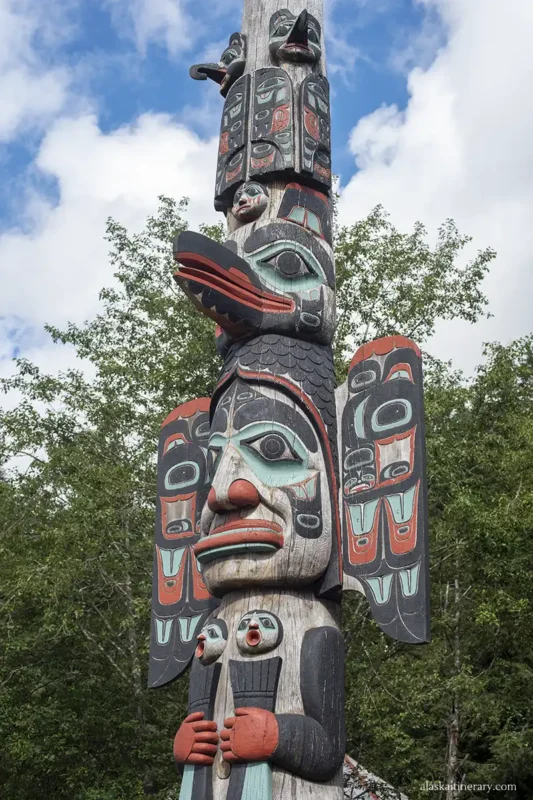
This modern pole tells the Tlingit legend of Raven bringing light to the world. Its central image—Raven holding the sun—is symbolic and one of the most recognized figures in Southeast Alaska Native art.
Sun Raven Totem Pole
Location: Near Thomas Basin, close to the Cape Fox Hill Trail
This totem pole shares a similar story with the Raven Stealing the Sun pole, but features a unique carving style. The Raven is depicted clutching the sun, bringing light back to the people. It’s another tribute to Tlingit storytelling through art.
Totem Pole at the Cape Fox Lodge Boardwalk
Location: Cape Fox Hill Trail or funicular above Creek Street
At the top of the boardwalk or funicular ride, you’ll find several small poles and a peaceful setting overlooking downtown. The site is quieter and great for taking photos or learning about newer poles commissioned by the lodge.
Personal Totem Poles on Stedman Street
Location: Stedman Street, near Creek Street
Take a walk down this residential area and you’ll notice several personal or family totem poles placed in front yards. These are real poles representing family history, values, and clan stories. Please admire respectfully, as these are on private property.


Ketchikan Indian Community (KIC) Totem Poles
Location: 2960 Tongass Avenue (or visible from the KIC building downtown)
Two tall, modern totem poles stand in front of the KIC building, representing tribal pride and unity. They are visible from the main road and add to Ketchikan’s ever-growing collection of Native art in public spaces.
Thundering Wings at Eagle Park
Location: Eagle Park, near the cruise ship tunnel on Front Street
This powerful eagle sculpture, titled Thundering Wings, was carved by Tlingit artist Nathan Jackson. It honors the Tlingit roots of Ketchikan’s name and stands as a modern symbol of cultural pride. It’s a quick and worthwhile stop while exploring downtown.
The Rock (Totem Tribute Monument)
Location: Berth 2, near the tunnel and Berth 1 parking area
This bronze monument isn’t a traditional pole, but features a carver holding a small totem and six other life-sized figures. It honors the Native, pioneer, and immigrant communities that shaped Ketchikan.
Southeast Alaska Discovery Center Totem Poles
Location: 50 Main Street, one block from cruise docks
Entry Fee: $5 for adults, free for kids under 15
Inside the Southeast Alaska Discovery Center, you’ll find three totem poles representing the Tlingit, Haida, and Tsimshian cultures. They’re a great indoor option, especially on a rainy day, and provide valuable cultural context alongside well-designed exhibits.


Who Carved the Totem Poles in Ketchikan?
Many of the totem poles standing in Ketchikan today—especially those placed in the 20th century or later—can be traced back to specific Alaska Native artists and master carvers. While some older poles, especially those from the 1800s, were created by artists whose names are no longer known, many modern replicas and original works are proudly signed and documented.
Below is a list of some of the most recognized poles in Ketchikan and the carvers behind them.
Chief Johnson Totem Pole
- Original Carver: Unknown (circa 1901)
- Replica (1980s): Carved by Israel Shotridge, a Tlingit artist from the Raven Clan. Shotridge is known for many restoration and replica projects throughout Southeast Alaska.
Chief Kyan Totem Pole
- Original Carver: Possibly Charlie Dick, a Tlingit carver
- Replica (1964): Created as part of the Civilian Conservation Corps (CCC) totem restoration project, involving master carvers from Saxman Village.
Raven Stealing the Sun Totem Pole
- Carver: Nathan Jackson, one of Alaska’s most well-known living Tlingit artists.
- He has carved numerous poles in Ketchikan and across the U.S., and his work is featured in major museums and public spaces.
Sun Raven Totem Pole
- Likely Carver: Also attributed to Nathan Jackson, though some versions were collaborative efforts with his son, Steven Jackson.
Cape Fox Lodge Poles
- Carved by Nathan Jackson and other artists from the Sealaska Heritage Institute art programs.
Saxman Totem Park (Replicas and Originals)
- Many of the poles were replicated by Tlingit master carvers in the 1930s–1940s during the CCC project.
- Names include Charlie Dick, Stephen Jackson Sr., and John Wallace—all respected Alaska Native carvers from the region.
Totem Heritage Center Poles (Originals)
- These poles were carved by unknown artists from the 1800s. They were collected from now-abandoned Tlingit and Haida villages such as Old Tongass and Howkan. As they are historical artifacts, they are preserved, not restored.
Totem Bight State Park
- Most poles here are replicas carved under the CCC restoration program, led by Native carvers from Saxman. Not all are individually credited, but Charles Brown, Nathan Jackson, and Leo Jacobs contributed to the park’s restoration and carving work in later years.

Planning Your Visit – Tips and Recommendations
Exploring the totem poles of Ketchikan can be as simple or in-depth as you want it to be. Whether you’re in town for just a few hours on a cruise stop or spending a full day, here are our best tips to help you plan a smooth and rewarding visit.
Visit Downtown Totems First if You Have Limited Time
If your time in Ketchikan is short—like a typical cruise port stop—start with the poles downtown. They’re free to visit and require no transportation. Most are within walking distance of the cruise docks and close to other attractions like Creek Street and Whale Park.
Combine Totem Sites to Maximize Your Time
If you have 4 to 6 hours, you can easily combine a visit to the Totem Heritage Center with Saxman Totem Park. You can walk to the Heritage Center and then take the city bus to Saxman, or join a shore excursion that includes both. If you’re docked at Ward Cove, Totem Bight State Park is closer and might be the better option logistically.
Ride the Public Bus – It’s Cheap and Simple
Ketchikan has a reliable city bus system. The Green Line runs north to Totem Bight State Park and south to Saxman Totem Park.
- Cost: $2 per person, one way (cash only, exact change)
- Departure Point: “Front & Dock Street” near Berth 2
- Tip: Ask the driver to announce your stop. Most are familiar with tourists visiting totem parks.
Consider a Shore Excursion if It’s Your First Time
If this is your first visit to Alaska, we highly recommend booking a guided tour. Local guides share the cultural background and meanings behind each pole—something you won’t get just by walking through. We’ve taken both guided and self-guided visits, and each has value, but the stories really add depth.
Book Independently and Save
We always book tours through Viator or GetYourGuide, not through the cruise line. The exact same tours are usually $50 to $150 cheaper per person when booked directly.
Make sure your tour includes port pickup and drop-off, and check cancellation policies.
Accessibility Notes
- Downtown totems are all accessible on foot with minimal elevation gain.
- Totem Heritage Center is walkable and fully accessible.
- Saxman Totem Park has paved walkways and restrooms.
- Totem Bight has a flat gravel path but no shuttle unless booked with a tour.


Ketchikan Totem Poles – Final Thoughts
Totem poles in Ketchikan aren’t just beautiful—they’re living pieces of culture, history, and identity. Whether you’re visiting on a cruise stop or spending a few days in town, seeing these poles up close is one of the most meaningful things you can do in Southeast Alaska.
We’ve explored these sites many times and still learn something new with each visit. You can admire many of the poles for free, and even more with just a few dollars or a well-planned tour. Whether you go on your own or join a local guide, you’ll walk away with a deeper appreciation of Alaska Native culture.
For me and Chris, the best places to see totem poles in Ketchikan are Saxman Totem Park, the Totem Heritage Center, and the totem poles scattered throughout downtown. Each location offers something unique.
If it’s your first time in Ketchikan, make this part of your day. These stories are worth hearing. These places are worth visiting.
Do You Like It? Pin It For Later!




What an amazing introduction to Ketchikan! I know that the poles have a far deeper meaning, however, as an art aficionado, I couldn’t get enough of these masterpieces! Obviously, it’s probably best to visit on a guided tour to really understand and cherish the history and the meaning behind all those mysterious symbols. So yes, yet another reason to pay Alaska an extended visit 🙂
My grandfather is Charles Brown and he oversaw the Saxman Totem Pole park. The long house and many of the poles were his designs.
That’s absolutely incredible—what an amazing legacy your grandfather left! Saxman Totem Park is such a powerful and beautiful place, and knowing that Charles Brown played such a big role in its creation makes it even more meaningful. Thank you so much for sharing that—your family’s connection to Ketchikan’s totem heritage is truly special.
Great post! Thanks. Do you know of any books explaining the symbology of the totem poles?