
Driving to the Arctic Circle from Fairbanks (DIY Guide)

Driving to the Arctic Circle from Fairbanks is possible, but it is not a casual road trip. Reaching this iconic latitude requires careful planning, a suitable vehicle, and a realistic understanding of what the drive involves. The Arctic Circle sign sits along the Dalton Highway, one of Alaska’s most remote and demanding roads. This route was built for industrial truck traffic, not sightseeing. Gravel surfaces, fast-moving semis, changing weather, and long distances without services are all part of the experience. In this guide, we focus only on how to get to the Arctic Circle from Fairbanks on your own. We explain where the Arctic Circle is located, how long the drive really takes, rental car restrictions, and when driving yourself makes sense.
This article may contain affiliate / compensated links. For full information, please see our disclaimer here.
Our Experience Driving to the Arctic Circle
Chris and I have driven the Dalton Highway few times as part of longer Alaska road trips. For this article, however, we focus only on self-driving to the Arctic Circle sign, not the entire Dalton Highway.
Reaching the Arctic Circle from Fairbanks is a challenging journey, but it can be done on your own as a very long day trip or as a two-day trip with an overnight stop. This guide is written for travelers who are specifically considering driving to the Arctic Circle independently, without joining a guided tour.
If your goal is to continue farther north to Coldfoot, Prudhoe Bay and the Arctic Ocean, the planning becomes much more complex. In that case, we strongly recommend reading our related guides:
- Dalton Highway Guide,
- Dalton Highway Safety Tips, and
- Dalton Highway Camping and Lodging articles, where we cover the full route in detail.
Because the Dalton Highway is demanding and rental vehicles approved for this road are limited and expensive, many travelers decide that a guided tour makes more sense for them.
If you prefer a stress-free option, we cover that alternative in our detailed guide to the best Arctic Circle tours from Fairbanks.
This article is designed to help you decide if driving yourself to the Arctic Circle fits your experience level, time frame, and travel style.

How Far Is the Arctic Circle from Fairbanks?
The Arctic Circle sign along the Dalton Highway sits about 194 miles north of Fairbanks. At first glance, that distance does not seem extreme.
However, this is not a normal highway drive. The Dalton Highway is mostly gravel. Speeds change often. Truck traffic slows you down. In ideal conditions, the drive takes about five hours one way. In reality, most travelers need more time. Road conditions, weather, and stops add up quickly.
For most drivers, this trip becomes a 12 to 14-hour day when done in one day. Short stops for fuel, food, and photos are necessary. Google Maps often underestimates the time needed. Do not rely on it for this route.
Because of the long distance and road conditions, some travelers split the trip into two days. This approach reduces fatigue and allows for a safer, less rushed drive.
Knowing the true distance and time commitment is essential before deciding to drive to the Arctic Circle on your own.
Agnes’ Advice: If you’re basing yourself in the city before or after your Arctic drive, explore my complete Fairbanks travel guide for where to stay, what to see, and how to plan your time in Interior Alaska.

What Makes the Arctic Circle Special
The Arctic Circle is an imaginary line located at approximately 66°33′ north latitude. It marks the southernmost point where, at least once each year, the sun does not set in summer and does not rise in winter. Crossing this line means entering the true Arctic.
Reaching the Arctic Circle from Fairbanks feels meaningful because it requires real effort. This is not a place you stumble upon. The farther north you drive, the quieter the landscape becomes. Vegetation changes. Signs of human presence fade quickly.
For many travelers, this is their first real taste of Alaska’s Arctic wilderness. The scale feels different. Distances feel longer. Silence becomes part of the experience.
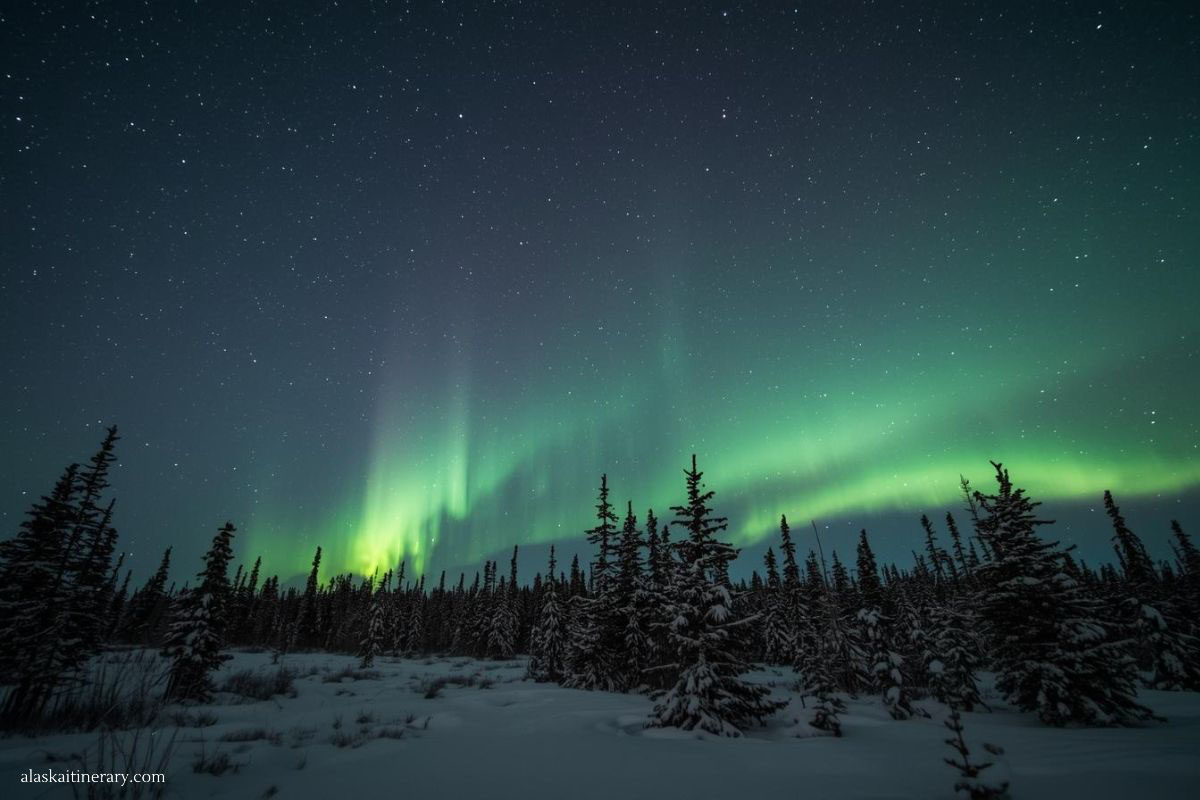
The Arctic Circle also sits within one of the best regions in the world for Aurora Borealis viewing. From late August through early spring, darkness returns to the sky. During active solar periods, the aurora can light up the horizon in green, purple, and red tones. While sightings are never guaranteed, being this far north improves your chances.
Even without seeing the Northern Lights, the Arctic Circle is worth the drive. Endless daylight in summer, open tundra, and the feeling of standing at a geographic milestone make it a powerful experience. Reaching it on your own highlights just how remote and wild this part of Alaska truly is.
Where the Arctic Circle Is Located
The Arctic Circle you can reach from Fairbanks is located along the Dalton Highway in northern Alaska. The official Arctic Circle sign sits at approximately milepost 115 on this route.
For most travelers, reaching this sign marks the end point of the drive. It is the easiest and most practical way to cross the Arctic Circle in Alaska without committing to the full Dalton Highway all the way to Prudhoe Bay.
The Arctic Circle monument includes a large sign, informational panels, and space to park safely off the road. Many travelers stop here for photos, a short break, and the satisfaction of standing above the Arctic Circle before turning back toward Fairbanks.
It’s important to understand that this location is very remote. There are no services, restrooms, or food options at the Arctic Circle sign itself. Once you leave Fairbanks, services become extremely limited, which is why planning and timing are essential for this drive.

The Dalton Highway: What You’re Really Driving
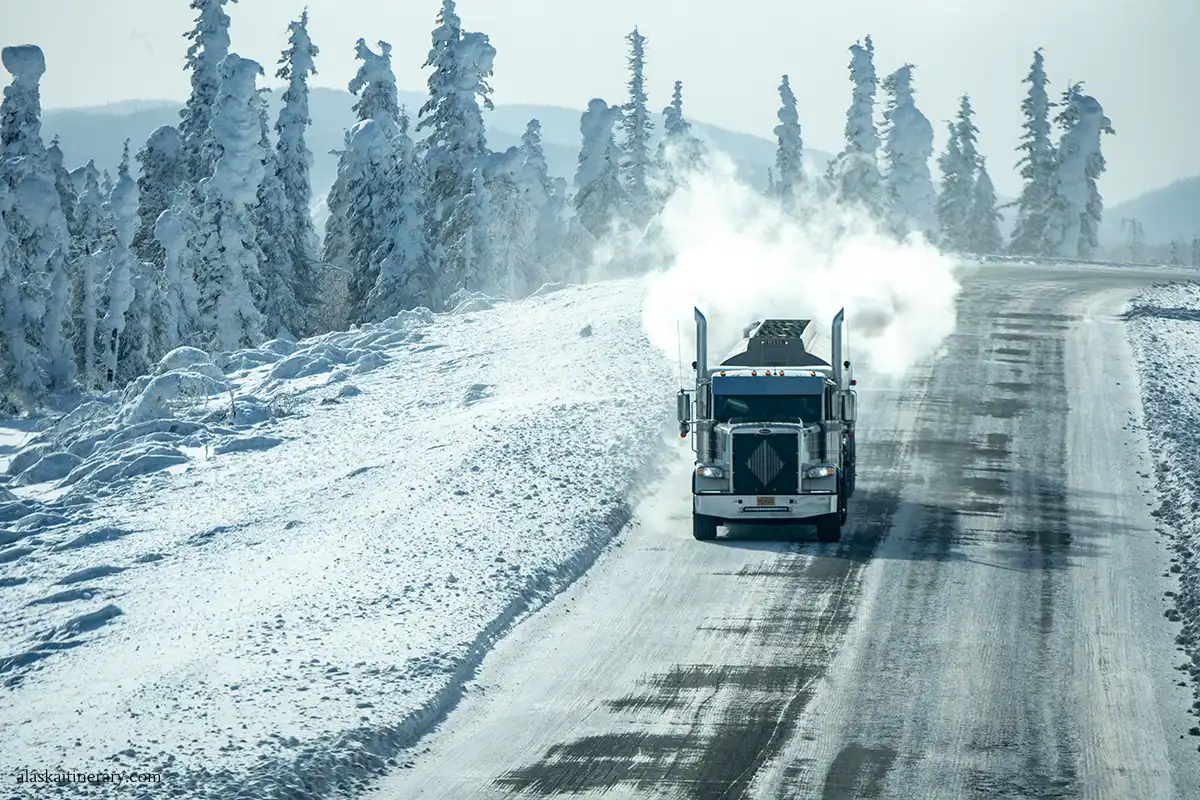
The Dalton Highway is not a typical scenic road. It exists to support the Trans-Alaska Pipeline. Heavy trucks use it every day.
Most of the road is gravel. Pavement appears only in short sections. Dust, loose rocks, and potholes are common. Truck traffic is constant. Large rigs move fast and throw rocks. Windshields often crack on this road.
Road conditions change quickly. Rain turns dust into mud. Dry weather reduces visibility. There are no shoulders in many areas. Pullouts are limited. You must stay alert at all times. Cell service is extremely limited. In many areas, it disappears completely. You cannot rely on a phone signal.
This road demands focus and patience. It is not dangerous by default. However, it is unforgiving if you drive carelessly. Understanding what the Dalton Highway is really like helps you decide if driving to the Arctic Circle on your own is the right choice.

Rental Cars and Driving Restrictions
Rental car rules are one of the biggest challenges when driving to the Arctic Circle from Fairbanks. Most national rental companies do not allow driving on remote and restricted routes such as the Dalton Highway, Denali Highway, or McCarthy Road.
The Arctic Circle sign sits along this route. Driving there violates many standard rental agreements.
Only a small number of local rental companies allow Dalton Highway travel. These typically include:
- Alaska Auto Rental is a solid local option and our pick. We rented from them for this drive. Check out their official website.
- GoNorth Alaska
- Alaska 4×4 Rentals
These companies specialize in Alaska travel and offer vehicles approved for remote gravel roads. Their fleets usually include high-clearance SUVs or trucks.
However, these rentals are significantly more expensive than standard cars. Daily rates are higher, and insurance coverage is often limited. Windshield damage, tires, and undercarriage issues may not be fully covered.
Rules can change. Before booking, always confirm:
- Dalton Highway driving is allowed
- Your specific vehicle is approved
- What damage is and is not covered
Failing to check these details can result in denied claims or costly repairs.

Can You Drive to the Arctic Circle in One Day?
Yes, you can drive to the Arctic Circle from Fairbanks in one day. This is especially doable during the summer months.
From June through mid-August, the midnight sun makes a big difference. You have daylight around the clock. Visibility stays excellent, even on the drive back late at night.
Still, this is a long day. The round trip usually takes 12 to 14 hours, including short stops. Fatigue is a real concern.
Because of the distance, some travelers prefer to turn this into a two-day trip. An overnight stop reduces stress and allows more flexibility.
Two common overnight options include:
- Arctic Circle Campground, located right next to the Arctic Circle sign
- Five Mile Campground, located at milepost 60 of the Dalton Highway
Both options allow you to break up the drive and enjoy the experience at a slower pace.
Driving to the Arctic Circle in one day is possible. Summer conditions make it easier. However, you should still be honest about your energy level and driving experience before committing.

Safety and Preparation Basics
Driving to the Arctic Circle from Fairbanks requires preparation. This is not a route where you can rely on last-minute decisions. Start with fuel planning. You should leave Fairbanks with a full tank. Once you turn onto the Dalton Highway, services become extremely limited.
The only fuel stop before the Arctic Circle is at the Yukon River Crossing, located at milepost 56. This is a critical stop. It usually operates from mid-May through mid-September, but hours can vary. Do not assume it will be open late in the day.
There is no fuel, food, or services at the Arctic Circle sign. Plan your turnaround with enough fuel to return safely to the Yukon River Crossing or all the way back to Fairbanks.
Coldfoot is located much farther north, around milepost 175, and is well beyond the Arctic Circle. It is not relevant for a standard Arctic Circle drive unless you plan to continue north.
Next, prepare for changing road and weather conditions. The Dalton Highway is mostly gravel. Rain can turn dust into mud. Dry conditions reduce visibility due to dust and truck traffic.
Check your spare tire before leaving Fairbanks. Flat tires and rock damage are common on this road. Make sure you know how to change a tire if needed.
Bring enough food and water for the day. Delays happen. There are no services once you leave the Yukon River area. Cell service is unreliable. In many areas, it disappears completely. Do not depend on your phone for navigation or emergencies.
Finally, check current road conditions before you go. Good preparation does not remove all challenges. It does reduce risk and makes the drive to the Arctic Circle far more manageable.

When Driving Yourself Makes Sense — And Who Should Skip This Drive
Driving to the Arctic Circle from Fairbanks makes sense for a specific type of traveler. This option works best if you are comfortable with long days on remote roads.
Driving yourself is a good fit if you:
- Have experience driving on gravel or rough roads
- Rent a vehicle approved for the Dalton Highway
- Feel confident handling long distances without services
- Want flexibility to stop and explore at your own pace
Summer conditions make this drive easier. Continuous daylight improves visibility and reduces stress on the return trip.
However, this drive is not for everyone. Some travelers should seriously consider skipping it.
You may want to skip driving yourself if you:
- Dislike long days behind the wheel
- Feel uneasy driving near heavy truck traffic
- Are prone to motion sickness
- Expect frequent services or cell coverage
- Feel stressed by changing road or weather conditions
Choosing not to drive does not mean missing out. A guided Arctic Circle tour offers a safer and more relaxed way to reach this milestone without dealing with road challenges.
Being honest about your comfort level is key. The Dalton Highway rewards prepared drivers. It punishes poor planning and unrealistic expectations.

Best Stops on the Way to the Arctic Circle
The drive to the Arctic Circle is long, but a few well-placed stops make it more enjoyable and help break up the distance. These are the most common and worthwhile stops on this route.
- Yukon River Crossing (Milepost 56). This is the most important stop on the drive. It offers fuel, food, and a chance to stretch your legs. The Yukon River is massive, and the bridge crossing marks a clear shift into more remote territory.
- Trans-Alaska Pipeline Viewpoints. Several pullouts along the Dalton Highway allow you to see the Trans-Alaska Pipeline up close. These stops are quick and easy, and they help explain why this road exists in the first place.
- Finger Mountain (Around Milepost 98). Finger Mountain is one of the most recognizable landmarks along the route. Many drivers stop here for photos and a short walk. It also serves as a good reference point that you are getting close to the Arctic Circle.
- Arctic Circle Sign (Milepost 115). This is the final destination for most travelers. The sign marks the official crossing into the Arctic. There are no services here, but it’s the highlight of the drive and worth taking time for photos and a short break.

Can You Drive to the Arctic Circle in Winter?
Yes, you can drive to the Arctic Circle in winter. However, this is a very different experience than driving in summer.
Winter brings extreme cold, limited daylight, and rapidly changing road conditions. Snow, ice, and blowing snow can reduce visibility without warning. The Dalton Highway remains active due to truck traffic, but that does not make it easy.
Fuel planning becomes even more important in winter. Mechanical issues also become more serious in extreme temperatures.
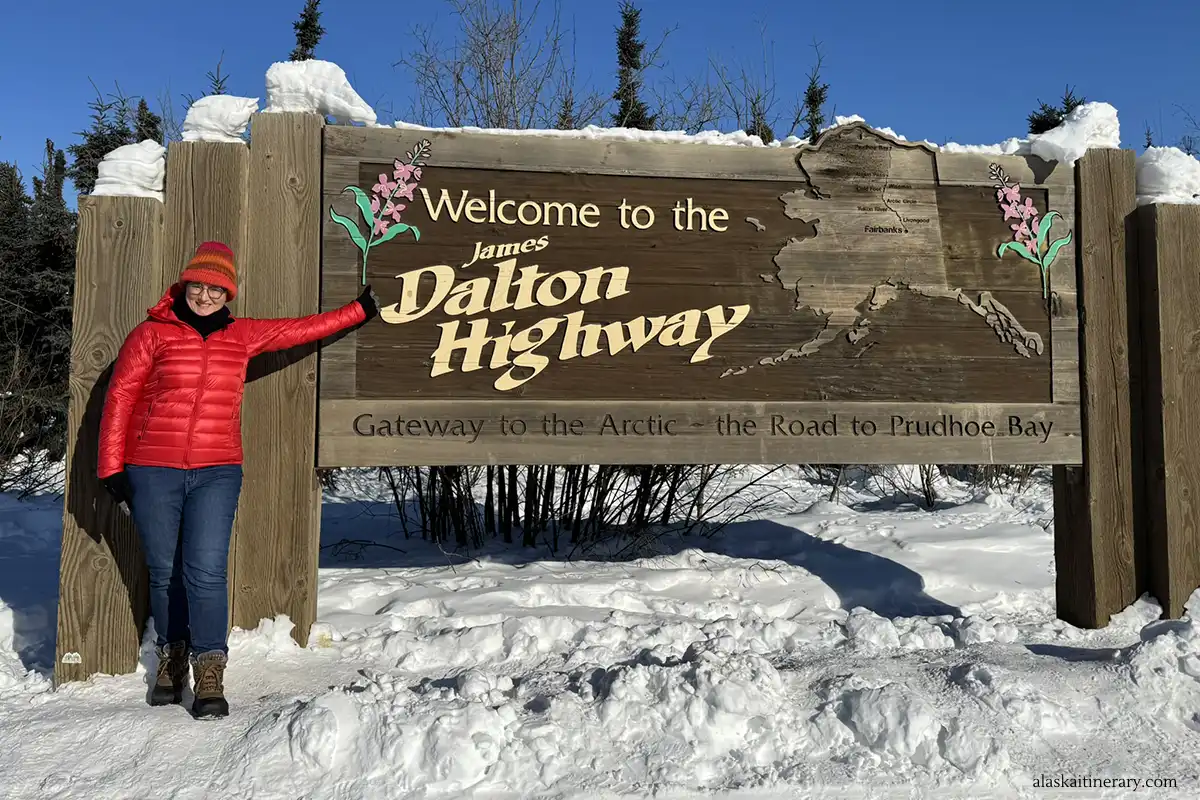
This drive is best suited for very experienced winter drivers with proper vehicles and preparation. It is not recommended for first-time Alaska winter travelers or anyone unfamiliar with driving in severe conditions.
We highly recommend taking a guided Arctic Circle winter tour instead of driving the Dalton Highway yourself. It’s the safest, easiest, and most enjoyable way to experience this incredible route during winter.
Final Thoughts
Driving to the Arctic Circle from Fairbanks is possible. However, it is not a simple road trip. This journey demands planning, focus, and the right vehicle. The Dalton Highway is remote and unforgiving. Fuel stops are limited. Road conditions change quickly. Rental restrictions add another layer of complexity.
For experienced drivers who enjoy remote roads, this drive can be deeply rewarding. Reaching the Arctic Circle on your own feels like a real achievement. At the same time, this option is not right for everyone. Long hours, gravel roads, and heavy truck traffic are part of the experience. Being honest about your comfort level is essential.
If you decide that self-driving is not the right fit, a guided Arctic Circle tour offers a reliable alternative. It allows you to reach the same milestone without dealing with logistics or rental limitations.
Whichever option you choose, the Arctic Circle is one of Alaska’s most memorable destinations. Reaching it, by tour or by car, offers a true glimpse into the state’s far north.
Do You Like It? Pin It For Later!


This drive looks very intriguing. Thank you for the detailed guidance on getting a rental car appropriate and approved for this drive.