
A Guide To Bear Viewing in Alaska – Best Places To Go, Season & Tips

Alaska is one of the best places in the world to see bears in the wild. Nowhere else offers such a rare mix of vast wilderness, healthy bear populations, and responsible viewing opportunities. From coastal salmon streams to remote tundra valleys, Alaska allows visitors to observe bears behaving naturally, without fences or artificial settings. This guide focuses on where to see bears in Alaska, when to go, and how to plan responsibly. It’s designed to help you understand bear behavior, choose the right locations, and set realistic expectations—before you decide if a guided tour is right for you.
This article may contain affiliate / compensated links. For full information, please see our disclaimer here.
Our Experience with Bear Viewing in Alaska
Our bear viewing experiences in Alaska come from real trips we planned and paid for ourselves. None of our visits were sponsored, and every recommendation in this guide is based on what we’ve personally seen, learned, and carefully evaluated along the way.
Over the years, Chris and I have experienced bear viewing in several parts of Alaska, including coastal areas, national parks, and remote wilderness locations. We’ve watched brown bears fishing for salmon, grazing along riverbanks, and moving freely through wide, open landscapes. We’ve seen bears both from safe viewing platforms and during guided excursions designed specifically for wildlife observation.
Some experiences involved iconic locations like Katmai and Lake Clark. Others were quieter places that still delivered unforgettable moments. Each setting offered a different perspective and taught us how much timing, location, and access matter when it comes to bear viewing.
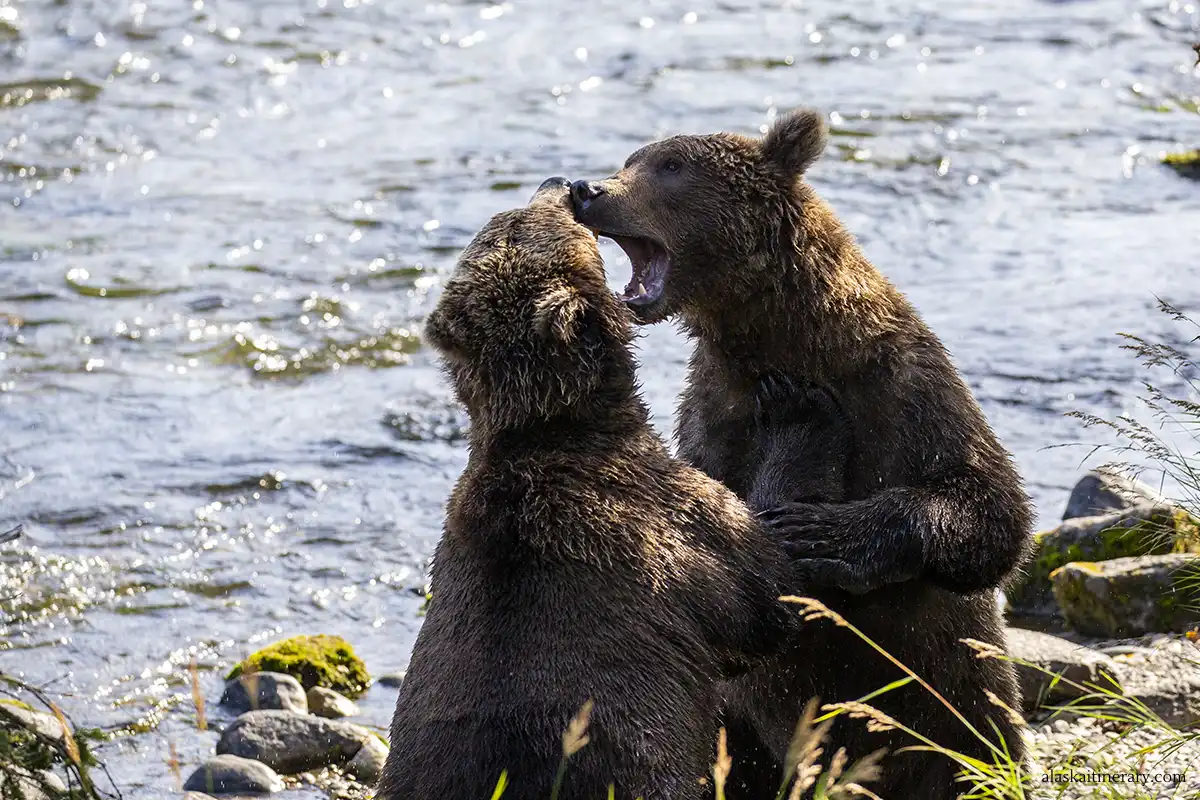
What stands out most is how natural and unscripted bear viewing in Alaska feels. There are no guarantees, no staged moments, and no predictable outcomes. Some days bring long, active encounters. Other days require patience and realistic expectations. That unpredictability is part of what makes bear viewing here so powerful.
This guide reflects those realities. It’s meant to help you plan smarter, choose locations that fit your travel style, and understand what bear viewing in Alaska truly looks like—before you book a tour or head into bear country.
Bear watching is a defining part of Alaska travel and sits at the core of many Alaska’s must-do experiences.


Our Bear Viewing Resources
If you’d like to explore specific bear viewing locations in more detail, we’ve created in-depth guides based on our own firsthand experiences across Alaska. These articles focus on logistics, timing, access, and realistic expectations for each area.
Here are some of our most helpful bear viewing resources:
- Best Alaska Bear Viewing Tours – Our Top Picks Based on Firsthand Experience
- Guide to Bear Safety in Alaska
- Brooks Falls Bear Viewing
- Katmai National Park Bear Viewing Guide
- Lake Clark Bear Viewing Tour Review
- Chinitna Bay Bear Viewing (by Boat)
- Bear Watching in Ketchikan: What to Expect
- Bear Viewing Tours from Anchorage
- Best Homer Bear Viewing Tours (to Lake Clark and Katmai)
- Top Spots for Bear Viewing on an Alaska Cruise
- Affordable bear viewing in Alaska withought a flight
You can read them individually or use them alongside this guide to plan your bear viewing trip more confidently.

Why Alaska Is the Best Place for Bear Viewing
Alaska stands apart as the world’s premier destination for bear viewing because of one simple fact: nowhere else combines bear numbers, habitat quality, and protection at this scale.
Alaska is home to about 98% of the U.S. brown bear population and roughly 70% of the entire North American brown bear population. That concentration alone makes bear encounters far more likely than in any other state or province.
Scale matters just as much as numbers. Alaska spans over 663,000 square miles, much of it undeveloped and protected. Bears here rely on natural food systems—salmon runs, coastal flats, sedge meadows, and berry-rich tundra—rather than human activity. This allows bears to gather naturally at predictable locations without artificial feeding or habituation.
Another key factor is regulation. Many of Alaska’s top bear viewing areas are located within national parks, preserves, wildlife refuges, and managed viewing sites, where access is controlled through permits, quotas, and strict distance rules. These measures protect both bears and visitors and keep encounters natural rather than staged.
Finally, Alaska offers unmatched variety. In a single state, you can observe bears fishing for salmon, grazing in open meadows, digging for clams along the coast, or roaming wide tundra landscapes. Few places in the world offer such diversity of bear behavior in truly wild settings.
Together, scale, density, protection, and habitat diversity explain why Alaska is not just a good place for bear viewing, but the benchmark against which all other destinations are measured.

Alaska’s Bear Population: A Fact-Based Overview
Alaska supports three species of bears, each adapted to different regions and ecosystems. Understanding where they live helps set realistic expectations for bear viewing.
Brown bears (grizzlies) are Alaska’s most iconic species. The state is estimated to have around 30,000 brown bears, including the famous Kodiak brown bears, a distinct subspecies found only in the Kodiak Archipelago. Kodiak Island alone supports roughly 3,500 brown bears, one of the highest concentrations anywhere in the world.
For comparison, Montana has an estimated 2,000 brown bears, while Wyoming has about 600. These numbers highlight just how exceptional Alaska’s brown bear population is.
Black bears are even more numerous. Alaska is estimated to have about 100,000 black bears, spread across forests, coastal zones, and interior regions. Despite their name, black bears in Alaska range in color from black to brown and blond. They are common in Southeast Alaska and parts of Southcentral Alaska.
Polar bears represent a completely separate category. An estimated 4,000 to 7,000 polar bears inhabit Alaska’s Arctic coast and sea ice. These bears are found primarily along the Beaufort and Chukchi Sea coasts and are only accessible for viewing in a few locations, mainly during late fall.
What makes Alaska unique is not just the number of bears, but how they are distributed across intact ecosystems. Large protected areas and limited road access allow bears to live with minimal human pressure, which is why bear viewing here feels wild, authentic, and unscripted.
Together, these populations form the largest, healthiest, and most diverse bear stronghold in North America.

Alaska Bear Viewing Season: When to Go
Timing plays a huge role in bear viewing success. Bears are present year-round in Alaska, but their behavior changes with the seasons, and so do your chances of seeing them.
Here’s how the bear viewing season typically unfolds.
Spring Awakening (May to June)
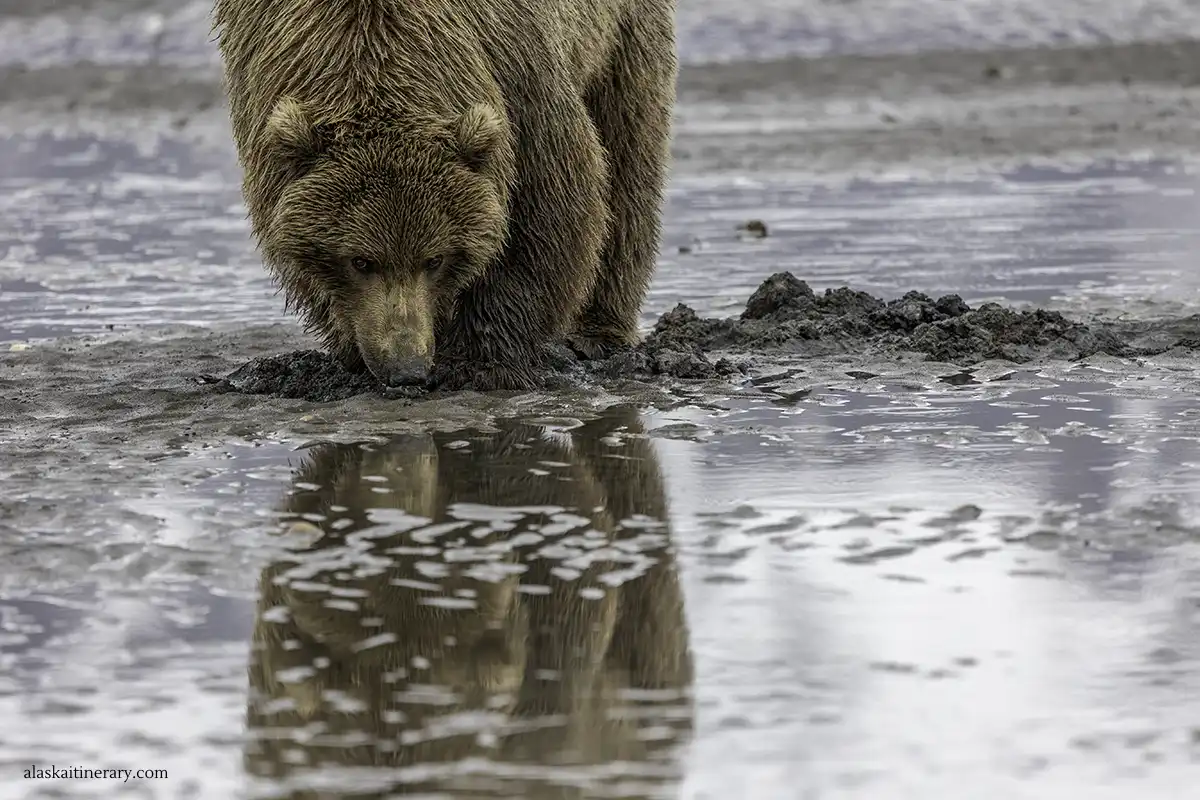
As the snow melts, bears emerge from hibernation and begin feeding again. During this time, they’re often seen grazing on sedge grasses, digging for roots, or searching coastal areas for clams.
Spring sightings can be rewarding, but bears are more spread out and not yet concentrated around rivers. This period works best in coastal areas and lower elevations.
Salmon Season (July to August)
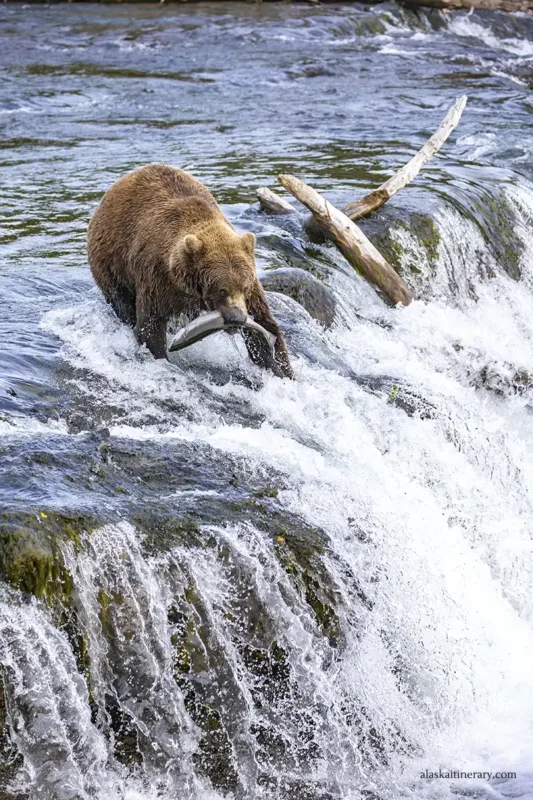
This is the peak bear viewing season in Alaska. Salmon runs draw bears to rivers and streams, creating predictable and often dramatic viewing opportunities.
July and August offer the highest chances of seeing:
- multiple bears in one area
- active feeding behavior
- iconic scenes like bears catching salmon
This is also the busiest time, so planning ahead is important.

Berry Season (August to September)
As salmon runs taper off, bears shift their focus to berries. This season offers a different kind of bear viewing, often with bears spread across hillsides, tundra, and forest edges.
Encounters can feel calmer and more natural, and cub sightings are more common. Late summer is a great option for travelers who want fewer crowds.
Fall Feeding (September to October)
Before winter, bears enter a phase called hyperphagia, where they eat constantly to build fat reserves. They’re active for long hours and can be seen throughout the day.
Viewing opportunities remain strong in early fall, especially in areas with lingering food sources. Weather becomes more unpredictable, but crowds drop significantly.
Polar Bear Season (October to November)
This season applies only to Alaska’s Arctic coast. In places like Kaktovik, polar bears gather near shore while waiting for sea ice to form.
This is a highly specialized experience, very different from brown or black bear viewing, and requires careful planning and permits.
Quick Reality Check: When is the best time to see bears in Alaska?
The best overall months for bear viewing in Alaska are July and August.
May, June, September, and early October can still be excellent, but sightings are less predictable and depend heavily on location.
Understanding seasonal behavior helps you choose the right place and avoid unrealistic expectations when planning a bear viewing trip.

Best Places for Bear Viewing in Alaska
Alaska offers many bear viewing locations, but not all provide the same experience. The places below stand out because of bear density, predictable food sources, access rules, and viewing reliability.
Some are famous and heavily regulated. Others are quieter but still deliver strong encounters. All are based on how bear viewing actually works in Alaska, not hype.
Katmai National Park and Preserve (Brooks Camp / Brooks Falls)
Katmai is Alaska’s most famous brown bear viewing destination. The park protects an estimated 2,200 brown bears, and the Brooks River area with the famous Brooks Falls is the iconic spot for watching bears during salmon season.
- closest gateways: King Salmon (closest), Homer (popular floatplane departure)
- how to get there: no roads; most visitors fly in (often by floatplane) and visit as a day trip or with permits for overnight stays
- best time: July and August for the classic salmon-run scenes
- reality check: access is limited and needs advance planning (permits, logistics, and weather)

Lake Clark National Park and Preserve
Lake Clark is a top-tier bear destination with fewer crowds than Katmai. Depending on the area, bears may be seen grazing in sedge meadows, digging for clams, or fishing later in summer.
What makes Lake Clark special is not a single massive bear concentration across the entire park, but seasonal gathering of bears in specific coastal and lowland areas where food sources are abundant.
Bears here are widely dispersed across a vast landscape that includes mountains, forests, lakes, rivers, and coastal flats. Because of this, bear viewing success depends heavily on location, timing, and access point.
The most consistent bear activity occurs in a few well-known areas where bears naturally congregate around sedge meadows, tidal flats, clams, and later in the season, salmon.
- dominant species: brown bears
- black bears: present but rarely seen in primary viewing areas
- access: no roads into the park
- primary gateways: Anchorage and Homer
- best overall season: late May through August
- To understand bear viewing in Lake Clark, it’s essential to look at its main viewing areas individually.

Silver Salmon Creek
Silver Salmon Creek is the most well-documented bear viewing area in Lake Clark and one of the most reliable coastal bear viewing locations in Alaska.
According to National Park Service data, up to about 219 brown bears have been documented using the coastal lowlands and surrounding habitat seasonally. This number refers specifically to bears utilizing this concentrated area during peak periods, not the entire park.
Bears here are commonly seen:
- grazing on sedge meadows in early summer
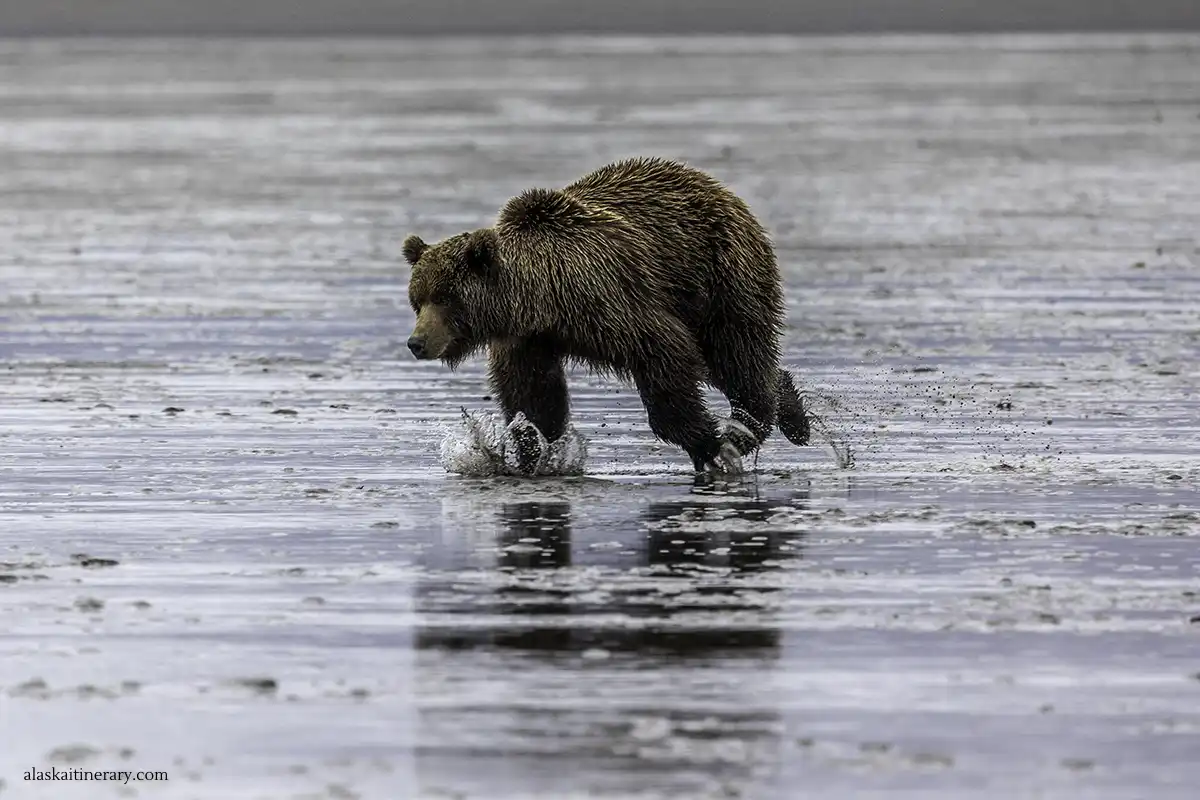
- digging for clams along tidal flats
- moving across open terrain with excellent visibility
- best time: June through August
- access: small aircraft only
- viewing style: ground-level, open landscapes
Silver Salmon Creek is known for predictable bear behavior and clear viewing conditions, which is why it’s one of the most sought-after bear viewing locations in the park.
Chinitna Bay
Chinitna Bay is a coastal area on the eastern side of Lake Clark and is especially popular because it can be also reached by boat from the Homer area, making it one of the more accessible bear viewing options in the park.
Bear activity here is seasonal and typically involves:
- individual bears or small groups
- coastal foraging for sedge grasses and clams
- movement between shoreline and forest edges
- best time: late May through July
- access: boat from Anchor Point or small aircraft
- viewing style: shoreline and tidal flats
Bear numbers here are lower than at Silver Salmon Creek, but sightings are frequent during early summer, especially in good weather and calm seas.
Crescent Lake
Crescent Lake offers a different bear viewing experience focused primarily on salmon fishing behavior later in the summer.
Rather than large concentrations, bears are seen:
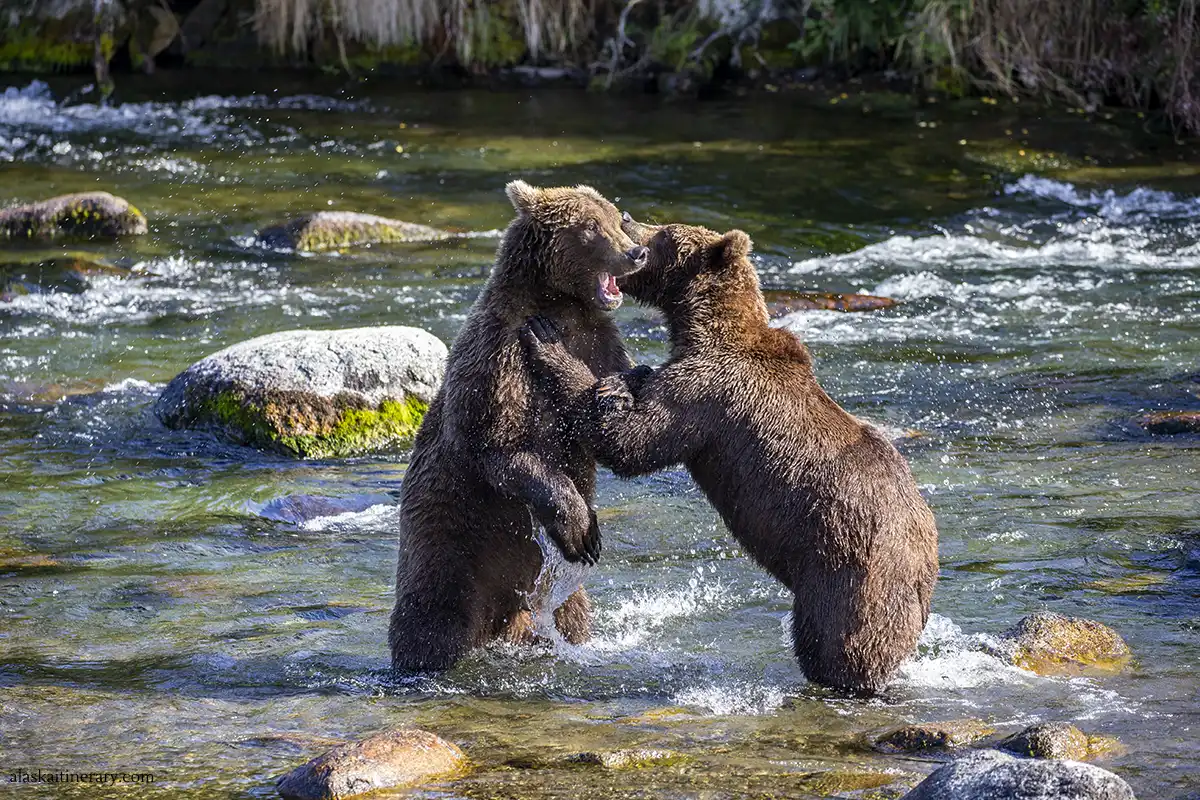
- fishing near lake outlets and streams
- moving along shorelines
- interacting around salmon runs
- best time: mid to late summer
- access: small aircraft only
- viewing style: boat-based and shoreline observation
Bear density is lower than in coastal meadow areas, but encounters often involve active fishing behavior, which many visitors find especially compelling.
Redoubt Bay Lodge
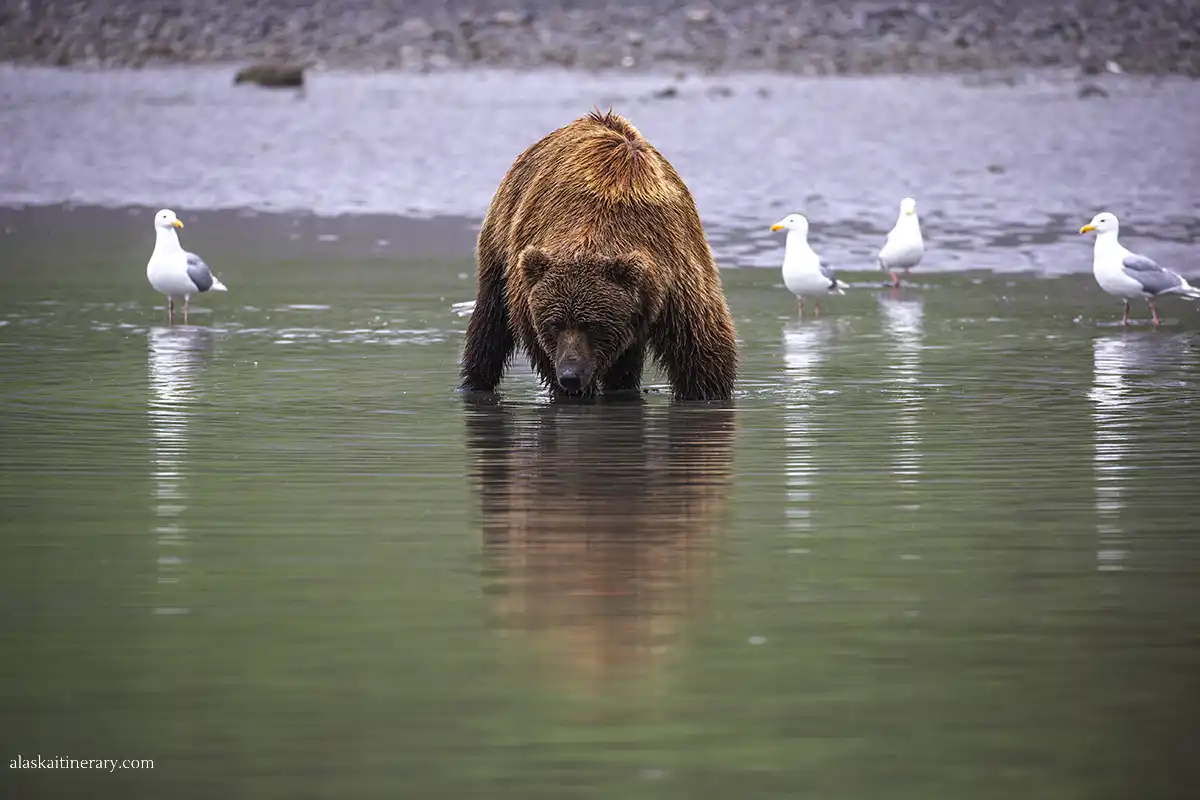
Redoubt Bay is known for lodge-based bear viewing in a managed coastal setting. Bears regularly return to the same feeding areas year after year, which creates high viewing reliability without disturbing natural behavior.
Bears here are typically observed:
- grazing along coastal flats
- foraging near sedge meadows
- moving through predictable travel corridors
- best time: June through August
- access: small aircraft from Anchorage
- viewing style: guided, lodge-based observation
While the number of bears in this area is smaller than at Silver Salmon Creek, consistency and comfort are the defining features.
Kodiak Island (Kodiak Archipelago)
Kodiak is home to the Kodiak brown bear, found only in this archipelago. Estimates put the population at roughly 3,500 bears across the islands.
- closest gateway: Kodiak (city)
- how to get there: fly or ferry to Kodiak; bear viewing usually requires a guided trip to reach prime habitat areas
- best time: summer months (June–September)
- reality check: this is not a quick add-on. It’s best as a dedicated Kodiak trip.

Denali National Park and Preserve
With around 300-350 grizzly bears, Denali National Park offers a very different bear experience—wide landscapes and natural behavior, usually viewed from a distance.
- closest gateways: the park entrance area, know as Denali Village near Healy/Cantwell and the Parks Highway corridor
- how to get there: drive to the entrance; deeper wildlife viewing happens via park buses
- best time: June through August
- reality check: sightings can be excellent, but they’re often far away. This is not “close-up bear viewing.”
Wolverine Creek (Big River Lakes area)
Wolverine Creek is a well-known brown bear viewing area tied to salmon runs. It’s often reached by floatplane into the Big River Lakes region.
- closest gateways: Soldotna/Kenai area (common departure), sometimes Anchorage
- how to get there: typically a floatplane trip; sources commonly describe about 30 minutes from Soldotna and 50 minutes from Anchorage for the flight portion
- best time: mid-to-late summer (salmon season)
- reality check: this is usually a fly-out experience. It’s not a roadside stop.

Fish Creek Wildlife Observation Site (Hyder)
Fish Creek is one of the best budget-friendly bear viewing spots in Alaska because it has a public viewing area and road access.
- closest gateway: Hyder (Fish Creek is about 3 miles north of Hyder)
- how to get there: drive to Hyder (no ferry needed); then drive to the Fish Creek Wildlife Observation Site
- best time: mid-July through mid-September, during chum and pink salmon runs
- reality check: it’s still wildlife, not a zoo. Timing matters, and patience helps.
Pack Creek (Admiralty Island)
Pack Creek is one of Alaska’s most famous regulated bear viewing sites. It’s located on Admiralty Island, about 40 miles south of Juneau, within the Stan Price State Wildlife Sanctuary. It’s one of the best places for bear viewing, with over 1,500 brown bears on the island, offering a near-guaranteed chance to witness bears in their natural habitat. It’s more than is found in all the Lower 48 states combined.
- closest gateway: Juneau
- how to get there: access is by floatplane or boat from Juneau; permits are required, and many people visit with a guided trip
- best time: summer (permit season typically runs June into early September)
- reality check: this is highly regulated for a reason. It’s amazing, but you need to plan ahead.

Traitors Cove / Margaret Creek (Ketchikan)
This is a classic Southeast Alaska black bear viewing experience near Ketchikan. Upon landing in Traitors Cove, you’ll be greeted by your personal Alaska Bear Guide at the floatplane dock. They’ll drive you approximately one mile down a U.S. Forest Service road to a trailhead. Your guide will then lead you on a brief 250-yard walk to the Margaret Creek Bear Viewing platform.
- where it is: about 26 miles north of Ketchikan in Margaret Bay/Traitors Cove
- closest gateway: Ketchikan
- how to get there: typically by floatplane (20 minutes) or by boat
- best time: summer, especially when salmon draw bears to the creek
- reality check: this is primarily black bear viewing, not brown bears.

Icy Strait Point / Hoonah (cruise-friendly bear country)
This area is popular with Alaska cruise travelers because bear-focused excursions can fit into a port day. This region is often called ‘Bear Island’ due to its world-leading concentration of brown bears per square mile.
- closest gateway: Hoonah / Icy Strait Point (cruise port)
- how to get there: cruise ship access + guided excursions from the port
- best time: summer
- reality check: sightings vary by day, but this can be a convenient option for cruisers who want bears without flights.
Polar Bears (Kaktovik, Arctic Alaska)
Polar bear viewing is its own category and only applies to the Arctic coast.
- closest gateway: Kaktovik (Barter Island) and Utqiagvik (formerly called Barrow)
- how to get there: fly to Kaktovik (logistics are very different from the rest of Alaska)
- best time: October to November (when polar bears gather near shore waiting for sea ice)
- reality check: specialized, weather-dependent, and typically expensive.

Which National Park in Alaska Has the Most Bears?
Katmai National Park and Preserve has the largest protected concentration of brown bears in North America. Estimates place the park’s brown bear population at around 2,200 bears, spread across river systems, coastal flats, and backcountry areas.
What sets Katmai apart is not just the number of bears, but how predictably they gather. During the summer salmon runs, bears concentrate along the Brooks River and nearby waterways, creating some of the most reliable bear viewing opportunities anywhere in Alaska.
Other parks, such as Lake Clark and Denali, also support healthy bear populations, but bears there are more widely dispersed across vast landscapes. Katmai’s combination of high bear density, seasonal food concentration, and protected access makes it the national park in Alaska with the most bears—and the most consistent viewing conditions.
How to Choose the Right Bear Viewing Experience in Alaska
Choosing the right bear viewing experience in Alaska depends on more than just picking a famous location. Comfort level, access, timing, and budget all shape what kind of experience you’ll actually enjoy.
Determine Your Comfort Level
Bear viewing ranges from platform-based observation to remote wilderness settings.
If you prefer structure and clear boundaries, managed sites and guided experiences are a better fit. If you’re comfortable with remote travel and changing conditions, fly-out or boat-access locations may appeal more.
Consider Accessibility and Logistics
Some of Alaska’s best bear viewing spots are not reachable by road. Access may involve:
- floatplanes
- small aircraft
- boats
If you want the simplest logistics, choose locations near established gateway towns like Juneau, Homer, Soldotna, or Ketchikan. Remote parks offer incredible experiences, but they require more planning and flexibility.
Match the Location to the Time of Year
Bear behavior changes with food availability. Salmon-focused locations work best in July and August, while coastal grazing areas can be productive earlier in the season. Choosing the right place for the right month matters more than choosing a famous name.
Think About Budget Early
Costs vary widely.
- Day trips and public viewing platforms are the most affordable.
- Fly-out and multi-day experiences cost more but often provide deeper immersion.
Decide early how much you’re comfortable spending so you can narrow options realistically.
Guided vs Independent Viewing
Guided experiences offer:
- safety and local knowledge
- access to restricted or remote areas
- a more controlled environment
Independent viewing works only in a few places and requires strong bear awareness. It’s not suitable for every traveler.
Set Realistic Expectations
Bear viewing is wildlife viewing. There are no guarantees. Some days bring multiple encounters. Other days are quieter. Choosing the right location and season improves your odds, but patience is always part of the experience.

Bear Viewing Safety and Ethics in Alaska
Bear viewing in Alaska is a privilege, not a guarantee. The goal is to observe bears without changing their behavior and without putting people or wildlife at risk.
Keep a Safe and Legal Distance
Alaska’s national parks and managed viewing areas enforce strict distance rules for a reason. Bears that become comfortable around people can lose natural behaviors and may eventually be destroyed for public safety.
- never approach a bear
- never block a bear’s path
- never position yourself between a bear and food, cubs, or water
If a bear changes its behavior because of you, you’re too close.
Follow Rules at Managed Viewing Sites
Platforms, boardwalks, and ranger-guided systems exist to protect both bears and visitors. These rules may feel restrictive, but they allow bear viewing to continue long-term.
Ignoring rules:
- increases stress on bears
- raises the risk of dangerous encounters
- threatens future access for everyone
Why Guides Matter
Experienced guides understand bear behavior, body language, and movement patterns. They know when to stop, when to move, and when to wait.
Guided bear viewing:
- reduces risk
- minimizes human impact
- keeps encounters calm and controlled
This is especially important in remote areas with high bear density.
Ethical Photography Expectations
Iconic photos often create unrealistic expectations. Bears rarely pose, perform, or repeat behaviors on demand.
Ethical photography means:
- no baiting
- no noise or gestures to provoke reactions
- no crowding for a “better angle”
The best images come from patience, not pressure.
Respect the Bear’s World
You are a visitor in bear country. Bears are not attractions, and bear viewing should never interfere with feeding, travel, or family behavior.
Responsible bear viewing ensures:
- safer experiences
- healthier bear populations
- continued access to Alaska’s wild places
When done correctly, bear viewing in Alaska remains natural, powerful, and unforgettable—for both people and bears.
Final Thoughts
Bear viewing in Alaska is one of the most powerful wildlife experiences in North America, but it works best when it’s approached with the right expectations. Alaska’s bears live in vast, protected landscapes, and every sighting happens on their terms, not ours.
Choosing the right location, timing your visit to match natural food cycles, and understanding access limitations all make a real difference. Some places offer iconic, predictable encounters. Others reward patience with quieter, less crowded experiences. Both are valid, and both can be unforgettable.
Bear viewing is also a responsibility. Respecting distance rules, following site regulations, and choosing ethical viewing options help protect bears and keep these opportunities available for future visitors.
When planned thoughtfully, bear viewing in Alaska is not just about seeing bears—it’s about experiencing wild places as they still exist today.
Do You Like It? Pin It For Later!


Wow, the photos are incredible. Definitely inspired to do bear viewing in Alaska, thank you for all the reviews/tips.
I will be honest with you….Bear viewing KIIIINDA freaks me out, but you’ve made some great points here, and I may or may not be open to it now 🙂
There is just something special about seeing animals in their natural habitats. I’d love to see the bears.