
The Alaska Purchase: History, Cost, Key Players, and Its Legacy

Are you curious how a frozen, sparsely populated land once dubbed Seward’s Folly became one of the most important territories in the United States? The Alaska Purchase is one of the most fascinating real estate deals in history. In 1867, the U.S. bought Alaska from Russia for $7.2 million—just two cents an acre. Back then, many Americans laughed at the idea. Today, Alaska is rich in oil, natural resources, and unmatched beauty. In this article, you’ll learn why Russia sold Alaska, how the U.S. made the deal, and what happened after. We’ll explain who negotiated it, what Seward’s Day commemorates, and whether Russia regrets it today. If you’re interested in history, Alaska, or surprising facts—this guide has what you’re looking for.
This article may contain affiliate / compensated links. For full information, please see our disclaimer here.
Overview of the Alaska Purchase
The Alaska Purchase was a landmark deal between the United States and the Russian Empire during Russian colonization of Alaska. On March 30, 1867, the U.S. agreed to buy Alaska for $7.2 million. That meant paying about two cents per acre for 586,412 square miles of land.
The treaty was negotiated by U.S. Secretary of State William H. Seward and Russian Minister Eduard de Stoeckl. The agreement was signed in Washington, D.C., and approved by the Senate on April 9, 1867. The official transfer took place on October 18, 1867, in Sitka, which was then the capital of Russian America.

At the time, the purchase was controversial. Many Americans mocked the deal, calling it “Seward’s Folly” or “Seward’s Icebox.” Critics believed Alaska was a frozen wasteland with no value.
However, this perspective changed over time as gold, oil, and other natural resources were discovered. Today, historians consider the Alaska Purchase one of the smartest territorial expansions in U.S. history. One of the most interesting Alaska facts is that, thanks to this historic deal, it became the largest state in the U.S.
The Alaska Purchase shaped how land is managed, accessed, and protected today, making historical context an important part of understanding Alaska travel planning.

Background: Russian America
Before the sale, Alaska was known as Russian America. Russia had claimed the territory in the mid-1700s after explorers like Vitus Bering mapped the coastline. The Russian-American Company, chartered in 1799, managed trade and colonization in the region. Its main focus was the fur trade, especially sea otter pelts, which were highly valuable in Asia.
At its peak, Russian America stretched from the Aleutian Islands across southern Alaska. Sitka, founded in 1804, became the capital and commercial center. However, the colony never attracted large numbers of settlers. It remained remote, difficult to supply, and expensive to defend.
By the 1850s, Russia’s interest in Alaska was fading. The fur trade had declined. The Crimean War (1853–1856) had drained the Russian treasury. There were also concerns about Britain possibly seizing Alaska if another war broke out.
Facing these challenges, Russia began quietly exploring options to sell the territory—especially to the United States, which was seen as a friendly power and a rising force in the Pacific.

Motivations Behind the Sale: Why did Russia sell Alaska?
Russia had several reasons for selling Alaska, both practical and strategic. By the 1850s, the once-lucrative fur trade—especially the sea otter trade—was in serious decline. The overhunting of animals and falling demand made it unprofitable to maintain distant outposts. Alaska had become more of a burden than a benefit.
Financial concerns played a big role. After the costly Crimean War, Russia needed money. Maintaining and defending such a remote territory required significant resources that the empire could no longer afford. Alaska was far from the Russian heartland and difficult to protect, especially against growing British naval power in nearby Canada.
Geopolitical strategy mattered too. Russia feared that if another war broke out, Britain might seize Alaska with ease. Selling the land to the United States, a rising power and a potential ally, was seen as a smart move to prevent British expansion and strengthen ties with the U.S.
Additionally, Russia hoped the sale would shift U.S. focus toward the Pacific and away from Europe. It was a calculated decision: better to sell the territory to a friendly power than risk losing it to a rival.

Key Players in the Alaska Purchase and Negotiation Process
Several influential figures played crucial roles in the Alaska Purchase. Without their determination and negotiation skills, the deal might never have happened.
William H. Seward – U.S. Secretary of State
Seward was the main driving force behind the purchase. He believed strongly in American expansion and saw Alaska as a valuable strategic asset. A firm supporter of Manifest Destiny, he viewed Alaska as a gateway to Asia and the Pacific. Despite heavy criticism, he pushed the treaty forward and signed the deal on March 30, 1867.
Edouard de Stoeckl – Russian Minister to the U.S.
De Stoeckl was Russia’s chief negotiator in Washington, D.C. He was instructed by the Tsar to seek a sale and found a willing partner in Seward. De Stoeckl handled negotiations smoothly and quickly. He secured favorable terms and helped finalize the treaty for Russia.
Tsar Alexander II – Emperor of Russia
Tsar Alexander II approved the sale of Alaska. After internal discussions with advisors and military leaders, he agreed with the idea that Alaska was too remote and difficult to defend. His approval allowed the negotiations to begin.
Andrew Johnson – U.S. President at the time
President Johnson supported the purchase and submitted the treaty to the Senate. Though embroiled in political troubles, including his impeachment, he stood behind Seward’s vision and signed off on the treaty once it was ratified.
These key figures worked across political and national boundaries to complete one of the most important land acquisitions in American history.
Talks between Seward and de Stoeckl moved quickly. After informal discussions, they agreed on the sale overnight. On March 30, 1867, the treaty was signed at 4 a.m. The U.S. agreed to pay $7.2 million in gold. The Senate approved it later that year, and the official transfer took place on October 18, 1867.

Public and Political Reaction: The Backlash and “Seward’s Folly”
The Alaska Purchase stirred mixed feelings across the United States. Some people supported the acquisition, seeing Alaska’s strategic and economic potential. Others mocked it.
Critics called it “Seward’s Folly” or “Seward’s Icebox.” They believed the U.S. had wasted millions on a frozen wilderness. Newspapers ran cartoons and jokes about buying snow and polar bears. Many Americans couldn’t understand the value of such a distant, unknown land.
Some in Congress also questioned the deal. They thought the money could be better spent elsewhere. But over time, opinions began to shift.
Once gold was discovered in the late 1890s, public sentiment changed. Alaska’s vast natural resources—timber, fish, oil, and minerals—turned the “folly” into a wise investment. Seward’s vision was finally appreciated, though long after his death.
Today, you can see William H. Seward’s legacy across Alaska—from his commemorative bust in downtown Seward to Fort William H. Seward in Haines, both honoring the man behind the deal that changed Alaska’s future. Moreover, the town of Seward, gateway to Kenai Fjords National Park, was named in honor of William H. Seward.

From Transfer to Transformation: Alaska’s Journey After the Purchase
After the treaty was signed in March 1867, the official transfer of Alaska took place on October 18, 1867, in Sitka. Russian troops lowered their flag, and the U.S. raised theirs. The moment was simple, but it marked a turning point in American history.
At first, Alaska remained largely ignored. The U.S. didn’t know what to do with it. There was no formal government, and only a few settlers moved in. Military officials oversaw the territory, but federal interest was low.
That changed in 1896, when gold was discovered in the Klondike region. The rush that followed brought thousands of prospectors through Alaska. From that moment, the region’s economic value became clear.
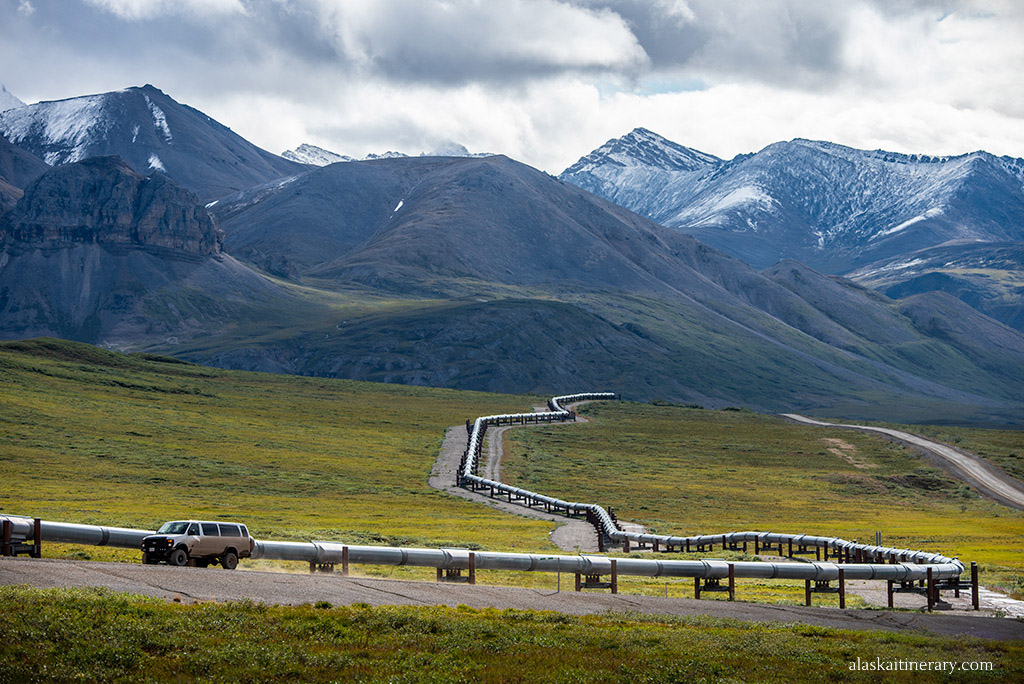
In the 20th century, Alaska’s importance continued to grow. It played a role in World War II, especially during the Aleutian Campaign. Later, the discovery of oil at Prudhoe Bay in 1968 confirmed Alaska’s massive natural wealth.
Today, Alaska contributes to energy, defense, tourism, and the fishing industry.
Seward’s Day: Commemorating the Purchase
Every year, Alaska honors the man behind the deal that changed its history—William H. Seward—with a holiday known as Seward’s Day. It marks the signing of the treaty for the Alaska Purchase, which took place on March 30, 1867.
Seward’s Day is observed on the last Monday in March. It is a state holiday in Alaska, meaning government offices and many schools are closed. It’s not a federal holiday, so businesses usually stay open.
The day is meant to reflect on the legacy of the purchase and the vision Seward had for the country. While many Alaskans spend the day like any other, some towns and local organizations hold historical programs, educational events, and museum exhibits to highlight the significance of the Alaska Purchase.
It’s a moment to look back and recognize how a once-criticized decision became a vital part of the United States.
Does Russia Regret Selling Alaska?
The question “Does Russia regret selling Alaska?” comes up often—especially given Alaska’s natural wealth and strategic location. The short answer is: officially, no. But the story is more complex.
From the Russian government’s perspective, there has never been a formal expression of regret. The decision to sell was based on strategic and financial concerns. In 1867, Russia was focused on consolidating its European territories and saw Alaska as vulnerable and hard to defend—especially from the growing British influence in Canada.
However, in modern times, many Russians view the sale differently. As Alaska’s value became clear—with its gold, oil, gas, and other resources—the sale began to look like a missed opportunity. Some Russian media outlets, politicians, and members of the public have expressed regret in hindsight, mostly in symbolic or nostalgic terms.
Still, it’s important to note that the sale was legal, final, and recognized under international law. There has never been a serious move by Russia to dispute the deal or reclaim the territory.
In short, while modern Russians may sometimes look back and wish Alaska had remained part of their empire, the historical decision made sense at the time—and it has never been officially challenged.

Conclusion
The Alaska Purchase was one of the most significant land deals in American history. What began as a controversial move—mocked as “Seward’s Folly”—proved to be a decision of enormous strategic and economic value for the United States. Alaska would later reveal its vast natural resources, breathtaking landscapes, and geopolitical importance.
For Russia, the sale made sense at the time. The territory was remote, hard to defend, and offered little profit. The U.S., on the other hand, gained a treasure trove of resources and a crucial northern frontier.
Today, the legacy of the Alaska Purchase is still felt across the state and the nation. From Seward’s Day celebrations to the thriving cities and protected wilderness, Alaska stands as a reminder that bold decisions can shape history in lasting ways.
Sources:
- “The Alaska Purchase.” Library of Congress.
- “Purchase of Alaska, 1867.” Office of the Historian, U.S. Department of State.
- “Alaska Purchase | History, Cost, & Significance.” Encyclopaedia Britannica.
- “There Are Two Versions of the Story of How the U.S. Purchased Alaska.” Smithsonian Magazine.
- “Remembering William Seward’s Alaska ‘folly’.” National Constitution Center.
- “Alaska Purchase.” Wikipedia, The Free Encyclopedia.
Note: The above sources have been consulted to ensure the accuracy and reliability of the information presented in this article.
Do You Like It? Pin It For Later!


Interesting to read more about the Alaska Purchase. And to know more about the political environment that was in place at the time of the sale. I can totally understand why public opinion changed once gold was found in Alaska! Good to celebrate this historic sale.