
Alaska Winter Travel Guide: Best Places, Things to Do, and Planning Tips

Alaska in winter feels like a completely different world. Snow covers the landscape, daylight is short, and the crowds are gone. In return, you get something few travelers ever experience—quiet, raw beauty, glowing northern lights, and true winter adventure. But winter travel in Alaska is not the same as summer. Some places slow down. Others come alive. Temperatures can drop far below freezing, roads might be icy, and planning matters much more than it does in peak season. That’s exactly why this guide exists. In this Alaska winter travel guide, we share everything you need to plan a successful trip. You’ll learn where to go, what to do, how cold it really gets, and how to prepare step by step. We also share our firsthand experience traveling across Alaska in winter, so you know what to expect before you go.
This article may contain affiliate / compensated links. For full information, please see our disclaimer here.
Our Experience Traveling in Alaska in Winter
Over multiple winter trips, we’ve spent weeks exploring some of Alaska’s top winter destinations, including Anchorage, Fairbanks, Talkeetna, Willow, and the Mat-Su Valley. We’ve experienced everything from coastal winter conditions in Southcentral Alaska to true Arctic cold in the Interior, giving us a broad perspective on what winter travel across the state is really like.
Winter conditions vary dramatically depending on where you travel. During our time in Fairbanks, temperatures dropped to around -13°F (-25°C) during the day, with nights falling below -22°F (-30°C). The colder weather brought clear skies, excellent visibility, and some of the best northern lights displays we’ve ever seen.
Over the years, we’ve tested many of Alaska’s most popular winter activities ourselves. We’ve gone dog sledding through snowy forests, ridden snowmobiles across frozen landscapes, soaked in hot springs, tried ice fishing, hiked to the Castner Glacier ice cave, and explored the Arctic in winter. Spending hours outside in subzero temperatures taught us what gear actually works, how to prepare, and which mistakes are easiest to avoid.

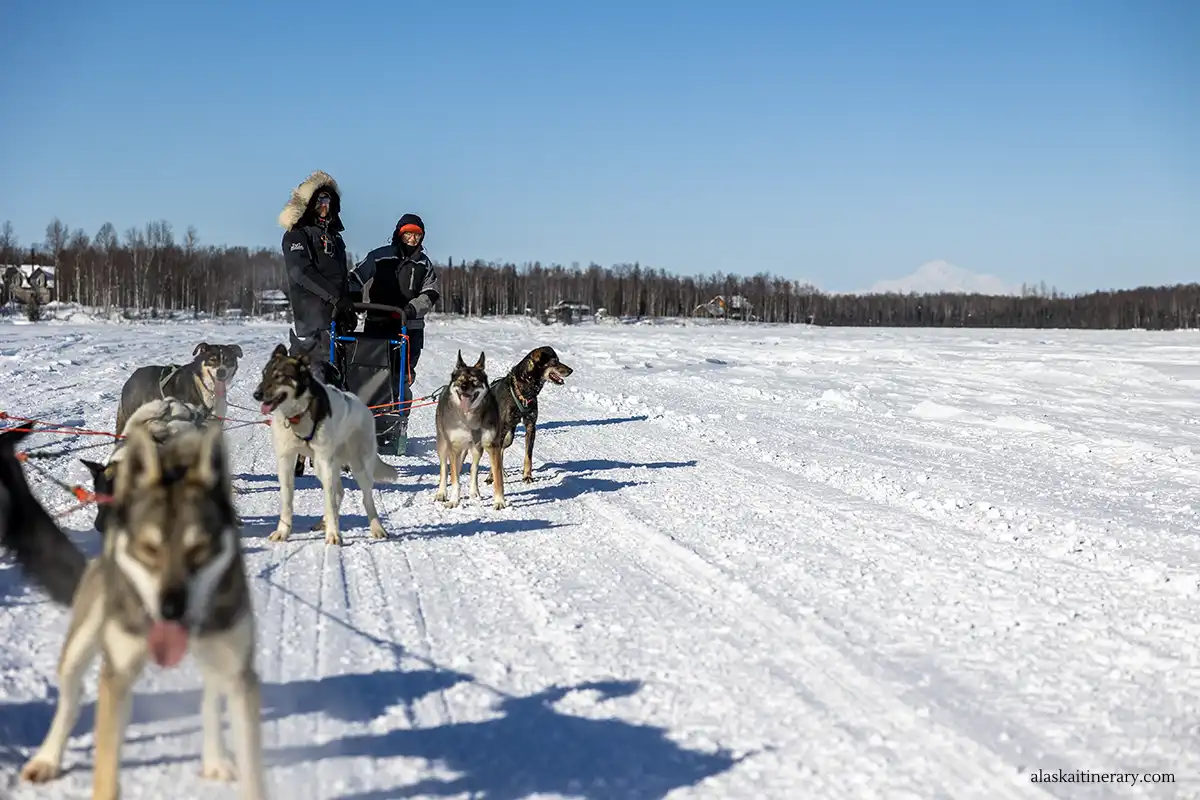
We’ve also logged hundreds of miles driving Alaska’s winter roads, including the Parks Highway, Richardson Highway, and roads throughout the Mat-Su Valley and Interior Alaska. Every trip reinforced the same lesson: winter driving conditions can change quickly, and planning ahead makes all the difference.
Beyond outdoor adventures, we experienced some of Alaska’s signature winter events, including Fur Rondy, the Iditarod Ceremonial Start, and the World Ice Art Championships (Ice Alaska). These events gave us a better understanding of how Alaskans embrace winter and why it’s such a special season to visit.
Everything we share in this guide is based on those experiences. We’ve spent weeks exploring Alaska in winter, tested the activities we recommend, driven the roads ourselves, and learned firsthand what it takes to plan a successful winter trip.


Is Alaska Worth Visiting in Winter?
Yes—Alaska is absolutely worth visiting in winter if you want to experience the northern lights, dog sledding, snowmobiling, frozen glaciers, and breathtaking snowy landscapes.
Winter offers experiences you simply can’t have during any other season. You can watch the aurora dance across the sky, ride behind a team of sled dogs, explore frozen rivers and ice caves, soak in hot springs surrounded by snow, and attend iconic events like Fur Rondy, the Iditarod Ceremonial Start, or the World Ice Art Championships.
At the same time, winter isn’t the right choice for everyone. Temperatures can be extreme, daylight is limited in early winter, and traveling requires more planning than during the summer months.
However, if you’re prepared for the cold, flexible with your itinerary, and excited about unique winter adventures, Alaska can easily become one of the most unforgettable destinations you’ll ever visit.

Why Visit Alaska in Winter?
Winter transforms Alaska into a quiet, snow-covered landscape that feels wild and untouched. Many places that are busy in summer become calm and peaceful.
Here’s what makes winter travel in Alaska unique:
- Fewer crowds almost everywhere
- A real chance to see the northern lights
- Stunning snowy landscapes and frozen rivers
- Unique winter activities like dog sledding, snowmobiling, and ice fishing
- Local winter events and festivals
It’s a completely different experience from summer. Slower, quieter, and often more personal.
The Biggest Challenges of Visiting Alaska in Winter
Winter travel here requires more planning than a typical trip.
You should be prepared for:
- Very cold temperatures, especially in the Interior
- Short daylight hours, particularly in December and January
- Snow and icy road conditions if you plan to drive
- Limited or seasonal availability of some attractions, tours, and restaurants
These are not reasons to skip winter—but they are important to understand before you go.
Who Should Plan an Alaska Winter Trip
Alaska in winter is a great fit if you:
- Want to see the northern lights
- Enjoy snow, winter landscapes, and cold weather
- Are interested in unique experiences like dog sledding or ice fishing
- Prefer fewer crowds and a slower pace
- Have already visited Alaska in summer and want something different
Who May Prefer Summer Instead
Winter is not the best choice for every traveler.
You may prefer summer if you:
- Want long daylight hours and easier sightseeing
- Plan a large road trip across many regions
- Want access to all national parks and seasonal attractions
- Prefer milder weather and less planning

When Is the Best Time to Visit Alaska in Winter?
For most travelers, the best time to visit Alaska in winter is from mid-February through March. This period offers the best combination of snowy landscapes, winter activities, longer daylight hours, and excellent chances to see the northern lights.
While Alaska’s winter travel season lasts much longer than many people expect—from late September or early October through mid-April—every part of the season offers a different experience.
In our opinion, March is the best month to visit Alaska in winter. You still get reliable snow, dark enough nights for aurora viewing, and much more daylight than in December or January. It’s also the time of year when many of Alaska’s biggest winter events, including Fur Rondy, the Iditarod Ceremonial Start, and the World Ice Art Championships, take place.
If seeing the northern lights is your top priority, remember that the aurora season lasts from late August to mid-April. In our opinion, September and March offer the best balance of excellent aurora viewing, milder temperatures, and longer daylight hours.
The best month also depends on your travel goals. If you’re planning your trip around the northern lights, winter festivals, or snowmobiling, your ideal travel dates may be slightly different.
Best Time to Visit Alaska in Winter by Travel Goal
| Travel Goal | Best Time to Visit | Why |
|---|---|---|
| Northern lights | Late September–March (best: February–March) | Long nights and frequent clear skies |
| Dog sledding | December–March | Reliable snow conditions |
| Snowmobiling | January–March | Deep snow and the widest tour availability |
| Ice fishing | January–March | Frozen lakes and peak season |
| Winter festivals | Late February–March | Fur Rondy, Iditarod, and Ice Alaska |
| Longer daylight | March | More time for sightseeing and day trips |
| Winter photography | February–March | Snowy landscapes with better light |
| Overall best experience | Mid-February–March | Best balance of daylight, snow, and winter activities |

Daylight in Winter Changes Your Trip More Than Most People Expect
One of the biggest surprises for first-time visitors isn’t the cold—it’s how quickly daylight changes throughout the winter.
Around the winter solstice, Anchorage gets only about 4½ hours of daylight, while Fairbanks has less than 4 hours. By mid-February, daylight increases to about 10 hours in Anchorage and 8 hours in Fairbanks. By mid-March, you’ll have nearly 12 hours of daylight in Anchorage and more than 10 hours in Fairbanks.
Those extra daylight hours make a huge difference. You have more time for sightseeing, winter activities, and driving between destinations without feeling rushed.
That’s one of the main reasons we recommend late February and March for most travelers. You still get snowy landscapes, excellent winter conditions, and dark enough nights for northern lights viewing—but with much longer and more enjoyable days.
| Time of Winter | Daylight in Anchorage | Daylight in Fairbanks |
|---|---|---|
| Late December | ~4.5 hrs | ~3.75 hrs |
| Mid-February | ~10 hrs | ~8 hrs |
| Mid-March | ~12 hrs | ~10 hrs |
Winter Temperatures Vary a Lot Across Alaska
One of the biggest mistakes first-time visitors make is assuming Alaska has the same winter weather everywhere. In reality, temperatures vary dramatically across the state.
Anchorage has a relatively mild coastal climate, with winter temperatures often ranging from 10°F to 30°F (-12°C to -1°C). Snow is common, but prolonged periods of extreme cold are less frequent.
Fairbanks has a much colder Interior climate. Winter temperatures commonly range from –20°F to 20°F (-29°C to -7°C), and during cold snaps they can drop below -40°F (-40°C). While the cold is more intense, Fairbanks also experiences more clear nights, making it one of the best places in Alaska to see the northern lights.
Agnes’ Advice: Don’t underestimate the cold, especially if you’re visiting Interior Alaska. Take a look at our detailed Alaska winter packing list, where we share exactly what to wear, what to buy, and include a free printable packing checklist.
What Is the Best Winter Month for Your Trip?
The best time to visit depends on what you want to experience. While Alaska’s winter season lasts from about October through mid-April, each part of the season offers something different.
| Month | What to Expect | Best For |
|---|---|---|
| October | Early winter, variable snow conditions | Early aurora trips, fewer crowds |
| November | Winter settles in, shorter days | Aurora viewing, quiet travel |
| December | Darkest month of the year | Holiday atmosphere, northern lights |
| January | Coldest month, reliable snow | Arctic winter experience |
| February | More daylight, excellent snow | Dog sledding, snowmobiling, aurora |
| March | Longer days, winter festivals, great snow | Overall best month for most travelers |
| April | Late winter, conditions vary by region | Late-season adventures |
Our favorite time to visit is late February through March. You still get beautiful winter scenery and excellent conditions for outdoor activities, but with much longer daylight hours than in early winter.
Want a more detailed breakdown? Check out our Alaska Winter Weather by Month guide, where we explain what to expect in each month, including weather, daylight, road conditions, and the best activities.

Best Places to Visit in Alaska in Winter
Alaska is huge, and in winter, you can’t see everything. The key is choosing the right base for your trip instead of trying to cover too much ground.
From our experience, winter travel works best when you focus on one or two areas and plan your activities around them. Some places offer better chances for northern lights, while others are stronger for events, scenery, or easy access.
Here are the best places to visit in Alaska in winter and what each one offers.
Fairbanks — Best for Northern Lights and True Winter Experience
Fairbanks is the top destination in Alaska for winter travel, especially if your goal is to see the northern lights.
It sits under the auroral oval, which means:
- more frequent aurora activity
- better visibility during clear nights
From our experience, Fairbanks feels like real winter Alaska. It’s much colder than Anchorage, but that cold often brings clear skies and great conditions for outdoor activities.
What makes Fairbanks special in winter:
- some of the best northern lights viewing tours in the state
- dog sledding, snowmobiling, and ice fishing (Fairbanks and North Pole area)
- nearby hot springs experiences
- unique winter events and ice art displays
- Arctic Circle winter tours
Agnes’ Advice: If your trip is focused on aurora and winter activities, this is the best place to base yourself. Check out my detailed artilce: Fairbanks in Winter – Best Things To Do for more tips.

Anchorage — Best for First-Time Visitors and Easy Access
Anchorage is the easiest place to start a winter trip to Alaska.
It has:
- the largest airport in the state
- the most accommodation options
- a mix of city comfort and outdoor activities
From our experience, Anchorage works well if you want flexibility. You can stay in one place and still access several winter experiences nearby.
What you can expect:
- winter events like Fur Rondy and the Iditarod season
- access to nearby areas like Girdwood and the Mat-Su Valley
- trails for walking, skiing, snowshoeing or fat biking
- restaurants, museums, and indoor options during cold days
Agnes’ Advice: Anchorage is a great base if this is your first winter trip to Alaska or if you prefer easier logistics. For more details and tips check out my article: Anchorage in Winter: Best Things to Do.

Palmer and the Mat-Su Valley — Best for Day Trips and Glaciers
Palmer and the surrounding Mat-Su Valley are often overlooked in winter, but they offer excellent access to outdoor scenery.
This area is close to Anchorage but feels more open and rural.
What you can expect:
- access to areas like Hatcher Pass
- Knik Glacier winter adventures
- views of the Chugach Mountains
- winter landscapes and fewer crowds
- dog sledding, snowmobiling, ice fishing and winter ATV tours
- opportunities for day trips from Anchorage
From our experience, this area works well if you want to explore beyond Anchorage without committing to a long road trip.

Talkeetna — Best for Views and Small-Town Winter Charm
Talkeetna is one of our favorite winter stops in Alaska.
It’s a small town, but in winter it feels especially peaceful and scenic. On clear days, you can sometimes see Denali rising above the Alaska Range, covered in snow.
What makes Talkeetna unique:
- quiet, cozy atmosphere
- potential views of Denali in winter conditions
- great stop between Anchorage and Fairbanks
- northern lights viewing
- strong local, small-town feel
From our experience, Talkeetna is not about big attractions. It’s about slowing down and enjoying the landscape.

Denali National Park — Best for a Scenic Winter Stop
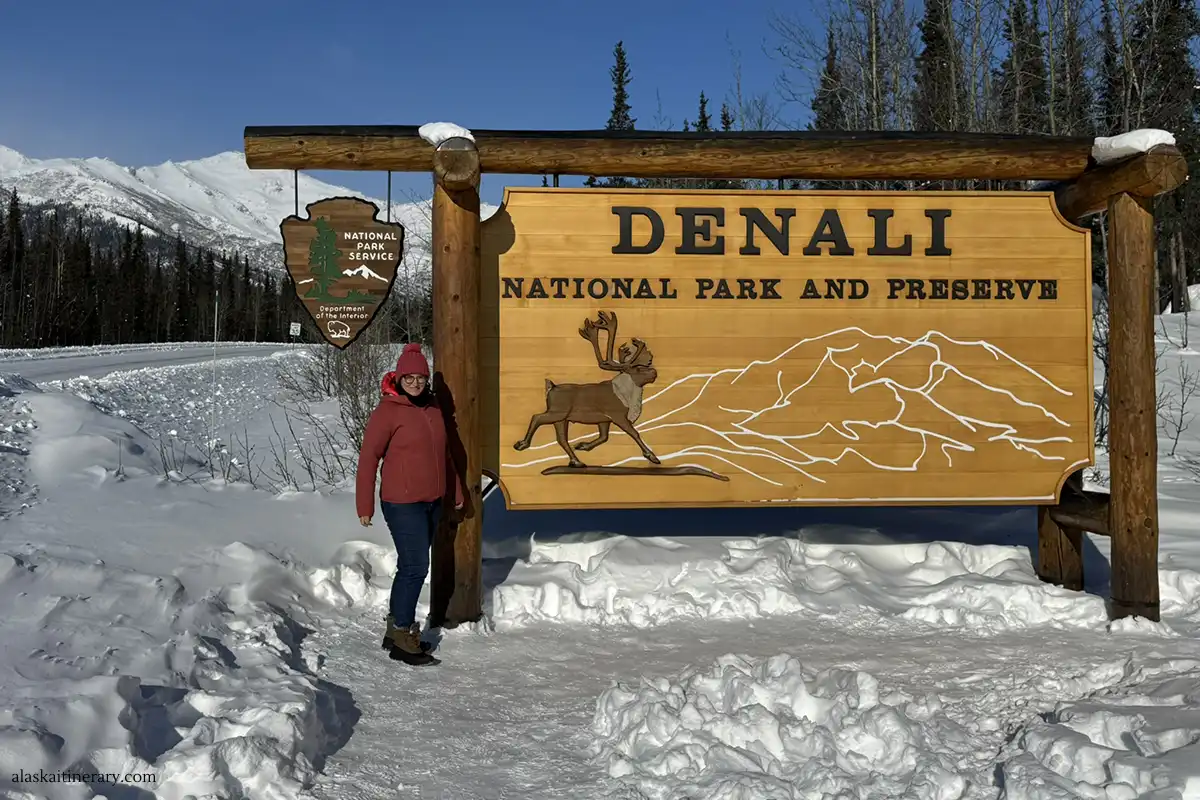
Although Denali National Park is Alaska’s most famous national park, visiting in winter is very limited. Most facilities are closed, access is limited, and you should not expect the full national park experience.
In winter, you can usually drive the Denali Park Road only as far as Mile 12-13 (or sometimes just to the Murie Science and Learning Center, which serves as the park’s winter visitor center), depending on road conditions.

Despite these limitations, Denali is still worth visiting if you’re traveling between Talkeetna and Fairbanks. It’s a beautiful place to stop for a few hours, enjoy the snowy scenery, and experience one of Alaska’s most iconic landscapes without the summer crowds.
Winter activities include:
- snowshoeing
- cross-country skiing
- winter hiking on snow-covered trails
- weekend visits to the Denali sled dog kennels (seasonal)
Important: There are no restaurants, stores, fuel stations, or lodging available in or near the park entrance during winter. Denali Village is essentially closed for the season. The nearest services are in Healy, about 12 miles north of the park entrance, or Cantwell, about 30 miles south.
Agnes’ Advice: For more details and tips check out my article: Visiting Denali in winter.
Seward — Best for Coastal Winter Scenery
Seward offers a completely different winter experience compared to Interior Alaska.
Instead of extreme cold and aurora-focused travel, you get:
- coastal scenery
- mountains meeting the ocean
- a quieter version of a popular summer destination
In winter:
- the town is much quieter
- services are limited
- there is no access to Exit Glacier area
From our experience, Seward feels calm and local in winter, far from the busy summer crowds.

Homer — Best for a Quiet, Off-Season Escape
Homer in winter is peaceful, remote, and very different from summer. Services are very limited.
You won’t find the same level of activity as in peak season, but that’s part of the appeal.
What makes Homer interesting in winter:
- dramatic coastal views
- quiet atmosphere with very few tourists
- slower pace and local feel
From our experience, Homer works best for travelers who enjoy:
- quiet destinations
- photography
- a slower, less structured trip
Not ideal for first-time visitors looking for many activities, but great for a unique winter experience.

How to Choose the Right Base for Your Trip
If you’re not sure where to go, here’s a simple way to decide:
- Best for northern lights: Fairbanks
- Best for first-time visitors: Anchorage
- Best for a mix of city and outdoor access: Anchorage
- Best for small-town charm: Talkeetna
- Best for easy day trips and glaciers: Palmer / Mat-Su Valley
- Best for coastal scenery: Seward
- Best for quiet, off-the-beaten-path travel: Homer
- Best for dog sledding: Fairbanks, Mat-Su Valley (Palmer area), Talkeetna
- Best for ice fishing: Mat-Su Valley and Fairbanks area
- Best for snowmobiling: Fairbanks, Talkeetna, and areas around Anchorage (including Mat-Su Valley and Girdwood)
- Best for skiing: Anchorage area and Alyeska Resort in Girdwood, Fairbanks (cross-country skiing), Mat-Su Valley (cross-country trails)
From our experience, Fairbanks and the Mat-Su Valley offer the widest range of winter activities, especially if you want to combine multiple experiences like dog sledding, snowmobiling, and ice fishing in one trip.
Best Things to Do in Alaska in Winter
Winter in Alaska is not just about the northern lights. There are many activities you can experience only during this season. From our experience, this is what makes a winter trip so special. You are not just sightseeing—you are actively experiencing Alaska.
Here are the best things to do in Alaska in winter.
See the Northern Lights
For many travelers, this is the main reason to visit Alaska in winter.
Alaska sits under the auroral oval, which makes it one of the best places in the world to see the northern lights. But not every location offers the same chances.
From our experience:
- Fairbanks gives you the highest chances due to its location and frequent clear skies
- Anchorage can work, but conditions are less reliable, if aurora is your priority – stay in Fairbanks area
To improve your chances:
- plan at least 3–4 nights in one location
- stay flexible and watch forecasts
- be ready to go out late at night
Agnes’ Advice: For detailed tips, locations, and planning advice, check our northern lights guides: Best Places to See Northern Lights in Alaska, and Best Alaska Northern Lights Tours.

Go Dog Sledding
Dog sledding is one of the most iconic Alaska winter experiences.
From our experience, it’s also one of the most memorable. You ride through snowy landscapes pulled by a team of trained sled dogs, often guided by experienced mushers.
What to expect:
- surprisingly active and engaging experience
- very cold conditions depending on location
- available near Fairbanks, Talkeetna, and the Mat-Su Valley
This is a must-do activity for first-time winter visitors.
Agnes’ Advice: For detailes check out our guide: Best Dog Sledding Tours in Alaska: Reviews, Tips, and How to Choose

Try Snowmobiling
Snowmobiling (often called snowmachining in Alaska) is one of the most exciting ways to explore winter landscapes.
You can cover much more ground than on foot and reach remote, scenic areas.
From our experience:
- tours are available near Fairbanks (North Pole area), Talkeetna, and Anchorage (Girdwood and Mat-Su Valley)
- conditions vary depending on snow and weather
- guided tours are the best option for most visitors
Great for adventure travelers and those who want a more active experience.
Agnes’ Advice: For detailes check out our guide: Best Snowmobile Tours in Alaska: Reviews, Tips, and How to Choose

Go Ice Fishing
Ice fishing is a unique Alaska winter activity that many visitors try for the first time.
From our experience, it’s much more comfortable than it sounds. Many tours provide heated huts and all the equipment you need.
What to expect:
- drilling through thick ice
- fishing in frozen lakes
- long, quiet moments surrounded by snow
Best areas:
- Mat-Su Valley
- Fairbanks area
A great option if you want something different and relaxing.


Go Skiing or Snowshoeing
Alaska offers excellent opportunities for winter sports.
You’ll find both:
- downhill skiing (mainly in Anchorage and at Alyeska Resort in Girdwood)
- cross-country skiing (very popular across Anchorage, Fairbanks, and the Mat-Su Valley)
From our experience, cross-country skiing is everywhere in Alaska. Locals use these trails daily in winter.
Snowshoeing is another easy way to explore snowy landscapes, even if you don’t have skiing experience.

Explore Glaciers in Winter
Glaciers are not just a summer activity. In winter, they feel even more dramatic and accessible in some areas.
From our experience, winter is a great time to explore glaciers in different ways:
- Matanuska Glacier (near Palmer)
- Matanuska Glacier is one of the most accessible glaciers in Alaska
- guided winter hikes directly on the glacier
- Knik Glacier (near Palmer)
- Knik Glacier is accessible by helicopter tours with glacier landings
- also reachable by snowmobile or ATV tours depending on conditions
- Castner Glacier Ice Cave (near Delta Junction)
- Castner Glacier is one of the most unique winter hikes
- you can walk into a glacier ice cave when conditions are safe

Experience Winter Festivals and Events
Winter is also festival season in Alaska, especially in late February and March. These events bring energy, local culture, and unique experiences you won’t find at any other time of year.
In Anchorage:
- Fur Rondy (Fur Rendezvous Festival)
- Iditarod ceremonial start and race season
In Fairbanks:
- World Ice Art Championships (Ice Alaska) — one of the largest ice carving competitions in the world
- Ice parks with massive sculptures, slides, and illuminated displays
From our experience, these festivals are not just tourist attractions. They are local events with a strong community feel. Visiting during this time adds a completely different dimension to your trip.
From our experience, glacier tours combined with winter activities like snowmobiling or helicopter landings are some of the most memorable experiences you can have in Alaska.


Visit Hot Springs
Soaking in hot water while surrounded by snow is one of the best winter experiences.
One of the most popular places is Chena Hot Springs near Fairbanks, but there are other options across the state.
From our experience:
- it’s a great way to relax after cold days
- it can also be combined with northern lights viewing
One of the most unique and relaxing winter activities.

Visit Santa Claus House in North Pole
Located just 20 minutes from Fairbanks, the Santa Claus House in North Pole is a fun stop for visitors of all ages. You can take a photo with the giant Santa statue, browse the gift shop, and enjoy the festive atmosphere year-round.
The North Pole area is also a great base for other winter adventures, including dog sledding, snowmobiling, and ice fishing, making it easy to combine several activities in one day.


Enjoy Winter Trails and Outdoor Activities
If you like being active outdoors, Alaska offers many options:
- snowshoeing
- fat tire biking
- walking winter trails
- cross-country skiing
- ice skating
- walk with reindeer
From our experience, even short walks in winter landscapes can be incredibly rewarding.

Take a Scenic Winter Train Ride
In winter, the Alaska Railroad operates one main passenger route between Anchorage and Fairbanks.
The Aurora Winter Train is a full-day journey that takes about 12 hours, running through some of the most scenic parts of Alaska. You travel across snow-covered landscapes, forests, rivers, and wide open valleys, with views of the Alaska Range on clear days.
From our experience, this is not just transportation—it’s part of the adventure.
What to expect:
- a long travel day (morning to evening)
- large windows and comfortable seating
- winter scenery you would not see from the road
- no need to drive in winter conditions
This route is a great option if you want to connect Anchorage and Fairbanks without driving, while still enjoying the landscape along the way.

What to Wear and Pack for Alaska in Winter
What you wear in Alaska in winter can make or break your trip. From our experience, proper clothing is the difference between enjoying your time outside and feeling uncomfortable after just a few minutes.
Agnes’ Advice: You don’t need extreme gear—but you do need the right layers and essentials. For a complete packing list and a free printable checklist, check our detailed Alaska winter packing list.
The Layering System (Most Important)
Dressing in layers is key.
You’ll need:
- a base layer (thermal top and bottom)
- a mid layer (fleece or insulated jacket)
- an outer layer (windproof and waterproof jacket)
From our experience, layering allows you to adjust quickly depending on temperature and activity.
Essential Winter Gear
Do not underestimate these items:
- insulated, waterproof winter boots
- warm merino hat that covers your ears
- gloves or mittens (mittens are warmer)
- thick merino wool socks
- neck gaiter or face covering for very cold days
In colder areas like Fairbanks, these are not optional.
Extras That Make a Big Difference
From our experience, these small items improve comfort a lot:
- hand and toe warmers
- insulated liners for gloves
- thermal insoles
- sunglasses (for snow glare)
Do You Need to Buy Everything?
Not necessarily:
- you can rent winter gear in places like Fairbanks (Alaska Outdoor Gear Rental, Alaska Element) and Anchorage (6th Avenue Outfitters, Alaska Outdoor Gear Rental)
- many tours also provide extra gear
This is a great option if you don’t want to invest in expensive clothing.
From our experience, it’s better to be slightly overdressed than underdressed. You can always remove a layer, but you can’t fix being cold once you’re outside.

How to Get Around Alaska in Winter
Getting around Alaska in winter requires more planning than in summer. Distances are long, conditions can change quickly, and not all transportation options run year-round.
From our experience, the best way to get around depends on your itinerary, comfort level, and travel style.
Driving (Most Flexible Option)
Driving gives you the most freedom, but it’s not for everyone.
Best for:
- experienced winter drivers
- flexible itineraries
- exploring areas like Anchorage, Mat-Su Valley, and routes toward Fairbanks
From our experience, always choose a 4WD vehicle and be prepared for changing conditions.
Train (Anchorage to Fairbanks)
The Alaska Railroad operates a winter route between Anchorage and Fairbanks.
- travel time: about 12 hours
- comfortable and scenic
- no need to drive in winter conditions
From our experience, this is a great alternative if you want to avoid winter driving.
Flights (Fastest Option)
Flying is often the easiest way to cover long distances.
- short flights between Anchorage and Fairbanks
- reliable even in winter (with occasional delays)
From our experience, flying saves time and reduces stress, especially on shorter trips.
Tours and Transfers (Easiest Option)
If you don’t want to drive, tours are the easiest way to get around.
Best for:
- first-time visitors
- aurora trips
- winter activities like dog sledding or snowmobiling
Many tours include transportation, which simplifies planning.

Driving in Alaska in Winter: What You Need to Know
Driving in Alaska during winter is possible, but it requires more preparation than a typical road trip. Snow, ice, limited daylight, and rapidly changing weather can make conditions very different from summer.
From our experience, driving around Anchorage and the Mat-Su Valley is generally easier, while longer routes—especially through Interior Alaska—can be much more challenging.
Should You Drive in Winter?
Yes—but only if you’re comfortable driving on snow- and ice-covered roads.
If you have little or no winter driving experience, we recommend:
- staying in one destination
- joining guided tours with transportation
- avoiding long road trips
Safety should always come before flexibility.
Rent the Right Vehicle
If you plan to drive, choose an AWD or 4WD vehicle whenever possible. Road conditions can change quickly, especially outside major cities.
Also remember to:
- check your rental company’s winter driving policies
- verify insurance coverage
- allow extra travel time
Agnes’ Advice: For route-specific advice, road conditions, rental tips, and winter driving safety, read our complete Driving in Alaska in Winter guide.


How to Plan an Alaska Winter Trip
Planning a winter trip to Alaska is very different from planning a summer road trip. Distances are long, daylight is limited, and weather can change quickly. From our experience, the best itineraries are simple, flexible, and built around one main goal.
How Many Days Do You Need?
The ideal length depends on what you want to experience.
- 3–4 days:
Best for a short northern lights trip based in one location (usually Fairbanks) - 5–7 days:
Enough time to combine aurora viewing with a few activities like dog sledding or snowmobiling - 8–10 days:
A great option if you want to visit more than one area, such as Anchorage and Fairbanks
One Base vs Multi-Stop Trip
This is one of the most important decisions.
Staying in One Place
Best for:
- northern lights trips
- first-time visitors
- travelers who don’t want to drive in winter
Popular choices:
- Fairbanks (best for aurora)
- Anchorage (best for easier logistics)
This is the easiest and least stressful option.
Visiting Multiple Locations
Best for:
- longer trips (7+ days)
- travelers comfortable with winter driving
- those who want to see different landscapes
Common routes:
- Anchorage → Talkeetna → Fairbanks
- Anchorage → Fairbanks (by car or train)
From our experience, keep it simple. Adding too many stops in winter often leads to more driving than enjoying.
How Much Should You Plan in Advance?
Winter travel requires a balance between planning and flexibility.
Plan ahead:
- accommodation
- key tours (dog sledding, snowmobiling, aurora tours)
Stay flexible:
- daily schedule
- northern lights viewing nights
- driving plans
From our experience, the best Alaska winter trips are simple and focused.
Choose:
- one or two main locations
- a few key activities
- enough nights to enjoy the experience without rushing
Trying to do too much in winter often leads to stress, especially with weather and road conditions.
Agnes’ Advice: For a detailed day-by-day plan, check our 10-day Alaska winter itinerary and our Alaska Northern Lights Itinerary for more ideas.

What Is Open in Alaska in Winter?
One of the biggest differences between summer and winter travel in Alaska is that not everything is open year-round. This is something many first-time visitors don’t expect.
From our experience, winter travel works very well—but only if you understand what stays open, what is limited, and what requires planning ahead.
What Stays Open Year-Round
You’ll still find plenty to do in winter, especially in larger towns and popular winter destinations.
Generally open in winter:
- hotels, lodges, and vacation rentals
- many restaurants and cafes in larger towns
- grocery stores and basic services
- winter tours (dog sledding, snowmobiling, aurora tours, ice fishing)
- hot springs and some attractions
- Alaska Railroad (Anchorage to Fairbanks route)
In places like Anchorage and Fairbanks, you’ll have no problem finding accommodation, food, and activities.
What Is Limited or Seasonal
This is where planning becomes important.
Some things you may expect from summer travel are:
- closed completely
- operating on reduced hours
- only open on certain days
- dependent on snow and weather conditions
Examples:
- some visitor centers and museums
- smaller restaurants and local businesses
- certain tours that run only in peak winter months (January–March)
- national park services and facilities
- Denali National Park has very limited access in winter. You can usually drive only as far as Mile 9 (or less, depending on road conditions). There are no services, restaurants, or stores inside the park, and most hotels and lodges near the entrance are closed for the winter.
Roads and Access in Winter
Access also changes in winter.
From our experience:
- some roads remain open but require careful driving
- others are closed or not maintained for regular travel
Example:
- the road to Exit Glacier in Seward is closed to vehicles in winter, but you can still reach the area by hiking, skiing, or snowshoeing
Always check current conditions before planning specific stops.
Tours and Activities: Plan Ahead
Winter tours are popular but more limited than in summer.
From our experience:
- the best tours sell out, especially in peak months (February and March)
- availability depends on weather and conditions
We recommend booking in advance for:
- dog sledding
- snowmobiling
- northern lights tours
- glacier tours
Why You Should Always Double-Check
Even if something is listed as open, it’s always best to confirm before your trip.
In winter:
- hours can change
- conditions can affect availability
- some businesses adjust schedules without much notice
From our experience, a quick check before you go can save you a lot of time and frustration.

Where to Stay During an Alaska Winter Trip
Choosing where to stay in Alaska in winter is just as important as choosing what to do. From our experience, the right base can make your trip easy and enjoyable, while the wrong one can add unnecessary stress—especially in winter conditions.
In most cases, it’s better to stay in one main location or split your trip between two carefully chosen bases.
Best Base for First-Time Visitors
If this is your first winter trip to Alaska, we recommend staying in:
- Anchorage → easiest logistics, most services, and access to nearby areas
- Fairbanks → best choice if your main goal is northern lights
Both cities offer:
- a wide range of accommodation
- easy access from major airports
- tours and activities available without long drives
From our experience, these two locations are the easiest and most reliable for planning a winter trip.
Best Base for Northern Lights
If seeing the northern lights is your top priority, choose:
- Fairbanks
It offers:
- higher chances of clear skies
- location under the auroral oval
- many tours and accommodations focused on aurora viewing
From our experience, staying 3-4 nights in one place gives you the best chance to see the lights.
City Hotel vs Lodge vs Aurora Stay
You’ll find different types of accommodation in Alaska in winter.
City Hotels (Anchorage, Fairbanks)
- easiest and most convenient option
- close to restaurants and services
- good base for tours
Lodges and Cabins
- more remote and scenic
- quieter experience
- sometimes better for northern lights viewing
Aurora-Focused Stays
- designed specifically for northern lights
- often located outside city lights
- may include wake-up calls or viewing areas
Should You Stay in One Place or Move Around?
This depends on your trip length and comfort level.
Stay in One Place. Best for:
- shorter trips (3–5 days)
- northern lights focus
- travelers who don’t want to drive
Split Between Two Locations. Best for:
- longer trips (7+ days)
- combining Anchorage and Fairbanks
- experiencing different regions
Location Matters More Than Luxury
In winter, location is often more important than the type of accommodation.
It’s better to:
- stay close to your main activities
- reduce driving time
- avoid long distances in winter conditions
From our experience, choose your accommodation based on your main goal:
- Northern lights → Fairbanks
- Easy trip with variety → Anchorage
- Quiet, scenic stay → smaller towns like Talkeetna, Mat-Su Valley
Once you choose the right base, planning the rest of your trip becomes much easier.

Alaska Winter Travel Costs: Is Winter Cheaper Than Summer?
Many travelers assume Alaska is always expensive. That’s partly true—but winter can be more affordable than summer in some ways, while still having its own costs.
From our experience, winter travel is not “cheap,” but it can offer better value if you plan it right.
Where You Can Save Money in Winter
Compared to peak summer season, winter often brings lower demand.
You may find:
- lower hotel prices in many areas, especially outside peak event periods
- better deals in cities like Anchorage, Fairbanks, and the Mat-Su Valley (Palmer and Wasilla area)
- fewer crowds, which means more availability and sometimes better rates
- more flexibility with bookings
Flights can also be:
- more affordable in winter, especially outside holidays
- easier to find compared to busy summer months
From our experience, standard hotels and vacation rentals in Anchorage, Fairbanks, and the Mat-Su Valley are often more budget-friendly in winter.
However, not all accommodation is cheaper.
- winter lodges, aurora-viewing cabins, and remote stays can be significantly more expensive
- these properties often include unique experiences, locations away from light pollution, or added services
So while you can save on regular hotels, specialized winter stays may increase your overall budget.
Where You May Spend More
Some parts of a winter trip can be more expensive than expected.
Typical higher costs include:
- guided tours (dog sledding, snowmobiling, aurora tours)
- specialized winter activities
- warm clothing and gear if you don’t already have it
- remote lodges or aurora-focused stays
These experiences are often the highlight of a winter trip, so it’s worth planning your budget around them.
From our experience, the best way to manage your budget is to:
- choose 1–2 main paid activities
- mix them with free or low-cost experiences
- stay in one location to reduce transportation costs
Trying to do everything can quickly increase your budget, especially in winter.

Common Mistakes to Avoid When Planning an Alaska Winter Trip
Alaska in winter can be an incredible experience—but only if you plan it the right way. From our experience, most problems travelers face are not about the destination itself, but about expectations and preparation.
Here are the most common mistakes to avoid.
Trying to See Too Much
Alaska is huge, and winter conditions slow everything down.
From our experience, trying to visit too many places leads to:
- long driving days
- less time for activities
- more stress if weather changes
It’s much better to focus on one or two locations and enjoy them fully.
Choosing the Wrong Base for Your Goal
Not every place offers the same experience in winter.
Common mistakes:
- staying in Anchorage expecting strong northern lights
- skipping Fairbanks when aurora is the main goal
- choosing remote areas without enough services
Always match your base to your priority:
- northern lights → Fairbanks
- easier trip → Anchorage
Underestimating the Cold
This is one of the biggest mistakes.
From our experience, Alaska cold feels very different from typical winter in most parts of the U.S.
- temperatures in the Interior can drop to -20°F (-29°C) or lower
- exposed skin can get cold quickly
- being outside for long periods requires proper gear
Dressing correctly is essential—not optional.
Not Planning Enough Nights for Northern Lights
Many travelers expect to see the northern lights in one night.
In reality:
- aurora is never guaranteed
- weather and cloud cover play a big role
From our experience, plan at least 3–4 nights in one location to improve your chances.
Driving Without Winter Experience
Driving in Alaska in winter is not the same as driving in mild winter conditions.
Common mistakes:
- renting the cheapest car instead of a 4WD/AWD
- not understanding icy road conditions
- underestimating low visibility
If you don’t have experience driving on snow and ice, it’s better not to drive at all.
Packing the Wrong Clothing
Many travelers pack for “city winter,” not Alaska winter.
Common issues:
- not enough layers
- poor-quality boots
- not protecting hands, face, and feet properly
From our experience, proper winter gear makes a huge difference in comfort and safety.
Expecting Summer Experiences in Winter
Winter Alaska is a completely different destination.
Some things are:
- closed
- limited
- or not available at all
Examples:
- some national park services
- summer tours and cruises
- certain roads and attractions
Always check what is open before planning your itinerary.
Not Leaving Flexibility in Your Plan
Weather plays a big role in winter travel.
From our experience:
- conditions can change quickly
- tours can be rescheduled
- northern lights depend on clear skies
Build flexibility into your itinerary whenever possible.

Final Thoughts
Planning a winter trip to Alaska is all about making smart, simple choices. From our experience, the biggest difference comes from picking the right base, staying long enough in one place, and not overloading your itinerary. Winter travel here rewards a slower pace. Give yourself time for changing weather, for northern lights viewing, and for enjoying each activity without rushing.
Focus on a few key experiences instead of trying to see everything. Book the most important tours in advance, prepare properly for the cold, and stay flexible with your daily plans. If you do that, everything else falls into place.
Alaska in winter is not complicated when you approach it the right way. It becomes one of the most memorable and unique trips you can take.
Looking for more planning advice? Explore our Alaska Travel Resources & Tips guide, where we’ve collected our best Alaska travel tips.
Do You Like It? Pin It For Later!


Ice cave looks amazing!! We have been planning a trip to Alaska for a while and hopefully will get to go soon. I am originally from Finland, so we wont be traveling to see Northern Lights and rather are looking to travel some other season, or maybe taking a cruise.
Your guide on choosing the right base is really helpful, especially for first time visitors to Alaska in the winter. I come from a tropical area so I’d definitely want to base in Fairbanks for the northern lights, ice fishing, dog sledding and snowmobiling.
I LOVE how detailed this article is! So much useful information! Thank you! I have chased the Northern Lights in many places, and Alaska is on my bucket list! The funny thing is… I could never see the Aurora Borealis but I got to see the Aurora Australis near Sydney, where I live!
Next to Fall, Winter is my favourite season so I’d love to visit Alaska in the winter – especially to see the northern lights and to experience dog sledding. I admit that I’d be nervous driving though.
Alaska’s winter landscapes look truly spectacular. This is a great guide for anyone wanting to experience the beauty, activities, and unique character of the region during the colder months.
Oh wow! Cold. Very cold. These sound like great ideas for people. Ive not been to Alaska but know several that love it.
The railroad trip, reindeer walks and northern lights would be amazing in the winter-thanks for sharing!
I find the comparison tables very helpful! It is crazy to see that in the winter some cities have less than 4 hours of daylight. I wouldn’t do well in winter. But I would love the daylight in the summer!
Alaska looks gorgeous in the winter time however, I’m not sure I would survive or enjoy the cold temperatures. I’d probably be doing more indoor things!
I’ve only been to Alaska once but fell in love with the place! That being said, I was always a little worried to visit in the winter. This has really changed my mind though! Seems like there so much to do. Will 100% need to go back!
Fantastic guide with lots of practical advice. It really makes an Alaska winter adventure feel possible. I’d love to see the northern lights some day…
I think if I were to go, I’d start with Anchorage because of the variety of things to do and the milder temperatures. I don’t do well with extreme cold, but I know I can deal with the temperatures Anchorage gets. Lots of great tips in this post!