
Best Northern Lights Viewing Spots in Alaska: The Complete Guide

Seeing the northern lights in Alaska is a dream for many travelers. But the real question is: where should you go for the best aurora views? Not every spot gives the same chance. Some places are easy to reach from major cities, while others require a drive into the wilderness. A few are hidden gems that only locals or experienced aurora chasers talk about. This guide focuses on the best northern lights viewing spots in Alaska—from well-known favorites around Fairbanks and Anchorage to remote Arctic villages and quiet roadside pullouts. You’ll find practical details on how to get there, whether you plan to go on your own or join a guided tour.
This article may contain affiliate / compensated links. For full information, please see our disclaimer here.
Your Aurora Viewing Resources
Knowing where to see the northern lights in Alaska doesn’t guarantee success. Many factors affect your chances, including weather, season, solar activity, and even cloud cover on a single night.
Before choosing where to watch the Northern Lights, it helps to understand the broader planning factors that shape Alaska travel, including seasons, transportation, and realistic expectations.
That’s why I’ve created detailed resources to help you plan smarter and improve your odds:
- Alaska Northern Lights Season: Month-by-Month Guide and How to Improve Your Odds. Learn which months are strongest and how daylight impacts your viewing chances.
- Best Northern Lights Tracking Apps for Alaska: Alerts, Kp, Clouds & Tips. Forecast tools I personally use to decide when and where to go.
- Photographing the Aurora in Alaska: Camera Settings, Gear & Pro Tips. A step-by-step guide for capturing the aurora, from beginner to advanced.
- Best Fairbanks Northern Lights Tours: Top Operators, Spots & Tips. Fairbanks has the highest odds; this guide compares top tour options.
- The Best Northern Lights Tours in Alaska: What You Need to Know. A statewide look at tours starting from Anchorage, Fairbanks, and beyond.
- Chasing the Aurora: A 7-Night Northern Lights Road Trip in Alaska On Your Own. A complete itinerary for planning a self-drive aurora trip.
With these resources, you can prepare for timing, tracking, tours, and photography—and this article will guide you to the best locations.
From Fairbanks to remote Interior locations, aurora viewing defines many of the most unforgettable Alaska winter experiences.

Quick Picks: Top 10 Aurora Spots in Alaska (At-a-Glance)
Short on time? Here are the best places to see the northern lights in Alaska:
- Murphy Dome (Fairbanks) – One of the highest points near Fairbanks, offering wide horizons and dark skies about 25 miles from the city. See Location on Google Maps.
- Cleary Summit (Fairbanks/Steese Highway) – A popular ridgeline lookout north of Fairbanks with easy roadside pullouts for quick stops. View on Google Maps.
- Chena Lake Recreation Area (North Pole) – Open landscapes with broad horizons, perfect for catching low auroras just outside Fairbanks. See Location on Google Maps.
- Creamer’s Field (Fairbanks) – An in-town option with flat, open fields—good for those without a car. View on Google Maps.
- Glen Alps / Flattop Trailhead (Anchorage) – Elevated views above the city lights, with parking and trails open year-round. See Location on Google Maps.
- Point Woronzof (Anchorage) – A coastal bluff with an unobstructed northern view over Cook Inlet and the Alaska Range. View on Google Maps.
- Eklutna Tailrace & Knik River Valley (Anchorage area) – Flat northern horizons, easily reached by car, good for lower aurora activity. See Location on Google Maps.
- Talkeetna Area – Dark skies and, on clear nights, the chance to photograph aurora with Denali in the background. View on Google Maps.
- Coldfoot & Wiseman (Brooks Range) – Remote Arctic villages above Arcitc Circle with some of the darkest skies and highest aurora success rates. View Coldfoot on Google Maps. View Wiseman on Google Maps.
- Nome (Bering Sea Coast) – Coastal tundra views, minimal light pollution, and strong aurora activity far north. View on Google Maps.

Interior Alaska: Fairbanks and Nearby (Best Overall Odds)
If the northern lights are on your Alaska bucket list, plan your trip to Interior Alaska. Fairbanks is the unofficial aurora capital of Alaska. Staying 2–3 nights in the Fairbanks area gives you the highest chances of seeing the aurora.
The city sits directly under the auroral oval, meaning even moderate solar activity can produce strong northern lights. Clear skies are common in winter, and you’ll find plenty of viewing spots within a short drive from downtown.
Murphy Dome
- Recommended Tour: SkyChase Northern Lights Experience
Murphy Dome is one of the highest points near Fairbanks, about 25 miles from downtown. Its elevation gives you wide, unobstructed views of the northern horizon. It’s popular with locals and tours alike. Roads are maintained in winter, but conditions can still be icy—four-wheel drive and good tires are recommended.
Agnes’ Advice: Go early in the evening to grab a good parking spot. On active nights, locals and tours fill the pullouts quickly.
Cleary Summit (Steese Highway)
- Recommended Tour: Cleary Summit Aurora Glass House Luxury Northern Lights Tour
About 20 miles north of Fairbanks, Cleary Summit is a classic aurora viewing site along the Steese Highway. Roadside pullouts give quick access to ridgeline views. It’s closer than Murphy Dome, making it a good choice if you want a shorter drive. Be prepared for wind exposure—it can feel much colder here than in town.
Agnes’ Advice: Dress extra warm—windchill here is brutal. Clear views are fantastic, but the exposed ridgeline makes it feel much colder.
Chena Hot Springs Resort
- Recommended Tour: Northern Lights and Chena Hot Springs Tour
Located about 60 miles northeast of Fairbanks, Chena Hot Springs Resort combines northern lights viewing with a classic Alaskan experience. The resort offers guided aurora tours that take you to darker spots on the property, away from light pollution. Visitors also enjoy the outdoor hot springs, which makes waiting for the aurora more comfortable on cold nights. Roads are maintained year-round, so access is straightforward even in winter.
Agnes’ Advice: Don’t forget your swimsuit—the outdoor hot springs give you the rare chance to watch the aurora while soaking in steaming mineral water.
Chena Lake Recreation Area (North Pole)
- Recommended Tour: Northern Lights Aurora Tour with FREE Photography
Located about 20 miles southeast of Fairbanks, the North Pole area offers wide-open horizons over frozen lakes and snowy fields. It’s especially good for photographing auroras that arc low across the horizon. Access roads are plowed in winter, and the spot is popular with both locals and guided tours.
Agnes’ Advice: Snowy fields and frozen lakes here reflect aurora colors beautifully. Bring a wide-angle lens if you plan to take photos.
Creamer’s Field
If you don’t have a car, Creamer’s Field Migratory Waterfowl Refuge is a practical in-town option. Just a short distance from downtown Fairbanks, it provides flat, open fields with fewer lights than most of the city. While it doesn’t compare to remote sites, it’s a good backup if you want something quick and easy.
Agnes’ Advice: You can still reach Creamer’s Field by taking a taxi or affordable Uber ride from downtown Fairbanks. It’s one of the easiest aurora spots to access without your own vehicle.
Bonus Tip: Real-Time Tracker
Fairbanks is the only city with its own dedicated aurora tracker. The Explore Fairbanks Aurora Tracker combines solar activity forecasts with local cloud cover updates for six surrounding viewing spots. Checking this tool before you head out can save you time and give you the best odds of success.

Arctic Alaska: Dark Skies and Big Success Rates
Heading north of Fairbanks takes you into Alaska’s Arctic, where skies are darker, towns are smaller, and the aurora shines with little interference. These locations require more effort to reach, but they reward you with some of the best northern lights displays anywhere in the world.
Arctic Circle (Dalton Highway)
The Arctic Circle is one of the most iconic aurora viewing locations in Alaska. Sitting far north of Fairbanks and away from major settlements, it offers very dark skies and strong aurora potential.
You can reach the Arctic Circle along the Dalton Highway, either by driving yourself or by joining a guided tour from Fairbanks. Self-driving requires careful planning, a vehicle approved for this route, and comfort with remote gravel roads. Guided Arctic Circle tours are a popular alternative, especially in winter, as they remove rental restrictions and road-related stress.
Agnes’ Advice: Because most car rentals forbid driving the Dalton Highway, taking a guided tour is often the only reliable option.
Coldfoot (Brooks Range)
- Recommended Tour: Arctic Circle and Northern Lights Tour
Coldfoot sits along the Dalton Highway, about 250 miles north of Fairbanks. It’s a small truck stop settlement, but its dark skies make it an excellent aurora base. Many guided tours offer overnight packages here, often combining aurora viewing with daytime Arctic Circle sightseeing. Road access is possible, but conditions are challenging in winter.
Wiseman (Brooks Range)
About 13 miles north of Coldfoot, Wiseman is a tiny historic village with cabins and lodges that cater to aurora travelers. The skies here are exceptionally dark, and the setting along the Brooks Range adds dramatic mountain backdrops. Visitors often describe it as one of the most peaceful aurora spots in Alaska.
Agnes’ Advice: Stay in a local cabin or lodge. Many owners are aurora photographers themselves and share real-time tips during your stay.
Nome (Bering Sea Coast)
On the western coast of Alaska, Nome offers wide tundra horizons and minimal light pollution. The aurora often dances over the Bering Sea, creating reflections and sweeping sky displays. Nome is accessible by plane from Anchorage year-round, and guided tours are available in winter.
Agnes’ Advice: Rent a car if you can. The road system around Nome is limited, but the three main roads stretch far enough into the tundra to find perfect dark-sky spots.
Utqiaġvik (Barrow)
The northernmost town in the United States, Utqiaġvik lies far above the Arctic Circle. Winters are extremely cold, but the aurora is frequent and vivid. Long polar nights provide extended viewing opportunities, though weather can be harsh. Flights from Anchorage are the only way to reach it.
Agnes’ Advice: Plan for extreme cold—temperatures can drop below –40°F. Dress in layers and bring the warmest gear you own.

Southcentral Alaska: Anchorage, Mat-Su, and Talkeetna
Southcentral Alaska gives you many options for aurora viewing. While Anchorage has more light pollution than Fairbanks, you don’t need to travel far to find dark skies. The Mat-Su Valley and Talkeetna region also offer excellent viewpoints with mountain backdrops.
Hatcher Pass (Mat-Su Valley)
Hatcher Pass, located north of Palmer and Wasilla, is one of the most scenic aurora spots in Southcentral Alaska. Surrounded by mountains in the Talkeetna Range, it offers dark skies, dramatic landscapes, and little light pollution once you leave the valley towns behind.
The drive up is beautiful, though winter road conditions can be challenging—snow and ice are common, and parts of the pass is close in winter. Still, the lower pullouts remain accessible year-round.
Agnes’ Advice: Bring a thermos and extra layers. Even on calm nights, mountain valleys here hold cold air, and temperatures can drop well below Anchorage’s.
Glen Alps / Flattop Trailhead (Anchorage)
- Recommended Tour: Northern Lights Tour
Just 20 minutes from downtown Anchorage, this trailhead sits above the city lights. The parking area and ridges give a wide view of the northern horizon. Roads are plowed year-round, though icy conditions are common.
Agnes’ Advice: Arrive early on clear nights. Locals often fill the parking lot, not just for aurora but also for stargazing.
Point Woronzof (Anchorage)
Located on the coast just west of the airport, Point Woronzof offers clear views north over Cook Inlet. The distant Alaska Range makes a dramatic backdrop when skies are clear. The area is easy to reach by car year-round.
Agnes’ Advice: Dress for wind. The bluff is often gusty, and the cold feels sharper right on the water.
Eklutna Tailrace & Knik River Valley (Anchorage area)
About 40 miles northeast of Anchorage, these spots provide a flat northern horizon—perfect when aurora activity is low. They’re easy to access by car and are popular with local photographers. Also Eagle River Nature Center is a nice place for aurora viewing.
Agnes’ Advice: Fog can settle in the river valley on still nights. If conditions look poor, head slightly higher into the surrounding hills.
Girdwood & Turnagain Arm Pullouts
The coastal Seward Highway south of Anchorage offers several pullouts with views across Turnagain Arm. While weather here is less predictable, breaks in the clouds can create stunning aurora reflections over the water.
Girdwood itself is Alaska’s top ski resort town, known for Alyeska Resort. By day, you can ski or ride the tram to the summit for sweeping mountain views. By night, you can look for aurora in the same valley—making it a perfect year-round destination.
Agnes’ Advice: Stop at multiple pullouts along the Arm. Sometimes just a short drive reveals clear skies hidden behind the mountains.
Talkeetna Area
Talkeetna sits about halfway between Anchorage and Denali. Its small-town charm combines with dark skies, and on clear nights you can frame the aurora with Denali itself. Several pullouts just outside town provide excellent northern views.
Agnes’ Advice: Spend the night if you can. Talkeetna offers cozy lodges and a slower pace, giving you more time to wait for the aurora.

Denali Region: Healy and Park Viewpoints
Denali National Park is better known for its wildlife and mountain scenery, but the area also offers excellent northern lights viewing in winter. Skies here are darker than Anchorage and less cloudy than coastal regions, though not as consistent as Fairbanks.
Healy
Just 11 miles north of the Denali Park entrance, Healy is a small community with lodging and easy road access. The dark skies and broad valleys make it a good base for aurora watching, especially if you plan to visit the park by day and chase the lights at night.
Denali Park Viewpoints (Along the Parks Highway)
Several pullouts along the Parks Highway near the Denali entrance provide wide northern views. These spots are easy to reach by car and often quieter than Fairbanks viewing sites. Winter driving can be icy, but roads are maintained.
Agnes’ Advice: Stop at multiple pullouts as you drive. Conditions can change quickly, and a clear view may be just a few miles down the road.

Kenai Peninsula: Occasional, But Worth Watching
The Kenai Peninsula isn’t the top aurora region in Alaska, but during strong geomagnetic storms, the lights can still be seen. Towns like Seward and Homer offer wide horizons over water, which makes for beautiful reflections when the aurora does appear. Weather is less predictable than in the Interior, and cloud cover is common, but skies can sometimes break clear.
Seward
Seward’s coastal setting gives open views across Resurrection Bay. Light pollution is limited once you leave the small downtown area. While aurora isn’t frequent here, major events can light up the bay with green reflections.
Agnes’ Advice: Head just outside town toward Lowell Point or along the Resurrection River valley for darker skies.
Homer
Homer sits at the end of the Kenai Peninsula, with views across Kachemak Bay and the surrounding mountains. Locals occasionally spot the aurora from Homer Spit, where the northern horizon is wide open.
Agnes’ Advice: Check the Kp index before you go. In Homer, you’ll usually need a higher Kp (4–5 or above) to see the aurora clearly.
Other Kenai Spots
Smaller communities like Kenai and Soldotna have occasional aurora sightings too, though light pollution can be stronger here than in Homer or Seward.
Agnes’ Advice: Drive just outside town into open areas for better skies—you don’t need to go far to escape streetlights.

Southeast Alaska: Possible, But Cloudier
Southeast Alaska, also known as the Inside Passage, is one of the cloudiest regions in the state. Towns like Juneau, Sitka, and Ketchikan are surrounded by rainforest and mountains, which means skies are often overcast in winter.
Aurora sightings here are rare compared to Fairbanks or Arctic Alaska, but not impossible—especially during strong solar storms.
Most Inside Passage towns are reached by cruise ship, but if you dream of seeing the aurora on an Alaska cruise, your best chance is on a September or October sailing.
Still, the odds are low, weather is often tricky, and Alaska cruise ports activities can be limited—so if seeing the northern lights is your top priority, plan a land trip to Fairbanks instead.
Juneau
Juneau’s coastal location and frequent cloud cover make aurora viewing a challenge. Still, during major aurora events, locals head to spots like North Douglas Island or out-the-road pullouts where skies can sometimes clear.
Sitka
Sitka is further south and surrounded by ocean and rainforest. Aurora sightings are very rare here, but they occasionally happen during strong geomagnetic storms.
Ketchikan
Ketchikan is one of the wettest towns in the United States, with frequent rain and clouds. Aurora viewing is extremely rare, even during peak activity.
Western & Northwest Alaska: Big Skies, Few Lights
Fewer people travel to Alaska’s western and northwest regions, but for aurora chasers, these areas offer some of the darkest skies in the state. With little light pollution and vast open tundra, the northern lights often fill the entire horizon. Access is more limited—usually by plane from Anchorage—but the experience is unforgettable.
Kotzebue
Located above the Arctic Circle on the Chukchi Sea, Kotzebue is known for clear tundra views and a wide-open northern horizon. The town is accessible by daily flights from Anchorage, and guided cultural tours sometimes include aurora viewing.
Bethel
Bethel lies further south, along the Kuskokwim River. While not as far north as Kotzebue, it still offers good aurora potential with minimal light pollution. Weather here can be cloudier, but when skies clear, the lights are spectacular.
Other Remote Villages
Smaller communities across Northwest Alaska, such as Nome (covered earlier) or villages along the Yukon-Kuskokwim Delta, provide authentic experiences with strong aurora potential. Access is almost always by plane, and weather can delay travel, so flexibility is important.
Agnes’ Advice: If you plan to include these areas, build extra days into your itinerary. Weather-related flight delays are common in rural Alaska.
Aurora Viewing Strategy
Alaska is huge, and distances between regions are long. If you’re in Anchorage, you won’t simply drive to Fairbanks for clearer skies, and if you’re in Fairbanks, you won’t head south to the Kenai overnight. The best approach is to choose one base and stay for several nights.
Each location—Fairbanks, Denali, the Arctic, Anchorage, the Kenai Peninsula—offers good odds if you give it time. Weather and solar activity change daily. Even with the best forecasts, the aurora may appear one night and hide the next.
That’s why patience is key. Plan at least three nights in one place for the best chance of success. Use local tools like the Explore Fairbanks Aurora Tracker or the UAF Aurora Forecast, but remember: nothing replaces staying put and waiting. The longer you allow, the better your odds of seeing the lights.
Safety, Parking & Etiquette at Night
Aurora chasing often means heading out late, in the dark, and in winter conditions. A little preparation makes the experience safer and more enjoyable.
Driving and Parking
- Winter roads: Expect snow and ice on highways and side roads. Use winter tires, and drive slower than you think you need to.
- Parking pullouts: Many aurora spots in Alaska are just roadside pullouts. Always park fully off the road, with hazard lights if needed.
- Don’t block others: Leave room for other cars. Some pullouts are small and fill quickly on active nights.
Staying Safe Outdoors
- Dress in layers: Standing still at –20°F feels colder than walking. Insulated boots, mittens, and a face covering make the difference.
- Bring a headlamp: Choose one with a red-light mode to protect your night vision. Keep extra batteries in your pocket.
- Stay aware: Wildlife is less active in deep winter, but moose sometimes wander near roads. Give them space.
Agnes’ Advice: Check out my article: What to Pack for an Alaska Winter Trip.
Aurora Etiquette
- Respect silence: Many people come for a quiet experience. Keep voices down, especially in small groups.
- Light discipline: Avoid shining headlights, flashlights, or phone screens directly at others. It ruins night vision and photos.
- Respect property: Stick to public areas, trails, and pullouts. Don’t trespass on private driveways or cabins.
- Leave no trace: Pack out trash and avoid leaving anything behind.
If You’re on a Tour
- Follow the guide’s instructions. They know safe parking spots and the best local conditions.
- Be patient—tours often move between sites to find clear skies.
By following these simple rules, you’ll not only stay safe but also help everyone around you enjoy the aurora experience to the fullest.

Final Thoughts
Alaska is one of the best places on Earth to see the northern lights, but success depends on more than luck. The right location, clear skies, and patience all matter. Whether you choose the reliable skies around Fairbanks, the remote beauty of the Arctic, or the occasional surprises along the Kenai or Southeast coast, each region offers its own unique aurora experience.
Give yourself time—at least a few nights in one location—to improve your chances. Use local forecasts, stay safe on winter roads, and respect the quiet of fellow aurora watchers.
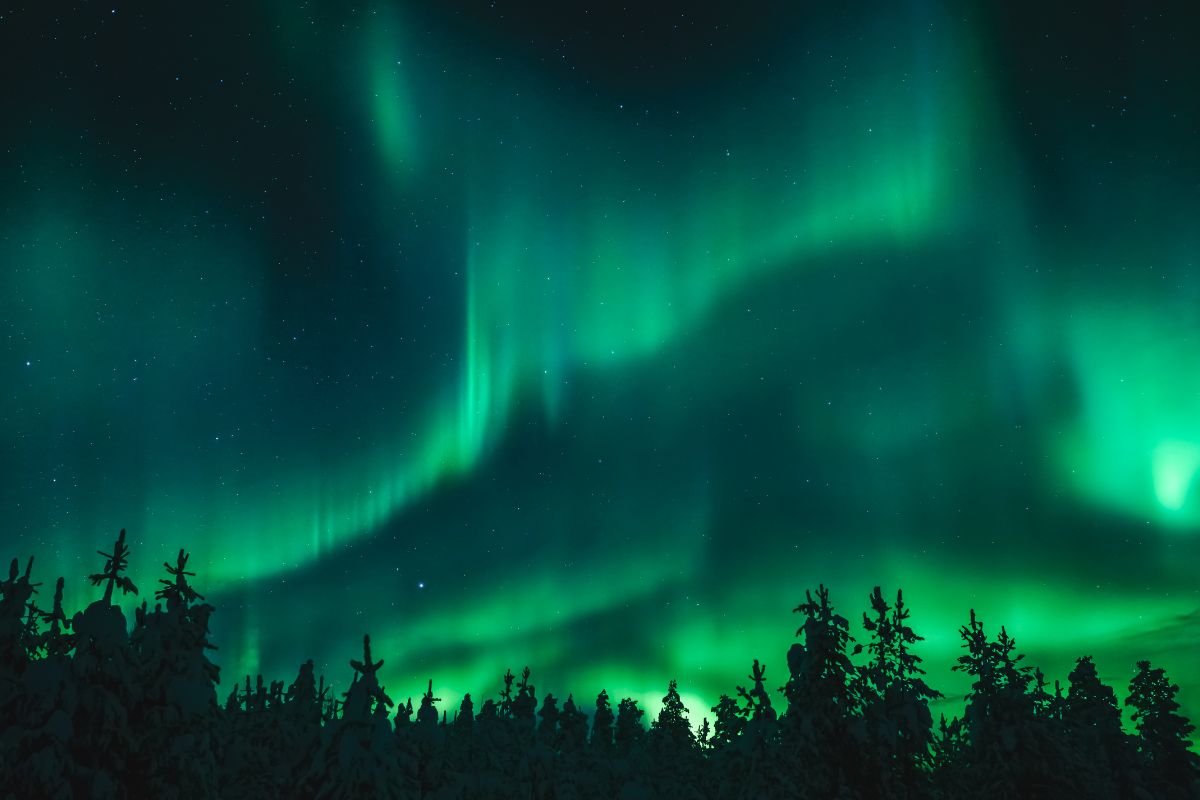
In the end, every aurora show is different. Some nights bring soft green arcs, while others explode in curtains of color across the entire sky. With the tips and locations in this guide, you’ll be ready to experience the northern lights in Alaska in the best way possible.
Do You Like It? Pin It For Later!


Terrific information. We are making another trip to Alaska soon and seeing the Northern Lights is on my bucket list.
While I’d love to go further afield to see the Northern Lights, I think I’d have to plan Fairbanks as a first stop, to increase our odds of seeing them.
This is such a fantastic guide! I’ve always dreamed of seeing the Northern Lights, and your tips make it feel so much more doable (and magical). I love that you included places beyond Fairbanks too — it’s great to see how many spots offer unique experiences for aurora chasing. Definitely saving this for my next winter adventure!
All I can think about is how awesome watching the northern lights in outdoor hot springs at Chena Hot Springs Resort would be. New bucket list item! You have lots of great tips for viewing the Aurora here, thanks for sharing!
What a comprehensive guide to seeing the Northern Lights in Alaska. I would love to go there anyway, so when I do, I’ll refer to this.
I love that Fairbanks has an aurora tracker! Super helpful. While I was lucky enough to see some incredible northern lights displays last year in my front yard in Connecticut, I’d love to experience them in Alaska.
I am heading to Alaska in 2026, and this post is a wonderful guide to help me figure out where to go to see the Northern Lights. The pictures are phenomenal and the information you’ve included is so helpful!
Great post! I never had Alaska on the radar for Northern Lights viewing ( we can see them in my home town occasionally and very briefly but I have never actually seen them at home) but it makes perfect sense, very quiet and no light pollution. Gorgeous pictures. I would love to see the Northern Lights again, last saw them many years ago in Northern Europe
Such a great post! Seeing the Northern Lights have always been on my bucket list, same with Alaska so will be great to experience both 🙂
What a fantastic and genuinely helpful guide — I love how you’ve highlighted places like Cleary Summit and Chena Hot Springs Resort, both of which offer such different but unforgettable northern lights experiences. Cleary Summit’s wide-open skies are perfect for those quiet, breath-holding moments, while soaking in the hot springs with the aurora dancing above feels almost surreal. Your mix of accessible spots and more remote gems makes this such a well-rounded resource for anyone dreaming of an Alaska aurora adventure. Thanks for putting this together — it’s such a joy to read!
Such a thorough guide! Thanks for these tips! I’d love to see the Northern Lights from Alaska!
Seeing the northern lights is something definitely on my bucket list. I may not get to see them soon, but I am saving this post
Seeing the Northern Lights is very high on my bucket list! Unfortunately I live in the city and we have so much light pollution that I’ll never see them where I live. I guess I’ll have to go back to Alaska 🙂 . I love how Fairbanks even has its own aurora tracker. That would be so helpful!