
7-Night Alaska Northern Lights Itinerary: An Aurora Season Road Trip

Seeing the Northern Lights in Alaska is incredible, but planning a trip around the aurora takes more than choosing one viewing spot and hoping for clear skies. The best strategy is to give yourself multiple nights, stay flexible, and spend most of your time where aurora-viewing conditions are especially favorable. This 7-night Alaska Northern Lights itinerary is a DIY road trip from Anchorage through Talkeetna to Fairbanks and Interior Alaska, with several dedicated nights for aurora viewing. It works throughout Alaska’s aurora season, from August 21 to April 21, whether you’re planning a fall trip or a snowy winter adventure. We’ll show you where to stay each night, how to plan your aurora viewing, when a guided tour makes sense, and how to adjust your plans for changing weather and cloud cover. September and March are especially great times for this road trip, but every month of Alaska’s aurora season can offer spectacular displays.
This article may contain affiliate / compensated links. For full information, please see our disclaimer here.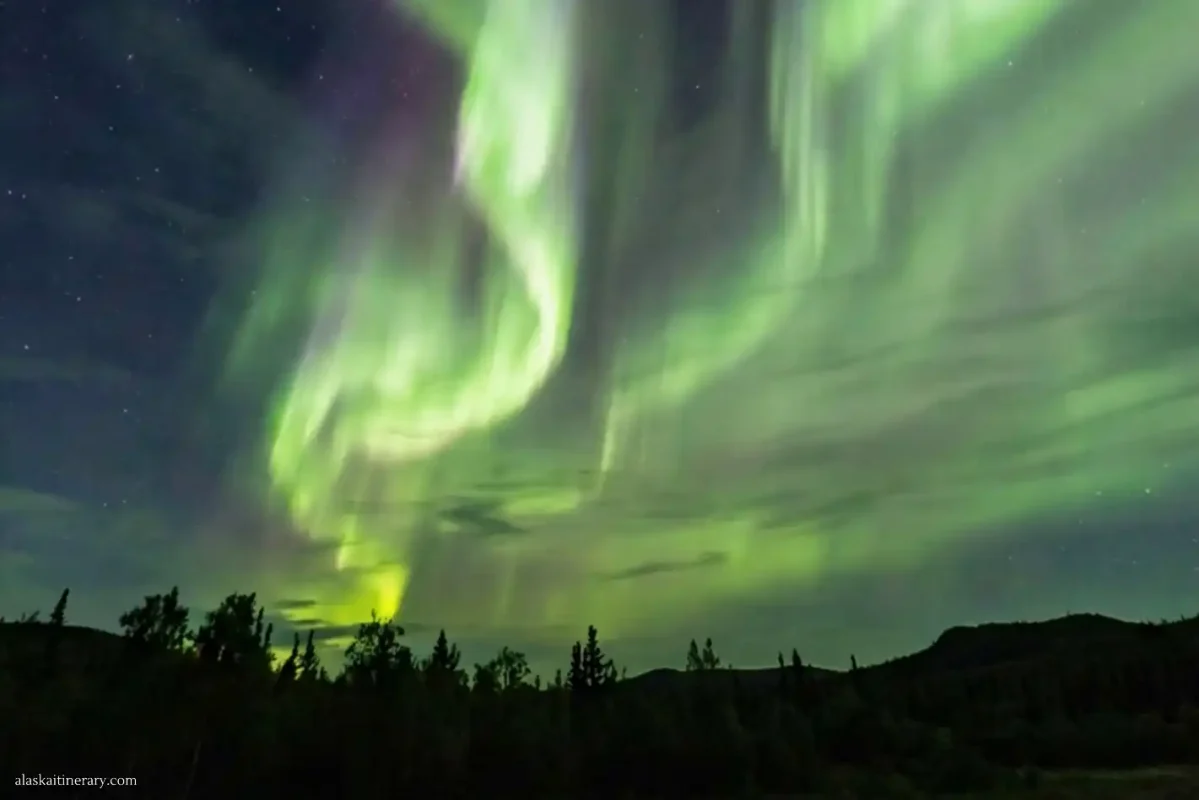
Our Experience Chasing the Northern Lights in Alaska
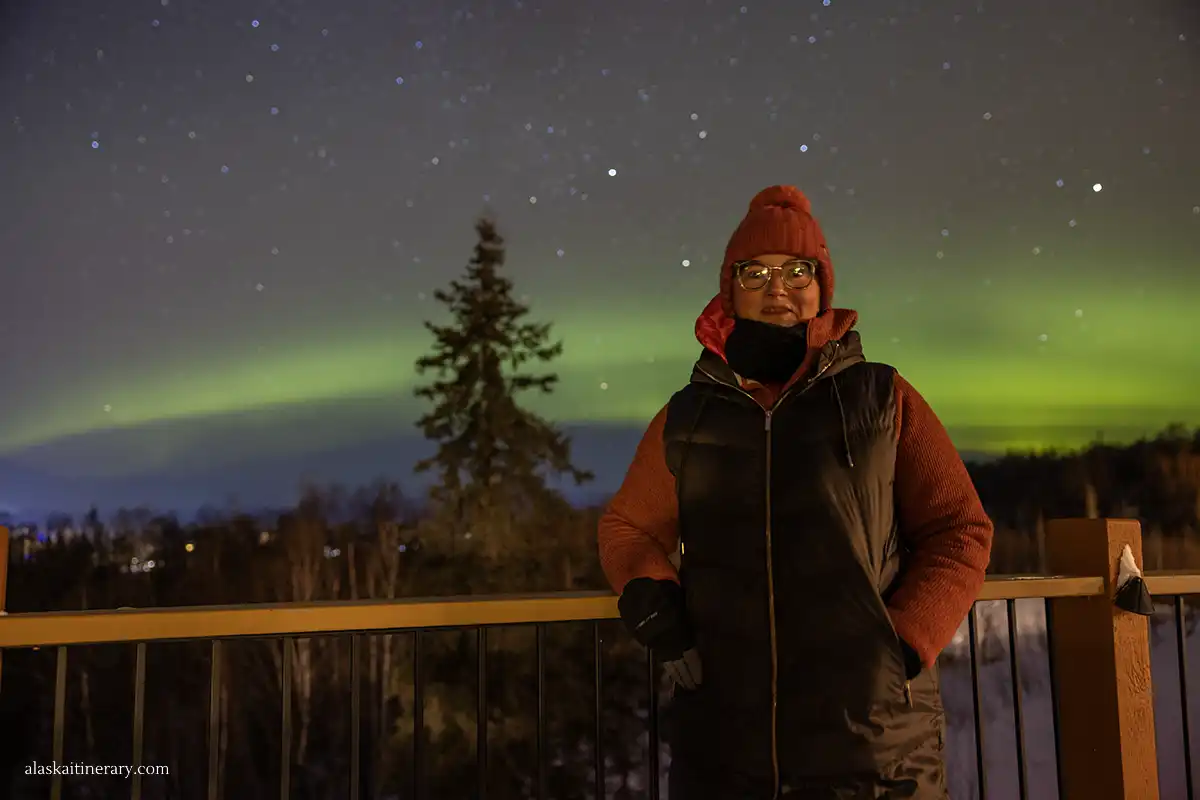
Seeing the Northern Lights in Alaska never gets old for us. After years of exploring Alaska in different seasons, chasing and photographing the Northern Lights has become one of our favorite Alaska experiences.
We’ve watched the aurora from different locations around Fairbanks and Interior Alaska, including Cleary Summit, Murphy Dome, Chena Lake, and Chena Hot Springs. We’ve also chased the aurora in Hatcher Pass and as far south as Homer, and experienced an incredible Northern Lights show along the Dalton Highway—but not every night was a success, which is exactly why we recommend giving yourself several opportunities.
We’ve also learned that a promising aurora forecast is only part of the equation. Cloud cover, weather, darkness, and road conditions can completely change your plans for the night.
Some nights require patience, while on others the sky can suddenly come alive when you least expect it. That experience shaped this itinerary.
Instead of relying on one “perfect” aurora night, we recommend giving yourself several opportunities and staying flexible enough to change your plans when conditions change.
Alaska Northern Lights Itinerary at a Glance
This 7-night DIY road trip starts in Anchorage and ends in Fairbanks, with five nights in Interior Alaska where we recommend focusing most of your aurora-viewing efforts.
| Day | Route | Daytime Plan | Aurora Plan | Overnight |
|---|---|---|---|---|
| Day 1 | Anchorage | Arrive, pick up rental car, explore Anchorage | Bonus aurora opportunity if skies are clear | Anchorage |
| Day 2 | Anchorage → Talkeetna | Scenic drive and explore Talkeetna | Watch locally if conditions are good | Talkeetna |
| Day 3 | Talkeetna → Fairbanks | Parks Highway drive; seasonal Denali stop | First dedicated Fairbanks aurora night | Fairbanks |
| Day 4 | Fairbanks | Sleep in and explore Fairbanks | Guided or stationary aurora viewing | Fairbanks |
| Day 5 | Fairbanks | Flexible day based on weather | Aurora chase based on cloud cover and conditions | Fairbanks |
| Day 6 | Fairbanks → Chena Hot Springs | Hot springs and Aurora Ice Museum | Watch for the aurora at Chena Hot Springs | Chena Hot Springs |
| Day 7 | Chena Hot Springs → Fairbanks | Return to Fairbanks and keep the day flexible | Final dedicated aurora night | Fairbanks |
| Day 8 | Fairbanks | Return rental car and fly home | — | — |
Why so much time in Fairbanks? If seeing the Northern Lights is the main goal of your Alaska trip, Interior Alaska is where we want you to spend most of your nights. The itinerary gives you five consecutive nights in the Fairbanks area, so one cloudy evening doesn’t ruin your entire trip.
Why We Start This Northern Lights Road Trip in Anchorage
We start this road trip in Anchorage because it’s a practical gateway to Alaska, with more flight options and connections than Fairbanks. It also allows you to experience the scenic drive north through Talkeetna before reaching Interior Alaska.
For this itinerary, we recommend renting a car in Anchorage and booking a one-way rental, returning it in Fairbanks. One-way rentals can be more expensive, but you won’t have to drive roughly 360 miles back to Anchorage at the end of your trip, giving you more time for aurora viewing.
However, Anchorage isn’t essential for a Northern Lights trip. If you find convenient flights directly to Fairbanks and seeing the aurora is your main priority, you can skip Anchorage and Talkeetna and spend your entire trip in the Fairbanks area.
Why Fairbanks Is Our Top Choice for the Northern Lights in Alaska
If seeing the Northern Lights is one of the main goals of your Alaska trip, Fairbanks is one of the best places in Alaska for Northern Lights viewing and our top choice for where to stay.
Fairbanks sits beneath the auroral oval, a region around the Earth’s magnetic poles where aurora activity is especially frequent. Interior Alaska also tends to have drier weather and fewer clouds than Southcentral Alaska, which is important because even a strong aurora display can be completely hidden by cloud cover.
Fairbanks also has plenty of dark viewing areas away from city lights and an excellent selection of dedicated aurora tours, heated viewing lodges, and other Northern Lights experiences.
For the best chances, we recommend spending at least three to four nights in the Fairbanks area. This itinerary gives you five consecutive nights in Interior Alaska, providing several opportunities to adjust your plans around clouds, weather, and aurora activity.

When Is the Best Time for This Alaska Northern Lights Itinerary?
You can follow this itinerary throughout Alaska’s aurora season, from August 21 through April 21. During these months, the nights are dark enough to see the Northern Lights, although daylight, temperatures, snow conditions, and available activities vary considerably throughout the season.
Why We Especially Like September and March
September and March are two of our favorite months for an Alaska Northern Lights trip, and there’s science behind that recommendation. Geomagnetic activity tends to be enhanced around the spring and fall equinoxes, which can increase opportunities for aurora displays.
September is a great choice if you want fall colors, milder temperatures, and generally easier driving conditions without the extreme cold of Interior Alaska in midwinter.
March offers a completely different experience. You’ll have snowy landscapes and winter activities, but considerably more daylight than in December or January while the nights remain dark enough for aurora viewing.
That said, you don’t need to travel during an equinox to see an incredible aurora. October, November, December, January, February, and April can all provide excellent Northern Lights viewing when aurora activity, darkness, and clear skies come together.
If your travel dates are fixed, don’t worry about trying to plan the “perfect” month. Multiple nights and clear skies are more important than choosing one specific week of the aurora season.
Planning this trip during the winter months? Check out our complete Alaska in Winter guide, where we cover the best winter activities in each destination, including dog sledding, snowmobiling, ice fishing, skiing and more. It’s a great resource for choosing daytime adventures to add between your Northern Lights nights.
Is This Northern Lights Road Trip Right for You?
This itinerary is best for travelers who want to make the Northern Lights a priority while also experiencing an independent Alaska road trip.
It’s a good fit if you:
- Want several opportunities to see the aurora rather than relying on one night.
- Prefer a DIY road trip with the flexibility to adjust your plans based on weather and cloud cover.
- Are comfortable driving long distances and, when applicable, in winter conditions.
- Want to combine Anchorage and Talkeetna with several nights in Fairbanks and Interior Alaska.
- Understand that the Northern Lights are a natural phenomenon and can never be guaranteed.
Be Prepared for Changing Road Conditions
Driving conditions on this route can be completely different depending on when you visit. In September, you may encounter mostly snow-free roads, while a winter trip can bring snow, ice, blowing snow, extreme cold, and limited daylight. Conditions can also change quickly during the transitional months.
If you’re traveling when winter conditions are possible, read our detailed guide to driving in Alaska in winter before deciding whether a self-drive trip is right for you.
If you aren’t comfortable with winter driving, you can still plan an incredible Northern Lights trip. Consider flying directly to Fairbanks or taking the train between Anchorage and Fairbanks, then using Fairbanks aurora guided tours with transportation for your Northern Lights nights instead of renting a car.
How to Plan Each Northern Lights Night
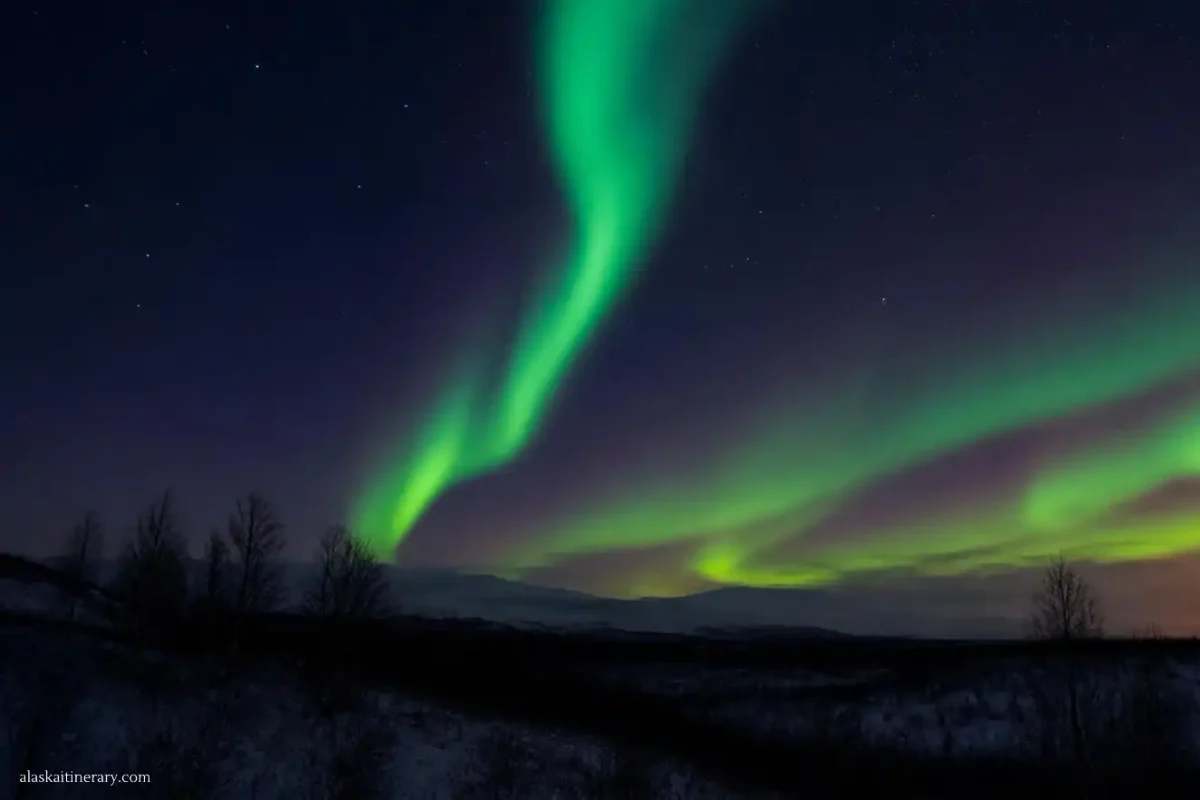
A successful aurora trip requires more than checking whether the Northern Lights forecast looks strong. Before heading out each night, we recommend checking aurora activity, cloud cover, weather, and road conditions.
Check Cloud Cover and Aurora Activity
A strong aurora forecast doesn’t help much if the sky above you is completely overcast. We always check cloud cover together with the aurora forecast and use both when deciding where to go.
Sometimes that means staying close to Fairbanks. On other nights, driving to a different viewing area may give you clearer skies. See our guide to the best Northern Lights tracking apps for Alaska to learn which apps we use for aurora alerts, Kp forecasts, cloud cover, and planning our aurora nights.
While in Fairbanks, we highly recommend checking the live aurora camera and aurora forecast from the Geophysical Institute at the University of Alaska Fairbanks to help you plan each night’s aurora chase.
Stay Flexible
Don’t decide months in advance which night will be your “main” aurora night. If you have clear skies and promising aurora conditions tonight, take advantage of them. Tomorrow’s forecast can always change.
This is also why we don’t recommend filling every Fairbanks day with long daytime tours. After staying out until 2 or 3 AM, you’ll appreciate having time to sleep and recover.
Choose Different Types of Aurora Experiences
You don’t need to chase the Northern Lights the same way every night. During this itinerary, we recommend combining a guided aurora tour, independent viewing from dark locations around Fairbanks, and a night at Chena Hot Springs.
This gives you different experiences while keeping several nights available for changing conditions.
Our tip: Be patient. Aurora activity can change quickly, and some of our best displays have come after hours of waiting. Dress much warmer than you think you’ll need—you may spend a long time standing outside before the show begins.
Day 1: Arrive in Anchorage
Route: Anchorage
Overnight: Anchorage
Aurora plan: Bonus opportunity if skies are clear
Fly into Ted Stevens Anchorage International Airport (ANC), pick up your rental car, and settle into your hotel. We recommend staying in downtown Anchorage, where you’ll be close to restaurants and attractions and have easy access to the highway for tomorrow’s drive north.
Keep your first day relaxed, especially if you’ve traveled a long distance. You’ll have plenty of late nights ahead.
See our complete Anchorage travel guide for the best things to do, where to stay, and practical tips for planning your time in Alaska’s largest city.
Night 1: Treat the Aurora as a Bonus — But Go If Conditions Are Good
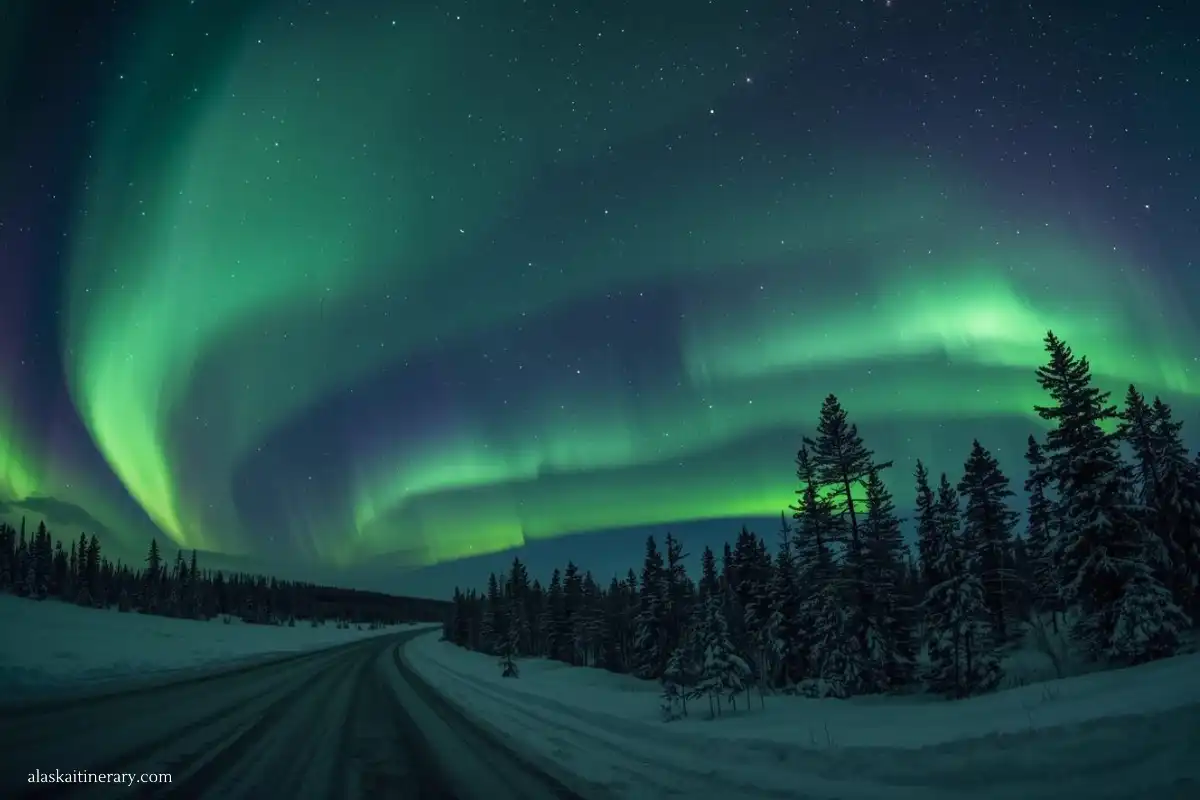
Anchorage isn’t our first choice for an aurora-focused trip, but you absolutely can see the Northern Lights here when the sky is clear and aurora activity is strong.
If the forecast looks promising and you still have energy after your flight, don’t waste a good aurora night. Some of the best places to try around Anchorage are:
- Glen Alps Overlook – Our top choice for elevated views above Anchorage and a wide view of the northern sky. Keep in mind that the road climbs steeply, so winter conditions can make the drive challenging.
- Point Woronzof – One of the easiest options if you’re staying in Anchorage. It’s close to the city and offers a broad northern view across Knik Arm, although there is still some light pollution from Anchorage and the airport.
- Eklutna Tailrace/Knik River Valley – Farther from downtown, but a good option when you want darker skies and a more open northern horizon.
- Hatcher Pass area – Much farther from Anchorage—about a 1.5-hour drive—but the darker mountain setting can reward you with spectacular aurora displays when conditions are good. Keep in mind that road and weather conditions can change quickly, especially in winter, so always check them before heading out at night.
Our tip: Check both the aurora forecast and cloud cover before deciding where to go. If conditions are mediocre, get some sleep. But if the sky is clear and the forecast is promising, take advantage of the opportunity—you never know what the weather will bring on the following nights.
Day 2: Anchorage to Talkeetna
Route: Anchorage → Talkeetna
Overnight: Talkeetna
Aurora plan: Watch locally if skies are clear
Today, leave Anchorage and drive north to Talkeetna, a small historic town surrounded by the Alaska Range. The drive takes roughly 2.5 hours without stops, but allow extra time for road conditions and scenic stops along the way.
Keep today fairly relaxed, especially because late-night aurora viewing will become a bigger part of the trip once you reach Fairbanks. Explore Talkeetna’s historic downtown, enjoy a good meal, and take advantage of views of Denali and the Alaska Range if the mountains are visible.
What you can do around Talkeetna varies considerably between fall and winter. See our complete Talkeetna travel guide for the best things to do, where to stay, and practical tips for planning your time in town.
Night 2: Watch for the Northern Lights Around Talkeetna
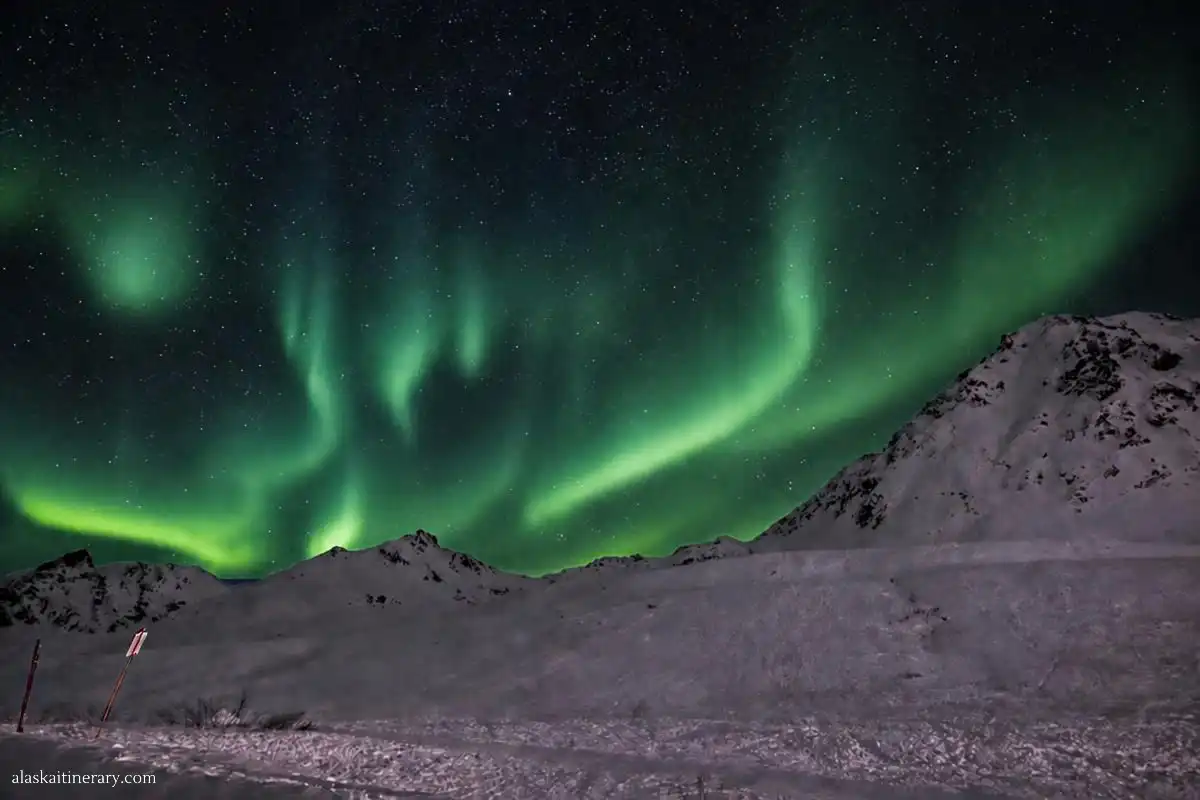
Talkeetna is much smaller than Anchorage, making it easier to escape artificial light. If skies are clear and aurora activity looks promising, take advantage of your second opportunity to see the Northern Lights.
- Talkeetna Riverfront Park is one of the easiest options close to downtown.
- For darker surroundings, consider Christiansen Lake.
If you’re staying at Talkeetna Alaskan Lodge, you may not need to drive anywhere at all. Its north-facing location and open views make it a convenient place to watch the sky.
Our tip: Tomorrow is the longest driving day of this itinerary. If conditions aren’t particularly promising tonight, get some sleep and save your energy for the five nights ahead in Interior Alaska.
Day 3: Talkeetna to Fairbanks
Route: Talkeetna → Fairbanks
Overnight: Fairbanks
Aurora plan: First dedicated Fairbanks aurora night
Today, continue north on the Parks Highway to Fairbanks. This is the longest driving day of the itinerary, so start early and avoid packing the day with activities. The drive takes roughly 4.5–5 hours without stops, but allow considerably more time for scenic breaks, changing weather, and road conditions.
You’ll pass through the Denali National Park area, making it a natural place to stop and stretch your legs. However, what you can see and do here varies greatly depending on when you travel. September access is very different from the middle of winter in Denali, so check current park conditions and operating schedules before your trip.
The priority today is reaching Fairbanks with enough time to check into your hotel, have dinner, and rest before your first serious Northern Lights night.
For tips on planning your stay in the city and ideas for things to do, see our complete Fairbanks travel guide.
If you’re visiting during the winter months, make sure to also read our detailed Fairbanks in winter guide, where we cover the best seasonal activities in the area, including dog sledding, snowmobiling, ice fishing, walking with reindeer, and more.
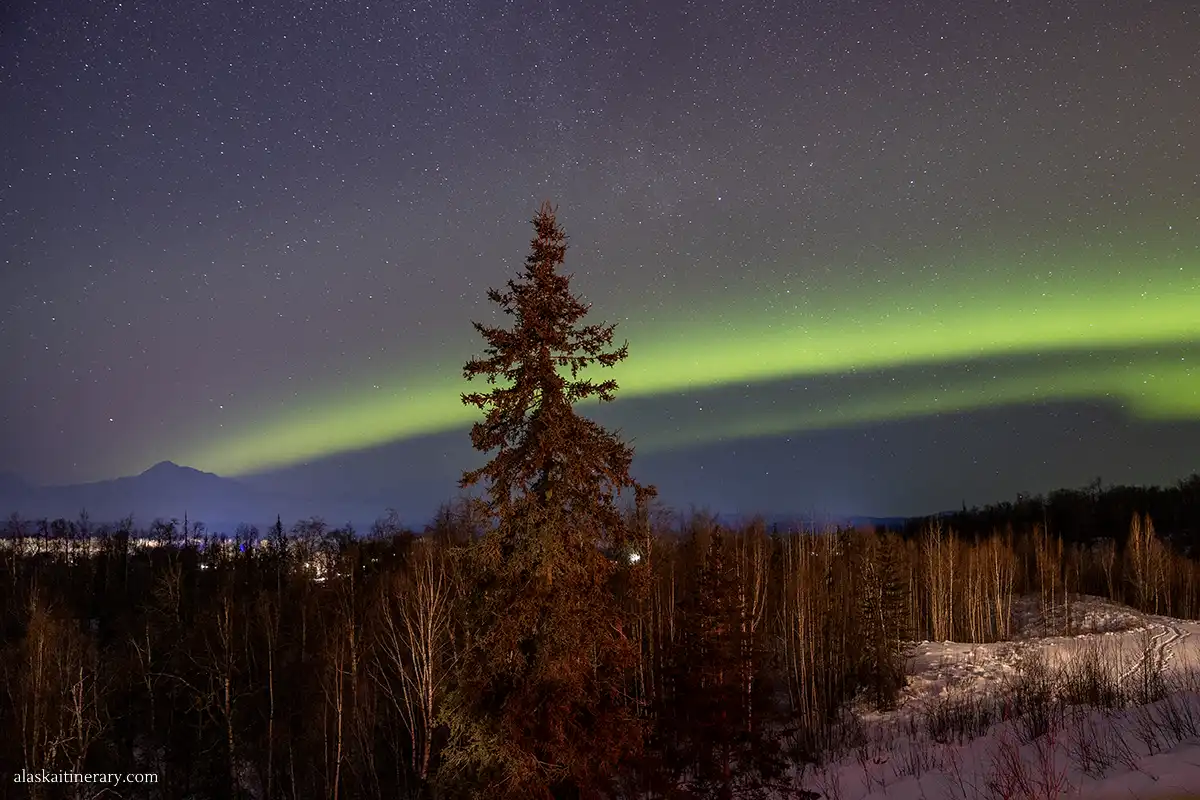
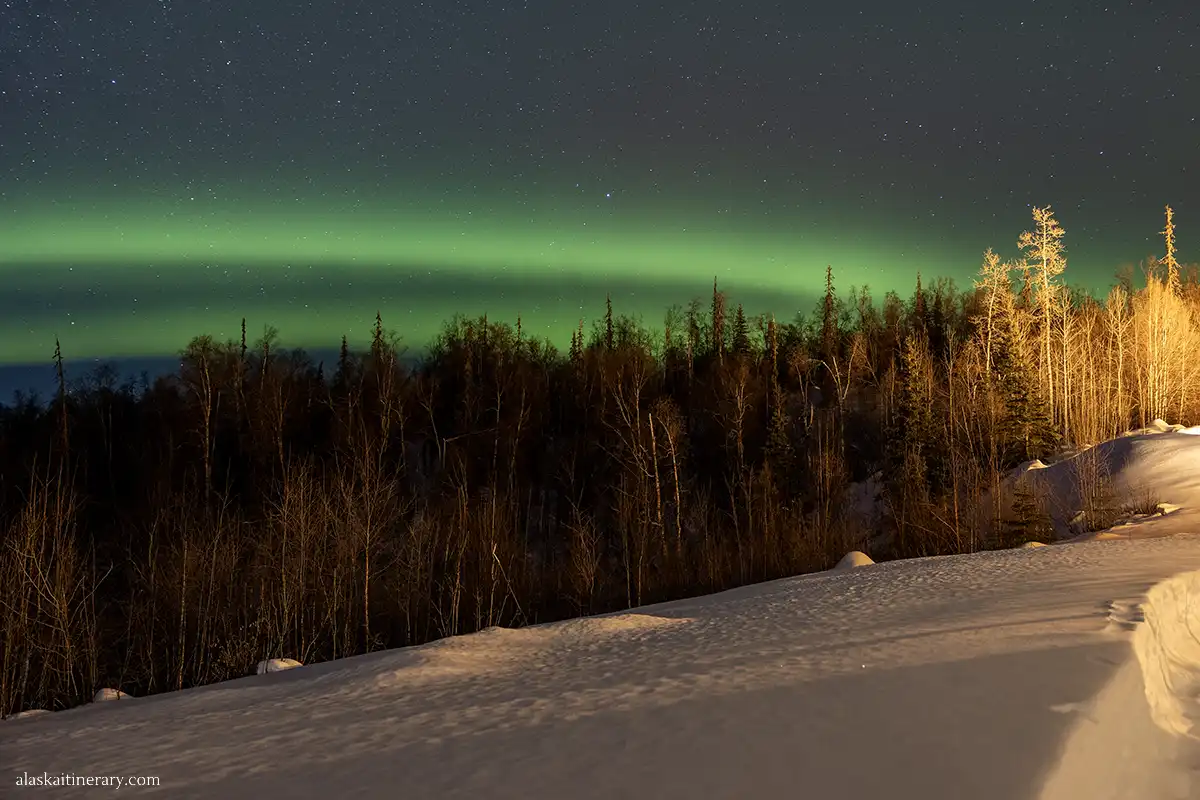
Night 3: Take Your First Fairbanks Northern Lights Tour
For your first night in Fairbanks, we recommend booking a guided Northern Lights tour.
Even though this is a DIY road trip, a tour is especially useful on your first Fairbanks night. A local guide can take you away from city lights, help you understand current conditions, and eliminate the need to navigate unfamiliar roads late at night.
Depending on your interests and comfort level, you can choose a longer aurora chase that searches for clearer skies, a comfortable heated viewing location, or a professional aurora photography tour.
A guided tour is a great way to get familiar with the Fairbanks area, discover good viewing locations, and learn the basics of aurora chasing. After your first tour, you may feel more confident exploring independently on the following nights—or decide you prefer the convenience of joining another guided chase
We recommend comparing the options in our guide to the best Fairbanks Northern Lights tours, where we explain the differences and who each type of tour is best for.
Our tip: Don’t assume that a longer tour automatically means a better aurora display. The Northern Lights are unpredictable. Choose your tour based on whether you value mobility, comfort, photography help, or simply more time outside waiting for the sky to cooperate.

Day 4: Fairbanks & Your Second Northern Lights Night
Route: Fairbanks area
Overnight: Fairbanks
Aurora plan: Try a different style of aurora viewing
After your first late night chasing the Northern Lights, sleep in and keep today relaxed. One of the biggest mistakes you can make on an aurora-focused trip is filling every daytime hour with activities and becoming exhausted after several nights of staying up late.
Spend a few hours exploring Fairbanks, visit the University of Alaska Museum of the North or Morris Thompson Cultural and Visitors Center, have an early dinner, and leave plenty of time to rest before heading out again.
Night 4: Try a Different Aurora Experience
Tonight, consider a different approach from your first Fairbanks night. If you joined an active aurora chase yesterday, choose a stationary viewing experience tonight, where you can wait comfortably for the sky to cooperate.
A heated aurora lodge, cabin, or glass viewing space can be especially appealing during the colder months. You can step outside when the aurora appears without spending the entire evening standing in extreme cold.
If you prefer to explore independently, you can also head to one of the dark viewing areas outside Fairbanks. Cleary Summit, Murphy Dome, and Chena Lake Recreation Area are among the places we like for aurora viewing, depending on clouds and road conditions.
See our guide to the best Northern Lights viewing spots in Fairbanks for more locations and practical details about each one.
Our tip: Don’t automatically return to the same place where you saw the aurora the night before. Check cloud cover and current conditions first. A location that was perfect yesterday may be completely overcast tonight.
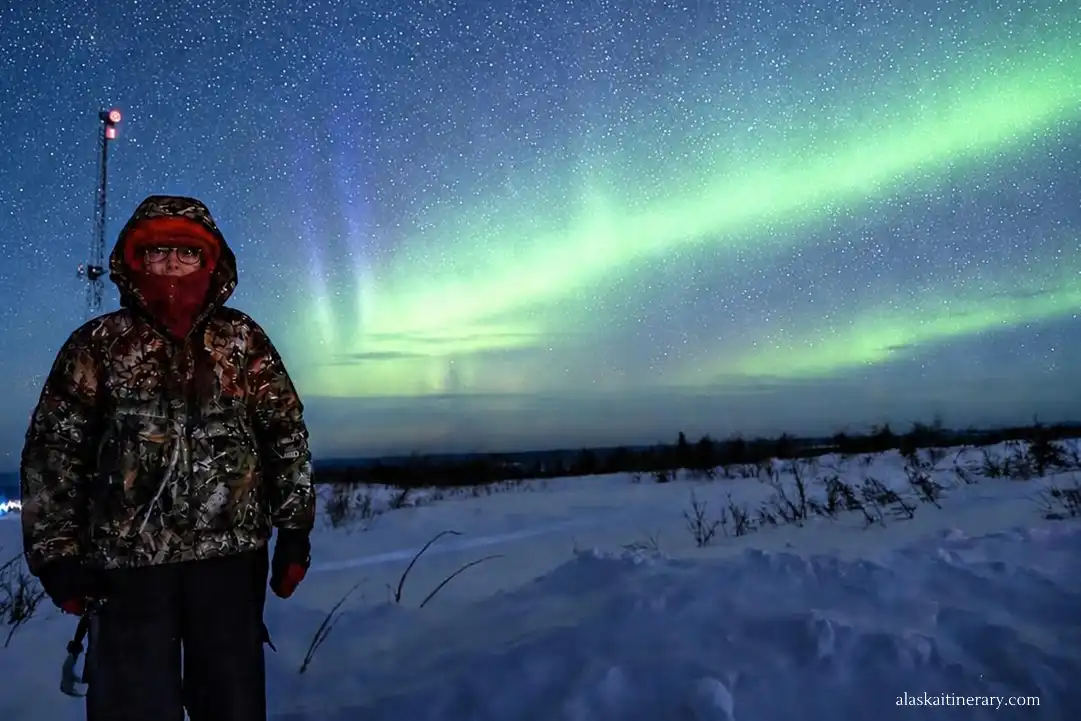
Day 5: Fairbanks & a Flexible Aurora-Chasing Night
Route: Fairbanks area
Overnight: Fairbanks
Aurora plan: Let the forecast and cloud cover decide where you go
By now, you’ve already had two dedicated Fairbanks aurora nights. Keep Day 5 flexible so you can sleep in after a late night and adjust your plans based on the weather.
Use the afternoon for an easy activity around Fairbanks, a relaxed meal, or simply some downtime. If you’re traveling during the winter months, this is also a good day to add a short winter experience, try dog sledding, snowmobilling or ice fishing, but don’t exhaust yourself before another night of aurora chasing.


Since this road trip is all about the aurora, you might want to combine one of Fairbanks’ best winter activities with a night of Northern Lights viewing. Fairbanks has some fantastic options that let you experience both in one adventure.
- Want to try ice fishing? Consider the “Aurora Ice” Ice Fishing & Salmon Dinner Tour, which combines ice fishing and dinner with aurora viewing when conditions cooperate.
- If dog sledding is high on your Alaska wish list, the Northern Lights Viewing including Dinner and Dog Sledding tour combines two classic Alaska experiences in one evening.
- Or, if you’re looking for something more adventurous, the Aurora Sleighers Snowmobile Tour in Fairbanks lets you explore the snowy landscape by snowmachine while keeping an eye on the night sky.
Night 5: Let the Conditions Decide Where You Go
Tonight, don’t choose your viewing location until you’ve checked the aurora forecast, cloud cover, weather, and road conditions.
Unlike the previous nights, make this a true aurora-chasing night. If clouds are covering Fairbanks, look at conditions in different directions and decide whether moving east, north, or west could put you under clearer skies. You might end up at Ester Dome, somewhere along the Chena Hot Springs Road corridor, or decide that staying closer to Fairbanks is the safest choice.
This is one of the biggest lessons we’ve learned from chasing the Northern Lights in Alaska: a strong aurora forecast doesn’t help if you’re standing under thick clouds. Sometimes finding clear skies is more important than chasing a higher Kp number.

Know When Not to Chase
Don’t let the desire to see the aurora override safe driving decisions. Alaska roads can become extremely icy, especially outside the city at night.
Even though we have experience with winter driving—and Chris is an excellent driver—we’ve had nights when the roads became so icy that we gave up the aurora chase and returned to Fairbanks. No Northern Lights display is worth taking unnecessary risks on dangerous roads.
If you’re uncomfortable driving after dark or conditions deteriorate, stay somewhere safe or book a guided aurora chase instead.
Our tip: Keep tonight completely flexible. If you’ve already had an incredible aurora display earlier in the trip, you can take the night off. But if previous nights were cloudy, Day 5 gives you another valuable opportunity without having to change the rest of your itinerary.

Day 6: Fairbanks to Chena Hot Springs
Route: Fairbanks → Chena Hot Springs
Overnight: Chena Hot Springs Resort
Aurora plan: Watch from the resort or join the Charlie Dome Aurora Viewing Tour
After several nights based in Fairbanks, head to Chena Hot Springs Resort for a different Northern Lights experience. On the way, make a short stop in North Pole to visit the famous Santa Claus House and see its year-round Christmas displays.
The resort is about 60 miles from Fairbanks, and the drive typically takes around 1.5 hours, depending on road and weather conditions.
There is no need to rush. Today should be another relatively easy day after several late aurora nights. Once you arrive, check in, relax in the natural hot springs, and visit the Aurora Ice Museum, which is open year-round.
Staying overnight is worth it for this itinerary because you don’t have to drive all the way back to Fairbanks after another late night.

Night 6: Watch the Aurora at Chena Hot Springs
Chena Hot Springs is far from Fairbanks’ city lights, so you can simply step outside at the resort and watch the sky if conditions are favorable.
For a more dedicated experience, Chena also offers an Aurora Viewing Tour to Charlie Dome. The five-hour trip travels by tracked vehicle to an elevated viewing area with 360-degree views, where heated yurts provide a place to warm up while waiting for the aurora.
We wouldn’t consider the tour essential, however. By this point, you’ve already had several aurora-viewing nights, and one advantage of staying at Chena is being able to watch for the Northern Lights without another nighttime drive.
Our tip: Don’t disappear into your room just because the aurora forecast looks modest. Keep checking the sky. Aurora activity can change during the night, and Chena’s dark surroundings make this a great place to take advantage of an unexpected display.
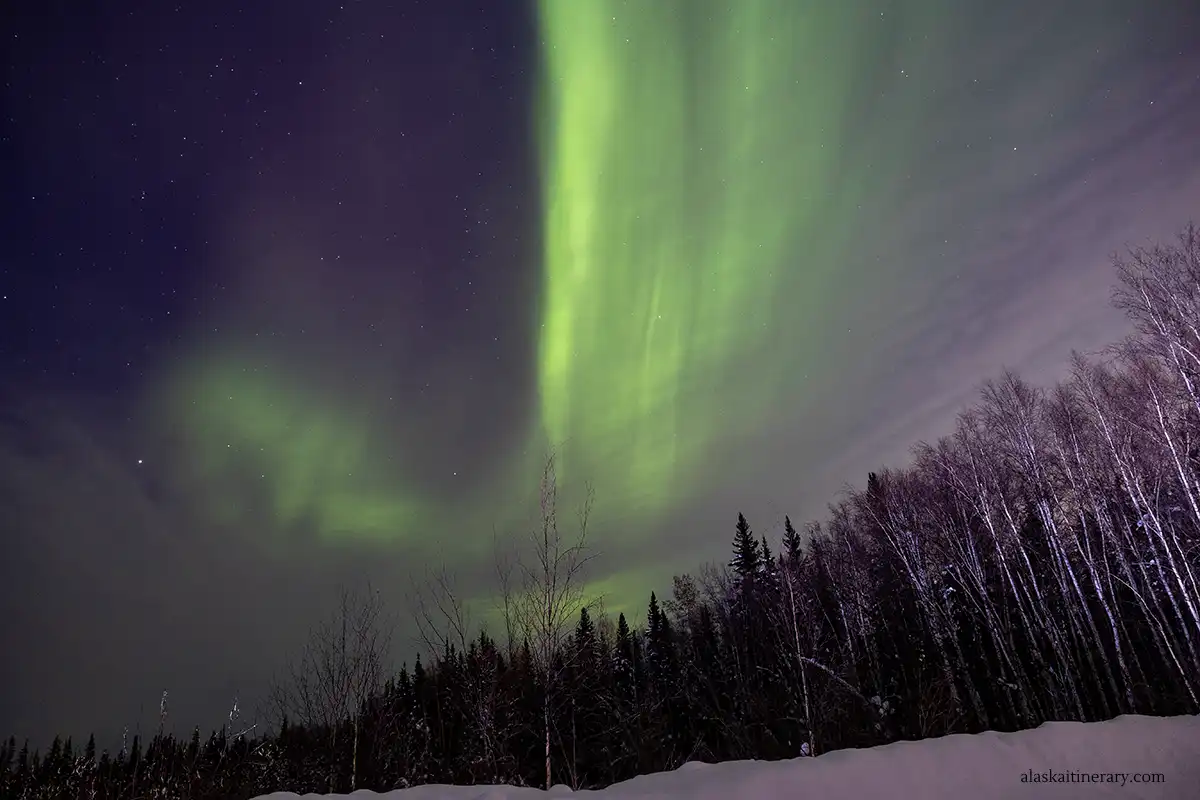
Day 7: Chena Hot Springs to Fairbanks
Route: Chena Hot Springs → Fairbanks
Overnight: Fairbanks
Aurora plan: Final dedicated Northern Lights night
After another late aurora night, enjoy a slow morning at Chena Hot Springs before driving back to Fairbanks. There is no need to pack much into today. Tonight is your final opportunity to see the Northern Lights, so leave enough time to rest before heading out again.
Once you’re back in Fairbanks, check into your hotel, have an early dinner, and look at the latest aurora forecast and cloud cover before deciding how to spend your last night.
Optional Alternative: Take an Arctic Circle & Northern Lights Tour
If visiting the Arctic Circle is on your Alaska bucket list, consider a guided Arctic Circle and Northern Lights tour from Fairbanks.
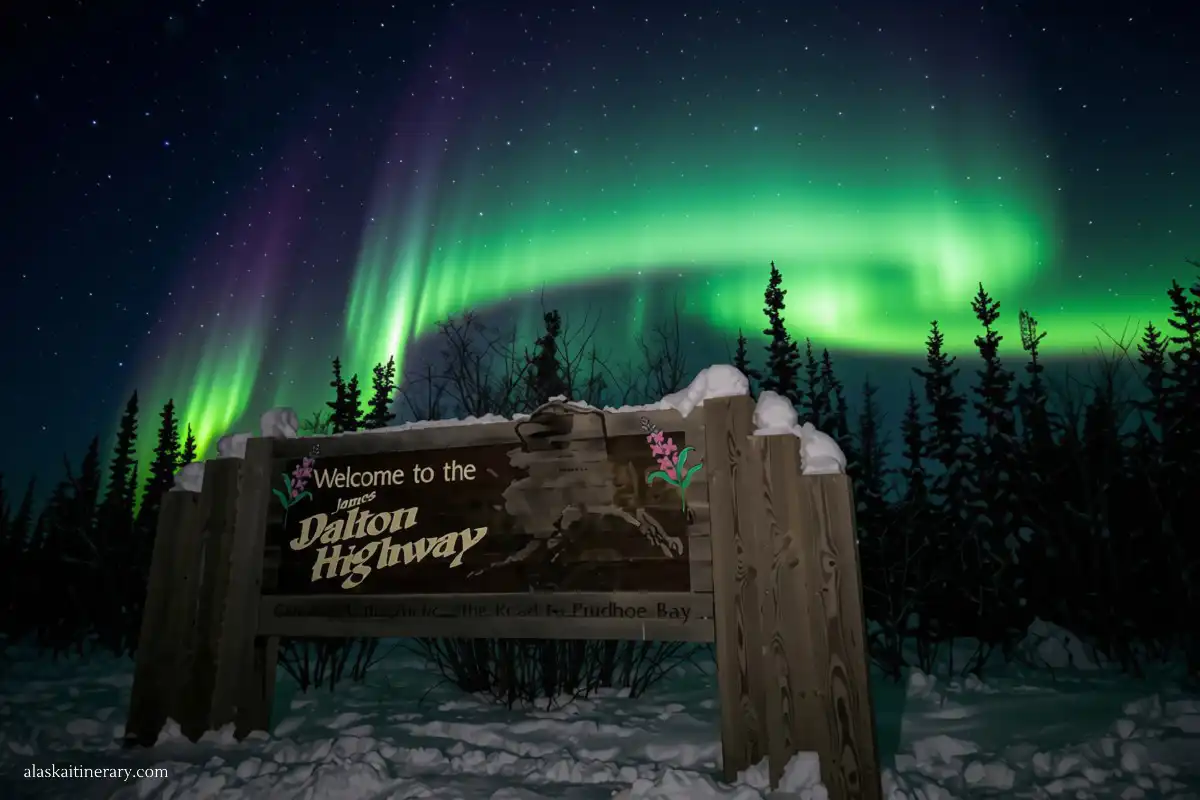
These tours combine a journey along the legendary Dalton Highway, a stop at the Arctic Circle, and Northern Lights viewing on the return trip when conditions cooperate. We’ve taken an Arctic Circle tour in winter, and it’s a memorable way to experience this remote part of Alaska without worrying about driving the Dalton Highway yourself.
Keep in mind that you don’t need to travel to the Arctic Circle to see the aurora. Choose this tour because you also want to experience the Dalton Highway and Arctic Circle.
Our tip: These tours are very long and can return to Fairbanks as late as 2 or 3 AM. Check your flight schedule before putting one on Day 7. If you have an early flight the next morning, move the Arctic Circle tour to an earlier Fairbanks day and shift one of your more flexible aurora nights to Day 7.
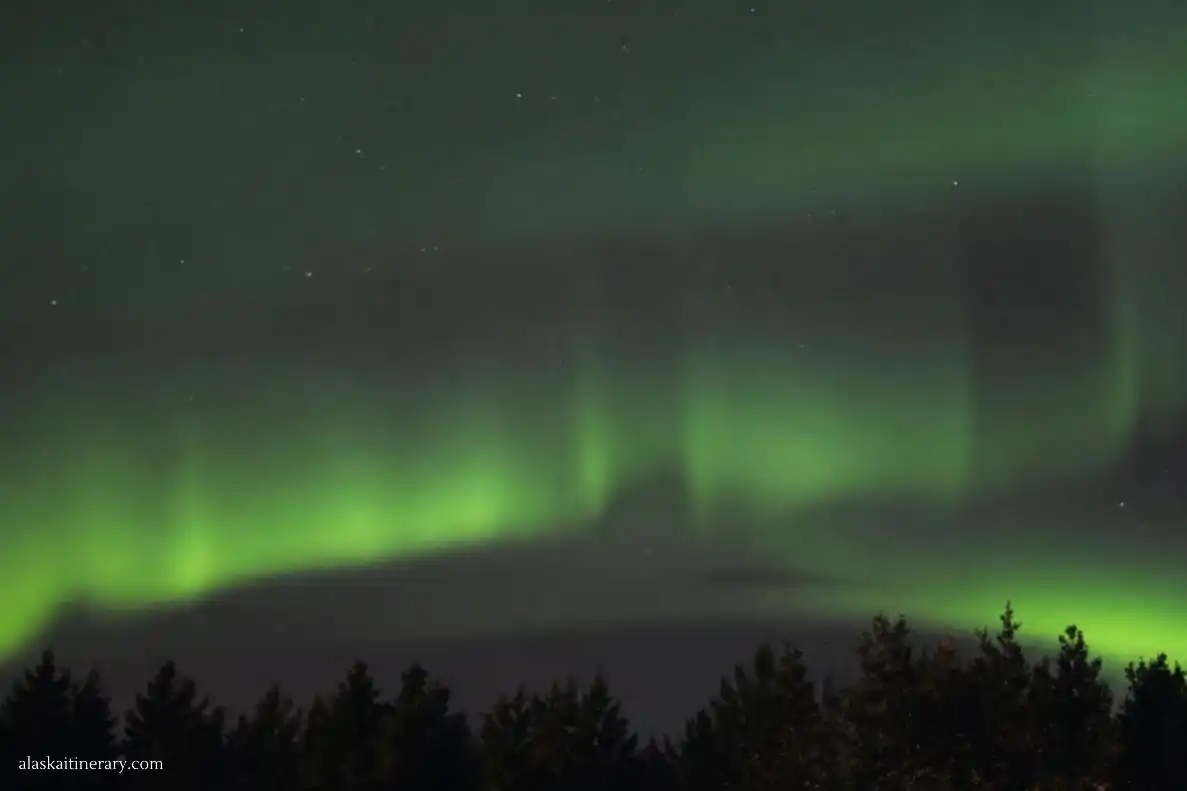
Night 7: Make Your Final Aurora Night Count
If you skip the Arctic Circle tour, keep your final evening completely flexible. By now, you’ll have a much better understanding of how the forecasts work and which type of viewing experience you prefer.
Check where skies are expected to be clearest and choose your location accordingly. You can return to the spot that worked best earlier in your trip, try somewhere new, or book another guided chase if clouds make finding clear skies more complicated.
And if you’ve already seen an incredible display? Don’t automatically stay in the hotel. Every aurora night is different, and your final night could look completely different from the first.
Our tip: This flexibility is exactly why we designed the itinerary with five consecutive nights in Interior Alaska. You aren’t depending on one specific evening to deliver the experience you traveled to Alaska for.
Day 8: Depart Fairbanks
Route: Fairbanks → Fairbanks International Airport
Aurora plan: Trip complete
After seven nights on the road and five consecutive nights in Interior Alaska, it’s time to wrap up your Northern Lights trip.
Return your rental car and fly home from Fairbanks International Airport (FAI). Ending the trip in Fairbanks saves you from driving all the way back to Anchorage and gives you more time where your chances for aurora viewing are strongest.
If your flight leaves later in the day, keep the morning relaxed. After several late nights, you’ll probably appreciate the extra sleep.
If you took an Arctic Circle and Northern Lights tour on Day 7, pay particular attention to your departure time. Some tours don’t return to Fairbanks until the early morning hours, so a later flight—or moving that tour to an earlier day—will make your final day much easier.
Safety Tips for Chasing the Northern Lights in Alaska
Aurora chasing often means heading away from city lights late at night, sometimes without knowing exactly how far you’ll drive before finding clear skies. A little preparation can make your night much safer and more comfortable.
- Fill up your gas tank before heading out. You may drive farther than expected while looking for clearer skies, and gas stations become much less frequent once you leave Fairbanks or Anchorage.
- Bring more warm clothing than you think you’ll need. Keep an extra insulated layer, gloves or mittens, hat, and warm boots in the car. In winter, temperatures around Fairbanks can be dangerously cold.
- Pack water, snacks, and a hot drink. Aurora chasing can easily turn into several hours of waiting, especially when you’re hoping for a late-night display.
- Always carry a headlamp or flashlight. You’ll need it for walking around dark viewing areas, setting up your camera, or dealing with an unexpected problem with your vehicle.
- Park completely off the road. Never stop in a traffic lane or somewhere your vehicle is difficult for other drivers to see. Use established parking areas and safe pullouts whenever possible.
- Watch for wildlife. Moose can be particularly difficult to see on dark roads. Slow down, scan the road ahead, and be especially cautious when visibility is limited.
- Check road and weather conditions before leaving. During winter, snow, ice, blowing snow, and rapidly changing conditions can make a road that seemed manageable earlier much more difficult later at night.
- Keep your phone charged. A power bank or car charger is useful, but don’t assume you’ll have cell service everywhere you go.
- Tell someone where you’re going. If you’re heading to a more remote viewing area, let someone know your approximate plans and when you expect to return.
- Don’t drive when you’re exhausted. After several nights of staying up until 2 or 3 AM, fatigue becomes a real concern. If you’re too tired to drive safely, stay close to your accommodation or choose a guided tour.

Can You Guarantee Seeing the Northern Lights in Alaska?
No. There is never a guarantee that you’ll see the Northern Lights, even if you visit Fairbanks during the heart of aurora season.
To see the aurora, several things need to come together. You need darkness, aurora activity, and sufficiently clear skies. Cloud cover is often the biggest obstacle because the Northern Lights can be active above you and still be completely hidden.
That’s why we don’t recommend planning an Alaska aurora trip around one specific night or one booked tour. Give yourself several nights, check the forecast and cloud cover each evening, and take advantage of good conditions when you have them.
We recommend spending at least three to four nights in Fairbanks if seeing the Northern Lights is one of the main goals of your Alaska trip. If you can stay longer, even better.
Also, don’t be discouraged by a weak forecast early in the day. Aurora conditions can change, and displays don’t always happen exactly when or where you expect them.
This itinerary can’t guarantee you’ll see the Northern Lights, but its five nights in Interior Alaska and flexible schedule give you multiple opportunities instead of relying on a single evening.
Our tip: If the sky is clear, go outside and look—even when the forecast isn’t spectacular. Some of our most memorable aurora nights have reminded us why it’s worth being patient and keeping an eye on the sky.
What to Pack for a Northern Lights Road Trip in Alaska
Northern Lights viewing often means standing outside for long periods in the middle of the night, so staying warm is essential. Even if daytime temperatures feel comfortable, it can feel much colder when you’re barely moving while waiting for the aurora.
Clothes
Your exact packing list will depend on when you visit. September can be relatively mild, while temperatures in Fairbanks during the winter months can fall far below zero.
At a minimum, bring warm base layers, an insulated jacket, waterproof or insulated boots, warm socks, gloves or mittens, and a hat. During the colder months, we also recommend insulated snow pants, hand and toe warmers, and a face covering.
If you’re planning a winter trip, see our complete Alaska winter packing list for the clothing and gear we recommend for extreme cold.
We’ve also put together the winter gear we use and recommend for Alaska on Amazon, including warm layers and accessories that have worked well for us during our winter trips.
Dress for waiting outside, not just walking from the car. You may feel perfectly comfortable while moving around and then become cold very quickly when you stand still photographing or watching the Northern Lights for an hour.
Photo Gear
If you plan to photograph the Northern Lights, make sure to pack a sturdy tripod, high-capacity memory cards, and extra batteries. Batteries drain much faster in cold temperatures, so bring spares and keep them warm when you’re not using them. A remote shutter release is also handy for taking photos at night without touching the camera and causing unnecessary vibration.
For camera settings, focusing techniques, and more photography tips, see our detailed guide to Photographing the Aurora in Alaska: Settings, Gear, and Pro Tips.
We’ve also put together the Northern Lights photography gear we use and recommend on our Amazon Store, so you can find our cameras, lenses, tripods, batteries, and other aurora photography essentials in one place.
Final Thoughts on This Alaska Northern Lights Itinerary
Planning a trip around the Northern Lights requires flexibility. You can choose the right season and location, but clouds, weather, and aurora activity will ultimately decide what happens each night.
That’s why this itinerary gives you several opportunities instead of relying on one aurora tour or one perfect evening. With five consecutive nights in Interior Alaska, you have time to adjust your plans, try different viewing experiences, and wait for the conditions to come together.
If seeing the aurora is your main goal, don’t try to squeeze too many destinations into your trip. Spend more time around Fairbanks, keep your daytime schedule relatively light, and take advantage of every promising clear night.
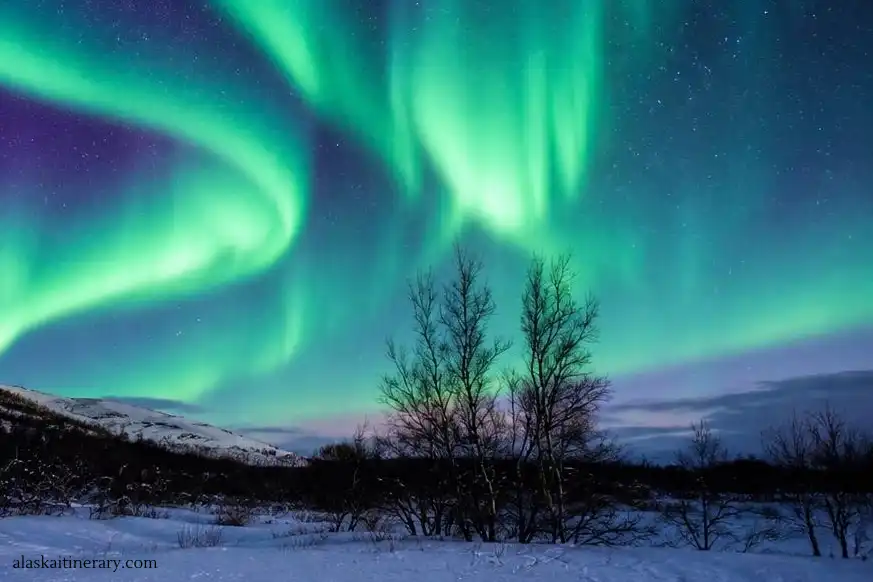
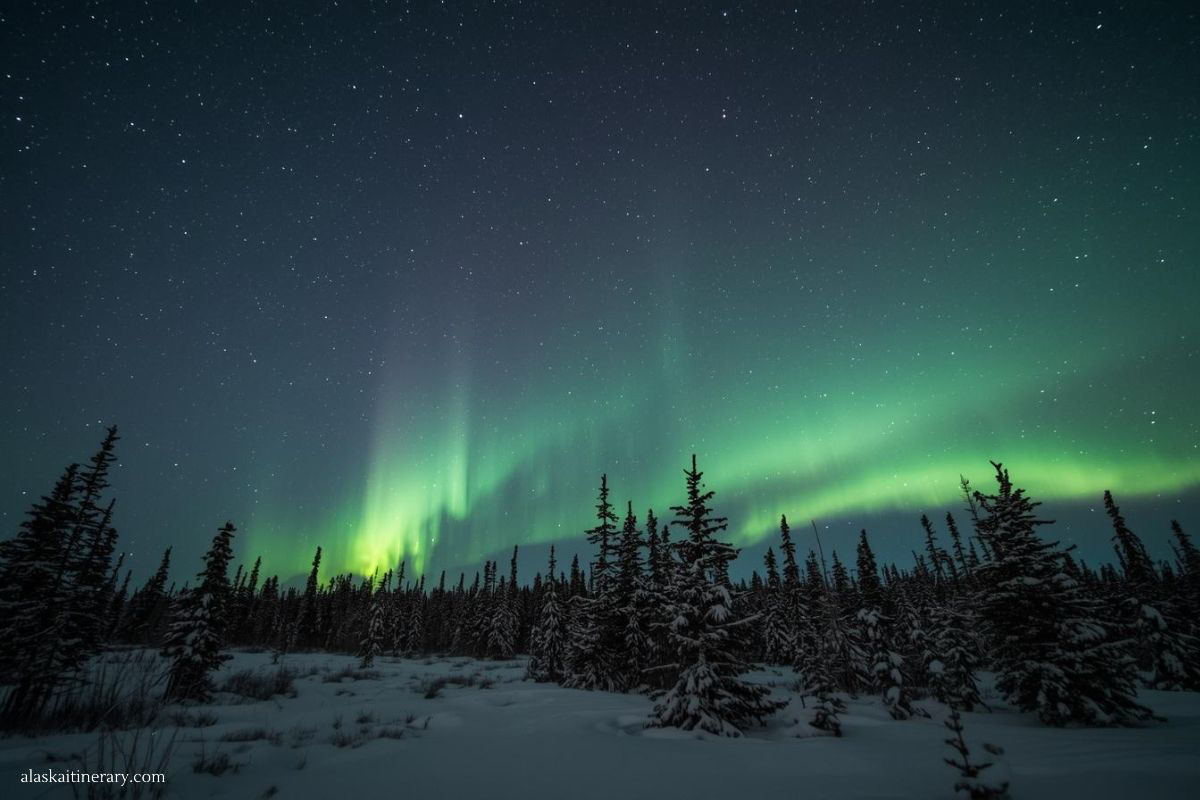
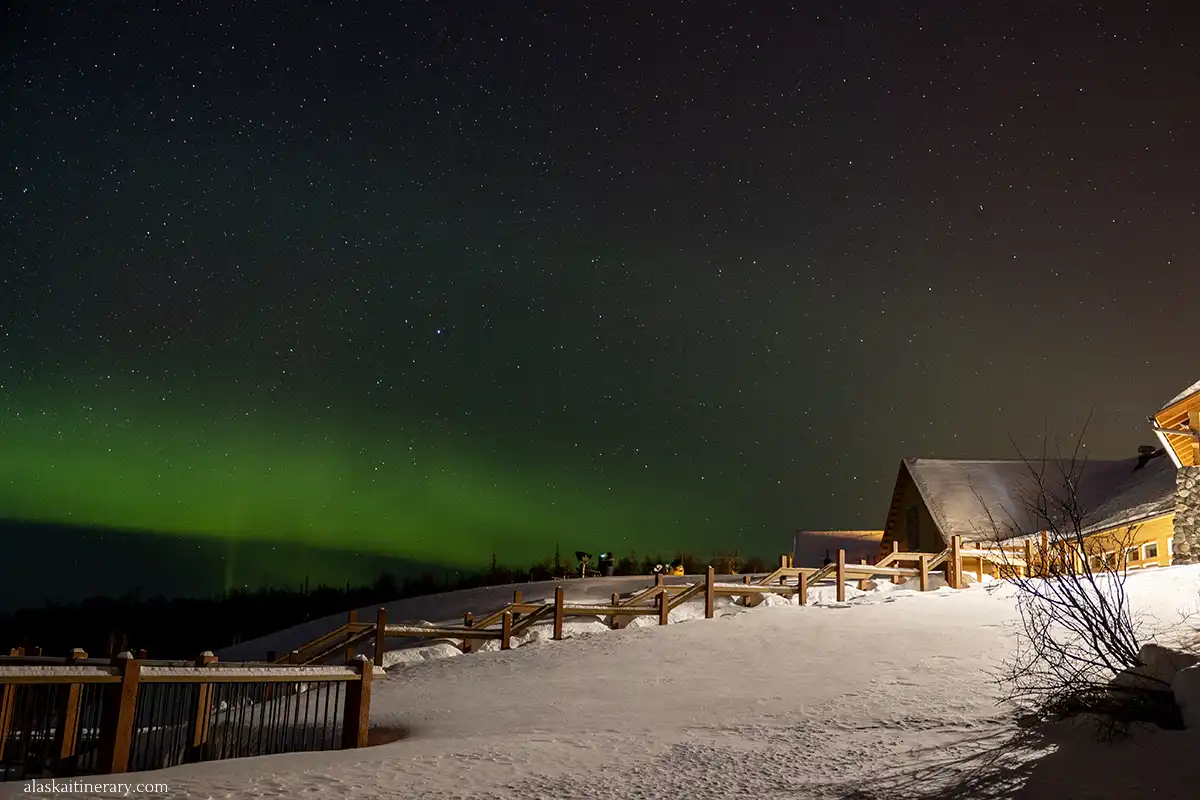
And remember that the Northern Lights never look exactly the same twice. Whether you see a faint green arc stretching across the horizon or an intense display dancing overhead, the unpredictability is part of what makes chasing the aurora in Alaska such a memorable experience.
If you’re planning to visit Alaska outside the aurora season, browse our other Alaska itineraries, including scenic summer road trips, wildlife adventures, and winter itineraries packed with unforgettable cold-weather experiences.
Do You Like It? Pin It For Later!


This is an excellent guide that leaves nothing out! I would love to see the northern lights one day, maybe not in Alaska just because it’s very far from me! It’s great you’ve added so many good viewing points, this is so helpful for others planning this trip. I also appreciate that you focus so much on safety and the weather conditions, it is something that’s easy to forget when excited about seeing the lights.
We actually leave next week for Norway for a Northern Lights cruise. But heading to Alaska for the Northern Lights will still stay on our travel wish list. But the temperatures in Alaska look even lower than what we are preparing for Norway! This looks like a great itinerary and enough time to hopefully get a great view of this amazing sight. You certainly got some great views on your trip. Keeping this post for future planning!
It would be quite interesting to chase the Northern Lights and see them in person. This is such a detailed guide and so helpful! If you are going to travel all that way, it is good to be as prepared as possible.
wow, what an insightful guide! Thank you for putting it together and sharing this detailed northern lights itinerary, great work 🙂
Seeing the Northern Lights in Alaska is on our bucket list–hoping we can fit this in during the next year or two.
I’m heading to Alaska next year and needed this post! So much information. I know I’ll be heading back for all the planning from you two who seem to be Alaska experts! Thanks.
This is something I’d love to do. Your photos are beautiful.
Wow this is some GREAT info! What a bucket list experience this would be!
This itinerary looks incredible. I love how you focused this trip on seeing the northern lights on your own and not with a guide or tour. Sometimes those are the best experiences! I would love to visit Alaska someday and see the lights, your photos are all stunning!
So many great opportunities to see the northern lights. I have seen them before in Yukon and Iceland, but would love to explore Alaska – and having a car seems like it would make it so easy to get around and pivot based on the aurora activity. I found those apps fairly helpful in the past. I love the idea of the train journey as part of the itinerary. What a great way to just sit back and relax, and enjoy the views
Hello! Chasing Aurora sounds like a real adventure! I guess a lot of people coming to Alaska are waiting for this chance. Good to know there are so many organised tours available for chasing as the proffessionals always do their best to catch the right moment.
Seeing the northern lights in Alaska is a bucket list item of mine! Most itineraries I’ve seen plan a day trip or two to chase the lights, so I love that you’ve designed a whole itinerary for that purpose
Thanks for the comprehensive guide. Seeing the Northern Lights would be my no. 1 thing to do in Alaska, although I’ve discovered many other activities to do there through your blog.
Very useful article! I don’t have many items on my bucket list but seeing the Northern Lights is one of these.
Chasing the Northern Lights is something I would dearly love to experience one day. A seven-night journey through Alaska, with the opportunity to see the aurora while travelling through such spectacular winter landscapes, sounds absolutely unforgettable.
I bet seeing the Northern Lights is beautiful. Your level of detail captures everything that motivates a person to visit. You cover everything – cars, driving, sites, etc. thanks. Its got me thinking about a trip.
Seeing the Northern Lights in Alaska has been on my travel wishlist for a while, so I really enjoyed reading this itinerary. I especially liked the practical tips on timing and where to go, which make the idea of planning an aurora trip feel much more achievable. Definitely saving this for the future!
We loved the trips we took to chase the Aurora. It looks like we need to plan a winter road trip in Alaska to chase the amazing views you got. We have learned that sightings are not guaranteed. So great to read that we will have some great sights along the way even if we miss the lights. And it may mean more than one trip!
Really awesome Alaska northern lights guide. Super clear and full of good, practical info. Thanks for sharing!
Thanks for a fantastic guide! I’d love to see the Northern Lights on day.
This is such a detailed guide, very useful for everyone who would like to see Northern Lights. I never thought this activity required so much advance planning, but now I see why. Very helpful tips!
great post and recommendations… I have heard the northern lights are a MUST if you visit Alaska.. I like how you’ve planned it out day by day and I really appreciate photography recs
What an adventure! I’ve chased the Northern Lights before, but never considered turning it into an actual road trip and moving between different locations like this. Love that you’re thorough about the practical and safety side of it too – that’s super important especially on winter roads!
This itinerary is such a helpful guide for anyone planning an Alaska trip! I love how it balances seeing beautiful places with maximizing your chances of catching the Northern Lights.
The Nothern Lights are a beautiful thing to see. I saw them when I went to Iceland. Putting together an itinerary, so people could see is really nice!
What a wonderful itinerary and northern lights guide. I’m from arctic Norway myself, and recognize many of the tips! I found the safety tips especially clever, its such an important part, yet so many don’t even consider safety whilst chasing the northern lights. Would love to experience Alaska one day!
I really like that you’ve left room for slow mornings after those late nights watching for the aurora—it’s so easy to get carried away and pack too much into an itinerary! The stop at Chena Hot Springs sounds lovely too. Such a useful guide for planning a trip like this!