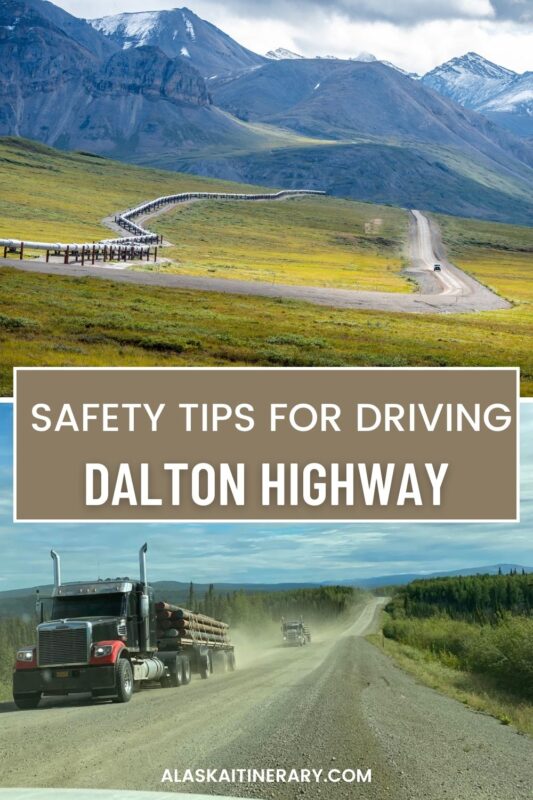
Safety Tips for Dalton Highway

The Dalton Highway presents an exhilarating yet demanding journey, leading you through some of the most spectacular and untamed landscapes in the US towards the Arctic Ocean in Alaska. To ensure your adventure is not just thrilling but also safe, it’s crucial to be well-prepared. In our comprehensive Dalton Highway Safety Tips guide, we provide in-depth advice on how to ready your vehicle for the journey, what essentials to pack, and what driving conditions to expect. We’ll also cover the specific rules of the road for this unique route. This guide is designed to equip you with all the necessary information before you depart from Fairbanks and venture into the remote north.
This article may contain affiliate / compensated links. For full information, please see our disclaimer here.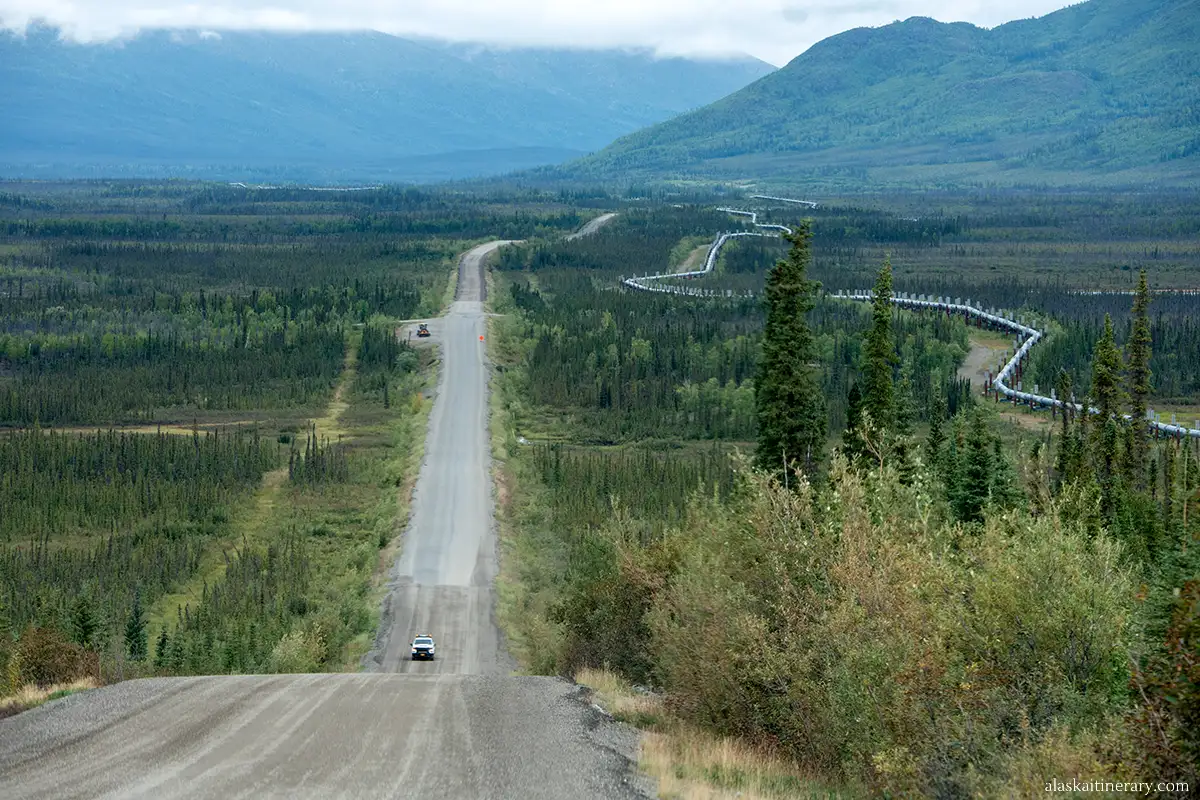
Your Essential Guide to Navigating the Dalton Highway Safely
Welcome to our comprehensive series on the Dalton Highway, a 414-mile journey packed with surprises at every turn. In our main article about driving the Dalton Highway, we covered the basics: the highway’s start and end points, fueling stations, car rental options, optimal travel times, weather conditions, detailed maps, road conditions, and intriguing historical facts about this famous Alaskan route.
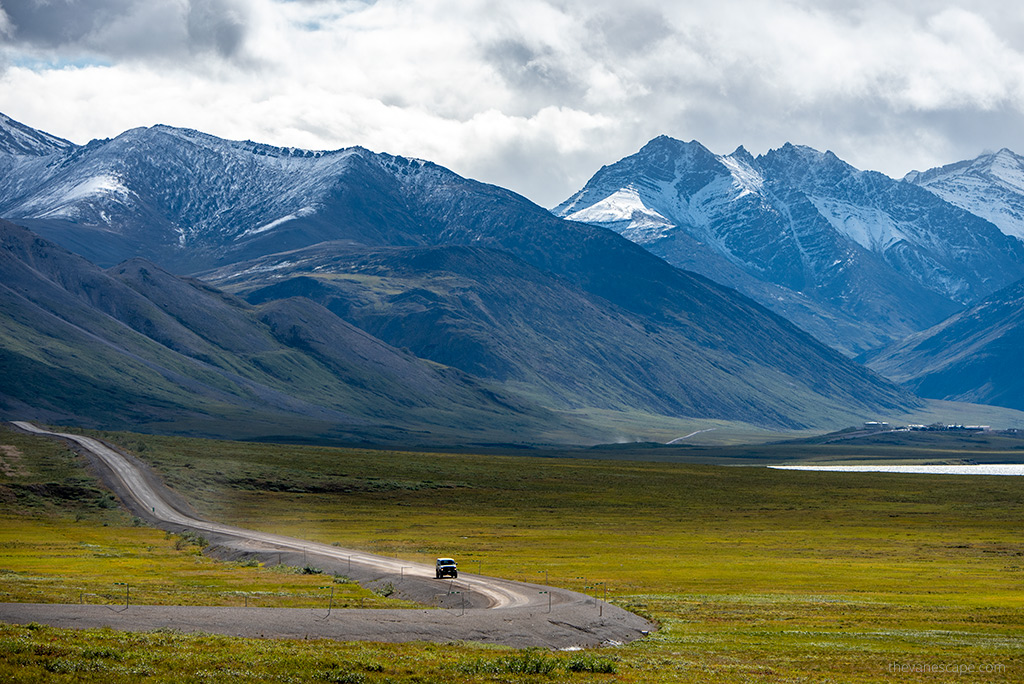
It’s one of the most scenic drives in Alaska and also one of the most challenging, which is why preparation is key.
This article delves deeper, focusing on the preparations needed for your Dalton Highway safety expedition. Considering it’s almost a 1000-mile round trip, thorough preparation is crucial. Beyond Fairbanks, facilities are scarce, with limited access to food, gas, and vehicle repair services. Therefore, perfect preparation in Fairbanks is key to a successful journey.
During our 10-day Dalton adventure in August, Chris and I gathered a wealth of tips and insights. In this guide, we’ll share how to prepare your vehicle, what essential items to pack, what to expect on this renowned truckers’ route, the costs involved, and crucial safety rules for driving the Dalton Highway. This article is your go-to resource before embarking on this epic journey. For easy navigation, use the table of contents provided.
Don’t forget to check out our article on camping along the Dalton Highway. It’s a valuable resource for finding safe overnight options, including campgrounds, public lands, hotels, and cabins along the way.
Essential Safety Tips for Your Dalton Highway Adventure
Medical Facilities: Be Prepared
On the 500-mile stretch between Fairbanks and Deadhorse, you won’t find any medical support or emergency facilities. Self-sufficiency is key when traveling the Dalton Highway. In case of an accident, knowing first aid is crucial, as exits are scarce, making access to emergency services difficult.
Pack a comprehensive First Aid Kit and BleedStop powder. Consider additional travel insurance for this journey, and don’t forget to bring any personal medications.
Phone Coverage & Internet: Limited Connectivity
Expect limited phone and internet service between Fairbanks and Deadhorse. Our AT&T coverage ceased near Elliott Highway, with no service along most of the route. WiFi, for a fee, is available at Coldfoot Camp and Yukon Crossing. Limited Verizon and AT&T service can be found north of Atigun Pass and in Coldfoot. Public phones using calling cards are accessible at Yukon River Camp (mile 56), Coldfoot (mile 175), and Deadhorse (mile 414).
Inform family and friends about your trip and the vehicle you’ll be driving, and leave them your Dalton Highway itinerary.
Satellite Phone: A Safety Measure
While we didn’t carry a satellite phone, renting one in Fairbanks is advisable, especially for hiking in the Brooks Range or visiting the Gates of the Arctic National Park and Arctic National Wildlife Refuge. Ensure the satellite phone covers the Dalton Highway area, as some may not function within the Brooks Range.
Paper Map: Navigating the Dalton Highway
Always carry a paper map. We recommend the Milepost map for its detailed mile-by-mile description. Download necessary apps and information before your journey, as internet access is unreliable on the Dalton.

Drinking Water & Food: Essential Supplies
Water on Dalton Highway
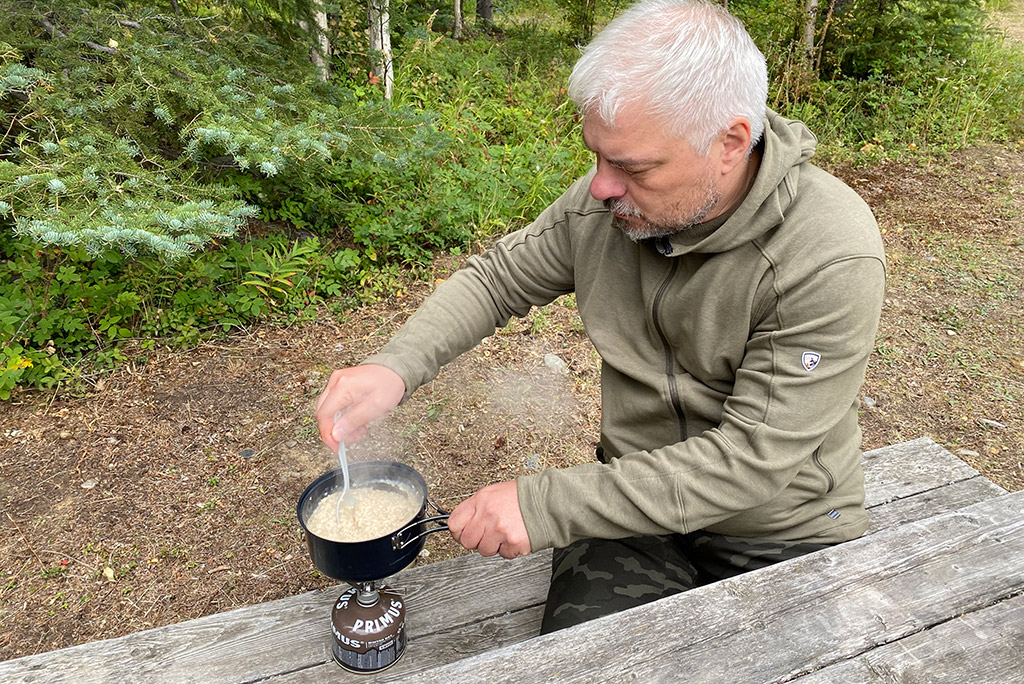
Giardia, a common cause of diarrhea, is widespread in Alaska’s waters. You should treat the water first if you use stream water for cooking or drinking, according to the BLM rule. So you must boil water rapidly for 5 minutes or use iodine tablets, water purification tablets, or a water purification filter system before consumption. Carry at least 2-3 gallons of drinking water, replenishing at available points like campgrounds. We used a Camping Water Container for this purpose.
Food on Dalton Highway
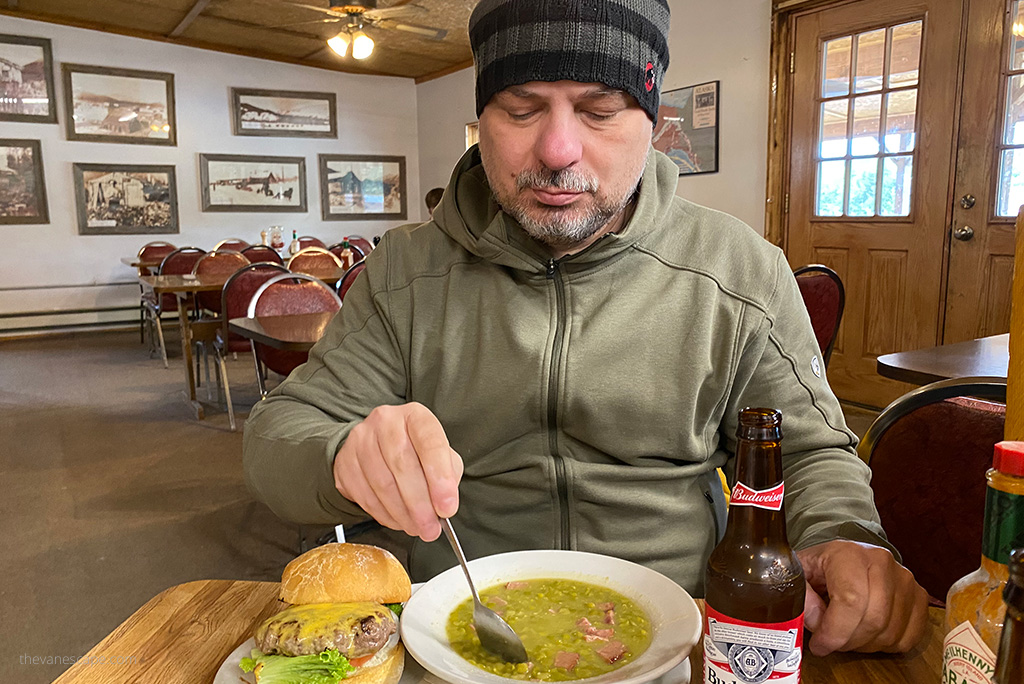
There are no grocery stores along the route, except for a minimally stocked store in Deadhorse. Pack all your food, mindful of smells that might attract wildlife. For warm meals, Yukon River Camp (mile 56), Coldfoot Camp (mile 175), and Deadhorse (mile 414) offer dining options.
Planning Your Budget for the Dalton Highway Trip
Embarking on a journey along the Dalton Highway requires careful financial planning for a 1000-mile (1610 km) round trip. Here are key considerations to ensure you’re well-prepared.
Cash and Banking
- Limited Banking Facilities: There are no banks or ATMs along most of the route. The only ATM is in Deadhorse, at the route’s end. Carry sufficient cash as backup, as card payment terminals may not always work due to damage or lack of connectivity.
Fuel Costs
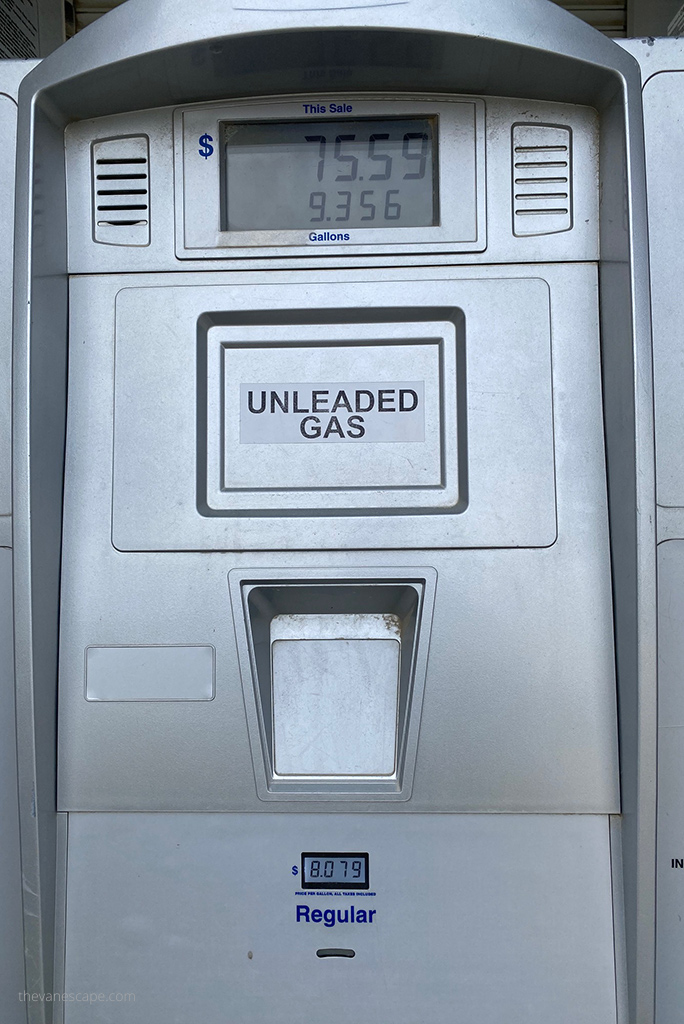
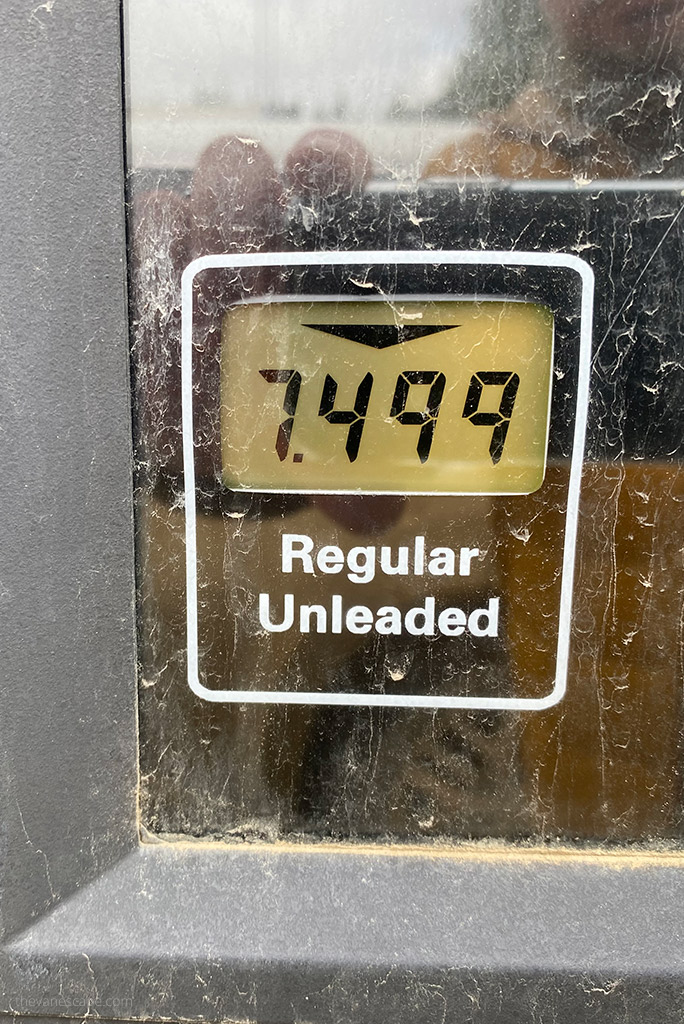
- High Gasoline Prices: Fuel is a major expense, notably pricier than in other parts of the US and Alaska. As of August 2022, prices were $7.499 per gallon in Coldfoot and $8.079 per gallon in Deadhorse.
Lodging Expenses
- Accommodation Options: Lodging choices are few and can be expensive, often exceeding $200 per room in lodges and hotels. Campgrounds typically charge $10 – $20 per site. Free camping is available on BLM-managed public lands. More details are available in our Dalton Highway Camping Guide and the article on Wiseman.
- Camping as a Budget Option: Camping, either in designated campgrounds or on public lands, is a cost-effective choice. We opted for tent camping, which is either cheap or free.
Food Costs
- Self-Supply is Essential: There are no grocery stores along the highway. You need to pack all your food and snacks. Prepared meals are available at only three locations, starting at $18 for a simple lunch.
Activity Expenses
- Arctic Ocean Tour: Access to the Arctic Ocean from Deadhorse is restricted to authorized tours, costing around $89 per person.
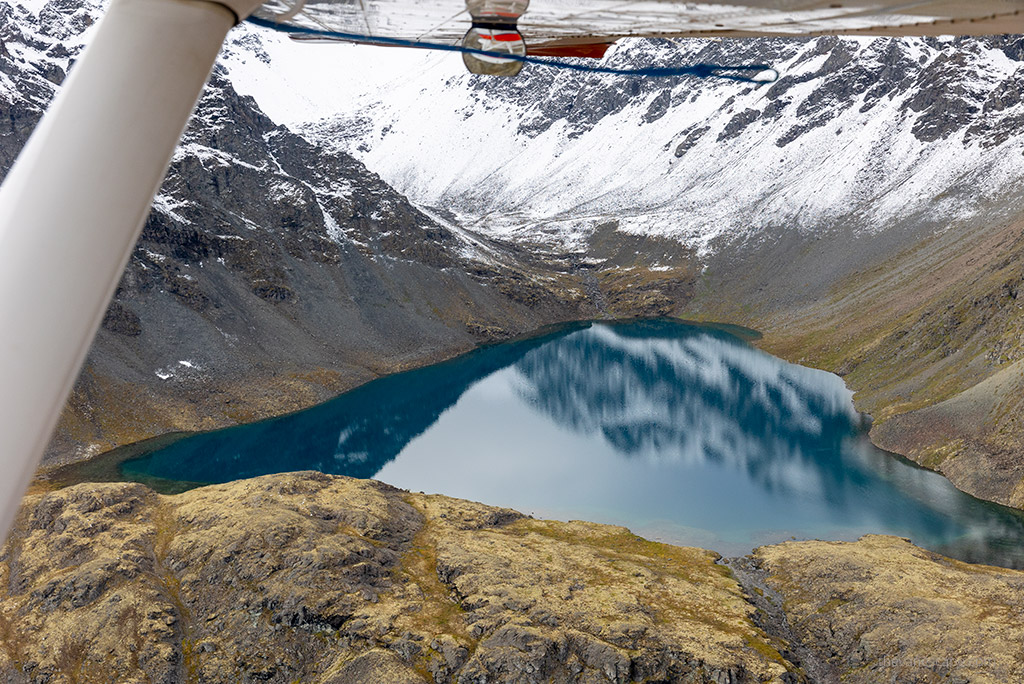
- Scenic Flights and Hikes: For a flightseeing over the Brooks Range with Coyote Air, budget approximately $900+ for two people. A day trip for hiking and exploring the Gates of Arctic National Park can cost $2200+ for two or more.
Planning your budget for the Dalton Highway involves accounting for these essential costs to ensure a smooth and enjoyable experience.
Vehicle Preparation for a Safe Dalton Highway Journey
Embarking on the Dalton Highway, a remote and challenging route through Alaska’s wild northern territory, demands meticulous vehicle preparation. Whether you’re driving your own car, RV, or a rental, start getting ready before leaving Fairbanks. Beyond this city, services dwindle, turning your 830-mile round-trip into a practical 1,000-mile expedition across the Arctic Circle and Antigun Pass.
Choosing the Right Rental for the Dalton Highway
When selecting a rental vehicle for the Dalton Highway, it’s crucial to understand that not all rentals, even those with 4WD or labeled as off-road vehicles, are permitted on this challenging route. Many rental companies explicitly prohibit driving on the Dalton and other gravel highways in Alaska. This means that opting for a 4WD or an off-road jeep does not automatically grant you the clearance to travel on the Dalton Highway.
Before finalizing your rental, it’s essential to verify the rental agreement and confirm with the company that the vehicle is allowed on gravel roads like the Dalton. This due diligence is necessary to avoid violating your rental agreement and facing potential penalties.
We recommend companies like Alaska Auto Rental from Fairbanks, which we had a positive experience with. Their vehicles are specifically adapted for the demanding conditions of the Dalton Highway, and they provide the appropriate insurance and equipment needed for this unique journey. Ensure to inform the rental company that your travel plans include the Dalton Highway so that they can equip you with a suitable vehicle and the necessary coverage.
What is the best Vehicle for Dalton Highway?
The optimal vehicle for this highway is one that combines high ground clearance, good traction, and fuel efficiency. Pick-up trucks, SUVs, and cars with high clearance are recommended. Smaller cars and motorcycles are not advisable due to the road’s rough conditions. Remember, a skilled and cautious driver is crucial for safely navigating the Dalton Highway.
Our Vehicle Experience on the Dalton Highway
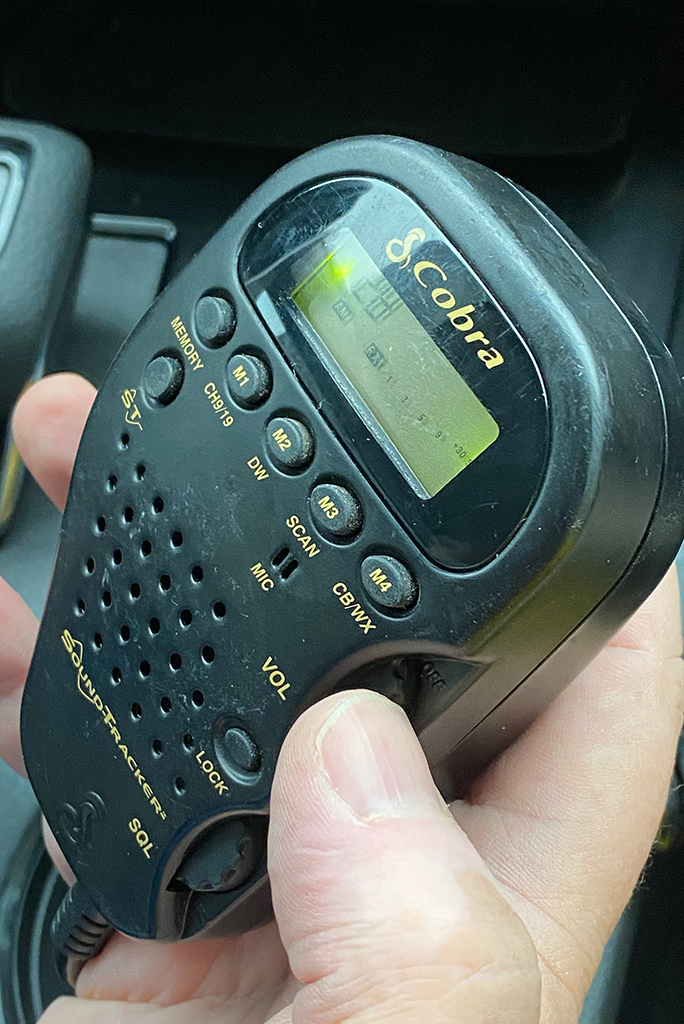
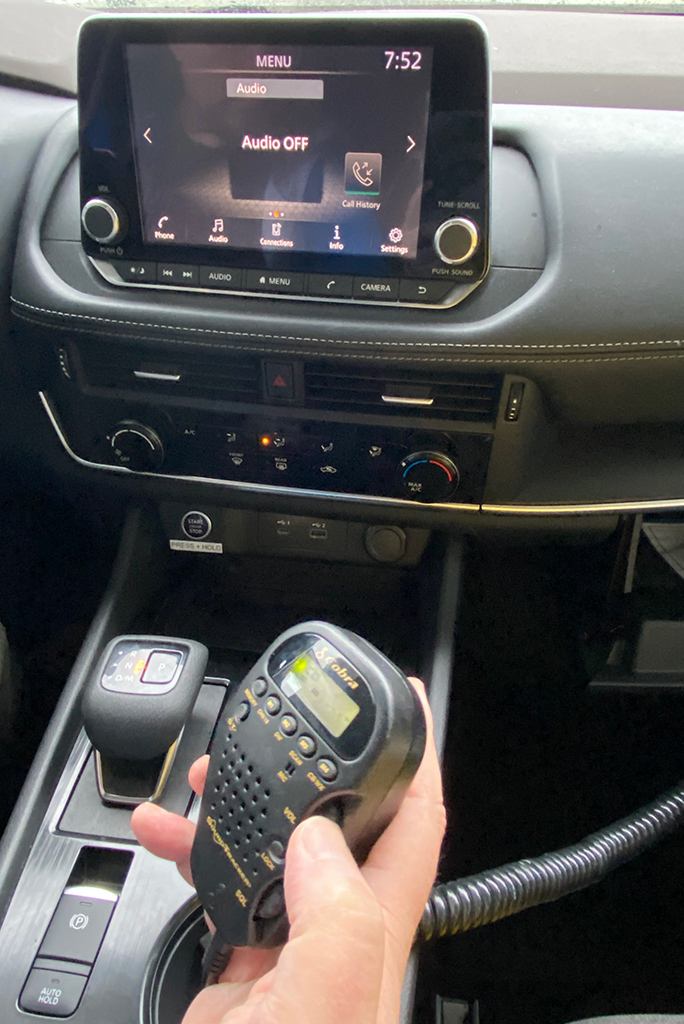
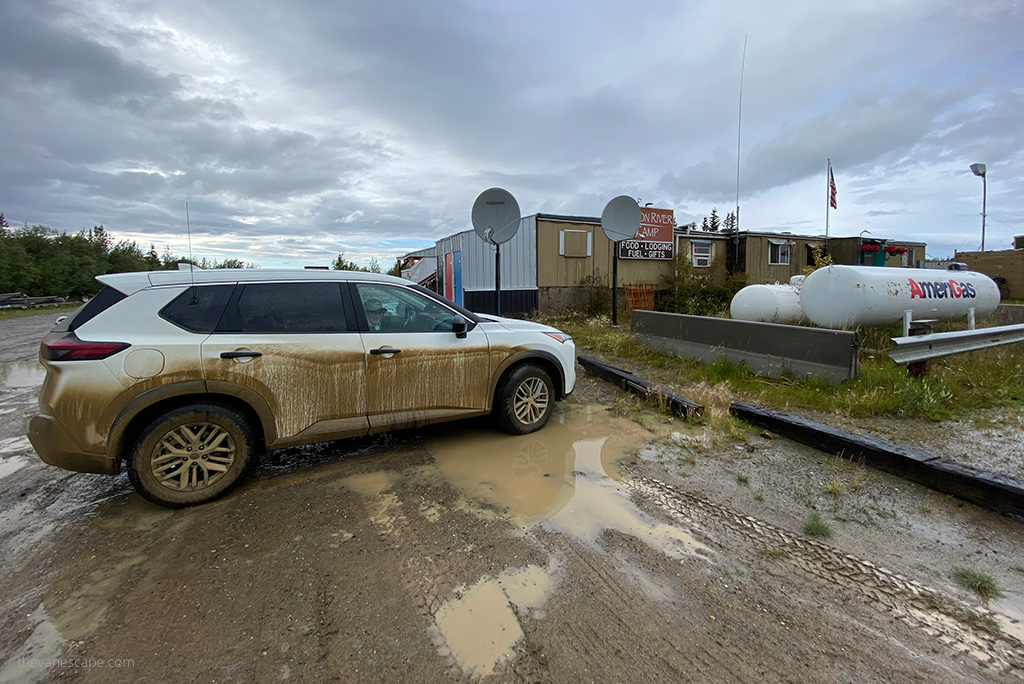
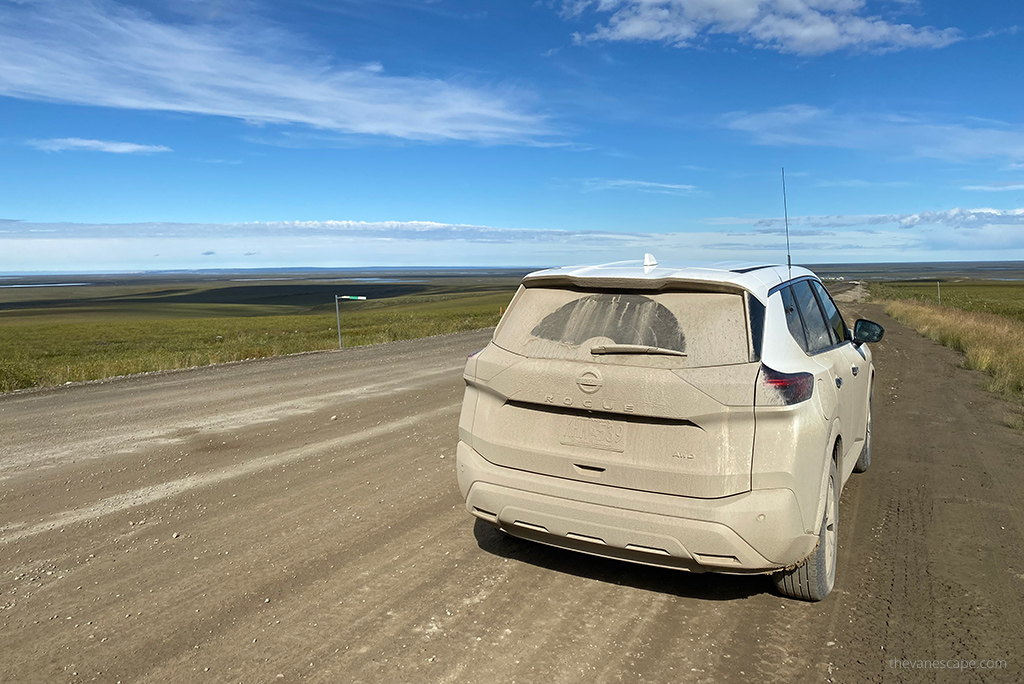
Our chosen vehicle, a Nissan Rogue from Alaska Auto Rental, was outfitted with two spare tires and a CB radio, essential for safety as recommended by the BLM. The rental company’s thorough maintenance program and safety inspection before each rental provided additional peace of mind. We ensured our rental was covered by comprehensive insurance for the journey.
Driver Skills for Safety Navigating the Dalton Highway
The Dalton Highway demands a driver skilled in handling various challenging weather conditions and road terrains. Chris, an experienced driver, was instrumental in ensuring our safe journey during our Dalton Highway trip in August. His expertise was particularly vital as we navigated through diverse and often harsh weather conditions.
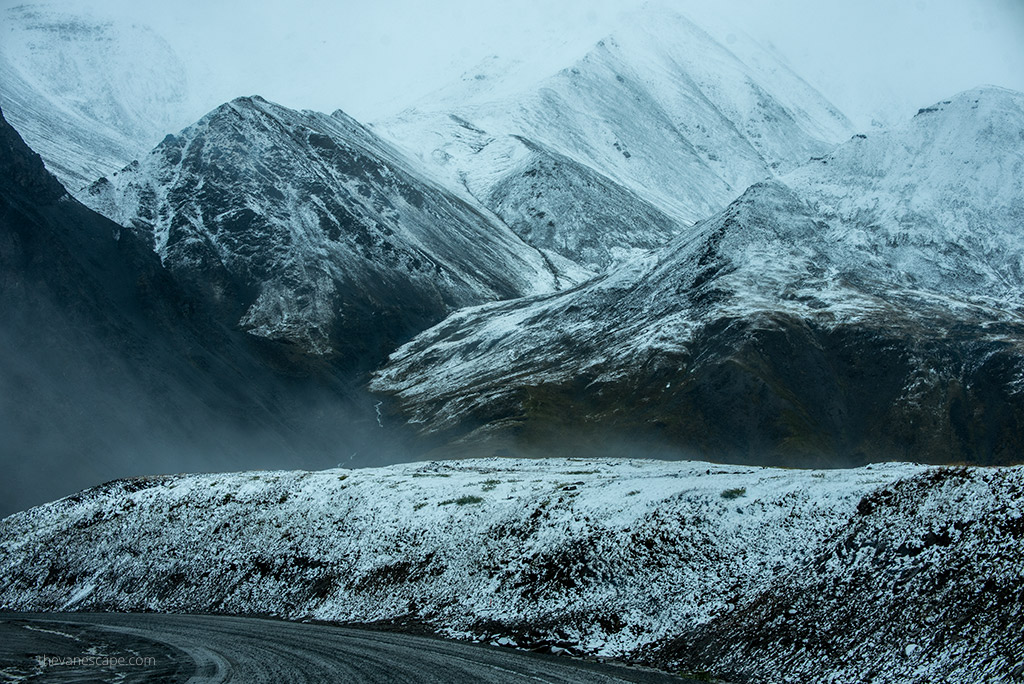
- Varied Weather Challenges: A driver must be adept at navigating through fog, heavy rain, and snowstorms. We encountered fog, rain, snow, and icy conditions, which Chris skillfully managed. The road conditions varied from slippery and muddy to icy, requiring constant vigilance and careful driving.
- Navigating Rough Terrain: The Dalton Highway is notorious for its unexpected massive potholes and areas of road damage, often worsened by extreme weather conditions and heavy truck traffic. Chris’s ability to anticipate and react to these road challenges was key to our safe travel.
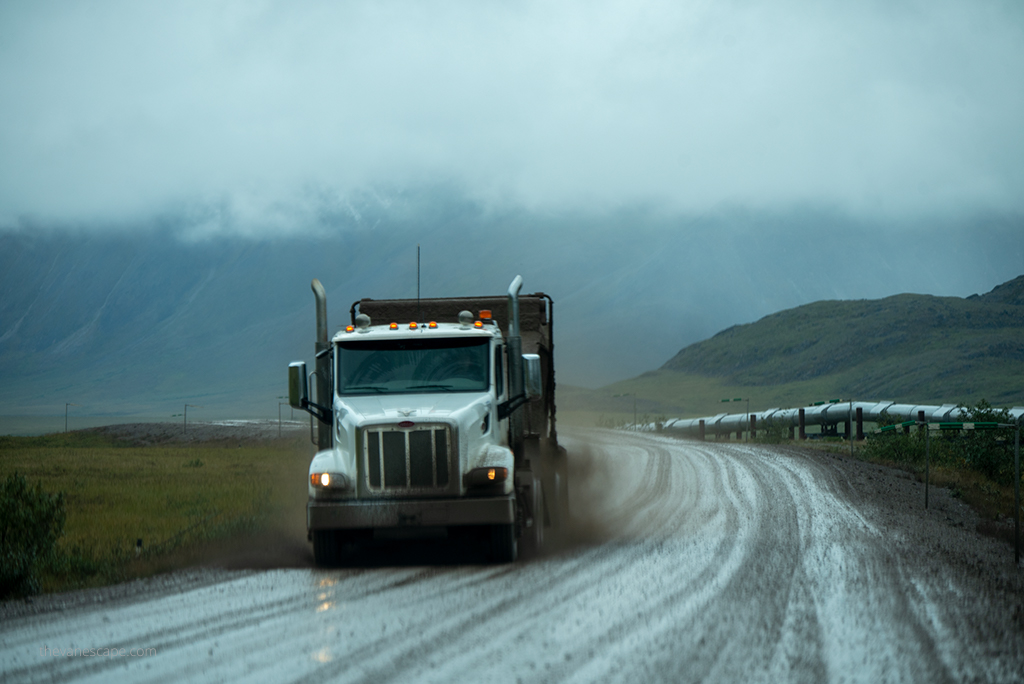
- Dealing with Large Trucks: The presence of large trucks on the Dalton Highway can be intimidating. Chris’s cautious approach and awareness when passing these vehicles, especially given the risk of flying rocks, were crucial. His experience ensured we maintained a safe distance and speed when encountering these large trucks.
If you have time, we invite you to watch this short 3-minute video to see what to expect on the Dalton Highway.
Essential Vehicle Equipment for Safety on the Dalton Highway
To ensure a safe and successful journey on the Dalton Highway, equipping your vehicle with the right gear is crucial. Here’s a checklist based on our experience.
Two Full-Sized Spare Tires
- Necessity of Spare Tires: We strongly recommend carrying at least two full-sized spare tires. The long stretches between service points mean that you need to be self-reliant in case of tire issues.
Tire Jack and Tools for Flat Tires
- Self-Sufficiency in Repairs: With repair services only available in Fairbanks and Deadhorse, having a tire jack and the necessary tools to handle flat tires is essential for the 500-mile stretch with no services.
CB Radio
- Communication on the Road: Our rental vehicle included a CB radio, a vital tool on the Dalton Highway. With limited internet or phone coverage, a CB radio becomes a lifeline, especially in areas with poor visibility. It allows communication with truck drivers and road workers, typically on Channel 19, for updates on traffic, route conditions, or emergencies. BLM and the Alaska Department of Transportation recommend preparing a vehicle with a CB radio.
Extra Gasoline
- Fuel Planning: Given the high gasoline prices and sparse fueling stations, carrying extra gasoline is wise. An additional 10 gallons in jerry cans can be a budget-saver.
Fuel along the Dalton Highway
- Fuel stations are located at Yukon River Crossing (Mile 56), Coldfoot (Mile 175), and Deadhorse (Mile 414). Plan your fuel stops strategically.
Motor Oil and Wiper Fluid
- Maintenance Supplies: Pack extra motor oil and wiper fluid. The gravel and dirt roads will necessitate frequent cleaning of your windshield and rear window.
Emergency Flares
- Safety First: Include emergency flares in your kit. They are invaluable for signaling in emergencies and alerting other drivers, especially in low-visibility situations.
Remember, preparation is key for a safe journey along the Dalton Highway. These items will help you tackle challenges and ensure a smoother experience.
Dalton Highway Safety Tips – Check your car before you leave Fairbanks
Be sure to check that you have a fully roadworthy car before you drive onto Dalton Highway. Because we rented a car at Alaska Auto Rental – our car, in accordance with the company’s policy, was additionally checked before the route.
Ensure all vehicle tires are properly inflated, check that the brakes are working properly, check all vehicle fluids, and check worn hoses and belts.
Packing Essentials for Your Safety Dalton Highway Adventure
With your vehicle fully prepared and equipped, the next step is packing your personal items. The essentials you need for the Dalton Highway will depend on the duration of your trip, planned activities, and the time of year you’re traveling. Below, we’ve listed our absolute must-haves for this route, vital for your safety and comfort. For those planning to camp, refer to our separate article for additional camping-specific tips. Check out our detailed list of what to pack for a trip to Alaska with a printable PDF checklist.
What to Pack?
- First Aid Kit and Personal Medications: A comprehensive first-aid kit is a cornerstone of safety on this remote route. Don’t overlook packing this along with any personal medications you may need.
- Drinking Water and Purification Tablets: Carry a sufficient supply of drinking water. Considering the prevalence of Giardia bacteria in natural water sources, bring water purification tablets or Compact Survival Water Filter for treating stream or river water.
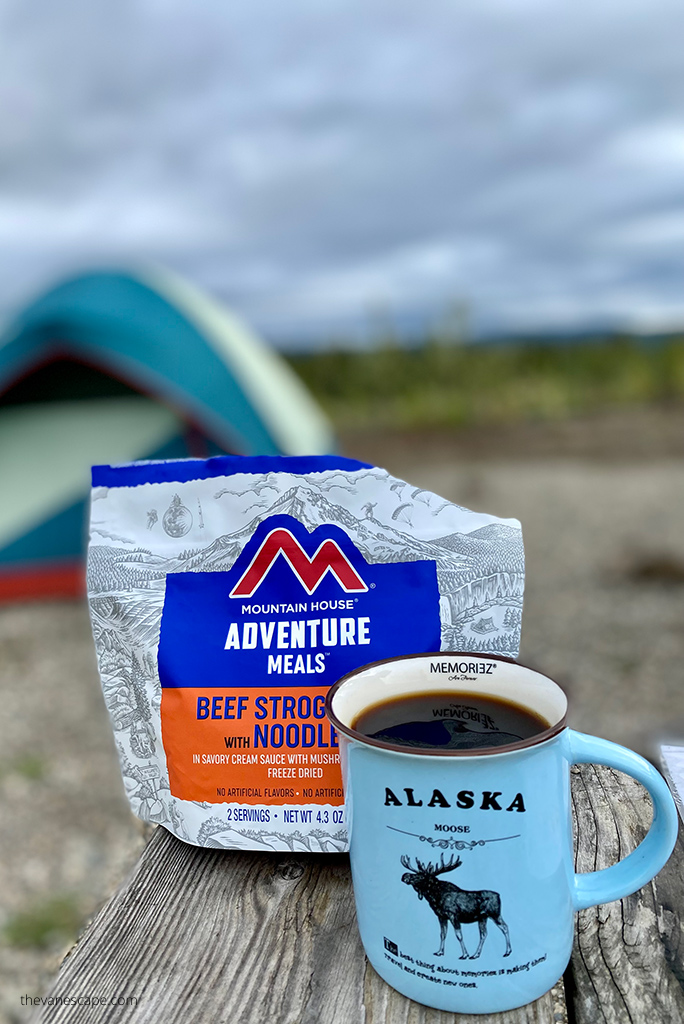
- Ready-to-Eat Food and Snacks: Choose fast, ready-to-eat items and hiking snacks. Be mindful of storing food securely so as not to attract wildlife. We chose Mountain House Adventure Meals, especially their Beef Stroganoff with Noodles and Lasagna with Meat Sauce.
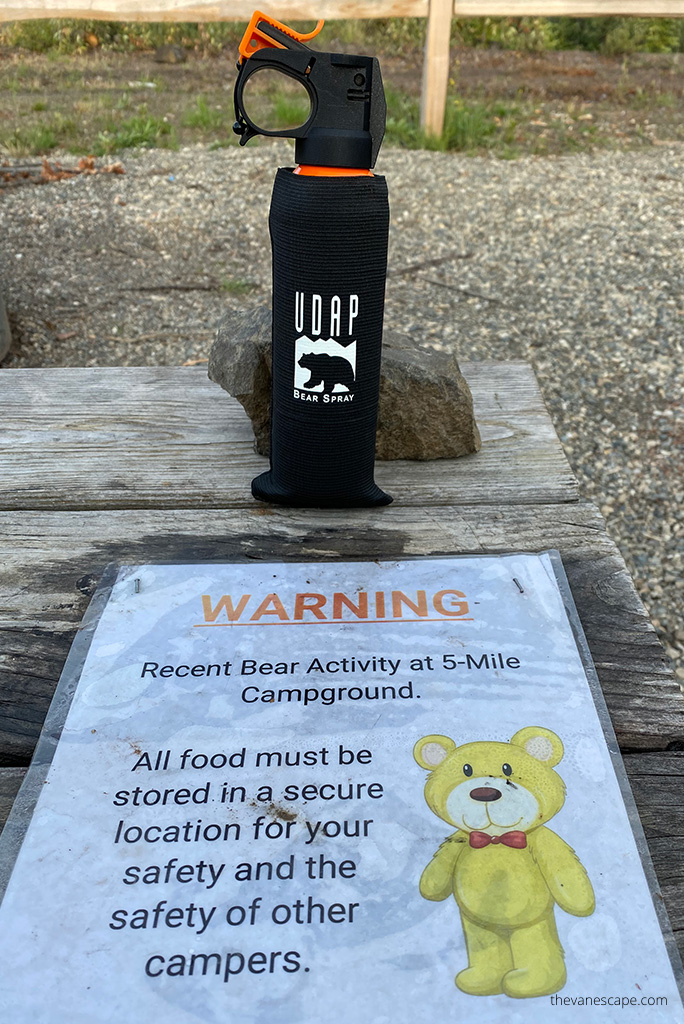
- Bear Safety Gear: Due to the abundant wildlife, bear spray and bear-resistant food containers are essential. Always have bear spray accessible while hiking or camping. Check out our Alaska bear safety tips to stay prepared.
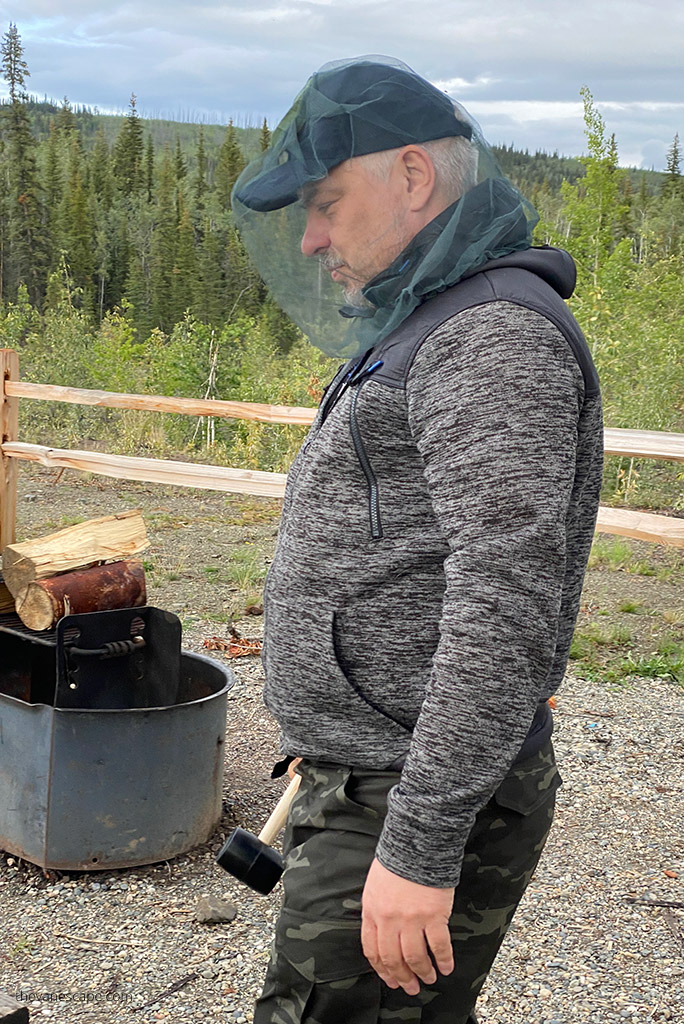
- Insect Repellent and Head Net: Prepare for mosquitoes by packing a mosquito head net and insect repellent containing at least 40% DEET.
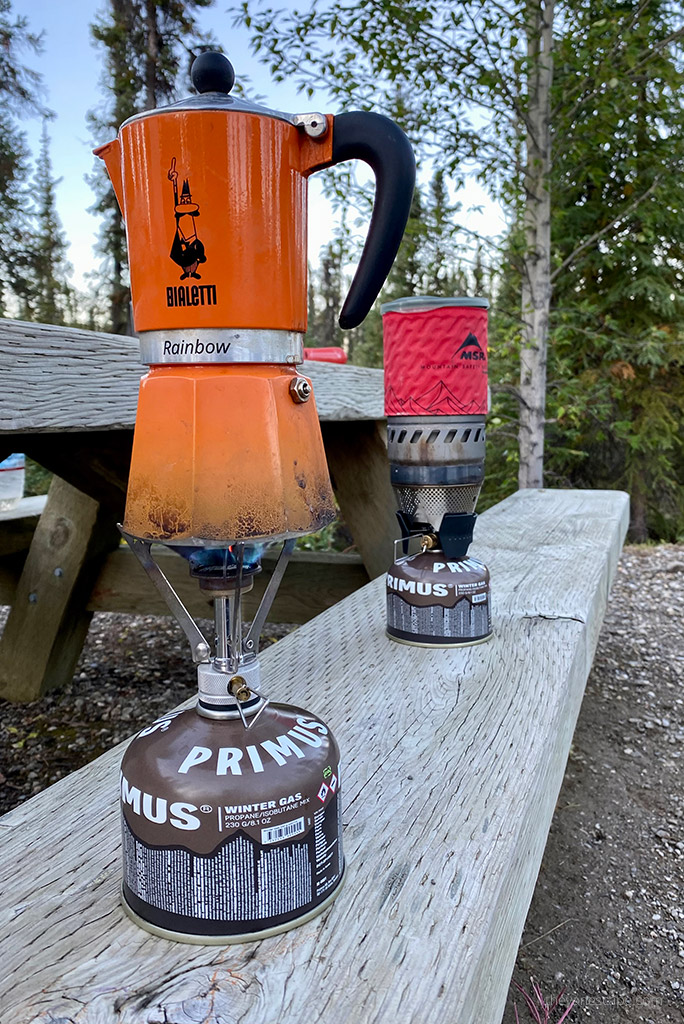
- Camping Gear: A warm, waterproof tent, sleeping bags, and comfortable mats are crucial. Include cooking gear for hot meals and coffee. We’ve detailed our camping gear choices in a separate article.
- Waterproof Boots: The Dalton Highway can be dusty, muddy, and wet. Bring durable, waterproof boots – they may get quite worn during the trip.
- Warm Clothing: Pack for varied temperatures – warm clothes, a hat, gloves, a windproof jacket, and a fleece. We experienced temperatures as low as 32°F (0°C) and as high as 68°F (20°C) in August.
- Rain Jacket: A waterproof raincoat with a hood is a practical necessity on the Dalton Highway.
- Hygiene Supplies: Be self-sufficient with hygiene essentials like biodegradable toilet paper, Outdoor Wet Wipes, cosmetics, and hand sanitizer. Always practice Leave No Trace principles.
- Garbage Bags: Carry garbage bags to dispose of waste responsibly only in designated areas and bear-proof containers.
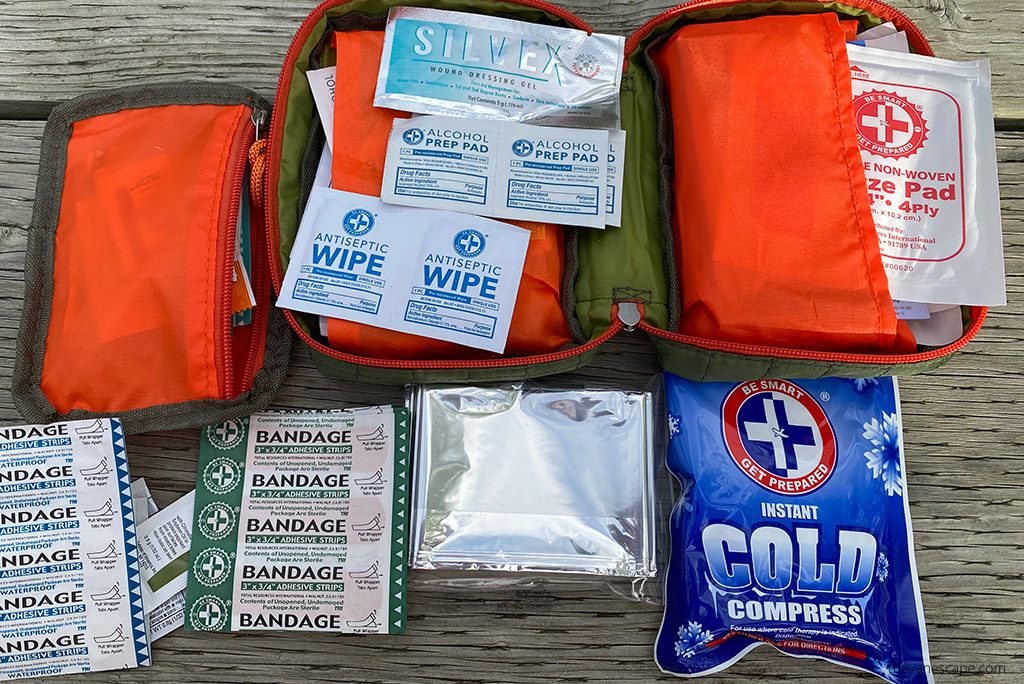
Remember, packing appropriately for the Dalton Highway is not just about comfort; it’s about ensuring your safety in a remote and challenging environment.
Our Tip: For more insights, check out our Alaska road trip packing list with a PDF checklist.
Dalton Highway Safety Tips – Check Before You Hit the Road
- Check current Dalton Highway road conditions before departing Fairbanks at Alaska Statewide Driving Conditions.
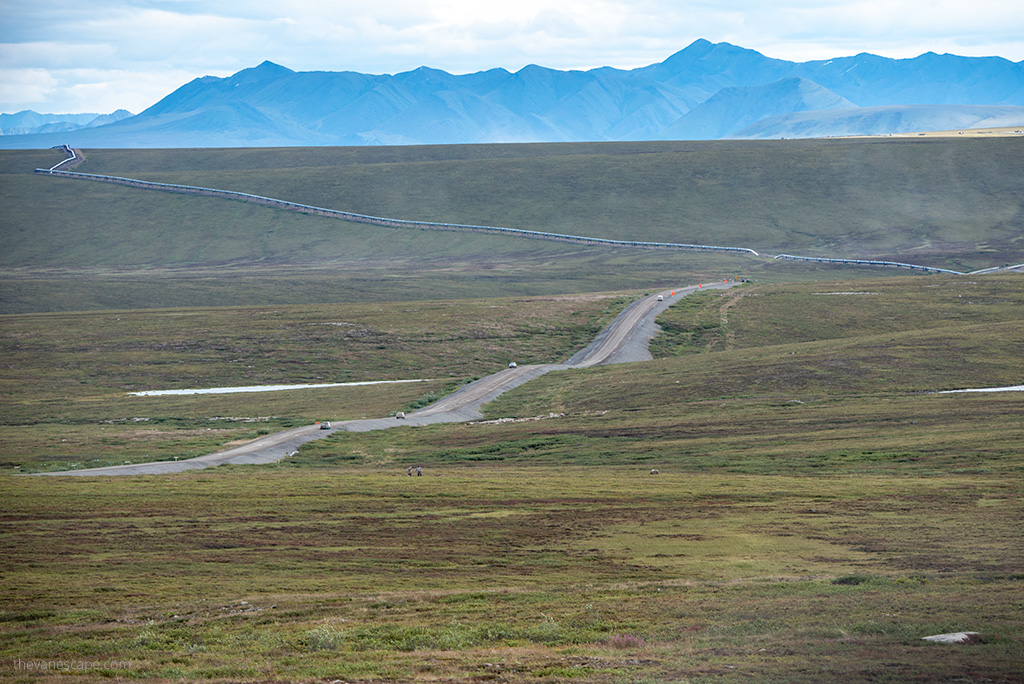
- Also, check the extended weather forecast via the National Weather Service Forecast. But no matter the weather forecast, be prepared for it to break down. You must be prepared for all seasons and the most difficult driving conditions, even in the middle of summer. As we did, you may encounter snow and ice north of Coldfoot, especially on the Atigun Pass, even in summer.
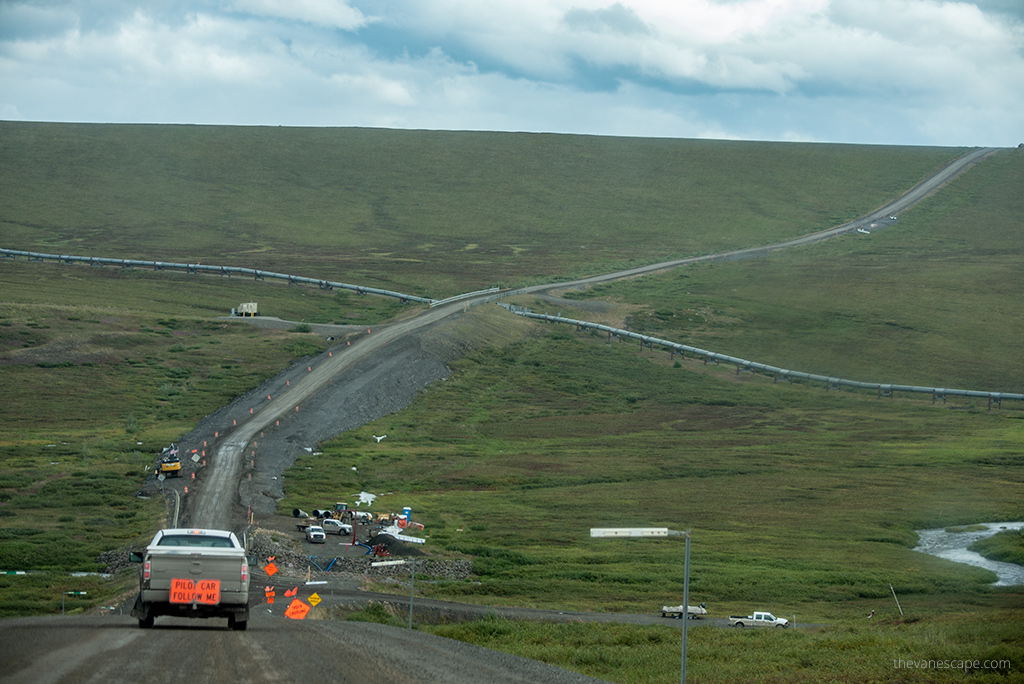
- Check if there are planned road reconstructions during your trip. It will help you plan your travel better if you know they might be road works and on which sections of the Dalton Highway. Road construction can cause some delays.
Essential Safety Tips for Navigating the Dalton Highway
Reset Your Trip Meter at the Start
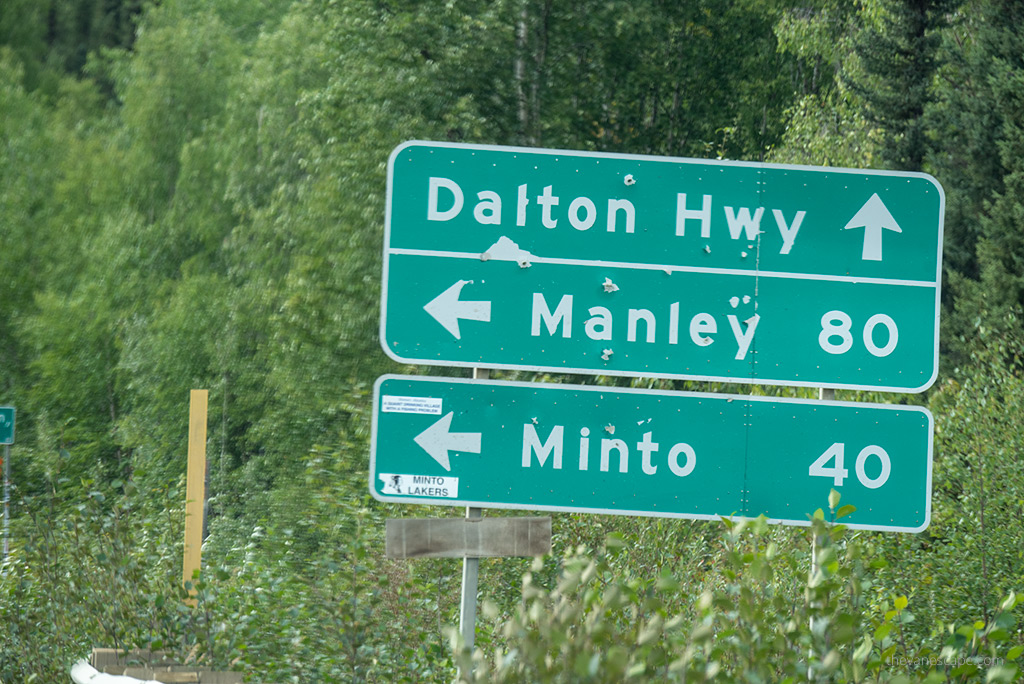
- Begin your journey 84 miles north of Fairbanks. At the start of the Dalton Highway, reset your trip meter at the road sign. This allows you to track attractions and follow Milepost tips accurately. The iconic “Dalton Highway Sign” is just over a mile in.
Keep Lights On During Your Drive
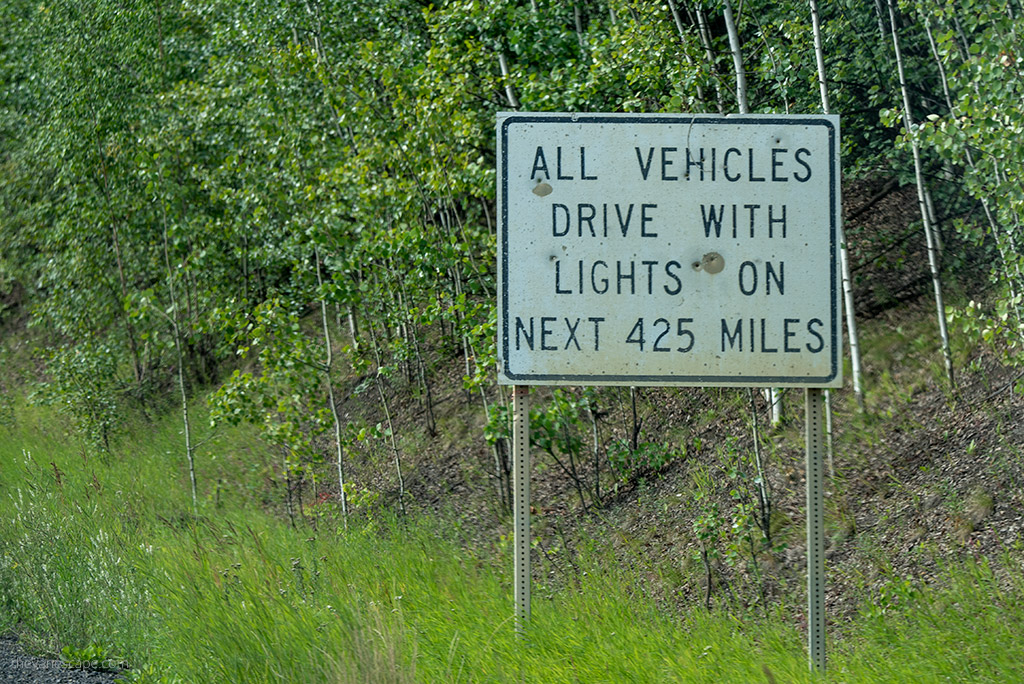
- A crucial safety rule on the Dalton Highway is to keep your lights on at all times. This improves visibility for you and others, especially with large trucks creating dust, mud, and gravel clouds.
Maintain Clean Lights
- Regularly clean your headlights and taillights to ensure visibility. The dusty and muddy conditions necessitate cleaning at every stop.
Show Respect for Large Trucks
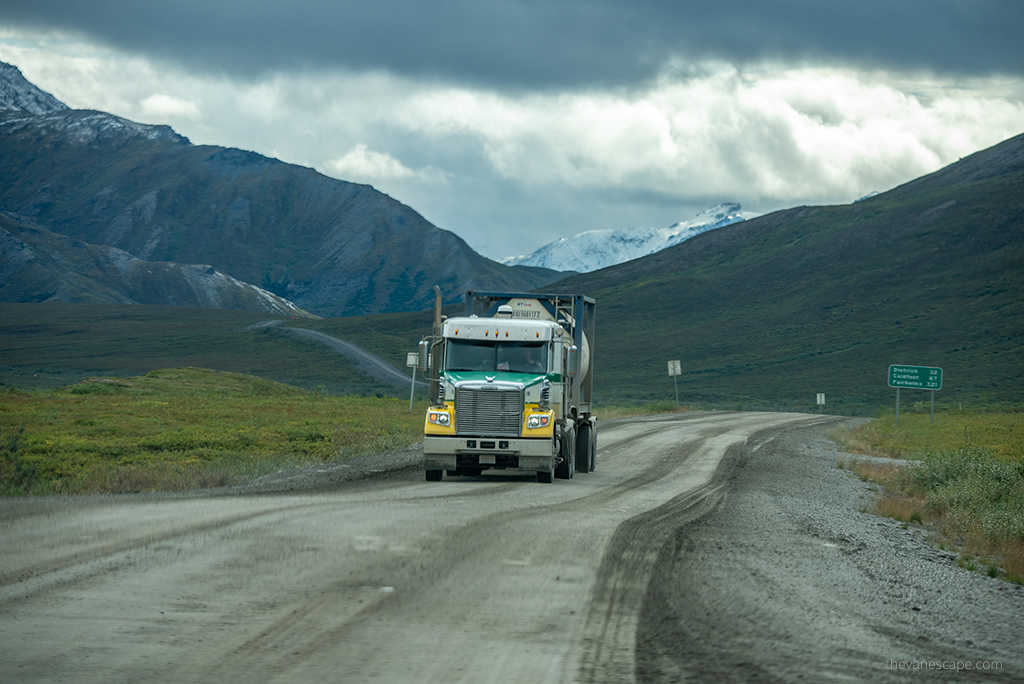
- Remember, the Dalton Highway is primarily an industrial road for pipeline supply trucks. Big trucks and road maintenance vehicles always have the right of way.
Slow Down When Passing
- Reduce your speed to 25-30 mph when passing to minimize rock damage. Yield to faster trucks, indicating your intention to let them pass safely. Lowering your speed also reduces the risk of rock damage to your windshield.
Regularly Check Rear-View Mirror
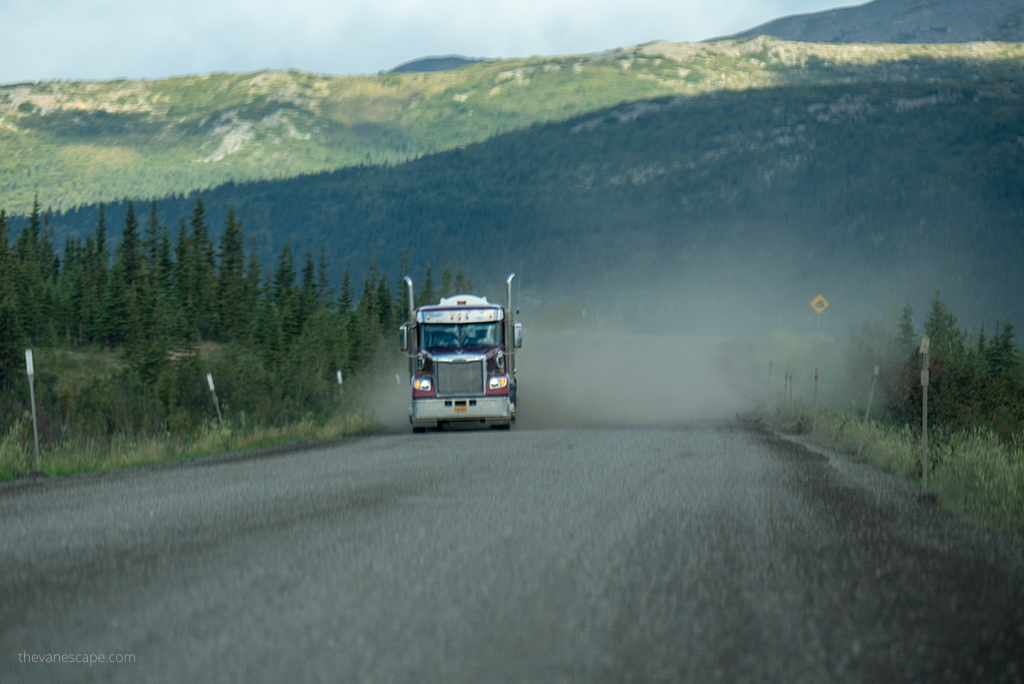
- If a truck approaches from behind, allow them to pass. Indicate with your blinker when it’s safe for them to overtake.
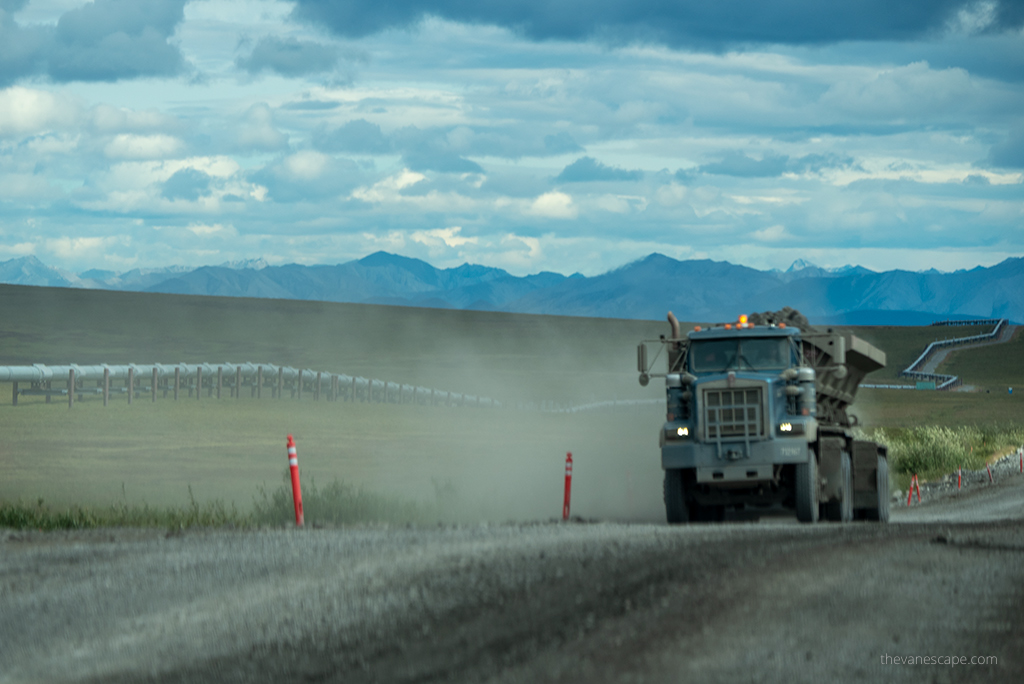
Adhere to Speed Limits
- The general speed limit is 50 mph, but adjust your speed according to road conditions and your comfort level. Always allow room for others, particularly trucks, to pass.
Stay on the Right and Avoid Stopping on the Road
- Avoid stopping on bridges, hills, or curves. Designated pull-offs are the safest spots for breaks or photos. Remember that trucks have long stopping distances, so stopping on the road can be dangerous.
Use Emergency Flashers Only for Emergencies
- Activate your emergency flashers solely in actual emergencies. Misuse can lead to unnecessary stops from motorists looking to assist.
Stop to Offer Assistance
- If you encounter someone who might need help, it’s customary to stop and offer assistance. This camaraderie is vital on such a remote route.
Be Mindful of Motorcycles, Bicycles, and Pedestrians
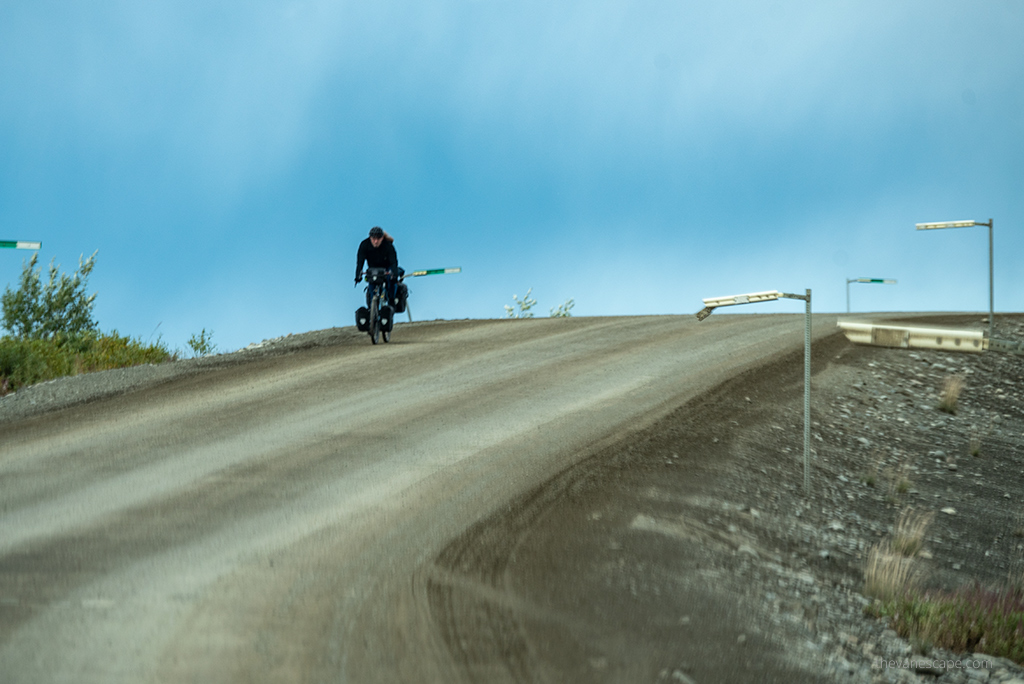
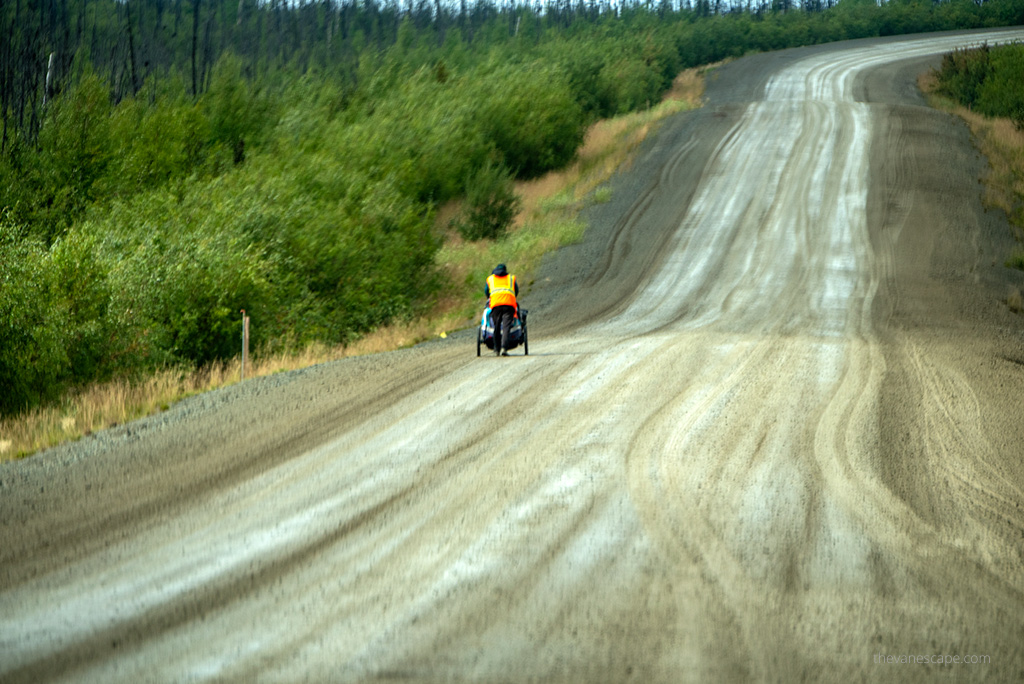
The Dalton Highway attracts motorcyclists and bicyclists. Exercise caution, slowing down to avoid throwing gravel or dust at them. We were astonished to meet a hiker, Oli the Walker, on his journey from Argentina to Deadhorse, emphasizing the diverse travelers on this route.
Oli the Walker, an intrepid adventurer, had embarked on an extraordinary journey, walking all the way from Ushuaia, Argentina to Deadhorse, Alaska. His journey spanned four years, taking him through varied landscapes and climates, a testament to his endurance and determination.
We crossed paths with Oli towards the end of our Dalton Highway expedition. It was a clear, crisp day, and we noticed a figure in the distance pushing a baby carriage loaded with supplies. As we drew closer, we were intrigued by his story. Oli shared tales of his long journey on foot, the challenges he faced, and the incredible sights he witnessed. His spirit of adventure and resilience was truly inspiring.
Navigating Wildlife Encounters on the Dalton Highway
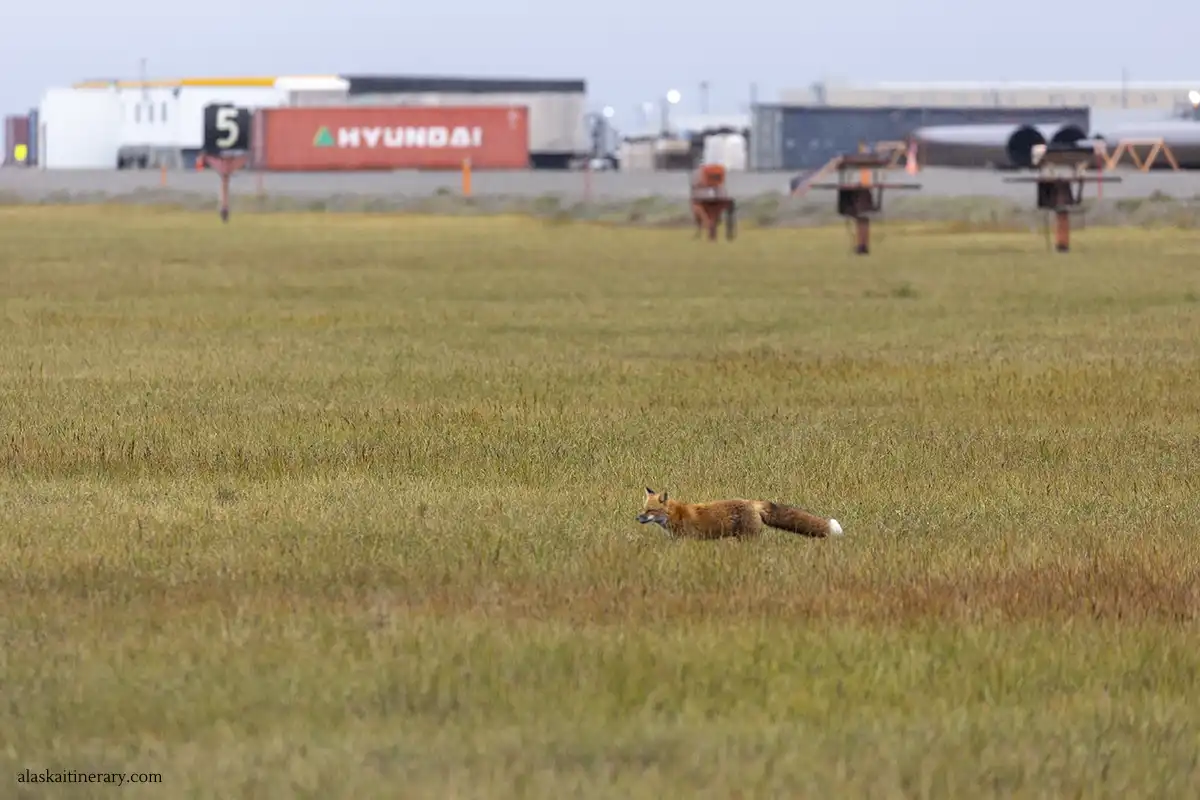
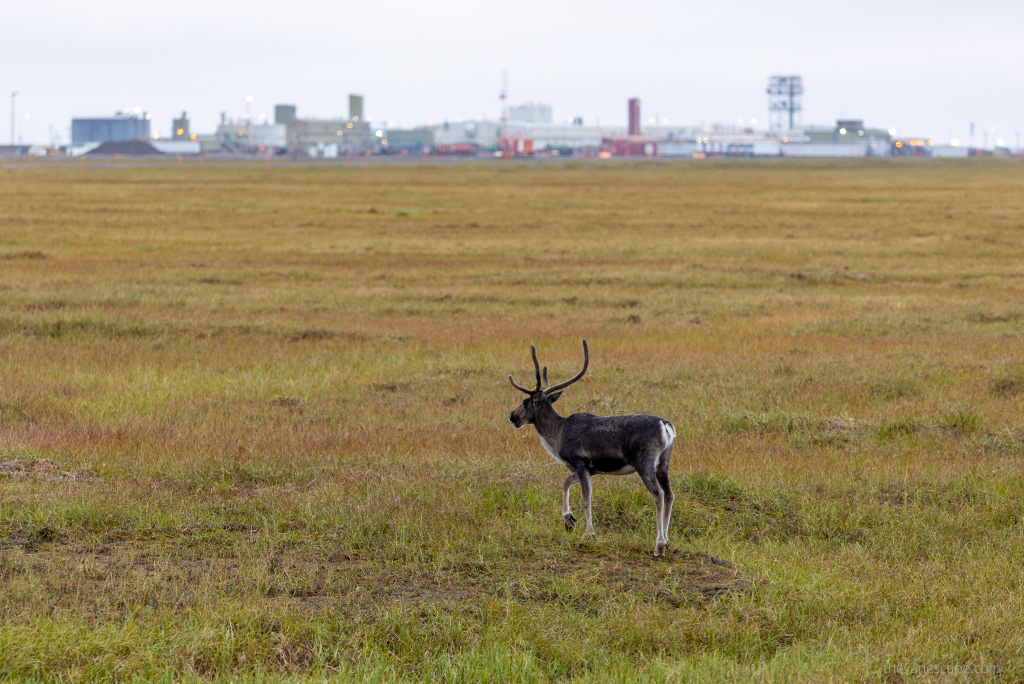
The Dalton Highway offers an extraordinary wildlife viewing experience, with the boreal forest and the Brooks Range serving as habitats for diverse species. You might encounter caribou, moose, grizzly and black bears, wolves, coyotes, red foxes, muskoxen, Dall sheep, and numerous arctic squirrels. However, it’s crucial to exercise extreme caution, as animals may unexpectedly appear on the road.
Safety Tips for Wildlife Spotting
- Be Vigilant: Always be alert for wildlife crossing the road. Check our Guide to Moose Safety in Alaska.
- Safe Stopping: If you wish to observe or photograph wildlife, only stop at safe locations. Never halt on the road itself, as this poses a danger, particularly with the inability of large trucks to brake quickly.
- Further Reading: For detailed advice on wildlife encounters, especially while camping, refer to our ‘Dalton Highway Camping’ article.
Photography on the Dalton Highway
As avid photographers, we understand the allure of capturing the stunning landscapes along the Dalton Highway, from the majestic Yukon River to the Arctic tundra. However, safety must be your top priority.
Our Approach to Photography on the Road:
- Shooting Through the Windshield: With Chris at the wheel, Agnes used telephoto lenses to take pictures through the windshield. While the road’s uneven surface led to some out-of-focus shots, adhering to safety rules meant we didn’t stop on the highway for photos.
- Utilizing Designated Pullouts: We made the most of every designated pullout along the highway, as detailed in the Milepost guide. This not only ensured safe photography but also helped us anticipate scenic spots, making it easier to prepare for shots through the windshield.
By following these safety tips, we were able to enjoy the Dalton Highway’s captivating scenery while prioritizing our safety and that of other road users.
Dalton Highway Safety Tips – What to do in case of Emergency?
Use CB Radio if no phone coverage
In a critical emergency, if you have no phone coverage, you can use CB radio (Channel 19) to call for help and relay messages to the State Troopers. But it might take hours to wait for help.
In the cell phone range
If you have phone coverage, call the Troopers at 800-811-0911 or 907-451-5100. If you want to report wildfires, call Alaska Fire Service at 800-237-3633.
In case of car trouble
Towing services are only available in Fairbanks, Coldfoot, and Deadhorse. If your vehicle breaks down, pull off the road as far as possible and set flares. You may have to wait hours for help. And towing service is extremely expensive on this road.
Articles about the Dalton Highway
Before you hit the Dalton Highway, we encourage you to check out and read our related articles about this scenic road, as we spent there a lot of time, and share our first-hand experiences:
- How to prepare for a Daltoh Highway adventure?
- Camping along the Dalton Highway – where to sleep along this route?
- Top Things to Do in Coldfoot
- Best Things to Do in Deadhorse and Prudhoe Bay
- Visiting the historic village of Wiesman
- Coyote Air from Coldfoot Review
- Scenic Flight over the Brooks Range
- Arctic Interagency Visitor Center in Coldfoot
- The Best Arctic Circle Tour From Fairbanks
- Visiting the Gates of the Arctic National Park
Do You Like It? Pin It For Later!