
Best Time to Visit Alaska for Different Travel Goals

Alaska is not a destination where timing is a small detail. The month you choose affects daylight, wildlife activity, crowds, prices, and even which places you can realistically explore. A trip planned for July can feel completely different from one planned for May or September. Many travelers ask when the best time to visit Alaska is. The answer depends on what you want to experience. Some months are better for outdoor adventures and wildlife viewing. Others work better for budget-conscious trips or quieter travel with fewer people. This guide breaks down the best times to visit Alaska based on travel goals rather than hype. We focus on when to go for adventure, wildlife, national parks, fishing, aurora viewing and lower costs, so you can choose the timing that fits your plans before getting into the details.
This article may contain affiliate / compensated links. For full information, please see our disclaimer here.
Our Experiences Exploring Alaska in Different Months
We’ve explored Alaska across many months and seasons, planning trips around what was actually possible at that time of year. Chris and I have traveled Alaska by car and RV, explored national parks independently, and returned during peak summer, shoulder season, and winter to experience how conditions change.
Timing shapes every activity in Alaska. Summer brings long daylight and full access for hiking, wildlife viewing, fishing, and road trips. Shoulder seasons offer fewer crowds and lower costs but require flexibility as services open late or close early. Winter travel shifts the focus to Northern Lights and snow-based activities, with daylight and weather guiding daily plans.
These experiences are why this guide focuses on when activities realistically work, not just when Alaska looks appealing on a calendar. There is no single best time to visit Alaska. The right month depends on what you want to do and how you plan to travel.
Agnes’ Advice: If you’re just starting to plan, our Alaska Travel Resources & Tips guide pulls together everything you need to prepare, from logistics and timing to practical planning advice.
Alaska Travel Seasons at a Glance
When planning a trip, Alaska travel is commonly divided into a few main Alaska travel seasons. These labels help with orientation, but the real differences show up when you look at specific months and travel goals.
- Peak season runs from June through August. This is when daylight is longest, most roads and national parks are fully accessible, and tours operate on full schedules. It is also the busiest and most expensive time to visit.
- Shoulder season falls mainly in May (early season) and September (late season). These months can offer fewer crowds and lower prices, but come with tradeoffs. Some tours open late in spring or close early in fall, and weather becomes less predictable.
- Winter season generally runs from October through March. Travel focuses on Northern Lights, snow-based activities, and specific base locations. Many summer services are closed, and conditions require more planning and flexibility.
- Alaska cruise season is shorter and more defined, typically running from late April through September. Cruise travel follows a different rhythm than land travel, which is why cruise timing is best planned separately.
When Is the Best Time to Visit Alaska Overall?
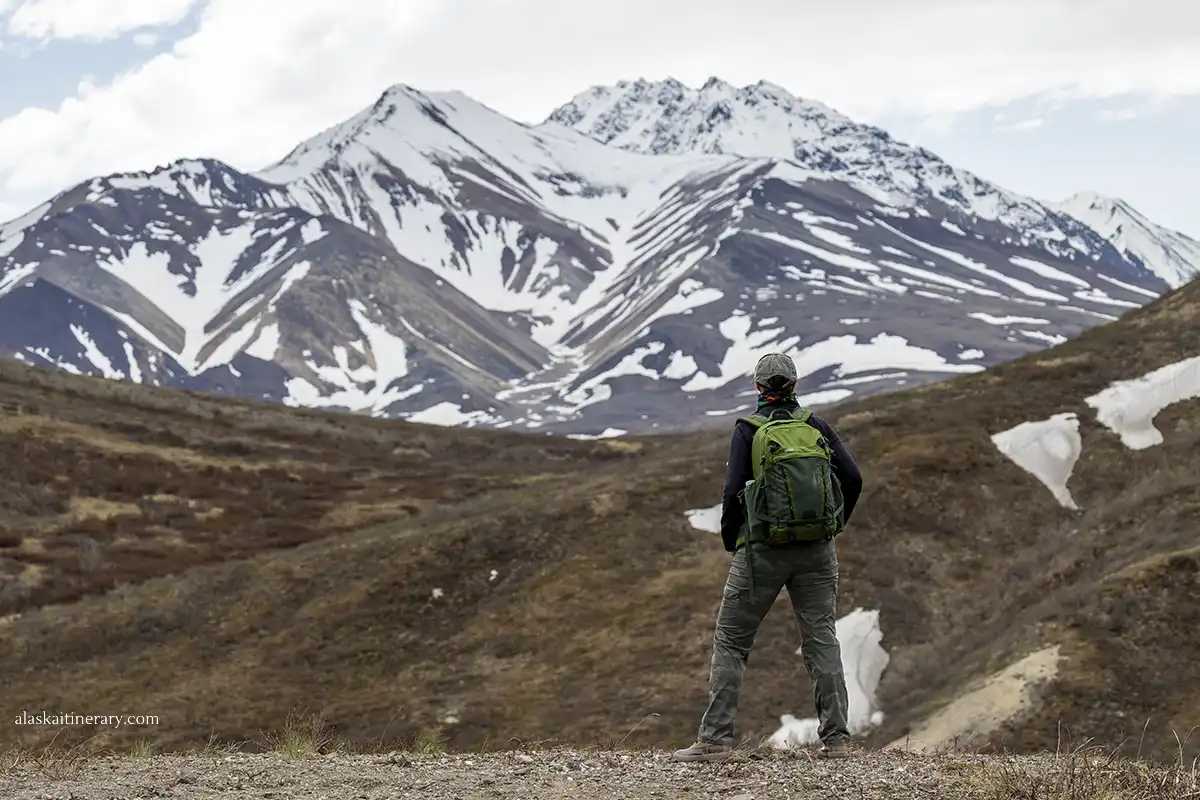
For most travelers, the best overall time to visit Alaska is June through August. This window offers the easiest logistics, the widest range of open services, and the most flexibility for planning different types of trips.
During these months, daylight is long, roads are clear, and visitor services operate on full schedules. National parks are accessible, guided tours run daily, and it’s easy to combine outdoor activities, wildlife viewing, hiking or camping and scenic drives in one trip. This period works especially well for first-time visitors who want to see a lot without constant planning adjustments.
That said, this “best overall” window comes with tradeoffs. Summer is also the busiest and most expensive time to travel in Alaska. Popular areas can feel crowded, and lodging and tours often book far in advance.
If your priorities are lower costs, fewer people, or a specific experience, the best time for you may fall outside peak summer. The sections below break down the best timing based on travel goals, so you can decide what matters most for your Alaska trip.
You might also be interested in where to go in Alaska based on your travel goals.
Best Time to Visit Alaska for Different Travel Goals By Month
This overview shows the most reliable months for different Alaska travel goals, based on typical access, conditions, and availability.

Month-by-Month Snapshot: What Each Month Is Best For
This snapshot gives a quick planning overview by month. Conditions and weather vary by region, but these patterns reflect typical travel realities in Alaska.
- January–March. Best for Northern Lights and winter activities. Very limited daylight. Most summer services are closed.
- April. A transition month. Daylight increases, but winter conditions still dominate. Best for late-season Aurora travel.
- May. Early shoulder season. Fewer crowds and lower prices. Wildlife activity increases. Some tours open late in the month.
- June. Start of peak season. Long daylight. National parks and tours operate widely. Ideal for road trips and outdoor travel.
- July. Peak season statewide. Longest days and full access. Best for first-time visitors and general wildlife viewing.
- August. Peak season continues. Strong wildlife and fishing. Busy, but very rewarding.
- September. Fall shoulder season. Fewer crowds and lower costs. Some services close late in the month. Early fall colors appear.
- October. Transition to winter. Limited access and services. Northern Lights season begins again.
- November–December. Winter travel focus. Short days and cold temperatures. Aurora viewing improves with proper planning.

Best Time to Visit Alaska for Northern Lights
The best time to visit Alaska for Northern Lights is September through March, when nights are long enough and conditions align for aurora viewing. Darkness is essential, but it is not the only factor. Aurora sightings depend on a combination of sufficient darkness, clear skies, solar activity, and being located under the auroral oval.
The most reliable viewing happens during the core winter months, especially in Interior Alaska around Fairbanks, where colder, drier conditions often mean clearer skies than coastal areas. Late August and the first week of April can also produce aurora sightings in rare cases, but visibility during these periods is less consistent due to limited darkness.
Northern Lights are never guaranteed. Timing improves your chances, but patience and weather play a major role.
Agnes’ Advice: For a detailed, month-by-month breakdown and practical tips to improve your odds, we cover this topic fully in our dedicated guide: Alaska Northern Lights Season: Month-by-Month Guide and How to Improve Your Odds.

Best Time to Visit Alaska for Adventure
For outdoor adventure, the best time to visit Alaska is June through early September. This period offers the longest daylight, the most reliable access, and the widest range of activities across the state.
Summer is when Alaska’s adventure landscape fully opens. Hiking trails are snow-free at lower and mid-elevations. Backcountry routes are accessible. Kayaking, rafting, glacier trekking, flightseeing, and guided wilderness tours operate on full schedules. Road trips are also easier, with clear highways and long daylight that allows flexible travel days.
July and August work best for travelers who want maximum choice and minimal restrictions. Nearly all adventure activities are available, from multi-day hikes to marine-based experiences. This is also the best time to combine different Alaska regions in one trip.
June is ideal if you want long days with slightly fewer crowds. Snow can linger at higher elevations, but conditions improve quickly as the month progresses.
Early September can still be great for adventure-focused travelers who are flexible. Trails are quieter, and conditions are often stable, but some tours and services begin to reduce schedules later in the month. Also fall colors are stunning.
Adventure travel outside summer is more limited. Winter Alaska offers a different kind of adventure—snow-based and location-specific—but it’s not suited for general outdoor exploration or road-based itineraries.
If outdoor activities are your top priority, summer is when Alaska is at its most accessible and versatile.

Best Time to Visit Alaska for Wildlife
The best time to visit Alaska for wildlife is late May through mid-September, when access, daylight, and animal activity align across most regions.
In Denali National Park, wildlife viewing is possible from late May through mid-September, which matches the period when park bus services operate and visitors can access the park road. During this window, grizzly bears, moose, caribou, Dall sheep, and occasionally wolves are active and visible along the road corridor and surrounding tundra.
Late May and June are especially good for seeing animals spread across open landscapes, while July and August bring peak vegetation and consistent activity.
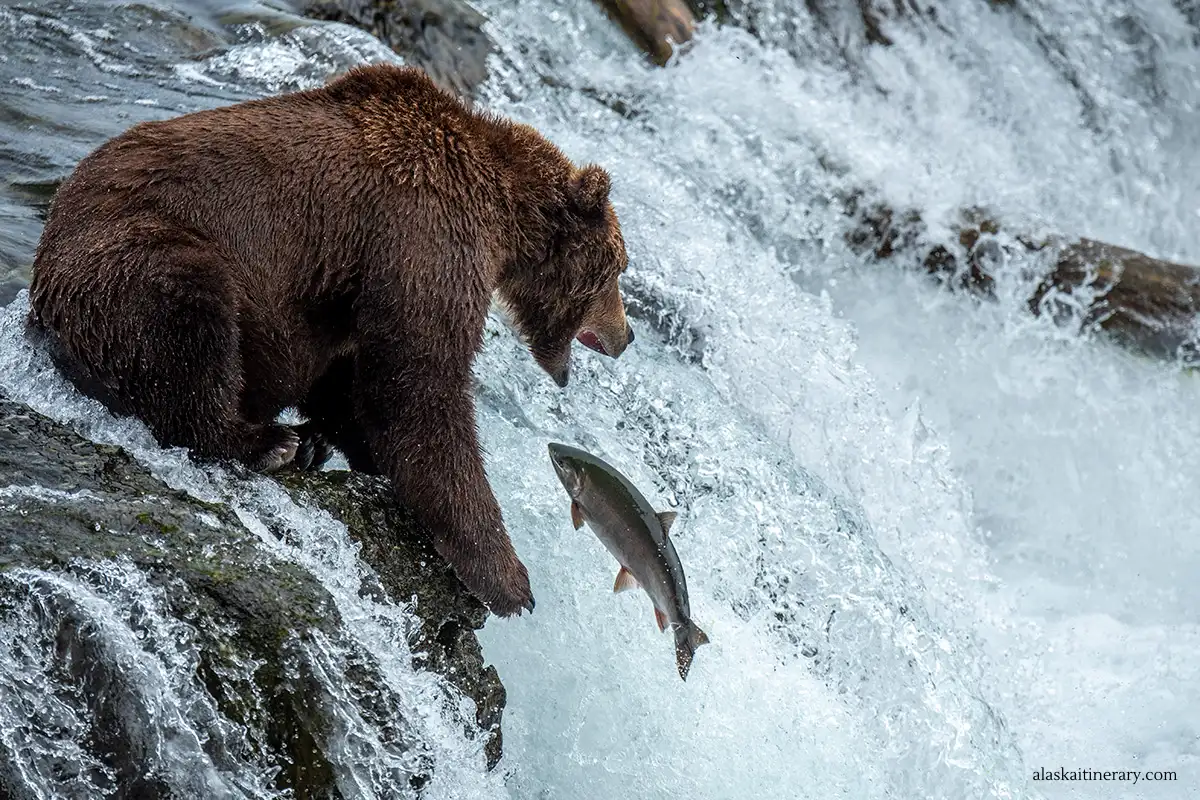
For brown bear viewing, timing depends on location. At Brooks Falls, bear viewing becomes reliable in late June, reaches its peak in July, and remains possible into August and early September, though bear activity at the falls is usually lower later in the season as feeding behavior shifts.
In Lake Clark National Park, bear viewing is possible from mid-May through September, with coastal bears visible throughout the season depending on food sources and location.
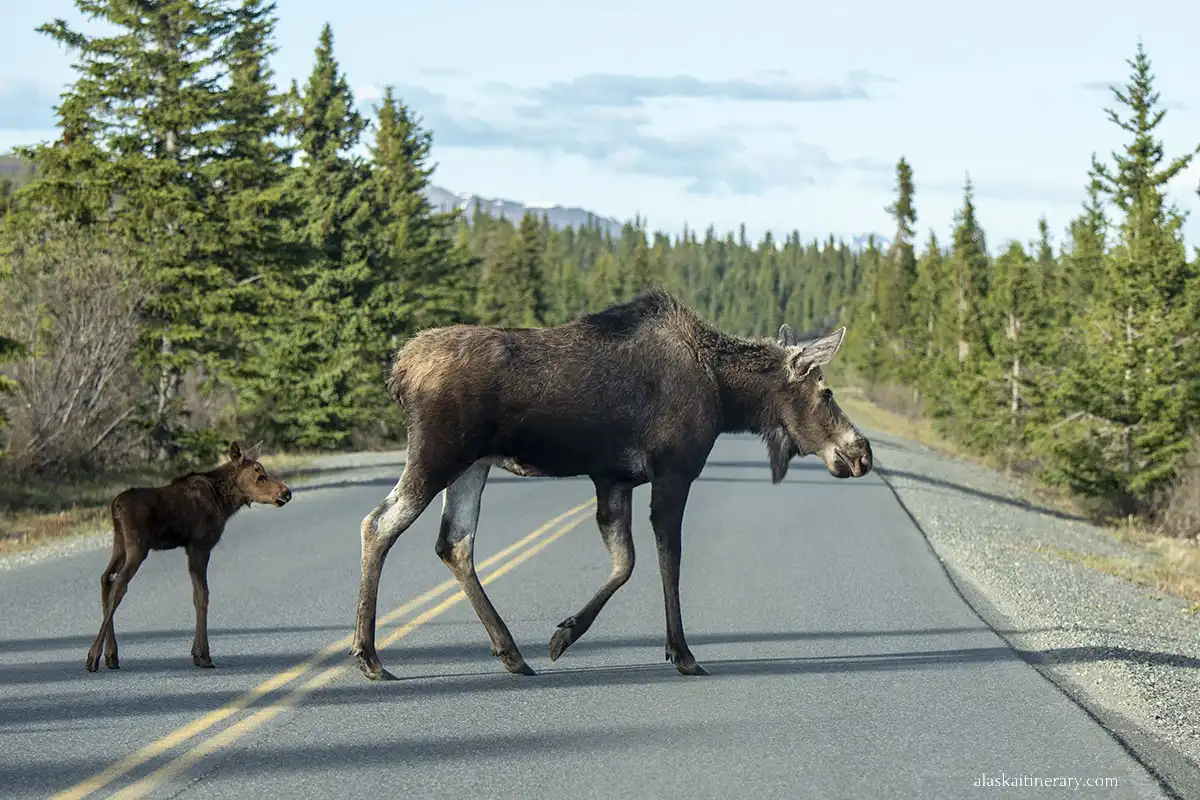
Moose can be seen year-round in Alaska, but late May and June are a special period because calves are born during this time, making it possible to spot cows with their young in wetlands, river valleys, and along road corridors. Fall brings increased movement during the rut, while winter sightings often occur in lowland areas.
Best Time to Visit Alaska for Whale Watching
The best time to visit Alaska for whale watching is May through September, with the most consistent sightings from June through August. This is when whales are actively feeding in Alaska’s coastal waters, and whale watching tours operate on full schedules.
In Kenai Fjords National Park, the whale watching season typically runs from late May through September. Humpback whales are the most common sightings during this period, often feeding near glaciers and along the coast. Summer offers the calmest seas and the highest tour availability.
Southeast Alaska is another prime region for whale watching. Places like Juneau, Icy Strait Point, and Sitka are well known for reliable humpback whale activity during summer. Whales arrive in late spring, remain through summer, and begin migrating south again in early fall.
Prince William Sound, near Whittier, also offers strong whale watching opportunities from June through August, especially during longer day trips that reach deeper into the sound.
Outside this window, whale watching becomes less predictable. April can be too early in many areas, while October is usually too late for regular sightings and scheduled tours.
If whale watching is a priority, plan your Alaska trip between June and August for the best balance of sightings, sea conditions, and tour availability.

Best Time to Visit Alaska for Fishing
The best time to visit Alaska for fishing is late May through September, with timing depending on the species and region you’re targeting.
Salmon fishing drives most trips. Runs begin in late May, peak through June, July, and August, and taper into September in some areas. Southcentral Alaska is especially popular during this window. On the Kenai River, different salmon species arrive at different times across the summer, which is why anglers plan trips around specific run windows rather than a single “best month.”
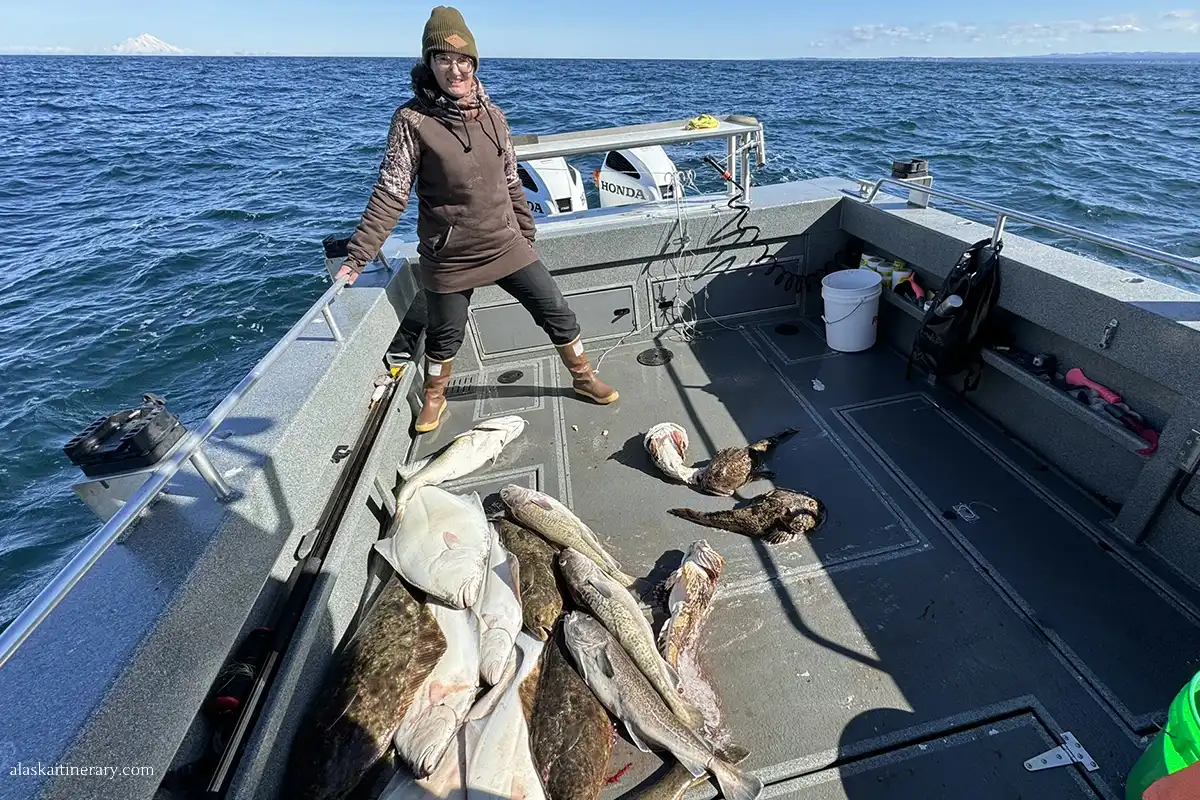
Halibut fishing is strongest during the core summer season, generally June through August, when seas are calmer and charters operate daily. Ports along the Gulf of Alaska are the main bases for these trips, including Homer, which is widely known for offshore halibut fishing. Shoulder months can work, but summer offers the most consistent conditions.
Freshwater fishing for species like rainbow trout and grayling also peaks in summer, when rivers are accessible and ice-free. Late summer and early fall can be productive as fish feed aggressively before seasonal changes.
Outside this window, opportunities become more limited. Winter fishing exists, mainly as ice fishing in Interior Alaska, but it is specialized and not part of a typical Alaska fishing trip. May and September can be excellent for experienced anglers who are flexible with weather and water conditions.
If fishing is a primary goal, plan your Alaska trip between late May and September, then fine-tune dates based on the species you want to target and the region you plan to fish.
Salmon fishing in Alaska is regulated by species, river, and date, which is why anglers plan trips around specific runs rather than a single “best month.”
Cheapest Time to Visit Alaska
The cheapest time to visit Alaska is May and September, known as the shoulder season. These months sit just outside peak summer, which lowers prices without fully shutting down access. Exploring Alaska on a budget is possible, but it takes some planning
In May, Alaska is transitioning into summer. Snow melts at lower elevations, roads reopen, and some tours begin operating. Lodging prices are often lower than in June or July, especially in cities like Anchorage and Fairbanks. However, not all tours run daily, and some national park services are still limited early in the month.
September is another strong budget-friendly option. Crowds thin quickly after August. Many hotels reduce rates, and rental car availability improves. Early September still offers good access in many areas, but services begin to scale back as the month goes on. Flexibility is key.
Winter, from October through March, can also be inexpensive for lodging and flights, especially outside Aurora-focused destinations. That said, winter savings come with major tradeoffs. Many attractions are closed, daylight is limited, and travel plans depend heavily on weather. Winter works best for travelers with specific goals, not general sightseeing.
Peak summer, from June through August, is the most expensive time to visit Alaska. Prices rise due to demand, and accommodations often sell out far in advance. This is when Alaska is easiest to explore, but it comes at a cost.
If budget is your priority, aim for May or early September. These months offer the best balance between lower prices and realistic access, as long as you plan with seasonal limitations in mind.

How to Choose the Right Time for Your Alaska Trip
There is no single best time to visit Alaska for everyone. The right timing depends on your priorities and how you plan to travel.
- If you want the easiest logistics and widest access, summer is the safest choice. This is when national parks, tours, and roads are fully available, and you can combine many experiences in one trip.
- If wildlife is your main focus, late May through mid-September offers the highest success rates, with timing adjusted by species and location.
- If fishing is a priority, plan between late May and September, then fine-tune dates based on the species and region you want to target.
- If lower costs and fewer crowds matter most, May and September offer the best balance, as long as you accept limited services and variable conditions.
- If you’re planning around the Northern Lights, focus on late September through March, and be flexible with weather and location.
Alaska rewards travelers who match their expectations to the season. Choosing the right time is less about finding a perfect month and more about aligning timing with what you want to experience most.
Final Thoughts
There is no single best time to visit Alaska for everyone. The right timing depends on what you want to see, how you plan to travel, and how flexible you can be. Summer offers the easiest access and the widest range of experiences. Shoulder season rewards travelers who want fewer crowds and lower costs. Winter works best for specific goals and careful planning.
Alaska is a place where timing shapes the entire trip. When you match your travel dates to your priorities—wildlife, national parks, fishing, adventure, or budget—you set yourself up for a better experience.
Choose the season that fits your plans, understand the tradeoffs, and Alaska will deliver something memorable no matter when you go.
Alaska doesn’t have a bad time to visit—only different ones. When you choose the right timing for your priorities, each season offers its own kind of magic.
Do You Like It? Pin It For Later!


Incredibly useful article! I’d like to visit Alaska one day, especially to see the whales.
Thanks for explaining this. I love being outdoors so the warmer months when I can see the wildlife would be my preference.
I would love to see the Northern Lights in Alaska, so I guess that I should go between late September and March. If I’m lucky I may be able to see some wildlife too, which would be a bonus.
We have always wanted to visit Alaska. I have a hard time deciding whether to visit in May for my birthday or in August, when more things are open and available.
This month by month guide is super helpful in deciding when to plan our first visit. I am having a hard time deciding between a winter northern lights visit and wildlife viewing during the warmer months.
After reading this, I know that May or September is our best choice. We don’t like crowds, but we will still be able to see wildlife, and prices are low.
This is an excellent guide! I cycled through Alaska from June-October and experienced the differences in seasons you describe here. I saw so much wildlife! Alaska is such a special place!
Wonderful guide! And the photos are FABULOUS!
Alaska might not be on my immediate bucket list, but if I am ever asked for suggestions, I think I will share your post straight away, because it is very comprehensive for those who are not at all familiar with Alaska and breaks the topic down smoothly.
I genuinely love your writing style