
Denali Facts: North America’s Tallest Peak and Its National Park

Wondering who first climbed North America’s highest peak? Or how big Denali National Park really is? You’re in the right place! In this article, we’ll dive into fascinating facts about Denali and its incredible national park. You’ll learn all the details from its breathtaking geography to its rich history, epic climbing stories, wildlife, and unique features. Ready to uncover the fascinating facts behind this legendary peak and park? Let’s explore everything that makes Denali so extraordinary!
This article may contain affiliate / compensated links. For full information, please see our disclaimer here.
Facts About Denali: Introduction
Denali, known as Mount McKinley, the crown jewel of Alaska, stands tall as the highest peak in North America. Rising to an incredible 20,310 feet, it dominates the skyline with its majestic beauty. But Denali is more than just a mountain.
It is the heart of Denali National Park and Preserve, a vast wilderness of towering peaks, rolling tundra, and thriving wildlife. It’s the most visited and most famous national park in Alaska.
For centuries, Denali has captivated explorers, adventurers, and nature lovers. Known as “The High One” or “The Great One” by the Koyukon Athabascans, this iconic mountain holds deep cultural and historical significance. Today, millions visit Denali National Park to witness its untamed landscapes, diverse wildlife, and breathtaking views.
This article focuses on facts, numbers, statistics, and history. However, if you plan a trip to Denali National Park, check our detailed resources:
- The best things to do in Denali National Park
- 3 days in Denali itinerary
- Where to stay in Denali – top hotels
- Camping in Denali
- Best RV campgrounds in Denali area
- Best hiking trails in Denali
- When is the best time to visit Denali
- Wildlife viewing in Denali
- Denali bus system
- The best Denali viewpoints

Denali Geography Facts
The Height of Denali (Mount McKinley)
Denali (Mount McKinley), located in south-central Alaska, is North America’s highest peak at 20,310 feet (6,190 meters) above sea level. Its prominence is 20,194 feet (6,155 meters), making it the third most prominent peak globally, after Mount Everest and Aconcagua.
Denali is one of the Seven Summits, the highest mountains on each continent, representing North America on this prestigious list.
The Two Summits
Denali (Mount McKinley) has two main summits: the South Summit, which is the tallest, and the North Summit, standing at 19,470 feet (5,934 meters). The South Summit is the primary climbing goal for mountaineers.
Base-to-Peak Rise
Denali boasts an incredible base-to-peak rise of about 18,000 feet (5,486 meters). This makes it one of the tallest mountains in the world when measured from its base.
Denali is actually ‘taller’ than Everest when measured from base to summit, rising approximately 18,000 feet compared to Everest’s 13,000 feet.
Denali’s Glaciers
Five major glaciers flow from Denali’s massive slopes:
- Peters Glacier (northwest)
- Muldrow Glacier (northeast)
- Traleika Glacier (east)
- Ruth Glacier (southeast)
- Kahiltna Glacier (southwest), the longest at 44 miles (71 kilometers)
Extreme Weather Conditions
Located near the Arctic Circle, Denali experiences some of the harshest weather on the planet. Winter temperatures often drop below -75°F (-60°C), with wind chills reaching -118°F (-83°C). These extreme conditions pose significant challenges for climbers.
Geological Composition
Denali is part of the Alaska Range and is primarily made of granite. Its rugged terrain and geological complexity attract scientists and geologists from around the world. Denali’s towering presence, dramatic glaciers, and extreme environment make it one of the most awe-inspiring mountains on Earth.

Denali Climbing Facts
1903: Early Expeditions to Denali
The first documented attempt to climb Denali was made in 1903 by Judge James Wickersham and his team of four. Starting their journey in Fairbanks, they reached an elevation of 10,000 feet on what is now called the Wickersham Wall.
In the same year, Dr. Frederick Cook led a six-member team to attempt the Northwest Buttress of Denali. They reached an elevation of 11,300 feet before completing their expedition by circumnavigating the mountain.
1906: Controversial Summit Claim
In 1906, Dr. Frederick Cook claimed to have become the first person to reach Denali’s summit. According to his account, he completed the ascent in just eight days, starting from the Tokositna River, ascending via the Ruth Glacier, and summiting through the East Buttress.
He also reported taking only four days for the descent. However, his claims were met with widespread skepticism due to inconsistencies in his story and lack of verifiable evidence.
1913: First Ascent of Denali
Denali’s first confirmed ascent was on June 7, 1913, by a team led by Hudson Stuck, an Episcopal missionary. The group included Walter Harper, who became the first person to set foot on the summit, Robert Tatum, and Harry Karstens, who later became the first superintendent of Denali National Park. Harper, a Native Alaskan, was the first person to stand at the peak.
1947: First Women On The Summit Denali
In 1947, Barbara Washburn became the first woman to successfully summit Denali. She was part of an expedition led by her husband, Bradford Washburn, a renowned mountaineer and cartographer. Barbara’s achievement was groundbreaking at the time and inspired future generations of female climbers.
Routes to the Summit
Denali has several climbing routes, but the West Buttress Route is the most popular. Established in 1951 by Bradford Washburn, it offers the “easiest” and safest path to the summit. Even so, it is a challenging climb due to the harsh weather, altitude, and physical demands.
Climbing Season
The climbing season typically runs from late April to early July. During this time, weather conditions are most favorable, although storms and extreme cold are still common. By mid-July, warmer temperatures increase the risk of avalanches and crevasse dangers.
Climbing Statistics
Each year, approximately 1,000 climbers attempt to summit Denali. The success rate varies but averages around 50%. In some years, as few as 30% of climbers reach the summit due to weather and altitude-related challenges.
Climbing Denali’s Challenges
Climbers face extreme conditions, including subzero temperatures, high winds, and thin air. Denali’s high altitude and latitude mean less oxygen is available compared to mountains of similar height in lower latitudes. Proper acclimatization and preparation are critical.
Notable Climbs
Denali has been climbed in record-breaking times, but also in incredible ways. In 2014, Kilian Jornet set a speed record, ascending and descending via the West Buttress Route in just 11 hours and 48 minutes.
In 1990, Anatoli Boukreev completed a solo speed ascent of Denali in just 10.5 hours from base to summit, a remarkable feat given the mountain’s challenges.
Denali Rescue Statistics
Despite its challenges, Denali has an experienced rescue team. Between 1990 and 2020, around 100 climbers lost their lives on Denali, mostly due to falls, avalanches, or exposure. Climbers are required to register with the National Park Service and pay a fee to fund rescue operations.
Who Can Climb Denali?
Climbing Denali requires excellent physical fitness and mountaineering experience. While no formal certifications are required, most climbers train extensively and often climb other major peaks, such as Rainier or Aconcagua, before attempting Denali.
Climbers are required to register with the National Park Service before attempting Denali. Proper preparation, including experience in glacier travel and crevasse rescue, is essential for safety.
If you are visiting Talkeetna, check out the climbing exhibits in Talkeetna Museum.

Denali Historical Facts
Indigenous Significance
Denali, meaning “The High One,” or “The Great One” has been revered by Alaska Natives for thousands of years. The Koyukon Athabascans, who inhabit the region, gave the mountain its name and hold it as a sacred place. For these communities, Denali represents a spiritual connection to the land and their ancestors.
The Naming Controversy
In 1896, a gold prospector named the mountain Mount McKinley after then-presidential candidate William McKinley. In 2015, the U.S. government officially restored the mountain’s original name, Denali, recognizing its cultural and historical significance.
However, on January 20, 2025, President Donald Trump signed an executive order to revert the name back to Mount McKinley. This decision has been met with mixed reactions, with many Alaskans and Indigenous groups continuing to use the name Denali.
Creation of Denali National Park
Denali National Park was established in 1917 as Mount McKinley National Park, thanks to conservationist Charles Sheldon’s efforts. It originally protected 2 million acres as a wildlife preserve. The park’s focus was to safeguard the Dall sheep and other animals from overhunting. In 1980, it was expanded to 6 million acres and renamed Denali National Park and Preserve under the Alaska National Interest Lands Conservation Act (ANILCA).
Role in World War II
During World War II, Denali became a training ground for the U.S. Army’s 10th Mountain Division. Soldiers practiced mountaineering and survival techniques in extreme cold, preparing for deployment in high-altitude combat zones.
A UNESCO Connection
While not designated as a UNESCO World Heritage Site on its own, Denali National Park is part of the Kluane/Wrangell-St. Elias/Glacier Bay/Tatshenshini-Alsek UNESCO World Heritage Site.
This transboundary area, shared by the U.S. and Canada, is recognized for its pristine wilderness and unparalleled natural beauty.

Denali National Park Facts
Establishment and History
The park was established in 1917 as Mount McKinley National Park, originally to protect wildlife, particularly Dall sheep. In 1980, under the Alaska National Interest Lands Conservation Act, it was expanded and renamed Denali National Park and Preserve, reflecting its cultural and geographical importance.
Size and Location
Denali National Park and Preserve spans an incredible 6 million acres, making it one of the largest national parks in the United States. Located in south-central Alaska, it sits approximately 240 miles north of Anchorage and 125 miles south of Fairbanks, making it accessible via road, rail, and air.
Unique Geology
Denali National Park lies within the Alaska Range, with its centerpiece being the towering Denali, the highest peak in North America. The park’s landscape features glacial valleys, rugged mountains, and permafrost-covered tundra, shaped by millennia of glaciation and tectonic activity.
Diverse Wildlife
Denali is home to an impressive variety of wildlife. Visitors often spot the “Big Five” animals: grizzly bears, wolves, moose, caribou, and Dall sheep. Other species include foxes, lynx, golden eagles, and over 160 bird species. The park’s ecosystem supports both predators and prey, making it a hotspot for wildlife enthusiasts.
Plant Life
Despite its harsh climate, Denali boasts over 700 species of flowering plants, shrubs, mosses, and lichens. Tundra wildflowers bloom during the short summer, creating bursts of color across the landscape. Iconic plants like fireweed, dwarf birch, and willow dominate the terrain.
Park Access and Transportation
The park’s main access point is the Denali Park Road, stretching 92 miles into the wilderness. Only the first 15 miles are open to private vehicles; beyond that, access is via park buses. This system minimizes human impact and enhances wildlife viewing opportunities.
Visitor Statistics
Denali National Park attracts over 600,000 visitors annually, with the majority visiting between late May and early September. The park’s remoteness and limited infrastructure help preserve its pristine wilderness.
Recreational Opportunities
Visitors can enjoy a wide range of activities, including wildlife viewing, hiking, camping, and photography. For the more adventurous, mountaineering and backcountry exploration offer thrilling challenges. Winter activities, such as dog sledding and snowshoeing, also attract those seeking unique experiences.
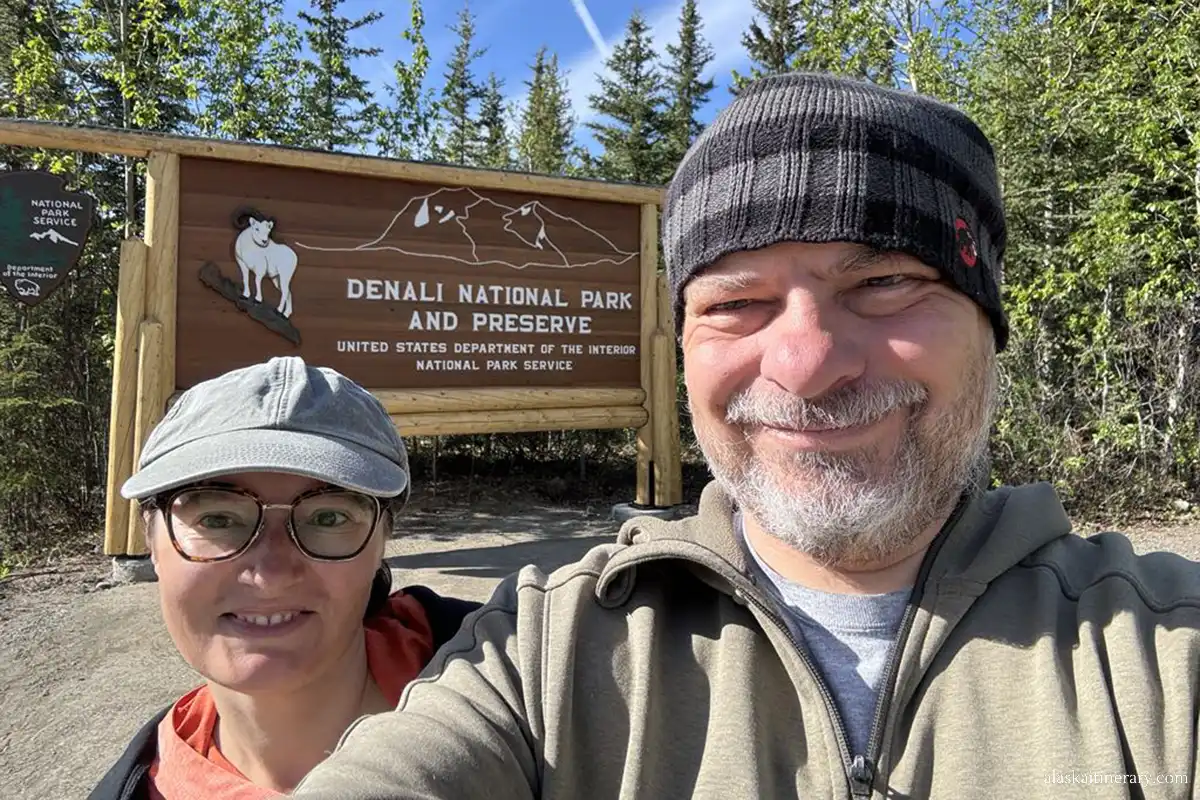
Denali National Park Fun Facts
Taller Than Everest?
While Mount Everest is the highest mountain above sea level, Denali has a greater vertical rise. Denali rises approximately 18,000 feet from base to summit, compared to Everest’s 13,000 feet from its base on the Tibetan Plateau.
Longest Glacier
Denali’s Kahiltna Glacier is the longest in the park, stretching 44 miles. It’s a favorite for mountaineers as it serves as the starting point for many climbing expeditions.
A Place Without Reptiles
Denali National Park has no native reptiles due to its harsh climate. Amphibians are rare too, with only one species, the wood frog, known to survive in this cold environment by freezing during winter.
A Frog That Freezes Itself
Denali is home to a single amphibian species—the remarkable wood frog. This frog survives the harsh Alaskan winters by entering a cryogenic state. During this time, its heart stops beating, and its lungs cease to function. Remarkably, when spring arrives, the frog thaws and returns to its normal activities, a true marvel of nature.
Dinosaur Discoveries in Denali
Denali National Park is not just about breathtaking views and wildlife—it’s also a paleontological treasure trove. The first dinosaur fossils were discovered here in 2005, and in 2016, paleontologists unearthed the first dinosaur bones in the park. Thousands of fossils, dating back 65–72 million years, have since been uncovered. Among them is a unique species of marine dinosaur, whose fossils are found only within Denali’s boundaries, adding another layer of intrigue to this extraordinary wilderness.
Climbing Speed Records
Kilian Jornet holds the fastest ascent and descent of Denali, completing the climb via the West Buttress Route in just 11 hours and 48 minutes in 2014.
Aurora Borealis Show
Denali National Park offers some of the best opportunities to see the northern lights. On clear winter nights, the aurora paints the sky with vibrant greens, purples, and reds.
Famous Visitors
Denali has inspired countless adventurers and artists. Among its notable visitors was President Warren G. Harding, who toured the park in 1923 during the construction of the Alaska Railroad.

Denali Facts: Conclusion
Denali is so much more than a mountain. It’s a place of wonder, where nature feels bigger, wilder, and more powerful than anywhere else. From its towering peak to its sprawling national park, Denali has a way of leaving you in awe.
Whether you’re fascinated by its incredible height, drawn to its unique wildlife, or inspired by its rich history, Denali has something special for everyone. It’s a place that stays with you long after you’ve left—its beauty, its stories, and its untamed wilderness are unforgettable.
If you ever get the chance to visit, take it. Denali is a reminder of just how extraordinary our world can be.
If you’re interested in fascinating facts, numbers, and statistics about other Alaskan destinations, check out our related articles:
- Alaska facts
- Fairbanks facts
- Whittier facts
- Valdez facts
- Juneau facts
- Skagway facts
- Sitka facts
- Haines facts
- Ketchikan facts
- Icy Strait Point facts
Do You Like It? Pin It For Later!



Great guide and interesting about the name change! I didn’t realize that McKinley was a only presidential candidate at the time it was first called Mount McKinley!