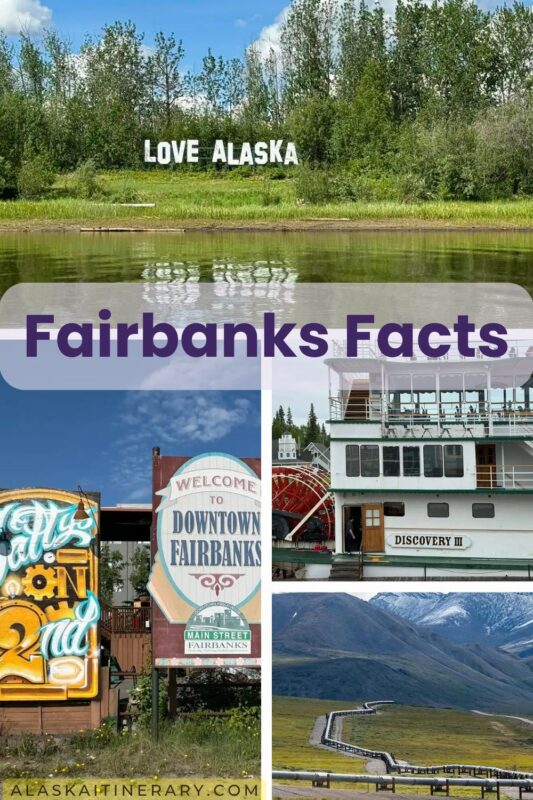
Facts About Fairbanks, Alaska: History, Geography, and More

Fairbanks, Alaska, is a city of extremes and unique experiences. Whether you’re drawn to its rich history, stunning natural beauty, or fascinating quirks, there’s something here for everyone. This article will take you through the most interesting numbers and facts about Fairbanks, giving you a deeper understanding of what makes this northern city so unique. Get ready to uncover the secrets of Fairbanks and see why it’s known as the “Golden Heart of Alaska.”
This article may contain affiliate / compensated links. For full information, please see our disclaimer here.
Introduction to Fairbanks Facts
Fairbanks sits at the heart of Alaska, both geographically and culturally. Known as the “Golden Heart of Alaska,” it’s the largest city in the interior and the second-largest in the state. With about 32,000 residents in the city and nearly 96,000 in the Fairbanks North Star Borough, it plays a vital role in Alaska’s economy and culture.
Founded in 1901 during the gold rush, Fairbanks quickly became a hub for mining and exploration. Today, it remains a key center for education, with the University of Alaska Fairbanks as a major research institution.
The city is also famous for its extreme weather. Winter temperatures often drop below -40°F, while summer brings nearly 24 hours of daylight.
This article will give you a detailed look at Fairbanks’ most essential facts, numbers, and statistics. Chris and I love learning about the places we explore. Chris is captivated by numbers and statistics—they spark his imagination and drive him to action.
I’m fascinated by history and geography and always eager to learn more about each place we visit. Since we’ve visited Fairbanks dozens of times, we’ve gathered extensive knowledge about this unique city.
Agnes’ Advice: If you’re planning a trip to Fairbanks, explore my complete Fairbanks travel guide for itinerary ideas, accommodation tips, Northern Lights planning advice, and the best things to do in every season.


Geographical Facts about Fairbanks
Where is Fairbanks, AK?
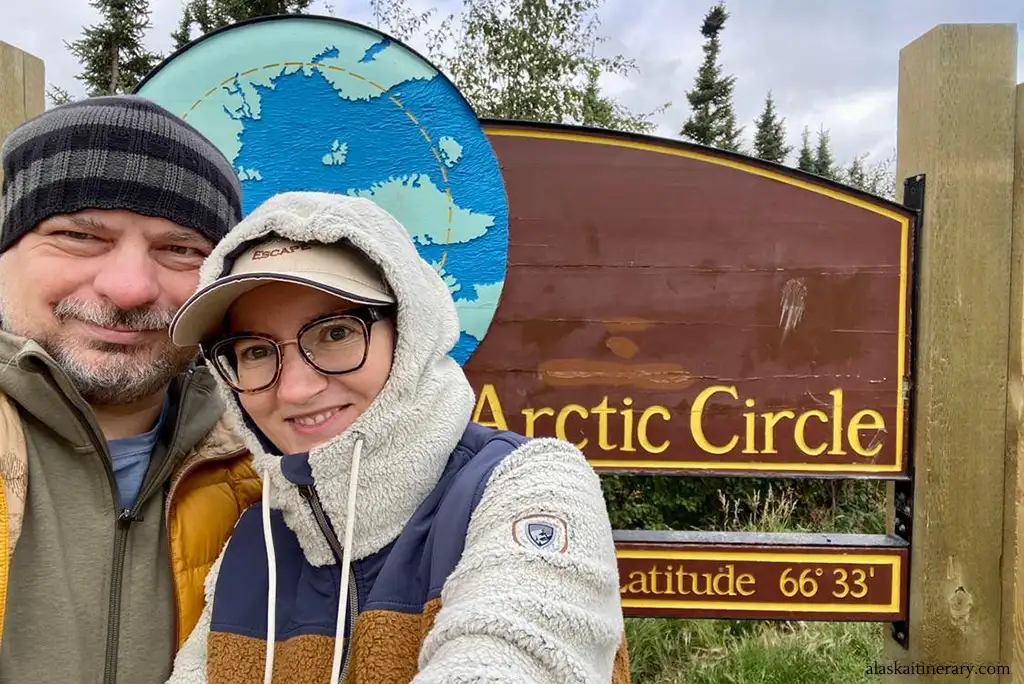
Fairbanks is located in the interior of Alaska, about 200 driving miles south of the Arctic Circle. It’s situated in the Tanana Valley, along the banks of the Chena River. This central location makes it a key hub for exploring Alaska’s vast northern regions.
Fairbanks is approximately 360 miles north of Anchorage, the largest Alaska city, and 120 miles north of Denali National Park. These distances make Fairbanks a key hub for accessing Alaska’s northern wilderness and national parks, such as Denali, Kobuk Valley, and The Gates of The Arctic National Park.
If you plan a trip to the Far North, you might be interested in our article, Anchorage or Fairbanks, from a traveler’s perspective.

Aurora Oval and Northern Lights
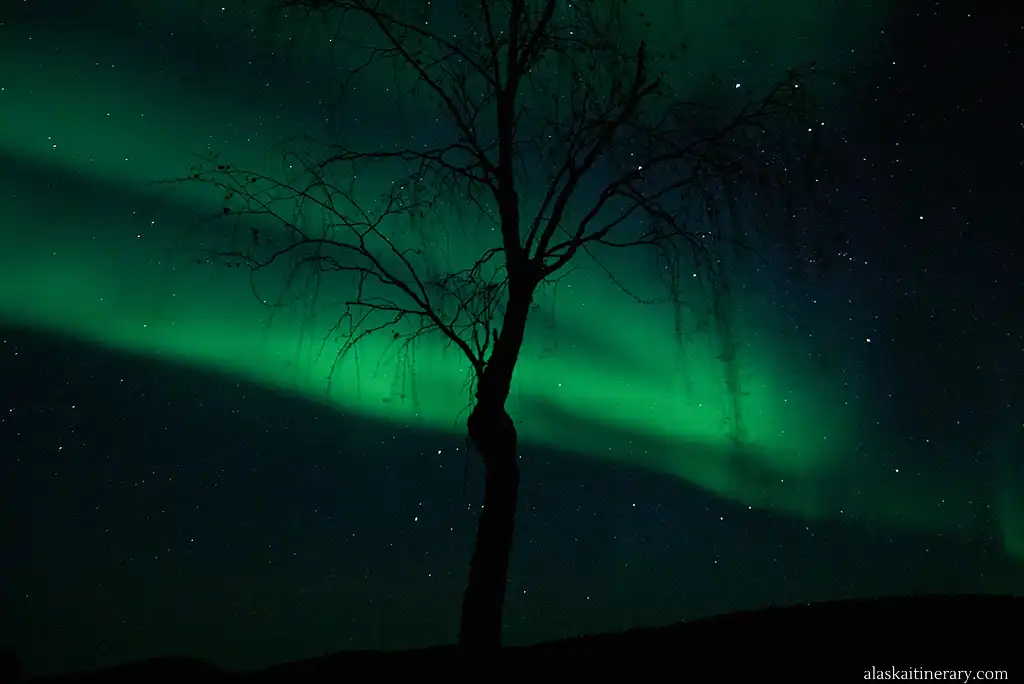
Fairbanks is also uniquely positioned under the Auroral Oval, around the Earth’s magnetic poles where the Northern Lights are most visible. This makes Fairbanks one of the best places in the world to see the Aurora Borealis, especially during the long winter nights when the skies are clear and dark.
In Fairbanks, the Northern Lights can be seen on about 200 nights yearly, especially during winter. The season in Fairbanks runs from mid-August to mid-April.
Population of Fairbanks
Fairbanks has a population of approximately 32,000 residents within the city limits. The broader Fairbanks North Star Borough, which includes the city and surrounding areas, has nearly 96,000 people.
In comparison, Anchorage, the largest city in Alaska, has a population of around 291,000, while Juneau, the state capital, has about 31,000 residents. These numbers highlight Fairbanks’ role as the second-largest metropolitan area in Alaska, after Anchorage, and its significance in the state’s demographic landscape.
How Big is Fairbanks, Alaska?
Fairbanks covers an area of 32.7 square miles, with 31.9 square miles of land and 0.8 square miles of water. It’s the largest city in Alaska’s interior, highlighting its importance as a regional center for both economic and cultural activities.
Fairbanks Climate and Weather
Fairbanks is known for its extreme climate. Winters are long and harsh, with temperatures often dropping below -40°F. Fairbanks is one of the coldest cities in the United States, with low winter temperatures typically between -15°F and -25°F.
Due to these extreme cold conditions, vehicles in Fairbanks are at risk of freezing if left unprotected. To prevent this, many parking lots around the city are equipped with electrical outlets for engine block heaters, allowing residents to keep their engines warm enough to start in the frigid weather.
On December 21st, the winter solstice, Fairbanks experiences just 3 hours and 43 minutes of daylight. By June 21st, the summer solstice, the city enjoys nearly 22 hours of daylight, with the sun remaining visible for 21 hours and 49 minutes.
That is why the city has its nickname, “The Land of the Midnight Sun.” This extreme variation in daylight and temperature significantly influences the lifestyle and activities in Fairbanks.

Historical Facts about Fairbanks, Alaska
The Founding of Fairbanks
Fairbanks began in 1901 during the Alaska Gold Rush. Captain E.T. Barnette intended to establish a trading post upriver, but his steamboat got stuck near the Chena River. Forced to stop, he set up camp at that spot, leading to the founding of Fairbanks.
The city was officially incorporated in 1903. By 1911, Fairbanks had grown to become the largest city in Alaska’s territory, with a population reaching around 3,500 residents.
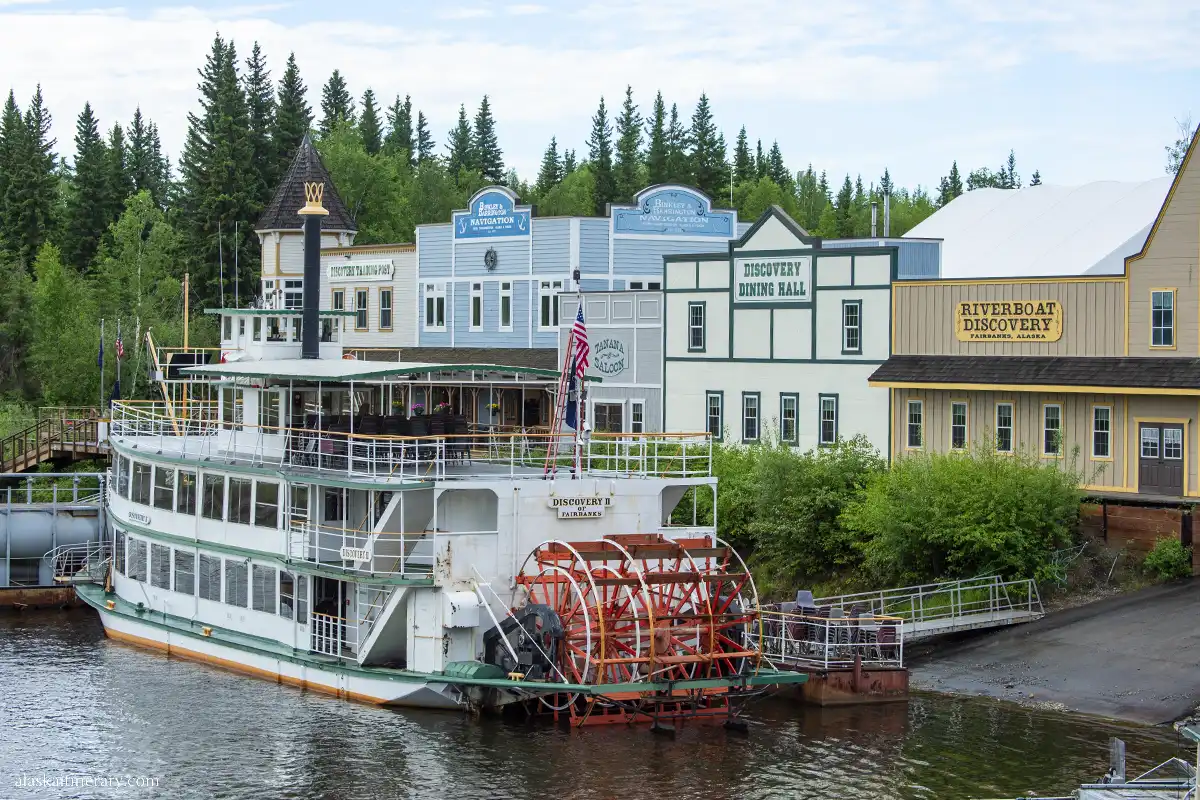
Today, you can experience some of this history by taking a scenic cruise on the Riverboat Discovery along the Chena River, where Fairbanks’ story began.
How Fairbanks Got Its Name?
Fairbanks was named in honor of Charles Warren Fairbanks, who served as a U.S. Senator from Indiana and later as the Vice President of the United States under President Theodore Roosevelt. The city’s founder, Captain E.T. Barnette, chose the name to gain political favor and possibly attract government support for the fledgling community.
At the time of Fairbanks’ founding in 1901, Charles W. Fairbanks was a prominent political figure, and naming the city after him was seen as a way to give the new settlement a sense of importance and legitimacy.
The Gold Rush Era
The Gold Rush was a game-changer for Fairbanks. The discovery of gold in the surrounding hills drew thousands of prospectors to the area, turning the city into a thriving boomtown. When gold was discovered in the nearby hills in 1902 by Felix Pedro, it sparked a rush of prospectors to the area.
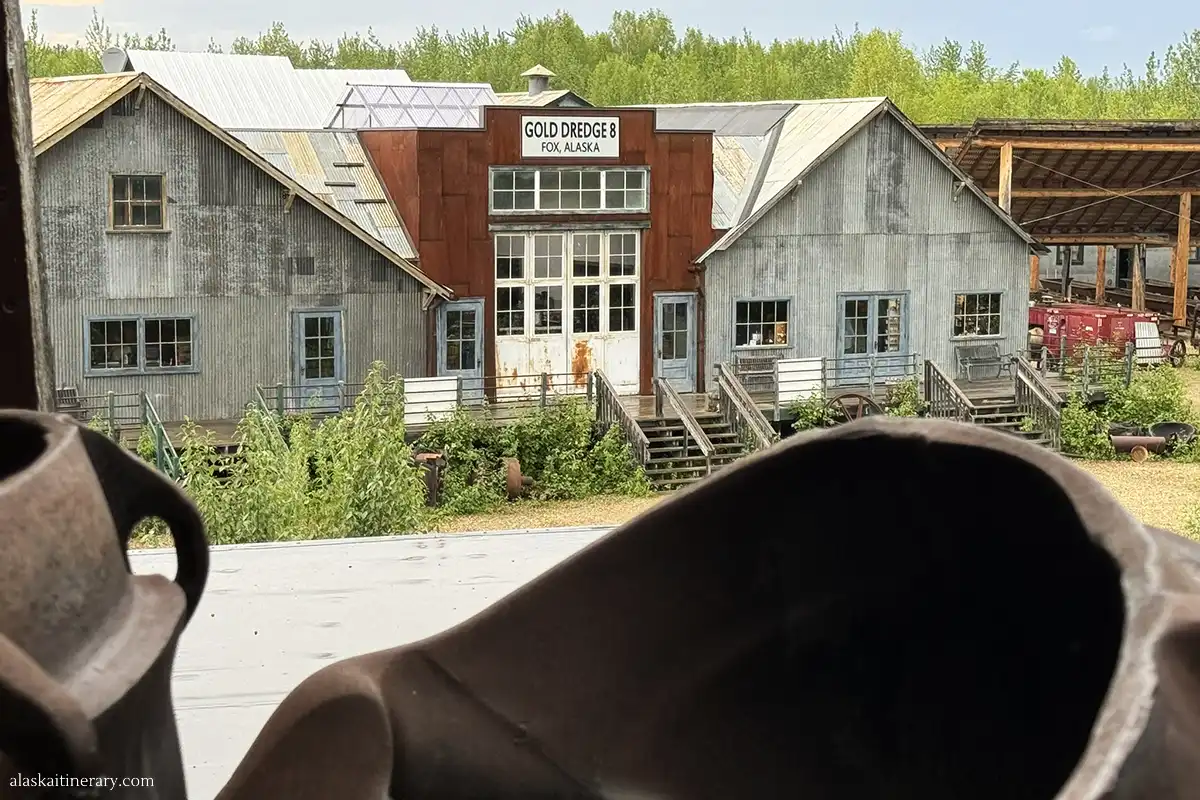
One of the key sites from this period is Gold Dredge 8, where large-scale mining took place. Between 1928 and 1959, Gold Dredge 8 and other dredges in the Fairbanks Mining District contributed to the extraction of over 7.5 million ounces of gold.
Nowadays, you can visit Gold Dredge 8, learn about the history of gold mining, and even try your hand at panning for gold. It’s a fun way to connect with Fairbanks’ rich history.
Gold continues to be commercially mined near Fairbanks at two major sites: the Fort Knox Gold Mine and the Pogo Gold Mine.

The Development of Infrastructure
As Fairbanks grew, so did its infrastructure. The Alaska Railroad reached the city in 1917, connecting Fairbanks to southern Alaska and turning it into a vital supply hub. Today, the train from Anchorage to Fairbanks remains one of the most scenic ways to travel between these two cities. The railroad was crucial to the city’s development, and it still plays an important role in transportation today.
The Impact of World War II
World War II put Fairbanks on the map as a strategic military location. The city became a key stopover for aircraft being ferried from the U.S. to the Soviet Union under the Lend-Lease program. This increased military presence led to the establishment of Fort Wainwright and Eielson Air Force Base, both of which are still active today.
If you’re in downtown Fairbanks, you can visit the Lend-Lease Memorial statue, which honors this important part of the city’s history.

The Role of the Trans-Alaska Pipeline
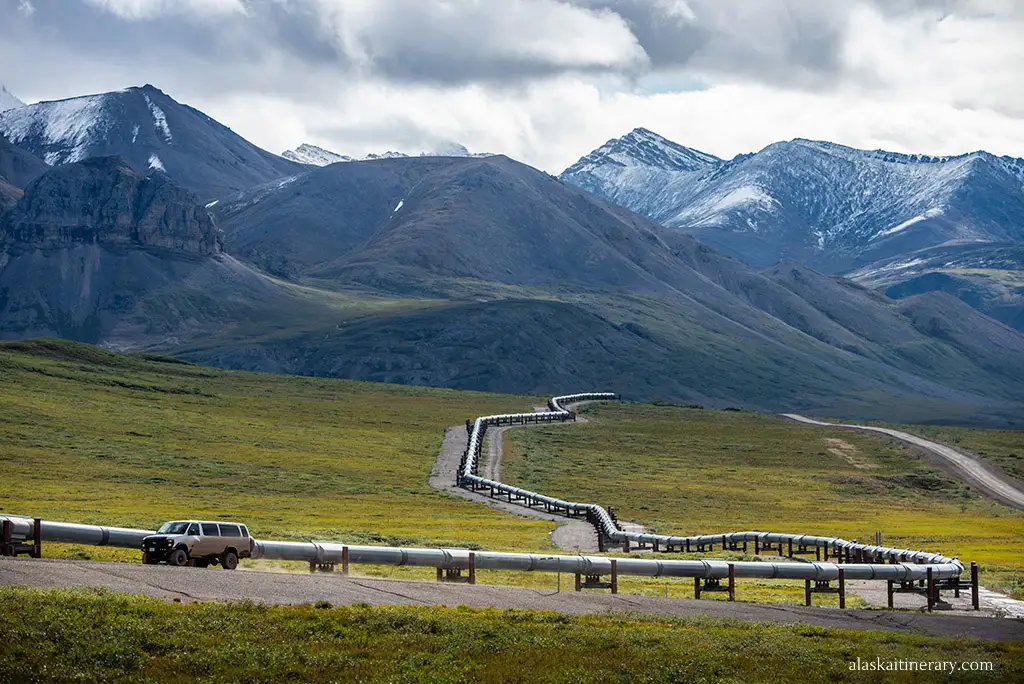
The 1970s brought another boom to Fairbanks with the construction of the Trans-Alaska Pipeline. The pipeline, running from Prudhoe Bay to Valdez, passes right through Fairbanks, making it a key operational hub.
The Dalton Highway, built to support the pipeline, connects Fairbanks to the oil fields of the North Slope. This project brought a lasting economic boost to the city, and you can still see the impact today.
Modern Fairbanks
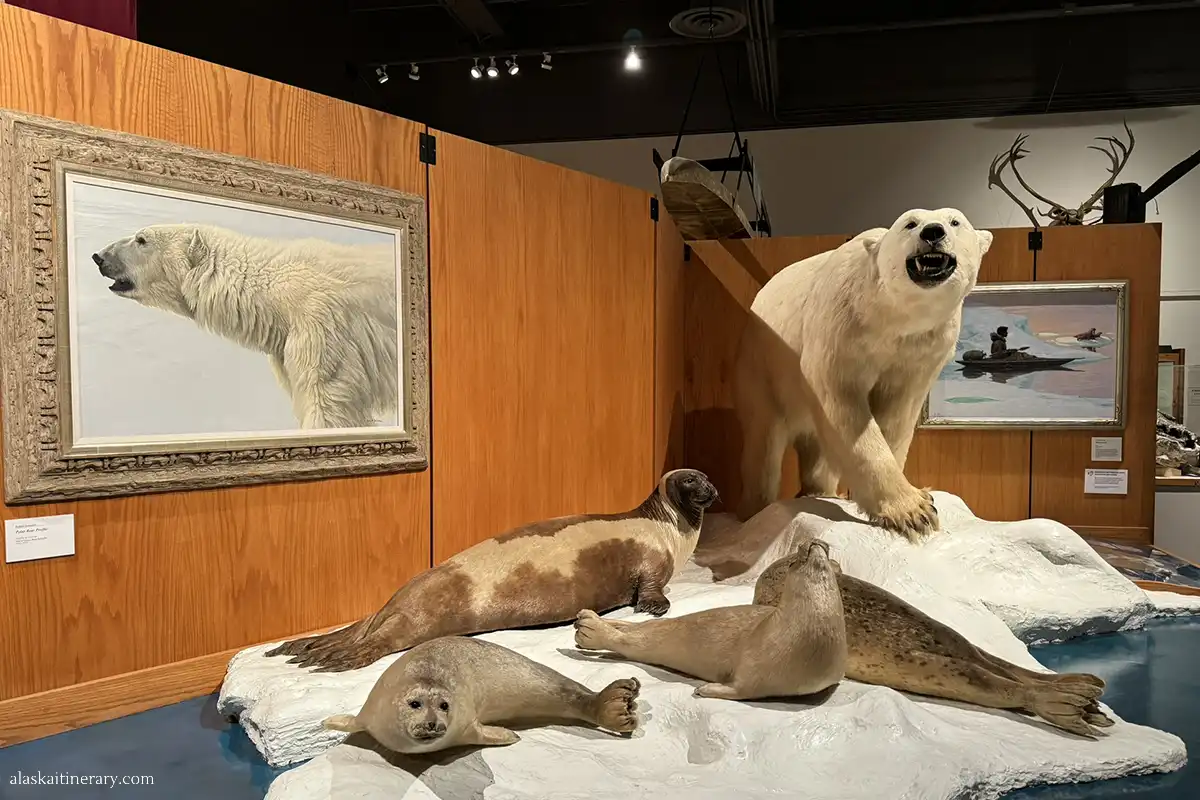
Today, Fairbanks is a lively city with a deep sense of history. The University of Alaska Museum of the North showcases the region’s natural and cultural history, and you can dive into the local culture there.
The Morris Thompson Cultural and Visitors Center is another must-see, offering exhibits on the people and traditions of Interior Alaska. The Fountainhead Antique Auto Museum showcases vintage cars and Alaskan history.

If you’re interested in something unique, take a day trip to Chena Hot Springs and check out the Aurora Ice Museum, where you can marvel at stunning ice sculptures year-round. These attractions keep the spirit of Fairbanks alive, making it a fascinating place to visit for anyone interested in history and culture.


Quirky and Fun Facts About Fairbanks
Facts about Fairbanks’ Nickname: “Alaska’s Golden Heart”
Fairbanks is known as “Alaska’s Golden Heart,” a nickname that highlights both its central location in the state and its rich history in gold mining. The Fairbanks Commercial Club first coined the nickname in the early 20th century to promote the city’s significance as a central hub and its welcoming community spirit. The phrase reflects Fairbanks’ role as a key player during the Gold Rush and its warm, hospitable nature, which continues to define the city today.
The Northern Lights Shine Bright
Fairbanks is one of the top spots worldwide for viewing the Northern Lights. Thanks to its position under the Auroral Oval, the lights are visible in Fairbanks on roughly 200 nights yearly between August and April.
Endless Summer Days
During summer, Fairbanks experiences the “Midnight Sun,” where daylight lasts nearly 24 hours. Around the summer solstice on June 21st, the sun barely sets, as it’s 21 hours and 49 minutes of daylight.
This extended daylight fuels unique local traditions, like the Midnight Sun Baseball Game, played annually without artificial lights since 1906. It’s a time when the city comes alive with activities that stretch late into the night.

Extreme Temperature Records
Fairbanks is known for its extreme weather. The city has set records for both high and low temperatures in Alaska. The coldest recorded temperature was -66°F (-54°C) in 1933. On the other hand, the hottest day on record reached 99°F (37°C) in 1919. These extremes highlight just how unpredictable Fairbanks’ climate can be.
Fairbanks Time Capsule
In Fairbanks, a time capsule is buried and set to be opened in 2059. It was buried in 1984 to celebrate Alaska’s 25th anniversary of statehood. The capsule holds nearly 200 items, including a Rubik’s Cube and a Polaroid camera, capturing the essence of the 1980s. When opened, it will offer future generations a fascinating glimpse into the past.
World Ice Art Championships
Fairbanks hosts the World Ice Art Championships every March, attracting ice sculptors from around the globe. This annual competition showcases stunning ice sculptures made from the region’s clear ice.
The event turns Fairbanks into a sparkling winter wonderland, with illuminated sculptures that glow beautifully at night.
The North Pole and Santa Claus House
Just a short drive from Fairbanks, you’ll find the town of North Pole, Alaska. This small town embraces the Christmas spirit year-round. The highlight is the Santa Claus House, a popular attraction where you can meet Santa, shop for unique gifts, and even send postcards with a North Pole postmark.

Fairbanks Facts: Conclusion
I hope these facts help you gain a deeper understanding of Fairbanks today, its rich history, and its important role in Alaska. From its early days during the Gold Rush to its current status as a hub for northern exploration, Fairbanks has evolved while maintaining its unique charm.
The city’s ability to thrive in extreme conditions, its welcoming community, and its connection to Alaska’s rich cultural and natural heritage make it a fascinating place to learn about and visit. Whether you’re planning a trip or just expanding your knowledge, these insights into Fairbanks provide a glimpse into what makes this city truly special.
If you like facts and numbers about Alaska, check out:
- Number And Facts About Alaska
- Facts about Anchorage
- Facts about Whittier
- Statistics and Facts about Ketchikan
- Facts About Sitka
- Skagway Facts
- Facts about Icy Strait Point
- Facts about Haines
Do You Like It? Pin It For Later!